价值投资理念

Search documents
奖善罚恶,推动上市公司常态化分红
Sou Hu Cai Jing· 2025-07-22 22:39
Core Viewpoint - In the increasingly complex international environment, global capital is more determined in choosing growth certainty. Promoting regular cash dividends among listed companies will further demonstrate the resilience and vitality of China's capital market, significantly enhancing the investment value of Chinese assets [1][3]. Group 1: Cash Dividends and Market Dynamics - The total cash dividends for 2024 are expected to reach a historical high, with many listed companies announcing interim profit distribution plans and leading enterprises taking the initiative to distribute substantial dividends [1]. - The issuance of the new "National Nine Articles" has led to continuous improvement in the fundamental systems of the capital market, gradually forming an ecosystem where listed companies are willing to distribute and regularly distribute dividends [1]. - Active dividend distribution by companies helps convey a strong signal of stable and improving performance to the market, contrasting with companies that do not distribute dividends, which erode investor confidence [1]. Group 2: Policy and Regulatory Framework - The emphasis on improving the incentive and constraint mechanisms for cash dividends at the 20th National Congress and the new "National Nine Articles" highlights the necessity of enhancing cash dividend supervision [2]. - The increasing willingness and intensity of dividends among listed companies effectively address common investor concerns regarding operational status and long-term returns [2]. - There are still challenges in optimizing the dividend ecosystem, such as significant disparities in dividends across different industries and the lack of awareness among some companies regarding dividends [2]. Group 3: Incentives and Penalties - Strengthening policy incentives through positive publicity and evaluation bias can make companies with frequent and substantial dividends more attractive, guiding market funds to prefer cash dividends and attracting more long-term capital [3]. - A combination of measures, including restrictions on major shareholder reductions and risk warnings, is necessary to compel companies that do not distribute dividends to enhance internal governance and return awareness [3]. - Differentiated supervision based on industry characteristics and company types is essential to guide reasonable profit distribution and protect investors' legal rights [3].
事关长期资金入市!财政部,最新发布!
证券时报· 2025-07-11 08:31
Core Viewpoint - The article emphasizes the importance of long-term investment strategies for state-owned commercial insurance companies, highlighting the implementation of a three-year long-cycle assessment mechanism to enhance investment stability and management capabilities [1][3][4]. Group 1: Long-Cycle Assessment Mechanism - The new assessment mechanism includes a shift in the evaluation of net asset return rates from a focus on annual performance to a combination of annual, three-year, and five-year indicators, with respective weights of 30%, 50%, and 20% [3]. - The capital preservation and appreciation rate will also be assessed over a longer period, which is expected to reduce the impact of short-term market fluctuations on performance evaluations [3][4]. - This mechanism aims to encourage insurance companies to focus on long-term returns and value investments, thereby enhancing their role as long-term institutional investors [3][4]. Group 2: Enhancing Management Capabilities - The notification requires insurance companies to improve asset-liability management, ensuring better alignment in terms of duration, cost-benefit, and cash flow [4]. - It also emphasizes the need for stable operations and the development of internal long-term assessment mechanisms to identify quality investment opportunities [4]. - By enhancing investment management capabilities, insurance companies can better serve the real economy and contribute to high-quality economic development [4]. Group 3: Market Impact and Future Prospects - The article notes that as of the end of 2024, the total investment balance of commercial insurance funds in China is expected to reach approximately 33 trillion yuan, with only about 11% currently invested in A-shares, indicating significant room for growth [7][8]. - The implementation of the long-cycle assessment is anticipated to increase insurance companies' tolerance for short-term market fluctuations, encouraging them to increase their A-share allocations [8][11]. - The overall trend suggests that more long-term funds are likely to enter the market, which could enhance market liquidity and stability, ultimately leading to a more favorable investment environment [10][12].


刚刚!财政部,最新发布,事关长期资金入市!
券商中国· 2025-07-11 08:08
Core Viewpoint - The article emphasizes the importance of long-term assessment mechanisms for state-owned commercial insurance companies to enhance their investment management capabilities and stabilize capital market operations [1][2][4]. Group 1: Long-term Assessment Mechanism - The Ministry of Finance's notification establishes a three-year long-term assessment mechanism for state-owned commercial insurance companies, focusing on improving asset-liability management and investment management capabilities [1][2]. - The assessment will now include a five-year performance indicator alongside annual and three-year indicators, with respective weights of 30%, 50%, and 20%, promoting a focus on long-term returns and reducing the impact of short-term market fluctuations [2][4]. - The new assessment criteria will be implemented starting from the 2025 performance evaluation, aiming to guide insurance companies towards long-term, value-based, and stable investments [2][3]. Group 2: Enhancing Management Capabilities - The notification requires insurance companies to improve their asset-liability management by optimizing the matching of cash flows, cost returns, and risk balance, ensuring stable growth of owners' equity [3]. - It also emphasizes the need for robust internal assessment mechanisms and investment management systems to identify quality investment opportunities and enhance long-term stable returns [3][4]. - The introduction of long-term assessment mechanisms is expected to alleviate short-term performance pressures, allowing insurance funds to increase their equity market investments and maintain stability [3][4]. Group 3: Market Impact and Investment Potential - As of the end of 2024, the total investment balance of commercial insurance funds in China is projected to reach approximately 33 trillion yuan, with about 11% allocated to A-shares, indicating significant room for growth in equity investments [6]. - The implementation of the long-term assessment mechanism is anticipated to enhance the willingness of insurance funds to enter the market, thereby improving market stability and reducing volatility [4][6]. - The article highlights that the shift towards long-term investment strategies aligns with the increasing quality of A-share companies and their dividend rates, creating a favorable environment for insurance funds to invest [9].

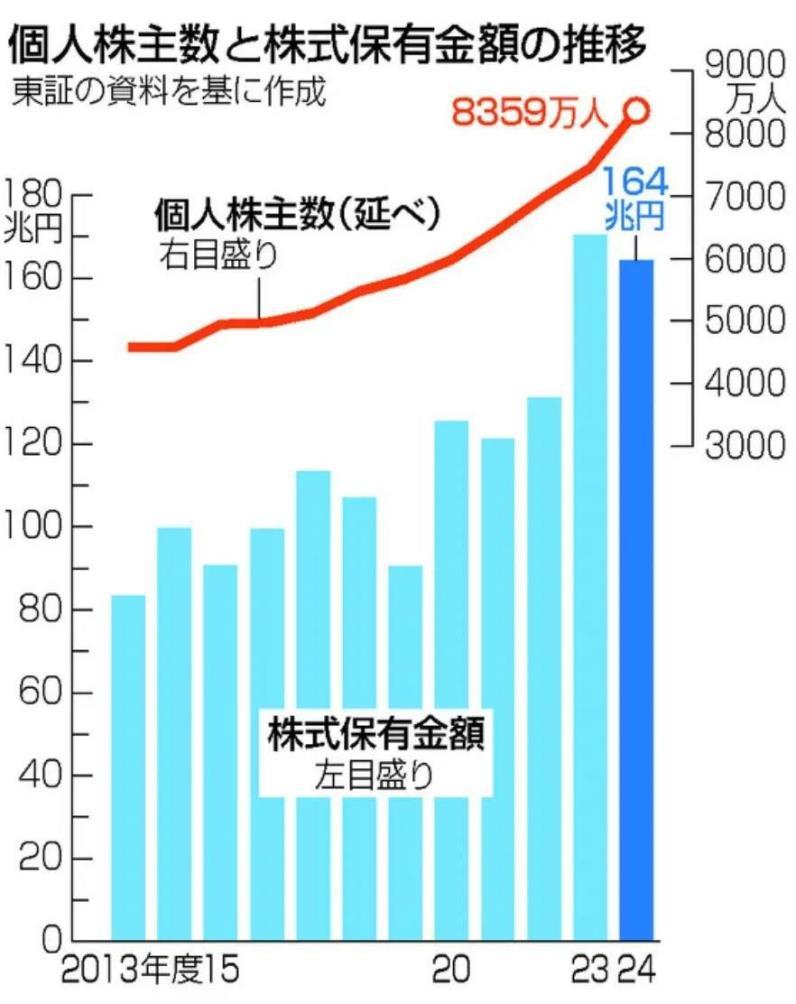
日本散户炒股热情空前,人数破8360万创纪录
Huan Qiu Wang· 2025-07-06 02:22
Group 1 - A surge in retail investors in Japan has been observed, with the number of individual shareholders increasing by 12.3% to reach 83.6 million, marking a historical high since 1949 [1][3] - The Japanese small investment tax exemption system (NISA) has significantly contributed to this trend, with cumulative purchases under NISA growing by 50% year-on-year to approximately 52 trillion yen by the end of 2024 [3] - Despite the increase in retail investors, the overall performance of the Japanese stock market has been disappointing, with the Nikkei index declining by 4% in the 2024 fiscal year, the worst performance since 2019 [3] Group 2 - Warren Buffett's announcement of Berkshire Hathaway's significant investment in Japan's five major trading companies has spurred retail investors to follow suit, leading to increased investments in these stocks [4] - The sentiment among Japanese retail investors reflects a "follow the leader" mentality, with many believing in Buffett's value investment philosophy [4] - Analysts suggest that even a small return of retail investor funds to the stock market could result in a substantial influx of capital, potentially up to $220 billion [4]
7.46%!企业年金近三年累计收益率首次出炉
news flash· 2025-06-16 22:13
Core Insights - The Ministry of Human Resources and Social Security has released the first-ever cumulative return data for enterprise annuities over the past three years, showing a cumulative return of 7.46% as of the end of Q1 [1] - The total scale of enterprise annuity accumulated funds reached 3.73 trillion yuan [1] - The new cumulative return data reflects a shift from reporting "current" and "annual cumulative" investment performance to a focus on "three-year cumulative" returns, indicating a greater emphasis on long-term investment performance by regulatory authorities [1] Investment Performance - The cumulative return is calculated using a time-weighted method, covering the period from April 1, 2022, to March 31, 2025 [1] - The change in reporting methodology is seen as beneficial for promoting long-term and value investment principles within enterprise annuities [1] Challenges and Recommendations - Despite the positive developments, enterprise annuities still face challenges such as insufficient marketization and short assessment periods [1] - There is a pressing need to establish a long-term performance assessment system to enable enterprise annuities to truly embody the concept of "long money for long investment" [1]
巴菲特的长寿密码:像孩子一样活成时间的朋友
Sou Hu Cai Jing· 2025-06-14 15:44
Group 1 - Warren Buffett, at 95, embodies a childlike dietary preference and an unwavering work enthusiasm, illustrating a life philosophy that emphasizes continuous growth over time [2] - Buffett's dietary choices reflect a return to simplicity, aligning with the wisdom of traditional Eastern medicine, which advocates for nourishing the body with pure and simple foods [3][4] - Research from Harvard indicates that individuals adhering to a natural diet have longer telomeres, supporting Buffett's belief in listening to the body's needs for optimal nutrition [4] Group 2 - Buffett's approach to work exemplifies the ultimate form of "flow," as he engages in his passion for investing, which significantly contributes to his vitality and sharp judgment [6][7] - Continuous cognitive engagement, such as reading extensive financial reports, keeps Buffett's brain active, enhancing his mental acuity and contributing to his longevity [8][10] - The essence of Buffett's longevity lies in a life system that embraces both learning and value investing, demonstrating a harmonious balance between childlike curiosity and wise discipline [9][10] Group 3 - Buffett's ability to maintain a low-stress state contributes to higher telomerase activity, which is linked to better health outcomes despite high work intensity [11] - His life philosophy suggests that true longevity is not about resisting time but rather dancing with life, emphasizing curiosity and passion as keys to a meaningful existence [12][14] - The legacy Buffett leaves is not merely financial wisdom but a guide to living a fulfilling life, highlighting the importance of maintaining a growth mindset and a focus on what truly matters [14]

应采取多种方式引导上市公司积极分红
Guo Ji Jin Rong Bao· 2025-06-09 08:23
Core Viewpoint - The Shanghai Stock Exchange aims to encourage listed companies to increase cash dividends and enhance shareholder returns through various market management tools, emphasizing the importance of cash dividends in assessing company performance and investment value [1][2]. Group 1: Importance of Cash Dividends - Cash dividends serve as a "litmus test" for the quality of a company's earnings, as they are difficult to manipulate compared to financial statements [1]. - They act as a "brake" on reckless expansion, prompting management to make more prudent investment decisions when real cash is distributed to shareholders [1]. - Stable and predictable dividends can attract long-term capital, helping to shift the speculative atmosphere in the A-share market [1]. Group 2: Recommendations for Enhancing Dividends - The dividend status of a company should be included as a condition for refinancing, limiting "stingy" companies from raising funds without returning value to shareholders [2]. - A proposed condition for refinancing is that companies must have paid dividends of at least 30% of net profits for five consecutive years, with a minimum dividend yield of 1% [2]. - Simplified procedures for asset restructuring should include dividend thresholds, ensuring only companies that provide substantial returns to shareholders can engage in such activities [2]. Group 3: Enhancing Disclosure and Accountability - The weight of dividend indicators in the information disclosure evaluation system should be increased to over 10%, with detailed assessment criteria for stability, transparency, and adequacy of dividends [2]. - Institutional investors should be encouraged to advocate for dividends, requiring them to submit dividend proposals when holding over 3% of shares [3]. - Tax policies should be established to incentivize dividends, with penalties for companies that consistently underperform in dividend payments [3]. Group 4: Regulatory Framework and Market Reform - The new "National Nine Articles" emphasizes strengthening cash dividend regulation and incentivizing high-quality dividend-paying companies [3]. - Reforming the dividend system is crucial for building a balanced ecosystem between financing and returns, ultimately achieving the goal of making the capital market more attractive and sustainable for investors [3].
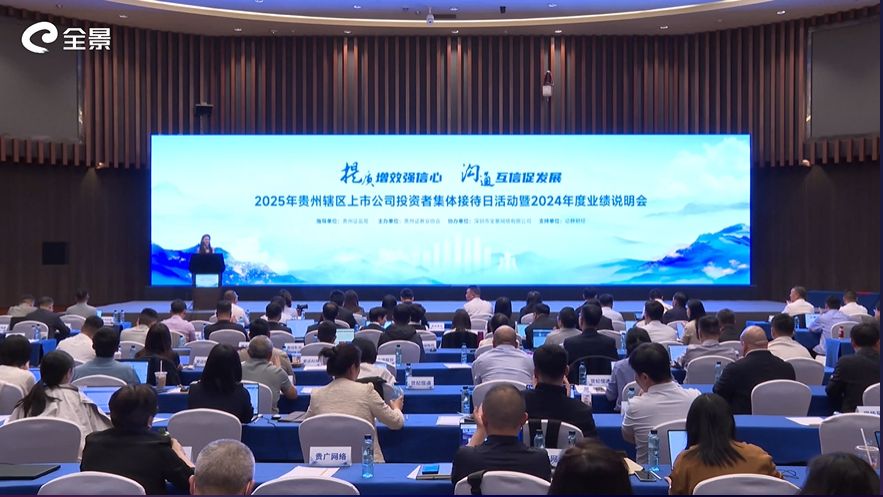
走在前,打头阵!贵州辖区集体接待日活动暨2024年度业绩说明会举办 问题答复率94.80%创近年新高
Quan Jing Wang· 2025-05-13 02:27
Core Points - The event "Quality Improvement and Efficiency Enhancement to Strengthen Confidence, Communication and Trust to Promote Development" was successfully held in Guiyang, focusing on the 2024 annual performance briefing of listed companies in Guizhou [1] - The event was guided by the Guizhou Securities Regulatory Bureau and aimed to enhance communication between investors and listed companies, showcasing the increasing significance of collective reception days in China's capital market [2] Group 1 - The event featured participation from all A-share listed companies in Guizhou, with key executives such as chairpersons, general managers, and financial directors in attendance, marking an annual engagement with investors [2] - The Deputy General Manager of Shenzhen Panoramic Network Co., Ltd. highlighted the importance of collective reception days in facilitating communication between investors and listed companies, noting the growing influence of these events in the capital market [2] Group 2 - The Deputy Director of the Guizhou Provincial State-owned Assets Supervision and Administration Commission emphasized the role of state-owned listed companies in market value management to optimize resource allocation and achieve a dual integration of industrial and capital operations [5] - The Deputy Director of the Financial Development Department of the Guizhou Provincial Committee of the Communist Party of China stressed the importance of investors as the foundation of the capital market and pledged continued support for quality listed companies to grow stronger [8] Group 3 - The Deputy Director of the Guizhou Securities Regulatory Bureau expressed that the performance briefing serves as a vital bridge for value discovery and investment concept dissemination, encouraging companies to communicate in a way that enhances investor engagement [10] - The event demonstrated the integrity and regulatory compliance of listed companies in Guizhou, achieving a high response rate of 94.80% to investor inquiries, with 885 questions received and 839 answered, marking a new high in the past three years [11]
市场真的有效吗?芒格教你如何从市场无效中寻找机会 | 螺丝钉带你读书
银行螺丝钉· 2025-05-10 13:36
Core Viewpoint - The article discusses Charlie Munger's perspective on market efficiency, highlighting the contrast between theoretical market efficiency and real-world examples of market inefficiencies, particularly in the context of investment strategies and behaviors of investors [2][4][12]. Summary by Sections Effective Market Hypothesis - The Efficient Market Hypothesis (EMH) suggests that all known information is reflected in stock prices, making it impossible for investors to consistently outperform the market [4]. - Eugene Fama's work in 1965 introduced the concept of stock prices following a random walk, asserting that current prices represent fair value [4]. Buffett as an Exception - Warren Buffett is presented as a notable exception to the EMH, having consistently outperformed the market, which has led to skepticism from academic circles [5][6]. - Critics, including notable economists, have questioned Buffett's success, attributing it to luck rather than skill [6]. Buffett's Counterargument - Buffett countered the academic criticism by showcasing the historical performance of nine successful investors, including himself and Munger, arguing that their success stemmed from hard work and adherence to value investing principles [8][10]. Market Inefficiencies - Munger identifies two types of market inefficiencies: those arising from small market sizes with limited attention and those driven by investor psychology, particularly during periods of fear and greed [12]. - A specific example of market inefficiency is the premium on ETFs, where investors may buy at inflated prices due to lack of understanding of the underlying mechanics [14]. Opportunities in Inefficient Markets - The article emphasizes that while efficient markets are an ideal, real-world inefficiencies create opportunities for experienced investors to buy undervalued assets and sell overvalued ones [16].

【立方债市通】央行发布重磅报告/河南推动组建省级再生资源回收企业/银行间债券市场上线科技创新债券
Sou Hu Cai Jing· 2025-05-09 13:15
Group 1: Technology Innovation Bonds - The interbank bond market officially launched technology innovation bonds on May 9, with 36 companies announcing a total issuance scale of 21 billion yuan as of May 8 [1] - The People's Bank of China emphasized the importance of long-term value investment in technology innovation bonds and encouraged market participants to actively engage in investment and trading [4][5] - The Central Bank's report indicated that nearly 100 market institutions plan to issue over 300 billion yuan in technology innovation bonds, suggesting a potential increase in issuance in the near future [15][16] Group 2: Monetary Policy and Market Operations - The Central Bank announced a temporary suspension of government bond trading operations, monitoring market supply and demand to determine when to resume [2] - The report highlighted that the 10-year government bond yield had dropped below 1.6%, prompting the Central Bank to use alternative tools to maintain liquidity and stabilize the bond market [2] Group 3: Regional Developments - The Henan provincial government is promoting the establishment of a provincial-level recycling resource recovery platform and supporting agricultural service projects through special government bonds [6] - Hunan province announced a subsidy of 2 million yuan for infrastructure REITs projects that pass the National Development and Reform Commission's evaluation [7] Group 4: Issuance Dynamics - Zhengzhou Thermal Power Group completed the issuance of 400 million yuan in corporate bonds with a 2.43% interest rate [9] - Xuchang New District Construction Investment Co., Ltd. issued 300 million yuan in corporate bonds at a 3.29% interest rate, with proceeds used to repay existing debt [10] - The Ministry of Finance plans to reissue 145 billion yuan in special government bonds for financial institution capital injection, with a 7-year term starting from May 15, 2025 [8]