
复利效应

Search documents
月月可分红:用红利ETF打造“工资外现金流”
Sou Hu Cai Jing· 2025-07-22 10:47
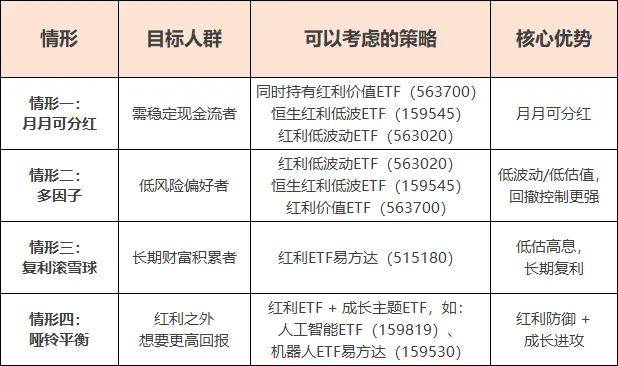
Core Viewpoint - The article discusses various investment strategies for dividend indices tailored to different investor needs, including those seeking monthly income, low volatility, long-term compounding, and higher returns [1][2]. Group 1: Monthly Dividend Income - Investors needing stable cash flow can consider holding a combination of Dividend Value ETF (563700), Hang Seng Dividend Low Volatility ETF (159545), and Dividend Low Volatility ETF (563020) to achieve "monthly dividends" [2][3]. - This strategy is suitable for individuals with regular monthly expenses, such as rent or loan repayments, providing opportunities for consistent cash inflow [3]. Group 2: Low Volatility Preference - For risk-averse investors, the Dividend Low Volatility ETF (563020) and Hang Seng Dividend Low Volatility ETF (159545) are recommended due to their low volatility and strong drawdown control [2][3]. - The Dividend Value ETF (563700) combines high dividends with low valuations, allowing investors to purchase high-yield stocks at relatively lower prices [3][4]. Group 3: Long-term Wealth Accumulation - Long-term wealth accumulators can opt for the Dividend ETF E Fund (515180), which offers annual dividends, allowing for reinvestment to enhance compounding effects [5][6]. - The core of compounding is reinvesting dividend income to increase principal, thereby generating more returns over time [6]. Group 4: Higher Returns Beyond Dividends - For investors seeking higher returns, a combination of Dividend ETFs and growth-themed ETFs, such as Artificial Intelligence ETF (159819) and Robotics ETF E Fund (159530), is suggested [6][7]. - This strategy aims to balance stability from dividends with growth potential from high-growth sectors, forming a "barbell strategy" that mitigates volatility in the short term while targeting excess returns in the long term [6][7]. Group 5: Investment Suitability - The article emphasizes that there is no universally best investment strategy; rather, investors should choose combinations that align with their goals and circumstances [8].

写给开启投资之路的你
Zhong Guo Zheng Quan Bao· 2025-07-03 21:35
Group 1 - The core idea emphasizes the importance of rational investment principles in navigating the complexities of the market [1][2] - Investment is compared to sailing in a vast ocean, where market fluctuations can lead to impulsive decisions, highlighting the need for a steady approach [1] - Long-term investment strategies are likened to nurturing a tree, stressing the significance of patience and avoiding panic during short-term market movements [1] Group 2 - The analogy of cooking is used to illustrate the selection of quality assets, emphasizing the need to look beyond superficial appearances and focus on fundamental health [2] - Asset allocation strategies should be balanced and reasonable, avoiding excessive speculation that could jeopardize the entire investment portfolio [2] - Rational investors are portrayed as those who carefully select quality assets and adopt appropriate investment strategies to achieve satisfactory returns [2]
中年股民感悟:来炒股的是不是没什么本事的人?
集思录· 2025-06-27 13:48
Core Viewpoint - The article discusses the concept of "having ability" in the context of different professions, contrasting labor-intensive jobs with white-collar jobs and investments, emphasizing the importance of leveraging knowledge and skills for higher returns [1][2][5][6]. Group 1: Understanding "Ability" - The term "having ability" is interpreted as generating high returns with minimal labor and cost, exemplified by successful entrepreneurs and contrasting with those who exploit systems for personal gain [2][6]. - Labor-intensive jobs like driving taxis or manual labor have low income ceilings, while white-collar jobs offer higher potential earnings and opportunities for side activities [1][5]. - True ability is seen as breaking free from the "time for money" cycle, allowing for greater value creation with less direct labor [5][6]. Group 2: Investment as a Test of Ability - Investing, particularly in stocks, is described as a high-risk arena where competition is fierce, and success requires significant knowledge and understanding of the market [6][7]. - The investment landscape is characterized by low entry barriers, allowing anyone to participate, but the potential for wealth accumulation is vast, making it a unique field for demonstrating true ability [6][8]. - Continuous learning and practical experience are essential for long-term success in investing, as knowledge and emotional control become the primary competitive advantages [7][8]. Group 3: The Role of Compounding - Compounding is highlighted as a powerful tool in investing, allowing for exponential growth of wealth over time, contrasting with the linear income growth typical of traditional jobs [7][8]. - The article emphasizes that starting to invest at any age can yield significant benefits, as long as the approach is consistent and informed [7]. Group 4: Societal Perceptions and Challenges - The article reflects on societal attitudes towards different professions, noting that those who choose to invest often face skepticism, yet the risks associated with various career paths are similarly high [12][13]. - It argues that the path to upward mobility is fraught with challenges, and those who dare to step outside conventional roles often encounter significant obstacles [13][14].

理解了复利效应,你就能摆脱对“立竿见影”的期望︱重阳荐文
重阳投资· 2025-06-23 08:40
Core Viewpoint - The article emphasizes the power of the compounding effect, illustrating how small, consistent actions can lead to significant long-term results, while also highlighting the common pitfalls of seeking immediate gratification and the importance of perseverance [2][16][39]. Group 1 - The compounding effect is often overlooked due to its subtle beginnings, leading many to abandon their efforts prematurely [16][24]. - A comparison is made between two choices: taking a lump sum of $3 million versus receiving a penny that doubles every day for 31 days, demonstrating the exponential growth potential of the latter choice [18][19]. - The article presents a scenario involving three friends, illustrating how small daily choices can lead to vastly different outcomes over time, emphasizing the importance of consistency and discipline [21][24]. Group 2 - The ripple effect of small negative choices can lead to significant adverse consequences in various aspects of life, as demonstrated through the example of a character named Brad [25][28]. - The article discusses the historical context of success, noting that past generations understood the value of hard work and discipline, which contrasts with the current mindset that often seeks quick fixes [33][34]. - It warns against the "microwave mentality," where individuals expect instant results, and stresses the need for sustained effort to achieve meaningful success [37][39].

好书推荐:我们95%的人生,正在被即时满足感奴役
点拾投资· 2025-06-20 13:01
Group 1 - The article emphasizes the power of compound interest and its significance in wealth accumulation, highlighting Warren Buffett's investment journey and the exponential growth of wealth over time [1] - It discusses the importance of patience in investing, noting that significant wealth often accumulates later in life, as demonstrated by Buffett's experience [1] - The concept of compound interest is presented as a fundamental principle governing not only financial growth but also personal habits and behaviors [1] Group 2 - The article explores the idea that habits shape our lives, with a significant portion of our actions being automatic and unconscious [3][5] - It illustrates how good habits can lead to success, while bad habits can create a cycle of dissatisfaction and missed opportunities [6][7] - The text suggests that small, consistent choices can lead to substantial changes over time, emphasizing the importance of tracking and adjusting daily actions [10][11][12] Group 3 - The article provides a practical strategy for personal development, encouraging individuals to track their daily choices related to specific goals [17][21] - It highlights the significance of consistency in making small improvements, which can lead to remarkable results through the compound effect [26][27] - The text uses examples from sports to illustrate how minor performance differences can lead to significant financial rewards, reinforcing the idea of incremental progress [27][28] Group 4 - The article presents a comparison of two individuals' savings strategies, illustrating the long-term benefits of starting early with compound interest [28][29] - It emphasizes that regardless of when one starts, it is never too late to benefit from the compound effect, encouraging immediate action towards personal goals [31] - The text concludes with a formula for achieving luck through preparation, attitude, opportunity, and action, underscoring the importance of taking initiative [38][39]
重视你人生的复利效应
3 6 Ke· 2025-06-05 09:33
Group 1 - The core message emphasizes the importance of persistence and the "compound effect" in achieving success, highlighting that consistent small actions lead to significant results over time [2][8][20] - The narrative illustrates how early life experiences and parental guidance shape an individual's work ethic and approach to challenges, showcasing the role of discipline and responsibility in personal development [3][5][6] - The author shares personal milestones achieved at a young age, attributing success to the principles instilled by a father figure, which include hard work, accountability, and the rejection of excuses [6][31] Group 2 - The article discusses the "compound effect" through relatable examples, such as the choice between immediate gratification and long-term benefits, illustrating how small, consistent decisions can lead to substantial outcomes [9][10][12] - It contrasts the lives of three friends to demonstrate how minor daily choices can lead to vastly different life trajectories over time, emphasizing the long-term impact of seemingly insignificant actions [12][16][19] - The text warns against the "microwave mentality," which expects quick results, advocating instead for a commitment to gradual improvement and the understanding that true success requires sustained effort [27][28][30]

重视你人生的复利效应
腾讯研究院· 2025-06-05 08:37
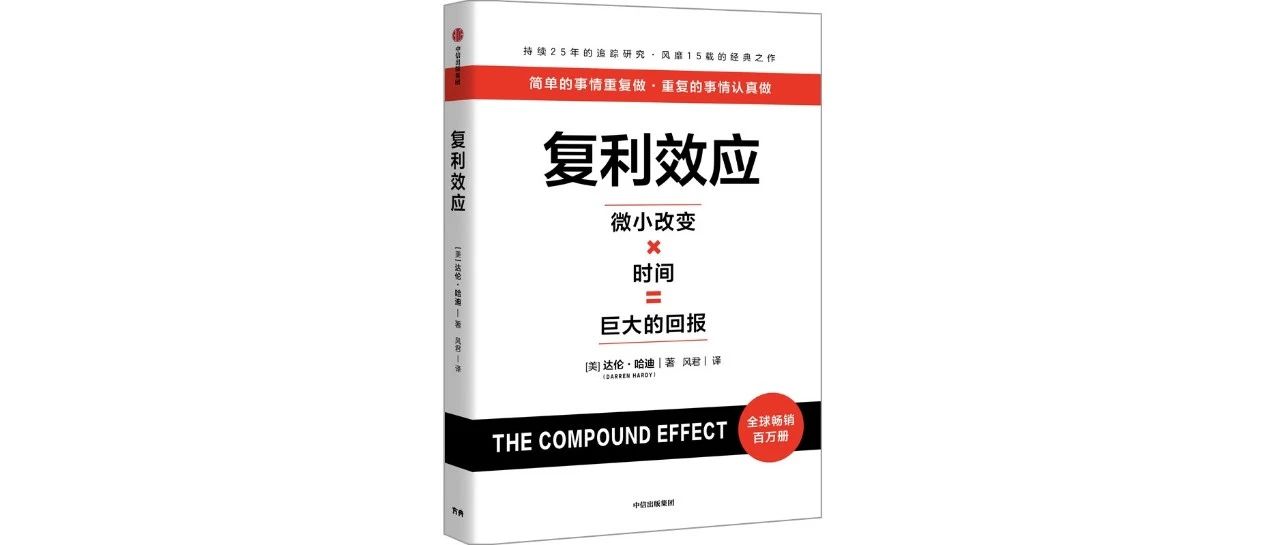
达伦·哈迪 《复利效应》作者 本文摘自中信出版社《复利效应》 你听过"稳扎稳打方能制胜"这句话吗?或者至少听过龟兔赛跑的故事吧?女士们,先生们,我就是那只 乌龟。给我足够的时间,我几乎可以在任何时候、任何比赛中击败任何人。为什么?不是因为我最优 秀、最聪明或速度最快。我之所以会赢,是因为我已经养成了积极的习惯,而且在将这些习惯付诸实施 时做到了始终如一。 我是世界上最相信持之以恒的人。它是成功的终极因素, 我自己就是一个活生生 的例子,但对于那些努力奋斗的人来说,这也是最大的陷阱之一。大多数人不知道如何坚持下去,维持 良好习惯。但我知道,这要感谢我的父亲。从本质上讲,他是为我点燃"复利效应"力量的第一位教练。 在我 18 个月大的时候,我的父母就离异了,父亲以单亲爸爸的身份把我抚养长大。他并不是那种温柔 体贴的养育型父亲。他曾是一名大学橄榄球教练,总是鼓励我追求成功。 多亏了父亲,我每天早上 6 点钟都会被叫醒。不是被温柔地拍拍肩膀唤醒,甚至也不是因为闹铃声。我 每天早上都是被铁器重复敲击车库水泥地面的声音吵醒的,车库就在我卧室旁边。我每天就像睡在与施 工工地仅一墙之隔的地方。父亲在车库的墙上贴了一张巨大的标 ...

儿童节,送孩子这3份长长久久的礼物
银行螺丝钉· 2025-05-31 20:27
Core Viewpoint - The article emphasizes the importance of financial education for children, suggesting that parents can provide lifelong gifts by helping their children develop financial literacy, proper consumption habits, and planning for future education expenses [1][26]. Group 1: Financial Literacy - The first gift is to help children develop financial thinking by introducing them to financial concepts early on, which can benefit them throughout their lives [1][7]. - Recommended methods include reading financial education books together with children to instill the right money mindset [1][7]. - A suggested book list is provided to aid in this financial education [1]. Group 2: Consumption Awareness - The article stresses the need to improve children's consumption awareness, starting with saving money before investing [2][4]. - It highlights the challenge many face in resisting the temptation of immediate consumption due to easy access to credit [2][3]. - Parents are encouraged to teach children the value of saving and the benefits of investing over time [2][4]. Group 3: Asset Accumulation - The article suggests starting with money market funds to help children visualize asset accumulation, showing them how their savings can grow over time [5][8]. - It provides an example of how saving can lead to purchasing more toys in the future compared to immediate spending [6]. Group 4: Insurance and Protection - The second gift involves securing proper insurance for children, including basic health insurance and additional commercial insurance for comprehensive coverage [9][10]. - It emphasizes the importance of parents also having their own insurance to ensure they can protect their children effectively [11]. Group 5: Education Fund Planning - The third gift is planning for children's education funds, which should be prepared early to ensure that educational expenses are covered regardless of future financial situations [11][12]. - Suggestions for investment vehicles include high-dividend funds that can provide regular cash flow for educational expenses [12][18]. Group 6: Cash Flow Management - The article introduces a cash flow management product called "Monthly Salary Treasure," which offers regular cash flow while maintaining a balanced investment in stocks and bonds [17][22]. - It explains that this product can provide stable cash flow regardless of market fluctuations, making it suitable for long-term financial planning [22][24].

资产配置的压舱石与财富防火墙 普通人如何选择分红险
凤凰网财经· 2025-05-29 11:45
Core Viewpoint - The article discusses the impact of recent global tariff issues on capital markets and emphasizes the importance of asset allocation strategies for individuals and families to achieve stable wealth growth in uncertain environments [1] Group 1: Role of Insurance in Asset Allocation - Hong Kong serves as a unique hub for global asset allocation, particularly in the insurance sector, due to its diverse financial products and effective regulatory framework [2] - Savings-type insurance (participating insurance) in Hong Kong offers risk protection and can counter currency fluctuations, making it an attractive investment option [2] - Insurance should primarily be viewed as a protective measure rather than an investment vehicle, with a focus on its risk management capabilities [2][3] Group 2: Unique Advantages of Participating Insurance - Participating insurance provides long-term benefits and can generate compound interest, allowing for global asset allocation and risk diversification [4] - The product can help address future financial needs such as retirement and education funding, and it can also facilitate wealth transfer [4] Group 3: Suitability of Participating Insurance - Participating insurance is best suited for long-term investors, with a recommendation to hold the policy for at least 15 years to avoid significant losses [5] - Individuals should plan their insurance allocations based on personal circumstances, with an emphasis on early planning for retirement and financial security [5] Group 4: Choosing Participating Insurance - Selecting a reputable insurance provider is crucial, as different companies have varying methods for calculating dividends and assessing product performance [6][7] - Historical stability and experience of the insurance company are important factors, as demonstrated by Prudential's resilience through financial crises [7]

“一万小时理论”有用吗?
3 6 Ke· 2025-05-25 07:59
Core Insights - The article emphasizes that linear effort does not guarantee linear returns, and that success is more about the right choices, talent, and passion rather than just time spent [1][2][5] - It highlights the concept of superlinear returns in entrepreneurship, investment, and technology, where a few winners dominate the market due to exponential growth and threshold effects [6][8][15] Group 1: Key Concepts - Warren Buffett critiques the "10,000-hour rule," suggesting that time investment alone is insufficient for success; the right direction and personal interest are crucial [2][5] - The article discusses the difference between linear returns (simple accumulation of effort) and compound returns (exponential growth), emphasizing that without inherent talent, repeated effort may not lead to significant breakthroughs [5][6] - Paul Graham's insights on superlinear returns reveal that performance is not always proportional to effort, as seen in competitive markets where only the best products succeed [6][8][10] Group 2: Strategies for Nonlinear Success - The article outlines strategies for achieving nonlinear success through linear efforts, such as deliberate practice, establishing positive feedback loops, and leveraging technology [29][30][34] - It provides examples like Google Maps and Amazon, where initial linear efforts led to significant competitive advantages once critical thresholds were reached [19][24] - The importance of identifying strategic inflection points and high-leverage activities is emphasized, as these can lead to exponential growth opportunities [33][34] Group 3: Implications for Individuals and Companies - Individuals are encouraged to focus on areas of passion and expertise while seeking opportunities that can yield exponential returns [25][37] - The article warns against the dangers of blind linear effort without strategic thinking, suggesting that success in the modern economy requires a mindset that seeks to integrate efforts into systems with nonlinear potential [39][36]