工业生产者出厂价格指数(PPI)

Search documents
直通部委|气象局启动重大气象灾害四级应急响应 11月份CPI同比上涨0.7%
Xin Lang Cai Jing· 2025-12-10 10:21
Group 1 - The Central Meteorological Administration has initiated a Level 4 emergency response due to significant meteorological disasters, including cold waves, strong winds, and snowstorms, affecting large areas of the country from December 10 to 13, with temperature drops of 6-10°C and localized drops reaching 14-16°C [1] - In November, the Consumer Price Index (CPI) rose by 0.7% year-on-year, with food prices reversing from a decline to an increase, particularly fresh vegetable prices which rose by 14.5% after a previous decline of 7.3% [1] - The Ministry of Finance issued 7 billion RMB in bonds in Hong Kong, with a subscription rate of 5.22 times, indicating strong investor interest [2] Group 2 - The National Market Supervision Administration has established 88 key laboratories and 42 innovation centers across 29 provinces, focusing on various safety and quality standards, enhancing the regulatory framework for market supervision [3] - The Ministry of Education released the "Excellence Engineer Education Certification Standards," aiming to shift the focus from a "paper-only" approach to practical engineering projects as criteria for graduation and degree conferral [4][5] - The All-China Federation of Trade Unions has launched a winter action plan to address wage arrears, focusing on protecting the rights of migrant workers and establishing mechanisms for monitoring and resolving wage disputes [6] - The Taiwan Affairs Office indicated that Taiwan's GDP is expected to be lower than that of many provinces in mainland China, highlighting the economic disparity and growth rates between the two regions [6]
我国2025年11月份CPI同比涨幅扩大 核心CPI继续上涨
Yang Shi Xin Wen· 2025-12-10 07:47
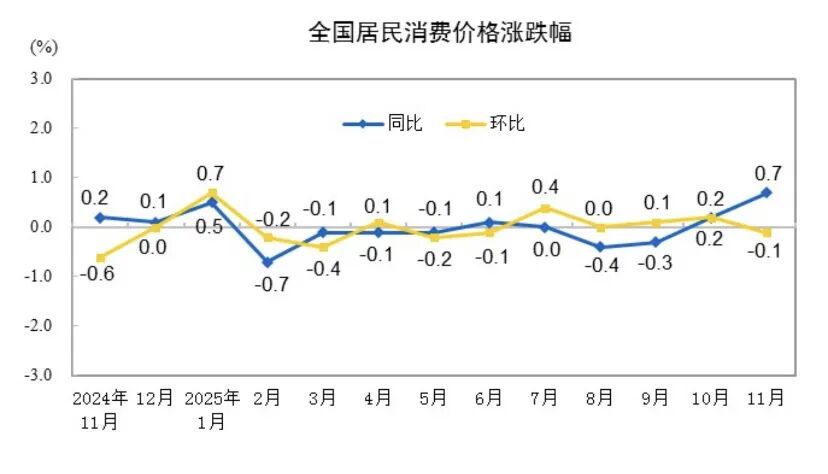
Core Insights - In November, consumer spending continued to recover, with the Consumer Price Index (CPI) slightly decreasing by 0.1% month-on-month but increasing by 0.7% year-on-year, marking the highest year-on-year increase since March 2024 [1][2] - The core CPI, excluding food and energy prices, rose by 1.2% year-on-year, maintaining above 1% for three consecutive months [2] CPI Analysis - The year-on-year increase in CPI was primarily driven by a shift in food prices from decline to increase, with food prices rising by 0.2% after a previous decline of 2.9% [2] - Fresh vegetable prices saw a significant turnaround, increasing by 14.5% after a 7.3% decline, contributing approximately 0.49 percentage points to the CPI year-on-year [2] - Energy prices decreased by 3.4%, with gasoline prices dropping by 7.5% [2] - Service prices experienced a seasonal decline of 0.4%, impacting the month-on-month CPI decrease [4] PPI Analysis - The Producer Price Index (PPI) increased by 0.1% month-on-month, marking two consecutive months of growth, while the year-on-year decline expanded to 2.2% [5][6] - Seasonal demand increases in certain domestic industries, such as coal and gas, contributed to the month-on-month price increases [5] - The international price trends for metals and oil led to a mixed impact on domestic prices, with some sectors experiencing price increases while others saw declines [6] - New industries, such as new materials and green technology, are driving price increases in related sectors, with specific categories like external storage devices seeing a year-on-year price increase of 13.9% [6][7]
2025年11月份CPI同比涨幅扩大核心CPI继续上涨
Guo Jia Tong Ji Ju· 2025-12-10 06:02
Group 1: CPI Analysis - The Consumer Price Index (CPI) increased by 0.7% year-on-year, marking the highest growth since March 2024, driven primarily by a reversal in food prices from a decline to an increase [2] - Food prices shifted from a decrease of 2.9% to an increase of 0.2%, contributing positively to the CPI by approximately 0.04 percentage points [2] - Fresh vegetable prices rose by 14.5%, marking the first increase after nine consecutive months of decline, significantly impacting the CPI [2] - Core CPI, excluding food and energy, rose by 1.2%, maintaining above 1% for three consecutive months [2][3] Group 2: PPI Analysis - The Producer Price Index (PPI) increased by 0.1% month-on-month, marking the second consecutive month of growth [4] - Seasonal demand increases in certain domestic industries, such as coal and gas, contributed to the rise in PPI [4] - Year-on-year, PPI decreased by 2.2%, with the decline slightly widening due to high comparison bases from the previous year [5] - The prices in key industries like coal mining and photovoltaic equipment manufacturing showed a narrowing of year-on-year declines, indicating improved market conditions [5]
重磅经济数据发布!
证券时报· 2025-12-10 04:35
Group 1 - The core viewpoint of the article highlights the continuous recovery of consumer spending in November, with the Consumer Price Index (CPI) showing a year-on-year increase of 0.7%, marking the highest growth since March 2024 [1][3] - The core CPI, excluding food and energy prices, rose by 1.2% year-on-year, maintaining a growth rate above 1% for three consecutive months [5][6] - The Producer Price Index (PPI) experienced a year-on-year decline of 2.2%, with the drop rate expanding by 0.1 percentage points compared to the previous month, primarily due to a high comparison base from the previous year [9][10] Group 2 - In November, food prices increased by 0.5%, exceeding seasonal levels by 0.9 percentage points, largely driven by a significant rise in fresh vegetable prices, which turned from a 7.3% decline to a 14.5% increase [4][3] - Fresh vegetable prices rose by 7.2% month-on-month, significantly higher than the average seasonal decline of 3.2%, contributing approximately 0.17 percentage points to the month-on-month CPI increase [2][3] - The increase in food prices was complemented by rising prices in other categories, such as household appliances and clothing, which rose by 4.9% and 2.0% respectively [7] Group 3 - The article notes that the comprehensive rectification of "involution-style" competition has shown results, with price declines in industries such as coal mining, photovoltaic equipment manufacturing, and lithium-ion battery manufacturing narrowing for several consecutive months [1][10] - Emerging industries are experiencing rapid development, leading to price increases in related sectors, such as a 13.9% rise in external storage devices and components, and a 3.8% increase in graphite and carbon products manufacturing [11] - The effective release of consumer potential is reflected in price recoveries in various industries, including a 20.6% increase in the manufacturing of arts and crafts and ceremonial goods [11]


11月金饰品价格同比增长58.4%!
Jin Rong Shi Bao· 2025-12-10 04:25
Group 1 - The core CPI excluding food and energy prices rose by 1.2% year-on-year in November, marking the third consecutive month above 1% [5] - The overall CPI in November showed a slight month-on-month decrease of 0.1% but a year-on-year increase of 0.7%, the highest since March 2024 [3][4] - The increase in CPI was primarily driven by a turnaround in food prices, particularly fresh vegetables, which rose by 14.5% after a previous decline [3][5] Group 2 - The PPI in November decreased by 2.2% year-on-year, while the industrial producer purchase prices also fell by 2.5% [6] - Month-on-month, the PPI increased by 0.1%, marking the second consecutive month of growth, influenced by seasonal demand increases in certain industries [8] - The average PPI from January to November showed a decline of 2.7% compared to the same period last year, indicating ongoing macroeconomic policy effects [6][8]
1.2%↑!创2024年3月以来新高!
券商中国· 2025-12-10 03:32
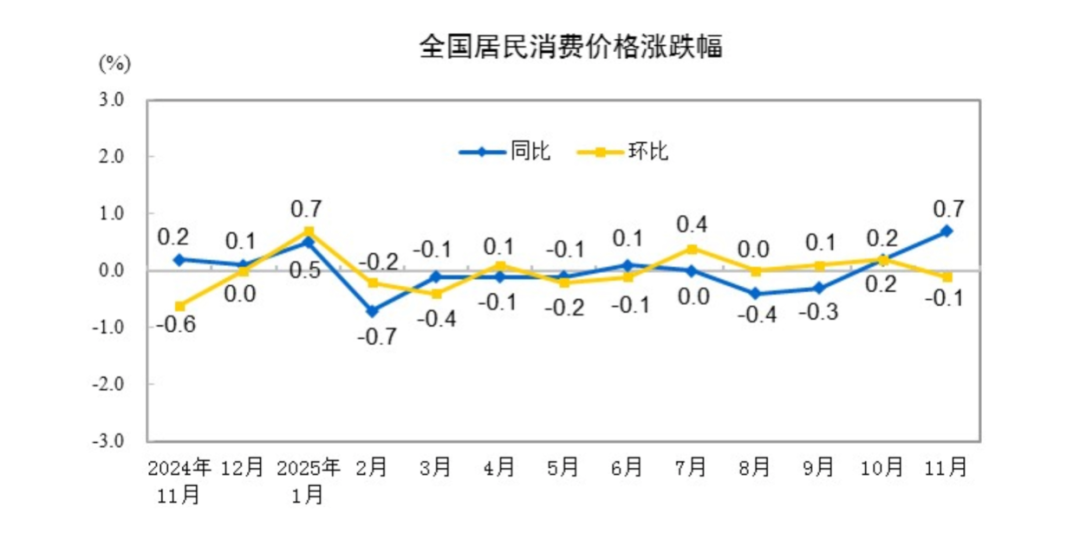
Core Viewpoint - In November, consumer spending continued to recover, and the effectiveness of comprehensive rectification of "involution-style" competition became evident, with notable changes in price trends across various industries [2][7]. Consumer Price Index (CPI) - In November, the CPI increased by 0.7% year-on-year, with the growth rate expanding by 0.5 percentage points compared to the previous month, marking the highest increase since March 2024 [3][4]. - Food prices rose by 0.2% year-on-year, while non-food prices increased by 0.8%. Fresh vegetable prices turned from a decline of 7.3% last month to an increase of 14.5%, contributing approximately 0.49 percentage points to the CPI [3][4]. - Month-on-month, fresh vegetable prices rose significantly by 7.2%, far exceeding the average seasonal decline of 3.2%, impacting the CPI by about 0.17 percentage points [3]. Core CPI - The core CPI, excluding food and energy, rose by 1.2% year-on-year, maintaining a growth rate above 1% for three consecutive months [5]. - Prices for services and industrial consumer goods, excluding energy, increased by 0.7% and 2.1%, respectively, contributing approximately 0.29 and 0.53 percentage points to the CPI [5]. Producer Price Index (PPI) - The PPI decreased by 2.2% year-on-year, with the decline rate expanding by 0.1 percentage points compared to the previous month, primarily due to a high comparison base from the previous year [6]. - The PPI showed a month-on-month increase for two consecutive months, attributed to seasonal demand increases in certain domestic industries [8]. Industry Price Trends - The comprehensive rectification of "involution-style" competition has led to a narrowing of price declines in related industries, such as coal mining, photovoltaic equipment manufacturing, and lithium-ion battery manufacturing [7]. - Emerging industries are rapidly developing, driving price increases in sectors like external storage devices (up 13.9% year-on-year) and integrated circuit manufacturing (up 1.7%) [7]. - Consumer potential is being effectively released, reflected in price increases in sectors such as craft art and ceremonial supplies (up 20.6% year-on-year) and sports ball manufacturing (up 4.3%) [7].
去年3月以来最高!国家统计局发布重要数据
Zhong Guo Zheng Quan Bao· 2025-12-10 02:29
Core Insights - In November, the Consumer Price Index (CPI) increased by 0.7% year-on-year, marking the highest growth since March 2024, primarily driven by a reversal in food prices from decline to increase [2][4] - The Producer Price Index (PPI) rose by 0.1% month-on-month, marking the second consecutive month of increase, while year-on-year, it decreased by 2.2% [5][8] CPI Analysis - The CPI's year-on-year increase of 0.7% reflects a 0.5 percentage point rise from the previous month, largely due to food prices shifting from a 2.9% decline to a 0.2% increase [2][4] - Fresh vegetable prices saw a significant turnaround, increasing by 14.5% year-on-year after nine months of decline, while pork and poultry prices decreased by 15.0% and 0.6%, respectively, with the rate of decline narrowing [4] - Core CPI, excluding food and energy, rose by 1.2% year-on-year, maintaining above 1% for three consecutive months [4] PPI Analysis - The PPI's month-on-month increase of 0.1% is attributed to seasonal demand increases in certain domestic industries, such as coal and gas, with coal mining prices rising by 4.1% [5][7] - Year-on-year, the PPI's decline of 2.2% is influenced by high comparison bases from the previous year, with various macroeconomic policies showing positive effects on prices [8] - Prices in emerging industries, such as new materials and intelligent manufacturing, have increased, with specific categories like external storage devices rising by 13.9% year-on-year [8]
国家统计局:11月CPI同比上涨0.7%,PPI环比上涨0.1%
Jing Ji Guan Cha Wang· 2025-12-10 02:13
经济观察网 据国家统计局数据,11月份,居民消费持续恢复,居民消费价格指数(CPI)环比略降 0.1%,同比上涨0.7%,扣除食品和能源价格的核心CPI同比上涨1.2%。受国内部分行业供需结构优化、 国际大宗商品价格传导等因素影响,工业生产者出厂价格指数(PPI)环比上涨0.1%,同比下降2.2%。 ...
刚刚公布!同比上涨0.7%
Zhong Guo Ji Jin Bao· 2025-12-10 02:13
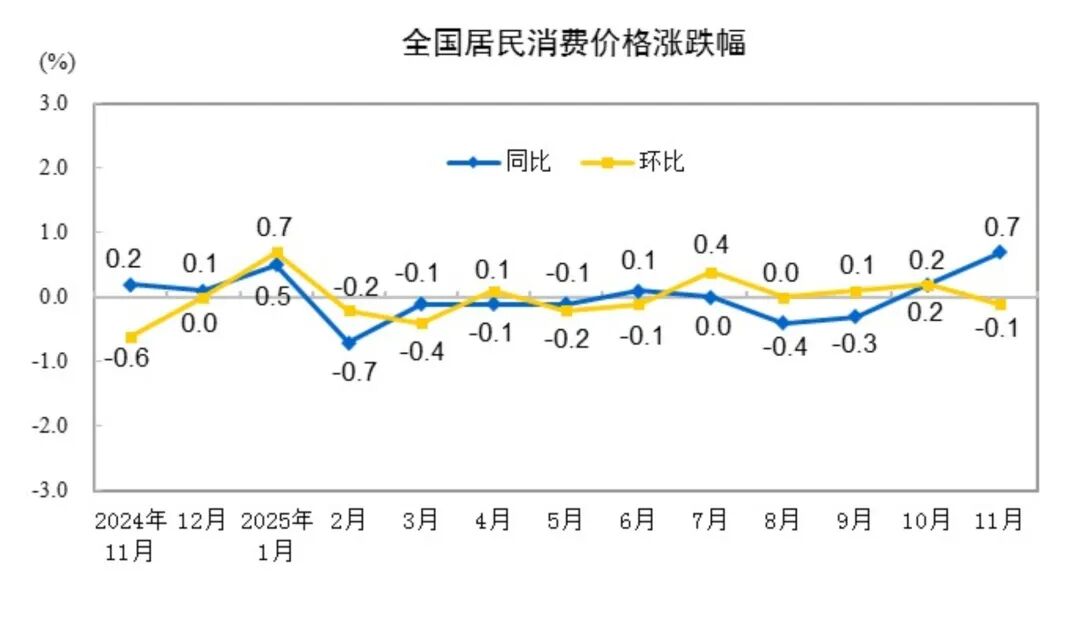
国家统计局数据显示,2025年11月份,全国居民消费价格同比上涨0.7%。其中,城市上涨0.7%,农村上涨0.4%;食品价格上涨0.2%,非食品价格上涨 0.8%;消费品价格上涨0.6%,服务价格上涨0.7%。1—11月平均,全国居民消费价格与上年同期持平。 11月份,受国内部分行业供需结构优化、国际大宗商品价格传导等因素影响,工业生产者出厂价格指数(PPI)环比上涨0.1%,同比下降2.2%。 国家统计局城市司首席统计师董莉娟解读2025年11月份CPI和PPI数据。 2025年11月份居民消费价格同比上涨0.7% 2025年11月份,全国居民消费价格同比上涨0.7%。其中,城市上涨0.7%,农村上涨0.4%;食品价格上涨0.2%,非食品价格上涨0.8%;消费品价格上涨 0.6%,服务价格上涨0.7%。1—11月平均,全国居民消费价格与上年同期持平。 11月份,全国居民消费价格环比下降0.1%。其中,城市下降0.1%,农村持平;食品价格上涨0.5%,非食品价格下降0.2%;消费品价格上涨0.1%,服务价 格下降0.4%。 2025年11月份工业生产者出厂价格环比继续上涨 2025年11月份,全国工业生产者出 ...
刚刚公布!同比上涨0.7%
中国基金报· 2025-12-10 01:59
来源:国家统计局 国家统计局数据显示, 2025年11月份,全国居民消费价格同比上涨0.7%。 其中,城市上涨 0.7%,农村上涨0.4%;食品价格上涨0.2%,非食品价格上涨0.8%;消费品价格上涨 0.6%,服务价格上涨0.7%。1—11月平均,全国居民消费价格与上年同期持平。 11月份,受国内部分行业供需结构优化、国际大宗商品价格传导等因素影响, 工业生产者出 厂价格指数(PPI)环比上涨0.1%,同比下降2.2%。 国家统计局城市司首席统计师董莉娟解读2025年11月份CPI和PPI数据。 2025年11月份居民消费价格同比上涨0.7% 2025年11月份,全国居民消费价格同比上涨0.7%。其中,城市上涨0.7%,农村上涨0.4%; 食品价格上涨0.2%,非食品价格上涨0.8%;消费品价格上涨0.6%,服务价格上涨0.7%。1‐ —11月平均,全国居民消费价格与上年同期持平。 11月份,全国居民消费价格环比下降0.1%。其中,城市下降0.1%,农村持平;食品价格上 涨0.5%,非食品价格下降0.2%;消费品价格上涨0.1%,服务价格下降0.4%。 一、各类商品及服务价格同比变动情况 11月份,食品烟酒 ...