
综合整治‘内卷式’竞争

Search documents
11月份核心CPI同比上涨1.2%!创2024年3月以来新高
Zheng Quan Shi Bao Wang· 2025-12-15 05:16
Group 1 - In November, the Consumer Price Index (CPI) increased by 0.7% year-on-year, with the growth rate expanding by 0.5 percentage points compared to the previous month, marking the highest increase since March 2024 [2] - The core CPI, excluding food and energy prices, rose by 1.2% year-on-year, maintaining a growth rate above 1% for three consecutive months [3] - The Producer Price Index (PPI) decreased by 2.2% year-on-year, with the decline rate widening by 0.1 percentage points compared to the previous month, influenced by a high comparison base from the previous year [4] Group 2 - Food prices contributed to the CPI increase, with fresh vegetable prices rising by 14.5% year-on-year after a nine-month decline, significantly impacting the CPI [2] - The prices of coal mining and washing, photovoltaic equipment manufacturing, and lithium-ion battery manufacturing have shown a narrowing decline in year-on-year prices, indicating the effectiveness of measures against "involution" competition [4][5] - Emerging industries are driving price increases in related sectors, with prices for external storage devices and components rising by 13.9% year-on-year, and integrated circuit manufacturing prices increasing by 1.7% [4][5]
国家发改委:提振消费要出实招出新招,综合整治“内卷式”竞争和培育发展新动能
Hua Er Jie Jian Wen· 2025-12-13 11:41
Core Viewpoint - The National Development and Reform Work Conference emphasized the need for practical and innovative measures to boost consumption, focusing on optimizing policies and enhancing service consumption [1] Group 1: Consumption Enhancement - The conference highlighted the importance of implementing a consumption upgrade policy, including the promotion of trade-in programs for consumer goods [1] - There is a call to accelerate the removal of unreasonable restrictions in the consumption sector to improve supply quality [1] Group 2: Industry Development - The meeting discussed the need to comprehensively address "involution" competition and foster new development dynamics [1] - It emphasized the importance of cultivating emerging and future industries, particularly through the "Artificial Intelligence +" initiative [1] - The conference also mentioned the need to enhance the low-altitude economy and promote high-quality development in the digital economy [1] Group 3: Reform and Market Integration - The conference proposed the formulation of a national unified market construction regulation to facilitate integrated reforms in access, scenarios, and factors [1] - There is a focus on improving investment attraction and addressing key issues in bidding and tendering processes to eliminate various barriers [1] Group 4: Support for Private Economy - The meeting called for greater efforts to develop the private economy and promote the establishment of supporting systems for the Private Economy Promotion Law [1]
物价水平保持企稳态势(锐财经)
Ren Min Ri Bao Hai Wai Ban· 2025-12-11 22:56
Group 1 - The Consumer Price Index (CPI) increased by 0.7% year-on-year in November, the highest since March 2024, driven primarily by a reversal in food prices from a decline to an increase [2] - Core CPI, excluding food and energy, rose by 1.2% year-on-year, maintaining above 1% for three consecutive months [2] - The increase in CPI was influenced by seasonal price rises in services and industrial consumer goods, with household appliances and clothing prices rising by 4.9% and 2.0% respectively [2][4] Group 2 - The Producer Price Index (PPI) saw a month-on-month increase of 0.1% but a year-on-year decrease of 2.2%, with the decline attributed to high comparison bases from the previous year [4][6] - Seasonal demand increases in certain domestic industries, such as coal and gas, contributed to the month-on-month price rise in PPI [4] - New industries, including new materials and intelligent technology, are driving price increases in related sectors, with prices for external storage devices rising by 13.9% year-on-year [6] Group 3 - To stabilize price levels and promote reasonable price recovery, there is a need to continue expanding domestic demand and optimizing market competition [7] - The upcoming year-end and early-year period is seen as a crucial time for consumer spending, with plans for various promotional activities to enhance consumption [7] - Looking ahead to 2026, policies aimed at expanding domestic demand are expected to support a moderate recovery in prices, particularly in service sectors such as dining, accommodation, and health services [7]

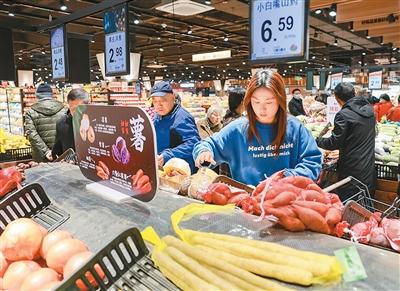
11月份CPI同比上涨0.7% 物价水平进一步企稳
Zheng Quan Ri Bao· 2025-12-10 16:25
Consumer Recovery - In November, the Consumer Price Index (CPI) decreased by 0.1% month-on-month but increased by 0.7% year-on-year, marking the highest growth since March 2024, indicating a continuous recovery in consumer spending [1][2] - The year-on-year increase in CPI was primarily driven by a shift in food prices from decline to growth, with food prices rising by 0.2% after a 2.9% drop in October [2][3] - Fresh vegetable prices saw a significant turnaround, increasing by 14.5% after a 7.3% decline in October, contributing approximately 0.49 percentage points to the CPI year-on-year [2][3] Core CPI and Industrial Prices - The core CPI, excluding food and energy, rose by 1.2% year-on-year, maintaining a growth rate above 1% for three consecutive months [3] - Prices for services and industrial consumer goods, excluding energy, increased by 0.7% and 2.1%, respectively, contributing approximately 0.29 and 0.53 percentage points to the CPI year-on-year [3] - The expansion of domestic demand policies has positively impacted prices, with household appliances and clothing prices rising by 4.9% and 2.0%, respectively [3] Producer Price Index (PPI) - The Producer Price Index (PPI) increased by 0.1% month-on-month in November, marking two consecutive months of growth, while the year-on-year decline was 2.2%, slightly widening from October [4][5] - The improvement in PPI is attributed to the optimization of supply and demand structures in certain domestic industries and the transmission of international commodity prices [4][5] Policy Impact and Market Dynamics - Continuous macroeconomic policies are showing positive effects, with a narrowing of price declines in key industries due to the ongoing governance of "involution" competition [5][6] - Emerging industries are driving price increases, with significant year-on-year price rises in sectors such as external storage devices (up 13.9%) and graphite products (up 3.8%) [5][6] - Consumer demand is being revitalized, leading to price increases in various manufacturing sectors, including a 20.6% rise in the price of arts and crafts products [6]
我国2025年11月份CPI同比涨幅扩大 核心CPI继续上涨
Yang Shi Xin Wen· 2025-12-10 07:47
Core Insights - In November, consumer spending continued to recover, with the Consumer Price Index (CPI) slightly decreasing by 0.1% month-on-month but increasing by 0.7% year-on-year, marking the highest year-on-year increase since March 2024 [1][2] - The core CPI, excluding food and energy prices, rose by 1.2% year-on-year, maintaining above 1% for three consecutive months [2] CPI Analysis - The year-on-year increase in CPI was primarily driven by a shift in food prices from decline to increase, with food prices rising by 0.2% after a previous decline of 2.9% [2] - Fresh vegetable prices saw a significant turnaround, increasing by 14.5% after a 7.3% decline, contributing approximately 0.49 percentage points to the CPI year-on-year [2] - Energy prices decreased by 3.4%, with gasoline prices dropping by 7.5% [2] - Service prices experienced a seasonal decline of 0.4%, impacting the month-on-month CPI decrease [4] PPI Analysis - The Producer Price Index (PPI) increased by 0.1% month-on-month, marking two consecutive months of growth, while the year-on-year decline expanded to 2.2% [5][6] - Seasonal demand increases in certain domestic industries, such as coal and gas, contributed to the month-on-month price increases [5] - The international price trends for metals and oil led to a mixed impact on domestic prices, with some sectors experiencing price increases while others saw declines [6] - New industries, such as new materials and green technology, are driving price increases in related sectors, with specific categories like external storage devices seeing a year-on-year price increase of 13.9% [6][7]
11月CPI同比涨幅扩大,食品价格是主因
Zheng Quan Shi Bao Wang· 2025-12-10 05:18
Group 1: Consumer Price Index (CPI) Trends - In November, the Consumer Price Index (CPI) increased by 0.7% year-on-year, with the growth rate expanding by 0.5 percentage points compared to the previous month, marking the highest increase since March 2024 [2] - The rise in CPI was primarily driven by food prices, which shifted from a decline to an increase, particularly fresh vegetable prices, which rose by 14.5% after a previous decline of 7.3% [2][3] - Core CPI, excluding food and energy, rose by 1.2% year-on-year, maintaining a growth rate above 1% for three consecutive months [4] Group 2: Producer Price Index (PPI) Trends - The Producer Price Index (PPI) decreased by 2.2% year-on-year in November, with the decline rate expanding by 0.1 percentage points compared to the previous month, ending a trend of narrowing declines [5] - The narrowing of price declines in certain industries, such as coal mining and washing, photovoltaic equipment manufacturing, and lithium-ion battery manufacturing, indicates the effectiveness of policies addressing "involution" competition [5][6] - Emerging industries are driving price increases in related sectors, with prices for external storage devices and components rising by 13.9% year-on-year [6]

重磅经济数据发布!
证券时报· 2025-12-10 04:35
Group 1 - The core viewpoint of the article highlights the continuous recovery of consumer spending in November, with the Consumer Price Index (CPI) showing a year-on-year increase of 0.7%, marking the highest growth since March 2024 [1][3] - The core CPI, excluding food and energy prices, rose by 1.2% year-on-year, maintaining a growth rate above 1% for three consecutive months [5][6] - The Producer Price Index (PPI) experienced a year-on-year decline of 2.2%, with the drop rate expanding by 0.1 percentage points compared to the previous month, primarily due to a high comparison base from the previous year [9][10] Group 2 - In November, food prices increased by 0.5%, exceeding seasonal levels by 0.9 percentage points, largely driven by a significant rise in fresh vegetable prices, which turned from a 7.3% decline to a 14.5% increase [4][3] - Fresh vegetable prices rose by 7.2% month-on-month, significantly higher than the average seasonal decline of 3.2%, contributing approximately 0.17 percentage points to the month-on-month CPI increase [2][3] - The increase in food prices was complemented by rising prices in other categories, such as household appliances and clothing, which rose by 4.9% and 2.0% respectively [7] Group 3 - The article notes that the comprehensive rectification of "involution-style" competition has shown results, with price declines in industries such as coal mining, photovoltaic equipment manufacturing, and lithium-ion battery manufacturing narrowing for several consecutive months [1][10] - Emerging industries are experiencing rapid development, leading to price increases in related sectors, such as a 13.9% rise in external storage devices and components, and a 3.8% increase in graphite and carbon products manufacturing [11] - The effective release of consumer potential is reflected in price recoveries in various industries, including a 20.6% increase in the manufacturing of arts and crafts and ceremonial goods [11]

1.2%↑!创2024年3月以来新高!
Zheng Quan Shi Bao Wang· 2025-12-10 03:53
Group 1: Consumer Price Index (CPI) Trends - In November, the Consumer Price Index (CPI) increased by 0.7% year-on-year, with the growth rate expanding by 0.5 percentage points compared to the previous month, marking the highest increase since March 2024 [2] - Food prices contributed to the CPI increase, with fresh vegetable prices rising by 14.5% after a decline of 7.3% in the previous month, significantly impacting the CPI [2] - The core CPI, excluding food and energy, rose by 1.2% year-on-year, maintaining a growth rate above 1% for three consecutive months [3] Group 2: Producer Price Index (PPI) Trends - The Producer Price Index (PPI) decreased by 2.2% year-on-year in November, with the decline rate expanding by 0.1 percentage points compared to the previous month, influenced by a high comparison base from the previous year [4] - The PPI showed signs of improvement in specific industries, with price declines narrowing in coal mining, photovoltaic equipment manufacturing, and lithium-ion battery manufacturing [4][5] - Emerging industries are driving price increases, with external storage devices and components rising by 13.9% year-on-year, and other sectors like integrated circuit manufacturing and carbon product manufacturing also showing positive trends [5]
山西“十五五”规划建议:落实建设全国统一大市场要求 综合整治“内卷式”竞争
Mei Ri Jing Ji Xin Wen· 2025-12-05 02:05
Group 1 - The core viewpoint of the article emphasizes the need for the implementation of a unified national market in Shanxi Province, focusing on enhancing market access and regulatory frameworks [1] - The proposal includes the establishment of a market access negative list system and a market access efficiency evaluation index system to streamline market entry [1] - It highlights the importance of strengthening property rights protection and improving information disclosure, social credit, mergers and acquisitions, and market exit systems [1] Group 2 - The initiative aims to enhance fair competition by eliminating barriers in areas such as resource acquisition, qualification recognition, bidding, and government procurement [1] - It seeks to address "involution" competition through comprehensive reforms and strengthen unified market supervision and enforcement [1] - The plan includes the development of high-standard market connectivity and logistics cost reduction measures to support the unified market construction [1]
强数据压制降息,美元短线偏强
Hua Tai Qi Huo· 2025-07-18 11:32
Report Industry Investment Rating No information provided in the content. Core Viewpoints of the Report - In the short - term, the US dollar may remain strong supported by high inflation and employment resilience, but in the medium - term, it is restricted by fiscal pressure and differences in the pace of interest rate cuts. The RMB fundamentals are still mild, but with narrowing interest rate spreads, stable settlement, and eased external expectations, the short - term exchange rate has a foundation for phased stability [57]. Summary by Related Catalogs 1. Quantity - Price and Policy Signals Quantity - Price Observation - The implied volatility curve of the 3 - month USD/CNY option shows an appreciation trend of the RMB, with the put - end volatility higher than the call - end. The volatility of the USD/CNY option has declined, indicating that the market's expectation of future volatility of the USD/CNY has weakened [4]. - The term structure shows the changes in the premium and discount of the Singapore Exchange's USD/CNY futures, bank forward premium and discount, and the US - China interest rate spread over different time periods [8]. Policy Observation - The policy counter - cyclical factor has not been activated and shows a fluctuating trend. The three - month CNH HIBOR - SHIBOR spread fluctuates [10]. - Based on CFTC data (as of July 8), the report presents the total positions and speculative net long positions of various currency pairs such as GBP/USD, CAD/USD, EUR/USD, and JPY/USD [14][17]. 2. Fundamentals and Views Macro - Economic Situation - There are differences in the pricing of interest rate cuts between the US and Europe. The TGA account had a balance of $311 billion on July 9, and the Fed's reverse repurchase balance was $227.2 billion. Changing the Fed chairman is unlikely to significantly change the US monetary policy direction in the short term [23]. - The US economic downward risk is rising. Employment data is mixed, inflation is waiting for June CPI data, and the economy is showing marginal decline with falling fiscal expenditure, differentiated June economic sentiment, and pressured May retail sales [25]. Tariff Events - In the trade negotiations with the US among 17 key countries and regions, different situations are presented. For example, the UK - US agreement is in effect, the China - US is accelerating the implementation of the London framework results, the India - US is close to reaching a temporary trade agreement, etc. Trump extended the grace period for the equal - tariff to August 1, and the equal - tariff 2.0 phase has officially started, increasing global trade uncertainty [26]. The "Great Beautiful Act" in the US - The "Great Beautiful Act" became effective on July 4. It includes measures such as corporate and individual tax cuts, reduction of clean - energy subsidies, medical assistance, and the supplementary nutrition assistance program, and an increase in the debt ceiling. However, it may lead to problems such as fiscal front - loading, deterioration of income and welfare distribution, and increased inflation [30][32]. China's Economic Situation - China's economic structure is differentiated. In June, the pressure increased, with the growth rates of investment sub - items declining and retail sales also under pressure. June's export data exceeded expectations, with financial data improving, and the RMB showing resilience in the face of trade policy uncertainties [33][42]. Comprehensive Rectification of "Involution - style" Competition - The government is promoting the in - depth construction of a unified national market, including requirements such as "five unifications and one opening". Industries such as steel, refining, and photovoltaic are the focus of rectification, with measures including curbing low - price disorderly competition and promoting the exit of backward production capacity [44]. Trade Policy Uncertainty - In 2025, Sino - US tariff frictions have recurred. Although a suspension agreement was reached in May, there may be further fluctuations. The export structure has changed, with emerging markets supporting overall exports. The RMB has shown resilience and is less affected by tariff policies, and the marginal impact of trade uncertainty on the exchange rate will continue to weaken [53]. Overall Views - Currently, the economic expectation difference between China and the US is neutral, the interest rate spread is neutral, and trade policy uncertainty is also neutral. In the short - term, the US dollar may remain strong, while the RMB has a foundation for phased stability [57]. Risk Assessment - From the historical data from April 2022 to the present (nearly 3 years), the range of the premium and discount of the futures main contract is between - 1100 and 900 [58].