
服务实体经济

Search documents
广州期货深圳分公司正式开业 深耕大湾区服务实体经济
Qi Huo Ri Bao· 2025-12-31 06:58
广州期货深圳分公司的设立是深耕大湾区、服务实体经济的重要举措。未来,分公司将依托广期所创新 产品与深圳金融资源,重点为黄金珠宝、贵金属及科技等领域提供综合金融服务,助力大湾区高质量发 展。 随后,广东省黄金协会副会长叶永光在致辞中表示,广州期货落户深圳将为本地产业链发展注入新动 力。深圳麦金网络科技有限公司总经理谢江欢代表合作企业致辞,期待未来深化协同合作。深圳分公司 总经理黄锐洋则表示,将带领团队扎根深圳,为客户提供专业、稳健的金融服务。 期货日报网讯(记者 饶红浩 )2025年12月29日上午,广州期货股份有限公司深圳分公司在深圳罗湖水 贝正式开业。深圳市期货业协会副会长田西平、罗湖区东晓街道有关领导、深圳市黄金珠宝首饰行业协 会副会长林畅伟、广东省黄金协会副会长叶永光、广州期货副总经理孙文慧、总经理助理周健锐等多位 领导嘉宾出席开业仪式。 广州期货副总经理孙文慧在开业致辞中表示,深圳分公司的成立是公司产业化、机构化转型的关键一 步。她指出,深圳分公司选址罗湖水贝——这一全球黄金珠宝产业集聚区,正是为了紧抓广州期货交易 所上市铂、钯期货期权的机遇,深入产业一线,更直接地服务实体企业风险管理需求。她强调,深 ...
中国银行:当好服务实体经济的主力军 和维护金融稳定的“压舱石”
Jin Rong Shi Bao· 2025-12-31 02:02
Group 1 - The meeting emphasized the importance of state-owned financial enterprises in the overall work of the Party and the country, urging China Bank to clarify its positioning and responsibilities [1] - China Bank is tasked with enhancing its core functions and competitiveness, aiming to become a world-class enterprise while serving the real economy and maintaining financial stability [1] - The bank is expected to contribute to the construction of a modern industrial system, major infrastructure projects, and the green transformation of the real economy, aligning with national strategies for expanding domestic demand [1] Group 2 - The meeting highlighted the need to strengthen the Party's leadership and integrate it with corporate governance, ensuring that Party leadership is reflected in decision-making, execution, and supervision [2] - There is a commitment to uphold the centralized and unified leadership of the Party over financial work and to improve mechanisms for implementing major Party decisions [2] - The bank aims to foster a clean political environment by promoting strict governance and anti-corruption measures [2]

期货业服务实体经济走深走实
Zheng Quan Ri Bao· 2025-12-29 17:04
Core Insights - The key themes for the futures market in 2025 are "expansion" and "quality improvement," reflecting a strategic commitment to high-quality development and the effectiveness of actions taken [1] - The futures market is enhancing its functions in price discovery, risk management, and resource allocation, contributing to the real economy [1] Group 1: Market Expansion - The futures market has shown steady growth, with total funds and client equity continuing to rise, solidifying the foundation for high-quality development [1] - As of December 8, 2023, both the total funds in the futures market and client equity have surpassed 2 trillion yuan [1] - In the first 11 months of the year, the cumulative trading volume reached 8.117 billion contracts, with a total transaction value of 67.545 trillion yuan, representing year-on-year increases of 14.74% and 20.19% respectively [2] Group 2: Investor Structure and Risk Management - The investor structure in the futures market has been optimized, with significant growth in the equity of special institutional clients, particularly insurance institutions [3] - The number of futures options available for qualified foreign investors has expanded to 107, indicating enhanced international appeal [3] - The proportion of industry clients in the OTC derivatives trading business of futures companies continues to grow, with risk management tools becoming more diverse and tailored to meet specific needs [4] Group 3: Asset Management and Future Outlook - As of the end of Q3, the number of private asset management products by futures companies and their asset management subsidiaries reached 2,859, with a total scale of 390 billion yuan, showing slight growth from the previous year [4] - Futures asset management is focusing on core responsibilities, with many companies developing investment products in futures and derivatives, aiming to capture opportunities in commodity asset allocation [4] - The futures market is expected to continue deepening product supply, optimizing investor structure, and improving the institutional framework to enhance market quality and its ability to serve the real economy [4]
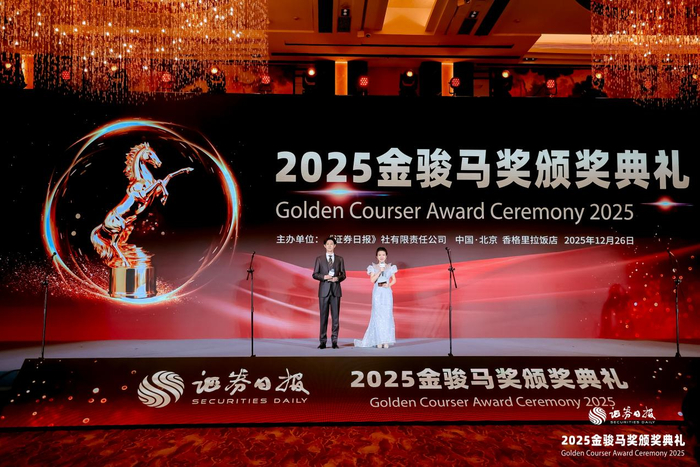
赋能实体载誉前行 山西证券获“金骏马服务实体卓越机构奖”
Zheng Quan Ri Bao Zhi Sheng· 2025-12-29 10:38
Core Viewpoint - Shanxi Securities has been awarded the "Golden Horse Award for Outstanding Service to the Real Economy," recognizing its significant contributions to national strategies, empowering the real economy, and assisting in industrial transformation and upgrading [1][3]. Group 1: Award Significance - The "Golden Horse Award" has been held since 2004, aiming to honor institutions that contribute to the healthy development of the capital market and empower the real economy, making it a highly credible and influential annual award in the industry [3]. - The award reflects Shanxi Securities' commitment to serving the local economy, promoting green transformation in resource-based regions, and providing comprehensive financial services throughout the enterprise lifecycle [3]. Group 2: Company Overview - Established in July 1988, Shanxi Securities is one of the first securities companies in China and is the only listed brokerage in Shanxi Province, having been listed on the Shenzhen Stock Exchange in November 2010 [3]. - The company has developed into a medium-sized brokerage with a prudent operating style, standardized management, and a complete range of business licenses, consistently adhering to its mission of "deepening in Shanxi and serving Shanxi" [3]. Group 3: Business Performance - Shanxi Securities has maintained its leading position in the investment banking sector within Shanxi, ranking first in the province for corporate bond underwriting for five consecutive years (2020-2024) and local government bond underwriting for three consecutive years (2022-2024) [5]. - The company has also led in provincial equity financing, with 33 New Third Board enterprises under its supervision, accounting for 45% of the total in Shanxi, and has recommended over 360 small and medium-sized enterprises to list on the Shanxi Equity Trading Center [5]. Group 4: Subsidiary Contributions - The investment banking subsidiary, Zhongde Securities, has consolidated its advantages in the Shanxi region while expanding into key areas, completing 4 refinancing projects, 82 bond projects, and 85 financial advisory projects in 2024 [7]. - Zhongde Securities has seen significant improvements in its core business rankings, with equity underwriting amount rising to 27th place (up 36 positions year-on-year) and bond underwriting amount rising to 24th place [7]. - The futures subsidiary, Green Dahuah, is focusing on the "insurance + futures" pilot in Luliang and expanding its business in Xinjiang, aiming to help the real economy mitigate market risks [7]. Group 5: International Expansion - The wholly-owned overseas subsidiary, Shanxi International, is enhancing its international business platform, focusing on investment banking, wealth management, and FICC, while optimizing its operational system and deepening collaboration with the parent company [8]. - The recent award serves as a testament to Shanxi Securities' commitment to its financial roots and its dedication to serving the real economy over the past 30 years [8].


中粮信托书写“十四五”高质量发展答卷
Jing Ji Guan Cha Wang· 2025-12-29 04:19
Core Viewpoint - The "14th Five-Year Plan" period is crucial for the financial industry in China to deepen supply-side structural reforms, return to its roots, and serve the real economy, with the trust industry playing a significant role in supporting the real economy while undergoing transformation pressures [1] Group 1: Business Transformation - The company adheres to the principle of "returning to the source" and has shifted its business model from traditional paths to asset management, asset services, and public welfare, focusing on three main tasks: serving the real economy, preventing financial risks, and deepening financial reforms [2] - By the end of 2025, the company's trust management asset scale is expected to reach 600 billion yuan, with over 120 billion yuan in asset management aligned with transformation directions and 2,400 family service trusts established [2] Group 2: Integration with the Real Economy - The company leverages its unique industry background from COFCO Group to integrate trust services with real industry needs, exemplified by projects like "Sweet Loan" and "Silage Loan" that support agricultural financing [3] - The company has served the real economy with a cumulative scale of nearly 100 billion yuan over five years, enhancing asset liquidity through innovative financial tools and supply chain finance [3] Group 3: Risk Management - The company prioritizes risk management as a lifeline, embedding risk control throughout the business process and evolving its risk management system to be comprehensive and intelligent [4] - The company has maintained a AAA credit rating for three consecutive years, reflecting its strong reputation and effective risk management practices [4] Group 4: Future Competitiveness - The company views technology and talent as dual drivers for long-term development, focusing on digital transformation and creating a robust talent development system [5] - By 2025, the company's digital framework is expected to support the management of assets worth trillions, with a young and professional team driving the transformation [5] Group 5: Social Responsibility - The company actively engages in social contributions through charitable trusts, with a cumulative scale of 170 million yuan during the "14th Five-Year Plan" period, supporting rural revitalization and education [6] - The company emphasizes its commitment to "finance for the people," providing family trusts to protect wealth and promote spiritual inheritance [6]
为金融强国建设贡献期货力量
Qi Huo Ri Bao Wang· 2025-12-29 01:03
Core Viewpoint - The 20th Central Committee's Fourth Plenary Session emphasizes the importance of accelerating the construction of a financial power and outlines the strategic blueprint for the 14th Five-Year Plan, guiding the futures industry to align with national economic and social development goals [1][2]. Group 1: Party Leadership - The principle of "upholding the Party's overall leadership" is identified as the foremost guideline for economic and social development during the 14th Five-Year Plan, highlighting the political advantages of China's financial development [2]. - The Futures Industry Association (FIA) is committed to integrating Party leadership with business development, implementing various measures to strengthen Party building within the industry [2][3]. Group 2: People-Centric Approach - The session stresses "putting people first," with a focus on improving the quality of life for the populace as a primary goal for the 14th Five-Year Plan [4]. - The futures industry is encouraged to incorporate social responsibility into its development strategy, particularly through the "insurance + futures" model to support rural revitalization [4][5]. Group 3: Economic Development Focus - The session emphasizes the need to focus on the real economy, advocating for intelligent, green, and integrated development [6]. - The FIA is guiding futures firms to innovate in service tools and models to better support the real economy, with significant financial services provided to small and medium-sized enterprises [6]. Group 4: Financial Innovation - The 14th Five-Year Plan calls for the development of various financial sectors, including technology finance, green finance, and inclusive finance [7]. - The FIA aims to deepen the understanding of the futures industry's role in supporting national strategies and enhancing financial services for the real economy [7]. Group 5: Cultural Development - The session highlights the importance of cultivating a distinctive financial culture, with the FIA promoting principles of compliance, integrity, professionalism, and responsibility within the industry [8][9]. - The FIA is implementing measures to integrate cultural development into business strategies and governance, ensuring alignment with the core values of the financial sector [9].
中小银行要服务好实体经济
Jing Ji Ri Bao· 2025-12-28 22:06
培育中国特色金融文化是中小银行固本培元、实现高质量发展的"软实力"。严格遵循法律法规、监管规 范,确保所有经营管理活动都有章可循、依章而行。以信用为基础,坚持契约精神,恪守职业操守和市 场规则。坚守服务实体经济的初心和本源,持续打造有温度、有情怀、有品质的金融服务。努力实现业 务规模增长与风险管控能力相匹配,推动金融创新行稳致远。 (作者系福建海峡银行党委书记、董事长) (文章来源:经济日报) 健全有效的公司治理是中小银行稳健经营和高质量发展的重要保障。深化金融机构党建与公司治理有机 融合,把党的领导落实到决策、执行、监督各环节。持续优化法人治理结构,清晰界定党委会、董事 会、高级管理层的职责边界与决策权限,通过制定清晰的"权责清单"和"运行规则",推动形成权责法 定、权责透明、协调运转、有效制衡的治理机制。全面应用数字化、智能化手段赋能企业内控管理提质 增效。 差异化、特色化是中小银行在严峻复杂环境下实现高质量发展的内在要求和必然选择。坚定融入属地发 展大局,紧密结合当地产业特色与自身资源禀赋,深刻理解区域经济的独特性和客户需求的多样性,锚 定特色化经营方向,深耕细作属地特色领域客群。紧跟国家战略部署,在做 ...
中原南阳担保入选2025金融业(河南)优秀实践案例
Sou Hu Cai Jing· 2025-12-25 07:21
Core Viewpoint - The "2025 Financial Industry (Henan) Excellent Practice Case" collection event highlights the achievements of the financial sector in supporting the high-quality development of the Henan economy, showcasing the vitality and resilience of the financial industry in the region [1]. Group 1: Recognition of Institutions - Zhongyuan Nanyang Guarantee Co., Ltd. was recognized as an excellent institution for serving the real economy in 2025, with its "Rural Revitalization Guarantee" product selected as an outstanding practice case [2]. Group 2: Support for the Real Economy - As a government financing guarantee institution, Zhongyuan Nanyang Guarantee enhances banks' confidence in lending through a risk-sharing mechanism and provides credit enhancement for various market entities, contributing to the robust development of the real economy. By the end of November 2025, the total guarantee amount exceeded 4 billion yuan, serving over 1,800 market entities [2]. Group 3: Rural Revitalization Initiatives - The "Rural Revitalization Guarantee" product was launched in response to national calls for comprehensive rural revitalization, focusing on three key areas: 1. Increasing guarantee support for major grain-producing areas and agricultural product sectors to enhance food security financial guarantees. 2. Providing continuous guarantee support for entities in the research and breeding sectors to promote seed industry revitalization. 3. Including entities involved in the planting and trading of specialty agricultural products in the key service list to encourage support for new business entities driving rural prosperity. - Within three months of its launch, the program provided over 320 million yuan in guarantee funds to various market entities in the rural revitalization sector [3].
聚焦期货核心价值 践行金融使命担当
Qi Huo Ri Bao Wang· 2025-12-24 01:12
Core Insights - The Central Economic Work Conference provides essential guidance for the financial industry, emphasizing the importance of serving the real economy and ensuring compliance and risk management [1][2][6] Group 1: Industry Development Directions - The conference outlines three key directives for the futures industry: serving the real economy, maintaining compliance and risk management, and pursuing differentiated development paths [2] - The emphasis on expanding domestic demand and building a strong domestic market aligns with the futures industry's role as a risk management tool for enterprises [2][3] Group 2: Service to the Real Economy - The futures industry is urged to focus on professional and refined risk management to address the challenges faced by enterprises, such as high procurement costs and price volatility [3][4] - Guoxin Futures has developed a diversified service system that integrates on-exchange and off-exchange services, enhancing its ability to serve industrial clients [3] Group 3: Risk Management and Compliance - A robust compliance and risk management framework is deemed essential for the futures industry to support the real economy and prevent systemic risks [6] - Guoxin Futures is implementing a comprehensive compliance system that includes dynamic tracking of regulatory changes and the integration of technology to enhance risk prediction and management efficiency [6] Group 4: Commitment to National Strategy - The company is actively engaging in initiatives that align with national strategies, such as promoting green transformation and supporting rural revitalization through innovative financial products [5] - Guoxin Futures has launched numerous "insurance + futures" projects, covering various agricultural sectors and providing risk management services to thousands of farmers [5] Group 5: Long-term Vision - Guoxin Futures aims to contribute to the construction of a modern futures market in China, guided by the principles of serving the real economy, managing financial risks, and fostering innovation [7]
长江期货:党建引领 专业赋能 助力行业高质量发展
Qi Huo Ri Bao Wang· 2025-12-23 02:01
Core Viewpoint - The year 2025 is pivotal for China's futures market to implement the financial power strategy and enhance its service to the real economy, with Changjiang Futures playing a significant role in this mission [1] Group 1: Governance and Leadership - Changjiang Futures emphasizes the importance of the Party's leadership for stable development, integrating "Party building + business" to enhance governance effectiveness and core competitiveness [2] - The company has optimized its governance structure, ensuring effective checks and balances among the board, supervisory committee, and management, while adhering to financial regulations [3] Group 2: Digital Transformation - The company views digital transformation as a core driver for improving service efficiency and risk management, launching a self-developed comprehensive financial app that enhances user experience [4] Group 3: Service to the Real Economy - Changjiang Futures focuses on serving the real economy by embedding futures tools into supply chains, providing financial support to enterprises facing price fluctuations [5] - The company has developed a comprehensive asset management service for institutional investors and high-net-worth clients, expanding its product line to include various investment strategies [6][7] Group 4: Rural Revitalization - The company actively explores effective paths for futures services in rural revitalization, implementing over 200 "insurance + futures" projects since 2020, benefiting numerous farmers and enterprises [8][9] - Changjiang Futures integrates Party building with industry assistance, enhancing financial literacy among farmers and stabilizing income through tailored financial solutions [9] Group 5: Investor Education and Social Responsibility - The company strengthens investor protection and education through diverse initiatives, aiming to improve financial literacy and rational investment awareness among the public [10] - Changjiang Futures commits to continuous improvement in professional capabilities and service depth to contribute to the construction of a modern socialist country [10]