深空经济

Search documents
楚江新材:子公司鑫海高导的高端异形铜导体,适配海底电缆、海上风电等高压传输场景
Mei Ri Jing Ji Xin Wen· 2025-10-24 08:31
Group 1 - The company, Chujiang New Materials, confirmed that its subsidiary, Tian Niao High-tech, produces carbon fiber prepregs that are widely used in the structures of next-generation aerospace vehicles such as rockets and satellites [2] - Another subsidiary, Xinhai High Conductivity, manufactures high-end shaped copper conductors designed for high-pressure transmission scenarios, including subsea cables and offshore wind power [2]


我国可重复使用火箭朱雀三号全箭亮相,航空航天ETF(159227)交投活跃
Xin Lang Cai Jing· 2025-10-23 02:55
Group 1 - The aerospace industry index in China shows mixed performance among constituent stocks, with Changcheng Military Industry leading at a 2.41% increase, while Guangqi Technology is the biggest loser [1] - The Aerospace ETF (159227) is currently priced at 1.11 yuan [1] Group 2 - The domestic low-orbit satellite network is entering a large-scale phase, with projections indicating that by 2028, the GW constellation will achieve the "Hundred Arrows Thousand Stars" plan, and by 2035, nearly 2,500 satellites will be launched annually, significantly increasing demand for rocket launches [2] - The commercial aerospace sector in China is entering a recovery phase, with a strong momentum expected as the industry accelerates, supported by breakthroughs from companies like StarNet and Yuanxin [2] - The Ministry of Industry and Information Technology is promoting the commercial use of satellite IoT, opening new opportunities for satellite applications [2] - The Aerospace ETF (159227) closely tracks the National Aerospace Index, with a high concentration of 98.2% in the military industry, covering key sectors such as aerospace equipment, satellite navigation, and new materials [2]



十五五展望:未来产业七行业投资策略(附58页PPT)
材料汇· 2025-10-19 13:48
Group 1: Low-altitude Economy - The low-altitude economy is expected to see significant development driven by large-scale infrastructure projects, with 2025 being a pivotal year for the transition from planning to industrial implementation [4] - The establishment of a nationwide low-altitude communication and navigation system is set to be completed by 2025, enhancing safety and operational capabilities in the low-altitude airspace [4] - The government's focus on developing new productive forces highlights the importance of the low-altitude economy in future economic strategies [4] Group 2: Deep Sea Technology - Deep sea technology has been elevated to a national strategic level, with significant market potential estimated in the trillions, covering areas such as deep-sea protection, detection, and resource development [5] - The government is expected to continue issuing supportive policies and financing for the deep sea technology sector, which is anticipated to accelerate its development [5] Group 3: Solar Thermal Power and Energy Storage - Solar thermal power generation is positioned as a stable and dispatchable energy source, with a projected cost reduction to 0.55 yuan per kilowatt-hour by 2025 [6] - The integration of molten salt energy storage systems is expected to enhance the efficiency and application of solar thermal power in various sectors [6] Group 4: Humanoid Robots - The aging population in China is driving the demand for humanoid robots, with projections indicating a labor supply gap of 6 million by 2025 and 20 million by 2030 [10] - The humanoid robot industry is expected to reach a market size of $32.4 billion globally and 75 billion yuan domestically by 2029 [10][12] - Recent policies in China are shifting focus from technology development to industrialization of humanoid robots, with several strategic plans being implemented [15] Group 5: Robotics Policies and Market Trends - China has introduced numerous policies to support the robotics industry, with a focus on enhancing manufacturing capabilities and promoting the integration of robotics in various sectors [15][19] - The market for humanoid robots is witnessing rapid commercialization, with several companies planning to deliver thousands of units in the coming years [18] Group 6: Commercial Space and Satellite Launches - The low-orbit satellite network is entering a dense phase, with a significant increase in satellite launches projected for the coming years [32] - The domestic satellite launch market is expected to grow from 12.4 billion yuan in 2020 to a substantial scale by 2030, driven by both state-owned and private enterprises [32]

聚焦高质量发展丨“智”造“新引擎” 安徽“往前赶”
Xin Hua She· 2025-09-22 08:58
Core Insights - Anhui Province is showcasing its resilience and vitality in the manufacturing sector by introducing ten leading technologies and products at the 2025 World Manufacturing Conference [1] - The province has transitioned from a traditional agricultural base to a manufacturing powerhouse, emphasizing the importance of digital transformation and innovation in driving high-quality industrial development [5][6] Group 1: Technological Advancements - The conference highlighted advanced technologies such as the lunar in-situ resource additive manufacturing system and intelligent robotics, reflecting Anhui's commitment to innovation [1] - Anhui Hefei presented three AGV series products designed for complex logistics scenarios, demonstrating the province's focus on intelligent manufacturing [3] Group 2: Digital Transformation - Anhui has implemented a policy framework to support the digital transformation of its manufacturing sector, with a total funding of 2.523 billion yuan allocated to various projects [5] - The province has achieved 100% digital transformation initiation among its industrial enterprises, showcasing the effectiveness of its digitalization efforts [6] Group 3: Emerging Industries - Anhui's strategic emerging industries have shown significant growth, with the output value of these industries growing at an average annual rate approximately double that of the overall industrial growth rate [9] - The province is home to a substantial share of national production in various sectors, including 10% of automobiles and 15% of photovoltaic components [8] Group 4: Future Industries - Anhui is actively developing future industries such as quantum technology and deep space economy, with initiatives aimed at fostering innovation and establishing a robust industrial foundation [10][11] - The province aims to create a comprehensive ecosystem for innovation, integrating government, industry, academia, and finance to support the growth of emerging sectors [15]
“深空经济”蓄势待发 耐心资本成破局关键
Jin Rong Shi Bao· 2025-09-15 02:03
Core Viewpoint - China's deep space exploration has become a critical point in technological competition, with the "deep space economy" rapidly evolving into a new economic landscape potentially worth trillions of dollars [1][2]. Group 1: Global Deep Space Economy - The global "deep space economy" is projected to reach a scale of one trillion dollars by 2040, driven by the increasing importance of commercial space in national strategic planning [2]. - In 2024 and 2025, "commercial space" was included in China's government work reports, emphasizing the development of emerging industries such as commercial space and low-altitude economy [2]. - The rapid development of commercial space has significantly reduced the cost of entering space, lowering barriers for investment and fostering a complete industrial ecosystem for the "deep space economy" [2][3]. Group 2: Key Industries in Deep Space Economy - The "deep space economy" encompasses various emerging economic activities that support deep space exploration, including technology research and development, product manufacturing, facility construction, scientific exploration, resource development, and related services [4]. - Ten key industries have been identified for the deep space economy, including deep space resource development, deep space internet, deep space energy, deep space biology, deep space transportation, deep space intelligence, deep space construction, deep space tourism, deep space security, and deep space culture [4]. Group 3: Industry Development Initiatives - The deep space exploration laboratory has established a committee for the transformation and industrialization of deep space economy results, focusing on priority development areas [5]. - A collaborative ecosystem has been created, involving investment and financial institutions to establish a deep space industry fund to support industry growth [5]. - An innovation alliance has been formed to facilitate rapid transformation of technological achievements and to connect various stakeholders in the industry [5]. Group 4: Challenges and Support Needs - Despite the high technological content and long-term potential of the deep space industry, there is a significant financing gap that requires more patient capital support [7]. - The deep space industry requires a collaborative approach involving government, industry, research institutions, and financial capital to drive innovation and build a sustainable economic ecosystem [7][8]. - Current policies are improving, with the National Space Administration implementing regulations to support commercial space activities, although there is still a gap in support for long-term capital compared to international standards [8].
新材料产业周报:深空经济概念首次提出,太行110重型燃气轮机迈入商业化新阶段-20250914
Guohai Securities· 2025-09-14 14:40
Investment Rating - The report maintains a "Recommended" rating for the new materials industry [1]. Core Insights - The new materials sector is identified as a crucial direction for the future development of the chemical industry, currently experiencing rapid growth in downstream demand. With policy support and technological breakthroughs, domestic new materials are expected to accelerate their long-term growth. The concept of "one generation of materials, one generation of industry" highlights the foundational role of the new materials industry as the material basis for other industries [3]. Summary by Sections 1. Electronic Information Sector - Focus areas include semiconductor materials, display materials, and 5G materials [4]. - Recent developments include a significant contract between OpenAI and Oracle worth $300 billion, marking it as the largest cloud service contract globally [5][23]. - The AI cloud market in China reached a scale of 22.3 billion yuan in the first half of 2025, with a projected growth of 148% by 2030 [6][24]. 2. Aerospace Sector - Key materials of interest are PI films, precision ceramics, and carbon fibers [7]. - The first Deep Space Economy and Industry Development Conference introduced the concept of deep space economy, indicating a shift towards economic empowerment and industrial drive in space exploration [8]. 3. New Energy Sector - Focus areas include photovoltaic materials, lithium-ion batteries, proton exchange membranes, and hydrogen storage materials [9]. - Beijing has established a hydrogen energy industry standard system covering the entire supply chain, with 202 standards published as of September 2025 [10]. 4. Biotechnology Sector - Key areas of interest include synthetic biology and scientific services [11]. - A recent publication from China Agricultural University discusses a bacterial spore display system for enzyme stability in the food industry, highlighting its potential applications and optimization strategies [12][13]. 5. Energy Conservation and Environmental Protection Sector - Focus areas include adsorption resins, membrane materials, and biodegradable plastics [14]. - Shanghai has initiated local standards for air pollution prevention in the pharmaceutical industry, aligning with national environmental laws [15]. 6. Industry Rating and Investment Strategy - The new materials sector is expected to enter a prosperous cycle driven by downstream application sectors, maintaining a "Recommended" rating for the new materials industry [16].
北交所策略专题报告:开源证券深空经济十大产业引领未来,关注星图测控等航天稀缺高增长标的
KAIYUAN SECURITIES· 2025-09-14 08:59
Group 1 - The report highlights the emergence of ten key industries in the deep space economy, including deep space resource development, deep space internet, deep space energy, deep space biology, deep space transportation, deep space intelligence, deep space construction, deep space tourism, deep space security, and deep space culture [2][12][16] - The total market capitalization of aerospace and military-related companies listed on the Beijing Stock Exchange reached 75.882 billion yuan as of September 12, 2025, with 19 companies in this sector [19][21] - Companies such as Xingtum Control (920116.BJ), Fujida (835640.BJ), and Chuangyuan Xinke (831961.BJ) are identified as high-growth targets within the aerospace sector, showcasing significant revenue and profit growth [20][29][31] Group 2 - The report indicates that the average weekly decline for five major industries, including high-end equipment, information technology, chemical new materials, consumer services, and pharmaceutical biology, was recorded at -4.59%, -3.82%, -3.15%, -3.25%, and -3.60% respectively [3][37] - The median price-to-earnings (PE) ratios for these industries have also decreased, with high-end equipment at 44.8X, information technology at 80.5X, chemical new materials at 45.7X, consumer services at 61.0X, and pharmaceutical biology at 42.2X [3][41][47] Group 3 - In the technology sector, the median PE ratio for 154 companies decreased from 54.9X to 53.5X, with an overall market capitalization decline from 538.565 billion yuan to 522.836 billion yuan [4][52] - Notable companies in the technology sector include Chicheng Co. (+23.44%), Shuguang Digital Creation (+18.81%), and Shunyu Precision Engineering (+8.07%), which experienced significant stock price increases [4][56] Group 4 - Fujida (835640.BJ) reported a total revenue of 408 million yuan in the first half of 2025, reflecting a year-on-year growth of 7.86%, with a net profit increase of 10.50% [29][30] - Chuangyuan Xinke (831961.BJ) achieved a revenue of 111 million yuan in the first half of 2025, marking an 18.44% increase, and a remarkable net profit growth of 354.24% [31][35] - Xingtum Control (920116.BJ) reported a revenue of 99 million yuan in the first half of 2025, with a year-on-year growth of 21.90% and a net profit increase of 24.26% [24][26]


北陆药业(300016.SZ)及参股公司均未涉及深空经济相关业务
Ge Long Hui· 2025-09-12 09:26
Group 1 - The company operates in two main business segments: chemical drugs (including raw materials) and traditional Chinese medicine [1] - The chemical drug segment focuses on the research, production, and sales of products such as contrast agents and hypoglycemic agents [1] - The traditional Chinese medicine segment concentrates on the production and sales of products related to central nervous system, heat-clearing and detoxifying, and tonifying categories [1] Group 2 - The company and its subsidiaries are not involved in any deep space economy-related businesses [1]

金海高科(603311.SH):尚未布局深空经济
Ge Long Hui· 2025-09-12 08:05
Group 1 - The company, Jinhai Gaoke (603311.SH), has not yet entered the deep space economy sector [1] - The company will evaluate related opportunities cautiously based on strategic development needs and market environment changes in the future [1] - Any significant progress in this area will be disclosed in a timely manner [1]

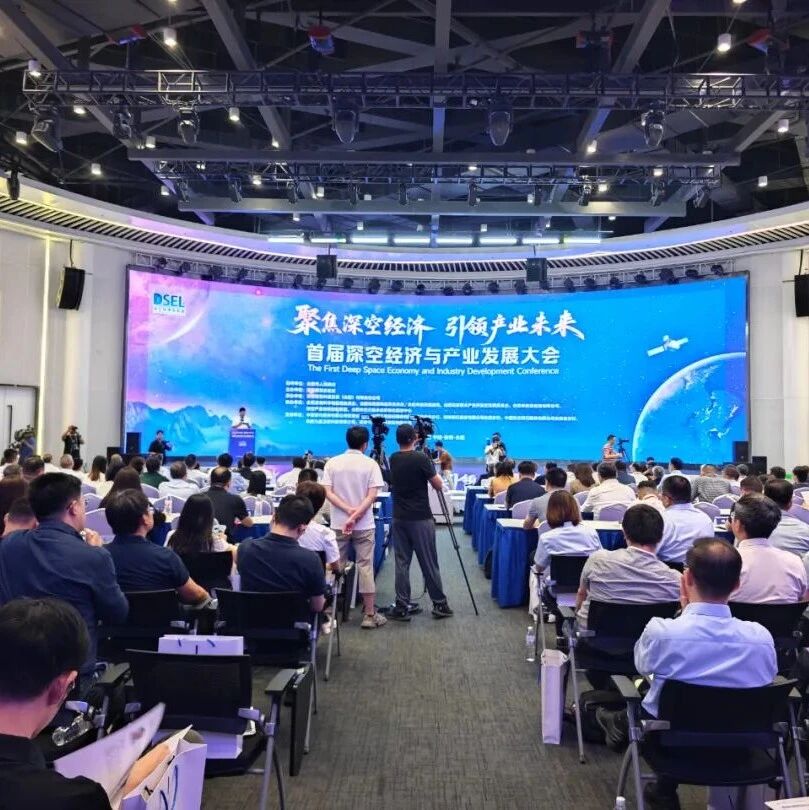
“深空经济”十大产业方向发布
机器人圈· 2025-09-11 10:08
Group 1 - The first Deep Space Economy and Industry Development Conference was held in Hefei, Anhui, focusing on the theme "Focusing on Deep Space Economy, Leading Industry Future" [3] - The conference introduced a framework for the concept of deep space economy, outlining ten industry directions including deep space resource development, deep space internet, deep space energy, deep space biology, deep space transportation, deep space intelligence, deep space construction, deep space tourism, deep space security, and deep space culture [3] - It is projected that the global deep space economy will reach a scale of one trillion dollars by 2040 [3] Group 2 - China's deep space exploration is transitioning from technological breakthroughs and scientific exploration to economic empowerment and industrial driving [4] - The deep space economy is expected to become a core engine for cultivating new productive forces and is crucial for upgrading the aerospace sector, fostering innovation, and reshaping spatial patterns [4] - The conference was hosted by the Deep Space Exploration Laboratory, a new research and development institution jointly established by the National Space Administration, the Anhui Provincial Government, and the University of Science and Technology of China [4]