
炼化一体化

Search documents
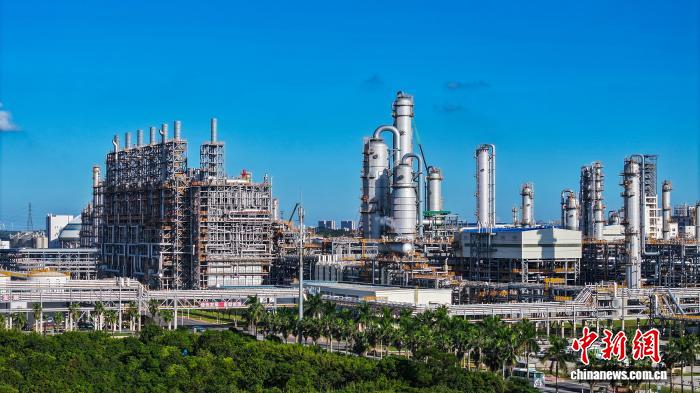
中国石油广西石化公司120万吨/年乙烯装置一次开车成功
Zhong Guo Xin Wen Wang· 2025-10-27 03:46
Core Viewpoint - The successful commissioning of the 1.2 million tons/year ethylene unit by China Petroleum Guangxi Petrochemical Company marks a significant transition from a "fuel-type" refinery to a "chemical products and organic materials-type" integrated refining and chemical enterprise, accelerating the development of a new industrial ecosystem in the Southwest region [1][4]. Group 1: Project Overview - The ethylene unit, constructed by China National Petroleum Corporation, utilizes proprietary large-scale ethylene technology and is capable of producing 1.2 million tons of polymer-grade ethylene, 616,000 tons of polymer-grade propylene, 400,000 tons of hydrogenated gasoline, and 35,000 tons of styrene annually, along with over 20 types of chemical raw materials and products [3][4]. - The project, which began construction in July 2023, faced significant climatic challenges but achieved ground-breaking in 8 months and a "soil-less" construction goal in 3 months, setting a benchmark for engineering projects in China [3]. Group 2: Economic Impact - The commissioning of the unit is expected to reduce oil product output by 3.49 million tons annually while increasing chemical product output by 3.06 million tons, directly addressing domestic supply gaps in high-end membrane materials and pipe materials [3][4]. - The project aims to transform Guangxi's industrial landscape from basic chemicals to high-end chemical new materials, leveraging the Western Land-Sea New Corridor to serve the Southwest, South China, and ASEAN markets, ultimately contributing to the establishment of a trillion-level green chemical new materials industry cluster [4].


荣盛石化:公司通过技术创新、绿色转型及战略布局积极响应国家政策导向
Zheng Quan Ri Bao Wang· 2025-10-24 09:17
Core Viewpoint - The company is actively responding to national policy directions through technological innovation, green transformation, and strategic layout, promoting its transformation and upgrading efforts [1] Group 1: Business Strategy - The company is focusing on vertical integration to strengthen its refining and chemical integration resource integration and scale effect [1] - It is leveraging the cost reduction and efficiency enhancement advantages of the "refining and chemical integration" model and the potential of "oil conversion" to continuously improve operational efficiency [1] Group 2: Financial Health - The company has excellent cash flow and strong debt repayment capability, indicating stable business operations and financial health [1] - Both short-term and long-term debt repayment arrangements are well managed, with ongoing attention to debt repayment capability indicators to control repayment risks [1] - The company aims to enhance cash flow management while ensuring high-quality development and maintaining a reasonable level of debt [1]

科新机电2025年三季报点评:业绩阶段波动 未来可期
Quan Jing Wang· 2025-10-22 11:21
Group 1 - The core viewpoint of the articles highlights the challenges faced by Kexin Electromechanical (300092.SZ) in the short term due to changes in product structure and increased production workload, leading to a decline in revenue and net profit [1] - For the first nine months of 2025, Kexin Electromechanical reported a revenue of 856 million yuan, a year-on-year decrease of 18.63%, and a net profit of 55.19 million yuan, down 61.44% year-on-year [1] - The company is taking measures to optimize production scheduling and accelerate capacity construction to ensure project delivery progress and quality [1] Group 2 - The pressure vessel industry in China is expected to experience a new round of equipment updates and industrial upgrades driven by green low-carbon transformation, integrated refining, and high-end material upgrades [2] - The market size of China's pressure vessel industry is projected to exceed 260 billion yuan by 2026, supported by ongoing policy implementation and accelerated project approvals [2] - Kexin Electromechanical has nearly 30 years of technical expertise and industry experience, actively advancing digital production line construction and equipment upgrading to strengthen its competitiveness in the high-end non-standard equipment sector [2] - The company is collaborating with large engineering firms to deliver multiple oversized core equipment in overseas markets, which may create additional growth sources [2] - Kexin Electromechanical's products serve the energy and chemical industries, indicating a broad market outlook, and the company is expected to benefit from the industry's upward cycle [2]

盘锦北燃富乙烷装置开车成功
Zhong Guo Hua Gong Bao· 2025-10-17 04:28
Core Viewpoint - The successful commissioning of the ethane-rich facility by Panjin Northern Asphalt Fuel Co., Ltd. marks a significant milestone in the company's production capabilities and resource optimization efforts [1][4]. Group 1: Project Overview - The ethane-rich facility consists of a 330,000-ton annual ethane gas extraction unit and a 260,000-ton annual low-boiling gas de-asphalting unit [4]. - The facility utilizes feedstocks such as coking dry gas, light hydrocarbon gas, and low-boiling gas, establishing a stable and efficient raw material supply system [4]. Group 2: Production and Market Impact - Upon full operation, the facility is expected to produce 330,000 tons of high-quality ethane gas annually, which will serve as a premium raw material for expanding into high-end markets [4]. - The successful operation of the facility demonstrates the company's comprehensive strengths in process technology, production management, and safety and environmental protection [4]. Group 3: Strategic Significance - The commissioning of the ethane-rich facility represents a key advancement in the company's integrated refining layout, supporting further resource optimization and industry chain extension [4]. - This project is a crucial step in enhancing the overall competitiveness of the company in the market [4].
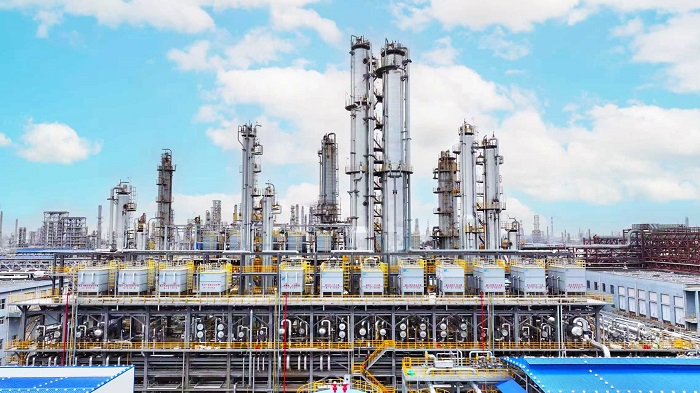
广东石化:啃下“硬骨头” 炼出好产品
Sou Hu Cai Jing· 2025-09-30 04:16
Core Viewpoint - Guangdong Petrochemical has successfully trial-produced three new product grades in full-density polyethylene, high-density polyethylene, and polypropylene, showcasing its commitment to developing high-quality products and overcoming technical challenges since its inception nearly three years ago [1] Group 1: Export Market Expansion - Guangdong Petrochemical has exported over 2 million tons of various products to more than 10 countries and regions, including Europe, Australia, and Japan, achieving a product qualification rate of 100% [3] - The company has optimized its refining processes to meet international standards, successfully increasing the smoke point of aviation kerosene from 22 mm to over 26 mm and achieving a corrosion level below 0 [3][4] Group 2: Aromatics Production and Purity - The aromatics unit at Guangdong Petrochemical has maintained a paraxylene purity of over 99.75%, significantly exceeding international standards, and has implemented various optimizations to enhance operational efficiency [4][5] - The company has reduced the circulation of ineffective materials and improved energy efficiency, with comprehensive energy consumption far below industry benchmarks [4] Group 3: New Product Development - Guangdong Petrochemical has completed over 230 production transitions across its four polyethylene units, focusing on new product development [7] - The company successfully trial-produced three new grades in one week, including a high-strength polyethylene suitable for dairy packaging, enhancing product value [7][8] - A total of 20 new high-efficiency materials have been developed, with total new product output exceeding 1.7 million tons, leading the industry in both variety and volume among Chinese petroleum refining enterprises [8]

长江能科(920158):北交所新股申购报告:电脱设备隐形冠军,炼化一体化驱动订单放量
KAIYUAN SECURITIES· 2025-09-23 14:00
Investment Rating - The report assigns a price-to-earnings (P/E) ratio of 11.74 times for the upcoming issuance of shares [1]. Core Viewpoints - Changjiang Energy Technology (920158.BJ) is recognized as a leading player in the electric dehydration equipment market, holding the largest market share domestically. The company focuses on the design, research and development, manufacturing, and service of specialized equipment for the energy and chemical industries [1][12]. - The company has shown a compound annual growth rate (CAGR) of 20% in revenue over the past two years, with a CAGR of 10% in net profit attributable to the parent company [3]. - The demand for electric dehydration equipment is rapidly increasing due to the implementation of integrated refining policies and equipment replacement policies, which are expected to shorten the replacement cycle of such equipment [2][38]. Summary by Sections Company Overview - Changjiang Energy Technology is a national-level specialized and innovative "little giant" enterprise, primarily engaged in electric dehydration equipment, separation equipment, heat exchange equipment, storage equipment, carbon capture equipment, and hydrogen energy equipment [1][12]. - The company has achieved significant recognition in the industry, with a strong reputation and stable high-quality customer resources, including major clients like Sinopec and CNOOC [20]. Financial Performance - The company's revenue for 2022, 2023, and 2024 is projected to be 2.19 billion, 3.48 billion, and 3.14 billion RMB respectively, with net profits of 40.68 million, 40.85 million, and 49.16 million RMB [1][12]. - In the first half of 2025, the company reported a revenue of 1.3 billion RMB, a year-on-year decrease of 6.23%, while net profit increased by 4.02% to 18.24 million RMB [1]. Market Demand - The market for petroleum refining and petrochemical equipment in China has grown from 484.9 billion RMB in 2018 to 715.1 billion RMB in 2023, with a compound annual growth rate of approximately 8.08% [2]. - The electric dehydration equipment market is expected to reach a domestic scale of 10 billion RMB over the next five years, with a global market size projected to be around 3.5 billion RMB [38]. Competitive Position - The company holds a leading position in the electric dehydration equipment market, with a market share ranking first in China from 2021 to 2023 [16][18]. - Key competitors include international firms such as Schlumberger Limited and Forum Energy Technologies, as well as domestic companies like Luoyang Zhengyuan Petrochemical Co., Ltd. and Jiangsu Jinmen Energy Equipment Co., Ltd. [24][25]. Research and Development - The company has obtained 17 invention patents and 44 utility model patents, with several technological achievements recognized as internationally advanced or leading [1][13]. - The company emphasizes technological innovation and has established several research and development platforms, including a key enterprise research institution in Jiangsu Province [13].
广东石化攻坚打造优质产品矩阵
Zhong Guo Hua Gong Bao· 2025-09-22 07:23
Core Viewpoint - Guangdong Petrochemical has successfully trial-produced three new product grades in a week, showcasing its commitment to developing a high-quality product matrix and overcoming technical challenges since its inception nearly three years ago [1] Group 1: Product Development and Market Expansion - Guangdong Petrochemical has exported over 2 million tons of various products since 2025, reaching international markets in over 10 countries and regions, with a product qualification rate of 100% [3] - The company has optimized its refining processes to meet international standards, achieving significant improvements in key performance indicators such as smoke point and sulfur content in its aviation fuel and ultra-low sulfur diesel [2][3] - The company has developed 20 high-efficiency new material products, with three grades reaching international advanced levels, leading the industry in both variety and production volume [8] Group 2: Technological Innovations and Operational Efficiency - The company has implemented over 230 production transitions across its four polyethylene units, demonstrating its agility in responding to market demands [8] - Through continuous optimization of its processes, Guangdong Petrochemical has maintained a xylene purity of over 99.75% and a yield stability between 96% and 97% [5][6] - The company has significantly reduced energy consumption in its operations, achieving a decrease of 1.4 kg standard oil per ton in August compared to July [5]
广东石化攻坚打造优质产品矩阵
Zhong Guo Hua Gong Bao· 2025-09-22 02:54
Core Insights - Guangdong Petrochemical has successfully trial-produced three new product grades in a week, showcasing its commitment to developing a high-quality product matrix [1] - The company has exported over 200 million tons of various products since 2025, achieving a 100% product qualification rate and gaining high recognition from international clients [2] Production and Innovation - The company has optimized its operations by adjusting over 20 parameters and conducting nearly 100 experiments, resulting in significant improvements in product quality, such as increasing aviation fuel smoke point and achieving ultra-low sulfur diesel standards [2] - The aromatics unit has maintained a product purity of over 99.75%, significantly exceeding national standards, and has implemented innovative designs to reduce emissions and enhance energy efficiency [3][4] Product Development - Guangdong Petrochemical has completed over 230 production transitions across its four polyolefin units, emphasizing its focus on new product development [5] - The company successfully developed 20 high-efficiency new material products, with several achieving international advanced levels, positioning it as a leader in the Chinese petroleum refining industry [5]
又一大型炼化一体化项目,开工!
Zhong Guo Hua Gong Bao· 2025-09-21 04:55
Group 1 - The Xinjiang Uygur Autonomous Region is celebrating its 70th anniversary with a major project launch event in Urumqi, where the integrated refining and chemical project by Sinopec in Kucha has commenced construction [1][3] - The Tarim Refining and Chemical Integration Project is a key initiative for Sinopec to promote integrated industrial chain development in Xinjiang, featuring advanced green and low-carbon technology with a total of 16 refining production units planned [3][5] - The project aims to increase annual output value by approximately 20.2 billion yuan and generate about 3.5 billion yuan in tax revenue, while creating around 10,000 jobs and facilitating local resource utilization [5] Group 2 - Upon completion, the Tarim Refining Company will have a crude oil processing capacity of 8.5 million tons per year, producing ethylene and paraxylene, thus supporting the development of oil and gas processing and textile industries [5] - Currently, the Tarim Refining Company is the only refining enterprise in Northwest China, with an existing crude oil processing capacity of 5 million tons per year, supplying over 70 million tons of products to regions including Xinjiang, Gansu, Qinghai, and Tibet over the past 20 years [5]


每周股票复盘:东方盛虹(000301)盛虹炼化上半年净利2.57亿元
Sou Hu Cai Jing· 2025-09-06 19:48
Core Viewpoint - The company, Dongfang Shenghong, has shown a positive financial performance in the first half of 2025, with significant improvements in its refining and new materials segments, indicating potential growth opportunities in the industry. Group 1: Financial Performance - In the first half of 2025, the refining segment (Shenghong Refining) achieved a net profit of 257 million yuan, marking a turnaround from losses in the previous year [1] - The new materials segment (Sierbang Petrochemical) reported a net profit of 120 million yuan, while the chemical fiber segment (Shenghong Chemical Fiber) generated a net profit of 140 million yuan, indicating stable operations across these sectors [1] Group 2: Market and Policy Impact - The recent anti-involution policies introduced by the government aim to optimize market competition and improve resource allocation efficiency, which may benefit large-scale integrated refining enterprises like Dongfang Shenghong [1] - The company is well-positioned to leverage these policies due to its scale, technology, and resource advantages, potentially leading to new development opportunities amid industry adjustments [1] Group 3: Capital Expenditure and Projects - The company has completed several projects, including two 200,000-ton EV production lines, and is currently constructing a 100,000-ton POE industrial facility expected to be operational in the third quarter of 2025 [4] - The capital expenditure has peaked, and the company anticipates a gradual decline in future capital spending, aligning with market conditions and industry trends [2][4] Group 4: Shareholder Actions - The controlling shareholder and its concerted parties have completed a share buyback plan amounting to 2.02 billion yuan, with an additional plan to buy back between 500 million and 1 billion yuan currently underway [5]
