生物制造

Search documents
四大证券报头版头条内容精华摘要_2026年2月10日_财经新闻
Xin Lang Cai Jing· 2026-02-09 23:18
专题:四大证券报精华 中国证券报 沪深北交易所推出优化再融资一揽子措施 2月9日,沪深北交易所推出优化再融资一揽子措施,旨在进一步提高灵活性和便利度,更好服务科技创 新和新质生产力发展。一揽子措施突出扶优、扶科、限劣导向,明确对优质上市公司进一步提高再融资 效率,优化未盈利创新企业再融资间隔期要求。为更好适应科技创新企业再融资需求,沪深交易所研究 推出主板上市公司"轻资产、高研发投入"认定标准。 市场监管总局发布多个制度文件 补齐液态食品散装运输管理制度短板 2月9日,围绕加强重点液态食品道路散装运输管理,市场监管总局联合相关部门发布了多个制度文件。 据悉,此次发布的《实行道路散装运输许可制度的重点液态食品目录》《重点液态食品道路散装运输准 运管理办法》《重点液态食品道路散装运输联单管理工作规范》等制度文件,旨在贯彻落实党中央、国 务院决策部署和新修改的食品安全法的规定要求,着力补齐液态食品散装运输管理制度的短板,不断提 升食品安全全链条监管水平。 AI需求激增 MLCC接棒内存上涨 AI引发的涨价潮正在元器件产业链蔓延。继存储芯片价格飙升后,片式多层陶瓷电容器(MLCC)成为 下一个涨价的关键元器件。据悉, ...
凯赛生物总裁杨晨:以生物智造筑牢双碳基石 打造产业协同生态
Zhong Guo Zheng Quan Bao· 2026-02-09 23:17
Core Viewpoint - Biomanufacturing is a crucial component of national strategic technological strength and a key engine for promoting green and low-carbon industrial transformation. The company, Kasei Biotech, has been deeply engaged in this field for over 20 years, leveraging core technologies and products to build competitive advantages [2] Group 1: Green Transformation in Downstream Industries - Kasei Biotech focuses on developing chemicals through biotechnological processes, aiming to create low-cost alternatives to traditional petrochemical products. The biomanufacturing process is characterized by mild reaction conditions and the use of renewable plant materials or biomass waste, significantly reducing reliance on non-renewable fossil resources [3] - The company has developed a series of biobased long-chain dicarboxylic acids and biobased hexamethylenediamine, which are typical products in the biomanufacturing industry. These products meet high-performance requirements while being cost-effective and environmentally friendly, thus supporting downstream industries in overcoming carbon barriers and enhancing market competitiveness [3] Group 2: Application and Production Capacity - Kasei Biotech's biobased composite materials have been successfully applied in various sectors, including new energy, transportation logistics, pipelines, and construction. For instance, biobased polyamide composite materials for battery shells reduce weight and costs while meeting fire resistance and protection needs [4] - The company has established a production capacity of 40,000 tons of biobased dodecanedioic acid and a 5,000-ton production line for biobased high-temperature polyamide. The company is also building a complete industrial chain in its Hefei biobased materials base [4] Group 3: Future Development and Innovation - Kasei Biotech plans to expand the application scenarios of biobased polyamides and composite materials, focusing on sectors such as automotive, energy storage, and robotics through joint ventures with industry leaders [5] - The company emphasizes the importance of technological innovation and supply chain security, continuously increasing R&D investment to support the development and commercialization of biobased products [6] - Future plans include enhancing the efficiency of core products, advancing research on new biobased materials, and developing high-value utilization technologies for biomass waste [7] Group 4: Collaborative Ecosystem - Kasei Biotech believes that the commercialization of new materials requires collaboration among various stakeholders, including capital, technology, industry, and government. The company has engaged in partnerships with state-owned enterprises and local governments to establish its first biomanufacturing materials industrial base [8] - The collaboration model of "central enterprises + local governments + industry leaders" is seen as an effective way to integrate resources and drive innovation in biobased materials [8] - The company aims to break the inertia of traditional petrochemical materials in downstream industries through application demonstration projects, thereby enhancing industry awareness and expanding commercialization pathways [9]


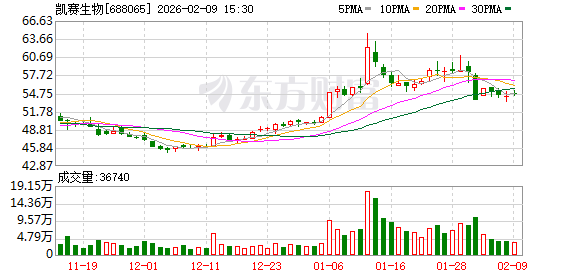
凯赛生物总裁杨晨: 以生物智造筑牢双碳基石 打造产业协同生态
Zhong Guo Zheng Quan Bao· 2026-02-09 22:04
Core Viewpoint - Biomanufacturing is a crucial component of national strategic technological strength and a key engine for promoting green and low-carbon industrial transformation. The company, Kasei Biotech, has been deeply engaged in this field for over 20 years, leveraging core technologies and products to build competitive advantages [1] Group 1: Green Transformation in Downstream Industries - Kasei Biotech focuses on developing chemicals through biomanufacturing processes, which create low-cost alternatives to traditional petrochemical products. This method utilizes biological conversion, operates under mild conditions, and avoids heavy metal catalysts, significantly reducing reliance on non-renewable fossil resources [2] - The company has developed a series of bio-based long-chain dicarboxylic acids and bio-based hexamethylenediamine, which are typical products in the biomanufacturing industry. These products meet high-performance requirements while being cost-effective and environmentally friendly, supporting downstream industries in reducing carbon footprints [2] Group 2: Application and Production Capacity - Kasei Biotech's bio-based composite materials have been applied in various sectors, including new energy, transportation logistics, and construction. For instance, bio-based polyamide composite materials for battery shells reduce weight and costs while meeting fire resistance and protection needs [3] - The company has established production lines for bio-based dodecanedioic acid and high-temperature polyamide, with a focus on creating a complete industrial chain in its Hefei base. The production layout is strategically organized across different locations to optimize capacity [3] Group 3: Future Development and Innovation - Kasei Biotech plans to expand the application scenarios of bio-based polyamides and composite materials, collaborating with partners like CATL to deepen application breadth and provide demonstration projects for low-carbon transformation in downstream industries [4] - The company emphasizes the importance of technological innovation and supply chain security, committing to continuous R&D investment to support the development of bio-based products [5] Group 4: Digitalization and AI Integration - Digitalization and smart technology are key development directions for Kasei Biotech, with a vision to reshape low-carbon living through biomanufacturing. The company has implemented AI tools in various research areas, enhancing operational efficiency across R&D, production, and management [6] Group 5: Collaborative Ecosystem in Synthetic Biology - Kasei Biotech recognizes the challenges in commercializing new materials and emphasizes the need for collaboration among capital, technology, industry, and government to drive the industry forward. The company has engaged in partnerships to enhance resource integration and support the commercialization of bio-based materials [7] - The collaboration model involving state-owned enterprises, local governments, and industry leaders aims to create a synergistic value network, facilitating the development of bio-based new materials across various sectors [7][8] Group 6: Strategic Goals for the Next 3-5 Years - The company aims to focus on three core areas in the next 3-5 years: advancing the high-value utilization of biomass waste, expanding the commercial application of bio-based polyamides and composites, and accelerating the construction of industrial demonstration projects and ecosystems [8]
以生物智造筑牢双碳基石 打造产业协同生态
Zhong Guo Zheng Quan Bao· 2026-02-09 20:25
Core Viewpoint - Biomanufacturing is a crucial component of national strategic technological strength and a key engine for promoting green and low-carbon industrial transformation. The company, Kasei Biotech, has been deeply engaged in this field for over 20 years, leveraging core technologies and products to build competitive advantages [1]. Group 1: Business Model and Product Development - Kasei Biotech focuses on developing chemicals through biotechnological processes, aiming to create low-cost, high-performance bio-based new materials that empower downstream industrial upgrades and promote the large-scale development of the biomanufacturing industry [1][2]. - The company has developed a series of bio-based long-chain dicarboxylic acids and bio-based hexamethylenediamine, which are typical products in the biomanufacturing industry. These products meet high-performance requirements while achieving low cost, lightweight, and recyclability, effectively reducing the carbon footprint of downstream products [2]. Group 2: Production Capacity and Industrial Layout - Kasei Biotech's Shanxi synthetic biological industrial park has launched a 40,000-ton biomanufacturing project for sebacic acid, which has quickly replaced chemical methods. A 5,000-ton bio-based high-temperature polyamide production line has also been established [3]. - The company is building a complete industrial chain in its Hefei bio-based materials industrial base, focusing on resin, composite materials, and application products. The production layout will be coordinated across different regions, with specific focuses for each base [3]. Group 3: Research and Development Strategy - Kasei Biotech emphasizes innovation-driven development, with a commitment to increasing R&D investment. Significant progress is expected in projects related to green dicarboxylic acids, bio-based piperidine, and bio-based long-chain polyamides by 2025 [4]. - The company is integrating AI technology into its R&D, production, and management processes, enhancing operational efficiency and supporting the development of bio-based new products [4][5]. Group 4: Collaborative Ecosystem and Market Penetration - Kasei Biotech is collaborating with various stakeholders, including state-owned enterprises and local governments, to create a synergistic ecosystem for biomanufacturing. This collaboration aims to leverage resources and expertise to overcome challenges in commercialization [6][7]. - The company is focusing on application scenario demonstration projects to break the inertia of traditional petrochemical materials in downstream industries, thereby enhancing industry recognition and expanding commercialization pathways for bio-based new materials [7]. Group 5: Future Development Directions - In the next 3-5 years, Kasei Biotech will focus on three core development areas: advancing the high-value utilization of biomass waste, expanding the application and commercialization of bio-based polyamides and their composites, and accelerating the construction of industrial demonstration projects and ecosystems [7].
产学研用同频发力 生物制造解锁万亿增长空间
Zhong Guo Zheng Quan Bao· 2026-02-09 20:25
作为未来产业之一,生物制造赛道近期多点开花、动能充沛。政策层面持续加码,上海市近期印发行动 方案,将生物制造纳入积极引导的新兴产业领域,确立其战略优先级;企业端积极发力,富祥药业通过 成立跨国合资公司推进微生物蛋白全球化布局;科研前沿同步突破,"合成高等生物"先导项目启动,AI 驱动下的生命科学创新持续深化,多方协同发力激活万亿产业新潜力。 ● 本报记者 傅苏颖 万亿赛道根基渐牢 近年来,政策高度聚焦产业化落地与技术突破,形成多层次支撑体系,促进我国生物制造产业蓬勃发 展。 工信部此前披露,"十四五"期间,我国生物制造产业规模稳步扩大,总规模达1.1万亿元,生物发酵产 品产量占全球70%以上。其中食品及添加剂、生物制药等细分领域年产值超4000亿元,推动生物制造成 为新的经济增长点。易凯资本预测,到2030年,中国生物制造市场规模将会接近1.8万亿元。 长城证券化工新材料首席分析师肖亚平在接受中国证券报记者采访时表示,合成生物学技术作为生物制 造的核心支撑,可推动产业实现低碳生产、提升劳动生产率,其成果广泛应用于医疗健康、能源开发、 环境保护、工业制造等多个领域,为解决人类面临的各类发展挑战提供创新解决方案, ...

上海制造业新蓝图:三年瞄准百家“10亿+”企业,加速布局航天智能新赛道
Jin Rong Jie· 2026-02-09 15:30
一份刚刚发布的三年行动方案,将重塑这座城市的产业版图,并将触角伸向近地轨道。 2025年,上海规上工业总产值跨越4万亿元大关,创下历史新高。在这个制造业强势复苏的基础上,上 海并未停下脚步。近日,上海市经济和信息化委员会牵头编制的《上海市支持先进制造业转型升级三年 行动方案(2026—2028年)》(下称《行动方案》)正式发布,设定了明确目标:到2028年,新增年产 值10亿元以上制造业企业100家,累计超过600家,并带动产业链新增规上工业企业500家。这个被称 为"10亿+"的企业集群,是上海工业经济的核心力量。 01 产业投资的强劲势头 强劲的投资为未来增长注入了信心。数据显示,2025年,上海工业投资同比增长20.0%。其中,作为核 心的制造业投资表现尤为亮眼,同比增长22.8%。这不仅体现了市场主体的预期,也为《行动方案》提 出的三年目标提供了坚实基础。 02 多路径的产业结构调优 《行动方案》提出了以四大行动、17条举措为核心的完整路径。其中,"结构调优升级行动"对不同能级 的产业给出了差异化方案。对于传统优势产业,方案强调"优化提升"。例如,推动石化企业向"去油增 化"转型,布局新型功能材料;钢 ...
农业农村部:大力培育农业科技领军企业,加快实施“百千万”农业科技企业培育工程
Xin Lang Cai Jing· 2026-02-09 14:05
2月9日,农业农村部召开科技创新领导小组会议,部党组书记、部长韩俊主持会议并讲话。会议强调, 要紧紧围绕加快农业农村现代化和农业强国建设重点任务,进一步加强农业基础研究战略性、前瞻性、 体系化布局,推动人工智能、生物制造等农业关键核心技术攻关取得突破,加快解决农业高质量发展技 术难题,催生农业新质生产力。要推动科技创新与产业创新深度融合,大力培育农业科技领军企业,加 快实施"百千万"农业科技企业培育工程,提升企业整体创新实力。要畅通农业科技成果转化渠道,构建 产学研用一体的农业科研组织模式,实施好农业新技术新产品新场景大规模应用行动,强化公益性农技 推广机构主体地位,创新多元化农技推广服务模式,打通成果落地应用"最后一公里",促进良田良种良 机良法集成增效。 ...
大盘反弹,中证A500ETF(159338)大涨超1.5%,连续4日净流入超5亿元
Mei Ri Jing Ji Xin Wen· 2026-02-09 06:12
Core Viewpoint - The article emphasizes the strategic direction of state-owned enterprises during the "14th Five-Year Plan" period, focusing on the integration and optimization of resources, innovation, and the development of emerging industries [1] Group 1: Strategic Initiatives - State-owned capital will drive the "three concentrations" strategy to promote restructuring and optimization [1] - There will be a strong emphasis on independent and original innovation, alongside the implementation of the "AI+" special action plan [1] - The focus will be on emerging industries such as renewable energy, aerospace, low-altitude economy, quantum technology, and 6G, with future planning for intelligent embodiment, biomanufacturing, marine energy, and green shipping [1] Group 2: Industry and Market Performance - The CSI A500 index emphasizes industry balance and leading companies, providing a more diversified and growth-oriented investment opportunity compared to the CSI 300 index [1] - As of the end of 2025, the CSI A500 index has increased by 464.28% since its base date, outperforming the CSI 300 index, which has risen by 361.15%, resulting in an excess return of 103.13% [1] - The number of clients for the Guotai CSI A500 ETF is the highest in its category, being more than three times that of the second-ranked competitor [1]
未来产业周报第9期(2026、2、1-2026、2、7):量子互联网可扩展性进步,侵入式脑机迈入商业化阶段-20260209
Shenwan Hongyuan Securities· 2026-02-09 05:30
Group 1: Quantum Technology - The team from the University of Science and Technology of China achieved significant breakthroughs in scalable quantum networks, including the construction of a basic module for scalable quantum repeaters and the realization of device-independent quantum key distribution (DI-QKD) over a distance of 100 kilometers, improving previous international experimental levels by over two orders of magnitude [4][5]. - The successful implementation of a quantum repeater with an entanglement lifetime of 550 milliseconds, exceeding the entanglement establishment time of 450 milliseconds, marks a critical advancement in quantum communication, enabling the construction of a kilometer-scale quantum internet [5]. Group 2: Biomanufacturing - The Shenzhen Advanced Institute of Technology developed a programmable integration platform for functional molecules, which opens up new applications in biomanufacturing, biosensing, and flexible electronics [6][7]. - OpenAI partnered with Ginkgo Bioworks to create an AI-driven automated experimental system that significantly reduces the production costs of cell-free protein synthesis (CFPS) by approximately 40% and reagent costs by 57% [8]. Group 3: Hydrogen Energy and Nuclear Fusion - The China Energy Construction Group's Songyuan hydrogen energy industrial park project has produced over 10,000 tons of green ammonia and received EU certification, validating the integrated commercial model of "green electricity - green hydrogen - green ammonia" [9][10]. - Shenzhen Energy signed a contract for a 505MW wind-solar hydrogen project with a total investment of approximately 8 billion, covering both upstream and downstream sectors [12]. Group 4: Brain-Computer Interfaces - The company Borui Kang has initiated the process for its initial public offering (IPO), marking a transition of invasive brain-computer interface technology from research to commercialization [13][15]. - A research team from the Chinese Academy of Sciences developed a novel optogenetic technique for visual brain-computer interfaces, enabling high-precision, long-term optical stimulation of the visual cortex, representing a significant advancement in sensory information input [16][18]. Group 5: Embodied Intelligence - Microsoft Research introduced a new robot model, Rho-alpha, which integrates multimodal perception capabilities, including visual, language, and tactile data, aimed at enhancing the application of embodied intelligence in unstructured environments [21]. Group 6: 6G and Commercial Space - A research team from Beijing University of Posts and Telecommunications made significant progress in 6G channel modeling, with their work being included in the international 6G standard framework by 3GPP [22]. - The U.S. Federal Communications Commission (FCC) accepted SpaceX's application for an orbital data center, which aims to establish a satellite constellation of up to 1 million satellites to support advanced AI models and applications [25]. Group 7: Future Industry Catalysts - A table summarizing key catalytic events for six future industries in 2026 was provided, highlighting important milestones and conferences that investors should track [26][27].