
碳达峰碳中和

Search documents
全球“电力时代”隐忧:供需紧张,电网稳定性面临大考
Xin Lang Cai Jing· 2026-02-07 00:40
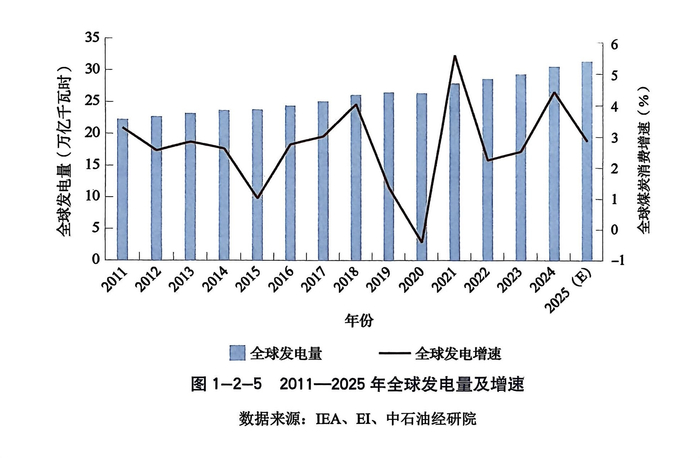
智通财经记者 | 田鹤琪 "世界正迅速迈入电力时代,如今,这一时代显然已经到来。"国际能源署(IEA)执行主任法提赫·比罗尔 于去年11月作出的论断,正在全球能源市场的剧烈变动中得到印证。 近日,中国石油集团经济技术研究院(下称中石油经研院)发布的《全球能源安全报告(2025)》(下 称《报告》)指出,全球电力供需依然处于紧张状态。 《报告》称,2025年,全球发电量预计达到32.2万亿千瓦时,同比增长2.9%;全球电力需求同比增速达 到3.3%,约为能源需求增速的两倍。 片来源:《2025年国内外油气行业发展报告》 其中,亚太地区贡献全球电力增量的约六成。2025年,在中国、印度经济增长的带动下,亚太地区电量 达16.9万亿千瓦时,增速达5.4%,在全球用电量中的占比由上年的51.8%增长至52.5%。 《报告》预计,2026年全球电力需求增速维持3%左右。 刘佳指出,一方面,可再生能源装机在总装机中占比突破50%,达到51.5%,但灵活性调节电源装机占 比仍为6.2%。 当前,电力需求的增长动力正在发生变化。 IEA于去年11月发布的《世界能源展望2025》(下称《能源展望》)显示,电力消耗的增长不再局限 ...

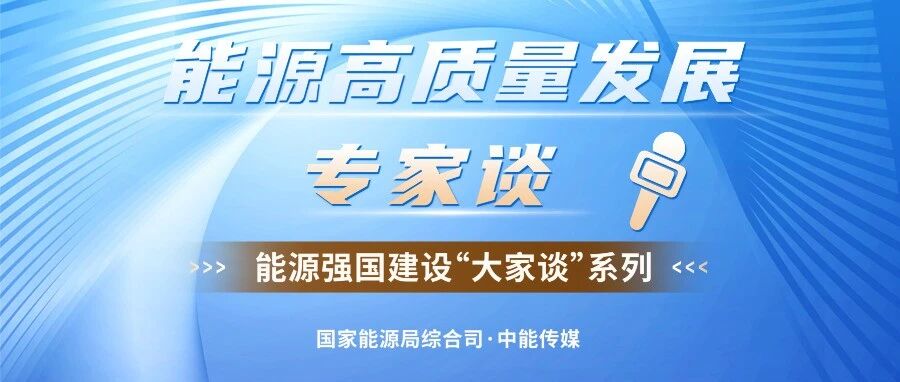
能源强国建设“大家谈”︱迈向能源强国:陆海统筹,向海图强,筑牢中国式现代化的能源基石
国家能源局· 2026-02-06 07:19
Core Viewpoint - The article emphasizes the importance of building a strong energy nation in China, highlighting the need for a new energy system that is secure, green, innovative, efficient, and open, as part of the broader goal of achieving socialist modernization [3][4]. Group 1: Strategic Goals and Phases - The construction of an energy strong nation is a significant strategic choice based on China's resource endowment and long-term needs, aiming for a historical leap from an energy power to a comprehensive energy strong nation [4]. - The new energy system should feature five characteristics: security resilience, green low-carbon transition, technological innovation, efficient governance, and cooperative openness [4]. - The next ten years are proposed to be divided into two key phases: the "15th Five-Year Plan" (2026-2030) focusing on foundational work and peak carbon emissions, and the 2035 vision aiming for a mature energy system and significant optimization of energy structure [5]. Group 2: Key Tasks for Energy Nation Construction - Strengthening energy security by expanding resource supply through strategic mineral exploration and development, while increasing oil and gas exploration efforts, particularly in marine areas [6][7]. - Accelerating the green low-carbon transition by increasing the share of renewable energy and optimizing the energy structure through the development of offshore wind power and carbon capture technologies [7]. - Enhancing technological innovation by focusing on key technologies in deep-water oil and gas development and promoting digital and intelligent technologies across the energy industry [7][8]. - Reforming oil and gas systems to create a unified energy market and improve governance mechanisms, fostering a competitive and efficient energy system [8]. - Expanding international energy cooperation to enhance global influence and participate in global energy governance [8]. Group 3: Global Resource Allocation and Energy Security - The article stresses the need to enhance global resource allocation capabilities while maintaining domestic energy supply resilience, emphasizing the importance of a dynamic and resilient energy security system [9]. - Strengthening domestic oil and gas supply capabilities through increased exploration and production, particularly in marine resources [9]. - Promoting renewable energy generation and ensuring a reliable transition from fossil fuels to mitigate supply risks [9]. - Utilizing the Belt and Road Initiative to enhance energy infrastructure connectivity and trade cooperation, thereby improving global resource allocation and risk management [9].
青海省国民经济和社会发展第十五个五年规划纲要
Xin Lang Cai Jing· 2026-02-06 00:21
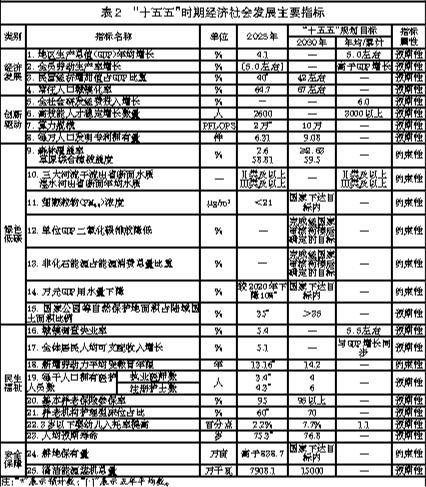
| | | 表2 "十五五"时期经济社会发展主要指标 | | | | | | --- | --- | --- | --- | --- | --- | --- | | 来源 | 指标名称 | 中立 | 2023 8 | | 十五十八 八六十二 | 指示 | | | | | | 18 0600 | 年均在式计 | 图"性 | | | 1. 地区生产总值(GIP)年的理长 | 14 | 4.1 | I | 5.0左右 | 17 10 192 | | 6 31 | 2. 会员学出年产家博长 | 22 | [5.0左右) | | 有平面是因大 | 27 10 14 | | 20 Hr | 3. BE STEP MI REDP PER | 11 | 40 | 42 元 存 | | SANTAL | | | 4. 就在人口的理体系 | 2 | 64.7 | 可在后 | 1 | SANTAR | | | 6. 金杜会祥发编 特丹人赠长 | 94 | - | I | 60 | 77 10 191 | | 色图 | 6. 高校能人才稳定增长数 | | 2600 | 1 | SOOO DI F | 2001 12 | | PR 2 ...
以“主力军”的担当高标准建设新型电力系统
Xin Hua Ri Bao· 2026-02-05 22:27
□ 本报记者倪敏李嘉豪 随着新能源比例持续攀升,电力系统的调节能力至关重要。谢永胜分析,预计到2035年,江苏规模化调 节资源需求巨大。他建议,要前瞻谋划技术经济最优的配置方案,明确各类调节资源的建设时序,具体 包括:推动煤电机组深度调峰改造,联合开发省内外抽水蓄能资源,充分挖掘电动汽车、冰蓄冷空调等 负荷侧调节潜力。同时,应加大对中长时储能技术的攻关和财政支持,并研究制定合理的储能容量电价 等保障政策,为调节资源的可持续发展奠定基础。 如何让绿电发挥最大价值?谢永胜认为关键在于"精准匹配"。他建议,应聚焦零碳园区等新型主体对绿 电的迫切需求,加强新能源发展规划与园区发展规划的有机衔接,促进绿电在规模与空间上与需求高效 耦合。通过推广"整村""整园"开发模式和打造"绿电直连"试点,可以引导绿电资源直接流向最需要、最 能借此创造环保与经济双重价值的企业,真正做到"好电用在刀刃上",助力产业链降碳增绿。 新型电力系统的稳定运行离不开灵活高效的市场机制与配套政策。谢永胜提出,需研究推动省间与省内 电力市场协同运作,争取有利的区外购电条件。同时,应探索构建电力中长期交易与现货市场联合运营 模式,使中长期市场稳定预期、 ...
推进“十五五”美丽兵团建设实现良好开局
Xin Lang Cai Jing· 2026-02-05 18:10
Group 1 - The core viewpoint of the article emphasizes the significant progress made in ecological environment protection in the Xinjiang Production and Construction Corps (XPCC) during the 14th Five-Year Plan period, highlighting the completion of binding assessment targets and notable improvements in ecological quality [1][2] - The meeting outlined the key tasks for 2026, focusing on the construction of a beautiful XPCC, with an emphasis on coordinated efforts in carbon reduction, pollution control, and green expansion [2] - The article mentions the importance of adhering to the three principles of precise pollution control, scientific pollution management, and legal pollution governance to enhance environmental quality and promote the beautiful XPCC initiative [2] Group 2 - The 15th Five-Year Plan period is identified as a critical phase for achieving socialist modernization, with a strong focus on high-quality development and ecological improvements [2] - The meeting called for a comprehensive approach to improve ecological environment quality through enhanced organizational leadership and collaboration between departments and regions [2] - The article highlights the need for a green and low-carbon transformation in industries, energy, and transportation to support the economic development of the XPCC [2]
最新报告预测:中国今年光伏发电能力将增25%,风电增2%
Nan Fang Du Shi Bao· 2026-02-05 15:39
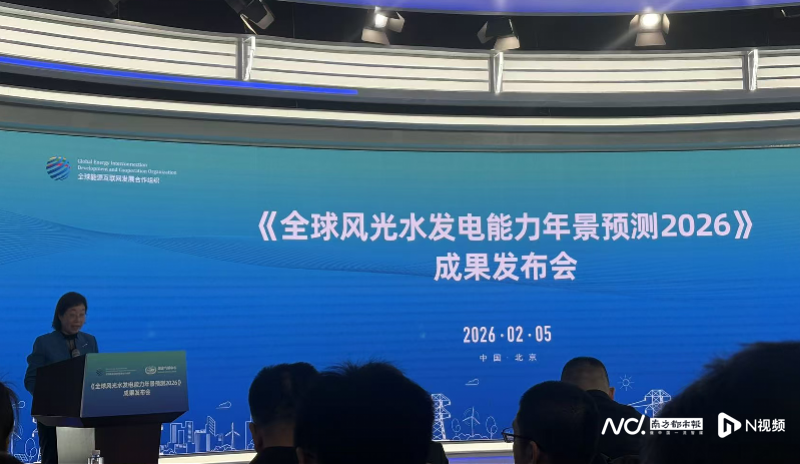
南都讯记者王玮发自北京 2月5日,《全球风光水发电能力年景预测2026》成果发布会在中国气象局举行。会议由 中国气象局国家气候中心与全球能源互联网发展合作组织(以下简称"合作组织")联合举办。 2月5日,《全球风光水发电能力年景预测2026》成果发布会在中国气象局举行。 中国气象局党组成员、副局长熊绍员指出,我国电力系统已迈入"新能源主导"的新阶段,截至2025年底可再生能 源装机占比超六成。在能源格局重构与气候变化背景下,新型电力系统对气候资源评估、极端灾害预警需求迫 切,气象与能源融合成为能源安全保障的关键举措。中国气象局深耕能源气象领域,构建资源评估与预报体系、 深化行业协同。此次发布的2026年《全球风光水发电能力年景预测报告》,能够为电力规划和交易等提供科学参 考。 《全球风光水发电能力年景预测2026》。 熊绍员表示,中国气象局与国家能源局已联合印发《关于推进能源气象服务体系建设的指导意见》,未来将聚焦 三大重点:一是完善能源气象监测预报预警业务,发展人工智能预报模型;二是深化气象成果在新能源全链条的 精准应用;三是共建创新平台,联合攻关关键技术、研制标准,深化全球合作与产学研融合。此举将为新型能 ...
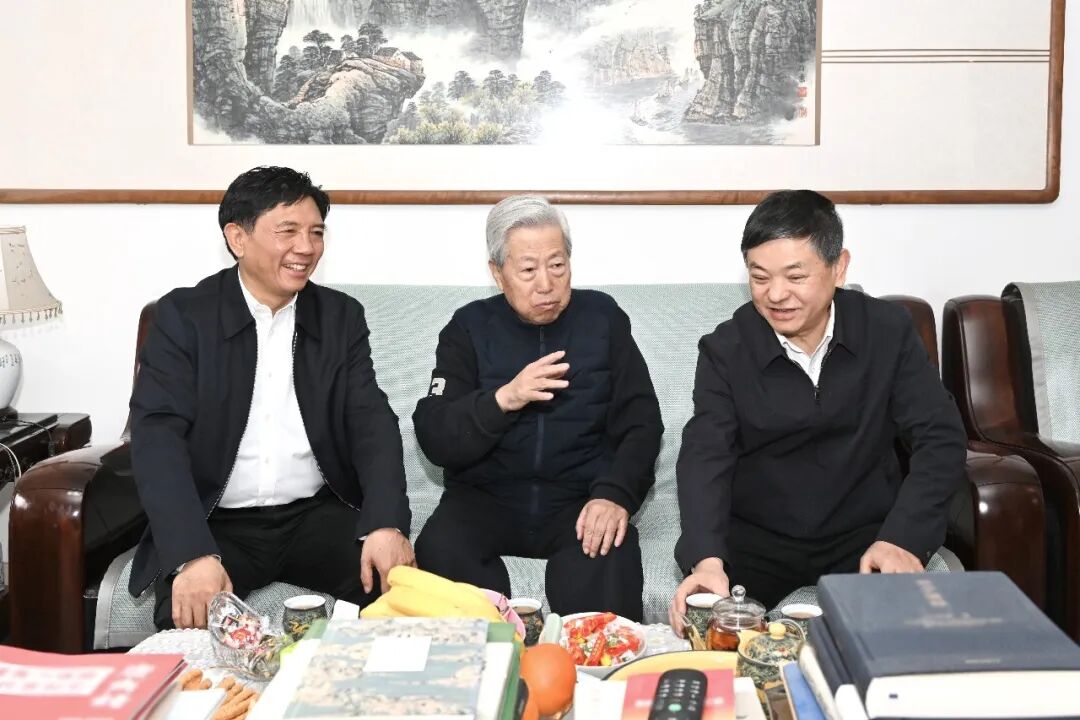
孙金龙、黄润秋看望慰问周生贤
Xin Lang Cai Jing· 2026-02-05 15:05
Core Viewpoint - The Ministry of Ecology and Environment emphasizes the progress made in ecological protection during the "14th Five-Year Plan" and outlines plans for the "15th Five-Year Plan" to further advance the construction of a beautiful China [3][4]. Group 1: Achievements and Progress - The ecological environment system has made significant breakthroughs in pollution prevention and control, accelerated the green and low-carbon transition, and improved ecological quality over the past five years [3]. - The Ministry has successfully completed all annual targets and tasks, ensuring high-quality completion of the "14th Five-Year Plan" [4]. Group 2: Future Plans - The year 2025 is highlighted as a critical year for advancing the construction of a beautiful China, with a focus on achieving carbon peak and carbon neutrality [3]. - The Ministry plans to systematically promote the "15th Five-Year Plan" for ecological protection, aiming for a good start in ecological protection and a comprehensive green transition in economic and social development [4]. Group 3: Leadership and Support - The leadership expresses gratitude to former leaders for their foundational contributions to ecological protection and encourages continued support and advice for future initiatives [4]. - The former leader, Zhou Shengxian, acknowledges the significant achievements during the "14th Five-Year Plan" and expresses optimism for future developments in ecological protection [4].
“十五五” 光伏形势展望
Xin Lang Cai Jing· 2026-02-05 12:26
Core Insights - The photovoltaic industry in China has made significant milestones during the "14th Five-Year Plan" period, with a focus on expansion, policy support, and technological advancements, despite facing challenges such as rising costs and market fluctuations [5][6][19]. Group 1: Industry Development Highlights - The cumulative installed capacity of photovoltaic systems has entered the terawatt era, with wind and solar power generation surpassing thermal power for the first time [5]. - The total output value of the photovoltaic industry has exceeded 1 trillion yuan, marking a significant economic milestone [5]. - The export value of photovoltaic products has surpassed $50 billion, with solar energy becoming the second-largest source of installed power [5][27]. Group 2: Policy Framework - The "1+N" carbon peak and carbon neutrality policy framework has been established, promoting the development of non-fossil energy sources [6]. - A series of market-oriented reforms and policies have been introduced to support the development of distributed photovoltaic systems [6]. - The "Energy Law" and "Renewable Energy Law" have been enacted to ensure the prioritization of renewable energy development [6]. Group 3: Technological Advancements - The average efficiency of N-type solar cells has improved significantly, with N-type cells accounting for 97% of the market share [12][15]. - The production capacity of polysilicon has expanded dramatically, with over 350,000 tons of capacity established [6]. - The industry has seen a reduction in energy consumption and production costs, with comprehensive energy consumption decreasing by 21% [9]. Group 4: Market Trends - The photovoltaic market has experienced a shift from rapid growth to a more balanced and diversified export structure, with a decrease in the dominance of module exports [27][36]. - The export market concentration for modules has decreased, with the share of the top ten export markets falling below 50% for the first time [37]. - The cumulative new installed capacity during the "14th Five-Year Plan" is 4.5 times that of the "13th Five-Year Plan," indicating robust growth [23]. Group 5: Future Outlook - The "15th Five-Year Plan" aims to enhance the quality of development in the photovoltaic sector, transitioning from scale competition to value competition [46]. - The global photovoltaic installed capacity is projected to reach between 725 to 870 GW annually during the "15th Five-Year Plan" period [40]. - The industry is expected to focus on intelligent, green, and integrated development, leveraging advanced technologies to enhance competitiveness [47].
如何理解发展分布式能源
Xin Hua She· 2026-02-05 08:09
Core Viewpoint - The development of distributed energy is emphasized as a crucial component of the new energy system, aimed at optimizing energy structure, promoting energy conservation and emission reduction, and advancing sustainable economic and social development [1] Group 1: Considerations for Development - The deployment of distributed energy is aimed at better achieving carbon peak and carbon neutrality, as it aligns with the resource and technical characteristics of renewable energy [2] - It addresses the diverse energy needs of the population through flexible operational modes, particularly benefiting remote areas and high-demand users like hospitals and industrial parks [2] - The development enhances energy security by increasing clean energy supply and reducing reliance on large energy systems [2] - It stimulates social investment and related industry growth due to lower investment thresholds and diverse application scenarios [2] Group 2: Key Development Areas - Focus on constructing zero-carbon parks that integrate various energy sources to meet diverse energy demands [3] - Promote zero-carbon rural development through distributed solar and wind energy projects [3] - Encourage building-integrated photovoltaics in new and existing structures to utilize available space for energy generation [3] - Foster the integration of clean energy with transportation infrastructure to meet energy needs for electric and hydrogen vehicles [3] - Strategically develop distributed natural gas energy stations to support power system stability [3] Group 3: Quality Development Precautions - Avoid blind expansion of scale by dynamically adjusting development plans based on actual needs [4] - Ensure adequate support systems are in place, including the construction of distribution networks and microgrids [4] - Prevent unfair competition by regulating the development and management of distributed solar energy, ensuring a fair market environment [4]
《福建省“十五五”规划纲要》锚定2035远景
Zhong Guo Jing Ji Wang· 2026-02-04 05:50
二、福建省是改革开放先行省份。"十五五"时期,福建将在全面深化改革、扩大高水平开放上奋勇争 先,奋力争创改革开放引领地。改革上,纵深推进新时代民营经济强省战略,加快打造国际一流营商环 境,坚决破除经济发展的"中梗阻"、社会民生的堵点痛点,改出政府效率、改出市场活力、改到群众满 意。开放上,积极对接长三角一体化、粤港澳大湾区建设等国家区域重大战略,加强基础设施、科技创 新、产业发展、文化旅游、重点区域等领域的合作;发挥"海丝"核心区集聚辐射和引领示范作用,加快 建设外贸强省、引资大省、开放强省,巩固拓展国内国际双循环的重要节点、重要通道功能;拓展对外 贸易增长新空间,引导龙头企业、优质产品有序出海,寻找新机遇、闯出新天地(301277)。 三、福建坚持以人民为中心。"十五五"时期,福建将在推动区域协调发展和城乡融合发展上作出示范, 进一步缩小地区、城乡、收入"三大差距"。统筹"山"与"海",深化新时代山海协作,构建沿海人口经济 集中集聚、山区生态重点保护、山海协同联动的区域发展格局。统筹"城"与"乡",以县域为重点联动推 进优城、强县、兴村"三篇文章",促进城乡"人、地、钱"等要素平等交换、双向流动。健全覆盖全 ...