
能源科技创新

Search documents
能源高质量发展专家谈丨能源科技实现历史性跨越,一大批大国重器传来好消息
国家能源局· 2025-08-28 09:24
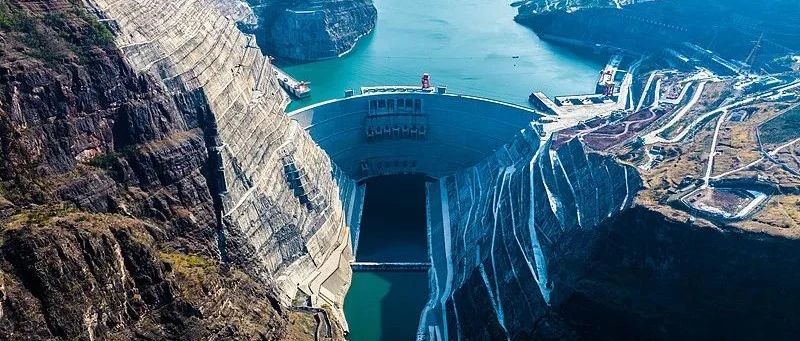
Core Viewpoint - The article emphasizes the importance of technological innovation in driving high-quality energy development during China's 14th Five-Year Plan, highlighting breakthroughs in clean energy, fossil energy cleaning, and integrated energy development, which collectively support energy security and the transition to a low-carbon economy [2][3][4]. Group 1: Clean Energy Development - During the 14th Five-Year Plan, the energy structure is rapidly adjusting, with non-fossil energy power generation capacity reaching 2.23 billion kilowatts by July 2025, accounting for 60.8% of total power generation capacity [3]. - The efficiency of N-type TOPCon solar cells has surpassed 27%, with the cost of electricity dropping to approximately 0.13 yuan/kWh, a reduction of about 50% compared to 2020 [3]. - The largest hydropower unit in the world, the Baihetan hydropower station, has been completed, and the pumped storage capacity exceeds 58 million kilowatts, maintaining the world's leading position for nine consecutive years [3]. Group 2: Fossil Energy Cleaning - Fossil energy continues to play a stabilizing role in energy security, with over 500 million kilowatts of coal-fired power units undergoing energy-saving, heating, and flexibility upgrades [4]. - Significant projects include the completion of Asia's first ultra-deep exploration well and the world's first 100,000-ton deep-water semi-submersible oil production platform [4]. - The CCUS demonstration project in Taizhou has been established with a capacity of 500,000 tons, marking a significant step in carbon capture technology [4]. Group 3: Integrated Energy Development - The smart grid is undergoing continuous upgrades, with the capacity for "West-to-East Power Transmission" increasing from 260 million kilowatts to 360 million kilowatts [4]. - The energy consumption of proton exchange membrane (PEM) electrolyzers has decreased to 4.2 kWh/Nm3, and key technologies for hydrogen refueling stations have achieved localization [4]. - The cost of lithium iron phosphate energy storage systems has dropped to around 0.4 yuan/Wh, with advancements in compressed air and vanadium flow battery storage technologies [4]. Group 4: Original Technological Innovation - The construction of a new power system aims to maximize the integration of renewable energy, with projections indicating that by 2060, wind and solar installations will exceed 900 million kilowatts, accounting for over 70% of power generation [5]. - The development of a new type of high-voltage direct current (HVDC) converter valve has been achieved, demonstrating 100% failure resistance in practical applications [6]. - The flexible HVDC technology has been successfully exported, with significant projects in the Middle East and a successful bid for the Dolwin6 offshore wind project in Germany [6]. Group 5: Strengthening National Strategic Technological Forces - The article highlights the need to address issues of fragmentation and homogeneity in energy technology innovation, advocating for a unified national strategy to enhance research capabilities [8]. - The establishment of national laboratories and innovation alliances in the energy sector aims to consolidate resources and focus on major national energy needs [8]. - Collaborative efforts among various stakeholders, including government, enterprises, and research institutions, are emphasized to drive technological advancements in flexible coal-fired power generation [9][10].


新华社丨向“绿”向“新”,数说“十四五”能源发展新突破
国家能源局· 2025-08-27 02:06
Core Viewpoint - The article highlights the significant progress and historical achievements in China's energy sector since the implementation of the "14th Five-Year Plan," emphasizing the completion of key energy production capacity and non-fossil energy targets [4]. Group 1: Energy Supply and Production - The energy supply in China is becoming more robust, with a projected national electricity generation exceeding 10 trillion kilowatt-hours by 2024, accounting for one-third of global production [5]. - The total energy production is estimated to be around 5 billion tons of standard coal, representing over one-fifth of global energy production [5]. - More than 90% of the increase in domestic energy consumption is expected to come from domestic sources [5]. Group 2: Renewable Energy Development - Nearly 50% of the new electricity generation capacity in the country is attributed to renewable energy sources [6]. - The total supply of non-fossil energy is projected to grow by nearly 50% [6]. - China has established the world's largest electric vehicle charging network, with two charging stations for every five electric vehicles [6]. - The share of renewable energy generation capacity has increased from 40% to approximately 60% [6]. Group 3: Technological Innovation and Market Growth - China holds over 40% of global renewable energy patents, with continuous improvements in solar conversion efficiency and offshore wind turbine capacity [7]. - By mid-2025, the installed capacity of new energy storage in China is expected to reach approximately 95 million kilowatts, a nearly 30-fold increase over five years [8]. - The hydrogen production and consumption scale in China is projected to exceed 36 million tons by 2024, ranking first in the world [8]. Group 4: Market Dynamics - The volume of electricity traded in the market has increased from 10.7 trillion kilowatt-hours during the "13th Five-Year Plan" to 23.8 trillion kilowatt-hours [10]. - The number of registered market participants in the electricity sector has reached 970,000, five times that of 2020 [10]. - A significant portion of photovoltaic equipment manufacturers and over 60% of wind turbine manufacturers are private enterprises [10].
国家能源局:“十四五”能源高质量发展成就显著
Zhong Guo Hua Gong Bao· 2025-08-27 01:57
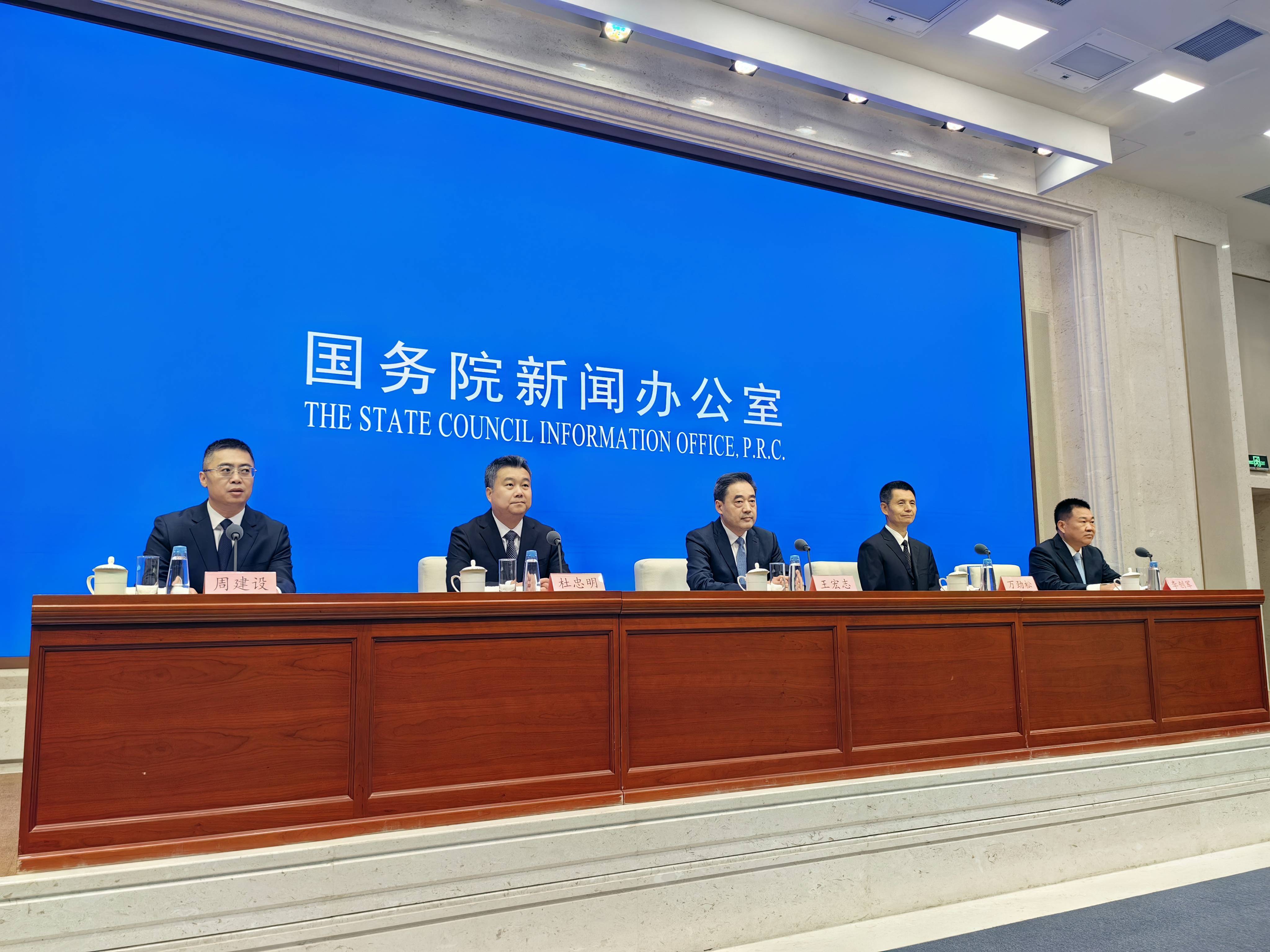
Group 1 - The core viewpoint is that China's energy sector has made significant progress and historical achievements during the "14th Five-Year Plan" period, with key indicators such as energy production capacity and the proportion of non-fossil energy expected to be met on schedule [1][2] - The "14th Five-Year Plan" is characterized by a more robust and resilient energy supply, with optimized resource allocation and improved energy infrastructure connecting various regions, enhancing energy security for over 1.4 billion people [1] - The plan emphasizes the fastest green and low-carbon transition, with renewable energy generation capacity increasing from 40% to around 60%, and significant annual additions in wind and solar power installations [2] Group 2 - The "14th Five-Year Plan" has seen major breakthroughs in energy technology innovation, with advancements in new energy technologies and oil and gas exploration reaching unprecedented depths [2] - The energy reform process has deepened, with coal, electricity, and new energy entering the market, and a national oil and gas network being established, alongside improvements in energy regulation and governance mechanisms [2]
全国有700多万个家庭当上了光伏“房东”
Yang Shi Xin Wen· 2025-08-27 01:04
Energy Consumption - During the "14th Five-Year Plan" period, China's energy consumption increment has reached 1.5 times that of the five-year increment during the "13th Five-Year Plan," with an expected new electricity consumption exceeding the annual electricity consumption of the EU [5] - In July, electricity consumption surpassed 1 trillion kilowatt-hours, equivalent to Japan's total annual electricity consumption [5] - In the eastern region, 40% of energy consumption comes from major energy transmission projects such as "West-to-East Electricity Transmission" and "North-to-South Coal Transport" [5] Green and Low-Carbon Transition - China has built the world's largest electric vehicle charging network, with 2 charging piles for every 5 electric vehicles [5] - The proportion of renewable energy generation capacity has increased from 40% to approximately 60% [5] - One-third of the total electricity consumed in society is green electricity, with significant contributions to global low-carbon transition by reducing carbon emissions by approximately 4.1 billion tons through exported wind and solar products [5] Renewable Energy Development - Distributed photovoltaic systems have seen new installations exceeding 400 million kilowatts, with 16 million kilowatts added in household photovoltaic systems, making over 7 million families "photovoltaic landlords" [5] - China holds over 40% of global new energy patents, continuously breaking world records in photovoltaic conversion efficiency and offshore wind turbine capacity [5] - The scale of new energy storage has reached the world's largest, with rapid development of smart microgrids and virtual power plants [5] Technological Innovation - Major projects such as the Baihetan Hydropower Station and the third-generation nuclear power "Hualong One" have been completed, showcasing China's technological innovation capabilities [5] - Oil and gas development has successfully reached depths of over 10,000 meters and advanced into deep-sea areas [5] Market Dynamics - The number of registered entities in the electricity market has reached 970,000, five times that of 2020 [6] - The majority of photovoltaic equipment manufacturing companies are private enterprises, with over 60% of wind turbine manufacturing companies also being private [6] - As of the end of July, the number of charging infrastructure units reached 16.696 million, ten times that at the end of the "13th Five-Year Plan," leading the world in scale [6]
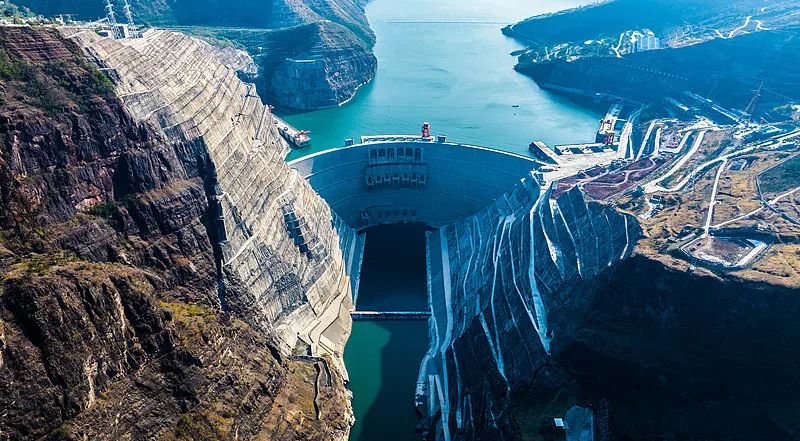
我国建成全球门类最全规模最大的能源体系(权威发布·高质量完成“十四五”规划)
Ren Min Ri Bao· 2025-08-26 21:45
Core Insights - The "14th Five-Year Plan" period has seen significant advancements in China's energy sector, with the country emerging as a key player in global energy transition [1][7] Group 1: Energy Supply and Demand - China's energy consumption increased by 9.8 million tons of standard coal in the first four years of the "14th Five-Year Plan," with projected new electricity consumption exceeding the annual consumption of the EU over five years [2] - Domestic energy production has met over 90% of the consumption increase, with total energy production equivalent to approximately 5 billion tons of standard coal, accounting for over 20% of global production [2] - The country has built the world's largest electric vehicle charging network, with 1.67 million charging points, and invested over 800 billion yuan in rural power grid improvements [2] Group 2: Green Transition - The share of renewable energy in total installed capacity has risen from 40% to around 60% during the "14th Five-Year Plan" [3] - Wind and solar power generation capacity increased from 530 million kilowatts in 2020 to 1.68 billion kilowatts by July 2023, with their share of total electricity consumption rising from 9.7% to 18.6% [3] - China's renewable energy projects have contributed to a 60% reduction in wind power costs and an 80% reduction in solar power costs globally over the past decade [3] Group 3: Technological Innovation and Investment - Significant breakthroughs in energy technology have been achieved, including advancements in oil and gas exploration and renewable energy efficiency [6] - The new energy storage capacity has grown nearly 30 times to approximately 95 million kilowatts during the "14th Five-Year Plan" [6] - Annual energy investment has consistently exceeded 4 trillion yuan, with private enterprises playing a crucial role, particularly in the power infrastructure sector where they account for over 85% of construction [6]
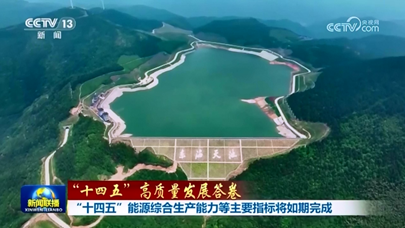
“十四五”能源综合生产能力等主要指标将如期完成
Yang Shi Wang· 2025-08-26 13:57
Core Viewpoint - The press conference highlighted the achievements in high-quality energy development during the "14th Five-Year Plan" period, emphasizing China's advancements in renewable energy and international cooperation in green energy projects [2] Group 1: Energy Supply and Resilience - Since the beginning of the "14th Five-Year Plan," China's energy supply has become more sufficient and resilient [2] - The share of renewable energy generation capacity has increased from 40% to approximately 60% [2] Group 2: Technological Innovation - Significant breakthroughs in energy technology have been achieved, with over 40% of global new energy patents originating from China [2] - China has set new world records in photovoltaic conversion efficiency and offshore wind turbine capacity [2] Group 3: International Cooperation - China has entered a new phase of green and low-carbon transformation in energy cooperation, collaborating on green energy projects with over 100 countries and regions [2] - The focus is on building a sustainable energy future in partnership with other nations [2]
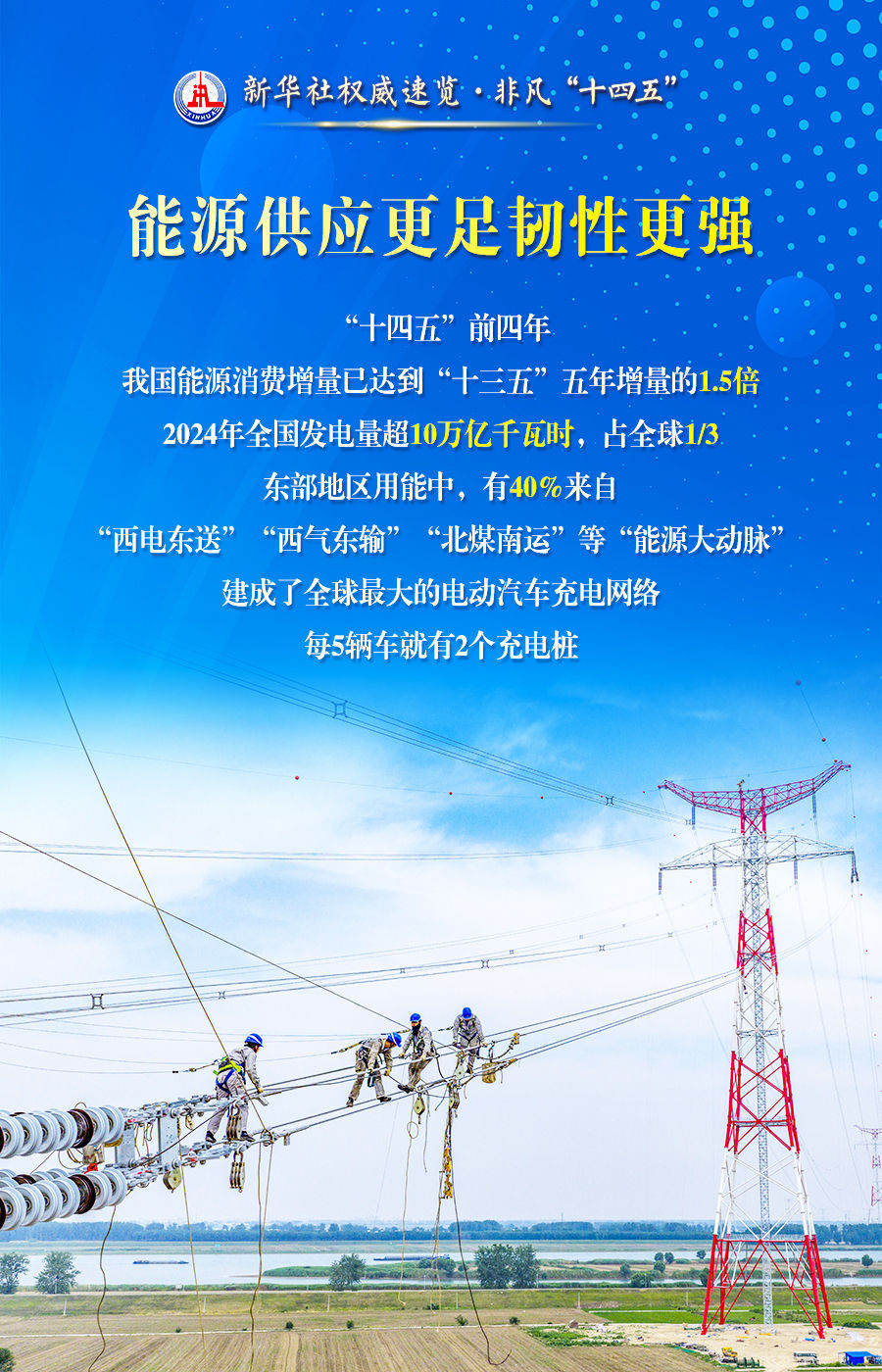
新华社权威速览·非凡“十四五”|中国,成为世界能源转型重要推动者
Xin Hua She· 2025-08-26 11:45
Group 1 - The core viewpoint is that China's energy sector has achieved significant breakthroughs and historical accomplishments since the start of the 14th Five-Year Plan, with key indicators such as comprehensive energy production capacity and the proportion of non-fossil energy expected to be met on schedule [1] - China has constructed the world's largest and fastest-growing renewable energy system, with the share of renewable energy generation capacity increasing from 40% to approximately 60% [3] - The total electricity consumption in China now includes one-third green electricity, contributing to a reduction of carbon emissions by approximately 4.1 billion tons for other countries [3] Group 2 - Energy technology innovation has seen substantial progress, with new energy patents accounting for over 40% of the global total, and new energy storage capacity ranking first in the world [6] - The development of smart microgrids and virtual power plants is accelerating, with pilot projects for vehicle-to-grid interactions being advanced [6] - Energy reform is deepening, with all industrial and commercial users entering the market, and the number of registered electricity market operators reaching 970,000, five times that of 2020 [8] Group 3 - The oil and gas sector is moving towards a "national unified network," indicating a significant step in energy integration [8] - The majority of photovoltaic equipment manufacturing companies and over 60% of wind turbine manufacturers are private enterprises, highlighting the role of private sector participation in the energy market [8]
新闻联播丨“十四五”期间,全国有700多万个家庭当上了光伏“房东”
国家能源局· 2025-08-26 11:27
Core Viewpoints - The "14th Five-Year Plan" period has seen significant achievements in energy consumption and development, with energy consumption growth reaching 1.5 times that of the previous five years, and projected new electricity consumption exceeding the annual total of the EU [5] Energy Consumption - In July, electricity consumption surpassed 1 trillion kilowatt-hours, equivalent to Japan's total annual electricity consumption [5] - Eastern regions derive 40% of their energy from major energy transmission projects like "West-to-East Power Transmission" and "North-to-South Coal Transport" [5] - The country has established the world's largest electric vehicle charging network, with 2 charging stations for every 5 electric vehicles [5] Green and Low-Carbon Transition - The renewable energy generation capacity has increased from 40% to approximately 60% of total installed capacity, with one-third of electricity consumption being green energy [5] - Exports of wind and solar products have contributed to a reduction of approximately 4.1 billion tons of carbon emissions globally [5] - Distributed solar power has seen significant growth, with over 400 million kilowatts of new installations, and more than 7 million households have become "solar landlords" [5] Energy Technology Innovation - The number of new energy patents accounts for over 40% of the global total, with advancements in solar conversion efficiency and offshore wind turbine capacity [5] - The scale of new energy storage has reached the world's largest, and developments in smart microgrids and virtual power plants are accelerating [5] - Major projects like the Baihetan Hydropower Station and the "Hualong One" nuclear reactor have been completed, showcasing China's technological innovation capabilities [5] Power Market - The number of registered entities in the electricity market has reached 970,000, five times that of 2020 [9] - The majority of photovoltaic equipment manufacturing companies are private enterprises, and over 60% of wind turbine manufacturers are also private [9] - As of the end of July, the number of charging infrastructure units reached 16.696 million, ten times that of the end of the 13th Five-Year Plan, leading the world in scale [9]
新华财经|我国已构建起全球最大、发展最快的可再生能源体系
Sou Hu Cai Jing· 2025-08-26 11:06
Core Viewpoint - China has established the world's largest and fastest-growing renewable energy system, achieving significant progress in energy development during the "14th Five-Year Plan" period [1][4][5]. Group 1: Energy Supply and Demand - During the first four years of the "14th Five-Year Plan," China's energy consumption growth reached 1.5 times that of the entire "13th Five-Year Plan" period, with projected new electricity consumption exceeding the annual electricity consumption of the European Union [4]. - By 2024, China's total electricity generation is expected to surpass 10 trillion kilowatt-hours, accounting for one-third of global electricity generation, with total energy production equivalent to approximately 5 billion tons of standard coal, representing over one-fifth of global production [4]. Group 2: Renewable Energy Development - The share of renewable energy generation capacity increased from 40% to around 60% during the "14th Five-Year Plan," with annual new installations of wind and solar power surpassing 100 million and 200 million kilowatts, respectively [5]. - One-third of the electricity consumed in society is now green electricity, and the proportion of non-fossil energy in total energy consumption is expected to exceed the planned target of 20% [5]. Group 3: Technological Innovation - China leads globally in new energy technologies, holding over 40% of global patents in this field, with continuous improvements in photovoltaic conversion efficiency and offshore wind turbine capacity [6]. - Major projects such as the Baihetan Hydropower Station and the "Hualong One" nuclear reactor have been completed, showcasing China's technological innovation capabilities [6]. Group 4: Energy Reform and Market Dynamics - The construction of a unified national electricity market has accelerated, with significant participation from private enterprises in the energy sector, enhancing market vitality [7]. - The number of registered electricity market participants has reached 970,000, five times that of 2020, indicating a robust growth in market engagement [7].
新华社权威速览丨向“绿”向“新”,数说“十四五”能源发展新突破
Xin Hua Wang· 2025-08-26 08:01
Group 1 - The core viewpoint of the article highlights the significant progress and historical achievements in China's energy sector since the implementation of the "14th Five-Year Plan" [4] - The energy supply is expected to be more robust, with a projected national electricity generation exceeding 10 trillion kilowatt-hours by 2024, accounting for one-third of global production [5] - Domestic energy consumption growth is primarily supported by domestic resources, with over 90% of the increase coming from self-sufficiency [6] Group 2 - The increment in new energy generation accounts for nearly 50% of the total new electricity generation capacity, promoting the growth of non-fossil energy [7] - China has built the world's largest electric vehicle charging network, with two charging stations for every five vehicles [8] - The share of renewable energy generation capacity has increased from 40% to approximately 60%, with one-third of electricity consumption now coming from green energy [8] Group 3 - By mid-2025, China's new energy storage capacity is expected to reach about 95 million kilowatts, representing a nearly 30-fold increase over five years [10] - The hydrogen production and consumption scale is projected to exceed 36 million tons in 2024, positioning China as a global leader in this sector [10] - The construction of a unified national electricity market is accelerating, with coal, renewable energy, and all industrial and commercial users entering the market [10] Group 4 - The market transaction volume of electricity has increased from 10.7 trillion kilowatt-hours during the "13th Five-Year Plan" to 23.8 trillion kilowatt-hours [12] - The number of registered electricity market operators has reached 970,000, five times that of 2020 [12] - A significant portion of photovoltaic equipment manufacturers and over 60% of wind turbine manufacturers are private enterprises [12]
