
资本市场开放

Search documents
证监会党委传达贯彻党的二十届四中全会精神 着力增强资本市场韧性和抗风险能力
Shang Hai Zheng Quan Bao· 2025-10-24 19:15
Core Viewpoint - The China Securities Regulatory Commission (CSRC) emphasizes the importance of implementing the spirit of the 20th Central Committee's Fourth Plenary Session, focusing on enhancing the resilience and risk resistance of the capital market, and aligning actions with the central government's decisions [1][2][3] Group 1: Enhancing Market Resilience - The CSRC aims to cultivate high-quality listed companies and improve the market ecology for long-term investments, strengthening mechanisms for market stability [1][2] Group 2: Improving Market Inclusiveness and Adaptability - The focus is on deepening reforms in the Sci-Tech Innovation Board and the Growth Enterprise Market, while enhancing the functions of the New Third Board, private equity, and venture capital [2] Group 3: Strengthening Regulatory Effectiveness - The CSRC plans to intensify the crackdown on securities and futures violations, advancing digital and intelligent regulation to enhance investor protection [2] Group 4: Promoting Market Openness - The strategy includes advancing the opening of markets, products, and institutions while ensuring safety, and supporting Hong Kong's status as an international financial center [2] Group 5: Enhancing Party Discipline and Team Building - The CSRC emphasizes the importance of party discipline, continuous improvement of work styles, and the establishment of a robust regulatory team [2][3] Group 6: Strategic Planning for Future Development - The CSRC will prioritize learning and implementing the plenary session's spirit as a major political task, conducting research to plan strategic tasks for the 14th and 15th Five-Year Plans [3]
证监会重要会议!五大部署→
Zheng Quan Shi Bao· 2025-10-24 14:55
Core Viewpoint - The China Securities Regulatory Commission (CSRC) is focused on implementing the spirit of the 20th Central Committee's Fourth Plenary Session, emphasizing the importance of political guidance and strategic planning for the upcoming five years of economic and social development [1][2]. Group 1: Key Initiatives and Strategies - The CSRC aims to enhance the resilience and risk resistance of the capital market by fostering high-quality listed companies and establishing a stable market ecosystem [3]. - There is a focus on improving the inclusiveness and adaptability of capital market regulations, including reforms in the Sci-Tech Innovation Board and the Growth Enterprise Market [3]. - The CSRC plans to strengthen the effectiveness and deterrence of regulatory enforcement, targeting illegal activities in the securities and futures markets while advancing digital and intelligent regulation [3]. Group 2: Political and Organizational Commitment - The CSRC is committed to aligning its actions with the central government's decisions, emphasizing the importance of political responsibility and the need for a robust regulatory framework [2][4]. - The organization will prioritize the construction of a clean and efficient regulatory team, ensuring accountability and integrity within its ranks [3]. - There is a call for comprehensive training and dissemination of the Plenary Session's spirit across the CSRC to ensure its principles are deeply understood and implemented [4].
中国证监会:着力增强资本市场的韧性和抗风险能力
Sou Hu Cai Jing· 2025-10-24 13:05
Core Viewpoint - The Chairman of the China Securities Regulatory Commission, Wu Qing, emphasizes the need to enhance the inclusiveness, adaptability, attractiveness, and competitiveness of China's capital market to better serve the "14th Five-Year Plan" development goals and the construction of a financial power [1] Group 1 - The focus is on strengthening the resilience and risk resistance capabilities of the capital market [1] - There is an emphasis on cultivating and developing a high-quality group of listed companies and improving the market ecology for long-term investment [1] - The establishment of long-term stabilization mechanisms is highlighted to solidify the internal foundation for market stability [1] Group 2 - The need to enhance the inclusiveness and adaptability of capital market systems is stressed [1] - Reforms of the Sci-Tech Innovation Board and the Growth Enterprise Market are to be deepened, with a focus on the nurturing functions of multi-tiered equity markets such as the New Third Board, private equity, and venture capital [1] - The effectiveness and deterrent power of regulatory enforcement will be improved, with a focus on cracking down on various illegal activities in securities and futures [1] Group 3 - The push for capital market openness includes orderly advancement of both market and product institutional openings [1] - There is a call to accelerate the construction of world-class exchanges [1]
着力增强资本市场的韧性和抗风险能力!证监会最新发声
Zhong Guo Zheng Quan Bao· 2025-10-24 11:39
Core Viewpoint - The meeting emphasized enhancing the resilience and risk resistance of the capital market, improving the inclusiveness and adaptability of market systems, and strengthening regulatory enforcement effectiveness and deterrence [1][3][4]. Group 1: Capital Market Resilience and Stability - Focus on cultivating and developing a high-quality group of listed companies, improving the "long money long investment" market ecology, and strengthening long-term market stability mechanisms [2][4]. - Continuous consolidation of the internal foundation for market stability [2][4]. Group 2: Regulatory Improvements - Enhance the effectiveness and deterrence of regulatory enforcement by strictly combating various securities and futures violations, accelerating digital and intelligent regulation, and strengthening the rule of law in the capital market [2][4][5]. - Improve the protection of investor rights and interests [4]. Group 3: Market Openness and International Cooperation - Promote deeper and higher-level capital market openness, coordinating safety and openness, and orderly advancing the two-way opening of markets, products, and institutions [2][5]. - Support Hong Kong in consolidating and enhancing its status as an international financial center and deepen international regulatory cooperation to improve risk prevention and regulatory capabilities in an open environment [5]. Group 4: Party Discipline and Team Building - Strengthen the party's discipline and the construction of the regulatory team, ensuring strict governance and promoting a culture of integrity within the China Securities Regulatory Commission [2][5]. - Emphasize the importance of learning and implementing the spirit of the 20th Central Committee's Fourth Plenary Session as a major political task [5].
全球第三大股票市场、全球最大交易所债券市场、亚洲第二大ETF市场 “起承转合”看上交所“十四五”成绩单
Zheng Quan Shi Bao· 2025-10-17 18:49
Core Insights - The Shanghai Stock Exchange (SSE) has focused on high-quality development during the 14th Five-Year Plan, becoming the world's third-largest stock market and the largest bond market [1][2] - The proportion of technology innovation companies in the SSE has increased from 32% to 41%, with their market capitalization rising from 27% to 32% [2] - The SSE has implemented significant reforms, including the establishment of the Sci-Tech Innovation Board, which has supported the listing of 376 new companies, including 37 unprofitable firms [2][3] Group 1: Market Development - The SSE's stock initial public offering (IPO) financing increased by 16% compared to the previous five-year period, while the bond market issuance reached 31 trillion yuan, a 42% increase [4] - The SSE has actively promoted the REITs market, with 51 new listings and 1,405 billion yuan raised, accounting for nearly 70% of the market [4][5] - The number of mergers and acquisitions (M&A) has increased, with 996 asset restructuring disclosures, a 20% increase, and 114 major asset restructurings, a 138% increase [5] Group 2: Innovation and R&D - R&D investment by SSE companies rose from 640 billion yuan to 1.07 trillion yuan, a 66% increase, accounting for nearly 40% of national R&D investment [3] - Sci-Tech Innovation Board companies have generated 120,000 patents, with a median R&D intensity of 12.6%, leading the A-share market [3] Group 3: Investor Protection and Market Integrity - The SSE has implemented a robust regulatory framework, issuing nearly 800 disciplinary actions against violations, with over 30% being severe penalties [8] - The SSE has established a three-tier investor education and protection mechanism, enhancing the suitability management system for investors [8][9] - The SSE has improved market accessibility, with a significant increase in online services and investor participation in shareholder meetings [9][10] Group 4: Internationalization and Cross-Border Cooperation - The SSE has integrated into the national opening-up strategy, with the Shanghai-Hong Kong Stock Connect achieving a cumulative transaction volume of 99 trillion yuan, a 275% increase [7] - The SSE has facilitated the issuance of Global Depositary Receipts (GDRs) for 10 companies, raising a total of 3.35 billion USD [7]


《海外资管机构赴上海投资指南(2025版)》(附英文版全文下载)
Di Yi Cai Jing· 2025-10-16 01:40
Core Viewpoint - The 2025 edition of the "Investment Guide for Overseas Asset Management Institutions in Shanghai" has been updated to support the construction of Shanghai as an international financial center and to promote high-level, institutional openness in the capital market [1] Group 1 - The guide has undergone its fifth update, reflecting changes in the macroeconomic environment and the latest industry developments [1] - The update is conducted under the guidance of key financial regulatory bodies, including the Shanghai Municipal Financial Committee, the Shanghai Securities Regulatory Bureau, and the Asset Management Association of China [1]
资本市场改革行稳致远
Jing Ji Ri Bao· 2025-10-14 22:18
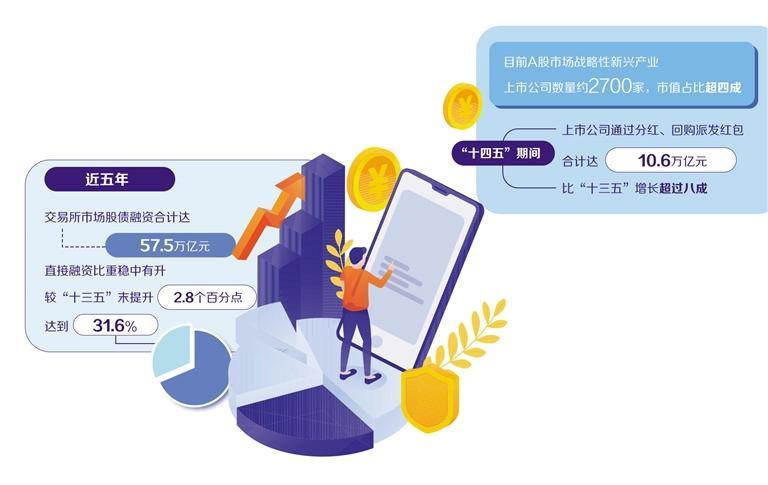
Group 1: Core Views - The capital market reforms during the "14th Five-Year Plan" period have significantly improved the market ecosystem, enhancing its role in supporting new productivity and resource allocation [2] - The "15th Five-Year Plan" period is crucial for achieving high-quality development in the capital market, with expectations for deeper reforms to contribute to China's modernization [2] Group 2: Investment and Financing Reforms - Investment and financing are key components of capital market development, with ongoing reforms enhancing market attractiveness and inclusivity [3] - The stock issuance registration system has been fully implemented, and measures like the "16 Articles for Sci-Tech Innovation" have been introduced to support high-quality tech enterprises [3] - Direct financing has increased, with total financing through stock and bond markets reaching 57.5 trillion yuan over the past five years, raising the direct financing ratio to 31.6% [3] Group 3: Investment Side Reforms - Significant measures have been taken to promote long-term capital investment, with various funds holding approximately 21.4 trillion yuan in A-share market by August, a 32% increase from the end of the "13th Five-Year Plan" [4] - Long-term capital is seen as a stabilizing force in the market, essential for maintaining healthy market operations [4] Group 4: Challenges and Future Directions - Despite progress, challenges remain in fully leveraging the capital market's role in supporting technological innovation and increasing direct financing ratios [5] - Future reforms should focus on enhancing the Sci-Tech Innovation Board and improving the product and service system to better serve new productivity [5] Group 5: Enhancing Listed Company Quality - Regulatory bodies are focused on improving the quality of listed companies through support for mergers and acquisitions and market management [6] - Since the introduction of the "Six Articles for Mergers and Acquisitions," around 230 major asset restructuring cases have been disclosed, indicating a trend towards industry consolidation [6][7] - The total amount distributed through dividends and buybacks by listed companies reached 10.6 trillion yuan during the "14th Five-Year Plan," an increase of over 80% from the previous period [7] Group 6: Exit Mechanisms and Market Health - The implementation of stricter delisting standards has led to the smooth exit of 207 companies over the past five years, promoting a healthier market environment [8] - Future delisting reforms should focus on optimizing standards and enhancing the deterrent effect against major violations [8] Group 7: High-Level Institutional Opening - The capital market has seen the approval of 13 foreign-controlled securities and fund institutions, with foreign holdings in A-shares reaching 3.4 trillion yuan [9] - The number of qualified foreign institutional investors (QFII) has exceeded 900, with significant foreign capital inflows into domestic stocks and funds [9][10] Group 8: Going Global - The "14th Five-Year Plan" has seen 269 domestic companies list abroad, with 83 of them being tech firms, reflecting a strong trend towards internationalization [10] - A-share companies reported overseas revenues of 4.9 trillion yuan in the first half of the year, marking a 4.5% year-on-year increase [10] Group 9: Future Directions for Capital Market Opening - Future efforts should focus on aligning market infrastructure and regulations with international standards, facilitating cross-border financing for tech firms, and expanding foreign investment access [11]
外资独资券商、期货公司队伍将“迎新” 资本市场开放再进一步
Jin Rong Shi Bao· 2025-10-10 02:01
Core Viewpoint - The establishment of Mizuho Securities (China) marks a significant expansion of foreign investment in China's securities and futures markets, reflecting the ongoing trend of institutional opening in the capital market [1][6]. Group 1: Establishment of Mizuho Securities (China) - Mizuho Securities (China) has been approved by the China Securities Regulatory Commission (CSRC) and will become the third Japanese securities company in China and the first wholly foreign-owned securities firm [1][3]. - The registered capital of Mizuho Securities (China) is RMB 2.3 billion, and its business scope includes securities underwriting, proprietary trading, and asset management limited to asset securitization [2][3]. - Mizuho Securities (China) must complete its business registration within six months and apply for a securities and futures business license within 15 days of obtaining its business license [2][3]. Group 2: Changes in Futures Companies - The CSRC has approved the change of ownership and actual controller of Qian Kun Futures to Goldman Sachs Group, making it the fourth wholly foreign-owned futures company in China [4][6]. - Prior to the change, Qian Kun Futures was primarily owned by Beijing Gao Hua Securities, with Goldman Sachs holding a minority stake [4]. - Following the approval, Goldman Sachs now fully owns Qian Kun Futures with an investment of RMB 317 million [4]. Group 3: Ongoing Institutional Opening - The CSRC has been actively promoting a high level of institutional opening in the capital market, including the removal of foreign ownership limits for securities and futures companies [6][7]. - As of mid-2025, there are 16 foreign-controlled securities companies in China, with total assets of RMB 53.28 billion and net assets of RMB 29.63 billion, reflecting a year-on-year growth of 10% and 6.96% respectively [6]. - The total revenue of foreign securities companies reached RMB 4.36 billion, with a net profit of RMB 710 million, showing a year-on-year increase of 19.88% and a 5.8-fold increase in net profit [6].
中国金融强国崛起,双支柱战略显威力,挑战美元霸主地位
Sou Hu Cai Jing· 2025-10-04 03:41
Core Insights - The total amount of cross-border payments in RMB has reached a historical high, with the dollar's share dropping to 62%, down 1 percentage point from the previous year, indicating a potential shift in currency preference among businesses [1] - Discussions around RMB's internationalization have intensified, with some questioning whether it could replace the dollar, despite RMB's international settlement share only being 3.5%, significantly lower than the euro and far from the dollar's dominance [3] - Regulatory changes, such as the recent easing of restrictions for foreign institutions to trade A-shares, have sparked debates about the attractiveness of RMB assets [3] - There is a notable increase in cross-border payments in RMB, particularly in Southeast Asia, where orders using RMB have doubled, reflecting a growing acceptance of the currency [3] - Foreign capital inflow into China's bond market has increased by 12% year-on-year, but 70% of this capital is directed towards short-term government bonds, indicating cautious long-term investment sentiment [3] - The lack of a "super anchor" asset and trust in the RMB are seen as major obstacles to its internationalization, with comparisons drawn to the dollar's established status in global trade [5] - Recent developments, such as Argentina's central bank renewing a currency swap agreement with China, highlight the mixed signals in RMB's international acceptance, as other countries like Chile reaffirm their preference for the dollar [5] - The Hong Kong Monetary Authority emphasizes that RMB internationalization is a gradual process, requiring time and effort to build trust and establish a stable capital market [5] - Market volatility in A-shares has raised concerns about foreign capital's willingness to invest, with fears of policy changes and information asymmetry contributing to a cautious approach [5] - The ongoing dialogue about RMB's internationalization and capital market opening reflects a complex interplay of market psychology and regulatory dynamics, with no clear resolution in sight [7] - The impact of RMB internationalization on ordinary people's financial interests is highlighted, as it affects their ability to access reliable assets and manage currency risks during international travel [9] - The gradual evolution of the RMB's role in global finance is likened to a marathon, with significant challenges remaining before it can rival the dollar's dominance [9]

吴清:外资持有A股市值3.4万亿元
Zhong Guo Xin Wen Wang· 2025-09-22 13:14
Core Viewpoint - The expansion of China's capital market is highlighted, with significant reforms and measures aimed at increasing foreign investment and enhancing market transparency and governance [1][2]. Group 1: Foreign Investment and Market Opening - The China Securities Regulatory Commission (CSRC) has approved 13 foreign-controlled securities, fund, and futures institutions to operate in China during the 14th Five-Year Plan period [1] - Foreign ownership in A-shares has reached 3.4 trillion RMB, with 269 companies listed overseas [1] - The CSRC has fully removed foreign shareholding limits for industry institutions and improved the Qualified Foreign Institutional Investor (QFII) system [1] Group 2: Regulatory Reforms and Initiatives - The CSRC has implemented significant reforms, including the introduction of long-term stock investment by insurance funds and the nationwide promotion of the personal pension system [1] - Initiatives such as the "Science and Technology Innovation 16 Articles," "Science and Technology Innovation Board 8 Articles," and "Mergers and Acquisitions 6 Articles" have been launched to support new productive forces [1] - The CSRC has revised the information disclosure management measures and improved corporate governance standards, promoting more standardized and transparent operations of listed companies [2]