闭源模型

Search documents
专家:2035年机器人数量或比人多
2 1 Shi Ji Jing Ji Bao Dao· 2025-10-04 05:41
Core Insights - The rapid development of the AI industry is accelerating iterations across various sectors, presenting significant industrial opportunities [1] Group 1: Trends in AI Industry - The first major trend is the transition from discriminative AI to generative AI, now evolving towards agent-based AI, with task length doubling and accuracy exceeding 50% in the past seven months [3] - The second trend indicates a slowdown in the scaling law during the pre-training phase, shifting focus to post-training stages like inference and agent applications, with inference costs decreasing by 10 times while computational complexity for agents has increased by 10 times [3] - The third trend highlights the rapid development of physical and biological intelligence, particularly in the smart driving sector, predicting that by 2030, 10% of vehicles will possess Level 4 autonomous driving capabilities [3] Group 2: Future Projections and Risks - The fourth trend points to a significant rise in AI risks, with the emergence of agents increasing risks at least twofold, necessitating greater attention from global enterprises and governments [4] - The fifth trend reveals a new industrial landscape for AI, characterized by a combination of foundational large models, vertical models, and edge models, with expectations that by 2026, there will be approximately 8-10 foundational large models globally, including 3-4 from China and 3-4 from the U.S. [4] - The future is expected to favor open-source models, with a projected ratio of 4:1 between open-source and closed-source models [4]

为 OpenAI 秘密提供模型测试, OpenRouter 给 LLMs 做了套“网关系统”
海外独角兽· 2025-09-23 07:52
Core Insights - The article discusses the differentiation of large model companies in Silicon Valley, highlighting OpenRouter as a key player in model routing, which has seen significant growth in token usage [2][3][6]. Group 1: OpenRouter Overview - OpenRouter was established in early 2023, providing a unified API Key for users to access various models, including mainstream and open-source models [6]. - The platform's token usage surged from 405 billion tokens at the beginning of the year to 4.9 trillion tokens by September, marking an increase of over 12 times [2][6]. - OpenRouter addresses three major pain points in API calls: lack of a unified market and interface, API instability, and balancing cost with performance [7][9]. Group 2: Model Usage Insights - OpenRouter's model usage reports have sparked widespread discussion in the developer and investor communities, becoming essential reading [3][10]. - The platform provides insights into user data across different models, helping users understand model popularity and performance [10]. Group 3: Founder Insights - Alex Atallah, the founder of OpenRouter, believes that the large model market is not a winner-takes-all scenario, emphasizing the need for developers to control model routing based on their requests [3][18]. - Atallah draws parallels between OpenRouter and his previous venture, OpenSea, highlighting the importance of integrating disparate resources into a cohesive platform [19][20]. Group 4: OpenRouter Functionality - OpenRouter functions as a model aggregator and marketplace, allowing users to manage over 470 models through a single interface [31]. - The platform employs intelligent load balancing to route requests to the most suitable providers, enhancing reliability and performance [37]. - OpenRouter aims to empower developers by providing a unified view of model access, allowing them to choose the best models based on their specific needs [34][35]. Group 5: Future Directions - OpenRouter is exploring the potential of personalized models based on user prompts while ensuring user data remains private unless opted in for recording [52][55]. - The platform aims to become the best reasoning layer for agents, providing developers with the tools to create intelligent agents without being locked into specific suppliers [58][60].


朱啸虎:搬离中国,假装不是中国AI创业公司,是没有用的
Hu Xiu· 2025-09-20 14:15
Group 1 - The discussion highlights the impact of DeepSeek and Manus on the AI industry, emphasizing the importance of open-source models in China and their potential to rival closed-source models in the US [3][4][5] - The conversation indicates that the open-source model trend is gaining momentum, with Chinese models already surpassing US models in download numbers on platforms like Hugging Face [4][5] - The competitive landscape is shifting towards "China's open-source vs. America's closed-source," with the establishment of an open-source ecosystem being beneficial for China's long-term AI development [6][7] Group 2 - Manus is presented as a case study for Go-to-Market strategies, illustrating that while Chinese entrepreneurs have strong product capabilities, they often lack effective market entry strategies [10][11] - Speed is identified as a critical barrier for AI application companies, with the need to achieve rapid growth to outpace competitors [11][12] - Token consumption is discussed as a significant cost indicator, with Chinese companies focusing on this metric due to lower willingness to pay among domestic users [12][13][14] Group 3 - The AI coding sector is characterized as a game dominated by large companies, with high token costs making it challenging for startups to compete effectively [15][16] - The conversation suggests that AI coding is not a viable area for startups due to the lack of customer loyalty among programmers and the high costs associated with token consumption [16][18] - Investment in vertical applications rather than general-purpose agents is preferred, as the latter may be developed by model manufacturers themselves [20] Group 4 - The discussion on robotics emphasizes investment in practical, value-creating robots rather than aesthetically pleasing ones, with examples of successful projects like a boat-cleaning robot [21][22] - The importance of combining functionality with sales capabilities in robotic applications is highlighted, as this can lead to a more favorable ROI [22][23] Group 5 - The conversation stresses the need for AI hardware companies to focus on simplicity and mass production rather than complex features, as successful hardware must be deliverable at scale [28][29] - The potential for new hardware innovations in the AI era is questioned, with a belief that significant breakthroughs may still be years away [30][31] Group 6 - The dialogue addresses the challenges of globalization for Chinese companies, noting that successful market entry in the US requires a deep understanding of local dynamics and compliance [36][37] - The importance of having a local sales team for B2B applications in the US is emphasized, as relationships play a crucial role in sales success [38][39] Group 7 - The conversation highlights the risks associated with high valuations, which can limit a company's flexibility and increase pressure for performance [42][43] - The discussion suggests that IPOs for Chinese companies may increasingly occur in Hong Kong rather than the US, as liquidity issues persist in the market [46][48] Group 8 - The need for startups to operate outside the influence of large companies is emphasized, with a call for rapid growth and innovation in the AI sector [49][53] - The potential for AI startups to achieve significant scale quickly is acknowledged, but the conversation warns that the speed of evolution in the AI space may outpace traditional exit strategies [52][53]

王兴兴,最新发声!“还处在爆发性增长前夜”
Zhong Guo Zheng Quan Bao· 2025-09-11 15:05
Group 1: AI Development Insights - The AI field is still in its early stages, with significant growth expected soon, as highlighted by the CEO of Yushu Technology, Wang Xingxing [2] - Challenges in high-quality data collection and model algorithms are present, particularly in the integration of multimodal data and robot control [2] - The era of innovation and entrepreneurship in AI is seen as promising, with lower barriers for young innovators [2] Group 2: Open Data and Resources - Open data and computational resources are essential for advancing AI, as stated by Wang Jian, founder of Alibaba Cloud [3] - The shift from code open-sourcing to resource openness marks a revolutionary change in AI competition [3] - The launch of the "Three-body Computing Constellation" with 12 satellites aims to process data in space, facilitating deep space exploration [3] Group 3: AI in Healthcare - Ant Group's CEO, Han Xinyi, emphasizes the importance of combining AI with human expertise in healthcare, focusing on personalized and precise recommendations [4] - The dual nature of healthcare as a low-frequency behavior and health management as a high-frequency need creates fertile ground for AI applications [4] - AI is expected to serve as an assistant to doctors, enhancing their capabilities rather than replacing them [4] Group 4: AI Business Opportunities - The upcoming year is anticipated to witness a significant explosion in AI applications, with new entrepreneurial opportunities emerging [5] - The distinction between B2B and B2C AI ventures is noted, with the U.S. focusing more on B2B and China excelling in C2C [5] - Differentiation in AI lies in creating unique user experiences beyond the AI technology itself [5]
图灵奖得主、王坚、韩歆毅、王兴兴等最新发声
Zhong Guo Ji Jin Bao· 2025-09-11 11:10
Core Insights - The 2025 Bund Conference gathered 550 guests from 16 countries to discuss the future of AI and innovation, featuring prominent figures like Richard Sutton and Wang Jian [1] Group 1: AI Development and Trends - Richard Sutton emphasized that AI is entering an "experience era" focused on continuous learning, with potential far exceeding previous capabilities [2] - Sutton also noted that fears surrounding AI, such as bias and job loss, are exaggerated and often fueled by those who profit from such narratives [2] - Wang Jian highlighted the shift from code open-source to resource open-source as a revolutionary change in AI, making the choice between open and closed models a key competitive factor [4] Group 2: Infrastructure and Economic Impact - Zhang Hongjiang pointed out that AI is driving large-scale infrastructure expansion, with significant capital expenditures expected, such as over $300 billion in AI-related spending by major tech companies in the U.S. by 2025 [6] - He also mentioned that the AI data center industry has seen a construction boom, which will positively impact the power ecosystem and economic growth [6] Group 3: AI in Healthcare - Ant Group's CEO, Han Xinyi, stated that AI will not replace doctors but will serve as a valuable assistant, enhancing the capabilities of specialists and supporting grassroots healthcare [9][11] - Han identified three core challenges for AI in healthcare: high-quality data, mitigating hallucinations, and addressing ethical concerns [11] Group 4: Challenges in AI Implementation - Wang Xingxing from Yushutech expressed optimism about the AI landscape but acknowledged that practical applications of AI still face significant challenges, particularly in aligning video generation with robotic control [13] - He noted that the barriers to innovation have lowered, creating a favorable environment for young entrepreneurs to leverage AI tools for new ideas [14]
把大模型送上天!王坚外滩大会分享:人工智能不能缺席太空
Guan Cha Zhe Wang· 2025-09-11 08:11
Core Insights - The 2025 Inclusion Bund Conference opened in Shanghai, focusing on the transformative impact of open resources in the AI era, as highlighted by Wang Jian, founder of Alibaba Cloud and director of Zhijiang Laboratory [1][5] - Wang Jian emphasized that the shift from code openness to resource openness is a revolutionary change in AI, making the choice between open and closed models a critical variable in AI competition [1][3] Group 1: AI and Open Resources - The concept of open source has evolved into open resources, where the availability of data and computational resources is essential for advancing AI [3][4] - Wang Jian compared the significance of open models in AI to the launch of the open-source browser Netscape in 1998, marking a pivotal moment in the internet era [3] Group 2: Satellite Technology and AI - In May 2023, Zhijiang Laboratory successfully launched 12 satellites, deploying an 8 billion parameter model into space, which allows for data processing directly in orbit [4] - This initiative, named the "Trisolaris Computing Constellation," aims to democratize access to satellite technology and facilitate deep space exploration by integrating AI and computational power in space [4] Group 3: Conference Overview - The 2025 Inclusion Bund Conference features a main forum, over 40 open insight forums, 18 innovation stages, and various tech-related events, emphasizing the theme of "Reshaping Innovative Growth" [5]

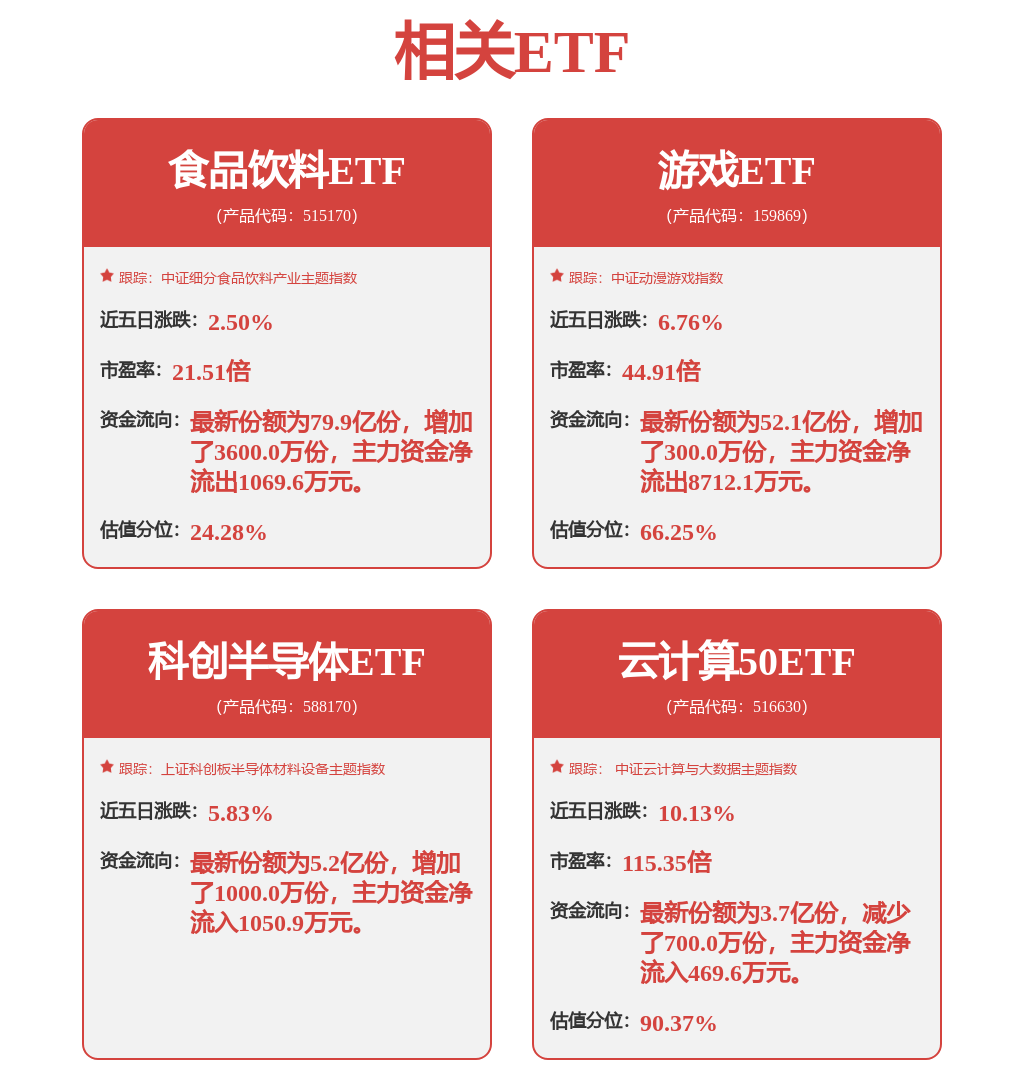
阿里云创始人王坚:开源与闭源模型的选择,已成为AI竞争关键变量
Xin Lang Ke Ji· 2025-09-11 02:06
Core Insights - The choice between open-source and closed-source models has become a critical variable in AI competition [1] - We are currently in an era of open-source and openness, where the openness of model weights signifies the openness of data and computing resources [1] - Merely opening software in the context of open-source is now seen as having limited impact [1]
路线图出炉!未来十年,AI改变中国
Hua Xia Shi Bao· 2025-08-30 09:44
Group 1 - The State Council released an opinion on August 26 to implement the "Artificial Intelligence +" initiative, aiming to deeply integrate AI with various sectors and reshape production and living paradigms [1][2] - The opinion outlines a clear roadmap for AI development in China over the next decade, with goals for 2027, 2030, and 2035, including achieving over 70% penetration of new intelligent terminals and agents by 2027 [2][3] - Key actions and foundational support capabilities are detailed in the opinion, focusing on technology, industry development, consumer quality, public welfare, governance, and global cooperation [4][6] Group 2 - Companies like MiniMax and Jieyue Xingchen expressed strong support for the opinion, indicating their commitment to leveraging AI in various industries, with MiniMax planning to provide enterprise-level services [3][5] - The opinion emphasizes the importance of AI in enhancing public welfare, particularly in healthcare, with a focus on improving grassroots medical services through AI applications [5][6] - The document highlights the need for a robust action framework to support the ambitious goals set forth, including the development of a secure and controllable AI ecosystem [6][7]

百度AI为何“起大早、赶晚集”
Guan Cha Zhe Wang· 2025-08-13 07:27
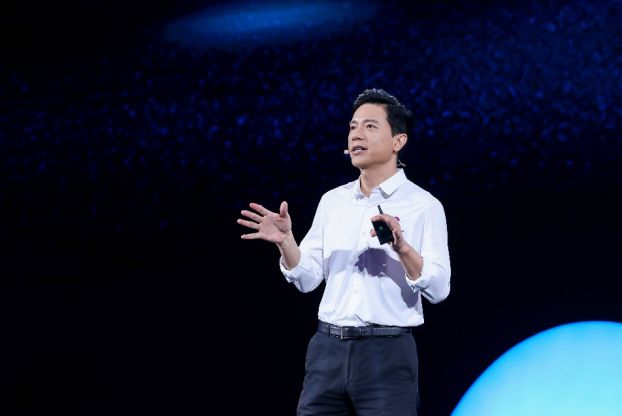
Core Insights - Baidu's founder, Li Yanhong, emphasized the need for the company to focus on core competencies and acknowledged that the lack of focus has led to failures in various business ventures, particularly in AI [1][4][6] - Despite having 700 million monthly active users and a strong technological foundation, Baidu has struggled to maintain competitiveness in the AI sector, particularly with its Wenxin Yiyan model lagging behind competitors [3][4][5] - The company has faced significant setbacks in its attempts to penetrate the food delivery and automotive sectors, leading to a reevaluation of its strategic direction [1][4][6] Business Performance - Baidu's Wenxin Yiyan model has not gained traction in the consumer market, with its ranking on the App Store declining significantly [1][4] - The company's revenue has decreased by 1%, indicating challenges in monetization and high training costs associated with AI development [5][6] - Baidu's previous market share in food delivery was as high as 33%, but it exited the market after being acquired by Ele.me in 2017 [1][4] Strategic Shifts - Li Yanhong has called for a shift from "AI hype" to practical applications, focusing on tools that deliver real value rather than just innovation for its own sake [4][5] - The company is transitioning from a closed-source model to an open-source approach, having released 10 models from the Wenxin 4.5 series, although some remain closed-source [5][6] - Baidu's management has decided to reduce investment in certain AI products, indicating a more cautious approach to resource allocation [7][8] Competitive Landscape - Baidu's competitive position has weakened against emerging players like DeepSeek, which has gained developer interest rapidly [5][6] - The company is facing significant competition in the cloud services sector, where it needs to leverage its AI capabilities to create a complementary business model [9][10] - Baidu's cloud services are seen as a potential growth engine, but it faces challenges from established players like Alibaba and Tencent [9][10] Future Outlook - Li Yanhong has expressed the need for Baidu to overcome internal challenges and focus on long-term strategies to build sustainable advantages in the AI space [12] - The company is expected to continue refining its approach to AI and cloud services, with an emphasis on practical applications and user feedback [4][12] - Baidu's ability to adapt to the rapidly changing AI landscape will be crucial for its future success and competitiveness [12]

为了不被挤下牌桌,OpenAI又开源了
Sou Hu Cai Jing· 2025-08-07 04:59
Core Insights - OpenAI has shifted its strategy by re-entering the open-source domain with the release of two models, gpt-oss-120b and gpt-oss-20b, marking a significant change from its previous closed-source approach [2][5][17] - The open-source models are designed to cater to different use cases, with gpt-oss-120b focusing on high inference needs and gpt-oss-20b aimed at localized applications [8][15] - OpenAI's decision to open-source these models is seen as a response to increasing competition in the AI space, particularly from companies like Anthropic and Google, which are gaining market share in the enterprise sector [3][22] OpenAI's Market Position - As of August, ChatGPT boasts 700 million weekly active users, a fourfold increase year-on-year, with daily message volume exceeding 3 billion [3] - OpenAI's paid user base has grown from 3 million to 5 million, with Pro and enterprise users contributing over 60% of revenue [3] - Despite its consumer market dominance, OpenAI faces challenges in the enterprise market, where competitors are encroaching on its share [3][22] Open-Source Strategy - OpenAI's initial open-source philosophy has evolved, with a notable shift to a closed-source model in 2020, which drew criticism for deviating from its mission to benefit humanity [5][16] - The newly released models follow a permissive Apache 2.0 license, allowing for extensive commercial and research use, which contrasts with the previous API-dependent model [14][15] - The open-source models are expected to enhance OpenAI's market influence, as they can now be deployed on major cloud platforms like Amazon AWS, allowing for broader accessibility [17][19] Competitive Landscape - The rise of open-source models has led to a more competitive environment, with companies like DeepSeek and Alibaba's Qwen series gaining traction in the market [18][22] - OpenAI's re-entry into open-source is anticipated to reshape the competitive dynamics, as more companies adopt a hybrid approach of open and closed models [17][22] - The trend indicates that open-source models are becoming increasingly viable, with the performance gap between open-source and closed-source models narrowing [17][18] Financial Implications - OpenAI is projected to achieve an annual recurring revenue (ARR) of $12 billion by the end of July, significantly outpacing its closest competitor, Anthropic, which is expected to reach $5 billion [19][22] - The financial model of open-source remains challenging, as companies may hesitate to adopt open-source strategies due to the lack of direct revenue generation from model usage [19][22]