高校科技成果转化

Search documents
第二十届中国研究生电子设计竞赛华东赛区现场赛在厦门开幕
Zhong Guo Xin Wen Wang· 2025-07-18 09:42
Group 1 - The 20th China Graduate Electronic Design Competition (referred to as "Yandian Competition") East China regional competition was held at Xiamen University, with over 200 teams from 42 universities participating [1][2] - The competition aims to showcase talent, stimulate innovation among graduate students, and enhance collaboration among regional universities to boost China's independent innovation capabilities in the electronic information field [1][5] - The Yandian Competition, initiated in 1996 by the China Electronics Society and Tsinghua University, is one of the largest and most influential thematic competitions in the "China Graduate Innovation Practice Series" [2] Group 2 - As of June 20, the current Yandian Competition attracted 8,228 participating teams from 333 graduate training institutions, with over 30,000 teachers and students registered, marking a 12% increase compared to the previous year [2] - The East China regional competition received 1,540 team registrations, with 1,097 teams in the technical main track, making it the highest in the country [2] - The competition features diverse projects across various fields, including industry, energy, transportation, education, agriculture, and health [2] Group 3 - The Deputy Secretary-General of the China Electronics Society emphasized that universities are the main force in technological innovation and major breakthroughs, and the competition aims to discover projects with industrialization prospects [5] - Participants are encouraged to engage with judges and experts to integrate competition experiences into their research innovations, with experts providing guidance for project industrialization [5]

武汉推出十亿元基金赋能高校师生创新创业
Sou Hu Cai Jing· 2025-07-02 10:28
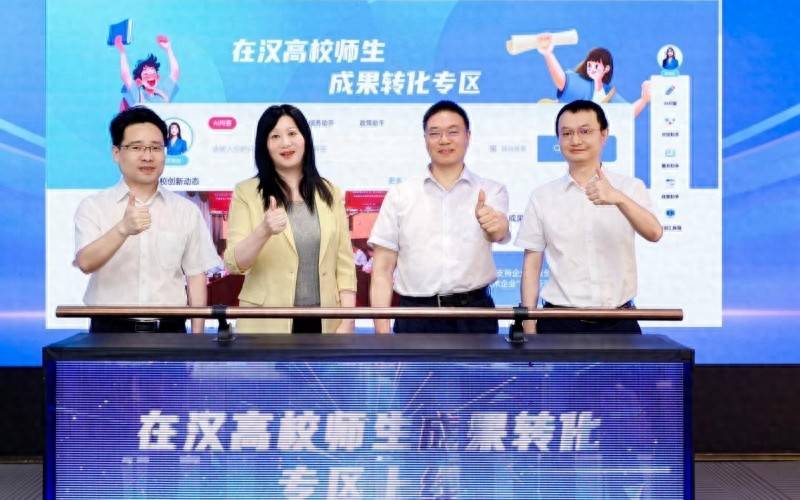
Group 1 - Wuhan has launched a 1 billion yuan fund to empower innovation and entrepreneurship among university faculty and students [2][3] - The fund, named "Wuchuangxing·University Faculty and Student Innovation and Entrepreneurship Fund," aims to provide comprehensive financial and resource support for startup teams [3] - The initiative includes the establishment of a service area for technology achievement transformation in universities, integrating functions such as achievement display and resource matching [2][4] Group 2 - The fund focuses on early-stage investments in hard technology and has a duration of 10 years, emphasizing patient capital for supporting innovation and entrepreneurship [3] - A "Technical Manager Partner Program" has been introduced to address the challenges of technology achievement transformation, involving experts from various sectors to facilitate project evaluation and resource integration [3][4] - The launch of these initiatives marks a new phase in the digital, capitalized, and platform-based transformation of scientific achievements in Wuhan [4]

我省一百二十一项科研成果从实验室“振翅”高飞
Xin Hua Ri Bao· 2025-07-01 23:26
Core Viewpoint - The article highlights the significant advancements in drug development efficiency through the establishment of regional technology transfer centers in Jiangsu, particularly in Nanjing, which facilitate the commercialization of scientific research and innovation in the biomedicine sector [1][4]. Group 1: Drug Development Innovations - The "Star Intelligence Cloud" team from Peking University has successfully transitioned from laboratory research to market application in central nervous system drug development, utilizing a breakthrough technology in gene encoding [1]. - The Nanjing Biomedicine Center has connected over 1,800 biomedicine companies, providing essential resources and support for innovative drug development [2]. Group 2: Funding and Support Mechanisms - The Nanjing Biomedicine Center has established a "concept verification fund" with an initial capital of 500 million yuan to support early-stage project transformations, which has already led to significant funding for various projects [3][4]. - The center has successfully facilitated 4300 technology transfer agreements and 121 project implementations within nine months, showcasing its effectiveness in bridging the gap between research and commercialization [4]. Group 3: Institutional Reforms and Policies - The Ministry of Education has implemented ten supportive measures for the establishment of regional centers, including the creation of a national technology achievement database [4]. - Jiangsu Province has introduced 20 specific policies to enhance the technology transfer process, including reforms in intellectual property rights and financial support for regional centers [4][5]. Group 4: Collaborative Ecosystem - The regional centers serve as platforms for collaboration between universities and industries, fostering an environment for innovation and entrepreneurship [5]. - The centers are designed to provide comprehensive services to universities and facilitate the development of a sustainable innovation ecosystem through continuous engagement with various stakeholders [5].
全国首家高校区域技术转移转化中心落地江苏后,发生了什么
Xin Hua Ri Bao· 2025-06-30 12:41
Group 1 - The article emphasizes the significant reforms in Jiangsu province aimed at enhancing the efficiency of technology transfer and commercialization of research outcomes from universities [5][12][18] - The establishment of the National University Regional Technology Transfer Center in Jiangsu is highlighted as a pioneering initiative to facilitate the transformation of scientific achievements into practical applications [12][13][18] - The center has successfully connected over 4,300 research outcomes from various universities, with 121 projects already transitioned into practical applications within just nine months [12][18] Group 2 - The article discusses the innovative funding mechanisms, such as the "concept verification fund" with an initial capital of 500 million yuan, designed to support early-stage projects and facilitate their transition to commercialization [10][12] - The collaboration between educational institutions and the government has led to the creation of a supportive ecosystem for startups in the biomedicine sector, addressing common challenges such as long R&D cycles and funding shortages [9][17] - The article notes that the Jiangsu center aims to become a national model for technology transfer, focusing on integrating education, technology, and talent to drive innovation and economic growth [13][18]

引新枝竞发 成蔚然之势
Huan Qiu Wang· 2025-06-30 00:55
Group 1: Core Perspectives - The construction of a strong education system requires systematic leaps and qualitative changes at both macro and micro levels [1] - Key issues must be addressed by gathering resources such as policies and funding to build a superior ecosystem [1] Group 2: Higher Education Technology Transfer - The Ministry of Education held a national meeting to promote the construction of regional technology transfer centers in universities [3] - Successful integration of technological and industrial innovation relies on strong universities, capable entrepreneurs, and financial support [3] - The first regional center in Jiangsu has demonstrated significant results in gathering various innovation elements and has set a precedent for future centers [3] Group 3: Educational Digitalization - The Ministry of Education emphasized the need for a new learning ecosystem that promotes lifelong learning through collaboration among schools, families, and society [4] - A successful learning society requires sufficient resource supply, convenient learning environments, and comprehensive incentive mechanisms [4] - The educational digitalization strategy is advancing through iterative processes, achieving significant progress in ecosystem integration [4] Group 4: Overall Education Reform - The acceleration of building a strong education system highlights the importance of organized integration and effective mechanism design [5] - There is a need to study non-educational factors that contribute to educational reform and to establish efficient systems and mechanisms [5]
元迈细胞生物科技获耐心资本支持
Nan Jing Ri Bao· 2025-06-24 02:28
Group 1 - Nanjing Yuanmai Cell Biotechnology Co., Ltd. has successfully received joint investment from the Nanjing University Technology Achievement Transformation Angel Fund and the Future Industry Angel Fund, marking the official launch of the Nanjing University Technology Achievement Transformation Angel Fund established in March this year [1] - Yuanmai Cell, founded in September 2022, focuses on the research and development of cell immunotherapy drugs, leveraging four core technology platforms: CAR-T module design, sequence screening, efficient gene delivery, and iPSC differentiation [1] - The founder, Professor Shen Pingping, is recognized as a leading authority in macrophage research and has received multiple funding supports from national and provincial programs, enhancing the company's research capabilities [1] Group 2 - The investment reflects the critical role of government-guided funds in accelerating the transformation of university scientific achievements into productive forces, thereby enhancing Nanjing's influence in the gene and cell therapy industry [2] - The Nanjing University Technology Achievement Transformation Angel Fund has a total scale of 500 million yuan, marking it as the first university technology achievement transformation fund in Jiangsu Province's strategic emerging industry special fund [2] - The fund aims to address the "last mile" challenge in transforming university scientific achievements into tangible productivity, with a focus on supporting projects in the biomedical and information communication sectors [3]
多校一园、校地融合,北京未来大学科技园启动共建
Xin Jing Bao· 2025-06-16 10:10
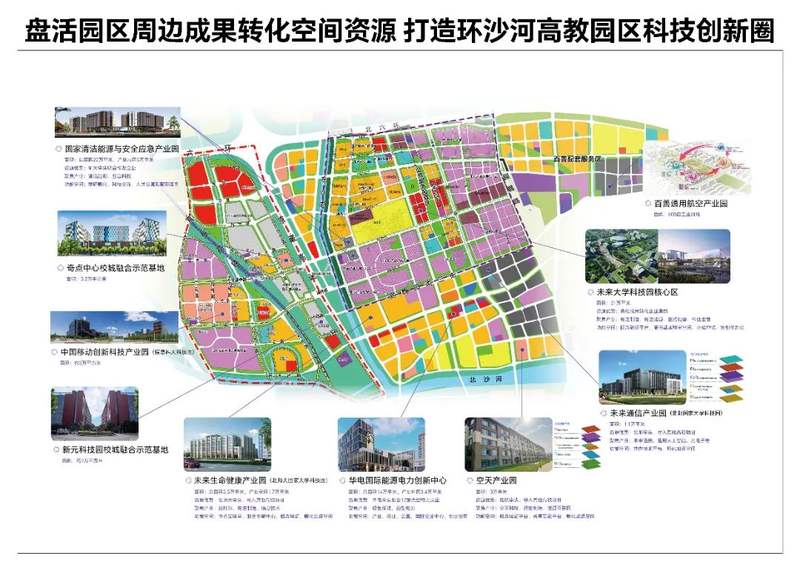
Core Insights - The establishment of the Beijing Future University Science and Technology Park marks a significant step in organized research results transformation and deepening the integration of universities and cities in the Shahe Higher Education Park [1] Group 1: Project Overview - The Future University Science and Technology Park is built on the advantages of a dense concentration of universities in the Shahe Higher Education Park, utilizing a "one park, multiple sites" and "multiple schools, one park" model [1] - The park is a collaboration among the Beijing Municipal Science and Technology Commission, the Beijing Municipal Education Commission, and Changping District, along with ten universities including Beihang University and Beijing Normal University [1] Group 2: Focus Areas and Objectives - The park focuses on three leading industries in Changping District: medical health, advanced energy, and advanced manufacturing, as well as cutting-edge fields like future information, future manufacturing, and future energy [1] - The core philosophy of the park is "strong alliances and resource sharing," aiming to create a concentrated area for university technology industries and a source of innovative technologies [1] Group 3: Development Progress - The construction of specialized parks within the Future University Science and Technology Park is accelerating, with a comprehensive service system for the transformation of scientific and technological achievements being established [2] - The International Energy and Power Innovation Center, led by North China Electric Power University, has attracted over 170 energy and technology companies, including 15 national high-tech enterprises [2] - The Aerospace Industry Park serves as a demonstration base for university achievement transformation, having registered 43 related enterprises and established a talent empowerment center [2] Group 4: Infrastructure and Ecosystem - The core area of the Future University Science and Technology Park is under rapid development, covering 210,000 square meters of industrial space to meet the needs for concept verification and pilot testing [5] - The total planned scale for the Phase IV project is 910,000 square meters, which includes residential, international exchange centers, commercial complexes, multifunctional sports venues, and quality educational facilities [5]
32个高校项目比拼“产品力”
Su Zhou Ri Bao· 2025-06-12 00:26
Group 1 - The core viewpoint of the news is the acceleration of the transformation of biomedical technology achievements from universities in Suzhou Industrial Park, promoting deep integration of industry, academia, and research [1] - The "BioMatch" series of events is organized to showcase projects from 23 universities, with 32 projects participating in the semi-annual roadshow, which aims to validate the "product strength" of innovative entrepreneurial ideas [1][2] - Award-winning projects can receive up to 200 square meters of free office space for three years and up to 500,000 yuan in concept verification funding, with additional support for top projects [1] Group 2 - The Suzhou Biomedical Sub-center aims to bridge the gap between industry and academia by organizing events that facilitate deep and efficient connections among universities, enterprises, and investment institutions [2] - Approximately 1,700 university achievements have been collected, with six roadshows organized, inviting over 80 quality university projects, and 165 projects have entered the concept verification database [2] - A reward mechanism has been established to promote the transfer and transformation of achievements, including rent-free office space, youth talent subsidies, and concept verification support [2]
聚力推动高校科技成果向基础教育转化
Xin Hua Ri Bao· 2025-06-09 21:34
Group 1 - The core viewpoint emphasizes the importance of integrating technological innovation and talent cultivation in education, with a focus on transforming scientific research outcomes into practical applications in basic education [1] - Jiangsu Province's government report indicates that R&D investment intensity exceeded 3.3% in 2024, and the region's innovation capability has risen to second place nationally, marking a significant qualitative leap in technological innovation [1] - The establishment of a collaborative platform for technology transfer is essential to enhance the adaptability and synergy of research outcomes with the needs of basic education [2] Group 2 - A differentiated resource allocation strategy is proposed to address disparities in educational development, particularly between southern and northern Jiangsu, ensuring equitable access to technological resources [3] - The need for a robust teacher training program is highlighted, focusing on enhancing the technological literacy of teachers, especially in underdeveloped regions [3] - The introduction of an innovative evaluation mechanism is suggested to motivate both higher education institutions and primary/secondary schools to engage in the transformation of scientific research outcomes [4][5] Group 3 - The proposal includes the establishment of a "green channel" within the education system to streamline administrative processes for educational technology products, facilitating quicker access to schools [5] - The concept of a "technology education understanding community" is introduced to break down communication barriers between researchers and educators, fostering collaboration and mutual understanding [6] - The importance of community involvement in education is emphasized, advocating for the creation of science popularization bases and interactive resources to engage families and society in the educational process [6]
全国高校区域技术转移转化中心(粤港澳大湾区)拟建设高端科学仪器分中心
仪器信息网· 2025-05-23 09:50
Core Viewpoint - Guangzhou and Shenzhen will jointly establish a high-end scientific instrument sub-center to accelerate the transformation of university scientific achievements into productive forces, facilitating a "two-way rush" between universities and enterprises [1][3]. Group 1: Establishment of the High-end Scientific Instrument Sub-center - The high-end scientific instrument sub-center will focus on the high-end analysis and testing instrument sector, with construction taking place in the Huangpu District's HeXin Mass Spectrometry Industrial Base, aiming to create 14 public transformation platforms [2]. - The establishment of the sub-center is part of the National University Regional Technology Transfer and Transformation Center, which received approval from the Ministry of Education in April this year [2][3]. Group 2: Collaborative Efforts and Stakeholders - A meeting was held at Southern University of Science and Technology, attended by representatives from government departments, universities, and enterprises, to discuss the establishment of the Shenzhen sub-center [2]. - Southern University of Science and Technology is leading the initiative and has organized internal coordination meetings to compile a project database of scientific instruments, providing technical reserves for the sub-center's construction [2]. Group 3: Objectives and Strategic Importance - The National University Regional Technology Transfer and Transformation Center aims to gather innovative resources and build a one-stop public transformation platform, enhancing the professional technology transfer team and leveraging the role of technology finance [3]. - The initiative is designed to promote the rapid transformation of university scientific achievements into real productivity, emphasizing the strategic importance of the Guangdong-Hong Kong-Macao Greater Bay Area [3].