黑土地保护

Search documents
新思想引领新征程丨我国节约集约用地、严守耕地红线 为中国式现代化提供坚实资源支撑
Yang Guang Wang· 2025-06-26 05:30
Group 1 - The core viewpoint emphasizes the importance of land protection for food security, ecological balance, and sustainable development, with a strict adherence to the 1.8 billion mu arable land red line [1] - From 2021 to 2024, the cumulative reduction in land consumption per unit GDP is 15.97%, achieving the "14th Five-Year Plan" target ahead of schedule [1] - The implementation of the strictest arable land protection and land-saving systems has led to improved efficiency in land use, supporting China's modernization efforts [1] Group 2 - The quality of arable land is crucial, with black soil being referred to as the "panda of arable land," and efforts are being made to protect and utilize it effectively [2] - A survey covering 83 key black soil protection counties in Northeast China shows that 86.34% of the black soil areas are stable or relatively stable [2] - By the end of 2024, over 1 billion mu of high-standard farmland will have been established, with significant achievements in resource-saving and intensive land use [2] Group 3 - The "tenglong huan niao" (replacing the old with the new) approach is being used to redevelop inefficient land, releasing approximately 500 mu of construction land for new projects [3] - The introduction of a smart heavy machinery manufacturing center in Qingdao has led to an annual sales revenue of 15 billion yuan, transforming the area from low land utilization to higher productivity [3] Group 4 - As of April this year, a total of 1.7047 million mu of inefficient land has been redeveloped in pilot cities, yielding positive results [4] - The Ministry of Natural Resources plans to further expand and deepen the pilot projects for inefficient land redevelopment, aiming to establish a more favorable policy and regulatory framework [4]
“耕地中的大熊猫”家底摸清!我国83个黑土地重点保护县地表基质调查完成
Yang Shi Wang· 2025-06-25 08:20
Group 1 - The core viewpoint of the article highlights the completion of a three-year survey on black soil resources in Northeast China, covering 83 key protection counties and establishing a quantifiable boundary for black soil [1][3] - The survey area spans 411,700 square kilometers, accounting for approximately 38% of the total black soil area in China, with specific criteria for defining black soil based on soil thickness and organic matter content [3] - The survey results categorize black soil into stable, relatively stable, vulnerable, and degraded zones, with stable and relatively stable areas making up 86.34% and medium to high-quality black soil areas comprising 88.66% [5] Group 2 - The investigation reveals that issues such as soil erosion, desertification, and salinization are closely related to the types of surface matrix structures, providing new perspectives for targeted management [7] - The findings will support the classification, registration, and high-standard farmland construction of black soil, with applications already in progress in various projects across Heilongjiang, Jilin, and Liaoning provinces [7][8] - Future efforts will focus on integrating survey results with land spatial planning, agricultural industry layout, ecological restoration, and carbon sink assessment, shifting the approach from "surface management" to "matrix management" [8]

守好中国粮仓 保护耕地中的“大熊猫”
Huan Qiu Shi Bao· 2025-06-25 07:13
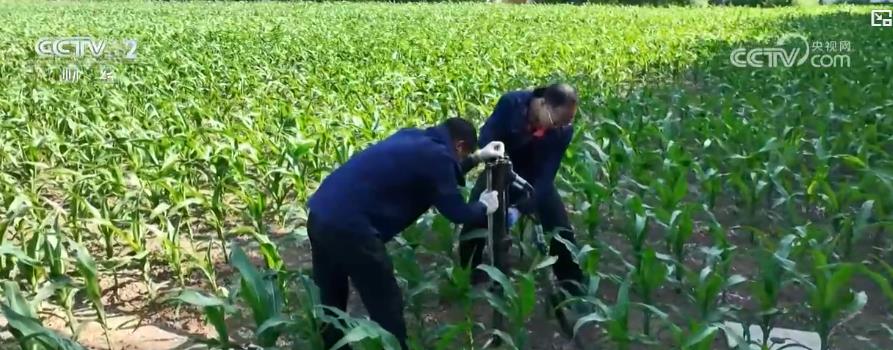
Group 1 - The article highlights the improvement of soil quality in Heilongjiang's black land through the use of organic fertilizers and innovative agricultural practices [1][3] - The North China Agricultural Group's Heshan Farm has implemented a green cycle agriculture pilot project since 2021, utilizing crop straw for livestock feed and returning fermented manure to the soil, enhancing soil structure and fertility [1] - The farm has established two modern closed fermentation bags for dairy cattle, capable of converting 120,000 tons of manure annually [1] Group 2 - The Baquanling Farm has adopted smart agricultural technology, using sensors to monitor soil parameters in real-time, which has improved soil monitoring efficiency by 85% and data accuracy to over 98% [3] - The data collected supports scientific fertilization and soil improvement, contributing to a long-term monitoring database for black land protection [3] - The transformation of small plots into larger fields has increased planting efficiency and reduced soil erosion risks, with an average yield increase of over 100 jin per mu after the transformation [4]
用好养好黑土地,吉林这样做
Ren Min Ri Bao Hai Wai Ban· 2025-06-16 22:13
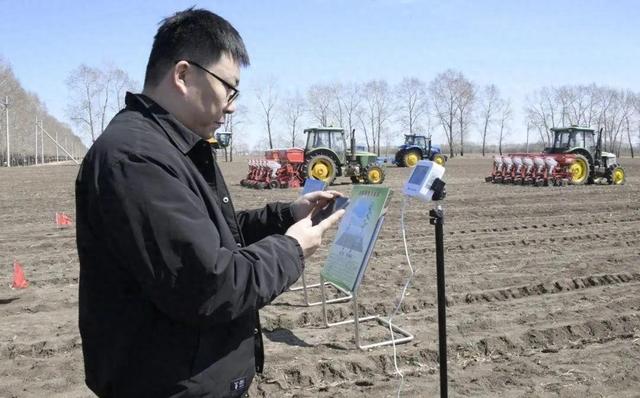
Core Viewpoint - The article emphasizes the importance of modern agricultural practices in Jilin Province, focusing on the protection and enhancement of black soil through innovative farming techniques and the promotion of sustainable agriculture [2][10]. Group 1: Agricultural Practices - Jilin Province is prioritizing the development of modern agriculture, with a focus on technology, green practices, quality, and branding [2]. - The "Lishu Model" of conservation tillage, which includes straw returning to the soil, has shown significant benefits, such as increasing soil organic matter and moisture retention [5][6]. - The adoption of advanced agricultural machinery, such as the seventh-generation multifunctional precision seeder, has improved efficiency and reduced labor [8]. Group 2: Economic Impact - The implementation of the "Lishu Model" has led to a 30-40% increase in grain yield for farmers, while also reducing the need for chemical fertilizers and pesticides [6]. - Jilin's agricultural output is projected to exceed 90 million acres, with a focus on high-standard farmland and sustainable practices [10]. - The local economy is benefiting from the production of various corn-based products, with fresh corn prices reaching 5-10 yuan per ear, significantly higher than previous prices [9]. Group 3: Community Engagement - Farmers are increasingly aware of the need to protect black soil and are actively participating in sustainable practices, such as using organic fertilizers and reducing chemical inputs [9]. - The establishment of modern production lines for corn processing has created job opportunities for local residents, enhancing community livelihoods [9]. - The upcoming 10th Lishu Black Soil Forum aims to further promote black soil protection and productivity enhancement, involving experts and large-scale farmers [6].
法治看点|“两高”关于破坏黑土地资源刑事案件司法解释重点内容解析
Zhong Guo Zi Ran Zi Yuan Bao· 2025-05-28 02:24
黑土地作为耕地中的"大熊猫",是保障国家粮食安全的重要资源。我国东北黑土区是北半球仅有的 三大黑土区之一,在粮食生产和生态屏障方面发挥着关键作用。然而,近年来,盗挖、滥挖、污染黑土 地等违法行为屡禁不止,严重威胁黑土地的可持续利用。2022年出台的黑土地保护法为黑土地的可持续 利用和保护提供了坚强的法治保障。为严厉打击破坏黑土地犯罪,加强黑土地保护,"两高"发布了《最 高人民法院 最高人民检察院关于办理破坏黑土地资源刑事案件适用法律若干问题的解释》(以下简称 《解释》)。《解释》的出台,为自然资源执法相关工作提供了更为明确的法律依据和指导,对有效遏 制破坏黑土地行为意义重大。 01 《解释》主要内容解析及对自然资源执法实践的指导作用 一是细化行为认定标准,织密违法犯罪法网。《解释》第一条以列举加兜底的方式,将非法占用黑 土地用于建房、建窑等工程建设、挖砂采石等资源开采,以及违规排放污染物、堆放废弃物导致黑土地 严重污染等行为,明确界定为非法占用耕地、改变用途并造成毁坏。这一规定兼顾了传统法律表述,又 将近年来出现的挖湖造景等新型破坏方式纳入规制范畴,构建起覆盖工程建设、资源开采、污染排放等 多领域、多角度的认 ...
法治时评|“降”入罪门槛“升”责罚力度
Zhong Guo Zi Ran Zi Yuan Bao· 2025-05-28 02:24
细读黑土地保护法,出现了3次"从重处罚"。第三十一条规定,违法将黑土地用于非农建设"从重处 罚";第三十二条规定,盗挖、滥挖黑土"从重处罚";第三十五条规定,造成黑土地污染、水土流失"从 重处罚"。这3个条款分别针对违法占用、盗挖滥挖、污染流失等破坏黑土地资源的3种严重情形,提出 了从重处罚的原则性规定。至于如何"从重","两高"的司法解释作了细化规定。总体来说,依据刑法第 三百三十八条、第三百四十二条、第三百四十三条等法条,入罪门槛进一步降低,责罚力度进一步升 档。最高法、最高检、公安部相关部门负责人在解读司法解释、发布有关典型案例时,也用3个"严 惩"再次表明了态度:严惩盗挖、滥挖,严惩以合法形式掩盖盗挖泥炭土行为,严惩污染黑土地犯罪行 为。 就违法占地而言,"两高"的司法解释调低了非法占用农用地罪的入罪面积标准;就计算方式而言, 破坏黑土的体积也成为入罪要件。此外,根据司法解释,既打击盗采黑土的上游,也打击窝藏、转移、 收购、代为销售的下游,事前通谋的则以共同犯罪论处;对非法开采属于矿产资源黑土的,以非法采矿 罪定罪论处;对排放、倾倒或者处置有毒有害废物、物质而严重污染黑土地的,以污染环境罪定罪处 罚; ...
北大荒:科技春耕向新提速 力促粮食连获丰收
Zhong Guo Zheng Quan Bao· 2025-05-19 20:33
Core Viewpoint - North China Grain Group, known as "the model for farming," is leveraging advanced technology and efficient operational models to enhance agricultural productivity and ensure high-quality spring sowing, setting the stage for expected record harvests in the fall [1]. Group 1: Spring Sowing Innovations - The spring sowing season has commenced, with North China Grain Group focusing on maximizing efficiency despite lower temperatures affecting rice transplanting schedules [2]. - The company is increasingly utilizing surface water for irrigation, which not only conserves groundwater but also improves crop yield, with reported increases in rice production from 1,220 pounds to over 1,270 pounds per acre [2][3]. - The implementation of advanced seedling raising equipment allows for significant land savings and reduced seedling growth time, enhancing overall agricultural efficiency [3]. Group 2: Technological Advancements in Farming - The use of automated seedling transplanting machines equipped with satellite navigation systems ensures precision and quality in planting, with capabilities for autonomous operation [4]. - North China Grain Group is adopting innovative practices such as early seedling cultivation in greenhouses to promote faster growth and higher yields for corn crops [4][5]. - The company is also focusing on soil health through the application of biological nitrogen-fixing techniques, which reduce reliance on chemical fertilizers and improve soil structure [5][6]. Group 3: Grain Storage and Trade - The establishment of a large grain storage center with advanced monitoring systems ensures the safe storage of significant quantities of corn and rice, facilitating timely sales for farmers at competitive prices [6][7]. - The company actively engages in grain trade, ensuring quality control and establishing stable relationships with major downstream enterprises to maximize trading benefits [7].

不折不扣守护黑土地
Jing Ji Ri Bao· 2025-05-12 21:58
Core Viewpoint - The protection of black soil and arable land requires stringent measures and legal frameworks to deter illegal activities effectively [1][3]. Group 1: Legal Framework and Enforcement - The Supreme People's Court and the Supreme People's Procuratorate have issued interpretations and typical cases to strengthen the legal framework against crimes that damage black soil resources [1][2]. - The new legal interpretation establishes volume-based criteria for illegal occupation of agricultural land, allowing for prosecution if 500 cubic meters of black soil are illegally excavated from permanent basic farmland [2]. - In 2022, judicial authorities in Heilongjiang, Jilin, Liaoning, and Inner Mongolia approved the arrest of 360 individuals in 319 cases related to illegal occupation of agricultural land, with 2,925 individuals prosecuted in 2,459 cases [3]. Group 2: Systematic Approach to Land Protection - The protection of black soil is a systematic project that requires coordinated efforts from government actions and farmers' practices, emphasizing the need for both administrative and legal measures [1][4]. - The central government emphasizes that the 1.8 billion acres of arable land must be genuinely productive and of high quality, reflecting a commitment to sustainable land use and ecological balance [3][4]. - The approach to land protection must include changing traditional agricultural practices and leveraging technological innovations to enhance soil conservation [4].
杨帆:用“超级高压锅”做出黑土“营养餐”
Ke Ji Ri Bao· 2025-05-12 01:49
Group 1 - The article highlights the significant contributions of young scientists in technological innovation, particularly in addressing agricultural challenges in China's black soil regions [2][4] - Yang Fan's team at Northeast Agricultural University developed a water-thermal humification technology to restore degraded black soil by converting agricultural waste into high-efficiency humus [4][6] - The team faced numerous challenges, including slow decomposition rates of straw, but eventually succeeded in creating a "super pressure cooker" to accelerate the transformation process [6][8] Group 2 - The application of the technology led to a significant increase in organic matter content in the soil, with a reported 10% improvement and a 5% increase in rice yield [2][8] - Yang Fan emphasizes the importance of translating laboratory results into practical applications for farmers, addressing the economic feasibility of using their developed products [7][8] - The collaborative efforts between Northeast Agricultural University and the Max Planck Society aim to foster innovation and train the next generation of agricultural scientists [9][10]

自然资源部第一地理信息制图院探索创新人工智能技术在生态保护监管中的应用——秦岭生态保护有了AI助手
Zhong Guo Zi Ran Zi Yuan Bao· 2025-05-08 02:03
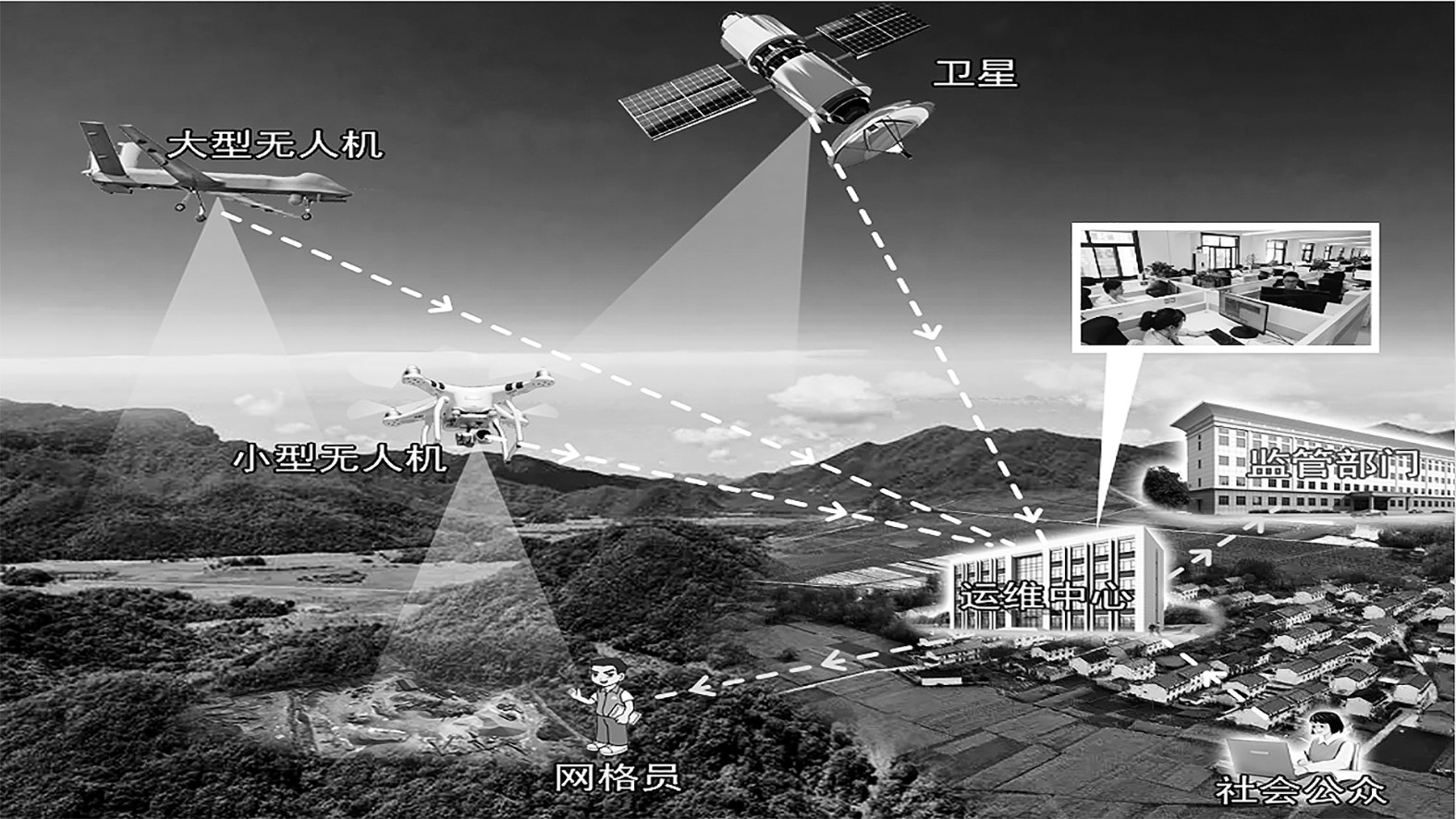
Core Insights - The Qinling Mountains, recognized as China's "central water tower" and an important ecological barrier, are undergoing a significant "smart upgrade" in ecological protection efforts through advanced technologies [1] Group 1: Technological Integration - The Ministry of Natural Resources' First Geographic Information Mapping Institute has developed an integrated monitoring model called "Sky, Ground, and Network" to enhance ecological protection in the Qinling region [1] - The introduction of AI technologies, particularly the DeepSeek model, marks a new phase of intelligent upgrades in ecological protection, optimizing platform functions and creating a smart regulatory model [1] Group 2: Remote Sensing and Monitoring - A deep learning-based automated change detection system has been implemented to identify illegal construction and disordered mining activities in the Qinling area, significantly improving monitoring efficiency [3] - The automated detection system combines multi-temporal image comparison and transfer learning algorithms, allowing for the automatic identification and precise localization of suspicious activities [3] Group 3: Drone Surveillance - A self-developed drone management system enhances inspection efficiency by collecting high-definition video and image data, which is processed through AI visual models for real-time identification of specific ecological issues [5] - The system has integrated over 7,600 video monitoring resources from various industry departments, improving identification accuracy from 45% to over 75% and increasing the daily detection of suspicious activities by 35% [5] Group 4: Legal and Regulatory Support - An intelligent legal knowledge retrieval system has been developed to assist enforcement personnel in quickly accessing relevant ecological regulations, significantly improving the efficiency of legal consultations [8] - This system utilizes deep learning and large language models to provide accurate legal interpretations and recommendations, enhancing decision-making for ecological protection [8] Group 5: Future Directions - The institute plans to further apply large model technologies in ecological protection, focusing on building a knowledge graph for ecological protection in the Qinling region and exploring new methods for intelligent problem analysis [9]