
合成生物学

Search documents
上海宝济药业股份有限公司 - B(02659) - 申请版本(第一次呈交)
2025-08-20 16:00
香港聯合交易所有限公司與證券及期貨事務監察委員會對本申請版本的內容概不負責,對其準確性或完整 性亦不發表任何意見,並明確表示概不就因本申請版本全部或任何部分內容而產生或因倚賴該等內容而引 致的任何損失承擔任何責任。 Shanghai Bao Pharmaceuticals Co., Ltd. 上海寶濟藥業股份有限公司 (於中華人民共和國註冊成立的股份有限公司) 的申請版本 警告 本申請版本乃根據香港聯合交易所有限公司(「聯交所」)及證券及期貨事務監察委員會(「證監 會」)的要求而刊發,僅用作提供資料予香港公眾人士。 本申請版本為草擬本,其內所載資料並不完整,亦可能會作出重大變動。 閣下閱覽本文件, 即代表 閣下知悉、接納並向上海寶濟藥業股份有限公司(「本公司」)、其聯席保薦人、整體協 調人、顧問或包銷團成員表示同意: 本公司招股章程根據香港法例第32章公司(清盤及雜項條文)條例送呈香港公司註冊處處長登記 前,本公司不會向香港公眾人士提出要約或邀請。倘於適當時候向香港公眾人士提出要約或邀 請,有意投資者務請僅依據呈交香港公司註冊處處長註冊的本公司招股章程作出投資決定;有 關文本將於發售期內向公眾刊發。 (a) ...
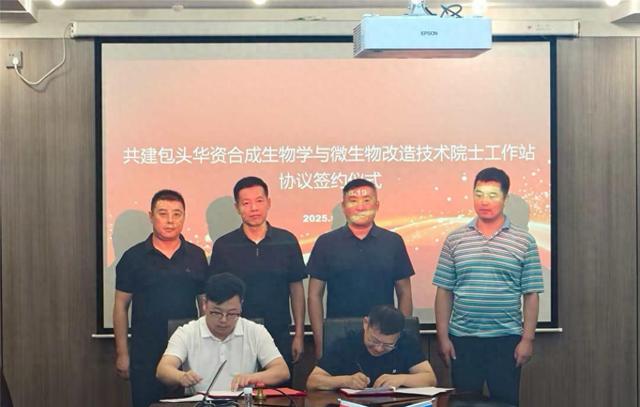
内蒙古自治区首家!合成生物与微生物改造领域院士工作站落地包头
Nei Meng Gu Ri Bao· 2025-08-20 14:45
Core Viewpoint - The establishment of the "Baotou Huazi Synthetic Biology and Microbial Modification Technology Academician Workstation" marks a significant collaboration between Baotou Huazi Industrial Co., Ltd. and Academician Zhang Youming, aiming to enhance research and development in synthetic biology and microbial technology in Baotou [3][4]. Group 1: Company Overview - Baotou Huazi Industrial Co., Ltd. is a leading large-scale mechanism sugar enterprise in northern China and the only publicly listed company in the national beet sugar industry [3]. - The company has been focusing on industrial development and transformation, with significant investments in technology research and development [3]. Group 2: Research and Development Initiatives - The newly established workstation will focus on core areas such as new microbial strain screening, fermentation process optimization, and high-end applications of xanthan gum and other products [4]. - A collaborative research and development system will be built, integrating "enterprise laboratory—academician team—pilot test platform" to enhance innovation [4]. - The initiative aims to establish a national key laboratory for microbial modification technology at Shandong University, promoting high-level talent cultivation and advanced biotechnology results transformation [4]. Group 3: Regional Impact - The workstation is expected to play a crucial role in optimizing and upgrading the industrial structure of Baotou, contributing to the city's green innovation development [4]. - Baotou has consistently viewed the establishment of academician workstations as a vital means to deepen the integration of industry, academia, and research, attract high-end talent, and promote the transformation of scientific achievements [4].


金威转债:营养健康全产业链龙头
Soochow Securities· 2025-08-20 07:31
1. Report Industry Investment Rating No relevant content provided. 2. Core Viewpoints of the Report - The expected listing price of Jinwei Convertible Bonds on the first day is between RMB 122.16 and RMB 135.89, and the expected winning rate is 0.0048%. Considering the good bond - bottom protection, average attractiveness in rating and scale, the expected conversion premium rate on the first - day of listing is around 29%. It is recommended to actively subscribe [1][13][14]. - Jindawei is a leading enterprise in the full - industry chain of nutritional health, with fluctuating revenue and net profit attributable to the parent company since 2020. The company's revenue mainly comes from the sales of health products, Coenzyme Q10, and Vitamin A series, and the product structure changes annually. The sales net profit margin and gross profit margin have decreased, while the sales expense ratio has increased [1][20][22]. 3. Summary According to the Directory 3.1. Convertible Bond Basic Information - Jinwei Convertible Bonds (127111.SZ) started online subscription on August 20, 2025, with a total issuance scale of RMB 1.292 billion. After deducting issuance fees, the net raised funds will be used for Coenzyme Q10 reconstruction and expansion projects, construction projects of 30,000 tons of allulose and 5,000 tons of inositol per year, information system construction projects, and supplementary working capital [1]. - The current bond - bottom valuation is RMB 98.24, and the YTM is 2.16%. The conversion parity is RMB 99.95, and the parity premium rate is 0.05%. The convertible bond terms are average, and the total share capital dilution rate is 9.76%, with relatively small dilution pressure on the equity [1][11][12]. 3.2. Investment Subscription Suggestions - The expected listing price of Jinwei Convertible Bonds on the first day is between RMB 122.16 and RMB 135.89. By referring to comparable targets and empirical results, the expected conversion premium rate on the first - day of listing is around 29% [13][14]. - The expected priority subscription ratio of original shareholders is 68.21%, and the expected winning rate is 0.0048% [17]. 3.3. Analysis of the Underlying Stock's Fundamental 3.3.1. Financial Data Analysis - Jindawei is a leading enterprise in the full - industry chain of nutritional health, mainly engaged in the R & D, production, and sales of health food and feed additives. Its revenue has fluctuated since 2020, with a compound growth rate of - 1.94% from 2020 - 2024. In 2024, the revenue was RMB 3.24 billion, a year - on - year increase of 4.43%. The net profit attributable to the parent company also fluctuated, with a compound growth rate of - 22.73% from 2020 - 2024. In 2024, it was RMB 342 million, a year - on - year increase of 23.59% [18][19][20]. - The company's revenue mainly comes from the sales of health products, Coenzyme Q10, and Vitamin A series. The proportion of health product sales revenue in the main business revenue has been increasing steadily since 2022, while the proportions of Coenzyme Q10 and Vitamin A series have been decreasing steadily [22]. - The company's sales net profit margin and gross profit margin have decreased, the sales expense ratio has increased, the financial expense ratio has decreased, and the management expense ratio has increased. The sales revenue is mainly from overseas markets [23]. 3.3.2. Company Highlights - The company uses synthetic biology as the underlying technology, applies it to the large - scale production of most raw material products, and actively uses synthetic biotechnology to layout new products [31]. - The company adheres to the principle of "strengthening innovation and leading the future", establishes a technology R & D and innovation system integrating enterprises, the market, and industry - university - research cooperation. It has multiple R & D platforms, more than 200 R & D personnel, and 194 domestic and foreign patent technologies as of December 31, 2024 [32].

梅花生物:上半年扣非净利同比增长24.98% 全球化运营进入实质阶段
Zhong Zheng Wang· 2025-08-20 07:09
Core Viewpoint - Meihua Biotech reported a slight decline in revenue but a significant increase in net profit, indicating effective cost management and product performance Group 1: Financial Performance - The company achieved operating revenue of 12.28 billion, a year-on-year decrease of 2.87% [1] - The net profit attributable to the company, excluding non-recurring items, was 1.628 billion, reflecting a year-on-year growth of 24.98% [1] - Key products such as monosodium glutamate, 98% lysine, and feed-grade isoleucine saw sales growth, while 70% lysine experienced both volume and price increases, contributing to higher gross margins [1] Group 2: Global Expansion - Meihua Biotech has advanced its global operations, completing a cross-border acquisition in July, marking a shift from strategic planning to actual operations [2] - The acquisition adds new amino acid products and production bases in Shanghai, Thailand, and North America, enhancing the company's capabilities in high-value downstream products [2] - The company aims to increase its market share in high-quality overseas markets for pharmaceutical-grade amino acids and improve profitability for food-grade amino acids through production efficiency [2] Group 3: Competitive Positioning - The company successfully reduced the EU anti-dumping duty rate on lysine from an initial 84.8% to 47.7%, strengthening its competitive position in international markets [3] Group 4: Capacity Upgrade and Digital Transformation - Meihua Biotech invested 1.087 billion in project expenditures, with the Tongliao monosodium glutamate capacity upgrade project achieving full production [4] - The company is implementing a Manufacturing Execution System (MES) to enhance production management, with significant improvements in operational efficiency reflected in inventory and accounts receivable turnover days [4] - Continued investment in R&D focuses on core technology platform development and strain optimization, with a pilot research platform established in Jilin for amino acids and polysaccharides [4]

金斯瑞生物科技(01548.HK):生命科学稳健增长 CDMO延续复苏态势
Ge Long Hui· 2025-08-20 03:09
Core Viewpoint - The company reported strong performance in 1H25, with significant revenue growth and improved profitability metrics, indicating a positive trend in its business operations [1][2]. Financial Performance - The company achieved revenue of $519 million in 1H25, representing a year-on-year increase of 81.9%, with adjusted net profit of $178 million and a net profit margin of 34.3% [1]. - The gross profit was $321 million, corresponding to a gross margin of 61.8%, reflecting enhanced profitability driven by increased capacity utilization and product upgrades [1]. - The net loss attributable to shareholders was $25 million, significantly narrowed from previous periods, primarily due to a $194 million investment loss from a joint venture [1]. Business Segments - The life sciences segment generated $250 million in revenue, up 11.3% year-on-year, driven by strong growth in protein business (52% growth) and demand for gene editing and AI-related R&D [1]. - The CDMO segment saw revenue reach $250 million, a remarkable increase of 511.1%, with a significant one-time payment of $214 million from a licensing agreement [2]. - The industrial synthetic biology segment reported revenue of $3.9 million, an 8.4% increase, although it faced operational losses due to increased R&D investments [2]. Development Trends - The company is focusing on global expansion and strengthening its market position in the life sciences sector, with ongoing investments in sales and R&D to enhance long-term competitiveness [1][2]. - The company expects to achieve key milestones in its CDMO business by the end of 2025 to early 2026, including potential licensing transactions [2]. Profit Forecast and Valuation - The company maintains its profit forecasts for 2025 and 2026, with an upgraded target price of HKD 21.50, reflecting a 22.2% increase based on DCF valuation, indicating a potential upside of 21.3% from current stock prices [2].

梅花生物科技集团股份有限公司2025年半年度报告摘要
Shang Hai Zheng Quan Bao· 2025-08-19 19:00
Core Viewpoint - The company, Meihua Biological Technology Group Co., Ltd., has announced its 2025 semi-annual operating data and strategic plans, emphasizing its focus on enhancing operational quality, expanding international presence, and maintaining investor returns. Company Overview - Meihua Biological Technology Group Co., Ltd. is engaged in the amino acid industry, focusing on synthetic biology technology as its core [32]. - The company reported a slight decrease in revenue of 2.87% year-on-year, totaling 12.28 billion yuan, while net profit increased by 19.96% to 1.768 billion yuan [32]. Financial Data - The company plans to upgrade production capacity and expand its scale, with project expenditures of 1.087 billion yuan in the first half of 2025 [33]. - The company has a history of stable cash dividends, distributing a total of 2.27 billion yuan in dividends for the 2024 fiscal year, which is approximately 83% of the net profit attributable to shareholders [38]. Strategic Initiatives - The company aims to enhance its global competitiveness through a significant acquisition of amino acid and HMO business assets from a Japanese company, adding over 30 patent families and expanding its product line [34]. - The company is committed to digital transformation, with plans to implement a standardized MES system across its production bases by the third quarter of 2025 [35]. Investor Relations - The company emphasizes transparent communication with investors, planning a semi-annual performance briefing on September 1, 2025, to address investor concerns and enhance engagement [45][47]. - The company has established a robust investor communication system to ensure timely and accurate information dissemination [39]. Governance and Compliance - The company is focused on improving its governance structure and compliance with regulations, including the potential restructuring of its supervisory board [40][41]. - The company has implemented a long-term incentive plan for its management team to align their interests with those of shareholders [42].
两部委发文!事关食品生物制造
合成生物学与绿色生物制造· 2025-08-19 13:31
Core Viewpoint - The article discusses the collaboration between the Ministry of Industry and Information Technology and the National Health Commission to promote innovative biomanufacturing technologies in the food processing sector, aiming to enhance the industrialization and marketization of research outcomes [2][3]. Group 1: Policy and Application Directions - The initiative focuses on collecting innovative biomanufacturing technology applications in areas such as food raw materials, food additives, and food and beverage processing [3]. - The application directions should align with the goal of building a diversified food supply system and have significant promotional value for industry development [3][4]. - Relevant products must be domestically developed, have completed small-scale pilot production or be in large-scale production, and demonstrate safety through research or prior approvals in other regions [4]. Group 2: Submission and Evaluation Process - Entities eligible for recommendation include registered companies, universities, research institutions, and industry associations with good biomanufacturing capabilities and no major safety or environmental incidents in the past three years [5]. - Recommended units must submit a detailed application form along with supporting materials by September 15, 2025, to the Ministry of Industry and Information Technology [6][7]. - The Ministry will organize experts to evaluate the submissions and identify key application directions that are strategically significant, technologically advanced, and have broad application prospects [8]. Group 3: SynBioCon 2025 Conference - The fourth Synthetic Biology and Green Biomanufacturing Conference (SynBioCon 2025) will be held from August 20-22, 2025, in Ningbo, Zhejiang, focusing on AI and biomanufacturing, green chemicals and new materials, future food, and future agriculture [9][10]. - The conference will include various activities such as a youth forum, high-level discussions, and a closed-door seminar on AI-enabled biomanufacturing innovation [9][10]. - The event aims to explore the development trends and growth points of biomanufacturing during the 14th Five-Year Plan period [22].

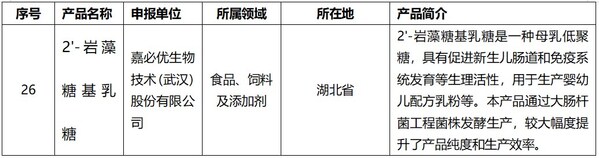
入选工信部首批生物制造标志性产品,嘉必优2'-FL生产跻身国际先进水平
Zhong Guo Jin Rong Xin Xi Wang· 2025-08-19 12:10
Core Viewpoint - The Ministry of Industry and Information Technology of China has announced the first batch of iconic biomanufacturing products, including 36 items, with Jia Bi You Biotechnology's 2'-fucosyllactose (2'-FL) recognized for its biomanufacturing capabilities [1][2]. Group 1: Biomanufacturing Product Recognition - The selection of iconic biomanufacturing products aims to promote original and disruptive technological advancements in the biomanufacturing sector, accelerating the transformation of innovative results into productive capabilities [2]. - 2'-FL is a human milk oligosaccharide (HMO) that is the most abundant in breast milk, known for its physiological activities that support the development of newborns' gut and immune systems [2]. Group 2: Jia Bi You's Technological Advancements - Jia Bi You is one of the earliest companies in China to focus on HMO research, initiating its synthetic biology project for HMOs in 2012 [5]. - The company employs advanced techniques such as metabolic engineering and integrated engineering technologies to enhance the industrialization of HMOs, achieving high production efficiency and product purity [5]. Group 3: Production and Market Potential - By the end of 2023, Jia Bi You's HMOs products have passed biosafety reviews, with 2'-FL approved as a food nutrition enhancer and production licenses obtained [6]. - The company has achieved high production levels for several HMOs, with 2'-FL, 3-FL, and LNT reaching international advanced levels, while 3'-SL, 6'-SL, and LNnT meet domestic advanced standards [6]. - The market for HMOs is expected to expand due to increasing consumer demand for health foods and advancements in HMO industrialization technology, driving upgrades in infant formula, adult nutrition, and functional foods [6]. Group 4: Future Collaborations and Innovations - Jia Bi You plans to collaborate with well-known dairy companies and continue market development in regions where HMO regulations have been established [7]. - The company is set to open a new research and innovation center in Wuhan in 2025, focusing on synthetic biology and integrating cutting-edge technologies to create a comprehensive biomanufacturing ecosystem [7]. - The promotion of the first batch of iconic biomanufacturing products is expected to stimulate innovation in China's biomanufacturing sector, contributing to high-quality industry development and enhancing China's global position in biomanufacturing [7].

嘉必优(688089):Q2业绩出色,多催化有望逐步展开
Xinda Securities· 2025-08-19 11:34
Investment Rating - The investment rating for the company is "Buy" [1]. Core Views - The company reported strong performance in Q2, with revenue of 307 million yuan, a year-on-year increase of 17.60%, and a net profit attributable to shareholders of 108 million yuan, up 59.01% year-on-year [1][3]. - The domestic business has driven growth, particularly in the context of the new national standard for milk powder, while overseas revenue remained stable [3]. - The company's gross margin in Q2 reached 50.63%, an increase of 7.24 percentage points year-on-year, attributed to improved capacity utilization and cost reduction [3]. - The company is actively pursuing mergers and acquisitions, with ongoing collaborations with existing clients and new partnerships, such as with Abbott [3]. Financial Summary - For the first half of 2025, the company achieved total revenue of 307 million yuan, with a net profit of 108 million yuan [1]. - The projected financials for 2025-2027 include an EPS of 0.99 yuan, 1.14 yuan, and 1.30 yuan, respectively, with corresponding P/E ratios of 30X, 26X, and 23X [3][4]. - The company expects continued growth in ARA and DHA products, with potential new applications for HMO in the domestic market [3].
研报掘金丨开源证券:利民股份Q2业绩环比大增,维持“买入”评级
Ge Long Hui A P P· 2025-08-19 07:13
Core Viewpoint - The report from Kaiyuan Securities indicates that Limin Co., Ltd. has seen a significant increase in Q2 performance, continuing to exceed expectations since Q1, and maintains a "Buy" rating [1] Group 1: Financial Performance - Limin Co., Ltd. has a manganese zinc production capacity of 45,000 tons, benefiting from the rising prices and widening price differentials of manganese zinc [1] - The average price of Baijunqing in Q2 2025 was 28,676 yuan/ton, reflecting a quarter-on-quarter increase of 4.28%, while the average price in Q1 2025 was 27,500 yuan/ton, with a quarter-on-quarter increase of 8.72% [1] - The company holds a 34% stake in Xinhe Chemical, which translates to a production capacity of 10,200 tons for Baijunqing, and the net profit attributable to the parent company in Q2 saw a quarter-on-quarter increase, benefiting from the price rise of Baijunqing [1] Group 2: Innovation and Future Growth - The company is actively innovating in new fields such as synthetic biology, which may create new growth trajectories in the future [1]
