能源安全

Search documents
接力奋斗勇担当
Jing Ji Ri Bao· 2025-09-02 22:55
Core Viewpoint - The importance of peace for the development of the energy industry is emphasized, highlighting the historical context of China's oil production and the commitment of workers to ensure energy security for the nation [1][2]. Group 1: Historical Context - The Daqing oil field has produced over 2.5 billion tons of crude oil over the past 60 years, which could theoretically wrap around the Earth's equator 16 times if transported in 60-ton tankers [1]. - The early efforts of Daqing oil workers, exemplified by the figure of Wang Jinxi, showcased a strong commitment to achieving oil production goals, reflecting a spirit of sacrifice and dedication [1]. Group 2: Current Industry Perspective - The energy sector is characterized as a technology-intensive industry, where a peaceful environment is deemed essential for stable and healthy development [1]. - There is a call for the current generation to actively contribute to national energy security by increasing oil and gas production, ensuring that the energy supply remains under domestic control [2].
“西伯利亚力量”越发强大:中俄能源合作既是生意,更超越生意
Sou Hu Cai Jing· 2025-09-02 08:57
Group 1 - The core viewpoint emphasizes Russia's significant position in China's energy import market, particularly in oil and natural gas, with over 1,000 billion cubic meters of natural gas delivered since the launch of the "Power of Siberia" pipeline in 2019 [1] - The "Power of Siberia" pipeline is not only a commercial project but also a strategic initiative for China's energy security, showcasing the resilience of Sino-Russian relations amid geopolitical challenges [1][4] - The ongoing cooperation between China and Russia in energy is a response to the changing international landscape, with China becoming Russia's most important and stable market for natural gas exports [4] Group 2 - The contrast between the successful "Power of Siberia" project and the troubled "Nord Stream" project highlights the vulnerabilities in international energy infrastructure and the geopolitical implications of energy cooperation [2] - Despite a decline in trade volume between China and Russia in early 2025, the need for a stable strategic partnership remains crucial for both nations to navigate ongoing challenges posed by Western sanctions [7] - The collaboration in energy has evolved beyond mere commercial interests, becoming a vital pillar for both countries to maintain stability and development in a turbulent international environment [9]

回旋镖来了。炸毁北溪管道的凶手是乌克兰人,德国这下坐不住了
Sou Hu Cai Jing· 2025-09-02 04:46
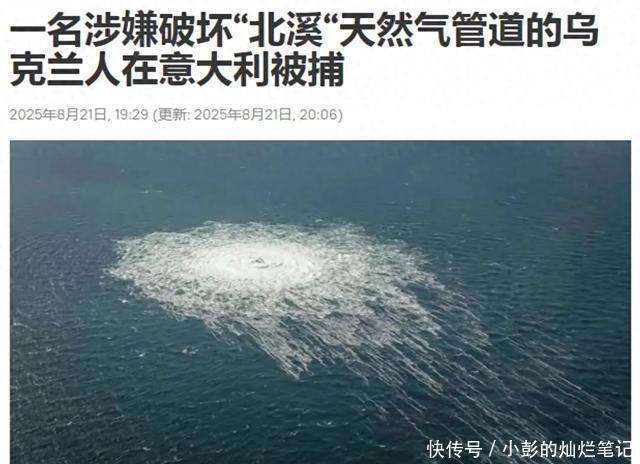
Core Insights - The explosion of the Nord Stream 1 and 2 pipelines in September 2022 has sparked intense discussions about energy security and geopolitical dynamics in Europe, with immediate blame directed at Russia by Western media [3] - The narrative that Russia would sabotage its own energy supply line is questioned, suggesting that Ukraine and the U.S. may be the true beneficiaries of the incident [3] - Recent developments indicate that a Ukrainian individual has been arrested in connection with the explosions, raising further questions about the involvement of state actors [5][7] Group 1: Incident Overview - The Nord Stream pipelines were destroyed by underwater explosives, leading to significant natural gas leaks and raising concerns about energy supply to Europe [3] - The incident has led to a shift in European energy sourcing, with a marked increase in reliance on U.S. liquefied natural gas, resulting in higher economic costs for European nations [8] Group 2: Arrest and Investigation - A Ukrainian man, Sergey Kuznetsov, has been identified as a key figure in the Nord Stream explosion, with reports suggesting a well-coordinated operation involving a team of specialists [7] - The operation reportedly cost around 300,000 euros, which has led to speculation about potential state support behind the execution of the attack [7][8] Group 3: Political Implications - The arrest and subsequent revelations put German Chancellor Merz in a difficult position, as public sentiment in Germany may turn against continued support for Ukraine if it is confirmed that Ukraine was involved in the pipeline destruction [8] - Russia has called for an emergency meeting of the UN Security Council to address the investigation's transparency, indicating its intent to challenge the narrative surrounding the incident [8]
上海合作组织成员国元首理事会关于能源可持续发展的声明
国家能源局· 2025-09-02 03:50
Core Viewpoint - The Shanghai Cooperation Organization (SCO) member states emphasize the need for energy security and market stability while promoting a fair energy transition tailored to national conditions, aiming to enhance the well-being of their people and protect the environment [2][3]. Group 1: Practical Cooperation - Member states call for the expansion of practical cooperation in the energy sector, including the implementation of joint projects for new energy infrastructure and upgrading existing facilities based on mutual benefits [2]. Group 2: Technological Innovation - There is a push for cooperation in technological innovation, focusing on the development and application of advanced energy technologies, and encouraging research by SCO member state scientific institutions [4]. Group 3: Capacity Building - The member states aim to strengthen cooperation in professional talent training, creating favorable conditions for the exchange of experiences, knowledge, best practices, and technological achievements in the energy sector [5]. Group 4: High-Level Joint Research - The Chinese side has proposed the implementation of high-level joint research projects in the energy sector by 2030, including seminars and training programs, to address global energy agenda issues and promote a fair and sustainable energy development model [6].

上海合作组织成员国元首理事会关于能源可持续发展的声明
Xin Hua Wang· 2025-09-01 17:30
Core Viewpoint - The Shanghai Cooperation Organization (SCO) member states emphasize the need for energy security and market stability while promoting a fair energy transition tailored to national conditions, aiming to enhance the well-being of their populations and protect the environment [2][3]. Group 1: Energy Cooperation - Member states call for the expansion of practical cooperation in the energy sector, including the implementation of joint projects for new energy infrastructure and the upgrading of existing facilities based on mutual benefits [2]. - There is a focus on promoting technological innovation cooperation by developing and utilizing advanced energy technologies, encouraging research among member states' scientific institutions [3]. - Capacity building is highlighted as essential, with an emphasis on training professionals and sharing experiences, knowledge, and best practices in the energy sector [3]. Group 2: Sustainable Development Goals - The SCO reaffirms its commitment to the United Nations 2030 Sustainable Development Agenda, particularly Goal 7, which aims to ensure access to affordable, reliable, sustainable modern energy for all [2]. - The member states believe that effective energy cooperation within the SCO region will contribute to addressing global energy agenda issues and foster a fair and sustainable energy development model [3].
上合组织天津峰会|上海合作组织成员国元首理事会关于能源可持续发展的声明
Xin Hua She· 2025-09-01 17:03
Core Points - The Shanghai Cooperation Organization (SCO) member states emphasize the need to maintain energy security and market stability while promoting fair energy transitions tailored to national conditions [1][2] - The declaration reaffirms commitment to the United Nations 2030 Sustainable Development Agenda, particularly Goal 7, which aims to ensure access to affordable, reliable, and sustainable modern energy for all [1] - The member states call for expanded cooperation in several areas to achieve sustainable energy development, including practical cooperation, technological innovation, and capacity building [1][2] Group 1 - The SCO member states recognize the profound adjustments in the global energy landscape and stress the importance of energy security [1] - There is a call for practical cooperation on joint energy projects, including the construction of new energy infrastructure and upgrading existing facilities [1][2] - The member states highlight the need for technological innovation in energy, encouraging research and development among member countries [2] Group 2 - The declaration emphasizes the importance of capacity building, particularly in training professionals and sharing best practices in the energy sector [2] - The Chinese side proposes high-level joint research projects in the energy field to be implemented before 2030, including seminars and training programs [2] - The member states believe that effective energy cooperation within the SCO region will contribute to addressing global energy agenda issues and promote a fair and sustainable energy development model [2]
电力规划设计总院党委书记胡明:规划引领“十四五”能源高质量发展迈出坚实步伐
Zhong Guo Dian Li Bao· 2025-09-01 09:39
Core Viewpoint - The article emphasizes the importance of energy security and the transition to a new energy system in China, highlighting the strategic initiatives and planning outlined in the "14th Five-Year Plan" for high-quality energy development [1][2]. Group 1: Energy Supply Chain Resilience and Security - The energy supply chain's resilience and security have significantly improved, with a focus on domestic production and risk management [2]. - The total production of primary energy is projected to exceed 4.98 billion tons of standard coal by 2024, with a production increase of over 22% since the beginning of the "14th Five-Year Plan" [3]. Group 2: Green and Low-Carbon Energy Transition - The green and low-carbon transition in the energy sector has reached new heights, with a commitment to increasing clean energy supply and reducing carbon emissions [4]. - By the end of 2024, the proportion of non-fossil energy consumption is expected to reach 19.8%, a 3.9 percentage point increase from 2020, while coal consumption is projected to drop to 53.2% [5]. Group 3: Coordinated Development of Energy Regions - The energy sector is addressing imbalances in supply and demand across urban and rural areas, focusing on optimizing energy resource allocation and enhancing regional energy development [6][7]. - The construction of large clean energy bases in western regions is progressing, with the "West-to-East Power Transmission" capacity exceeding 300 million kilowatts [8]. Group 4: Modernization of the Energy Industry Chain - The modernization of the energy industry chain has advanced significantly, with a focus on enhancing technological innovation and upgrading the energy sector [9]. - China has become a global leader in the production of photovoltaic components and wind power key components, contributing over 80% and 70% respectively to the global market [10]. Group 5: Continuous Release of High-Quality Development Vitality - The energy sector is undergoing reforms to enhance market dynamics and governance, with over 60% of total electricity consumption now determined by market transactions [11][12]. - The establishment of a unified national electricity market is accelerating, with significant progress in the marketization of coal and renewable energy pricing [12]. Group 6: International Energy Cooperation - The energy sector is actively participating in global energy governance and international cooperation, enhancing its influence and capabilities in the global market [13][14]. - China has established energy cooperation projects with over 100 countries, strengthening its energy security and international partnerships [14].

中国石化驻鄂企业“十四五”累计实现营收2.1万亿元
Jing Ji Ri Bao· 2025-09-01 08:33
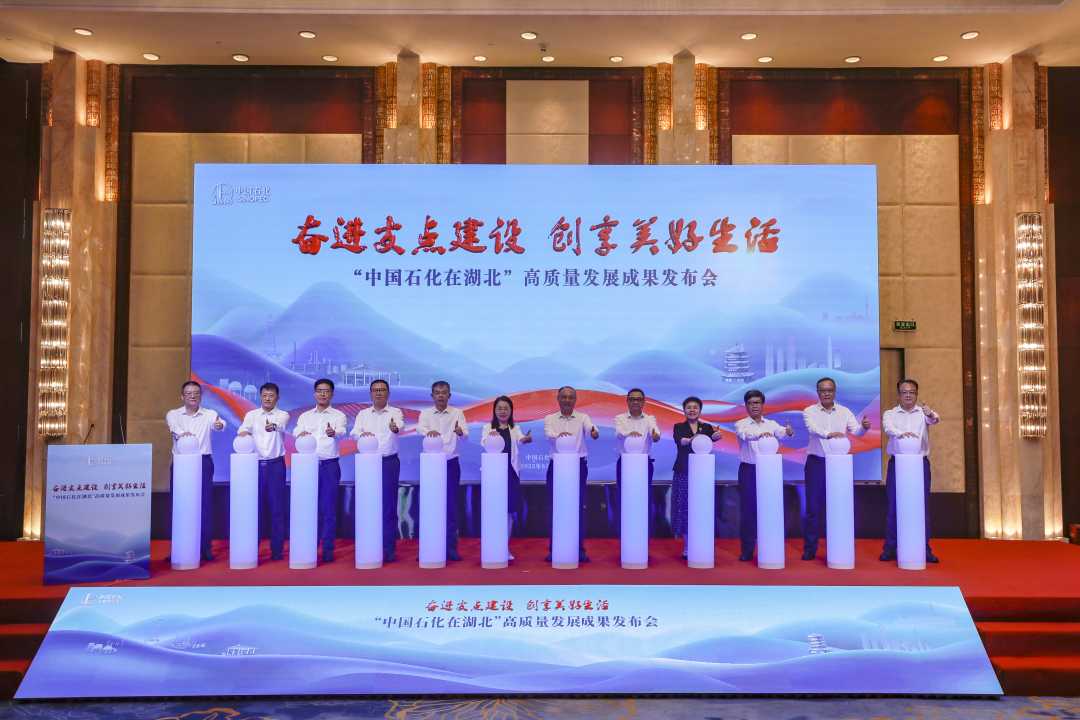
Core Insights - China Petroleum & Chemical Corporation (Sinopec) held its first high-quality development achievement conference in Wuhan, showcasing its practices in energy security, industrial upgrading, and green transformation since the 14th Five-Year Plan [1][3] Group 1: Achievements in Hubei - Hubei province is identified as one of the most concentrated areas for Sinopec's enterprises, with a complete industrial chain and significant development potential [3] - During the 14th Five-Year Plan, the Jianghan Oilfield added proven oil reserves of 36.28 million tons, with crude oil production reaching 5.8 million tons and cumulative natural gas production of 36.5 billion cubic meters [3] - The refining capacity of Zhonghan Petrochemical and Jingmen Petrochemical was enhanced to a total of 15 million tons, maintaining its position as the largest refining and chemical integration enterprise in Central China [3] Group 2: Research and Innovation - Sinopec's enterprises in Hubei undertook over 200 national and provincial-level research projects during the 14th Five-Year Plan, receiving more than 120 provincial and ministerial-level science and technology progress awards [3] - The company filed over 1,300 national patents, including more than 430 invention patents [3] Group 3: Social Responsibility Initiatives - On the day of the conference, 16 Sinopec enterprises in Hubei launched the second phase of the "Clean Guardian of the Yangtze River" social responsibility initiative, focusing on pollution prevention, resource utilization reduction, green transformation acceleration, biodiversity protection, and regional collaboration [3]

135万吨降到1吨!中美谈了三次白谈,特朗普手里的牌反而越来越少
Sou Hu Cai Jing· 2025-09-01 07:43
Group 1 - Recent data shows that China's energy imports from the U.S. have nearly dropped to zero, with no liquefied natural gas imports since March and crude oil imports ceasing since June, while coal imports plummeted from 1.35 million tons in January to less than 1 ton per month after May [1] - The imposition of tariffs by the U.S. on Chinese goods in February led China to retaliate with tariffs on U.S. energy products, eliminating the price advantage of U.S. energy in the Chinese market [1][2] - The negotiations between the U.S. and China have not yielded any concessions from China on energy issues, as China prioritizes long-term energy security over short-term political gains sought by the U.S. [1] Group 2 - China has diversified its energy supply sources, purchasing crude oil from Russia and increasing domestic production, which has allowed it to maintain a strong position despite U.S. tariffs [1] - The U.S. is facing challenges in finding alternative buyers for its energy exports, as markets like Japan and South Korea are stable but have limited growth, while Southeast Asian countries are primarily coal users and price-sensitive [2] - The current state of U.S.-China energy trade is likely to persist unless tariffs are completely lifted, which poses a dilemma for the U.S. administration as it would undermine their negotiating position [2]
果然一点面子都不给,特朗普等来了一个坏消息,印度做出的决定,让美国人着急又无奈
Sou Hu Cai Jing· 2025-09-01 02:43
Group 1 - The core issue revolves around India's continued purchase of Russian oil despite the U.S. imposing additional tariffs, indicating a strong stance against external pressure [1][3][7] - India's oil imports from Russia are projected to increase by 10% to 20% in September, translating to an additional 150,000 to 300,000 barrels per day [1][3] - The U.S. tariffs have significantly impacted Indian exporters, particularly in textiles, jewelry, and seafood, with industry associations warning of substantial job losses and market share reductions [3] Group 2 - India currently meets about 40% of its oil demand through Russian imports, saving substantial foreign exchange and stabilizing domestic energy supply [5][7] - The Indian government is diversifying its energy sources, increasing imports from the Middle East, the Americas, and Africa, while still relying heavily on Russian oil due to its cost-effectiveness [5][7] - India's response to U.S. tariffs reflects a strategic assertion of national interests, prioritizing energy security and economic benefits over external pressures [7]