
务实合作

Search documents
又是一年慕安会 欧洲的焦虑与全球南方的自信
Xin Lang Cai Jing· 2026-02-15 08:32
Group 1 - The core sentiment at the Munich Security Conference is the uncertainty surrounding transatlantic relations, with questions raised about whether Europe can still consider the U.S. an ally [1] - The Chairman of the Munich Security Conference openly questioned Washington's need for allies and its willingness to treat Europe as a partner [1] - German Chancellor Merz emphasized that the U.S. cannot be "great" without Europe, while French President Macron urged Europe to stop retreating or compromising [1] Group 2 - There is a strong emphasis from global South countries on strategic autonomy, pragmatic cooperation, and prioritizing development [1] - ASEAN Secretary-General Kao Kim Hourn called for peace and emphasized cooperation with all nations [1] - Representatives from various countries, including Togo and Saudi Arabia, highlighted the need for mutually beneficial cooperation and the importance of hearing the voices of developing nations [1]
习言道|中俄、中美两场元首外交同一天举行,很不寻常!
Xin Lang Cai Jing· 2026-02-05 15:05
Core Points - The simultaneous diplomatic engagements between China and Russia, and China and the United States on February 4, highlight the importance of dialogue and communication in the current turbulent international landscape [2][3] - President Xi Jinping emphasized the need for deeper strategic cooperation and proactive engagement in both meetings, aiming to ensure the continuous development of China-Russia relations and to manage differences with the U.S. [3][4] - The discussions underscored the significance of pragmatic cooperation across various fields, with Xi advocating for shared development opportunities and stability in global affairs [4][5] Group 1: Dialogue and Communication - The emphasis on dialogue over confrontation is crucial for maintaining global strategic stability, as highlighted by Xi's remarks on the importance of communication and mutual trust [3][4] - Both President Putin and President Trump expressed confidence in their respective relationships with China, indicating a willingness to strengthen cooperation [3][4] Group 2: Pragmatic Cooperation - Xi's calls for "pragmatic cooperation" in interactions with both Russia and the U.S. reflect a strategic approach to enhance bilateral relations and address global challenges [4][5] - The focus on expanding high-level openness and collaboration with various countries, including Russia, is part of China's broader strategy for economic globalization [4] Group 3: Fairness and Justice - Xi's statements during the meetings emphasized the obligation of major powers to uphold fairness and justice in international relations, particularly in the context of rising unilateralism and protectionism [5][6] - The Taiwan issue remains a critical point in U.S.-China relations, with Xi reiterating China's firm stance against any attempts at separation [5]

外媒关注英首相斯塔默访华:中国是“值得信赖的稳定合作伙伴”
Zhong Guo Xin Wen Wang· 2026-01-30 06:37
Core Viewpoint - The visit of UK Prime Minister Starmer to China marks a significant step in enhancing bilateral economic relations, reflecting the UK's strong desire for pragmatic cooperation with China, which is seen as a reliable partner by many countries [1][2][5] Group 1: Economic Opportunities - Starmer is leading a delegation of over 50 executives from major UK companies across various sectors, indicating a strong expectation for deepening UK-China economic ties [2] - The visit is expected to create "significant opportunities" for UK businesses, aligning the UK's strengths in finance and services with China's growing demand for healthcare and elderly care services [2][3] - China is recognized as the world's second-largest economy and a key player in global supply chains, supporting approximately 370,000 jobs in the UK [2] Group 2: Strategic Relations - Starmer emphasizes the need for the UK to improve trade relations with China, especially in light of the shifting dynamics with the US and its Western allies [4] - The UK government aims to establish a more stable and pragmatic relationship with China, which is expected to benefit both the UK public and businesses [2] - Recent surveys indicate growing confidence in the professional services sector regarding China's economic development, as more Chinese companies seek overseas investments [3] Group 3: Policy Shifts - Starmer's administration is focused on economic growth and recognizes the importance of engaging with China, moving away from the previous "ice age" in UK-China relations [4] - The UK is encouraged to adopt a policy that acknowledges China's status as a rising power, rather than ignoring its influence [4][5] - The current global issues, such as artificial intelligence and public health, may align the UK's perspectives more closely with China's than with its traditional ally, the US [4]
罕见一幕!中国和加拿大签约不到5天,英法两国又双双示好中国!
Sou Hu Cai Jing· 2026-01-27 07:11
Group 1 - Several Western countries are shifting their stance towards China, driven by increasing economic pressures and a perceived decline in the reliability of the United States [1][5] - Canada has reversed its previous hardline stance against China, signing numerous agreements during Prime Minister Trudeau's visit, indicating a significant change in strategy due to economic dependencies [1][5] - France's President Macron has also altered his approach, initially facing domestic political pressure but later welcoming Chinese investments in Europe, highlighting a shift towards pragmatic cooperation with China [3][5] Group 2 - The synchronized actions of these countries suggest a collective response to the aggressive "America First" policies, which have strained relationships even among allies [5][6] - The UK is reconsidering its relationship with China, as evidenced by the approval of a new Chinese embassy and potential visits by UK officials, reflecting a need for economic collaboration post-Brexit [6][8] - The essence of international relations is driven by interests rather than friendships, with countries seeking new partnerships when their current alliances threaten their economic well-being [8]
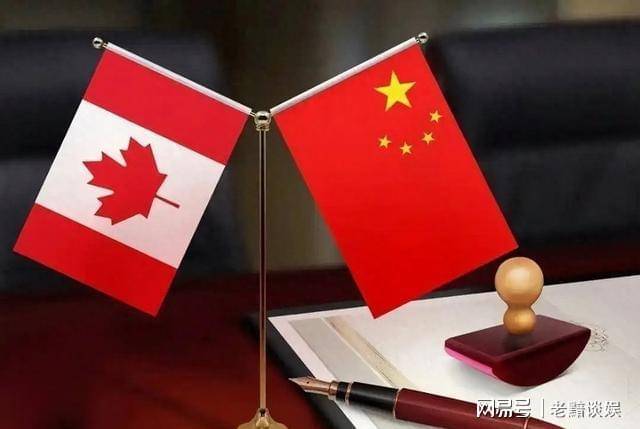
救命稻草竟是中国!加拿大扛不住美国压榨,8年破冰直奔北京
Sou Hu Cai Jing· 2026-01-15 13:52
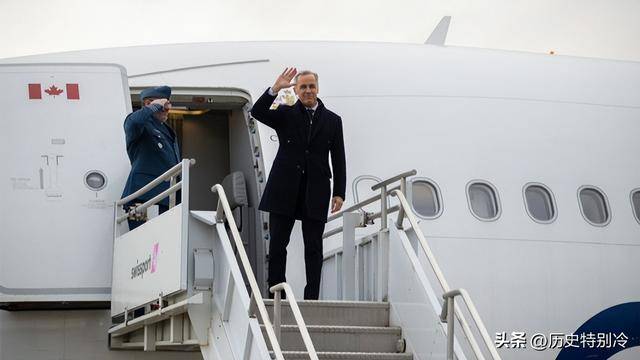
Core Viewpoint - The article discusses Canada's economic challenges and its strategic pivot towards China amid rising U.S. tariffs and domestic economic downturns, highlighting the importance of pragmatic cooperation over ideological divides in global trade dynamics [3][31]. Economic Context - Canada's GDP fell by 0.3% in October 2025, marking the largest decline since December 2022, attributed to the adverse effects of U.S. tariff policies, with expectations of worsening impacts in 2026 [5]. - Over 70% of Canada's exports are directed to the U.S., making its economy highly sensitive to U.S. policy changes, particularly in the energy sector where Canadian oil prices are significantly discounted compared to international rates [7][9]. Trade Relations - Canada has invested 34 billion CAD in the Trans Mountain pipeline to diversify its oil exports, but U.S. plans to take control of Venezuelan oil could further reduce Canadian oil imports [9]. - A trade war has escalated between Canada and China, with Canada imposing a 100% tariff on Chinese electric vehicles and China retaliating with anti-dumping investigations and tariffs on Canadian agricultural products [14][16]. Public Sentiment - A significant portion of the Canadian public (62%) supports the removal of high tariffs on Chinese electric vehicles, indicating a shift in public opinion towards favoring trade agreements with China [16]. Energy Cooperation - In the first 11 months of 2025, Canada exported nearly 100 million barrels of oil to China, with the Trans Mountain pipeline generating substantial revenue, reducing the price discount on Canadian oil to under 10 CAD [18]. Global Trade Dynamics - The visit of Canadian Prime Minister Carney to China reflects a broader trend of countries seeking pragmatic relations with China despite U.S. pressures, as seen with leaders from Argentina and the UK also planning visits [20][22]. - The article emphasizes that the U.S. tariff policies have inadvertently increased costs for American companies, highlighting the competitive advantages of Chinese manufacturers in the electric vehicle sector [24]. Future Outlook - The upcoming discussions between Canada and China will focus on critical issues such as trade tariffs and agricultural exports, with the potential to reshape bilateral relations and global trade dynamics [33].
约旦与欧盟将进行历史上首次双边峰会
Xin Lang Cai Jing· 2026-01-05 23:53
Group 1 - Jordan and the EU will hold their first-ever bilateral summit on January 8, focusing on strengthening bilateral relations and deepening political and economic partnerships [1] - The summit will be attended by Jordan's King Abdullah II, European Council President Costa, and European Commission President von der Leyen [1] - Discussions will include the implementation of the EU-Jordan Strategic and Comprehensive Partnership Agreement signed in January 2025, aiming to expand practical cooperation in various fields [1] Group 2 - The summit will address regional and international hot issues, with a particular focus on the latest developments in the Middle East [1] - Topics of communication will include security, trade, and immigration [1]
第八届进博会来了
Zhong Guo Jing Ji Wang· 2025-10-31 00:41
Core Points - The eighth China International Import Expo (CIIE) will be held from November 5 to 10 in Shanghai, featuring participation from 155 countries and regions, with over 4,108 foreign enterprises exhibiting, marking a record scale with an exhibition area exceeding 430,000 square meters [1][2] Group 1: Key Features of the Expo - The expo emphasizes openness, with six countries serving as guest countries, showcasing China's achievements in deepening reforms and promoting high-level openness during the 14th Five-Year Plan [2] - The event will display 461 new products, technologies, and services, positioning China as a global innovation testing ground [2] - The exhibition area has increased to over 367,000 square meters, with 600 more exhibitors compared to last year, including 290 Fortune 500 companies, indicating a historic high in both exhibition area and number of enterprises [2][3] Group 2: Focus on Emerging Economies - The expo will feature enterprises from 123 Belt and Road Initiative countries, a 23.1% increase year-on-year, and 163 enterprises from the least developed countries, up 23.5% [3] - There will be an expanded African product zone to support zero-tariff policies for African countries, with an 80% increase in African enterprise participation [3] Group 3: Highlights of the Enterprise Exhibition - The exhibition will include six major sectors: medical devices, automotive, technology equipment, consumer goods, agricultural products, and service trade, along with innovative areas like "Ice and Snow Economy" and "Silver Economy" [4] - Major global companies will participate, including top industrial electrical firms and multinational medical enterprises, showcasing new products for chronic and rare diseases [4] Group 4: New Initiatives and Services - The expo will introduce a "Cross-Border E-commerce Preferred Platform" and a "Cross-Border E-commerce Service Area" to enhance procurement opportunities [5] - Digital services will be optimized, including a smart navigation system and AI digital service assistants for real-time multilingual support [5] Group 5: Economic Impact and Global Cooperation - The CIIE serves as a platform for high-level openness, aiming to inject certainty into the global economy amid changing dynamics [6][7] - China remains the world's second-largest import market, with imports of goods and services expected to exceed $15 trillion during the 14th Five-Year Plan [7] - The expo aims to create a stable and transparent business environment, promoting trade and investment facilitation, and supporting enterprises from the least developed countries [7]
第八届进博会来了(锐财经)
Ren Min Ri Bao· 2025-10-30 21:00
Core Points - The eighth China International Import Expo (CIIE) will be held from November 5 to 10 in Shanghai, with participation from 155 countries and regions, and over 4,108 foreign enterprises exhibiting, marking a record scale with an exhibition area exceeding 430,000 square meters [1][2]. Group 1: Key Features of the Expo - The expo emphasizes openness, with six countries including Thailand and the UAE serving as guest countries, showcasing China's achievements in reform and high-level opening during the 14th Five-Year Plan [2]. - A total of 461 new products, technologies, and services will be displayed, with a focus on future industries such as low-altitude economy and humanoid robots, as well as innovations in information technology and green economy [2]. - The exhibition area has increased to over 367,000 square meters, with more than 600 new exhibitors compared to last year, including 290 Fortune 500 companies, achieving historical highs in both exhibition area and number of exhibitors [2][3]. Group 2: International Cooperation and Development - The expo will feature enterprises from 123 Belt and Road Initiative countries, a 23.1% increase year-on-year, and 163 enterprises from the least developed countries, up 23.5% [3]. - To support African countries, the expo will expand the African product zone and promote a 100% zero-tariff policy for eligible products, with an 80% increase in African exhibitors [3]. Group 3: Highlights of the Enterprise Exhibition - The enterprise exhibition will cover six major areas including medical devices, automotive, and consumer goods, with innovative sections like "Ice and Snow Economy" and "Silver Economy" [4]. - Major global companies will participate, including top industrial electrical firms and multinational medical companies, showcasing new products targeting chronic and rare diseases [4]. Group 4: New Initiatives and Services - New initiatives include a "Cross-Border E-commerce Preferred Platform" and a "Cross-Border E-commerce Service Area" to attract new business flows and enhance procurement opportunities [5]. - The expo will provide improved digital services, including a smart navigation system and AI digital service assistants for real-time multilingual support [5]. Group 5: Economic Impact and Global Cooperation - The CIIE serves as a platform for high-level opening, aiming to inject certainty into the global economy amid profound changes in the global landscape [6][7]. - China remains the world's second-largest import market, with imports of goods and services expected to exceed $15 trillion during the 14th Five-Year Plan, highlighting the potential of its vast market [7]. - The expo aims to create a stable and transparent business environment, promoting trade facilitation and intellectual property protection, while supporting exhibitors from the least developed countries [7].
第八届进博会展览面积和企业总数再创新高
Ren Min Ri Bao· 2025-10-30 01:12
Core Points - The 8th China International Import Expo (CIIE) will be held from November 5 to 10 in Shanghai, featuring participation from 155 countries, regions, and international organizations, with 4,108 overseas enterprises exhibiting, marking a record high in exhibition area exceeding 430,000 square meters [1] - China has maintained its position as the world's second-largest import market for 16 consecutive years, with projected goods and services imports exceeding $15 trillion during the 14th Five-Year Plan period [1] - The cumulative intended transaction amount from the previous seven CIIEs has surpassed $500 billion, aiding global enterprises in navigating international market fluctuations and sharing opportunities within China's vast market [1] Group 1: Characteristics of the Expo - The expo will emphasize openness, with the Ministry of Commerce innovating the "Shared Big Market · Export China" brand and launching a series of "Export China" activities [2] - A total of 461 new products, technologies, and services will be showcased, including future industries such as low-altitude economy and humanoid robots, as well as new themes like silver economy and sports economy [2] - The number of participating enterprises has increased by over 600 compared to last year, with 290 Fortune 500 and industry-leading companies attending, setting historical highs in exhibition area and total number of enterprises [2] Group 2: Global Participation and Support Measures - Enterprises from 123 Belt and Road Initiative countries are participating, reflecting a year-on-year increase of 23.1%, while 163 enterprises from the least developed countries have also increased by 23.5% [3] - The number of African enterprises participating has surged by 80%, with a dedicated area for African products expanded [3] - Shanghai is optimizing exhibition services with 18 customs facilitation measures, 8 border inspection initiatives, and 20 public security measures to enhance convenience for exhibitors [3]
共享市场机遇 促进务实合作
Ren Min Ri Bao· 2025-10-29 03:50
Core Points - The 8th China International Import Expo (CIIE) will be held from November 5 to 10 in Shanghai, featuring participation from 155 countries, regions, and international organizations, with 4,108 overseas enterprises exhibiting, marking a record exhibition area of over 430,000 square meters [1][2] - China has maintained its position as the world's second-largest import market for 16 consecutive years, with projected goods and services imports exceeding $15 trillion during the 14th Five-Year Plan period [1] - The cumulative intended transaction amount from the previous seven CIIEs has surpassed $500 billion, aiding global enterprises in navigating international market fluctuations and sharing opportunities within China's vast market [1] Group 1: Characteristics of the Expo - The expo will emphasize openness, with the Ministry of Commerce launching the "Shared Big Market · Export China" brand and hosting a series of related activities [2] - A total of 461 new products, technologies, and services will be showcased, including innovations in low-altitude economy and humanoid robots, as well as new themes like silver economy and sports economy [2] - The number of participating enterprises has increased by over 600 compared to last year, with 290 Fortune 500 and industry-leading companies attending, setting historical highs in both exhibition area and total number of enterprises [2] Group 2: Global Participation and Support Measures - Enterprises from 123 Belt and Road Initiative countries are participating, reflecting a year-on-year increase of 23.1%, while companies from the least developed countries have also increased by 23.5% [3] - The number of African enterprises exhibiting has surged by 80%, with a dedicated area for African products expanded [3] - Shanghai authorities are enhancing exhibition services, including customs facilitation measures and temporary entry permits, to optimize the experience for exhibitors [3]