AI芯片

Search documents
5000亿美元市值大挪移:TPU对决GPU 谷歌能否终结英伟达霸权?
Mei Ri Jing Ji Xin Wen· 2025-11-29 05:38
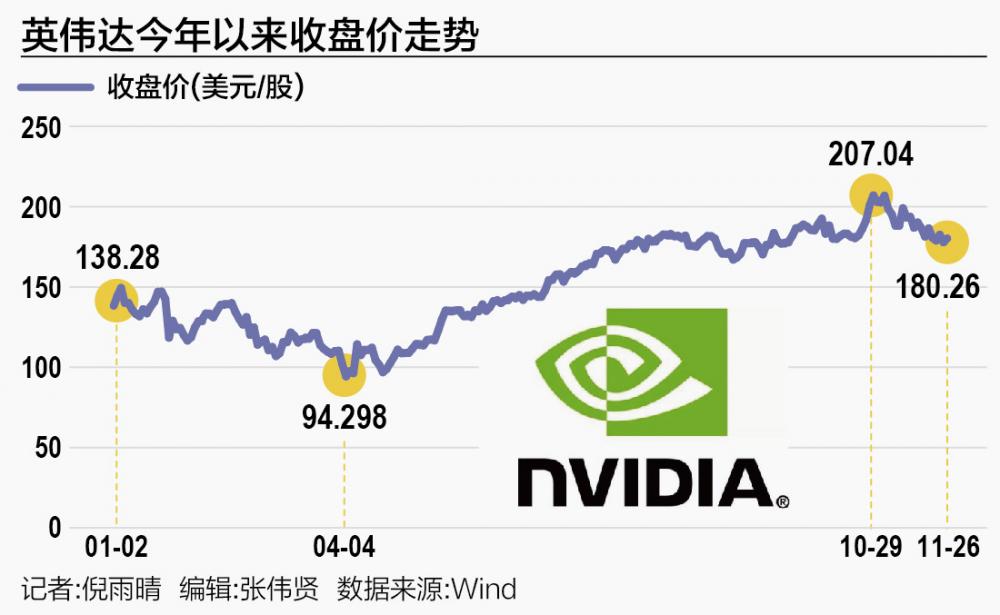
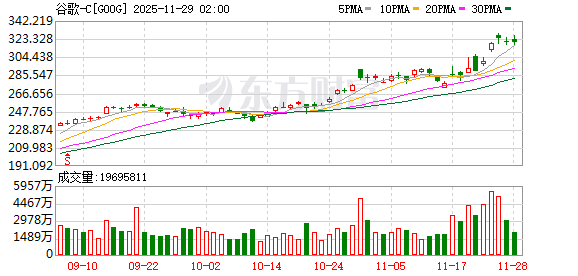
Core Insights - In November 2025, a significant market shift occurred between Nvidia and Google, with Alphabet's market value increasing by approximately $530 billion, approaching $4 trillion, while Nvidia's market value decreased by $620 billion [2][5] - The driving force behind this shift is a rumor that Meta is in talks with Google to purchase Google TPU chips, which could disrupt Nvidia's dominance in the AI chip market, where it currently holds nearly 85% market share [2][5] Market Reactions - Google's stock rose by 13.87% in November, with a year-to-date increase of 69%, while Nvidia's stock fell by nearly 12.59%, reducing its year-to-date gain to 27.96% [2] - The news triggered a chain reaction in the industry, with Broadcom's stock, a joint manufacturer of Google TPU, rising over 16%, while Nvidia's stock faced pressure despite exceeding Wall Street expectations in its latest earnings report [5] Technological Competition - Google has developed its TPU chips over nearly a decade, achieving 2-3 times the energy efficiency compared to GPUs, with the latest seventh-generation product, Ironwood, showing a fourfold performance increase over its predecessor [2][8] - The TPU's evolution highlights its specialization for AI workloads, particularly in large-scale model training and inference, contrasting with Nvidia's GPUs, which are more general-purpose [11][20] Industry Perspectives - Analysts are divided on the implications of Google's advancements. Some believe that the market's reaction to TPU is exaggerated and that Nvidia will remain a dominant player, while others warn that Google's vertical integration capabilities pose a significant threat to Nvidia's market position [21][22] - The potential collaboration between Google and Meta is seen as a long-term challenge to Nvidia's dominance, with Google aiming to supply up to 1 million TPU chips to AI startups [23][24]



SemiAnalysis深度解读TPU--谷歌冲击“英伟达帝国”
Hua Er Jie Jian Wen· 2025-11-29 05:07
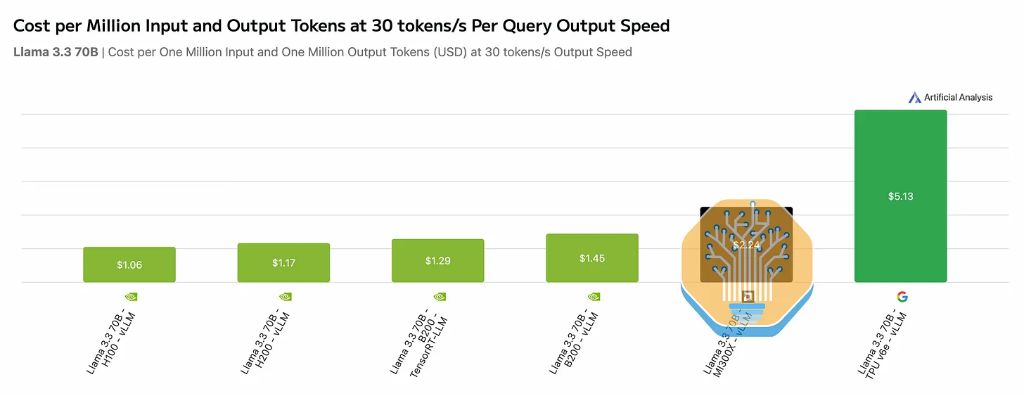
Core Insights - Nvidia maintains a leading position in technology and market share with its Blackwell architecture, but Google's TPU commercialization is challenging Nvidia's pricing power [1][2] - OpenAI's leverage in threatening to purchase TPUs has led to a 30% reduction in total cost of ownership (TCO) for Nvidia's ecosystem [1] - Google's transition from a cloud service provider to a commercial chip supplier is exemplified by Anthropic's significant TPU procurement [1][4] Group 1: Competitive Landscape - Google's TPU v7 shows a 44% lower TCO compared to Nvidia's GB200 servers, indicating a substantial cost advantage [7] - The first phase of Anthropic's TPU deal involves 400,000 TPUv7 units valued at approximately $10 billion, with the remaining 600,000 units leased through Google Cloud [4][43] - Nvidia's financial team has responded to market concerns regarding its "circular economy" strategy, indicating sensitivity to Google's competitive pressure [5][31] Group 2: Technological Advancements - Google's TPU v7 architecture has been designed to optimize system performance, achieving competitive memory bandwidth and capacity compared to Nvidia's offerings [12][62] - The introduction of Google's proprietary interconnect technology (ICI) allows for efficient scaling and reduced latency, enhancing TPU performance [15][17] - The shift in Google's software strategy to support PyTorch on TPU marks a significant change in its approach to external developers, potentially eroding Nvidia's CUDA advantage [19][21][23] Group 3: Market Dynamics - The AI infrastructure market is experiencing a shift, with companies like Fluidstack and TeraWulf emerging as key players in the Neocloud space, leveraging Google's credit backstop for financing [9][47] - The competitive landscape is evolving as more companies, including Meta and xAI, are lining up as potential TPU customers, indicating a growing demand for Google's hardware [4][29] - The performance disparity between TPU and Nvidia's GPUs is becoming more pronounced, with Anthropic's large-scale TPU orders validating the platform's capabilities [49][50]
十年磨一芯,谷歌做对了什么?
财联社· 2025-11-29 04:45
Core Viewpoint - The emergence of Google's TPU is challenging NVIDIA's dominance in the GPU market, with predictions that Google could capture 10% of NVIDIA's annual revenue by increasing TPU adoption [3]. Group 1: TPU Development and Market Position - Google initiated the TPU project in 2013 due to increasing computational demands from deep learning applications, leading to the development of custom ASICs that significantly improve efficiency for machine learning tasks [5][6]. - The first TPU was deployed in just 15 months, gaining public attention when it powered AlphaGo's victory over a world champion in 2016, marking a pivotal moment for AI [6]. - The introduction of the Transformer architecture in 2017 aligned well with TPU's design, elevating its role from a simple AI accelerator to a foundational infrastructure for Google's AI initiatives [7]. Group 2: Strategic Advantages and Ecosystem - Google's TPU design focuses on cost efficiency and performance, utilizing a simplified architecture that maximizes deep learning efficiency while sacrificing some hardware versatility [8][9]. - Unlike competitors that rely heavily on external computing resources, Google has built a vertically integrated AI capability chain encompassing "chip-cloud-model-application," creating a unique and difficult-to-replicate ecosystem [9].

均普智能涨1.42%,成交额1.05亿元,近3日主力净流入113.47万
Xin Lang Cai Jing· 2025-11-28 08:13
Core Viewpoint - The company, Ningbo Junpu Intelligent Manufacturing Co., Ltd., is actively expanding its business in the fields of humanoid robots, automotive thermal management, and new energy vehicles, benefiting from the depreciation of the RMB and strategic partnerships with major clients [2][3]. Group 1: Company Developments - The company established a joint venture with Zhiyuan Robotics to co-develop, produce, and sell general humanoid robot bodies [2]. - It completed a significant project for Procter & Gamble, marking the largest investment in intelligent manufacturing equipment for electric shavers in nearly a decade [2]. - The company is providing intelligent manufacturing solutions for various clients, including ZF, Porsche, Ford, and Midea Group, focusing on advanced technologies in the automotive sector [2]. Group 2: Financial Performance - For the first nine months of 2025, the company reported a revenue of 1.508 billion yuan, a year-on-year decrease of 4.09%, and a net profit attributable to shareholders of -54.34 million yuan, a decline of 11.42% [8]. - The company's overseas revenue accounted for 71.98% of total revenue, benefiting from the depreciation of the RMB [3]. Group 3: Market Position and Shareholder Information - The company operates in the mechanical equipment sector, specifically in automation equipment, and is involved in various concept sectors such as AI chips and machine vision [8]. - As of September 30, 2025, the number of shareholders increased by 12.38%, with an average of 40,981 circulating shares per person, a decrease of 11.02% [8].

寒武纪涨2.10%,成交额56.67亿元,主力资金净流入791.09万元
Xin Lang Zheng Quan· 2025-11-28 06:02
Core Viewpoint - The stock of Cambricon Technologies Co., Ltd. has shown significant volatility and growth, with a notable increase in revenue and profit year-on-year, indicating strong business performance in the AI chip sector [1][2]. Group 1: Stock Performance - On November 28, Cambricon's stock rose by 2.10%, reaching 1345.00 CNY per share, with a trading volume of 5.67 billion CNY and a turnover rate of 1.03%, resulting in a total market capitalization of 567.17 billion CNY [1]. - Year-to-date, Cambricon's stock price has increased by 104.41%, with a 7.69% rise over the last five trading days, a 2.18% decline over the last 20 days, and a 15.30% drop over the last 60 days [1]. - The company has appeared on the "龙虎榜" (a stock trading leaderboard) four times this year, with the most recent appearance on August 22, where it recorded a net buy of -678 million CNY [1]. Group 2: Financial Performance - For the period from January to September 2025, Cambricon achieved a revenue of 4.607 billion CNY, representing a year-on-year growth of 2386.38%, and a net profit attributable to shareholders of 1.605 billion CNY, reflecting a year-on-year increase of 321.49% [2]. Group 3: Shareholder Information - As of September 30, 2025, the number of shareholders in Cambricon increased by 52.13% to 62,000, while the average number of circulating shares per person decreased by 34.13% to 6,748 shares [2]. - Among the top ten circulating shareholders, Hong Kong Central Clearing Limited holds 12.0035 million shares, a decrease of 3.7005 million shares from the previous period [3].

X @外汇交易员
外汇交易员· 2025-11-28 03:53
Stock Performance - MediaTek's stock has risen for 5 consecutive days, with a weekly gain exceeding 20%, poised to achieve its largest weekly increase since 2002 [1] - Investor enthusiasm is driven by Google's latest Gemini model and AI chip deals [1] AI Chip Collaboration - MediaTek has partnered with Google to design TPUs, positioned as competitors to NVIDIA's AI chips [1] - Google is significantly intensifying its competition with NVIDIA in the AI chip race, with Meta emerging as a potential multi-billion dollar customer [1] - For years, Google has restricted its custom TPUs for internal use within its cloud data centers, offering computing power for rent [1] Market Analysis - Morgan Stanley anticipates significant challenges for MediaTek in the Chinese mobile phone market next year [1] - The potential of Google's TPUs is expected to offset the adverse effects on the mobile phone business in the long term [1] - Morgan Stanley upgraded Google's rating from Equal Weight to Overweight on Thursday [1]
瑞芯微涨2.14%,成交额8.04亿元,主力资金净流出260.90万元
Xin Lang Cai Jing· 2025-11-28 02:55
Core Viewpoint - 瑞芯微's stock price has shown significant growth this year, with a year-to-date increase of 68.10% and a recent uptick of 2.14% on November 28, 2023, indicating strong market interest and performance [1][2]. Financial Performance - For the period from January to September 2025, 瑞芯微 achieved a revenue of 3.141 billion yuan, representing a year-on-year growth of 45.46% [2]. - The net profit attributable to shareholders for the same period was 780 million yuan, reflecting a substantial year-on-year increase of 121.65% [2]. Shareholder Information - As of September 30, 2025, 瑞芯微 had 87,500 shareholders, an increase of 34.79% compared to the previous period [2]. - The average number of circulating shares per shareholder decreased by 25.76% to 4,811 shares [2]. Stock Market Activity - 瑞芯微's stock has been active, appearing on the龙虎榜 six times this year, with the most recent appearance on August 28 [1]. - The stock's trading volume on November 28 was 804 million yuan, with a turnover rate of 1.06% [1]. Dividend Distribution - Since its A-share listing, 瑞芯微 has distributed a total of 1.274 billion yuan in dividends, with 566 million yuan distributed over the past three years [3]. Institutional Holdings - As of September 30, 2025, the top ten circulating shareholders included Hong Kong Central Clearing Limited, which increased its holdings by 1.6511 million shares to 15.3608 million shares [3]. - Other notable changes in institutional holdings include a decrease in shares held by 银河创新混合A and 南方中证500ETF [3].

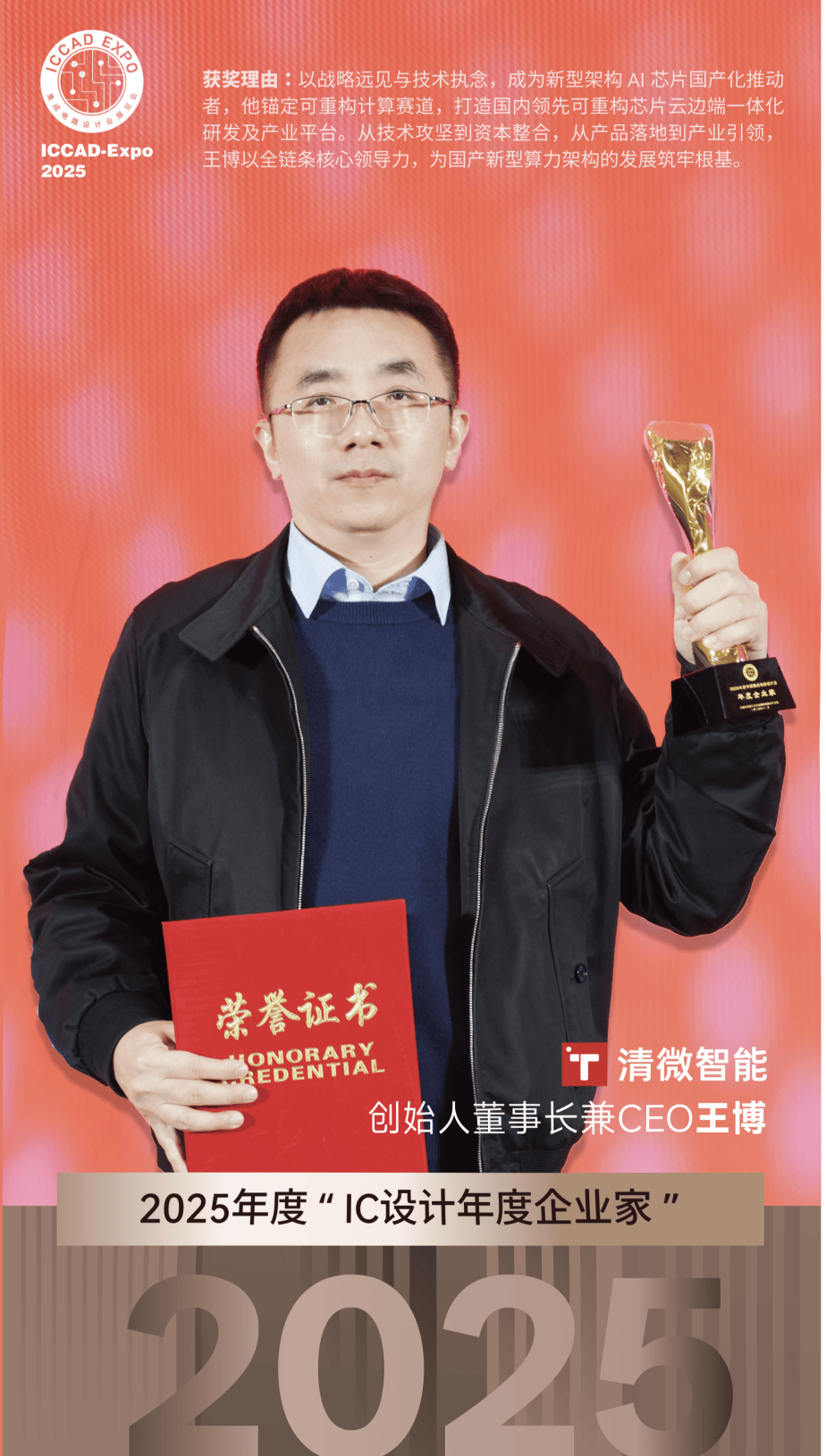
ICCAD2025:中国芯片设计产值预测首超千亿美元,清微智能CEO王博获年度企业家
Sou Hu Cai Jing· 2025-11-28 02:11
Core Insights - The 2025 Integrated Circuit Development Forum (ICCAD-Expo) held in Chengdu highlighted the optimistic sales forecast for China's chip design industry, projecting sales to exceed $100 billion for the first time by 2025, indicating a return to high growth [1][3] - The event gathered over 2,000 renowned companies in the integrated circuit industry, including major players like Samsung, Siemens, and TSMC, showcasing the latest technologies [1][3] - The forum emphasized the significant growth potential of non-GPU AI chips, with projections indicating that the market share of reconfigurable chips in non-GPU server markets will reach 30% by mid-2025 and grow to 50% by 2028 [3][5] Industry Developments - The theme of this year's ICCAD-Expo was "Open Innovation, Achieving the Future," attracting over 6,300 industry experts to discuss the development trends of the integrated circuit industry [3] - The Chinese semiconductor industry is expected to experience a new wave of growth, potentially reaching a scale of 1 trillion yuan by 2030, driven by advancements in AI and other new technologies [3][5] - Clear Micro Intelligence, a domestic reconfigurable computing chip company, presented insights on the strategic development opportunities in the non-GPU chip architecture during the forum [5][6] Company Highlights - Clear Micro Intelligence's CEO, Wang Bo, was awarded the "2025 IC Design Annual Entrepreneur" title for his strategic vision and commitment to promoting the localization of new AI chip architectures [6][10] - The company has successfully mass-produced the TX81 chip, which is designed for large-scale AI applications, achieving a 50% cost reduction compared to competitors and a threefold increase in energy efficiency [6][7] - Since the mass production of its products, Clear Micro Intelligence has established large-scale intelligent computing clusters across multiple regions in China, with over 20,000 orders for reconfigurable computing cards [7]
两艘巨轮将抵华,中国运回黄金,赶在特朗普访华前,中美互赠大礼
Sou Hu Cai Jing· 2025-11-28 02:06
Group 1 - The article discusses the gradual improvement of China-US relations, highlighted by three significant events [1] - China's central bank has increased its gold reserves for 12 consecutive months, reaching 74.09 million ounces, which is still below the global average of 15% [3][27] - The increase in gold reserves aims to optimize foreign exchange reserves and reduce risks associated with excessive dollar assets, acting as a "safety cushion" for the economy [5] Group 2 - China has resumed large-scale purchases of US soybeans, with 3 million tons valued at approximately $1.5 billion, marking a significant trade development since May [10][12] - This soybean purchase is strategically timed ahead of the US midterm elections, benefiting agricultural states that are crucial for the Republican Party [12][14] - The US is considering the export of Nvidia's H200 AI chips to China, which could significantly impact the AI chip market and reflects ongoing negotiations between the two countries [15][19] Group 3 - The article suggests that these developments indicate a pragmatic approach to trade, with both countries seeking mutual benefits, contrasting with the tensions seen during the 2018 trade war [24][26] - Despite the positive signals, underlying differences remain, particularly regarding chip exports, which are still under intense debate in the US [26] - The overall economic interdependence of China and the US, accounting for over 40% of global GDP, emphasizes the need for cooperation rather than confrontation [29]

一个月市值蒸发5万亿元 英伟达遭遇谷歌自研芯片冲击波
2 1 Shi Ji Jing Ji Bao Dao· 2025-11-27 23:25
Core Viewpoint - The AI chip market is experiencing significant shifts as Google accelerates the commercialization of its self-developed AI chip, TPU, potentially impacting NVIDIA's dominance in the GPU market [1][4]. Group 1: Google's TPU Development - Google has been developing TPU since 2013, initially for internal AI workloads and Google Cloud services, but is now pushing for external commercialization, with Meta considering deploying TPU in its data centers by 2027 [4]. - The potential contract with Meta could be worth several billion dollars, indicating a significant market opportunity for Google [4]. - Google’s strategy aligns with its long-term goal of integrating hardware and software, especially as the costs of training large models rise dramatically [4]. Group 2: NVIDIA's Market Position - NVIDIA currently holds over 90% of the AI chip market share, but faces increasing competition from companies like Google [4]. - In response to the competitive landscape, NVIDIA emphasizes its "one generation ahead" advantage and the versatility of its GPUs, which are seen as irreplaceable in current AI innovations [5]. - Despite the challenges posed by self-developed chips, NVIDIA continues to supply GPUs to Google, indicating a complex relationship between the two companies [5]. Group 3: Industry Trends - The trend towards self-developed AI chips is not limited to Google; other tech giants like AWS and Microsoft are also advancing their own chip technologies [6][7]. - The industry is moving towards a heterogeneous architecture, where companies are diversifying their chip supply strategies rather than relying solely on one type of architecture [7]. - The collaboration between companies like Anthropic with both NVIDIA and Google highlights a shift towards a multi-supplier strategy in AI infrastructure [7]. Group 4: Market Reactions - Following news of Google's TPU commercialization, NVIDIA's stock experienced significant volatility, reflecting market concerns about its future share and profitability in the AI infrastructure space [8]. - The evolving landscape suggests a transition from hardware competition to system-level competition, with changes in software frameworks and energy efficiency influencing the AI chip market [8].