双碳目标

Search documents
有毒气体变宝藏
Xin Lang Cai Jing· 2026-01-25 22:24
Core Viewpoint - The research team led by Academician Li Can from the Dalian Institute of Chemical Physics has developed a proprietary technology for the complete decomposition of hydrogen sulfide into hydrogen and sulfur, transforming a hazardous waste into valuable resources, achieving international leading standards in this field [1][4]. Group 1: Technology Overview - Hydrogen sulfide (H2S) is a toxic compound commonly produced in natural gas extraction, refining, and coal chemical processes, posing significant environmental and health risks [2]. - The traditional Claus process converts hydrogen sulfide into sulfur and water, which is seen as inefficient since it wastes the hydrogen component [2]. - The newly developed electrocatalytic technology allows for the separate recovery of both sulfur and hydrogen, effectively addressing the limitations of the Claus process [3]. Group 2: Implementation and Results - A pilot demonstration unit capable of processing 100,000 cubic meters of hydrogen sulfide annually has been established, achieving over 1,000 hours of stable operation with over 99.95% purity for sulfur and over 99.999% purity for hydrogen [4]. - This technology operates under mild conditions (room temperature and atmospheric pressure) without emitting carbon dioxide, making it suitable for various industries such as coal chemical, petrochemical, and oil and gas extraction [4]. Group 3: Economic and Environmental Impact - The International Hydrogen Association predicts that by 2030, China's green hydrogen production capacity will reach approximately 1.8 million tons, with the new technology potentially recovering about 730,000 tons of green hydrogen from the annual processing of 8 billion cubic meters of hydrogen sulfide, contributing significantly to carbon neutrality goals [5]. - The electrocatalytic technology's operational costs for hydrogen production are expected to be half that of current water electrolysis methods, with further cost reductions anticipated as the technology matures, benefiting the hydrogen energy industry and low-carbon energy systems [5].
加码绿电 筑牢能源安全网
Zhong Guo Zheng Quan Bao· 2026-01-25 21:06
Core Insights - The National Energy Group has established a solid energy supply foundation through supply assurance, price stability, green transformation, and innovative reforms, achieving significant milestones in coal production, wind power capacity, and market capitalization [1][2]. Energy Supply and Production - The company has stabilized its self-produced coal volume at 600 million tons and has achieved a wind power capacity exceeding 72 million kilowatts, contributing to a market capitalization surpassing 1 trillion yuan [1]. - The group aims to enhance effective investment and promote the transformation and upgrading of traditional industries while developing emerging industries on a large scale by 2026 [1]. Renewable Energy Development - During the 14th Five-Year Plan, the group has focused on expanding scale and optimizing layout, resulting in a threefold increase in renewable energy installed capacity compared to the end of the 13th Five-Year Plan [2]. - The company has developed large-scale wind and solar bases and launched the world's largest open offshore photovoltaic project, showcasing innovative integration of green energy and agriculture [2]. Energy Storage and Hydrogen Production - The group has made significant advancements in energy storage, with 195 new storage projects operational by the end of 2025, accounting for approximately 6% of the national new energy storage capacity [2]. - The hydrogen energy sector has been established with a production capacity of 6,000 tons per year, representing 5% of the national total, with various applications leading industry development [2]. Coal Power Upgrades - The company is focusing on upgrading coal power as a key transformation strategy, with four projects selected as national pilot projects for next-generation coal power [3]. - These upgrades are expected to reduce carbon emissions by 10% for certain coal power units by 2024 [3]. Energy Security and Supply Assurance - The National Energy Group has built a resilient supply assurance system, prioritizing supply stability and price control while enhancing emergency supply capabilities [3][4]. - The company has accelerated the release of high-quality coal production capacity, achieving significant operational metrics, including a stable self-produced coal volume and record daily power generation [3][4]. Transportation and Logistics - The group is improving its transportation network, with ongoing projects like the Huanghua Port Phase V and the Dongyue Railway, enhancing coal transportation efficiency [4]. - The company’s coal production and power generation metrics account for significant national shares, with annual coal production representing one-sixth of the national total [4]. Reform and Innovation - The company has implemented comprehensive reforms, completing 161 specific reform tasks to enhance governance and operational efficiency [5][6]. - The restructuring of assets has led to a significant increase in the market value of China Shenhua, with over 200 billion yuan in asset restructuring [6]. Future Outlook - By 2026, the company plans to strengthen its safety and supply responsibilities, enhance investment effectiveness, and promote high-quality development while focusing on carbon asset management and technological innovation [6].

绿色低碳改造提速 驱动企业生产模式加快转型
Zhong Guo Zheng Quan Bao· 2026-01-25 21:06
Core Viewpoint - The green and low-carbon transformation of enterprises is essential for high-quality development, requiring enhanced management capabilities, technological reserves, and financial support to drive deep transformation [1][2][3] Group 1: Industry Actions and Developments - Multiple listed companies have announced initiatives for green low-carbon transformation, covering sectors such as steel, non-ferrous metals, and energy equipment, focusing on improving production efficiency and creating new market opportunities [1] - Liugang Co. plans to raise up to 300 million yuan for a high-quality technology upgrade project aimed at enhancing product quality and reducing emissions [1] - Zhongjin Lingnan is implementing a project to expand lead-zinc ore processing capacity, which will significantly improve resource utilization efficiency [1] Group 2: Technological and Strategic Considerations - The transition to green low-carbon practices has shifted from a strategic choice to a necessary operational requirement, particularly for high-energy-consuming industries [3] - Companies face challenges in selecting suitable technologies that balance advanced capabilities with cost-effectiveness, emphasizing the need for a strategic assessment of technology compatibility with long-term low-carbon goals [4] - The evaluation of technology should consider maturity, economic feasibility, environmental benefits, and adaptability to existing production lines [3][4] Group 3: Financial and Support Mechanisms - The contradiction between green investment and profitability is becoming more pronounced, with significant capital requirements and long payback periods posing challenges for companies [5] - Green finance faces issues such as mismatched loan terms and high entry barriers for small and medium-sized enterprises, which often struggle to access necessary funding [5][6] - Innovations in green financial products are expected in 2026, including transition bonds and asset securitization, to better support corporate transformation efforts [6]
又一新能源项目落户老山脚下
Xin Hua Ri Bao· 2026-01-25 19:13
Core Viewpoint - The establishment of the wind power yaw motor manufacturing project by Dime Electric in Nanjing Jiangbei New Area represents a significant step towards green low-carbon development and enhancing the quality of the manufacturing industry in the region [1] Group 1: Project Overview - The Dime project is located in the Pukou Development Zone, covering an area of approximately 13,600 square meters with a total construction area of about 17,000 square meters [1] - The project will serve as a production base for wind power yaw motors, featuring two production lines for wind power yaw motors and one production line for solar tracking motors, with an expected annual output of around 150,000 units [1] Group 2: Technological Advancements - The company utilizes multi-field coupling simulation technology and self-developed control algorithms to produce high power density and high control precision permanent magnet synchronous motors [1] - The products are designed to significantly enhance the efficiency of wind and photovoltaic power generation, with solar tracking systems improving solar energy utilization by approximately 35% compared to traditional fixed solar panels [1] Group 3: Strategic Alignment - The project aligns with the "14th Five-Year Plan" focus on promoting energy structure transformation and expanding the green manufacturing industry [1] - It emphasizes the research and manufacturing of core components for clean energy equipment, contributing to the establishment of a green low-carbon industrial system in the region and supporting the "dual carbon" goals [1]
绿色智能双重转型,矿用卡车迈向无人新能源时代
Guotou Securities· 2026-01-25 13:27
Investment Rating - The report maintains an "A" rating, indicating a leading position in the market [5] Core Insights - The coal mining industry is experiencing a dual transformation towards green and intelligent technologies, with significant growth potential for mining trucks in the new energy era [1] - The demand for unmanned mining trucks is expected to surge due to advancements in smart mining construction and supportive policies, with projections indicating a fleet exceeding 10,000 units by 2026-2027 [1][22] - The transition to new energy mining trucks is becoming mainstream, driven by mature technologies in pure electric and hybrid models, alongside favorable policies and cost advantages [2][37] Summary by Sections 1. Special Research - The continuous release of open-pit coal mine capacity is creating substantial growth opportunities for mining trucks, with open-pit coal mines accounting for approximately 25% of China's total coal production in 2023 [16] - The number of unmanned mining trucks is projected to increase from 88 units in 2020 to over 4,000 by 2025, with a forecast of surpassing 10,000 units by 2026-2027 [1][22] - The industry is accelerating its green transformation, with new energy mining trucks expected to see sales exceed 1,500 units in 2023 and forecasted to surpass 2,000 units by 2025 [2][37] 2. Market Information Tracking - The report tracks coal prices, with the average price of thermal coal reported at 685 RMB/ton as of January 21, 2026, remaining stable compared to January 7, 2026 [10] - Coking coal prices have seen an increase, with the main coking coal price at 1,770 RMB/ton as of January 20, 2026, up by 150 RMB/ton from January 6, 2026 [10] 3. Industry Dynamics - Recent policies from the National Energy Administration and other departments are promoting the construction of zero-carbon factories and the use of new energy vehicles in mining operations [9] - The report highlights the importance of smart mining and unmanned truck applications, supported by various national policies aimed at enhancing safety and efficiency in mining operations [35] 4. Investment Portfolio and Recommendations - The report suggests focusing on companies with strong positions in the coal sector, such as China Shenhua, Shaanxi Coal and Energy, and China Coal Energy, which are expected to benefit from stable profits and cyclical recovery [11] - It also recommends monitoring companies involved in the production of new energy mining trucks, including XCMG, SANY Heavy Industry, and others, as they are well-positioned to capitalize on the growing market [2][43]
2025 年我国规上工业发电量同比增长 2.2%,寒潮下美国气价周环比大涨
Xinda Securities· 2026-01-25 09:01
1. Report Industry Investment Rating - The investment rating for the utilities industry is "Bullish" [2] 2. Core Viewpoints of the Report - The power sector is expected to see improved profitability and value re - evaluation after multiple rounds of power supply - demand contradictions. Coal - fired power's peak - shaving value is prominent, electricity prices may rise slightly, and the cost of coal - fired power enterprises is controllable. The performance of power operators is likely to improve significantly. For the natural gas sector, with the decline in upstream gas prices and the recovery of domestic consumption, the urban gas business can achieve stable gross margins and high growth in sales volume. Traders with low - cost long - term contract gas sources and receiving terminal assets may increase profits [5][98] 3. Summary by Relevant Catalogs 3.1 This Week's Market Performance - As of January 23rd, the utilities sector rose 2.3%, outperforming the market (CSI 300 fell 0.6% to 4,702.50). The top three industries in terms of gains and losses were building materials (9.2%), petroleum and petrochemicals (7.7%), and steel (7.3%), while the bottom three were banks (-2.7%), communications (-2.1%), and non - bank finance (-1.5%) [12] - The power sector rose 1.72%, and the gas sector rose 7.21%. Among sub - industries, thermal power generation rose 2.71%, hydropower generation fell 0.89%, nuclear power generation rose 0.33%, thermal services rose 2.09%, comprehensive power services rose 4.56%, photovoltaic power generation rose 7.21%, and wind power generation rose 2.82% [14] - In the power sector, the top three gainers were Nanwang Energy (16.26%), Shanghai Electric Power (11.95%), and Zhongmin Energy (7.76%); the bottom three were Yangtze Power (-1.96%), Huaneng Power International (-1.47%), and Huaneng Hydropower (-0.87%). In the gas sector, the top three gainers were Zhongtai Co., Ltd. (23.02%), Jiufeng Energy (14.70%), and Furan Energy (13.15%); the bottom three were Shuifa Gas (0.00%), ENN Energy (1.45%), and Dazhong Public Utilities (2.26%) [17] 3.2 Power Industry Data Tracking 3.2.1 Thermal Coal Prices - In January, the annual long - term contract price of Qinhuangdao Port thermal coal (Q5500) was 684 yuan/ton, a month - on - month decrease of 10 yuan/ton. As of January 23rd, the market price of Shanxi - produced thermal coal (Q5500) at Qinhuangdao Port was 686 yuan/ton, a week - on - week decrease of 11 yuan/ton [23] - As of January 23rd, the pit - mouth price of Shaanxi Yulin thermal lump coal (Q6000) was 770 yuan/ton, a week - on - week decrease of 15 yuan/ton; the pit - mouth price (tax - included) of Datong南郊 coking coal (Q5500) was 626.08 yuan/ton, a week - on - week decrease of 1.82 yuan/ton; the wagon - loading price of Inner Mongolia Dongsheng large - sized clean coal (Q5500) was 564 yuan/ton, a week - on - week decrease of 5 yuan/ton [23] - As of January 22nd, the FOB spot price of Newcastle NEWC 5500 kcal thermal coal was 73.55 US dollars/ton, a week - on - week increase of 0.05 US dollars/ton; the ARA 6000 kcal thermal coal spot price was 101.5 US dollars/ton, a week - on - week increase of 4.80 US dollars/ton; the Richards Bay thermal coal FOB spot price was 80 US dollars/ton, a week - on - week increase of 3.95 US dollars/ton. As of January 23rd, the Newcastle NEWC index price was 108.4 US dollars/ton, a week - on - week increase of 1.2 US dollars/ton. The ex - warehouse price of Indonesian coal (Q5500) at Guangzhou Port was 731.9 yuan/ton, a week - on - week decrease of 3.81 yuan/ton; the ex - warehouse price of Australian coal (Q5500) at Guangzhou Port was 737.15 yuan/ton, a week - on - week decrease of 3.36 yuan/ton [26] 3.2.2 Thermal Coal Inventory and Power Plant Daily Consumption - As of January 23rd, the coal inventory at Qinhuangdao Port was 582 tons, a week - on - week increase of 32 tons [30] - As of January 22nd, the coal inventory of 17 inland provinces was 9,010.4 tons, a week - on - week decrease of 290.3 tons (3.12%); the daily consumption of power plants in 17 inland provinces was 445.9 tons, a week - on - week increase of 33.7 tons/day (8.18%); the available days were 20.2 days, a decrease of 2.4 days compared to last week [32] - As of January 22nd, the coal inventory of 8 coastal provinces was 3,299.4 tons, a week - on - week decrease of 49.5 tons (1.48%); the daily consumption of power plants in 8 coastal provinces was 241.7 tons, a week - on - week increase of 23.9 tons/day (10.97%); the available days were 13.7 days, a decrease of 1.7 days compared to last week [32] 3.2.3 Hydropower Inflow Situation - As of January 23rd, the Three Gorges outbound flow was 9,180 cubic meters per second, a year - on - year increase of 13.05%, and flat week - on - week [45] 3.2.4 Key Power Market Transaction Electricity Prices - In the Guangdong day - ahead spot market, as of January 16th, the weekly average price was 349.15 yuan/MWh, a week - on - week increase of 10.85% and a year - on - year decrease of 6.2%. In the real - time spot market, the weekly average price was 291.58 yuan/MWh, a week - on - week decrease of 0.83% and a year - on - year decrease of 22.2% [52] - In the Shanxi day - ahead spot market, as of January 22nd, the weekly average price was 377.70 yuan/MWh, a week - on - week increase of 253.77% and a year - on - year increase of 15.9%. In the real - time spot market, the weekly average price was 385.26 yuan/MWh, a week - on - week increase of 194.3% and a year - on - year increase of 7.5% [59] - In the Shandong day - ahead spot market, as of January 18th, the weekly average price was 221.85 yuan/MWh, a week - on - week increase of 9.59% and a year - on - year decrease of 15.4%. In the real - time spot market, the weekly average price was 275.45 yuan/MWh, a week - on - week increase of 50.11% and a year - on - year increase of 11.9% [60] 3.3 Natural Gas Industry Data Tracking 3.3.1 Domestic and International Natural Gas Prices - As of January 23rd, the national index of LNG ex - factory prices at the Shanghai Oil and Gas Trading Center was 3,992 yuan/ton (about 2.85 yuan/cubic meter), a year - on - year decrease of 7.44% and a month - on - month increase of 3.72%. In November 2025, the average import price of domestic LNG was 490.97 US dollars/ton (about 2.48 yuan/cubic meter), a year - on - year decrease of 17.25% and a month - on - month increase of 2.80%. As of January 23rd, the CIF price of imported LNG in China was 11.32 US dollars/million British thermal units (about 2.93 yuan/cubic meter), a year - on - year decrease of 19.80% and a month - on - month increase of 9.58% [58] - As of January 21st, the European TTF spot price was 13.79 US dollars/million British thermal units, a year - on - year decrease of 10.3% and a week - on - week increase of 21.0%; the US HH spot price was 4.98 US dollars/million British thermal units, a year - on - year increase of 12.9% and a week - on - week increase of 68.8%; the Chinese DES spot price was 10.6 US dollars/million British thermal units, a year - on - year decrease of 22.6% and a week - on - week increase of 6.5% [61] 3.3.2 EU Natural Gas Supply, Demand, and Inventory - In the third week of 2026, the EU's natural gas supply was 6.34 billion cubic meters, a year - on - year increase of 14.8% and a week - on - week increase of 4.6%. Among them, LNG supply was 3.21 billion cubic meters, a week - on - week increase of 12.6%, accounting for 50.6% of the natural gas supply; imported pipeline gas was 3.13 billion cubic meters, a year - on - year increase of 4.2% and a week - on - week decrease of 2.6%. From January to March 2026, the EU's cumulative natural gas supply was 18.28 billion cubic meters, a year - on - year increase of 11.2% [65] - In the fourth week of 2026, the EU's natural gas inventory was 54.489 billion cubic meters, a year - on - year decrease of 14.60% and a week - on - week decrease of 4.45%. As of January 21st, 2026, the EU's natural gas inventory level was 47.6% [73] - In the third week of 2026, the EU's estimated natural gas consumption was 11.82 billion cubic meters, a week - on - week increase of 0.8% and a year - on - year increase of 6.2%. From January to March 2026, the EU's estimated cumulative natural gas consumption was 33.49 billion cubic meters, a year - on - year increase of 13.4% [75] 3.3.3 Domestic Natural Gas Supply and Demand - In November 2025, the apparent domestic natural gas consumption was 36.28 billion cubic meters, a year - on - year increase of 4.1%. From January to November 2025, the cumulative apparent domestic natural gas consumption was 388 billion cubic meters, a cumulative year - on - year decrease of 0.1% [78] - In December 2025, the domestic natural gas production was 22.98 billion cubic meters, a year - on - year increase of 5.4%. The LNG import volume was 8.48 million tons, a year - on - year increase of 18.8% and a month - on - month increase of 22.2%. The PNG import volume was 4.97 million tons, a year - on - year increase of 12.7% and a month - on - month decrease of 0.8%. From January to December 2025, the cumulative domestic natural gas production was 261.89 billion cubic meters, a cumulative year - on - year increase of 6.3%. The cumulative LNG import volume was 68.43 million tons, a cumulative year - on - year decrease of 10.7%. The cumulative PNG import volume was 59.43 million tons, a cumulative year - on - year increase of 8.0% [79] 3.4 This Week's Industry News 3.4.1 Power Industry - Related News - In December 2025, the power generation of above - scale industrial enterprises was 858.6 billion kWh, a year - on - year increase of 0.1%. From January to December 2025, it was 9,715.9 billion kWh, a year - on - year increase of 2.2%. In December 2025, the decline of thermal power narrowed, and the growth rates of hydropower, nuclear power, wind power, and solar power generation slowed down [87] - Facing the severe test of winter power supply, the national energy system took multiple measures to ensure stable supply. After winter 2026, the national electricity load increased rapidly, exceeding 1.4 billion kilowatts for the first time on January 20th, reaching 1.417 billion kilowatts and setting three consecutive winter records. The daily electricity consumption also exceeded 30 billion kWh for the first time in winter, reaching 30.47 billion kWh on January 19th [87] 3.4.2 Natural Gas Industry - Related News - From January to December 2025, the natural gas production of above - scale industrial enterprises was 261.9 billion cubic meters, a year - on - year increase of 6.2%. In December, the production was 23 billion cubic meters, a year - on - year increase of 5.1% [88] 3.5 This Week's Important Announcements - Shenergy Co., Ltd.: In 2025, the power generation of its controlled power plants was 57.654 billion kWh, a year - on - year decrease of 1.7%. The on - grid electricity was 55.376 billion kWh, with an average on - grid electricity price of 0.494 yuan/kWh (tax - included). In the fourth quarter of 2025, it added 2.0672 million kilowatts of controlled installed capacity. As of the end of 2025, its controlled installed capacity was 20.6611 million kilowatts, a year - on - year increase of 15.1% [89] - Shanghai Electric Power Co., Ltd.: From January to December 2025, its combined power generation was 78.232 billion kWh, a year - on - year increase of 1.41%. The on - grid electricity was 74.979 billion kWh, a year - on - year increase of 1.49%. The average on - grid electricity price was 0.58 yuan/kWh. As of the end of December 2025, its controlled installed capacity was 26.3213 million kilowatts, and clean energy accounted for 62.59% of the installed capacity [90] - Hubei Energy Group Co., Ltd.: As of the end of 2025, its total assets were 100.081 billion yuan, a year - on - year increase of 1.83%. The attributable net profit was 1.896 billion yuan, a year - on - year increase of 4.51% [91] - SDIC Power Holdings Co., Ltd.: From October to December 2025, the power generation of its controlled enterprises was 33.142 billion kWh, and the on - grid electricity was 32.229 billion kWh, a year - on - year decrease of 14.22% and 14.43% respectively. From January to December 2025, the power generation was 158.093 billion kWh, and the on - grid electricity was 154.209 billion kWh, a year - on - year decrease of 8.12% and 8.06% respectively. In the fourth quarter, it added 2.1471 million kilowatts of controlled installed capacity. As of the end of the fourth quarter, its installed controlled capacity was 46.8956 million kilowatts [92] - Guanghui Energy Co., Ltd.: It is estimated that the attributable net profit in 2025 will be between 1.32 billion yuan and 1.47 billion yuan, a year - on - year decrease of 50.03% - 55.13% [93] - Furan Energy Group Co., Ltd.: In 2025, its natural gas supply was 4.931 billion cubic meters, and its operating revenue was 33.754 billion yuan, a year - on -





2025年我国规上工业发电量同比增长2.2%,寒潮下美国气价周环比大涨
Xinda Securities· 2026-01-25 07:46
Investment Rating - The investment rating for the utility sector is "Positive" [2] Core Insights - The report indicates that China's industrial power generation for 2025 is expected to grow by 2.2% year-on-year, with significant fluctuations in natural gas prices in the U.S. due to cold weather [1][2] - The utility sector has outperformed the broader market, with a 2.3% increase as of January 23, 2026, while the power sector rose by 1.72% and the gas sector surged by 7.21% [4][12] - The report highlights a tightening supply-demand balance in the power sector, suggesting potential for profit improvement and value reassessment for power companies [5] Summary by Sections Market Performance - As of January 23, 2026, the utility sector has increased by 2.3%, outperforming the market, while the power sector rose by 1.72% and the gas sector by 7.21% [4][12] - The top-performing sectors included construction materials and oil and petrochemicals, while banking and telecommunications lagged [12] Power Industry Data Tracking - The price of thermal coal at Qinhuangdao Port (Q5500) decreased by 11 CNY/ton week-on-week, currently at 686 CNY/ton [4][23] - Coal inventory at Qinhuangdao Port increased by 320,000 tons week-on-week, totaling 5.82 million tons [30] - Daily coal consumption in inland provinces rose by 8.18% week-on-week, reaching 4.459 million tons [32] Natural Gas Industry Data Tracking - Domestic LNG prices increased by 3.72% week-on-week, with the national index at 3992 CNY/ton [58] - The U.S. Henry Hub gas price surged by 68.8% week-on-week, reaching 4.98 USD/MMBtu [61] - The EU's natural gas supply increased by 14.8% year-on-year, with a total supply of 6.34 billion cubic meters [65] Key Industry News - In December 2025, China's industrial power generation reached 858.6 billion kWh, a slight increase of 0.1% year-on-year [5] - The report suggests that the power sector is likely to see improved profitability due to ongoing supply-demand tensions and market reforms [5] Investment Recommendations - The report recommends focusing on leading coal power companies such as Guodian Power, Huaneng International, and Huadian International, as well as regional leaders in tight supply areas [5] - For natural gas, companies with low-cost long-term gas sources and receiving station assets are expected to benefit from market conditions [5]
2026新能源汽车后市场新生态大会在重庆万州举办
Zhong Guo Qi Che Bao Wang· 2026-01-25 05:22
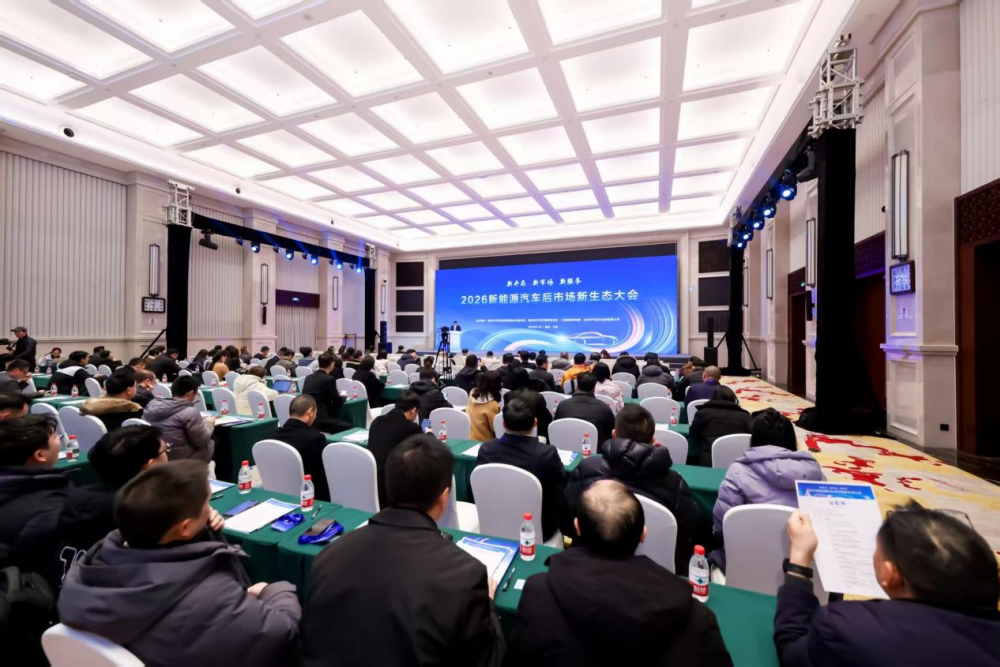
Core Insights - The 2026 New Energy Vehicle Aftermarket New Ecology Conference was held in Wanzhou, Chongqing, focusing on "new beginnings, new markets, and new services" to promote a safe, efficient, and green aftermarket ecosystem [1][3]. Group 1: Conference Overview - The conference was organized by various governmental and industry bodies, including the Chongqing Municipal Economic and Information Commission and the China Automotive Engineering Research Institute [1][3]. - Key figures from the Ministry of Industry and Information Technology and various industry organizations attended, emphasizing the importance of the new energy vehicle industry as a driver for high-quality manufacturing development [3][6]. Group 2: Industry Development Goals - The Chongqing government aims to enhance the automotive aftermarket system, focusing on smart connected new energy vehicles and establishing a globally influential hub for this sector [8][10]. - Key initiatives include improving vehicle inspection and maintenance capabilities, financial and insurance services, and fostering the battery recycling and automotive modification industries [8][10]. Group 3: Market Trends and Innovations - During the conference, it was noted that during the 14th Five-Year Plan, China's new energy vehicle sales and penetration rates were among the highest globally, driven by policy support and innovation [11]. - The industry is expected to continue evolving with a focus on quality improvement, internationalization, and the integration of services and products [11][14]. Group 4: Future Directions - The automotive aftermarket is anticipated to undergo significant changes, with trends towards openness, digitalization, and lifecycle services becoming prominent [17][20]. - Companies are encouraged to leverage AI technology for improved diagnostics and repair efficiency, and to establish standardized supply chains for new energy vehicle components [25][29]. Group 5: Recycling and Sustainability - The recycling of retired lithium batteries is highlighted as a critical national resource strategy, with significant market potential [34][36]. - Companies are urged to develop efficient recycling technologies and localized closed-loop networks to meet international regulatory requirements and support global carbon neutrality goals [37][39]. Group 6: Collaborative Efforts - The conference featured discussions on policy guidance, ecological collaboration, and innovative business models, showcasing the vibrant development of China's new energy vehicle aftermarket [40]. - The insights and consensus reached during the conference are expected to strengthen capabilities, enhance quality, and foster resource connections within the industry [40].

建发房产2025以三维深耕标定人居新高度
Xin Jing Bao· 2026-01-25 02:00
Core Insights - The real estate industry is transitioning from "scale competition" to "value cultivation," emphasizing product strength, service quality, and corporate responsibility as core competitive advantages for enduring through cycles [1][15] - In 2025, Jianfa Real Estate achieved multiple national and industry awards, showcasing its commitment to high-quality development and contributing to industry stability [2][15] Awards and Recognition - Jianfa Real Estate's accolades in 2025 include the "2025 China Civil Engineering Zhan Tianyou Award for Excellent Residential Community Gold Award" for its Beijing Jianfa Wangjing project, recognized for its excellence in planning, engineering quality, technological innovation, and green energy [2] - The company ranked in the top tiers of various industry evaluations, including "Top 3 Excellent Enterprises in Real Estate Product Strength" and "Top 2 Excellent Enterprises in Real Estate Cultural Innovation" [2] - Jianfa Real Estate was recognized as "Top 10 Super Product Strength in Chinese Real Estate Enterprises" and its "Good House System Framework" was awarded "Top 10 Good House Construction Systems" [2] Sustainable Development and Urban Integration - Jianfa Real Estate focuses on urban renewal and carbon neutrality, aligning its development with city growth and cultural integration [4] - The "Lighthouse Strategy" launched in 2025 emphasizes customized, culturally rich designs that reflect local heritage, avoiding uniformity across cities [4] - Projects like Beijing Jianfa Haiyan and Chengdu Jianfa Haiyao exemplify this approach, integrating local culture with modern design [5][4] Product Innovation and Quality Assurance - The company maintains a strong commitment to quality, launching a "Good House" framework with over 1,050 technical standards to ensure comfort, safety, and sustainability [8] - Innovations include the "Six重静界" soundproofing system and advanced water purification technologies, with projects receiving platinum-level certifications for noise reduction [9] - Customer feedback is integral to product development, with over 212,000 surveys collected and extensive direct communication with clients to inform improvements [9] Customer Service and Community Engagement - Jianfa Real Estate emphasizes customer satisfaction throughout the project lifecycle, achieving high rankings in delivery and customer satisfaction metrics [10] - The company implements a comprehensive quality control process called "One House Seven Inspections" to ensure thorough checks before delivery [11] - Community initiatives, such as the "Yuexin Community" and various cultural events, foster engagement and enhance the living experience for residents [12][13] Industry Leadership and Corporate Responsibility - Jianfa Real Estate's achievements in 2025 reflect its commitment to high-quality development and serve as a model for the industry amid a focus on value creation [15] - The company aims to blend cultural and technological advancements in its products while enhancing service experiences and promoting sustainable practices [15]

巨型“充电宝”,通过竣工验收
财联社· 2026-01-25 01:01
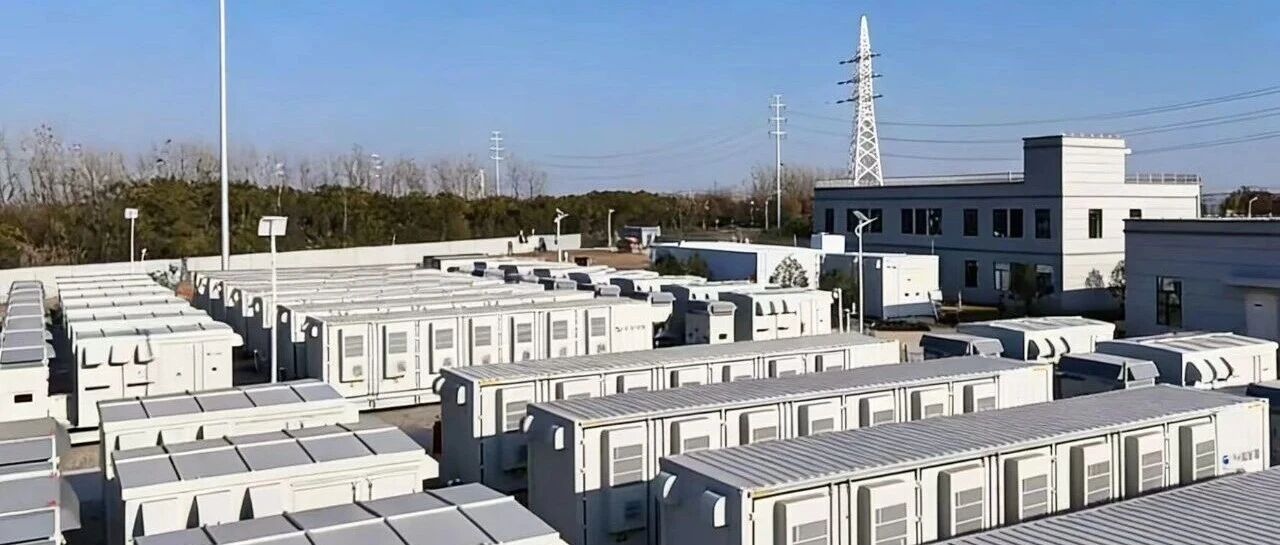
Core Viewpoint - China Power Construction Corporation has successfully completed the acceptance of the first phase of the largest sodium-ion battery energy storage station under construction in China, located in Honghu City, with a capacity of 100 MW/200 MWh [1] Group 1: Project Overview - The first phase of the project is configured with an energy storage capacity of 50 MW/100 MWh, including the construction of a 50 MW 110 kV booster station and a 110 kV line to the 110 kV Maojiang Substation [1] - Once fully operational, the project will become one of the largest sodium-ion energy storage stations in the country, significantly promoting regional sodium-ion storage and the development of a new power system [1] Group 2: Regional and National Impact - The project is one of the first pilot demonstration projects for new energy storage in Hubei Province, contributing positively to the local new energy industry cluster and supporting the region's "dual carbon" goals and socio-economic development [1] - The successful implementation of this project is crucial for accelerating China's energy green transition and constructing a new power system [1]