
民营经济

Search documents
长三角增速第一,为什么是它?
Mei Ri Jing Ji Xin Wen· 2025-08-08 23:41
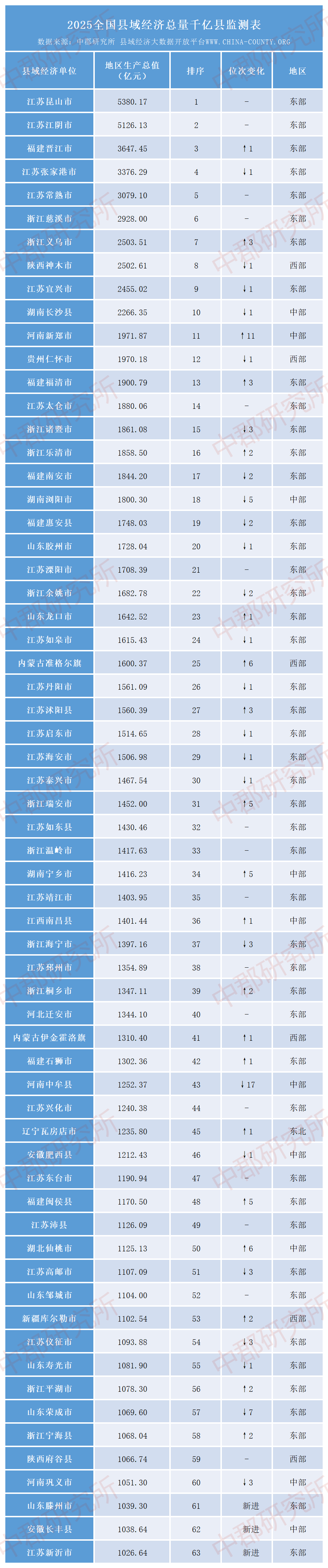
Economic Performance of the Yangtze River Delta - The economic total of the Yangtze River Delta region exceeded 16 trillion yuan in the first half of 2025, accounting for 24.8% of the national economy [1] - Nine cities in the region achieved a GDP exceeding 500 billion yuan, with Shanghai leading at 26,222.15 billion yuan, followed by Suzhou and Hangzhou at 13,002.35 billion yuan and 11,303 billion yuan respectively [1] - 34 cities in the Yangtze River Delta matched or exceeded the national GDP growth rate of 5.3%, with 17 cities achieving growth rates of 6% or higher [1] Economic Growth of Zhoushan - Zhoushan's economy grew by 6.9% in the first half of the year, the highest in the Yangtze River Delta, surpassing the growth of neighboring cities [2] - The city's industrial output value increased by 11.5%, significantly above the provincial average of 3.9%, with key industries such as power production and shipbuilding showing substantial growth [3] - Zhoushan's marine economy accounted for 69.72% of its GDP, making it one of the cities with the highest marine economic contribution in the country [3] Industrial Development in Zhoushan - The industrial output value of Zhoushan's major industries, including power supply, shipbuilding, and petrochemicals, contributed significantly to the city's overall industrial growth [3] - The green petrochemical and new materials industry is identified as the largest industrial sector in Zhoushan, contributing 61% to the city's industrial output [3] National Economic Trends - The report highlights that the number of "billion-county" economies in China has reached 63, with a total GDP exceeding 10 trillion yuan, representing 7.99% of the national economy [12] - The county-level economic growth is led by cities like Kunshan and Jiangyin, with significant contributions from other regions as well [17]

民营经济促进法 如何贯彻?怎样落实?
Yang Shi Wang· 2025-08-08 22:26
Core Viewpoint - The Supreme People's Court has issued guiding opinions to implement the Private Economy Promotion Law, consisting of 25 opinions aimed at ensuring the development and growth of the private economy [1] Group 1 - The guiding opinions were introduced to address the need for a supportive legal environment for the private economy [1] - The opinions outline specific measures to protect the rights and interests of private enterprises, enhancing their operational environment [1] - The implementation of these opinions is expected to significantly contribute to the expansion and strengthening of the private economy in China [1]
美国开征“黄金税”了丨今日财讯
Sou Hu Cai Jing· 2025-08-08 16:08
Group 1 - The Supreme People's Court of China issued guidelines to implement the Private Economy Promotion Law, aiming to refine adjudication rules and improve work mechanisms to address practical issues [2][7] - China Mobile reported a net profit of 84.2 billion yuan for the first half of 2025, with total revenue of 543.8 billion yuan, a 0.7% year-on-year increase, and a digital transformation revenue of 156.9 billion yuan, up 6.6% year-on-year [9][7] - A new company, Xinjiang Railway Co., Ltd., was established with a registered capital of 95 billion yuan, focusing on various services including construction, railway transportation, and real estate [9][7] Group 2 - The 2025 World Robot Conference opened in Beijing, featuring over 1,500 exhibits from more than 200 companies, including over 100 new products and 50 humanoid robot manufacturers, marking a record for similar events [6][7] - The Chinese shipbuilding industry set a new record with the delivery of the 9,000-car capacity automobile carrier "GRANDE TIANJIN," built in just 179 days [5][7] - OpenAI launched GPT-5, a new AI model that significantly outperforms previous versions in various fields including coding, mathematics, writing, health, and visual perception [10][7] Group 3 - International gold prices reached a new intraday high of $3,534.1 per ounce, with the U.S. imposing tariffs on gold imports, affecting major products like 1-kilogram and 100-ounce gold bars [11][7] - Toyota Motor Corporation projected a significant drop in net profit to 2.66 trillion yen for the 2025 fiscal year, a decrease of approximately 44% due to U.S. tariff policies and yen appreciation [13][7]



城市24小时 | 长三角增速第一,为什么是它?
Mei Ri Jing Ji Xin Wen· 2025-08-08 15:35
Economic Overview - The economic performance of the Yangtze River Delta (YRD) region, comprising 41 cities, shows a total economic output exceeding 16 trillion yuan in the first half of 2025, accounting for 24.8% of the national economy, highlighting its role as a strong economic growth engine [1] City Performance - Shanghai's GDP reached 26,222.15 billion yuan, while Suzhou and Hangzhou surpassed the trillion yuan mark with GDPs of 13,002.35 billion yuan and 11,303 billion yuan, respectively [5] - 34 cities in the YRD exceeded or matched the national GDP growth average of 5.3%, with 17 cities achieving growth rates of 6% or higher [5] Notable Growth - Zhoushan led the region with a GDP growth rate of 6.9%, followed by Shaoxing and Huai'an at 6.8% [5] - Zhoushan's economy has shown consistent high growth rates in recent years, attributed to its unique marine economy advantages [6][7] Industrial Insights - The shipbuilding industry in Zhejiang province, particularly in Zhoushan, contributes significantly to the region's industrial output, with over 80% of the province's shipbuilding output coming from this city [7] - Zhoushan's industrial output value increased by 11.5%, with key sectors such as power production, shipbuilding, and petrochemicals driving growth [6][7] Marine Economy - By 2024, Zhoushan's marine economy is projected to reach a production value of 155.22 billion yuan, representing 69.72% of its GDP, making it one of the cities with the highest marine economy share in the country [7]

8月8日《新闻联播》主要内容
Xin Lang Cai Jing· 2025-08-08 11:59
Group 1 - China's total electric vehicle charging facilities exceed 16 million [7] - The completion of 600 million tons of crude steel capacity transformation to ultra-low emissions [6] - The cargo throughput of the Yangtze River trunk line ports exceeded 2.3 billion tons in the first seven months [2] Group 2 - The significant strategic platform construction in Nansha, Guangzhou has achieved phased results [8] - The area for autumn grain in China has slightly increased, with overall growth remaining normal [9]
信托公司发挥专业优势 助力民营企业长足发展
Jin Rong Shi Bao· 2025-08-08 07:52
要说春节期间什么最火爆,非《哪吒2》与DeepSeek莫属。 直到现在,《哪吒2》的票房仍在持续攀升,而DeepSeek的算力效率也在不断优化,这便是民企的 力量。当前,民营企业在新能源、人工智能等领域大显身手,呈现出新的特点。 据了解,我国民营企业中有九成以上为中小企业。今年以来,从国家到地方,从宏观政策、金融支 持到产业扶持,一系列利好举措密集落地,为中小企业高质量发展插上腾飞的翅膀。2月17日,民营企 业座谈会召开,体现了党中央对民营经济的高度重视,给民营企业带来了更大信心和动力。 民营经济是国民经济的重要组成部分,在推动经济高质量发展、促进创新、稳定就业和改善民生中 发挥着重要作用。但在实践中,民营企业在经营发展中仍面临一些困难,比如融资难等。这些问题,可 以用信托的方式解决吗? 加大创新解决民营企业难题 华润信托相关负责人表示,过去,中小民营企业通常通过股东个人担保、物业抵押等方式获得授信 支持。现在通过担保品服务信托,可以为企业获得授信提供助力,帮助企业快速回笼资金,投入到产能 的扩大及创新研发之中。 当下,信托公司在服务民营企业的过程中,通过创新金融工具、开展多元化合作等方式,为民营企 业提供了 ...
保险支持民营经济做强做优
Jing Ji Ri Bao· 2025-08-08 07:27
Group 1: Financial Support for Private Enterprises - The People's Bank of China and other regulatory bodies emphasize the importance of financial support for the development of the private economy, advocating for a robust policy framework to enhance financial backing for private enterprises [1] - The insurance sector is encouraged to diversify its product offerings to meet the varied needs of private enterprises, particularly small and micro businesses [2] Group 2: Insurance Innovations and Support - China Life launched the first PCT international patent application fee compensation insurance, aimed at supporting medical technology and specialized small enterprises [3] - The insurance industry is developing comprehensive risk solutions for technology-driven enterprises, including innovative insurance products for sectors like unmanned aerial vehicles and new materials [4] Group 3: Investment Trends and Strategies - By the end of 2024, the balance of insurance fund investments reached 33.26 trillion yuan, reflecting a 15.08% year-on-year increase, with a focus on specialized and innovative enterprises [5] - China Life's investment initiatives include a 50 billion yuan fund targeting technology innovation, supporting over 1,200 private enterprises [6] Group 4: Financing Solutions for Small and Micro Enterprises - The insurance sector is addressing financing challenges for private enterprises by leveraging insurance products to enhance creditworthiness and facilitate loans [7] - China Export & Credit Insurance Corporation supported the export of high-end oil and gas equipment, facilitating 235 million yuan in bank financing [8]


金融活水润科创:国寿寿险三大“工具箱”激活民营经济新引擎
Zhong Guo Jing Ji Wang· 2025-08-08 07:27
Core Viewpoint - China Life Insurance Company actively responds to national calls, aiming to provide diverse and high-quality financial services to support the high-quality development of the private economy and small micro-enterprises [1][2]. Group 1: Insurance Solutions for Small and Micro Enterprises - The company has developed targeted insurance solutions such as the "Employee Welfare Insurance" series, which covers accidental death, disability, and medical expenses, effectively alleviating economic pressure on enterprises facing accident risks [2][3]. - In Yunnan, the company has served over 6,000 enterprises, providing risk protection for over 450,000 individuals and processing more than 43,000 claims totaling 62.87 million yuan [3]. - In Hainan, the company has insured 2,204 small and micro-enterprise clients, covering 375,500 individuals and providing risk protection exceeding 158 billion yuan [3]. Group 2: Comprehensive Service Models - The company has launched a "Full Cycle Escort Plan" to help private enterprises reduce costs and increase efficiency, offering services such as free cleaning and equipment maintenance [4]. - In Shandong, over 20 enterprises have received free initial setup services, achieving a customer satisfaction rate of 100% [4]. Group 3: Investment in Technology and Innovation - The company invested 1.023 billion yuan in the National Investment (Shanghai) Technology Achievement Transformation Venture Capital Fund, which subsequently invested 600 million yuan in Qi Anxin [8]. - In 2020, the company allocated 3 billion yuan to the National Small and Medium Enterprises Development Fund, which has invested in companies like Hangzhou Yushu Technology [8]. - Qi Anxin is a leader in the enterprise-level cybersecurity market, while Hangzhou Yushu Technology specializes in high-performance robots, contributing to various sectors including agriculture and public rescue [8]. Group 4: Support for Private Enterprises - The company emphasizes its role in supporting the private economy and strategic emerging industries through equity investments and partnerships with quality private enterprises [9]. - It has provided funding support to numerous private enterprises, including Ningde Times, BYD, Meituan, Alibaba, and Xiaomi, facilitating industrial upgrades and high-quality development [9].
全新发布服务民企二十条 沪农商行全力支持民营经济做优做强
Jin Rong Jie· 2025-08-08 07:24
Core Viewpoint - Shanghai Rural Commercial Bank has developed a "2025 Service Plan for Private Enterprises" to address the challenges faced by private enterprises, focusing on enhancing financing support, strengthening service for key private clients, and deepening comprehensive services for private enterprises [1] Financing Support for Private Enterprises - The bank aims to increase credit support for private enterprises, implementing policies to encourage first-time loans and credit loans, resulting in over 500 billion yuan in loans to private enterprises in Q1 2025, including over 70 billion yuan for first-time borrowers [3] - The bank has issued nearly 130 billion yuan in seamless renewal loans in Q1 2025, with over 60 billion yuan allocated to small and micro enterprises, marking a nearly 60% increase year-on-year [3][4] Service for Key Private Client Groups - The bank has provided loan services to over 4,000 technology-oriented private enterprises, with a loan balance of nearly 80 billion yuan as of March 2025, and has also supported over 850 billion yuan in loans for inclusive private enterprises [5] - For green and low-carbon private enterprises, the bank has supported over 780 enterprises in green development, with a green credit balance of 28 billion yuan [6] Comprehensive Services for Private Enterprises - Shanghai Rural Commercial Bank emphasizes a holistic approach to support private enterprises, offering services beyond traditional finance, including investment services, listing guidance, and transaction banking services [7] - The bank has served over 200 A-share listed private enterprises and has a total credit scale exceeding 180 billion yuan for various industry associations as of March 2025 [7][8]
最高法发布落实《民营经济促进法》“25条” 严格落实“非禁即入”
Zheng Quan Shi Bao Wang· 2025-08-08 06:22
Core Viewpoint - The Supreme People's Court issued the "Guiding Opinions on Implementing the Private Economy Promotion Law," aiming to enhance legal protections for the private economy through 25 specific measures, focusing on equal treatment, law-abiding operations, and a fair judicial environment [1][2]. Group 1: Legal Framework and Market Environment - The Guiding Opinions emphasize the need for a robust legal framework to support the private economy, including the establishment of a fair and transparent business environment [1]. - It highlights the importance of enforcing the "non-prohibition, entry allowed" policy and addressing local protectionism and hidden barriers to market entry [2][3]. Group 2: Anti-Monopoly and Competition - The Opinions call for strengthened judicial efforts against anti-competitive practices and unfair competition, ensuring that all economic entities can participate fairly in the market [2]. - It also addresses the need for clear regulations on local government practices that may constitute disguised monopolies [2]. Group 3: Debt and Financing Issues - The Opinions propose measures to tackle the issue of overdue payments to private enterprises, including the establishment of a mechanism for preventing and clearing overdue debts [4]. - It aims to regulate financial institutions' practices regarding loan conditions to protect the rights of private enterprises [4]. Group 4: Dispute Resolution and Credit System - The Opinions seek to lower the costs of dispute resolution for private enterprises by improving the credit repair mechanism and addressing non-compliance in enforcement actions [6]. - It emphasizes the need for timely updates of credit information to facilitate normal financing for enterprises [6]. Group 5: Enforcement and Compliance - The Supreme People's Court stresses the importance of increasing enforcement efforts against entities that evade or resist execution, particularly those exhibiting malicious credit behavior [7]. - It aims to ensure that the rights of winning parties in legal disputes are protected through effective enforcement measures [7].