粮食安全

Search documents
以科技力量筑牢全球粮食安全基石 多国专家学者高度评价中国农业成就
Yang Shi Wang· 2025-10-16 10:41
Core Insights - The 45th World Food Day emphasizes the theme of collaboration for diverse food systems and a better future, highlighting China's contributions to agricultural innovation [1] - The World Agricultural Technology Innovation Conference showcased global experts discussing the pressures on food systems due to climate change and population growth, stressing the need for resilient food supply systems [3] - China's agricultural innovations, including the application of nanotechnology, artificial intelligence, and robotics, are recognized as leading examples for sustainable development [3] Group 1 - Global agricultural experts praised China's ongoing research and innovation efforts, contributing significantly to global agricultural technology [1][3] - The conference highlighted the importance of food security and peace, with agricultural innovation being a key area for China to showcase its capabilities [3] - Developing countries are looking to China for collaboration and learning to address their own food security challenges [3][4] Group 2 - Egypt is exploring deeper cooperation with China in agricultural practices and solar energy utilization, aiming to expand the adoption of Chinese crop varieties [4] - The International Rice Research Institute acknowledged China's achievements in transforming food systems, serving as a model for other nations [4]


【百姓身边的“十四五”】人均粮食占有量1000斤,变化从田间到舌尖
Zhong Guo Jing Ji Wang· 2025-10-16 09:52
Core Points - Since the "14th Five-Year Plan," China's grain production has reached new heights, establishing a diversified food supply system that ensures not only sufficient food but also improved nutrition and health for residents [2][4] - The annual grain production is stable at over 1.3 trillion jin (approximately 650 million tons), with a target to reach 1.4 trillion jin by 2024 [4][6] - Per capita grain availability exceeds the internationally recognized safety line of 400 kilograms, reaching 500 kilograms [6] Group 1 - The self-sufficiency rate for soybeans has increased by 4 percentage points, while the self-sufficiency rate for edible vegetable oil has risen by nearly 5 percentage points [6] - Total production of meat, eggs, and milk is projected to reach 175 million tons by 2024, an 18.8% increase from 2020 [6] - Per capita annual consumption of meat is 72 kilograms, which is above the world average, with egg consumption at 25 kilograms and milk consumption at 40.5 kilograms, an increase of 2.3 kilograms since 2020 [7] Group 2 - The total production of aquatic products, including fish, shrimp, and crabs, is expected to reach 73.58 million tons by 2024, a 12.3% increase from 2020 [7] - During the "14th Five-Year Plan" period, the annual production of facility vegetables has exceeded 200 million tons, achieving year-round balanced supply [7] - The quality safety monitoring pass rate for agricultural products has remained stable at over 97.5% [7][9] Group 3 - New and revised standards for pesticide residue limits have increased by nearly 40% compared to the end of the "13th Five-Year Plan," with a total of 3,782 items [9] - High-toxicity pesticides have been eliminated from field agricultural production, enhancing safety measures [9] - A comprehensive regulatory system has been established, including a certification system for agricultural products, ensuring traceability and accountability [9]

邮储银行山东省分行:“抢烘战” 不能卡在 “钱” 上,备耕忙也要“资”持到底
Qi Lu Wan Bao· 2025-10-16 09:27
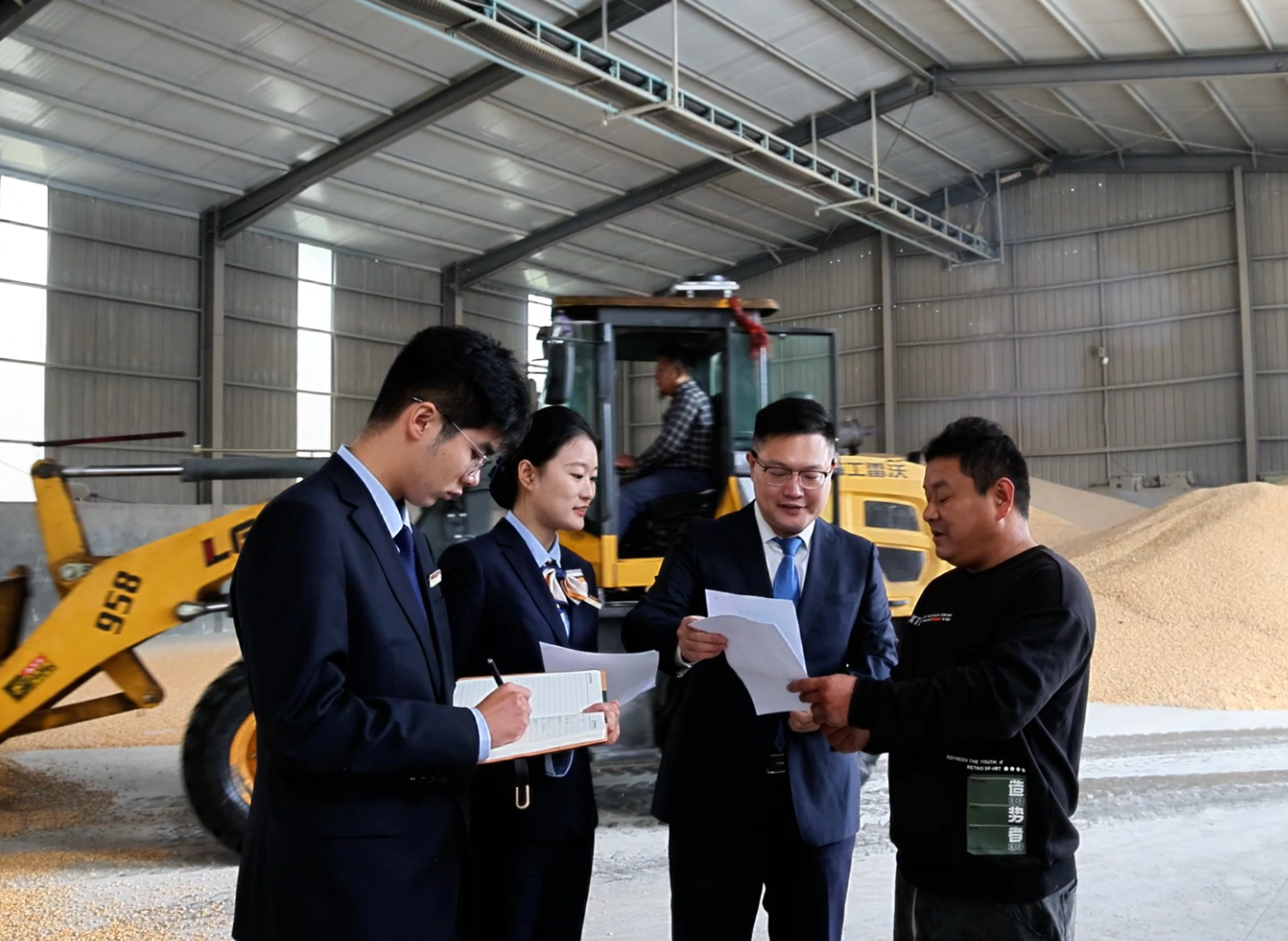
Group 1 - Postal Savings Bank of China (PSBC) Shandong Branch is actively supporting the "Three Autumns" production by leveraging its resources in a major grain-producing province, focusing on early deployment and comprehensive financial support [1] - The bank has established a customer database for grain clients and created a grid marketing team to address financial service needs through direct engagement [1] - PSBC has implemented a fast-track loan approval process to meet the urgent financing needs of grain clients, utilizing mobile technology to facilitate on-site credit services [1] Group 2 - Shandong Youbang Fertilizer Technology Co., Ltd. has developed new fertilizer formulations suitable for wet soil conditions due to continuous rainfall, leading to increased orders [2] - The company faced cash flow pressures for raw material procurement, prompting PSBC to provide a quick loan of 10 million yuan through its online "Micro Loan" service [2] - The financial support has enabled the company to maintain production and fulfill existing and new orders, contributing to the stability of grain supply and economic development [2]

“抢烘”“备耕”不愁“等贷”,邮储“资”持历久弥新
Qi Lu Wan Bao· 2025-10-16 08:17
Core Insights - The article highlights the challenges faced by farmers in Shandong due to continuous rainfall during the autumn harvest, which has delayed grain collection and created difficulties in grain processing [1] - The timely financial support from banks, particularly Postal Savings Bank, is crucial in addressing the urgent needs of farmers and ensuring food security [2] Group 1: Financial Support and Solutions - Postal Savings Bank has been actively providing loans to farmers and agricultural cooperatives to facilitate the purchase of essential equipment like high-end drying machines, which are critical for preventing grain spoilage [3][4] - The bank's quick loan approval process, exemplified by a 10-minute online loan application that provided 500,000 yuan, demonstrates its commitment to supporting farmers during this critical period [3] - In total, Postal Savings Bank's branches in Shandong have issued over 1.83 billion yuan in agricultural loans this autumn, benefiting nearly 765 entities involved in grain collection and processing [10] Group 2: Impact on Local Agriculture - The establishment of drying facilities, such as those operated by Guosheng Agricultural Technology Company, has significantly improved the efficiency of grain processing, allowing for the drying of up to 1,000 tons of grain daily [7] - The drying services provided by these facilities have alleviated the anxiety of farmers regarding grain spoilage due to adverse weather conditions, ensuring that their harvest can be safely stored [7][8] - The proactive measures taken by Postal Savings Bank, including the introduction of credit loans without collateral, have enabled agricultural enterprises to scale up their operations and meet the urgent demands of the harvest season [12][14]

从收割到仓储 看智慧农业如何“拿捏”粮食安全
Yang Shi Xin Wen Ke Hu Duan· 2025-10-16 08:10
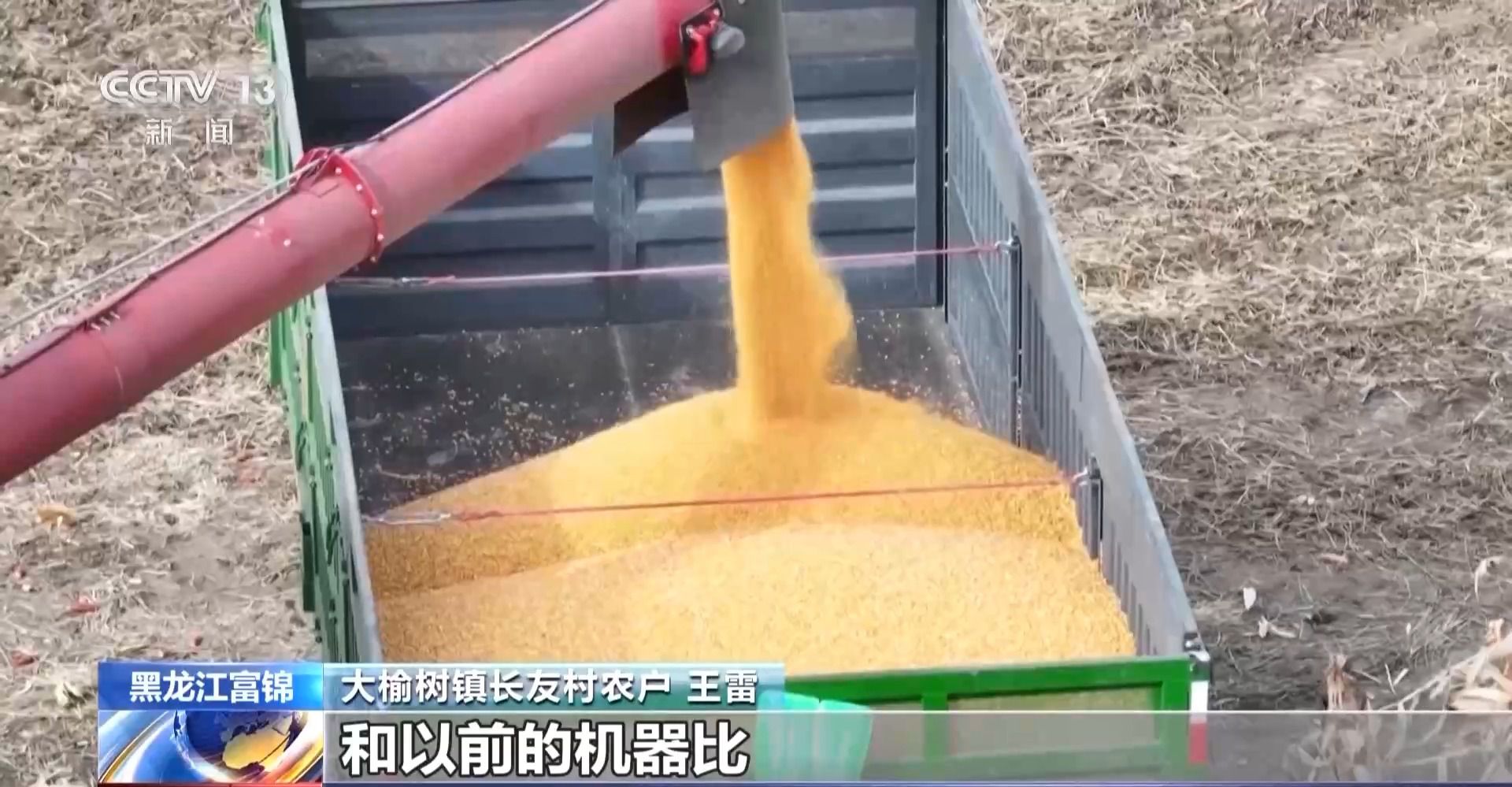
Group 1 - The article emphasizes the importance of reducing food loss as a key strategy for ensuring food security, particularly during the current autumn harvest season [1] - In Fuyun City, technological innovations such as smart harvesting and warehouse management are being implemented to enhance local food security, with a grain loss rate controlled below 1% using advanced harvesting machinery [1][3] - The local grain storage facilities have adopted automated systems for grain sales, allowing farmers to complete transactions efficiently, thus minimizing their travel and maximizing data processing [5] Group 2 - In Longnan City, Gansu Province, over 20,000 acres of rice are being harvested with a focus on reducing losses and costs through optimized planting layouts and mechanized harvesting, achieving a loss rate of around 1% [12][13] - The local agricultural machinery service center has organized multiple harvesting machines to address challenges posed by recent heavy rainfall, ensuring timely and efficient rice harvesting [13] - In Jishui County, Jiangxi Province, 540,000 acres of late rice are being harvested, with high mechanization efficiency allowing several acres to be harvested in a single day [16][19] Group 3 - The article highlights the use of smart agricultural technologies, such as temperature and humidity sensors, to monitor crop conditions and prevent potential pest issues, thereby ensuring higher yields [22] - Local initiatives have been taken to enhance drying capabilities, with over 300 large-scale drying machines operating 24/7, achieving a daily drying capacity exceeding 9,000 tons [24] - The implementation of innovative land management practices, such as raising flood-prone fields, has improved land productivity and facilitated large-scale mechanized farming [21]

镜头丨节粮爱粮 不负食光
Zhong Yang Ji Wei Guo Jia Jian Wei Wang Zhan· 2025-10-16 08:02
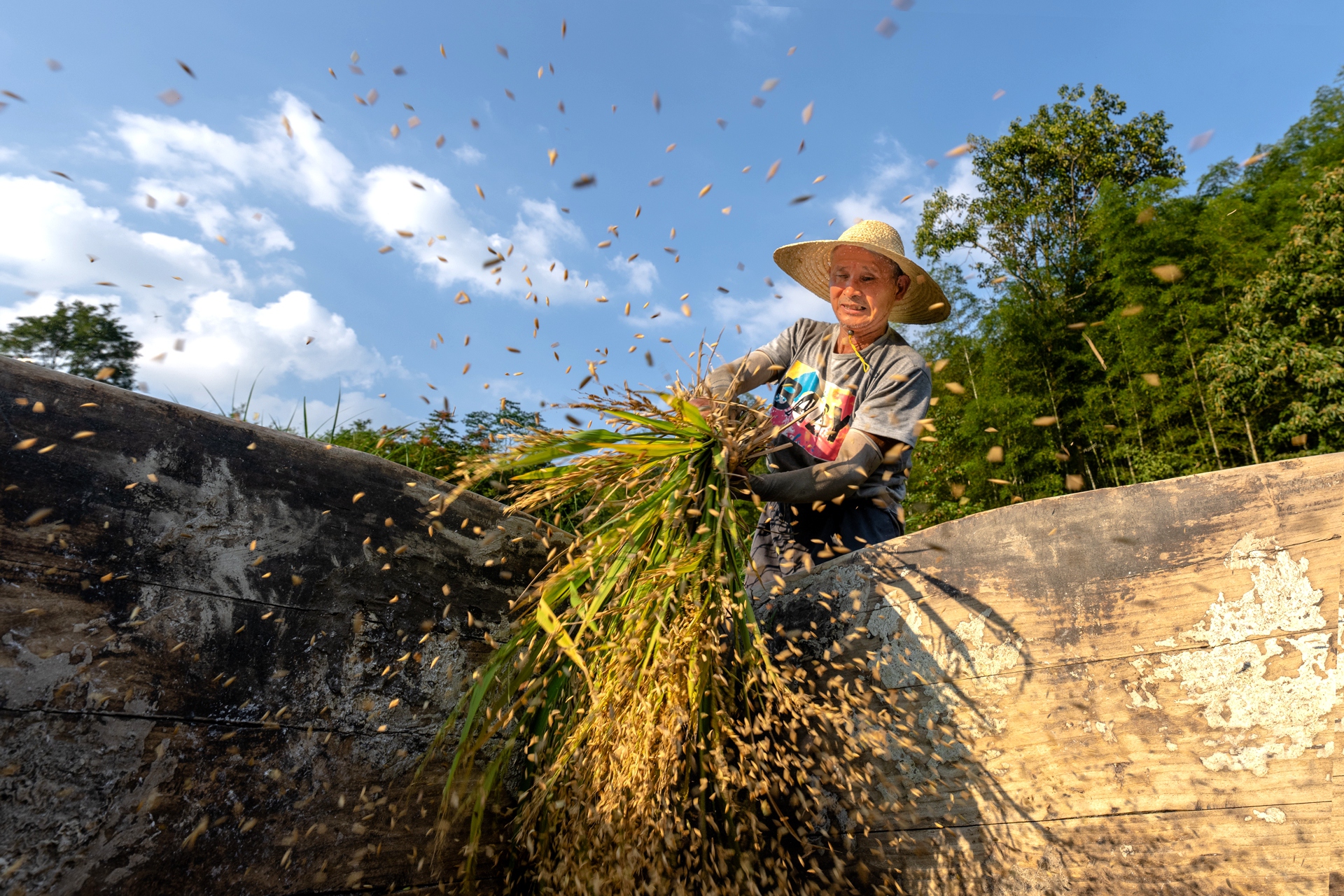
2025年10月16日是第45个世界粮食日。粮食安全是"国之大者",各地抓好耕地资源保护,夯实粮食安全根基,确保中国人的饭碗牢牢端在自己手中。让我们 每个人从自身做起、从点滴做起,自觉做爱粮惜粮节粮的实践者。 贵州省遵义市余庆县凉风小学组织学生走出教室、走向田野,体验水稻收割,培养热爱劳动、珍惜粮食的好习惯。图为凉风小学学生在体验收割水稻。(贵 州省遵义市余庆县纪委监委供 周磊 摄) 四川省成都市成华区从机关食堂和就餐人员双向发力,在全区机关食堂开展厉行节约倡议活动,通过提供大小餐盘、实行自助用餐、推行"光盘行动"等方 式,号召就餐人员量"粒"而行。(四川省成都市成华区纪委监委供 彭蕊 摄) el Prop 32000 0 STERNANCE FIL Proper 7 1. GENT 11-2 the start of The Comment of the Children the state for a see of the many of the may be a 14 2 11 percent 29 49 2011 11/11/2 ring provision ) THE FEATURE THE SEC ...
新华鲜报丨守护好“食”光!世界粮食日话“饭碗”
Xin Hua Wang· 2025-10-16 07:59
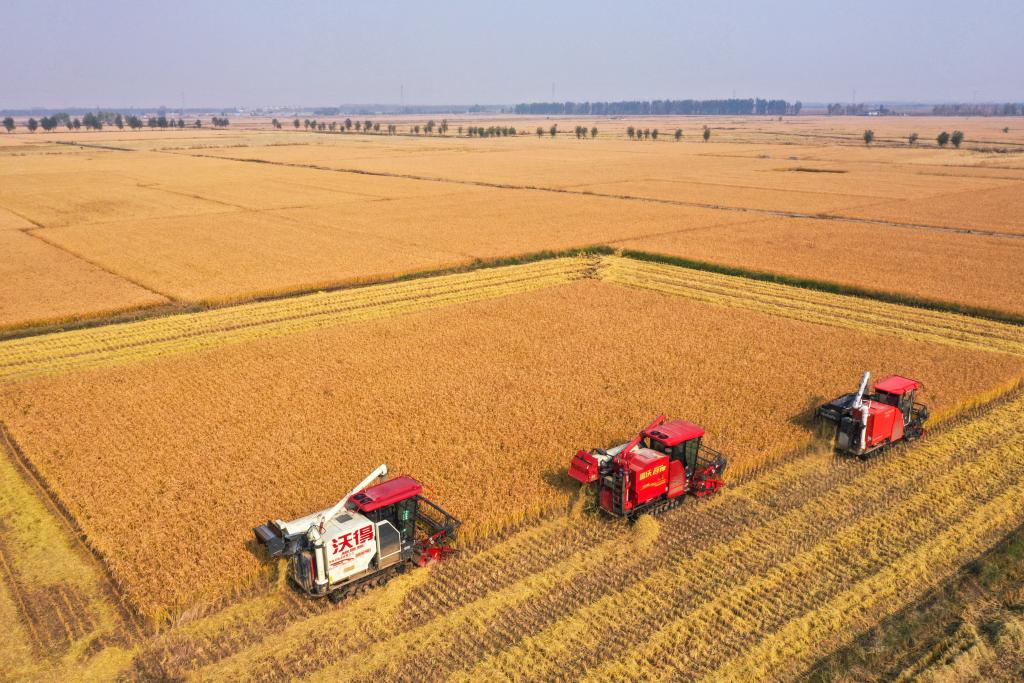
新华社北京10月16日电 题:守护好"食"光!世界粮食日话"饭碗" 新华社记者古一平、胡了然 手中有粮,心中不慌! 10月16日,我们迎来第45个世界粮食日。今年的主题是"手拉手共倡多样美食,聚合力同创美好未来"。 14亿多人要吃饭,是我国最大的国情。习近平总书记始终牵挂着粮食安全这件"头等大事",强调"要把保障国家粮食安全摆在突出位置"。 农业农村部最新农情调度显示,全国秋粮收获过六成。 目前我国人均粮食占有量达到500公斤,高于国际公认的人均400公斤粮食安全线,做到了谷物基本自给、口粮绝对安全。端牢饭碗,中国底 气十足。 辛勤耕耘、保证粮食产量;节粮减损、深耕"无形粮田"。生产、储备、加工、消费……保障国家粮食安全的努力,贯穿粮食流通全链条。 坚定不移保丰收—— 我国粮食产量连续多年保持在1.3万亿斤以上,去年更是首次迈上1.4万亿斤新台阶。但多年丰收并不代表可以懈怠松劲儿,自然灾害等不利影 响还在威胁着粮食生产。 2025年10月14日,在吉林省公主岭市,吉林省米兜种植农民专业合作社进行机械化收割水稻作业展示(无人机照片)。新华 社记者 张楠 摄 近期黄淮地区特别是河南、山东等地出现连阴雨天气,一些地 ...
14亿多中国人的饭碗端得更牢 农民的腰包越来越鼓
Yang Shi Wang· 2025-10-16 06:08
我国是农业大国,重农固本是安民之基、治国之要。"十四五"收官之际,中国农业交出亮眼的成绩单。 从粮食首次迈上1.4万亿斤新台阶,到持续增长的农村居民人均可支配收入,一组组鲜活的数据表明, 我国农业农村发展保持了稳中有进、稳中向好的良好势头,来看"十四五"成绩单↓ "十四五"规划纲要提出,要持续强化农业基础地位,深化农业供给侧结构性改革,强化质量导向,推动 乡村产业振兴。 农村人居环境明显改善,全国14万个村庄得到绿化美化。农村电商、直播带货等一批新业态不断涌现。 全国农村居民人均可支配收入从2020年的17131元增长至2024年的23119元,年均增幅接近8%。 农民的腰包越来越鼓、生活越来越美好。农业强、农村美、农民富的乡村全面振兴新图景,正徐徐铺 展。 从东北黑土地,到黄淮海主产区、长江流域,我国坚持用现代科学技术服务农业:累计建成高标准农田 超过10亿亩,农作物耕种收综合机械化率超过75%,农作物的良种覆盖率超过96%。 丰收不仅是田间的喜讯,更是民生福祉的提升。"十四五"期间,我国农村公路总里程超过464万公里, 建成了众多的产业路、旅游路。新疆奇台县凭借万亩金色麦浪,将A级旅游景区、农业观光示范点 ...
抢收抢烘抢时效 农业银行不遗余“粒”助秋收
Xin Hua Wang· 2025-10-16 04:02
Core Viewpoint - Agricultural Bank is actively supporting grain harvest and ensuring food security by providing financial services to farmers and agricultural enterprises during the critical autumn harvest period, especially in the face of adverse weather conditions [1][2][3] Financial Support for Farmers - Agricultural Bank has strengthened communication with agricultural departments to meet the funding needs of grain purchasing, processing, and storage [1] - The bank has introduced financial products like "Agricultural Machinery Loan" and "Huinong e-loan" to assist farmers in purchasing necessary equipment for harvesting and drying crops [2] - As of now, the bank has issued over 200 million yuan in agricultural machinery loans to support mechanized operations and drying needs [2] Impact of Weather on Harvest - Continuous rainy weather has led to difficulties in harvesting and drying crops, causing delays and increased moisture content in grains [1][2] - The grain processing company in Hubei reported a significant reduction in purchasing capacity due to adverse weather, highlighting the challenges faced by the industry [2][3] Quick Loan Approval Process - Agricultural Bank's Hubei branch streamlined the loan approval process, completing a 6.2 million yuan loan in just five working days to help a grain processing company acquire more machinery [3] - This quick financial support has increased the company's daily purchasing capacity from over 300 tons to 400 tons, significantly improving operational efficiency [3] Commitment to Food Security - Agricultural Bank is committed to implementing national food security strategies by providing precise and rapid financial services to agricultural enterprises and farmers [3]

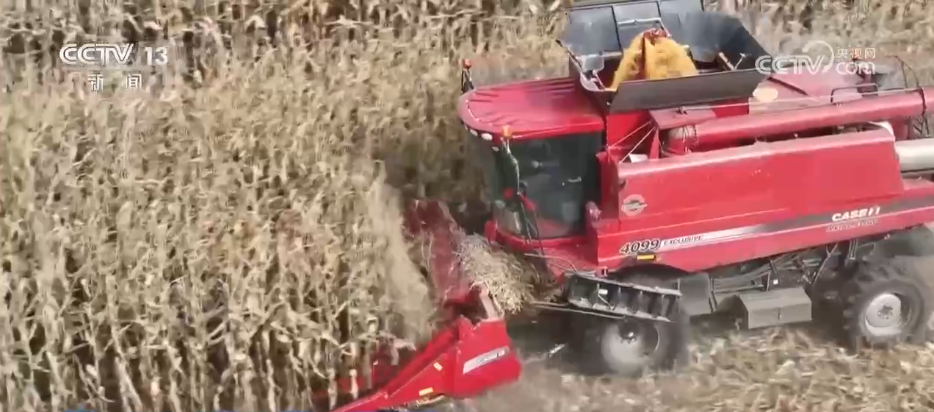
厘米级精度收割、“农田哨兵”应用……秋收“科技范儿”为粮食安全注入新动能
Yang Shi Wang· 2025-10-16 03:33
央视网消息:10月16日是世界粮食日,本周也是粮食安全宣传周。减少粮食损耗是是保障粮食安全的重要途径,在目前的秋收工作中,减 损降耗的理念正融入各个环节。 甘肃陇南:2万余亩水稻机械化收割 多举措减损降本 在当地一处粮库,前来售粮的车辆排起了长龙。在这里,农户售粮凭一张一卡通就可实现登记、迁样、过磅、卸车、结算,自动化的售粮 模式让农民少跑路、让数据多跑路。 金秋十月,甘肃省陇南市2万余亩水稻陆续进入收割期。当地通过优化种植布局、科学管理、机械化收割等措施,让今年的秋收减损降 在陇南市武都区角弓镇的5000余亩稻田里,金黄的稻穗压弯秸秆,联合收割机在田间穿梭,切割、脱粒、装袋一气呵成。秋收事关粮食安 全,当地农机部门紧盯水稻收割关键期,提前谋划部署,以"降本增效、减损保收"为目标,结合河谷地形、地块大小制定适配的收割方案,确 保机械力量快速到位。 黑龙江富锦:从收割到仓储智能减损 守护粮食安全 在黑龙江富锦市,从田间地头的智能收割到仓储中心的智慧管理,科技创新、智能减损正为当地粮食安全注入新动能。 在富锦市大榆树的玉米田里,一台联合收割机正以厘米级精度作业。这是农户王雷今年新购入的联合收割机,粮食损失率控制在 ...