AGI

Search documents
智谱开源全球首个「会操作手机的AI」AutoGLM,让每台手机都可以成为豆包手机
IPO早知道· 2025-12-09 03:29
Core Viewpoint - The article discusses the open-sourcing of AutoGLM by Zhipu AI, which is considered the world's first AI agent capable of "Phone Use," enabling complex operations like food ordering and flight booking [2]. Group 1: Open-Sourcing Impact - The open-sourcing of AutoGLM allows hardware manufacturers, mobile phone companies, and developers to create AI assistants that can understand screens and simulate human interactions [2]. - AutoGLM supports over 50 high-frequency Chinese applications, including WeChat, Taobao, Douyin, and Meituan, showcasing its automation capabilities [2][3]. - The initiative aims to lower the technical barriers for AI phones, transitioning the AI phone ecosystem from a closed to an open collaborative model [2]. Group 2: Features of AutoGLM - Zhipu has released a comprehensive set of ready-to-use capabilities, including a trained core model, Phone Use capability framework, demo applications, and documentation for quick onboarding [3]. - The project supports both local and cloud deployment, ensuring users maintain control over their data and privacy [2]. Group 3: Vision for AI Agents - Zhipu envisions a collaborative environment where teams can develop AI-native phones, researchers can create new algorithms, and individual developers can adapt demos for niche applications [4]. - The company believes that achieving AGI from agents requires adherence to the 3A principles: Around-the-clock operation, Autonomy without interference, and Affinity across devices [4]. - The AutoGLM team is committed to advancing agent open-source research, aspiring to create a ubiquitous AI assistant akin to "Jarvis" [4].


没了遥控器,还被扔进荒野,具身智能该「断奶」了
机器之心· 2025-12-09 03:17
Core Viewpoint - The article discusses the challenges faced by humanoid robots in real-world scenarios, emphasizing that their capabilities have been overestimated and that significant advancements are still required for practical applications [11][61]. Group 1: Robot Performance in Real-World Scenarios - Humanoid robots struggle with tasks in outdoor environments, often failing to perform basic functions without remote control [9][11]. - The ATEC 2025 competition highlighted the limitations of robots in navigating complex terrains and performing tasks autonomously, with many relying on remote operation [30][32]. - Successful completion of tasks by some teams demonstrated that traditional methods combined with advanced technology can yield better results than relying solely on large models [26][50]. Group 2: Technical Challenges - Robots face significant difficulties in perception and decision-making, particularly in varying light conditions that affect their sensors [14][21]. - The complexity of physical interactions, such as grasping objects with different textures and colors, poses a challenge for robots due to their lack of tactile feedback [23][56]. - The integration of various computational units (CPU, GPU, NPU) in a compact and efficient manner remains a significant hurdle for robotic systems [52][56]. Group 3: Future Directions and Industry Insights - Experts believe that for robots to be integrated into human environments, they must develop capabilities in mobility, manipulation, and environmental modification [61][66]. - The article suggests that failures in robotic tasks are essential for progress, as they reveal weaknesses that need to be addressed for future advancements [65][66]. - The future of artificial general intelligence (AGI) is expected to involve a deeper integration of machine intelligence with the physical world, moving beyond data recognition to environmental interaction and action execution [66].

对话金沙江创投朱啸虎:直面AI浪潮下的激流与暗礁
Xin Lang Cai Jing· 2025-12-09 02:41
专题:未竟之约:张小珺访谈录 由新浪财经 、微博着力打造,微博财经 × 语言即世界工作室联合出品的泛财经人文对话栏目《未竟之 约》首期深度访谈即将上线。主持人张小珺对话金沙江创投主管合伙人朱啸虎,直面AI浪潮下的激流 与暗礁。 以下为对话实录: 张小珺:Hello,大家好,我是小珺。欢迎来到微博财经与语言及世界工作室联合出品的高端人物访谈 节目《未尽之约》,我们希望和还未完成愿望的人一起去抵达还未完成的旅途。 2024年3月,我曾经发表过一篇报道,叫作《朱啸虎讲了一个中国现实主义AIGC故事》,那使他以犀利 的观点为人所熟识。那么今天,我们将继续记录他在这波全球AIGC浪潮中的新鲜的辛辣的观。 辛辣的观察。 新鲜的辛辣的观察。 今天,我们将继续记录他在这波全球AIGC浪潮中的新鲜的、辛辣的观察。 哈喽Allen,先给观众朋友们打个招呼。 朱总:大家好。 张小珺:这是我们近两年的第三次聊天,也是《朱哮虎讲了一个中国现实主义AIGC故事的第三次连 载》,我们想持续记录你在这波AI浪潮中的观察笔记。 朱啸虎:chatGPT会成为一个超级入口,对META构成威胁 张小珺:ChatGPT会成为一个新的超级入口吗? 那从 ...
The Chip That Could Unlock AGI
a16z· 2025-12-08 15:05
Unconventional AI's Vision - Unconventional AI aims to revolutionize computing by drawing inspiration from the brain's efficiency, targeting AI ubiquity [1, 40, 41] - The company is focusing on analog computing to achieve greater efficiency compared to digital systems, especially for AI workloads [4, 9, 15] - The company's goal is to find a paradigm analogous to intelligence within five years and build a scalable solution for manufacturing [34, 35] Technological Approach - Unconventional AI is exploring energy-based models, diffusion models, and flow models due to their inherent dynamics [26] - The company is building a mixed-signal chip, potentially one of the largest analog chips ever built, for its first prototype [48, 50] - The company plans to release open-source resources to encourage experimentation and collaboration [27] Industry Perspective - The increasing energy consumption of data centers, currently using 4% of the US energy grid, is a major concern, potentially rising to 8%-10% [16] - The industry faces a potential shortfall of 400 gigawatts of additional capacity over the next 10 years to meet AI demand [17] - TSMC is considered a key partner, while collaboration with Nvidia and Google remains a possibility [36, 37, 38] Company Strategy - Unconventional AI is building a practical research lab environment, encouraging exploration and innovation without premature manufacturing constraints [56, 57] - The company seeks individuals skilled in mapping algorithms to physical substrates, energy-based models, dynamical systems, and analog/digital circuit design [47, 48] - The company emphasizes agency and empowerment for its team members, fostering a culture of ownership and learning from both successes and failures [59, 60]

谷歌突砍Gemini免费版炸锅,数据养模遭背刺?GPT-5.2突袭Gemini 3,Demis Hassabis:谷歌须占最强位
AI前线· 2025-12-08 07:18
Core Viewpoint - Google has significantly reduced the daily request limit for its free Gemini API from 250 to 20, which has negatively impacted developers working on small projects [2][5]. Group 1: Changes in Gemini API - The Pro series of the Gemini API has been canceled, and the Flash series now allows only 20 requests per day, which is insufficient for developers [2][5]. - Previously, Google offered a generous free tier for the Gemini API, providing up to 1.5 billion free tokens daily, which included various usage permissions and free fine-tuning features [4]. Group 2: Developer Reactions - Developers expressed frustration over the abrupt policy change without prior notice, highlighting the negative impact on their projects [5]. - Some developers believe that Google is shifting its strategy towards monetization after gathering sufficient data from users [5]. Group 3: Competitive Landscape - Google’s Gemini 3 has gained a significant user base, with average session durations on desktop and mobile exceeding those of ChatGPT [6]. - OpenAI is reportedly planning to respond to Gemini 3 with the upcoming release of GPT-5.2, which is expected to be launched earlier than initially scheduled [6][9]. Group 4: Performance Benchmarks - Benchmark results indicate that GPT-5.2 outperforms Gemini 3 in several academic and reasoning tasks, suggesting a competitive edge for OpenAI [7]. Group 5: Future Directions - Google is focusing on three main areas: multimodal integration, world models, and agent systems, aiming to enhance the capabilities of its AI models [19][20]. - The company is particularly interested in developing models that can understand and generate content across various modalities, including video and audio [19]. Group 6: Leadership Insights - Demis Hassabis, CEO of Google DeepMind, emphasized the importance of scientific methods in AI development and the need for continuous scaling to achieve advanced AI capabilities [14][16]. - He also noted that while the U.S. and Western countries currently lead in AI algorithm innovation, China is rapidly catching up [22].


哈萨比斯:DeepMind才是Scaling Law发现者,现在也没看到瓶颈
量子位· 2025-12-08 06:07
Core Insights - The article emphasizes the importance of Scaling Laws in achieving Artificial General Intelligence (AGI) and highlights Google's success with its Gemini 3 model as a validation of this approach [5][19][21]. Group 1: Scaling Laws and AGI - Scaling Laws were initially discovered by DeepMind, not OpenAI, and have been pivotal in guiding research directions in AI [12][14][18]. - Google DeepMind believes that Scaling Laws are essential for the development of AGI, suggesting that significant data and computational resources are necessary for achieving human-like intelligence [23][24]. - The potential for Scaling Laws to remain relevant for the next 500 years is debated, with some experts expressing skepticism about its long-term viability [10][11]. Group 2: Future AI Developments - In the next 12 months, AI is expected to advance significantly, particularly in areas such as complete multimodal integration, which allows seamless processing of various data types [27][28][30]. - Breakthroughs in visual intelligence are anticipated, exemplified by Google's Nano Banana Pro, which demonstrates advanced visual understanding [31][32]. - The proliferation of world models is a key focus, with notable projects like Genie 3 enabling interactive video generation [35][36]. - Improvements in the reliability of agent systems are expected, with agents becoming more capable of completing assigned tasks [38][39]. Group 3: Gemini 3 and Its Capabilities - Gemini 3 aims to be a universal assistant, showcasing personalized depth in responses and the ability to generate commercial-grade games quickly [41][44][45]. - The architecture of Gemini 3 allows it to understand high-level instructions and produce detailed outputs, indicating a significant leap in intelligence and practicality [46]. - The frequency of Gemini's use is projected to become as common as smartphone usage, integrating seamlessly into daily life [47].

Google DeepMind CEO:AGI 还差 1–2 个突破?
3 6 Ke· 2025-12-08 02:42
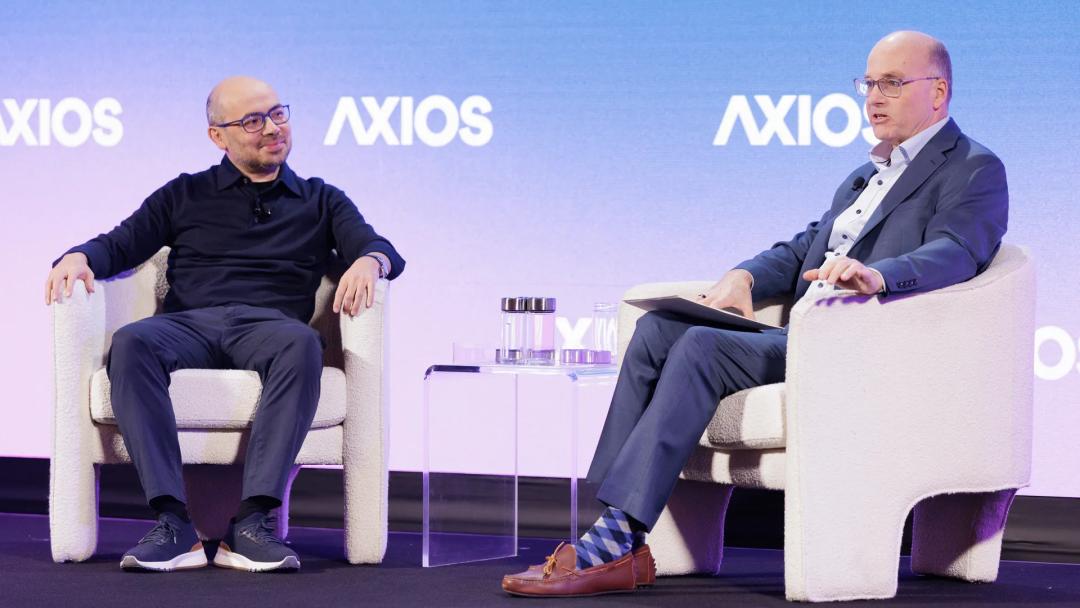
Core Insights - The conversation at the Axios AI+ Summit highlighted the proximity of achieving Artificial General Intelligence (AGI), with Google DeepMind CEO Demis Hassabis suggesting that only one or two breakthroughs akin to AlphaGo are needed to reach this milestone [2][13]. Group 1: Progress Towards AGI - Hassabis estimates that AGI could be achieved within 5 to 10 years, based on specific advancements rather than just model size [3]. - Key advancements include the transition of models from text-based systems to multimodal understanding, exemplified by Gemini's ability to interpret video content deeply [4][6]. - Gemini demonstrates a significant shift in AI capabilities, showing independent judgment rather than merely conforming to user input, indicating a move towards stable personality systems [7][10]. - The model can now generate playable games and aesthetically pleasing web pages in a fraction of the time previously required, showcasing its understanding of code structure and design logic [11][12]. Group 2: Limitations of Current Models - Despite advancements, current models lack continuous learning capabilities, meaning they cannot improve through user interaction [16]. - They are unable to execute long-term planning or multi-step decision-making, which is essential for AGI [17][18]. - Current AI systems are not reliable enough to handle complex tasks in dynamic environments, indicating a need for more robust intelligent agent systems [19][20]. - Gemini lacks stable memory across conversations, which is crucial for maintaining consistent user interactions and preferences [21][22]. Group 3: Future Breakthrough Directions - Hassabis identified two critical areas for future breakthroughs: world modeling and intelligent agent systems [24]. - The world model, Genie, aims to help AI understand the physical world's laws, moving from mere visual comprehension to real-world reasoning [25][26]. - The vision for intelligent agents includes creating systems that can autonomously plan and execute tasks, moving beyond simple question-answering capabilities [28][30]. Group 4: Risks and Competition - The timeline for achieving AGI is contingent on various uncertainties, including technological risks and geopolitical competition [31]. - There are significant concerns regarding the malicious use of AI and the potential for AI systems to deviate from intended instructions [33]. - The competitive landscape is tightening, with advancements in AI technology occurring rapidly in both Western and Chinese contexts, indicating a race rather than a clear leader [35][36]. Group 5: Competitive Advantages - The scientific method is emphasized as a crucial tool for advancing AI development, allowing for systematic exploration and validation of various approaches [39][41]. - DeepMind's strategy involves a comprehensive exploration of multiple methodologies rather than adhering to a single approach, enhancing their decision-making capabilities [42][43]. - The company's unique advantage lies in its ability to integrate research, engineering, and infrastructure to transform complex problems into viable products [44]. Conclusion - The window for achieving AGI is closing rapidly, with a timeline of 5 to 10 years for potential breakthroughs, underscoring the urgency for strategic decisions in the AI field [45].
谷歌祭出Transformer杀手,8年首次大突破,掌门人划出AGI死线
3 6 Ke· 2025-12-08 01:01
Core Insights - Google DeepMind CEO Hassabis predicts that Artificial General Intelligence (AGI) will be achieved by 2030, but emphasizes the need for 1-2 more breakthroughs akin to the Transformer and AlphaGo before this can happen [11][4][16]. Group 1: AGI Predictions and Challenges - Hassabis stresses the importance of scaling existing AI systems, which he believes will be critical components of the eventual AGI [3]. - He acknowledges that the path to AGI will not be smooth, citing risks associated with malicious use of AI and potential catastrophic consequences [13]. - The timeline for achieving AGI is estimated to be within 5 to 10 years, with a high bar set for what constitutes a "general" AI system, requiring comprehensive human-like cognitive abilities [16][18]. Group 2: Titans Architecture - Google introduced the Titans architecture at the NeurIPS 2025 conference, which is positioned as the strongest successor to the Transformer [6][21]. - Titans combines the rapid response of Recurrent Neural Networks (RNN) with the powerful performance of Transformers, achieving high recall and accuracy even with 2 million tokens of context [7][8]. - The architecture allows for dynamic updates of core memory during operation, enhancing the model's ability to process long contexts efficiently [22][43]. Group 3: MIRAS Framework - The MIRAS framework is introduced as a theoretical blueprint that underpins the Titans architecture, focusing on memory architecture, attentional bias, retention gates, and memory algorithms [36][39]. - This framework aims to balance the integration of new information with the retention of existing knowledge, addressing the limitations of traditional models [39][40]. Group 4: Performance Metrics - Titans has demonstrated superior performance in long-context reasoning tasks, outperforming all baseline models, including GPT-4, on the BABILong benchmark [43]. - The architecture is designed to effectively scale beyond 2 million tokens, showcasing its advanced capabilities in handling extensive data [43]. Group 5: Future Implications - The advancements in Titans and the potential for Gemini 4 to utilize this architecture suggest a significant leap in AI capabilities, possibly accelerating the arrival of AGI [45][48]. - The integration of multi-modal capabilities and the emergence of "meta-cognition" in Gemini indicate a promising direction for future AI developments [48].
X @Elon Musk
Elon Musk· 2025-12-07 23:35
RT DogeDesigner (@cb_doge)AGI Wars 🔥 https://t.co/FK0oVkxZn0 ...
腾讯研究院AI速递 20251208
腾讯研究院· 2025-12-07 16:01
Group 1: Generative AI Developments - NVIDIA has released CUDA Toolkit 13.1, marking the largest update in 20 years, featuring a tile-based programming model and enhancements for tensor core performance [1] - Google introduced the Titans architecture and MIRAS framework, combining RNN rapid response with Transformer capabilities, seen as a significant advancement post-Transformer [2] - Google launched Gemini 3's deep thinking mode, showcasing superior reasoning abilities in complex tasks, indicating a shift from text generation to problem-solving [3] Group 2: Robotics and AI Research - Researchers from Berkeley and NYU proposed the GenMimic method, enabling robots to replicate human actions by watching AI-generated videos, marking Yann LeCun's first paper post-Meta [4] - The GenMimic strategy has been validated on the Yuzhu G1 robot, utilizing a new dataset of 428 generated videos [4] Group 3: Meta's Strategic Shift - Internal memos reveal Meta's shift from a "metaverse-first" approach to prioritizing AI hardware, with significant budget cuts to the Reality Labs division [5][6] - Meta is developing the ultra-thin MR headset Phoenix, now delayed to 2027, while focusing on immersive gaming experiences with Quest 4 [5] Group 4: Apple Leadership Changes - Apple faces significant leadership changes, with key figures like Johny Srouji considering departure, raising concerns about AI talent retention [7] - The company has lost several high-profile executives to competitors, indicating a trend of talent migration within the tech industry [7] Group 5: AI Application Insights - A report by OpenRouter and a16z reveals that open-source model traffic has surged to 30%, with Chinese open-source models increasing from 1.2% to nearly 30% [8] - The report highlights that programming and role-playing applications dominate AI usage, with a notable rise in paid usage in Asia [8] Group 6: Future of AI Search - a16z discusses the evolution of AI search, emphasizing the need for a native AI architecture to enhance content extraction and real-time relevance [9] - Many companies are opting to outsource AI search capabilities rather than developing in-house solutions, indicating a shift in strategy [9] Group 7: Competitive Landscape in AI - Hinton predicts that Google, with its Gemini 3 and proprietary chips, is poised to surpass OpenAI, noting the unexpected duration of this competitive shift [10] - Data shows that Gemini's user engagement is increasing significantly, contrasting with the stagnation of ChatGPT's user growth [10][11] Group 8: AI in Professional Settings - Anthropic's Claude-driven interview tool surveyed 1,250 professionals, revealing mixed feelings about AI's impact on work efficiency and job security [12] - The survey indicates a significant portion of creative professionals experience economic anxiety related to AI, while scientists express concerns about trust and reliability [12]