双碳战略

Search documents
海南省绿色低碳发展研究院成立大会在海口举行
Hai Nan Ri Bao· 2025-12-15 00:56
大会指出,绿研院的成立是海南生态文明建设史上的大事,更是自贸港封关运作前夕的重要战略布 局。海南正朝着"2030年前碳达峰、2045年前全面建成低碳岛"目标推进,亟需专业化平台支撑。绿研院 将整合全国顶尖资源形成"产学研用"协同创新模式,坚持政治引领、创新驱动、开放合作,突出海洋海 岛特色,积极参与国际规则制定,为海南将生态优势转化为发展优势注入强劲动力。随后,部省领导共 同为绿研院揭牌。 海南日报海口12月14日讯(海南日报全媒体记者 孙慧)12月14日,海南省绿色低碳发展研究院(以下 简称绿研院)成立大会暨首届绿色低碳发展研讨会在海口市举行。 绿研院由省住房和城乡建设厅联合国内顶尖科研机构组建,是海南落实国家"双碳"战略、推进生态 文明试验区建设的重要举措。绿研院将立足自贸港建设需求,搭建绿色低碳领域产学研协同创新平台, 聚焦城乡低碳转型、绿色技术创新、蓝碳开发应用、零碳示范建设等关键领域,为海南生态文明建设和 绿色低碳发展提供政策咨询、技术支撑与行业交流服务。 住房和城乡建设部副部长李晓龙、省政府副省长赵峰参加大会并致辞。 ...
12月15日至21日展会活动预告
Zhong Guo Jing Ji Wang· 2025-12-14 23:51
Group 1: Industry Overview - The national exhibition industry is experiencing a steady conclusion to the year, with several upcoming exhibitions focusing on industry frontiers and international cooperation, showcasing the resilience and market potential of the sector [1] - Major exhibitions scheduled for next week include the 2025 Shanghai Textile Machinery Exhibition, the 8th Hainan International Health Industry Expo, and the 2025 ARCE Asia Robotics Conference [1][2][4] Group 2: Key Exhibitions - The 2025 Shanghai Textile Machinery Exhibition will take place from December 16 to 19 at the Shanghai New International Expo Center, covering an exhibition area of 60,000 square meters with 600 participating companies [1] - The 8th Hainan International Health Industry Expo will be held from December 19 to 22 in Sanya, featuring six core exhibition areas and over ten parallel forums, with a total exhibition area of approximately 30,000 square meters [1] - The 2025 ARCE Asia Robotics Conference will occur from December 19 to 21 at the Guangzhou International Procurement Center, with an exhibition area of 50,000 square meters and an expected attendance of over 100,000 visitors [2] - The 2025 Shenzhen International Hotel and Catering Industry Expo will be held from December 16 to 18, covering 200,000 square meters and featuring 2,500 exhibitors [5] - The 2025 Shenzhen International High-Performance Medical Device Exhibition will take place from December 18 to 20, with an exhibition area of 30,000 square meters and over 20 specialized seminars [5] - The 5th Chengdu Urban Circle Construction Forum will be held on December 19, focusing on promoting the integration of urban development and signing cross-regional industrial chain projects [6]
推动充电设施均衡布局
Xin Hua Ri Bao· 2025-12-14 21:37
Core Viewpoint - The development of charging infrastructure is crucial for implementing the national "dual carbon" strategy and assessing government governance capabilities in the digital age [1] Group 1: Planning and Design - A systematic planning and guidance mechanism should be established to predict charging demand based on the development trends of new energy vehicles and spatial resource characteristics [1] - The establishment of a district-level "old community power expansion guidance fund" is proposed to secure funding for infrastructure upgrades through diversified financing methods [1] - Safety technical guidelines for charging facility construction should be developed in collaboration with relevant departments and fire rescue agencies [1] Group 2: Collaborative Mechanisms - A joint meeting system should be established, led by district leaders, involving relevant departments, street offices, power supply companies, and operating enterprises for charging facility construction [1] - A management responsibility list for charging facility construction should be created to clearly define the responsibilities of government departments, communities, property companies, and operating companies in various stages of application, construction, operation, and maintenance [1] Group 3: Operational Model Innovation - The promotion of a unified construction and operation model is suggested, where professional operating companies are responsible for the construction and maintenance of charging facilities to enhance service quality [2] - The establishment of a unified smart charging service platform across the district is recommended, along with a regulatory mechanism covering the entire lifecycle of charging facilities [2]


会飞的逃生舱、能变水的单车,工业设计:眺望未来的望远镜
Chang Jiang Ri Bao· 2025-12-14 00:58
Group 1 - The article highlights the emergence of futuristic designs at the Wuhan International Industrial Design Expo, showcasing how technology is integrating into everyday activities like camping and commuting [1] - A multifunctional outdoor camping kerosene stove, designed by Hubei University of Technology and Wuhan Kukuqiu Education Technology Co., allows for flexible switching between cooking, lighting, and heating modes, winning third place at the 2025 Milan Design Week [6] - A bike seat tube water purifier, which combines a water purification system with a bicycle seat, utilizes a piston pumping mechanism and a three-layer filter to provide safe drinking water for cyclists, earning an award for excellent concept design at the 2025 Golden Reed Industrial Design Competition [6] Group 2 - The smart flying backpack, designed by the School of Art and Design at Wuhan University of Technology, is aimed at emergency escape from high-rise buildings, allowing users to don it in just five minutes and providing automated flight and obstacle avoidance [9][10] - The flying backpack offers a systematic solution for emergency evacuations in urban high-rises, exploring innovative pathways in public safety equipment [9] - A "rare earth two-wheeler," made from solid-state hydrogen storage alloys, is now in use for two-wheelers and industrial forklifts, showcasing advancements in clean energy transportation [13][15] - This two-wheeler can travel 80 kilometers on a single hydrogen tank, is particularly suited for cold northern climates, and maintains 90% performance after 2000 cycles, aligning with China's dual carbon strategy [18]

两部门强化绿色金融供给,划定三类重点支持方向
Xinda Securities· 2025-12-13 13:10
Investment Rating - The report does not specify a direct investment rating for the industry but emphasizes a positive outlook on green finance initiatives and ESG investments [2][3]. Core Insights - The report highlights the strengthening of green finance supply by two departments, focusing on three key support directions: technological breakthroughs and industrial applications, enterprise green transformation, and zero-carbon factory construction [3][12]. - By 2030, the goal is to increase the output value of green factories at national, provincial, and municipal levels to 40% [3][12]. - The report indicates a significant growth in ESG bonds, with a total issuance of 3,832 bonds and a stock scale of 5.72 trillion RMB, where green bonds account for 62.15% [5][29]. - The ESG public fund market consists of 944 products with a total net value of 11,645.22 billion RMB, with ESG strategy products making up 45.09% [5][35]. - The report notes that 95% of business leaders view climate transition as a source of growth and opportunity, indicating a shift in perspective towards sustainability [21][22]. Summary by Sections Domestic Focus - The Ministry of Industry and Information Technology and the People's Bank of China have issued a notice to enhance green finance support, targeting three main project categories [3][12]. - The report outlines the implementation of a carbon footprint factor database by 2027, aiming to improve data quality and international influence [13]. - Hubei Province has completed the first compliance of multiple industries under the national carbon market, marking a significant local practice for the market's operation [14]. International Focus - The World Bank's report on Mauritania highlights the country's economic challenges and the need for diversification beyond the mining sector, which currently contributes 70% of exports and one-fifth of GDP [4][18]. - The ISSB has made targeted revisions to the IFRS S2 to support the implementation of climate-related disclosures [19]. - Munich Re has set new climate targets for its insurance and investment portfolios, emphasizing a commitment to climate solutions [20]. ESG Financial Products Tracking - The report provides detailed statistics on ESG bonds, public funds, and bank wealth management products, indicating a robust market presence and growth potential [5][29][40]. - The issuance of ESG bonds in the past year totaled 1,231 bonds with a total amount of 13,668 billion RMB [5][29]. Index Tracking - As of December 12, 2025, major ESG indices have shown varied performance, with the Shenzhen ESG 300 index having the highest increase of 14.75% over the past year [7][41]. Expert Opinions - Experts emphasize the integration of technology and finance to build a resilient and efficient sustainable development paradigm, highlighting China's advantages in climate technology [8][42].
一举拿下新疆2500辆电动重卡大单!谁家车?
第一商用车网· 2025-12-13 04:33
Core Viewpoint - The strategic cooperation between JiuZhou HengChang and Shaanxi Automobile Heavy Truck (Shaanxi Auto) marks a significant step towards green logistics and intelligent driving transformation, with plans to purchase 2,500 electric heavy trucks by 2026 [1][3]. Group 1: Strategic Cooperation - The procurement plan for 2,500 electric heavy trucks is a precise alignment based on industry trends and the strengths of both companies, enhancing JiuZhou HengChang's green logistics capabilities [3]. - Shaanxi Auto, as a leading player in the heavy truck industry, offers advanced electric products with superior range, load capacity, and intelligent control, making them well-suited for JiuZhou HengChang's logistics needs [3]. Group 2: Development Strategy - JiuZhou HengChang aims to leverage this partnership to advance two key areas: the transition to autonomous driving technology in logistics and the integration of electric heavy trucks into local industry ecosystems, particularly in Xinjiang [5]. - The company plans to enhance operational efficiency and safety through the introduction of intelligent scheduling systems and autonomous driving equipment [5]. Group 3: Future Outlook - This cooperation represents a pivotal moment for JiuZhou HengChang's transformation from a traditional logistics company to a smart logistics service provider, focusing on green and intelligent logistics solutions [7]. - The company intends to deepen collaborations with industry leaders and explore new low-carbon, efficient logistics models across broader markets, contributing to the logistics industry's transformation [7].
世界级高端工业母机在沈阳下线交付
Liao Ning Ri Bao· 2025-12-13 01:34
Core Insights - The collaboration between China General Technology Group and Dongfang Electric Group has led to the successful development and delivery of four high-end five-axis CNC machine tools, marking a significant technological breakthrough and addressing the "disconnection between research and application" in the industry [1][2] Group 1: Collaboration and Innovation - The partnership aims to create a new model for the development of domestic industrial mother machines by integrating research, application, and production [1] - A cooperative innovation paradigm has been established, focusing on "scenario-driven, joint research, shared risks, and shared benefits" to overcome the challenges faced in high-end CNC machine development [1][2] Group 2: Technical Achievements - The delivered products feature autonomous control of the entire machine and core components, achieving key technical indicators such as positioning accuracy and processing efficiency that meet international advanced levels [2] - These machine tools will be directly applied in national key projects, including hydropower and new-generation coal power, supporting the "dual carbon" strategy and ensuring energy security [2] Group 3: Future Plans and Strategic Goals - The collaboration is seen as a strong initiative for central enterprises to lead the industrial chain and build an innovative consortium, with plans to deepen strategic cooperation in core technology challenges and advanced power equipment [2] - A second-phase cooperation agreement has been signed to further explore strategic collaboration in industrial mother machines and international engineering [2]

电网工程施工技术发展现状、挑战及展望
国家电网· 2025-12-12 13:47
Investment Rating - The report does not explicitly state an investment rating for the industry Core Insights - The report emphasizes the importance of mechanization, intelligence, and unmanned construction in the development of power grid engineering, which aligns with the new development philosophy and high-quality development requirements [4][24] - The construction technology and equipment levels have significantly improved due to the implementation of innovative equipment and standards [6][15] - The report outlines the challenges faced in power grid engineering construction, including labor shortages and complex environmental conditions [32][37] Summary by Relevant Sections Current Status of Power Grid Engineering Construction Technology - The report highlights the establishment of a comprehensive mechanization construction equipment system, which includes 154 types and 512 models of equipment across three main specialties: overhead transmission lines, substations, and cables [8][12] - The mechanization application rates for overhead lines, substations, and cable engineering are projected to reach 87.45%, 93.97%, and 94% respectively by October 2025 [24][28] Challenges in Power Grid Engineering Construction Technology - The construction industry faces challenges such as a declining labor force, increased elderly population, and difficulties in material transportation in complex terrains [32][37] - Environmental factors, including high-altitude and sensitive ecological areas, complicate construction processes and increase safety risks [41][48] Development Trends in Power Grid Engineering Construction Technology - The report outlines several innovative technologies being developed, including low-altitude material transportation, unmanned tower assembly, and intelligent construction management platforms [61][67][84] - New materials and construction methods are being researched to enhance efficiency and reduce environmental impact, such as lightweight composite materials and superconducting cables [103][123]
钢材年报:宏观托底有度,钢市震荡寻底
Tong Guan Jin Yuan Qi Huo· 2025-12-12 11:32
Report Industry Investment Rating - Not provided in the given content Core Views - The macro - policy adheres to the general principle of making progress while maintaining stability. The fiscal policy will be more proactive, and the monetary policy will be moderately loose. The government aims to stabilize the real - estate market [3][15][75]. - In 2025, the steel market was in a weak state. Real - estate investment and new - construction area declined, dragging down the demand for construction steel. Manufacturing and exports provided some support, with good plate consumption. Overall terminal demand was weak, and China's steel demand in 2026 is expected to slightly shrink. In terms of supply, the total steel output in 2025 remained high, with a significant decline in long - product output and a relatively small decline in plate output. In 2026, the crude - steel output regulation policy is likely to keep the output at a level similar to or slightly lower than that in 2025 [3][75]. - In 2026, steel futures are expected to continue the weak and volatile pattern. Macro - policies can provide a floor, but strong stimulation is unlikely. Weak demand and stable supply in the fundamental aspect. The decline in real - estate steel demand is the main drag, and the resilience of manufacturing and exports can only provide partial support, unable to offset the overall contraction in demand. The supply side has limited elasticity under output regulation, and cost and inventory pressures persist. The steel - price center will move downwards. The reference price ranges are 2,600 - 3,300 yuan/ton for rebar and 2,700 - 3,500 yuan/ton for hot - rolled coils [3][76]. Summary by Directory 1. Steel Market Review - In 2025, steel futures went through three stages: "falling first, then rising, and then falling back". In the first half of the year, due to weak domestic real - estate demand, unfulfilled peak - season expectations, and unexpected macro and overseas tariff policies, steel prices declined. In July, policies and supply tightening led to a rapid price rebound, but later, due to unfulfilled policy expectations, prices fell back. From September to October, the "peak season" was not prosperous, and in the seasonal off - season from November, prices were weak and volatile. The overall price center of the year moved down [10][11]. 2. Demand: Real - Estate Drag and Manufacturing Support - **Fifteenth Five - Year Plan Start**: In 2025, China's macro - policies adhered to the principle of making progress while maintaining stability. Fiscal policy was proactive, supporting key areas and preventing local - government debt risks. Monetary policy was flexible and precise, aiming to maintain economic growth and stable exchange rates. The core tasks of the "Fifteenth Five - Year Plan" include building a modern industrial system, implementing innovation - driven strategies, expanding domestic demand, and deepening reform and opening - up. The Central Economic Work Conference emphasized more proactive fiscal and moderately loose monetary policies and stabilizing the real - estate market [13][14][15]. - **Real - Estate Drag**: In 2025, real - estate policies focused on risk prevention and market stability. In 2026, the focus will be on building a new development model. In 2025, real - estate development investment continued to decline, with "three major projects" providing some support. In 2026, real - estate development investment is expected to decline by 8 - 10% year - on - year, and real - estate steel demand is expected to decline by 8 - 10% year - on - year, with its proportion in total steel demand dropping to about 21% [16][17][18]. - **Infrastructure Rebound**: In 2025, infrastructure investment was moderately ahead of schedule, with a focus on structural optimization. Investment in new infrastructure and energy infrastructure increased. Although the overall infrastructure investment declined slightly in the first 10 months, the steel demand in energy and water - conservancy sectors grew significantly. In 2026, infrastructure investment is expected to grow steadily, and infrastructure will remain an important support for steel consumption [22][23]. - **Stable Manufacturing Growth**: In 2025, the machinery industry was robust, with the excavator industry and ship - building industry performing well. The automobile industry had high production and sales, especially in new - energy vehicles. The home - appliance industry underperformed the market, with domestic sales being high in the first half and low in the second half and exports facing pressure. In 2026, domestic home - appliance demand may be under pressure, while overseas production may increase. Overall, manufacturing activities showed marginal improvement, but demand was not yet solid [30][31][32]. - **High and Stable Steel Exports with Increasing Resistance**: In 2025, China's steel exports reached a record high. Although exports to some countries decreased due to anti - dumping measures, exports to other regions increased significantly. The export structure was mainly composed of plates, pipes, and bars. In 2025, the export of hot - rolled coils decreased, while the export of building materials and billets increased [39]. - **Weak Domestic Demand, Strong Plates and Weak Long Products**: In 2025, the steel market was weak, with real - estate investment and new - construction area declining, dragging down construction - steel demand. Manufacturing and exports provided some support, with good plate consumption. In 2026, China's steel demand is expected to slightly shrink, with real - estate remaining a drag and plate demand remaining relatively resilient [44]. 3. Supply: High - Volume Pressure and Structural Differentiation - **Policy - Guided Supply Control and Quality Improvement**: In 2025, the steel industry issued two core policies to regulate the industry, optimize the structure, and promote growth. In 2025, steel supply was at a high level, with strong plate production and weak long - product production, and a front - heavy and back - light production rhythm. In 2026, China's steel supply is expected to continue the trend of total - volume control and structural optimization, with crude - steel output likely to be similar to or slightly lower than that in 2025 [50][51][52]. - **Better - than - Average Steel - Mill Profits**: In 2025, the steel industry's profitability was high in the first half and low in the second half. The profit in the first half came from cost reduction, while the profit in the fourth quarter turned into a loss. In 2026, steel mills are expected to maintain a meager - profit state due to pressure from the demand side and high - price fluctuations in raw materials [63]. - **Inventory Analysis**: In 2025, steel inventory pressure increased gradually. Inventory was low in the first half and accumulated significantly in the second half. The inventory pressure of hot - rolled coils was higher than that of rebar. Weak terminal demand led to continuous pressure on steel prices from inventory, and if demand does not improve, the inventory contradiction may intensify [64]. 4. Market Outlook - In 2026, steel futures are expected to continue the volatile and weak pattern. Macro - policies can provide a floor but are unlikely to have strong stimulation. Weak demand and stable supply in the fundamental aspect. The decline in real - estate steel demand is the main drag, and the resilience of manufacturing and exports can only provide partial support, unable to offset the overall contraction in demand. The supply side has limited elasticity under output regulation, and cost and inventory pressures persist. The steel - price center will move downwards, with the reference price ranges of 2,600 - 3,300 yuan/ton for rebar and 2,700 - 3,500 yuan/ton for hot - rolled coils [76].
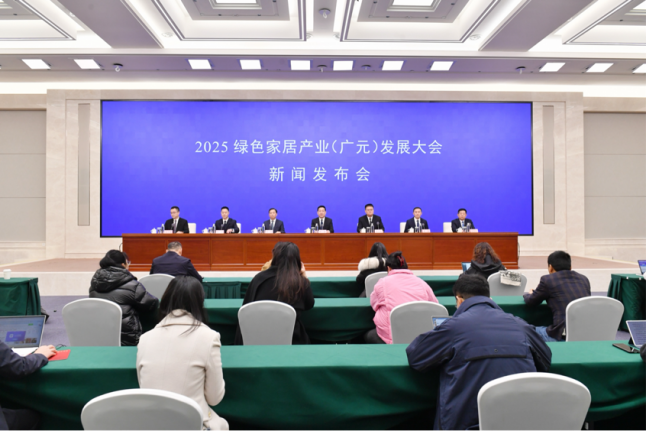
2025绿色家居产业(广元)发展大会即将举行
Zhong Guo Fa Zhan Wang· 2025-12-12 09:28
Core Viewpoint - The 2025 Green Home Industry (Guangyuan) Development Conference will be held on December 21-22, 2025, aiming to promote the high-quality development of the green home industry in Guangyuan, Sichuan Province [2][3]. Group 1: Conference Overview - The conference will focus on the theme "Smart Manufacturing for a Carbon-Friendly Future," emphasizing the intelligent and green transformation of the home industry [3]. - It will gather over 350 guests, including leaders from national ministries, industry associations, and renowned enterprises, to discuss future development paths for the green home industry [3]. Group 2: Opportunities and Initiatives - The conference will launch the "Guangyuan Green Smart Home Collaborative Innovation Center," aimed at enhancing innovation capabilities in the western region and facilitating cross-regional cooperation projects, with an expected signing of over 30 manufacturing projects and 10 trade projects, totaling around 10 billion [4]. - The event will also feature the 15th China Wood Protection Conference and a series of activities to promote exchanges and future discussions [4]. Group 3: Industry Development and Support - Guangyuan City has invested over 10 billion in the construction of the green home industry city, with over 250,000 square meters of standardized factory buildings completed [4][6]. - The city has implemented a three-dimensional support model to reduce logistics costs by over 50%, facilitating the import of raw materials from countries like Russia and New Zealand [6]. - Policies have been introduced to support the green home industry, including financial incentives of up to 2 million for project attraction and quality improvement [6].