
冰雪经济

Search documents
从冰博会看中国冰雪运动装备的机遇和挑战
Xin Hua Wang· 2026-01-08 07:43
Core Viewpoint - The 2026 Harbin International Ice and Snow Economic Expo highlights the opportunities and challenges for China's ice and snow sports equipment industry, showcasing advancements in domestic products and the potential to break foreign brand monopolies. Group 1: Industry Developments - The expo gathered ice and snow equipment companies from around the world, focusing on market opportunities [1] - Domestic manufacturers aim to increase market share and reduce reliance on imports, with significant breakthroughs in product development [1] - The number of companies in the ice and snow equipment sector has grown from approximately 300 in 2015 to around 900 in 2023, with sales revenue increasing from less than 5 billion to about 22 billion [3] Group 2: Product Innovations - Harbin Qianmao Xuelong Sports Equipment Co., Ltd. developed a specialized skiing board for the national team, utilizing aerospace-grade composite materials, priced at half of imported products [1] - Ice Snow Huan Tong Sports Equipment Technology Co., Ltd. launched 13 new products, including lightweight ski boards and helmets using aerospace-grade carbon fiber technology [2] - Heilongjiang Carbon Environment Composite Materials Co., Ltd. introduced carbon fiber ski boards and plans to expand into international markets [3] Group 3: Market Challenges - Despite advancements, domestic companies face challenges due to the established presence of foreign brands in the market [4] - High-end products are still dominated by foreign brands, indicating a need for continued innovation and integration within the supply chain [5] - Experts suggest that support for small and medium enterprises in terms of financing and policy is crucial for fostering innovation in the industry [5]
【图解】透过“3.6亿人次”看冰雪旅游新趋势
Zhong Guo Jing Ji Wang· 2026-01-08 07:00
Core Insights - The report from the China Tourism Research Institute highlights the significant transformation of China's ice and snow tourism over the past decade, evolving from niche experiences to a mainstream trend, and expanding from seasonal to year-round activities [3][5]. Group 1: Market Growth and Trends - The number of participants in ice and snow tourism is projected to reach 360 million during the 2025-2026 winter season, with expected revenue of 450 billion yuan [5]. - Among these, 220 million tourists are anticipated to travel primarily for ice and snow tourism [5]. - A survey indicates that 74.8% of respondents are interested in ice and snow leisure activities, with 50.5% preferring long-distance travel for such experiences [6]. Group 2: Spending Patterns - Tourist spending is shifting from essential expenses like transportation and accommodation to more discretionary spending on entertainment, wellness, cultural experiences, and technology [6]. Group 3: Investment Landscape - The northern region of China leads in ice and snow tourism investments, accounting for 30% of total investments, approximately 30 billion yuan, with indoor ice and snow theme complexes being the most active investment category [9]. - The ice and snow economy is expected to exceed 1 trillion yuan by 2025, with over 14,000 related enterprises, reflecting an annual growth rate of 11% [12]. Group 4: Internationalization and Market Dynamics - The focus of internationalization in ice and snow tourism is shifting from merely attracting global attention to deepening international connections [13]. - Domestic ice and snow equipment, such as skis and snowboards, are increasingly being marketed internationally through cross-border e-commerce, while foreign capital shows strong interest in investing in China's ice and snow industry, including high-end hotels and resorts [14].


冰雪旅游持续升温 搅“热”开年消费市场
Xin Hua Wang· 2026-01-08 06:58
Core Insights - The 12th National Public Ice and Snow Season was launched in Changchun, Jilin Province, with the theme "Ice and Snow Start a New Journey, Passion Towards the Future" [1] - The 42nd China Harbin International Ice and Snow Festival opened, with the Harbin Ice and Snow World expanding to a record area of 1.2 million square meters [1] - The "China Ice and Snow Tourism Development Report (2026)" forecasts that the number of ice and snow leisure tourists in China will reach 360 million, generating revenue of 450 billion yuan during the 2025-2026 season [1] Group 1 - During the recent New Year holiday, 40% of the top 20 busiest flight routes for tourism were "ice and snow travel" routes, including flights from Shanghai and Guangzhou to Harbin [3] - Average ticket prices for flights to popular ice and snow destinations increased by over 50% compared to November [3] - The demand for hotel and accommodation bookings in these destinations also peaked, with ice sports and ice-themed tourism remaining major consumer hotspots [3] Group 2 - The Yao Xue Ice World in Shanghai attracted over 50,000 visitors during the New Year holiday, with a 260% year-on-year increase in visitor numbers [5] - Major theme parks in Shanghai, such as Lego Land and Happy Valley, have added ice rinks and artificial snow scenes to enhance visitor experiences [5] - The ice tourism market is expanding beyond northern regions, with new ice venues opening in places like Hangzhou [7] Group 3 - The "China Ice and Snow Tourism Development Report (2026)" indicates a new pattern of ice and snow tourism development characterized by "south-north resonance, central rise, and east-west collaboration" [7] - The South China region leads in investment in ice and snow tourism, accounting for 30% of total investments, approximately 30 billion yuan [7] - Indoor ice and snow theme complexes are the most active investment category, breaking climate limitations and enabling year-round ice and snow consumption [7] Group 4 - The ice and snow economy encompasses a wide range of sectors, including ice sports, tourism, equipment, culture, and commerce, collectively referred to as "Ice and Snow+" [8] - This sector not only drives product consumption but also service consumption, significantly boosting domestic demand and extending the industrial chain [8] - The vibrant consumer market in the ice and snow sector reflects the vitality of the economy and the immense potential of domestic demand [8]

构建金融支持冰雪经济新生态|哈行支持冰雪相关行业贷款余额34亿元
Sou Hu Cai Jing· 2026-01-08 04:05
Core Insights - Harbin Bank is focusing on building a new financial ecosystem to support the ice and snow economy in Heilongjiang, with a total loan balance of 3.4 billion yuan for ice and snow-related industries by the end of November 2025 [1] - The bank has tailored financial products to meet the diverse needs of the ice and snow industry, including loans for small and micro enterprises in sports, accommodation, and cultural sectors [1][2] Group 1 - Harbin Bank has supported 25 enterprises and provided 113 loans to individual practitioners in the ice and snow industry, with a total loan balance of 88 million yuan [1] - The bank offers a range of financial products, including the Ice and Snow Cultural Tourism Loan and the Xin Dan Cultural Tourism Quick Loan for small and micro clients [1] - For heavy asset tourism projects, the bank provides project loans with terms of up to 20 years [1] Group 2 - Harbin Bank has provided credit support to various ice and snow sports equipment companies, including funding for projects like the Ice World Four Seasons project and the renovation of Friendship Palace [1] - The bank has collaborated with nine leading internet platforms to design a series of ice and snow consumption activities, enhancing consumer engagement in the ice and snow economy [2] - The bank has launched the "Ice and Snow Benefit Financial Package" to promote Harbin's ice and snow brand both nationally and internationally [2]
新华时评:冰雪“长红”,文旅“常青”
Xin Hua She· 2026-01-08 03:51
Core Insights - The article highlights the success of Harbin's ice and snow economy, emphasizing its transformation into a sustainable model that drives cultural and tourism development [1][2] - The city has evolved its offerings from basic attractions to more immersive experiences, catering to changing consumer demands for deeper engagement and emotional satisfaction [2] Group 1: Ice and Snow Economy - Harbin's ice and snow festival, with over 40 years of history, has become a major attraction, drawing large crowds and boosting the local economy [1] - The ice and snow industry is expanding, with new cultural products being developed and in high demand, indicating a shift towards quality and innovation [1][2] - The ice and snow economy has evolved into a multi-trillion yuan sector, encompassing culture, technology, sports, and equipment, creating opportunities for diverse products and experiences [2] Group 2: Market Demand and Consumer Behavior - Tourists are increasingly seeking in-depth experiences rather than quick visits, leading to longer stays and higher expectations for emotional and spiritual fulfillment [2] - The shift from sightseeing to experiential travel reflects a broader trend in consumer preferences, necessitating a focus on service quality and product innovation [2] Group 3: Governance and Service Improvement - Continuous improvement in governance and service quality is essential for sustaining the ice and snow economy, with feedback from visitors being utilized to enhance offerings [2] - The city aims to create a compelling narrative around its cultural and tourism assets, enhancing the appeal of deep travel experiences [2] - By addressing both soft and hard infrastructure, Harbin seeks to convert first-time visitors into repeat customers, showcasing resilience and vitality in the local economy [2]
何以“完美”?多国市长亲历“冰天雪地也是金山银山”的哈尔滨答案
Zhong Guo Xin Wen Wang· 2026-01-08 02:18
Core Viewpoint - Harbin's ice and snow economy is being recognized as a successful model for transforming cold resources into a vibrant economic driver, showcasing the potential of winter sports and tourism [1][7]. Group 1: Event Highlights - The "World Mayors Dialogue in Harbin" featured international guests experiencing the city's ice and snow carnival, highlighting the integration of traditional and modern activities [1]. - Guests participated in various winter sports, including ice skating and ice dragon boat racing, which reflects the innovative spirit of Harbin's winter tourism [3][4]. Group 2: Cultural and Economic Integration - The ice dragon boat, a modern adaptation of the traditional water dragon boat, symbolizes the cultural fusion between southern and northern China, enhancing winter outdoor sports and tourism [3]. - Harbin's ice and snow sports benefit from a combination of natural resources and a passionate local population, creating a robust framework for competitive sports, public fitness, and sports industry development [7]. Group 3: Economic Impact - The transformation of Harbin's cold resources into a thriving economy is evident as the city explores new paths for "sports+" integration, driving cultural tourism and regional economic growth [7]. - The global influence of Harbin's ice and snow industry contributes significantly to the city's high-quality development, demonstrating that winter landscapes can be economically beneficial [7].

冰雪经济正在崛起,外媒评价其为“中国增长的新引擎”
Huan Qiu Wang· 2026-01-08 01:08
【环球网财经综合报道】日前,中国旅游研究院发布《中国冰雪旅游发展报告(2026)》指出,我国冰雪旅游正进入 持续繁荣的新阶段。预计2025-2026冬季,我国冰雪旅游休闲人数将达到3.6亿人次,冰雪旅游休闲收入有望达到4500 亿元。 越南通讯社近日发文称,中国冰雪经济正崛起为新的增长动力,预计2025年总体价值将超过10000亿元人民币。 报道还提到,2024-2025年冰雪季,消费额和游客人次大幅增长,不仅带动旅游收入,还在促进区域联动和就业;中国 政府将冰雪经济视为国家战略,目标到2030年规模超1.5万亿元。 特别是在北京冬奥会推波助澜下,形成产业链全面发展,如滑雪设备制造、冬季服装等相关行业扩增。以吉林省为 例,冰雪项目的经济效益与社会融合日益显著,有望为全球经济增长注入新的动力。 该报道强调,中国冰雪经济的亮点在于旅游业与相对完整的产业链模式并行发展,从滑雪设备制造、冬季运动服装到 人造冰雪技术、活动组织、教练培训和文化创意内容开发,相关行业正在同步发展,创造巨大的附加值。中国的冰雪 经济不仅是利用气候优势的故事,更是经济发展的创新思维的生动证明,将挑战转化为机遇,为全球经济增长多变的 背景下创造 ...
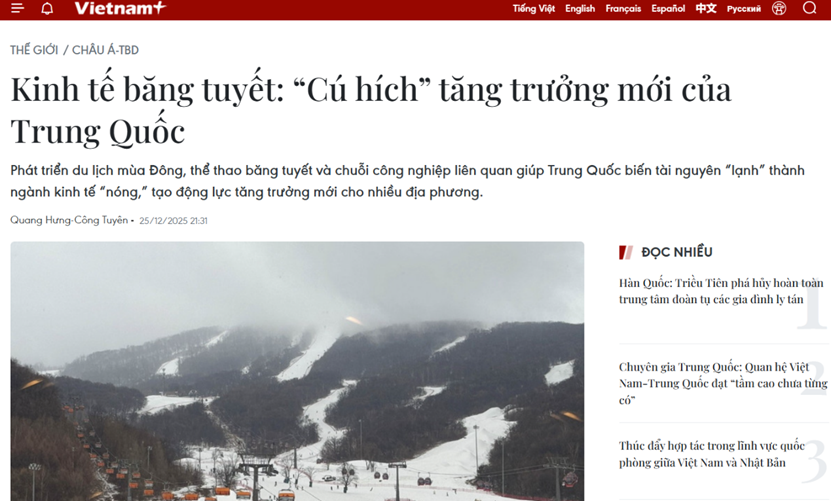
银行多维发力 冰雪“冷资源”变身“热经济”
Jin Rong Shi Bao· 2026-01-08 01:03
Core Viewpoint - The ice and snow consumption market is rapidly growing, driven by policy guidance and changes in consumer behavior, with a market size approaching one trillion yuan [1][2]. Group 1: Market Growth and Trends - Ice and snow consumption has emerged as a new consumption form, integrating sports, culture, and tourism, and is expected to reach a scale of nearly one trillion yuan [1]. - The 2024-2025 ice and snow season is projected to see consumer participation and related spending exceed 187.5 billion yuan, marking a growth of over 25% compared to the previous season [2]. - Ice and snow tourism has consistently attracted over 300 million visitors for three consecutive seasons [2]. Group 2: Financial Innovations and Support - Banks are launching promotional activities to lower the barriers to ice and snow consumption, such as "ice and snow consumption discounts" and "points exchange for skiing rights" [2]. - Financial institutions are integrating credit support, payment convenience, and consumer incentives to stimulate ice and snow consumption [1][4]. - The Bank of China has implemented a comprehensive financial service model that combines credit, scene-based payments, and themed activities to enhance consumer engagement [3]. Group 3: Industry Development and Ecosystem - A complete ice and snow economic industry chain is forming, enhancing the development of related sectors such as equipment manufacturing and hospitality services [4]. - The ice and snow tourism sector in Beijing's Changping District has seen significant visitor increases, particularly during peak holiday periods, boosting local hospitality and dining [4]. - The government has issued guidelines to promote high-quality development in the ice and snow economy, with expectations for the industry to exceed one trillion yuan by 2025 [6]. Group 4: Future Directions and Recommendations - The ice and snow consumption sector requires ongoing efforts to lower participation barriers, improve service quality, and enhance sustainability [5]. - Banks are encouraged to innovate financial products and services around ice and snow activities to alleviate consumer spending pressures and stimulate participation [7]. - The banking sector should leverage digital financial tools to enhance the entire ice and snow economic chain, improving supply quality and consumer satisfaction [6].
国际冰雪赛事带来“虹吸效应”
Xin Lang Cai Jing· 2026-01-07 22:25
Core Viewpoint - The upcoming FIS Snowboard Cross World Cup at Shenyang Northeast Asia International Ski Resort marks a significant milestone for Liaoning's winter sports development and is expected to enhance the region's ice and snow economy [2][5]. Group 1: Event Details - The World Cup will take place on January 16, featuring nearly 200 top athletes from 21 countries and regions, including the world's top three ranked competitors [2]. - The ski resort has undergone comprehensive upgrades, expanding its snow area to 220,000 square meters and adding 14 ski trails, along with advanced snowmaking equipment [2][3]. Group 2: Economic Impact - The event is anticipated to create a "siphon effect," boosting local tourism and related businesses, with a reported 30% increase in ski equipment sales [3]. - The hosting of this World Cup is part of a broader strategy to develop Liaoning's ice and snow economy, with a target of reaching a total industry output value of 190 billion yuan by 2027 [3]. Group 3: Future Prospects - The event is seen as a stepping stone for Liaoning to host the 2028 National Winter Games, aiming to align with international standards in event management and operations [3][5]. - The integration of ice and snow sports with cultural tourism is expected to further enhance the region's appeal as a destination for winter sports enthusiasts [5].
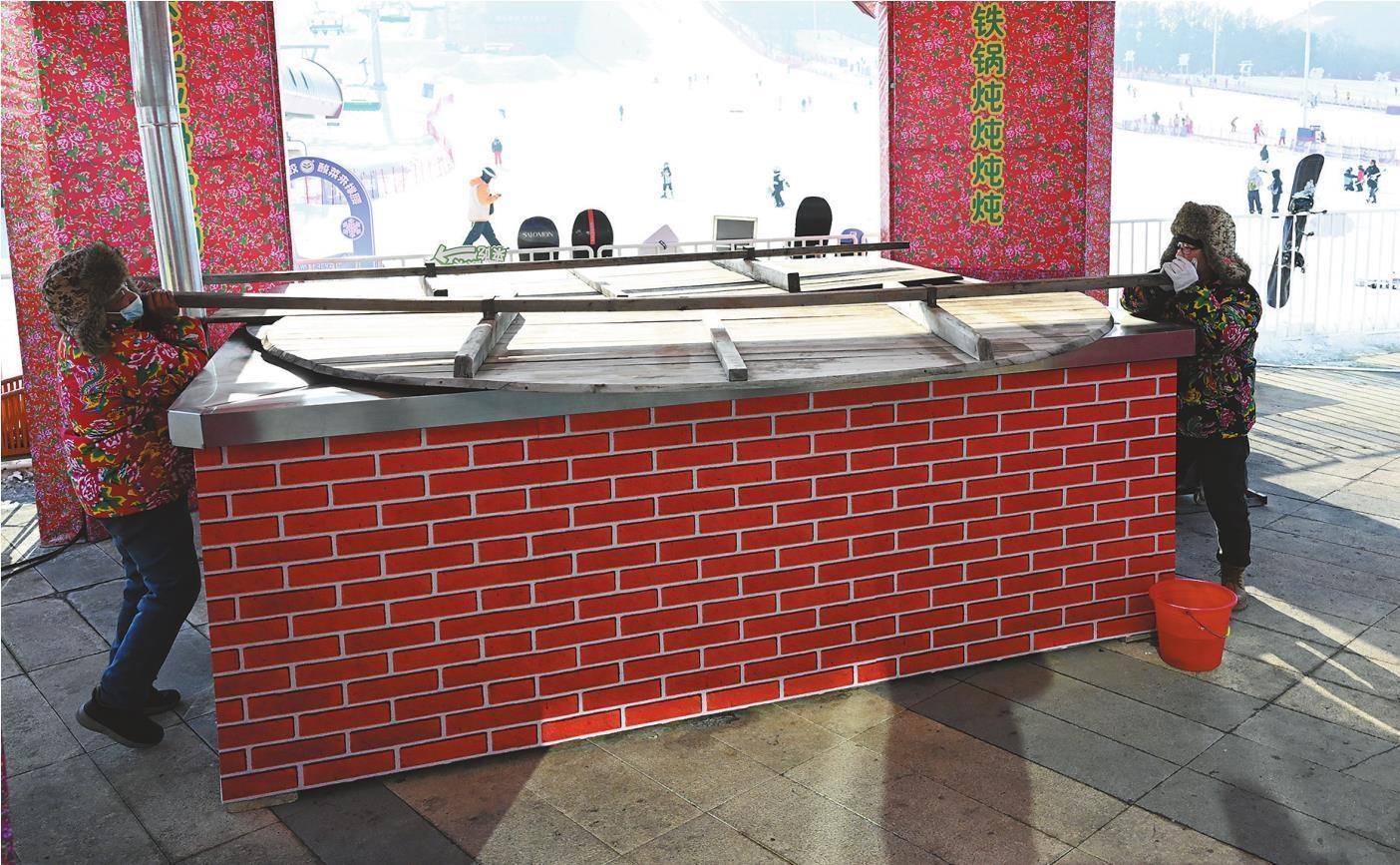
冰雪经济投资促进专题推介活动举办
Xin Lang Cai Jing· 2026-01-07 22:24
Group 1 - The Harbin International Ice and Snow Economy Expo aims to showcase investment potential and cooperation projects in various fields related to the ice and snow economy [1] - Over a hundred representatives from domestic ice and snow tourism and equipment manufacturing sectors attended the event to discuss new opportunities for development [1] - The Harbin Municipal Bureau of Enterprise and Investment Services presented the advantages of Harbin's ice and snow economy, with specific promotions from districts focusing on equipment manufacturing and tourism [1] Group 2 - The president of the Harbin Ice and Snow Economy Industry Chamber highlighted the establishment of a comprehensive industrial chain covering manufacturing, tourism, technology, finance, and event operations [2] - Local companies shared their experiences and innovations, such as the development of a metaverse ice and snow experience platform and AI photography technology [2] - The integration of past experiences in cultural tourism projects with new technologies aims to enhance Harbin's ice and snow tourism innovation [2]