
雪蜡车

Search documents
中国大众滑雪30年
Ren Min Ri Bao Hai Wai Ban· 2026-01-13 22:49
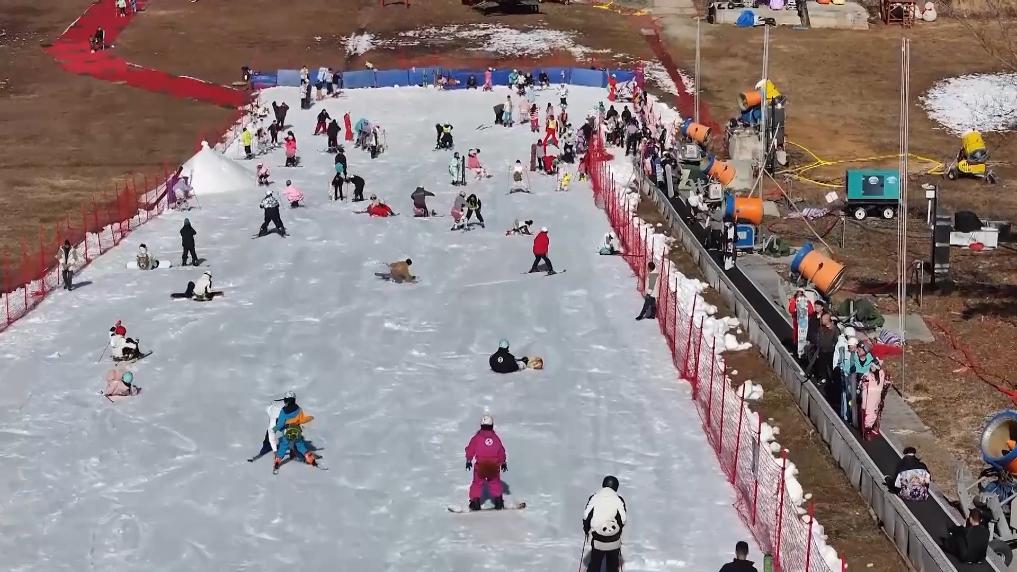
Core Insights - The development of China's skiing industry has evolved from a niche activity to a widespread public interest, significantly influenced by the Beijing 2022 Winter Olympics and supportive government policies [9][20][22] Industry Development - The first major ski resort aimed at the public, Yabuli Windmill Mountain Villa, opened in 1995, marking a milestone in China's skiing history [15] - The number of ski resorts has increased significantly since the early 2000s, with urban ski resorts becoming popular weekend destinations [16] - By 2024, the total consumption in ski resorts is projected to reach 78.613 billion yuan, with a 27.97% increase in spending within a two-kilometer radius of ski resorts [10] Infrastructure and Participation - As of 2024, there are 2,678 ice and snow sports venues in China, with a notable increase in facilities in southern regions [9][10] - The establishment of indoor ski resorts in cities like Shenzhen has made skiing accessible to a broader audience, catering to urban populations with high demand for ice and snow experiences [12] Economic Impact - The ice and snow economy has become a significant growth driver for local economies, with indoor ski resorts attracting over 70,000 visitors and generating over 10 million yuan in revenue during peak periods [12] - The number of companies in the ice and snow equipment manufacturing sector has grown from approximately 300 in 2015 to around 900 in 2023, with sales revenue increasing from less than 5 billion yuan to about 22 billion yuan [13] Cultural Shift - The perception of skiing has shifted from a risky hobby to a popular recreational activity, with increased participation and safety awareness among the public [9][10] - The integration of skiing into daily life reflects a broader cultural acceptance and enthusiasm for winter sports in China [14][20]


今冬我国冰雪旅游休闲人数将达3.6亿人次
Xin Lang Cai Jing· 2026-01-09 18:42
Core Insights - China's ice and snow tourism is entering a new phase of sustained prosperity, with projected leisure participants reaching 360 million and expected revenue of 450 billion yuan for the winter season of 2025-2026 [1] - The market is shifting from attracting visitors through resources to retaining them with warm services, with significant commercial value being released from ice and snow IPs [1] - Consumer confidence indicates substantial growth potential, with 74.8% of respondents interested in ice and snow leisure activities and 50.5% planning long-distance trips [1] Investment Landscape - A new investment pattern has emerged in China's ice and snow tourism, characterized by "south-north resonance, central rise, and east-west collaboration," with South China leading in investment at 30% [2] - The indoor ice and snow theme complexes are the most active investment category, enabling year-round ice and snow consumption [2] - The ice and snow economy is projected to exceed 1 trillion yuan by 2025, with over 14,000 related enterprises in the country, reflecting an 11% year-on-year growth [2] Industry Development - The ice and snow tourism sector has developed a comprehensive industrial chain encompassing culture, sports, and equipment [2] - Domestic ice and snow equipment, such as skis and snow wax cars, are increasingly being exported through cross-border e-commerce, indicating a shift from attracting global attention to deepening international connections [2]
撬动万亿市场,冰雪经济何以滚烫?
Xin Lang Cai Jing· 2026-01-09 18:42
Core Viewpoint - The development of the ice and snow economy in China is rapidly expanding beyond traditional regions, driven by increased consumer participation and innovative offerings, creating diverse opportunities for growth and transformation in various sectors [10][13][15]. Industry Overview - The 2024-2025 ice and snow season is expected to see a total of 26.05 million participants nationwide, with Zhejiang ranking first among southern provinces at 1.29 million participants [4]. - The Harbin Ice and Snow World has reached a record scale, covering 1.2 million square meters and utilizing over 400,000 cubic meters of ice and snow, attracting 90.357 million visitors and generating 137.22 billion yuan in tourism revenue [6][10]. Regional Development - The ice and snow economy is transitioning from a seasonal focus to year-round opportunities, with regions like Chongli successfully attracting 4.3 million summer visitors in 2024, surpassing winter numbers for the first time [11]. - The integration of outdoor sports and tourism is being emphasized, with events like the Chongli 168 Super Cross-Country Race and Chongli Marathon contributing to a complete sports tourism ecosystem [11]. Consumer Trends - The ice and snow sports market is witnessing a shift towards younger, fashionable, and family-oriented consumers, leading to a diverse and segmented market for equipment and experiences [13]. - The number of indoor ski resorts has increased to 79, with a growth rate of 33.9%, primarily concentrated in East and South China, catering to local demand for skiing experiences [12]. Industry Growth - The ice and snow industry is evolving into a comprehensive ecosystem, encompassing equipment manufacturing, event management, training services, and cultural tourism, with significant potential for future growth [13][14]. - The number of companies in the ice and snow equipment sector has increased from approximately 300 in 2015 to around 900 in 2023, with sales revenue rising from under 5 billion yuan to about 22 billion yuan [13][14].

【图解】透过“3.6亿人次”看冰雪旅游新趋势
Zhong Guo Jing Ji Wang· 2026-01-08 07:00
Core Insights - The report from the China Tourism Research Institute highlights the significant transformation of China's ice and snow tourism over the past decade, evolving from niche experiences to a mainstream trend, and expanding from seasonal to year-round activities [3][5]. Group 1: Market Growth and Trends - The number of participants in ice and snow tourism is projected to reach 360 million during the 2025-2026 winter season, with expected revenue of 450 billion yuan [5]. - Among these, 220 million tourists are anticipated to travel primarily for ice and snow tourism [5]. - A survey indicates that 74.8% of respondents are interested in ice and snow leisure activities, with 50.5% preferring long-distance travel for such experiences [6]. Group 2: Spending Patterns - Tourist spending is shifting from essential expenses like transportation and accommodation to more discretionary spending on entertainment, wellness, cultural experiences, and technology [6]. Group 3: Investment Landscape - The northern region of China leads in ice and snow tourism investments, accounting for 30% of total investments, approximately 30 billion yuan, with indoor ice and snow theme complexes being the most active investment category [9]. - The ice and snow economy is expected to exceed 1 trillion yuan by 2025, with over 14,000 related enterprises, reflecting an annual growth rate of 11% [12]. Group 4: Internationalization and Market Dynamics - The focus of internationalization in ice and snow tourism is shifting from merely attracting global attention to deepening international connections [13]. - Domestic ice and snow equipment, such as skis and snowboards, are increasingly being marketed internationally through cross-border e-commerce, while foreign capital shows strong interest in investing in China's ice and snow industry, including high-end hotels and resorts [14].

中国旅游研究院发布报告 预计3.6亿人次共赴今冬“冰雪之约”
Xin Hua She· 2026-01-05 11:55
Group 1 - The core viewpoint of the articles is that China's ice and snow tourism is entering a new stage of sustained prosperity, with significant growth expected in both visitor numbers and revenue during the 2025-2026 winter season [1][2] - It is projected that the number of ice and snow tourism leisure participants will reach 360 million, with expected revenue of 450 billion yuan [1] - Northern cities like Harbin, Shenyang, Changchun, and Zhangjiakou are transitioning from attracting visitors through resources to retaining them through warm services, enhancing the overall tourism experience [1] Group 2 - The report indicates a new pattern in China's ice and snow tourism, characterized by "south-north resonance, central rise, and east-west collaboration," with South China leading in investment [2] - In 2025, South China is expected to account for 30% of the investment, totaling approximately 30 billion yuan, with indoor ice and snow theme complexes being the most active investment category [2] - The ice and snow economy is projected to exceed 1 trillion yuan by 2025, with over 14,000 related enterprises in the country, reflecting an annual growth rate of 11% [2]
一个工业大省的升级样本
Jing Ji Ri Bao· 2025-12-24 22:18
Group 1 - Shandong Energy Group has invested in the construction of a 900,000 kW offshore wind farm, achieving full-capacity grid-connected power generation by the end of December 2022 [2] - Shandong is the only province in China with all 41 industrial categories, with its state-owned enterprises leading in total assets and operating income among provincial-level regulated enterprises [4] - The province's state-owned enterprises are expected to maintain their leading position in total profit and net profit by 2025 [4] Group 2 - Companies like Weichai Power are focusing on long-term R&D investments, exemplified by their hydrogen internal combustion engine that took eight years to develop without profit but is expected to secure future growth [5][6] - Shandong's state-owned enterprises are actively engaging in high-end manufacturing and technological innovation, with significant R&D investments leading to breakthroughs in various fields [6][7] - The provincial government has implemented a "R&D reserve fund system" to support major technological breakthroughs, with a plan to allocate 20% of the previous year's net profit to a dedicated R&D fund [7] Group 3 - The "chain leader system" has been introduced to enhance collaboration among state-owned enterprises and their supply chains, promoting joint development and innovation [10][17] - Shandong's state-owned enterprises are acting as "chain leaders," fostering innovation and resource sharing among smaller enterprises, thus enhancing overall industry competitiveness [14][15] - The province aims to cultivate 50,000 high-tech enterprises and achieve 200 major innovation results by 2027, reflecting a commitment to long-term industrial development [17] Group 4 - Shandong's traditional industries are undergoing transformation through technological innovation and smart upgrades, demonstrating that established sectors can also generate new growth [18][25] - The province's focus on optimizing traditional industries aligns with national strategies to enhance innovation capabilities and competitiveness [25][29] - Shandong's state-owned enterprises are encouraged to concentrate on their core businesses while exploring reasonable extensions to enhance overall performance [26][28] Group 5 - The provincial government emphasizes the importance of a balanced relationship between government intervention and market dynamics, promoting a model where state-owned enterprises can lead in high-risk, long-cycle R&D areas [33][35] - Shandong's approach to innovation and development showcases a blend of strategic government support and market-driven initiatives, aiming for high-quality growth [35][36] - The province's experience serves as a valuable reference for other regions in China, illustrating that transformation does not require starting anew but can be achieved through leveraging existing strengths [25][36]

新华视点丨冰雪经济“冷资源”激发产业发展“热活力”
Xin Hua Wang· 2025-12-20 01:36
Core Viewpoint - The ice and snow economy is experiencing significant growth, driven by increasing consumer interest and supportive government policies, with projections indicating a thriving market by 2025 [1][6]. Industry Growth - The ice and snow industry is expected to see a substantial increase in demand, with ski goggles orders projected to grow by 61.8% and ski helmet orders by 14% by 2026 [3]. - The 2024-2025 snow season is anticipated to generate a total consumption amount of 786.13 billion yuan across ski resorts, with a 27.97% increase in spending within a two-kilometer radius of these resorts [10]. Policy Support - The Chinese government has issued several policies to promote the development of the ice and snow economy, including the "Opinions on Stimulating the Vitality of the Ice and Snow Economy" and initiatives to boost consumption [6]. - The 2025 Central Economic Work Conference emphasized the importance of domestic demand and the expansion of quality goods and services, providing a clear direction for the ice and snow economy [6]. Regional Developments - Yiwu, known as the "world supermarket," is experiencing a surge in orders for ice and snow products, such as ice skates and ski goggles, due to the onset of the ice and snow season [7]. - The Shengxianli International Ski Resort in Hangzhou welcomed nearly 70,000 visitors last season, generating revenue of 20 million yuan, indicating a growing trend in winter leisure activities [8]. Technological Advancements - The ice and snow equipment sector in China is witnessing advancements in self-research capabilities, with breakthroughs in key areas such as carbon fiber ski boards and indoor ski simulators [15]. - Companies like Taishan Sports are developing innovative products, including big data ski simulators and proprietary ice sports safety mats, enhancing the technological support for ice and snow sports [17]. Industry Ecosystem - The Chinese ice and snow industry encompasses a complete ecosystem, from resource development and equipment manufacturing to service operations and consumer spending, indicating a well-rounded market structure [10]. - In Shandong, over 100 ice and snow equipment manufacturing companies have formed clusters that include facilities for ice and snow venues, competition gear, and leisure equipment, showcasing the region's robust industry growth [22].
撬动超万亿元产业规模 中国冰雪经济何以滚烫
Xin Hua She· 2025-12-18 23:24
Core Viewpoint - The central economic work conference emphasizes the importance of domestic demand and building a strong domestic market, with the booming ice and snow economy driving new consumption scenarios and regional development [1] Group 1: Individual Impact - The Beijing Winter Olympics has significantly increased the popularity of winter sports, with over 300 million people participating in ice and snow activities in China [1] - Local residents, such as Lang Engge, have transformed their homes into guesthouses, capitalizing on the influx of tourists and promoting winter sports in their communities [2] - The transformation of local economies is evident, with many villagers becoming ski instructors or opening businesses related to the ice and snow industry, providing diverse income opportunities [3] Group 2: Regional Development - The ice and snow economy is expanding from traditional northern regions to a nationwide presence, breaking geographical and seasonal limitations [4] - In Harbin, the 2024-2025 winter season is expected to attract 90.35 million visitors and generate 137.22 billion yuan in tourism revenue, showcasing the region's cultural and economic potential [4] - The growth of indoor ski resorts is notable, with 79 facilities projected by April 2025, a 33.9% increase, primarily concentrated in Eastern and Southern China [5] Group 3: Industry Growth - Participation in ice and snow sports is projected to reach 292 million people in the 2024-2025 season, with a participation rate of 20.61%, reflecting a significant increase from the previous season [6] - The ice and snow industry is developing a comprehensive supply chain, including equipment manufacturing, event management, and tourism integration, creating substantial growth opportunities [6] - The number of companies in the ice and snow equipment sector has increased from approximately 300 in 2015 to around 900 in 2023, with sales revenue rising from less than 5 billion yuan to 22 billion yuan [6][7]
大看台丨撬动万亿,冰雪经济何以滚烫?
Xin Hua Wang· 2025-12-18 07:30
Core Viewpoint - The recent Central Economic Work Conference emphasizes the importance of domestic demand and building a strong domestic market, highlighting the booming ice and snow economy as a driver for new consumption scenarios, regional development, and industrial ecology [1] Industry Overview - According to the "China Ice and Snow Industry Development Research Report (2025)", the scale of China's ice and snow industry is expected to exceed 1 trillion yuan by 2025, with total consumption during the 2024-2025 ice and snow season projected to exceed 187.5 billion yuan, including 78.6 billion yuan from ski resorts [3][17] - The participation in ice and snow sports has reached 290 million people, with a participation rate of 20.61%, an increase of approximately 27.4 million people from the previous season [17] Regional Development - The ice and snow economy is expanding beyond traditional northern regions, creating a diverse regional development pattern across the country, with areas like Harbin and Chongli focusing on year-round tourism and outdoor sports [12][14] - Chongli is transitioning from a winter-only economy to a year-round destination, with summer tourist numbers projected to reach 4.3 million in 2024, surpassing winter visitors for the first time [14] Consumer Trends - The consumer base for ice and snow sports is becoming younger, more fashionable, family-oriented, and professional, leading to a segmented and upscale market for equipment and experiences [19] - The number of indoor ski resorts has increased to 79, with a growth rate of 33.9%, primarily concentrated in East and South China, catering to local demand for skiing experiences [16] Industry Growth - The ice and snow industry is forming a complete industrial chain covering equipment manufacturing, event operation, training services, and cultural tourism integration, providing significant potential for future growth [17] - The number of companies in the ice and snow equipment sector has increased from about 300 in 2015 to around 900 in 2023, with sales revenue rising from less than 5 billion yuan to approximately 22 billion yuan [19][22]

撬动万亿,冰雪经济何以滚烫?
Xin Hua Wang· 2025-12-18 05:51
Core Insights - The article discusses the booming ice and snow economy in China, driven by increased participation in winter sports and significant investments in infrastructure and tourism [1][8]. Industry Overview - The ice and snow industry in China is projected to exceed 1 trillion yuan by 2025, with a total consumption scale of over 187.5 billion yuan during the 2024-2025 winter season, including 78.6 billion yuan from ski resorts [1][8]. - The number of participants in ice and snow sports is expected to reach 292 million, with a participation rate of 20.61%, an increase of approximately 27.44 million from the previous season [8]. Regional Development - The ice and snow economy is expanding beyond traditional northern regions, with significant growth in southern and western areas, creating a diverse regional development landscape [5][6]. - In Harbin, the 2024-2025 winter season is expected to attract 90.35 million visitors, generating 137.22 billion yuan in tourism revenue, showcasing the integration of local culture and winter sports [5]. Individual Impact - Local residents are transitioning into roles such as ski instructors and accommodation providers, benefiting from the increased tourism and interest in winter sports [4][5]. - The story of individuals like Lang Engge, who promotes ice sports in his community, illustrates the grassroots impact of the winter sports boom [2][4]. Market Trends - The demand for ice and snow sports equipment is diversifying, with a trend towards younger, fashionable, and family-oriented consumers, leading to a segmented market from rental to high-end customized products [8][10]. - The number of companies in the ice and snow equipment sector has grown from approximately 300 in 2015 to around 900 in 2023, with sales revenue increasing from under 5 billion yuan to 22 billion yuan [8][10].