区域协调发展

Search documents
中部崛起动能强潜力大
Jing Ji Ri Bao· 2025-08-17 21:54
Group 1: Economic Growth in Central China - The central region of China, comprising six provinces, is showing strong economic growth, with five provinces exceeding the national GDP growth rate in the first half of the year [1] - The region is crucial to the national economy, representing about one-tenth of the land area and one-quarter of the population [1] - High-tech manufacturing has become a significant driver of economic growth in the central region, indicating a clear trend towards optimizing industrial structure [1] Group 2: Consumer Market Potential - The central region has a vast consumer market potential, housing about one-quarter of the national population [2] - Provinces are implementing various measures to convert population advantages into economic achievements, such as expanding online consumption and enhancing rural commerce [2] - Initiatives like the "old for new" consumption upgrade are being promoted to stimulate consumer demand effectively [2] Group 3: Foreign Trade and Open Economy - Despite being inland and facing external trade challenges, the central provinces are actively expanding their foreign trade networks [3] - There is a noticeable increase in the export of high-tech products, indicating an optimization of export structure and the release of innovation-driven trade benefits [3] - The region is focusing on building inland open channels and enhancing connectivity through ports and logistics to facilitate global market access [3]
金句丨促进民营经济健康发展,总书记深入阐述
Xin Hua Wang· 2025-08-16 08:59
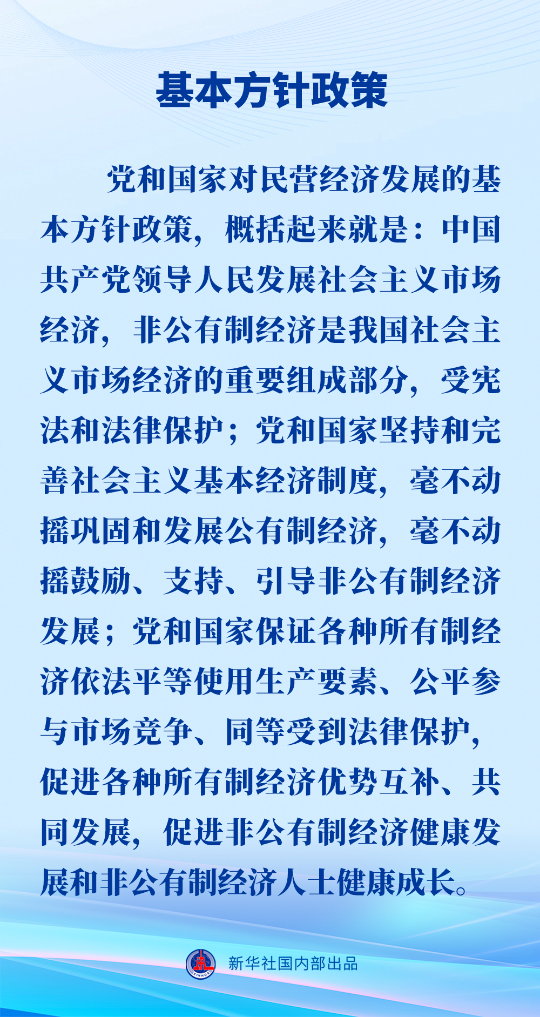
Core Viewpoint - The article emphasizes the importance of promoting the healthy and high-quality development of the private economy in China, highlighting the broad prospects and significant opportunities for private enterprises and entrepreneurs in the new era [1]. Policy Guidelines - The fundamental policy for the development of the private economy includes the leadership of the Communist Party in developing a socialist market economy, recognizing the non-public economy as an essential part of this system, and ensuring equal legal protection for all forms of ownership [2]. Current Environment - The political, economic, and social environments are currently very favorable for the development of the private economy, providing a timely opportunity for private enterprises and entrepreneurs to showcase their capabilities [4]. Key Actions for Development - The focus is on implementing concrete measures to promote the private economy, including: 1. Removing obstacles to the equal use of production factors and fair market competition. 2. Addressing issues related to overdue payments to private enterprises. 3. Protecting the legal rights and interests of private enterprises and entrepreneurs. 4. Effectively implementing various relief policies. 5. Further establishing a clean relationship between government and business [8]. Entrepreneurial Responsibilities - Private enterprises and entrepreneurs are encouraged to enhance their ideals, cultivate a sense of national responsibility, and contribute to the construction of socialism with Chinese characteristics and modernization [11]. High-Quality Development - High-quality development is deemed essential for the private economy, with a call for private enterprises to actively engage in creating a new development pattern and contributing to technological innovation, modern industrial systems, rural revitalization, and improving people's livelihoods [13]. Self-Reform and Management - To become enduring enterprises, private companies must adopt advanced management systems and be willing to undergo self-reform, similar to state-owned enterprises [14]. Integrity and Legal Compliance - Entrepreneurs are urged to adhere to principles of integrity, respect the law, and cultivate a good reputation, while also promoting the healthy development of the private economy through ethical practices [16].

6亿人次升腾起流动中国的烟火气
Xin Hua Wang· 2025-08-15 07:58
6亿人次的天量数据不仅成色十足,更是彰显经济活力的晴雨表。"赣超"球迷专列、红色研学专列受热 捧,"天山号""新东方快车"等旅游列车与景区"无缝"对接,中老铁路跨境游广受青睐——泱泱大国的浩 荡人流,早已不再满足于基本的物理移动,而是转化为对美好生活的热忱追寻。而在暑运大幕下人潮如 织的旅游景区、持续破圈的"宝藏小城"、丰富多彩的文旅活动......不断"上新"的消费场景,让这流动中 的烟火气,悄然升腾于大江南北,为经济发展添了一把火。 2025年铁路暑运自7月1日启动。记者8月12日从中国国家铁路集团有限公司获悉,自7月1日至8月11日, 全国铁路累计发送旅客突破6亿人次,达到6.16亿人次,同比增长4.0%,日均发送旅客1467.5万人次。 不断翻滚的数字,无时无刻不在验证着神州大地不息的生命脉动。晨食重庆小面,午品黔江鸡杂,已然 成为学子们的日常——越织越密的高铁网络,不仅改变着人们的生活半径,还让人们的出行习惯不 断"在线升级"。 更值一提的是,铁路服务的更新换代成为常态,旅途的温情在流淌,文化的魅力在绽放。热热闹闹 的"暑运画卷"里,无论是广州南站上水工日行万步确保旅客用水"无忧",还是武汉、汉口等 ...
中国十五冶与黄石市下陆区政府、湖北工建签署三方战略合作协议
Sou Hu Cai Jing· 2025-08-14 03:08
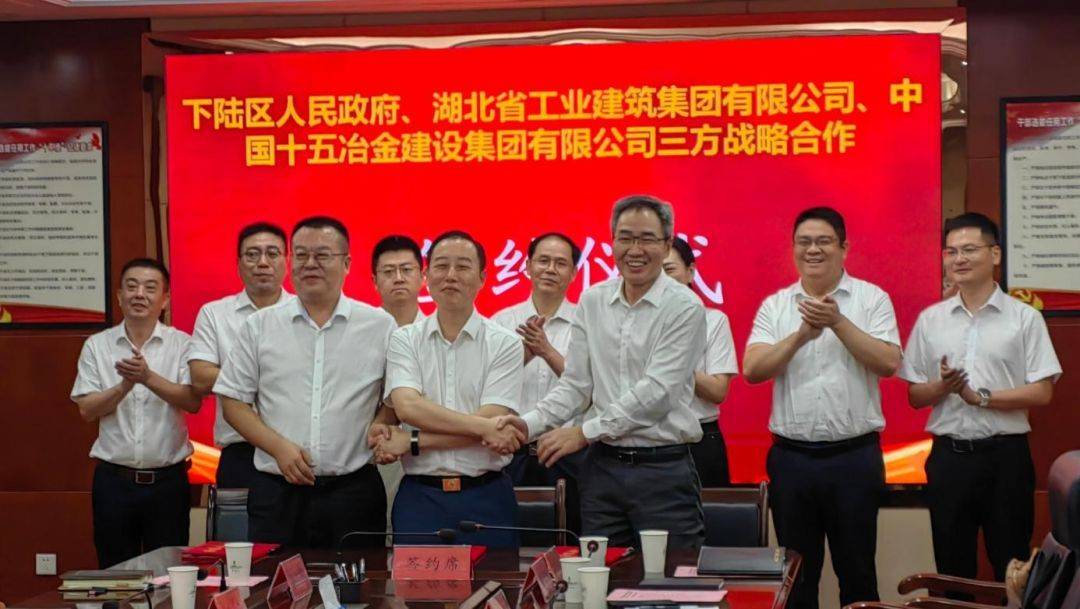
Core Viewpoint - China Fifteenth Metallurgical Group (China Fifteen) has signed a tripartite strategic cooperation agreement with the Huangshi Xiaolu District Government and Hubei Industrial Construction Group to promote urban renewal and the effective revitalization of idle assets and land in Huangshi City [1][3]. Group 1 - The signing ceremony was attended by key figures including Zhang Yisong, General Manager of China Fifteen, and local government officials, highlighting the collaborative effort between the government and state-owned enterprises [1][4]. - Zhang Yisong expressed gratitude for the support from the Xiaolu District Government and Hubei Construction Group, emphasizing the commitment to urban construction and the acceleration of subsequent work related to land assessment, acquisition, and compensation [3]. - The agreement aims to leverage the strengths of local government coordination and the professional capabilities of state-owned enterprises to promote regional coordinated development and urban renewal [3]. Group 2 - The three parties agreed to expand cooperation dimensions, increase cooperation intensity, and strengthen cooperation depth, focusing on urban renewal, efficient revitalization of idle assets and land resources, and regional development [3]. - The collaboration is expected to enhance the urban functional positioning and cultural quality of the region, contributing to the coordinated development of the economy, society, and environment in Huangshi [3].
山西省融入京津冀协同发展工作推进会成功举办
Zhong Guo Fa Zhan Wang· 2025-08-11 08:45
会议指出,党中央高度重视区域协调发展工作,习近平总书记在新时代推动中部地区崛起座谈会上强调 山西省要加强与京津冀协同发展等重大战略的衔接。省委、省政府连续5年在省委经济工作会、政府工 作报告对融入京津冀工作作出安排部署。各地各部门要积极对接,与京津冀在清洁能源保障供应、文化 旅游一体发展、科创产业通力合作、基础设施互联互通、生态环境联防联治、医疗教育资源共享等方面 不断深化合作。 中国发展网讯记者郭建军报道8月6日,省推动中部高质量发展工作领导小组办公室召开山西省融入京津 冀协同发展工作推进会,认真学习贯彻习近平总书记关于区域协调发展的重要论述和考察山西重要讲话 重要指示精神,全面落实省委、省政府关于融入京津冀的要求部署,总结前期工作成效,部署下一阶段 重点任务。省发展改革委党组书记、主任、省中部办主任陈磊出席会议并讲话。 会议强调,融入京津冀是一项系统工程,要提高政治站位,科学研判发展形势,抓住关键环节,凝聚工 作合力。要加强"十五五"规划衔接,推动政策精准协同发力,加强重大项目一体谋划实施,深化体制机 制改革创新,重点区域加快突破。要提升研究力、执行力、协同力,把省委、省政府决策部署落到实 处,构建京津冀 ...
“两重”建设稳投资优结构促发展
Jing Ji Ri Bao· 2025-08-10 23:11
Core Viewpoint - The National Development and Reform Commission has allocated over 300 billion yuan to support the third batch of "two重" construction projects, completing the annual allocation of 800 billion yuan for such projects, which are crucial for promoting high-quality development [1][2]. Group 1: Investment and Economic Impact - The "two重" construction projects are expected to directly drive effective investment and promote economic growth, with an estimated direct impact of around 1.6 trillion yuan on fixed asset investment, stabilizing infrastructure investment growth at 6% to 7% for the year [4][5]. - The projects focus on key areas such as ecological restoration, major transportation infrastructure, and urban underground pipelines, which enhance both immediate physical workload and long-term asset quality [4][6]. Group 2: Structural and Regional Optimization - The "two重" construction is set to optimize investment direction and regional layout, with funding directed towards economically viable and public-interest projects, thereby avoiding inefficient expansion [4][6]. - The initiative aims to rebalance regional factors and optimize layouts, particularly in the Yangtze River Economic Belt and the Western Land-Sea New Corridor [4][5]. Group 3: Implementation and Coordination - The successful implementation of the "two重" projects requires a focus on key organizational aspects and bottlenecks, emphasizing system coordination and precise policy measures to accelerate the formation of physical workloads [7][8]. - Experts suggest establishing a technical guideline and performance evaluation system for the projects, ensuring effective supervision and addressing challenges in project execution [8].
万亿俱乐部城市半年报出炉:大连下半年有望“撞线”,外贸大市增速回落
Hua Xia Shi Bao· 2025-08-09 09:59
Economic Performance of Major Cities - The top ten cities by GDP in the first half of the year are Shanghai, Beijing, Shenzhen, Chongqing, Guangzhou, Suzhou, Chengdu, Hangzhou, Wuhan, and Nanjing, with all but Nanjing exceeding 1 trillion yuan, forming China's "2 trillion club" [3] - Cities close to the "2 trillion" threshold include Nanjing, Ningbo, and Tianjin, with projected GDPs between 1.80 trillion and 1.85 trillion yuan for 2024, but their growth rates of 5.3%, 5.1%, and 5.3% respectively suggest challenges in reaching the target by year-end [3] - Cities like Wenzhou, Dalian, and Xuzhou have shown optimistic growth rates exceeding 6.0%, with GDPs of 483.19 billion, 464.7 billion, and 450.93 billion yuan respectively, indicating potential for joining the "trillion club" by year-end [3] Trends in Foreign Trade Cities - Major foreign trade cities have experienced a general decline in growth rates compared to the first half of 2024, with Shenzhen at 5.1%, Suzhou at 5.7%, and Ningbo at 5.1%, all showing decreases from previous rates [5] - Conversely, Guangzhou and Foshan have seen growth recover due to lower base figures from the previous year, with Guangzhou increasing from 2.5% to 3.8% and Foshan from 1.7% to 2.3% [5] Regional Economic Development - The distribution of "trillion cities" shows 21 in the east, 6 in the central and western regions, and none in the northeast, highlighting regional disparities [8] - The potential for Dalian to become the first "trillion city" in Northeast China is a significant focus, with local government emphasizing high-quality economic work to achieve this goal [8][7] Future of the "Trillion Club" - The "trillion club" has expanded significantly over the past two decades, with projections suggesting that the criteria for membership may evolve to include "2 trillion" and "3 trillion clubs" as China's economic strength grows [10] - The central government has emphasized the need for regional coordination and development strategies to enhance economic vitality and address disparities among cities [9]

(走进中国乡村)从城市到田园 中国“西部菜都”年轻人回乡探寻更多可能
Zhong Guo Xin Wen Wang· 2025-08-08 12:38
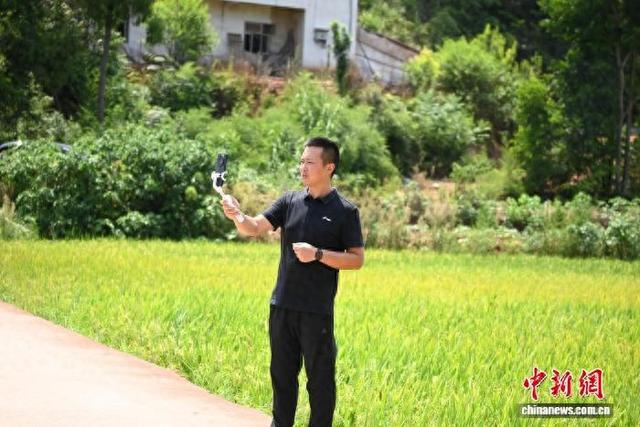
Core Viewpoint - The article highlights the trend of young people returning to rural areas in Chongqing's Tongnan district, leveraging the internet and e-commerce to explore new opportunities in agriculture and rural development [1][5]. Group 1: Young Entrepreneurs in Rural Areas - Gong Yijia, born in 1992, has been engaged in rural e-commerce for over seven years, successfully selling agricultural products like ginger and rice to major cities and even exporting them [1]. - Jiang Feng, a former kindergarten teacher, joined the "Yumeiren" village broadcasting team, emphasizing the emotional connection and community engagement through live streaming and video content [3]. - Wen Chunlai, the village party secretary, transitioned from running a small renovation company to managing the needs of over 2,000 villagers, focusing on selling agricultural products through live streaming [3][4]. Group 2: Rural Development Initiatives - The "Tongnan Village Broadcasting" brand plan aims to empower locals to promote their hometown's culture and products through the internet, enhancing visibility and market reach [5]. - The trend of "reverse urbanization" is noted, with more urban residents choosing to move to rural areas, indicating a shift towards regional coordination and urban-rural integration [5]. - The initiative is seen as a platform for young people to innovate and start businesses in rural settings, aligning with broader urbanization trends [5]. Group 3: Innovation in Agriculture and Food - Li Youfu, with over 20 years in the restaurant industry, has introduced innovative dishes and snacks, such as lemon-flavored meals, to attract a wider audience [6]. - His online presence, "Tongnan Lemon Brother," showcases the potential of food to connect cultures and markets beyond local boundaries, particularly in Southeast Asia [6].
“借力”到“自立”,产业承接有智慧
Ren Min Ri Bao· 2025-08-08 09:14
Core Viewpoint - The article emphasizes the importance of regional coordinated development, highlighting the need to promote relative balance while respecting natural laws and progressing gradually [1][3]. Economic Impact - The collaboration between companies like Seres and Huawei has led to significant economic benefits, with Seres achieving a net profit of 5.946 billion yuan last year, contributing 66.7% to the industrial added value growth in Chongqing's automotive sector [1]. - The establishment of the new energy vehicle industry in Chongqing has attracted talent from top universities, enhancing the region's appeal and creating job opportunities [2]. Industry Development - Chongqing's automotive industry has evolved from producing fuel vehicles to becoming a player in the new energy vehicle market, with 19 complete vehicle manufacturers and over 1,200 automotive parts companies [1]. - The article discusses the importance of innovation for long-term development and industry enhancement, indicating that collaboration between coastal and inland regions can strengthen the entire supply chain [1][2]. Social Responsibility - The article highlights the social and economic responsibilities of companies, noting that collaboration should not only focus on immediate gains but also on long-term benefits such as talent cultivation and resource aggregation [2][3]. - The mutual support and cooperation between eastern and western regions are framed as a political task, showcasing the commitment of eastern provinces to assist western regions through various collaborative models [3]. Investment Trends - Recent investments from Chongqing into other regions, such as the establishment of a branch in Shenzhen, indicate a new phase of industrial development and the expansion of collaborative opportunities between eastern and western regions [4].

万亿俱乐部城市半年报出炉:深圳、宁波增速回落,大连下半年有望“撞线”
Hua Xia Shi Bao· 2025-08-08 07:51
Group 1 - The core viewpoint of the articles highlights the economic performance of major Chinese cities in the first half of 2025, with 27 cities achieving a GDP of over 1 trillion yuan, forming the "2 trillion club" [2][3][8] - The top ten cities by GDP in the first half of 2025 are Shanghai, Beijing, Shenzhen, Chongqing, Guangzhou, Suzhou, Chengdu, Hangzhou, Wuhan, and Nanjing, all exceeding 1 trillion yuan except for Nanjing [2] - Cities like Wenzhou, Dalian, and Xuzhou are showing optimistic growth, with GDP growth rates exceeding 6.0%, indicating potential entry into the "trillion club" by the end of the year [2][6] Group 2 - Major foreign trade cities have experienced a general decline in growth rates compared to the first half of 2024, with Shenzhen's growth dropping from 5.9% to 5.1% [4] - Guangzhou and Foshan have seen a rebound in growth rates due to lower comparisons from the previous year, with Guangzhou increasing from 2.5% to 3.8% [4] - The need for foreign markets remains critical for China's economy, especially in light of the real estate market adjustments and weak consumer investment [5] Group 3 - The distribution of "trillion cities" shows a concentration in the eastern region, with 21 cities, while the northeastern region lacks any, highlighting regional economic disparities [6][7] - The concept of the "trillion club" may become outdated as China's economic strength grows, potentially leading to the emergence of "2 trillion" and "3 trillion clubs" in the future [8] - The central government's focus on regional coordination and development strategies aims to enhance economic vitality and address existing disparities [7][9]