
跨境支付

Search documents
宇信科技:成功中标并参与了境外某地区数字法币建设项目 相关业务仍在发展阶段
Xin Lang Cai Jing· 2025-08-14 09:01
Core Viewpoint - The company emphasizes the importance of overseas business and the opportunities brought by the internationalization of the Renminbi, positioning cross-border payment as a key component of its overseas strategy [1] Group 1 - The company has successfully won a bid and is participating in a digital currency construction project in a foreign region [1] - The relevant business is still in the development stage and currently does not contribute significantly to the company's operating revenue [1]

粤开市场日报-20250814
Yuekai Securities· 2025-08-14 08:43
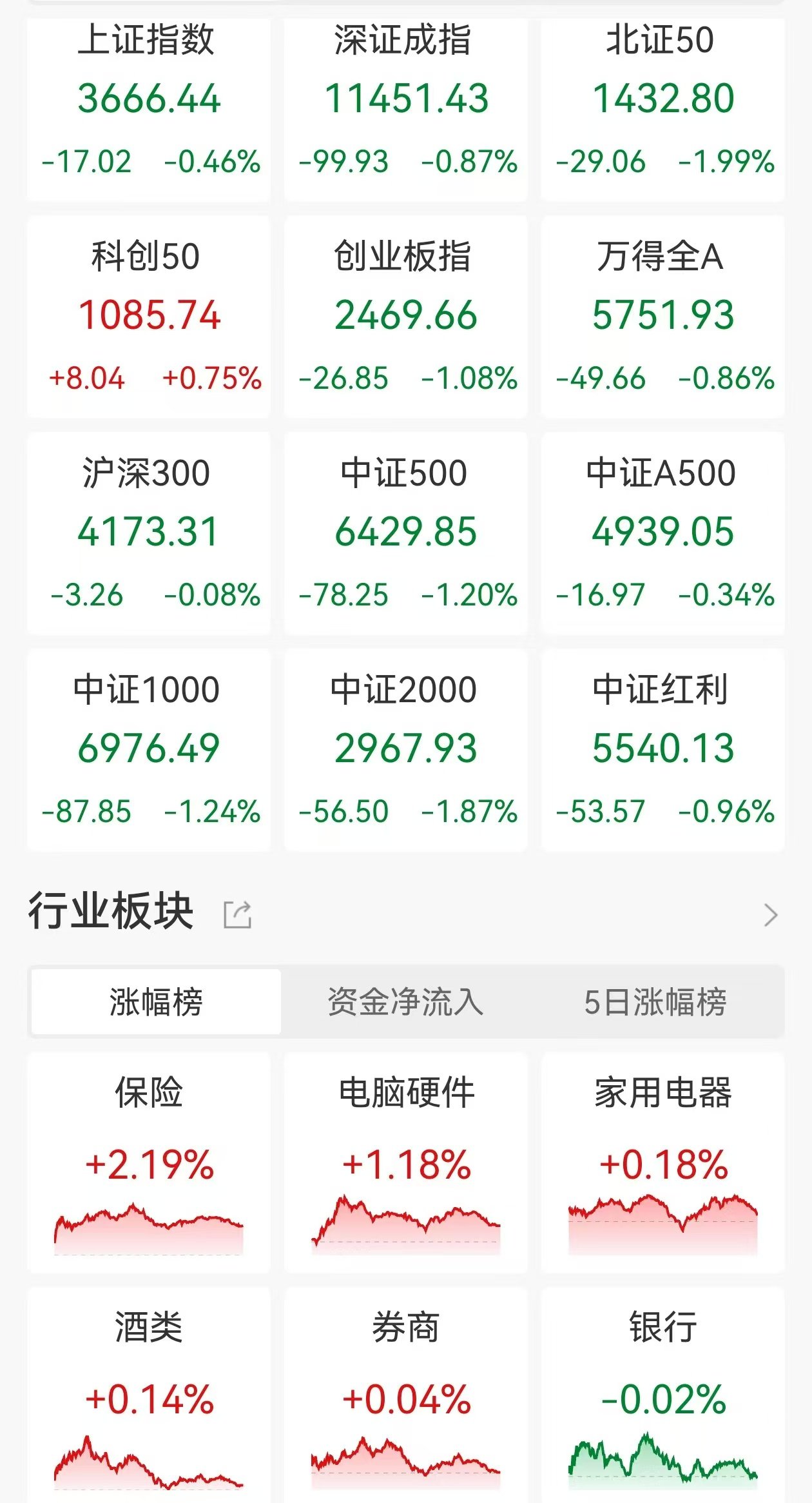
Market Overview - The A-share market saw a majority of indices decline today, with the Shanghai Composite Index falling by 0.46% to close at 3666.44 points, and the Shenzhen Component Index dropping by 0.87% to 11451.43 points. The ChiNext Index decreased by 1.08% to 2469.66 points, while the Sci-Tech 50 Index rose by 0.75% to 1085.74 points [1] - Overall, there were 4644 stocks that declined, while only 734 stocks increased, and 41 stocks remained flat. The total trading volume in the Shanghai and Shenzhen markets reached 22792 billion yuan, an increase of 1282.72 billion yuan compared to the previous trading day [1] Industry Performance - Among the Shenwan first-level industries, only the financial sector saw an increase, while all other sectors experienced declines. The sectors that led the decline included comprehensive, defense and military, communication, steel, textile and apparel, and beauty and personal care [1] - The top-performing concept sectors today included insurance selection, digital currency, GPU, cross-border payment, servers, financial technology, and others [1]
【A股收评】沪指盘中超3700点,寒武纪继续新高!
Sou Hu Cai Jing· 2025-08-14 07:53
8月14日,三大指数调整,截至收盘,沪指跌0.46%,盘中触及3700点上方,深成指跌0.87%,创业板跌1.08%,科创50指数涨0.75%,两市超700只个股上 涨,沪深两市今日成交额约2.28万亿元。 AI算力概念今日表现不俗,寒王寒武纪(688256.SH)涨超10%,再创历史新高,市值逼近4000亿大关。此外,中科曙光(603019.SH)、海光信息 (688041.SH)、瑞芯微(603893.SH)大涨。 浙商证券最新研报表示,2025年年初,DeepSeek等国产大模型密集发布,掀起新一轮AI浪潮,显著推高算力需求。AI芯片作为上游核心环节,因技术壁垒 高、验证周期长、客户黏性强,呈现寡头格局,具备研发积累和系统集成能力的企业优势显著。寒武纪作为少数具备云端AI芯片量产交付能力的厂商,已 构建涵盖芯片架构、训练推理软件平台、整机系统的全栈方案,产品在互联网、运营商、金融等多个重点行业中落地。2025年一季度,公司营收同比增长 4230.22%,归母净利润实现扭亏为盈,凭借成熟产品矩阵和自研架构,正逐步构筑国产AI"硬件底座"。 脑机接口概念走强,南京熊猫(600775.SH)、创新医疗(002 ...



A股收评:三大指数集体调整,沪指3700点得而复失!全市场超4600股下跌
Ge Long Hui· 2025-08-14 07:10
Market Overview - The A-share market experienced fluctuations, with the Shanghai Composite Index closing down 0.46% at 3666 points after briefly surpassing 3700 points during the day [1] - The Shenzhen Component Index fell by 0.87%, while the ChiNext Index declined by 1.08% [1] - The total trading volume reached 2.31 trillion yuan, an increase of 131.1 billion yuan compared to the previous trading day, marking the second consecutive day of over 2 trillion yuan in trading volume [1] Sector Performance - The real estate inspection and aerosol detection sectors saw significant declines, with Huajian Group hitting the daily limit down [1] - The aerospace sector also weakened, with Hengyu Xintong dropping nearly 9% [1] - The PCB sector faced losses, with Defu Technology falling over 11% [1] - The 6G concept stocks performed poorly, with Dingyang Technology down over 12% [1] - Other sectors with notable declines included composite flow batteries, fluorine chemicals, instruments, Xinjiang-related stocks, and CPO concepts [1] Active Sectors - The insurance sector was active, with China Pacific Insurance rising nearly 5% [1] - The electronic ID and digital sentinel sectors saw gains, with Hengbao Co. hitting the daily limit up [1] - The brain-computer interface sector experienced growth, with multiple stocks like Nanjing Panda and Innovation Medical hitting the daily limit up [1] - Other sectors with notable gains included glass fiber, cross-border payments, and digital currency [1] Top Gainers and Losers - The top gainers included insurance, computer hardware, and household appliances, with respective 5-day increases of +2.19%, +1.18%, and +0.189% [2] - The banking, liquor, and brokerage sectors showed minimal gains, with increases of +0.04%, +0.14%, and a slight decrease of -0.029% respectively [2]
广电运通(002152) - 2025年8月13日投资者关系活动记录表
2025-08-14 06:16
Group 1: Company Overview and AI Model - The Wangdao large model is a self-developed industry model with over 10 billion parameters, supporting various AI capabilities and over 60 industry-specific skills [1] - The model has been applied in multiple sectors, including legal risk control, government services, and smart operations [1] - The company has received regulatory approval for its generative AI services in June [1] Group 2: Digital Payment and Cross-Border Services - The company holds an internet payment license and is actively exploring cross-border payment services, covering RMB settlement for cross-border trade [2] - It is also looking into stablecoin issuance and applications, leveraging its expertise in digital RMB and blockchain technology [2] Group 3: Data Trading and Cross-Border Data Flow - The company is involved in the Guangzhou Data Exchange, promoting cross-border data flow through strategic partnerships with Hong Kong digital asset platforms [3] - Recent collaborations aim to enhance data asset compliance and facilitate cross-border transactions in the Guangdong-Hong Kong-Macao Greater Bay Area [3] Group 4: Public Data Value and Infrastructure Projects - The company is working on integrating public, enterprise, and personal data, contributing to the construction of a trusted data space in Guangzhou [4] - It has secured a project worth 35.0187 million yuan for digital infrastructure development [4] - The company has launched 111 data products on the Guangzhou Data Exchange, promoting local data market growth [4] Group 5: Opportunities in Computing Power - The demand for computing power is increasing due to national infrastructure initiatives and the rise of AI model training [5] - The company’s subsidiary, Guangdian Wuzhou, is a leading provider of intelligent computing products, with an annual production capacity of 240,000 servers [5] - Revenue projections for Guangdian Wuzhou are 558 million yuan in 2022 and 1.702 billion yuan in 2023, indicating rapid growth [5]

午评:沪指半日涨0.2% 券商股延续涨势
Xin Lang Cai Jing· 2025-08-14 04:10
Market Overview - The Shanghai Composite Index opened higher and rose, while the ChiNext Index experienced sideways movement. The overall market showed a downward trend with over 4200 stocks declining [1] Key Sectors Brokerage Sector - The brokerage sector saw significant interest, with stocks like Changjiang Securities, Guosheng Financial Holdings, Huatai Securities, and Bank of China Securities rising. Institutional research on brokerages has increased, with 8 brokerages being investigated since July, compared to only 3 in the same period last year. Key focus areas for institutions include business transformation, internationalization, and specialized development. According to a report by CICC, the current market resembles an "enhanced version of 2013," with expectations for better overall performance this year [4] Brain-Computer Interface (BCI) Sector - The BCI sector showed strong performance with stocks like Botao Biological, Sanbo Brain Science, Innovative Medical, and Beiyikang rising. Recent reports indicate that Apple is integrating brain signals into its operating system through a partnership with Synchron to develop the Stentrode device, which captures neural signals via a micro-metal stent implanted in blood vessels. The global BCI market is projected to reach $2.62 billion in 2024, with a compound annual growth rate (CAGR) of 17.35%, and the Chinese BCI industry is expected to grow to 2.8 billion yuan in 2024, a year-on-year increase of 20.1% [5] Performance Summary - As of the midday close, the Shanghai Composite Index was at 3690.88 points, up 0.20%, while the Shenzhen Component Index was at 11533.87 points, down 0.15%, and the ChiNext Index was at 2490.64 points, down 0.23% [2]




A股午评 | 科创50涨近2% 沪指争夺3700点 大金融等权重股拉升
智通财经网· 2025-08-14 03:49
Market Overview - A-shares showed mixed performance with over 4,000 stocks declining, while the Shanghai Composite Index briefly surpassed 3,700 points for the first time since December 2021 [1] - The trading volume reached 1.4 trillion yuan, an increase of 101.2 billion yuan compared to the previous trading day [1] - The Shanghai Composite Index rose by 0.20%, while the Shenzhen Component Index and the ChiNext Index fell by 0.15% and 0.23% respectively [1] Sector Performance Digital Currency - The digital currency sector saw significant activity with stocks like Zhongke Jincai and Hengbao shares hitting the daily limit [2] - The announcement of the digital asset development policy in Hong Kong marks a transition to a new phase for the digital asset market, expanding the focus from cryptocurrencies to broader asset tokenization [2] Brokerage Sector - The securities and insurance sectors experienced strong performance, with notable gains from firms like Changcheng Securities and Huatai Securities [3] - As of August 11, 29 A-share listed brokerages reported their 2025 semi-annual earnings forecasts, with 27 expecting profit increases, indicating a positive outlook for the brokerage sector in the second half of the year [3] Semiconductor Sector - The semiconductor sector showed renewed strength with stocks like Longtu Guangzhao and Hanwha Microelectronics rising [4] - Recent developments in domestic semiconductor technology, including the testing of China's first commercial electron beam lithography machine, suggest a positive trajectory for the sector [4] Institutional Insights Dongguan Securities - The firm noted a gradual upward trend in the market index, highlighting strong market support and low volatility characteristics [5] - The continuous increase in margin financing indicates a growing market confidence, with expectations for a sustained strong market performance [5] Zhongyuan Securities - The firm anticipates a steady upward trend in the market, supported by loose liquidity and an increase in margin trading [6] - The upcoming peak of semi-annual report disclosures in mid-August may pose performance verification pressures on high-valuation stocks [6] Dongfang Securities - The firm believes the market will maintain a strong trend, driven by liquidity and supportive government policies [7] - High-growth sectors such as telecommunications and innovative pharmaceuticals are attracting significant investment, driven by profit expectations and industry development [7]
跨境支付指数盘中涨幅超2%,四方精创涨逾10%
Mei Ri Jing Ji Xin Wen· 2025-08-14 02:16
(文章来源:每日经济新闻) 每经AI快讯,8月14日,跨境支付指数盘中涨幅超2%,成分股表现亮眼,四方精创涨逾10%,中科金财 涨停,恒宝股份涨8.79%,*ST汇科涨6.89%,京北方涨6.85%。 ...



太极股份(002368.SZ):在数字人民币方面主要参与中国和新加坡的数字人民币跨境支付项目
Ge Long Hui· 2025-08-13 13:05
Group 1 - The main business of Taiji Co., Ltd. includes cloud and data services, proprietary software products, industry solutions, and digital infrastructure [1] - Dongxin Peace primarily focuses on smart cards and digital identity security business [1] - In terms of digital currency, the company is involved in the cross-border payment project of digital RMB in China and Singapore [1]


新国都(300130.SZ):部分支付终端产品中集成了外采的eSIM技术,主要应用于设备联网
Ge Long Hui· 2025-08-13 13:05
Core Viewpoint - The company, New Guodu (300130.SZ), is actively involved in various sectors including payment services, digital scene services, electronic payment terminals, cross-border payments, and artificial intelligence [1] Group 1 - The company's main business areas encompass payment services and digital scene services [1] - The electronic payment terminal business is a significant part of the company's operations [1] - The company integrates externally sourced eSIM technology into some of its payment terminal products, primarily for device connectivity [1]
