
绿色化

Search documents
趋势研判!2025年中国海洋钻井平台行业发展历程、产业链、发展现状、竞争格局及未来前景展望:我国能源需求持续增长,海洋钻井平台市场前景广阔[图]
Chan Ye Xin Xi Wang· 2025-10-12 01:19
Core Insights - The marine drilling platform industry is crucial for the development and utilization of offshore oil and gas resources, with approximately 70% of global oil and gas reserves located in deep-sea areas [1][10] - China's marine drilling platform manufacturing industry is projected to grow significantly, with production value expected to increase from 3.6 billion yuan in 2018 to 20.64 billion yuan in 2024, reflecting a compound annual growth rate (CAGR) of 33.78% [10][11] - The industry is experiencing technological advancements, with China achieving breakthroughs in deep-water drilling capabilities, including the development of the sixth-generation semi-submersible drilling platform "Fengjin" [1][10] Industry Overview - Marine drilling platforms are essential structures for offshore drilling, equipped with drilling, power, communication, navigation, and safety systems [3][4] - The industry is categorized into fixed and mobile drilling platforms, with various types including jack-up, semi-submersible, and floating drilling vessels [3][4] Industry Development History - China's marine drilling platform development began in the 1960s, with significant advancements in technology and capabilities over the decades [5][10] - The first deep-water semi-submersible drilling platform, "Ocean Oil 981," was completed in 2011, marking a new stage in China's deep-water drilling capacity [5][10] Industry Value Chain - The upstream segment includes raw materials and equipment such as steel, aluminum alloys, and drilling equipment, while the midstream involves construction and maintenance services [6] - The downstream segment focuses on the operation and leasing of marine drilling platforms [6] Market Trends - The global marine drilling platform market is recovering, with utilization rates for self-elevating and floating drilling platforms at 91% and 89% respectively as of 2024 [8] - The average daily rental rates for self-elevating and floating drilling platforms have increased significantly, reflecting a growing demand in the market [8] Competitive Landscape - The global market is characterized by competition between international giants and leading domestic companies, with firms like Transocean and Shelf Drilling dominating the international scene [12] - Chinese companies such as CNOOC and COSL are rapidly expanding their influence, leveraging the domestic market and a complete marine engineering industry chain [12] Future Development Trends - The industry is moving towards greater intelligence, with the integration of IoT, big data, and AI technologies to enhance operational efficiency and safety [16] - There is a strong emphasis on green practices, with platforms transitioning to electric power systems and improved waste management to minimize environmental impact [17] - Efficiency improvements are being pursued through technological upgrades and optimized supply chain management to reduce costs and enhance competitiveness in deep-sea resource development [18]


金融机构定制化服务助长三角高端装备先进制造领域优质项目落地
Zhong Guo Xin Wen Wang· 2025-10-11 01:32
Core Viewpoint - The 2025 Yangtze River Delta High-Value Patent Operation Competition finals showcased 16 high-quality projects in advanced manufacturing, emphasizing the region's shift towards high-end, intelligent, and green manufacturing [1][2] Group 1: Event Overview - The competition featured projects in various sectors, including industrial robots, smart sensors, and precision equipment [1] - The event was organized by the National Intellectual Property Operation (Shanghai) International Service Platform, highlighting the integration of key technology patents and industrialization solutions [1] Group 2: Support and Resources - The platform aims to enhance intellectual property layout and connect with technology transaction market resources in the Yangtze River Delta [1] - Financial institutions participated in the event, offering customized services such as intellectual property pledge financing and industry chain finance [1][2] - The competition established a service ledger for tech enterprises to provide lifecycle funding support [1]
浙江华业夏增富:推动中国螺杆走向世界
Shang Hai Zheng Quan Bao· 2025-10-10 18:20
Core Viewpoint - Zhejiang Huaye aims to strengthen its position in the manufacturing sector by focusing on high-quality production and technological innovation, as expressed by its founder, Xia Zengfu [1][6]. Company Overview - Founded in 1994, Zhejiang Huaye has evolved from a small workshop in Zhoushan to a leading player in the plastic machinery sector, specializing in screw and barrel components [6][7]. - The company has established a strong market presence, achieving a market share increase from 10% in 2021 to 13.2% in 2024, maintaining its position as the industry leader for four consecutive years [8]. Strategic Positioning - Initially focused on producing reliable screws, the company has shifted its strategy to become a technology leader and solution provider in the plastic machinery parts sector, adapting to the growing demands of downstream industries [7][8]. - The company has successfully collaborated with major clients, such as Yizhiming, to develop advanced equipment, showcasing its capability in producing high-quality, high-precision components [8]. Innovation and Development - In 2016, the company partnered with McKinsey to modernize its operations, leading to significant improvements in production capacity and competitiveness [9]. - Zhejiang Huaye is committed to continuous innovation, with 14 ongoing projects focused on new products and processes related to screws and barrels [10][11]. Market Outlook - The company is expanding its focus to include new materials like PEEK, aiming to enhance product value and market coverage [12]. - The overall market for screw barrels in China is projected to grow from 10.8 billion yuan in 2023 to over 20 billion yuan by 2030, indicating a robust growth trajectory for the industry [12]. Future Vision - Zhejiang Huaye envisions a future where manufacturing emphasizes high-end, intelligent, and green development, leveraging digital technologies and AI to enhance efficiency and quality [13]. - The company is dedicated to promoting Chinese manufacturing on a global scale, aspiring to transform Zhoushan into a hub for advanced manufacturing [13].
上海“五篇大文章”贷款余额4.8万亿元,同比增13.7%
2 1 Shi Ji Jing Ji Bao Dao· 2025-10-10 12:10
Core Viewpoint - The Shanghai Financial "Five Major Articles" initiative aims to enhance the city's financial services and support high-quality economic development, with a target loan balance of 4.8 trillion yuan by August 2025, reflecting a year-on-year growth of 13.7% [1][2]. Group 1 - The Shanghai Financial "Five Major Articles" initiative has established a working group comprising 16 departments, resulting in 92 tasks and 275 specific projects to ensure effective implementation [1]. - The loan balance for the initiative is projected to reach 4.8 trillion yuan by August 2025, which is 6.6 percentage points higher than the growth rate of other loans [1]. - The initiative emphasizes the importance of aligning financial reforms with Shanghai's strategic goals for high-quality development and the construction of five centers [2]. Group 2 - The initiative focuses on enhancing the role of financial services in supporting technological innovation, green development, and digital transformation [2]. - It aims to improve financial inclusivity by innovating financial products and services, particularly in the areas of elderly finance and urban development [2]. - Collaboration among various departments is essential for the successful advancement of the initiative, including strengthening connections between industry and finance [2]. Group 3 - The People's Bank of China introduced the top-level design and policy framework for the financial "Five Major Articles" during the meeting [3]. - Various financial products and services were presented, including the "Husheng Points" financial service package and the "Specialized, Refined, Unique, and Innovative Loan" product manual [3]. - The meeting highlighted the importance of risk prevention and regulatory cooperation to maintain systemic financial stability [2].
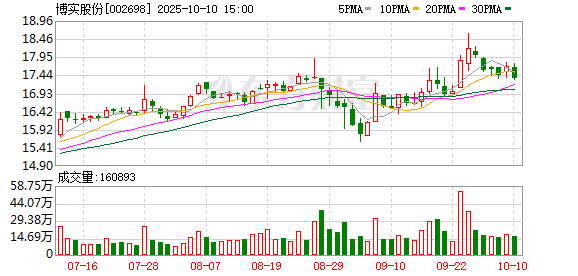
博实股份:公司未来的主要业务发展方向
Zheng Quan Ri Bao· 2025-10-10 08:16
Core Viewpoint - The company emphasizes the importance of technological innovation and industrial integration in the context of the new technological revolution and industrial transformation, positioning itself to lead in future industries [2] Group 1: Technological Development - The rapid development of digital technologies such as 5G, industrial internet, new materials, big data, cloud computing, deep learning, and artificial intelligence supports the company's transition from "automation" to "digitalization" and "intelligence" [2] - The company aims to integrate advanced manufacturing with information technology to empower the digital, intelligent, and green development of the manufacturing industry [2] Group 2: Product Innovation and Market Strategy - The company's product range has expanded from intelligent manufacturing equipment to digital workshops and smart factories, showcasing its achievements in product innovation, research and development system construction, and marketing efforts [2] - Future strategies include a market demand-oriented approach, innovation-driven technology leadership, and ensuring core technology security through self-control [2] Group 3: Operational Goals - The company plans to accelerate the research and development of intelligent manufacturing equipment and the expansion of industrial service businesses, aiming for intelligent replacement of high-risk and labor-intensive operations to achieve safer, more efficient, and greener production [2]

走向智能化绿色化国际化!今年以来我国快递市场规模持续增长
Yang Shi Xin Wen· 2025-10-09 02:27
Core Insights - The express delivery market in China has shown continuous growth in 2023, with a focus on enhancing service levels and promoting smart, green, and international development to support online consumption [1][3] Group 1: Market Growth and Performance - From January to August 2023, the total express delivery volume reached 128.2 billion pieces, marking a year-on-year increase of 17.8% [1] - The average daily express delivery volume in January and February was approximately 620 million pieces, surpassing the expected daily volume for the 2024 "Double 11" shopping festival [1] - The express delivery sector has effectively met the demands of live-streaming sales, holiday economies, and the recycling of consumer goods, thereby continuously stimulating online consumption [3] Group 2: E-commerce Integration - Over 80% of express delivery volume is derived from e-commerce, which has significantly transformed production and consumption habits, as well as the logistics landscape in China [4] - The online retail sales in China have surged from 258.6 billion yuan in 2009 to 15.5 trillion yuan in 2024, representing a 59-fold increase over 15 years [4] Group 3: Regional Performance - The express delivery business in western regions of China has shown remarkable growth, with provinces like Shaanxi and Ningxia experiencing increases exceeding 40%, while Guizhou, Xinjiang, Inner Mongolia, and Qinghai saw growth rates above 30% [8] Group 4: Cross-border E-commerce Expansion - Chinese companies are accelerating their overseas expansion in cross-border e-commerce, with nearly 300 overseas distribution centers and warehouses established this year [12][18] - The integration of cross-border e-commerce and international logistics is crucial for transforming trade methods and building a resilient international logistics supply chain [16] Group 5: Market Recognition and Demand - Major Chinese e-commerce platforms like Alibaba, AliExpress, Pinduoduo's Temu, and Shein have gained significant market share and recognition among international consumers [14] - The demand for unique and innovative products from Chinese companies has led to increased orders and price hikes, indicating a robust market response [10]

2025年中国西服行业发展历程、产业链、市场现状、竞争格局及发展趋势研判:个性化定制是行业发展方向,需求不断增加[图]
Chan Ye Xin Xi Wang· 2025-10-09 01:37
Core Insights - The production and demand for suits in China have been declining due to decreased industry prosperity, widespread market saturation, and increased competition from foreign markets. In 2015, the production of suit sets was 594 million pieces, while it is projected to be approximately 165 million pieces by 2024 [1][5]. Industry Overview - Suits, also known as western-style clothing, are characterized by features such as lapels and pockets, and are typically worn in formal settings. They can be categorized by gender, occasion, production process, and button style [2][3]. Current Industry Status - The suit industry in China is experiencing a downward trend in both production and demand. The production of suit sets is expected to decline by 8.61% year-on-year in the first half of 2025 [5][6]. Consumer Demand - There is a growing demand for personalized and comfortable suits, particularly among younger consumers, especially Generation Z. Key preferences include unique styles (53%), body-shaping designs (51%), and high-quality fabrics (48%) [6][7]. Customization Trend - Personalized customization is identified as the future direction of the suit industry, with the high-end custom suit market expected to reach 6.8 billion yuan in 2024 and potentially 8 billion yuan in 2025 [7][11]. Industry Chain - The upstream of the suit industry includes raw materials like cotton, viscose, and wool, while the midstream involves manufacturing. The downstream consists of retail and customization channels, serving consumers through both online and offline methods [8][9]. Historical Development - The suit entered China in 1911 and has evolved from a single style to a diverse range of options, reflecting cultural shifts. The industry is currently transitioning from scale expansion to category restructuring, driven by technological innovation [9][10]. Competitive Landscape - The Chinese suit industry has shifted from OEM production for foreign brands to developing independent brands with advanced technology. The market is competitive, with major players including HLA, Hongdou, Youngor, and Kute Intelligent [10][11]. Future Trends - The demand for suits is expanding beyond business professionals to the general public, with a focus on quality. Future trends include high-end, eco-friendly, and customized products, supported by advancements in smart manufacturing technology [10][11].



打破“枷锁” 看见未来
Qi Huo Ri Bao· 2025-10-09 00:46
Core Viewpoint - The Chinese glass industry, the largest in the world, is facing unprecedented structural pressures, necessitating a transformation from quantity accumulation to quality enhancement, and from being large to becoming strong [1] Group 1: Industry Challenges - The glass industry is deeply tied to the real estate sector, making it a cyclical industry with a sharp structural imbalance in demand despite high supply [1] - There is an oversupply of low-end float glass while high-end glass, such as ultra-thin electronic glass, remains heavily reliant on imports, leading to a "bottleneck" risk in advanced fields [1][2] - The glass manufacturing process is energy-intensive, with fuel costs accounting for 30% to 40% of total production costs, making companies sensitive to energy price fluctuations [2] Group 2: Environmental and Regulatory Pressures - The glass industry contributes approximately 2% of China's total industrial carbon emissions, facing increasing pressure from stricter environmental regulations and carbon trading markets [2] - The traditional high-energy, high-emission development model for construction glass is becoming unsustainable due to intense market competition and lack of pricing power [2] Group 3: Path to Transformation - High-end development is essential for the glass industry to break through, requiring a shift of resources from low-end to high-value sectors, such as electronic information display glass [3] - Green transformation is viewed as a future competitive necessity, focusing on energy revolution through methods like "coal-to-gas" conversions and exploring disruptive low-carbon technologies [3] - Smart manufacturing is crucial for enhancing competitiveness, involving the use of automation and AI to optimize production processes and reduce human error [4] Group 4: Service-oriented Approach - Transitioning from being mere suppliers of glass to providing comprehensive solutions for end-users is vital for overcoming product homogenization and enhancing value chains [4] - The future leaders in the glass industry will be those that integrate high-end materials, green technology, digital intelligence, and service solutions into their business models [4]
探寻玻璃产业系统性重构阶段的转型之路
Qi Huo Ri Bao· 2025-10-08 23:40
Core Viewpoint - The glass industry in China is undergoing a significant transformation, shifting from a focus on quantity to quality, driven by government policies aimed at optimizing structure and eliminating outdated capacity [1][2][16]. Group 1: Industry Overview - The glass industry is a crucial pillar of the national economy, with an output value of nearly 7 trillion yuan, covering over 150 sectors [1]. - The glass sector is transitioning from a phase of merely controlling production to a comprehensive optimization of capacity, energy, and products [2][3]. - The industry faces structural challenges, including overcapacity in traditional sectors and a shortage of high-end products, necessitating a shift towards high-quality development [2][6][16]. Group 2: Policy and Governance - The Ministry of Industry and Information Technology has issued a plan focusing on "capacity optimization, energy upgrading, and product upgrading" to address structural overcapacity and high-end shortages [2][4]. - Strict measures are in place to prevent the addition of new flat glass capacity, requiring new projects to include capacity replacement plans [2][4]. - The policy emphasizes the importance of market mechanisms and encourages leading companies to establish green low-carbon transformation funds [2][4]. Group 3: Market Dynamics - The glass industry is experiencing a bifurcation, with traditional float glass facing declining demand while high-end sectors like photovoltaic and electronic glass are witnessing rapid growth [6][8]. - The demand for float glass has decreased due to a downturn in the real estate market, with production dropping by 4.5% year-on-year in the first eight months of 2025 [8]. - Conversely, the photovoltaic glass sector is struggling with excess low-end capacity despite a projected increase in global installations [8][9]. Group 4: Technological and Structural Challenges - The glass industry is characterized by a lack of high-end production capacity, with only 20% of electronic glass being produced domestically, leading to reliance on imports [9][18]. - The industry faces issues with product homogeneity and insufficient investment in research and development, which hampers innovation and responsiveness to market changes [6][10]. - The transition to high-end products is essential, as traditional low-end products are facing intense price competition and declining profitability [16][18]. Group 5: Future Outlook and Strategies - The industry is expected to see a shift in capacity from traditional float glass to high-end segments, with projections indicating that the share of float glass will decrease from 65% to 55% by 2026 [12][14]. - Companies are exploring various strategies, including technological upgrades, market empowerment, and optimizing layouts to navigate the current challenges [10][11]. - The integration of advanced technologies and a focus on high-end materials are seen as critical for the industry's future competitiveness and sustainability [18][19].

资本赋能产业升级 豫企军团提质焕新
Sou Hu Cai Jing· 2025-10-08 22:15
Core Viewpoint - The capital market in Henan province has played a crucial role in enhancing the quality and efficiency of local enterprises during the "14th Five-Year Plan" period, facilitating technological upgrades and strategic industry improvements [1][2]. Group 1: Capital Market Development - The number of A-share listed companies in Henan increased from 87 at the end of 2020 to 112, with 13 companies listed on the Beijing Stock Exchange, leading the central six provinces [2]. - Since 2021, Henan enterprises have consistently raised over 100 billion yuan in bond financing annually, with the total bond issuance reaching 4,958 billion yuan, doubling since 2021 [2]. - The average cost of bond issuance has decreased to 2.66%, down 212 basis points from its peak [2]. Group 2: Industry Upgrades and Innovations - Leading companies like Muyuan Foods have leveraged capital markets for significant growth, with revenues projected to rise from 56.3 billion yuan in 2020 to 137.9 billion yuan by 2024 [3]. - Muyuan Foods has invested in R&D for smart farming and disease prevention, supported by a 300 million yuan technology innovation bond issued in May [3]. - The company has filed a total of 2,276 patents, with 138 new patents granted in 2024 alone [3]. Group 3: Financial Performance and Returns - By August 2025, the number of A-share listed companies in Henan with a market value exceeding 10 billion yuan reached 35, doubling from the previous year [6]. - Nearly 80% of listed companies reported profits in the first half of the year, with total revenues exceeding 100 billion yuan for 13 companies, and a combined net profit of 447.95 billion yuan, up 39.83% year-on-year [6]. - Companies like Shuanghui Development and Muyuan Foods have significantly increased their dividend payouts, with Shuanghui distributing 22.52 billion yuan in cash dividends in 2025 [7]. Group 4: Financial Tools and Services - The Zhengzhou Commodity Exchange has listed 27 futures and 20 options, capturing 35.03% of the national futures market share [8]. - The exchange has attracted 2.2 trillion yuan in settlement funds and has introduced seven products for foreign traders [8]. - Over 700 enterprises have received risk management services from Henan's futures companies, with agricultural insurance and futures business covering goods worth 39.14 billion yuan [10]. Group 5: Policy Support and Future Directions - The Henan government has implemented policies to support mergers and acquisitions, aiming to enhance traditional industries and foster emerging sectors [11][12]. - The "14th Five-Year Plan" has seen the issuance of various REITs to support infrastructure and promote digital and green transformations [11]. - The province aims to deepen cooperation with major stock exchanges to facilitate more companies in listing and financing [12].