
石油和化学工业

Search documents
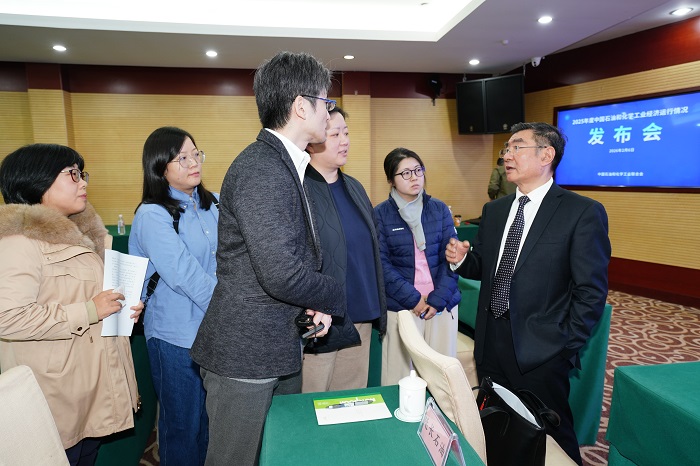
“十四五”石化行业经济运行整体稳中有进
Zhong Guo Hua Gong Bao· 2026-02-06 12:04
Core Insights - The petrochemical industry in China is expected to see significant growth in revenue and profit by 2025, with revenue projected to reach 15.67 trillion yuan, a 41.4% increase from 2020, and total profit expected to be 702.09 billion yuan, a 36.2% increase from 2020 [2][3] Group 1: Industry Performance - During the "14th Five-Year Plan" period, the petrochemical industry's average annual revenue growth rate is projected to be 4%, while the average annual profit growth rate is expected to be 6.4% [2] - The industrial added value is anticipated to grow by 6.9% compared to 2024, surpassing the national industrial added value growth rate by 1 percentage point [2] Group 2: Market Dynamics - The industry is responding to external environmental changes and domestic supply-demand imbalances, maintaining stable economic operations and contributing positively to national energy and food security [3] - Key energy and chemical production is stable, with crude oil production increasing for seven consecutive years and natural gas production increasing for nine consecutive years [3] Group 3: Future Outlook - The petrochemical industry is expected to face challenges in structural adjustment and optimization, as well as in original innovation and key technology development [3][4] - However, opportunities arise from global industrial chain restructuring and moderate global economic growth, suggesting that the industry will transition from a "bottom wandering" phase to a "bottom recovery" phase in 2026 [3] Group 4: Strategic Focus - The industry needs to balance traditional and emerging strategic industries, transition between old and new development drivers, and manage fossil and low-carbon resources effectively [4] - Emphasis will be placed on quality improvement and efficiency, with a focus on independent innovation, structural upgrades, and green low-carbon transformation [5]

化工职业教育:体系建设日臻完善
Zhong Guo Hua Gong Bao· 2025-12-30 04:03
Group 1 - The development of the petroleum and chemical industry relies heavily on talent, with vocational education playing a crucial role in talent cultivation [1] - During the 14th Five-Year Plan period, China's vocational education in the chemical sector has formed a service system that integrates education with industry needs, enhancing the capacity to support the development of the petroleum and chemical industries [1] - The number of vocational institutions offering petroleum and chemical-related programs has increased significantly, with over 50 higher vocational colleges, more than 600 higher vocational institutions, and around 700 secondary vocational schools, serving over 600,000 students [1] Group 2 - The positioning of vocational education has become clearer, with deeper integration of industry and education, supported by new policies that recognize vocational education as equally important as general education [2] - The China Chemical Education Association has completed the revision of professional standards for 47 vocational programs, aligning educational offerings with industry demands and establishing a solid foundation for talent development [2] - Over 20 industry-education integration communities and alliances have been established to enhance the quality of vocational education and better meet the needs of the local petrochemical industry [2] Group 3 - The digitalization of vocational education has made significant progress, with innovative teaching models and methods emerging, supported by the application of digital and intelligent tools [3] - Approximately 30 excellent textbooks related to petroleum and chemical vocational education have been included in the national planning for the 14th Five-Year Plan [3] - The international influence of chemical vocational education has increased, with efforts to adopt and share international best practices, leading to the establishment of over ten international standards for professional and curriculum development [3]
明年起我国调整部分商品关税,将带来哪些影响?
Sou Hu Cai Jing· 2025-12-30 00:24
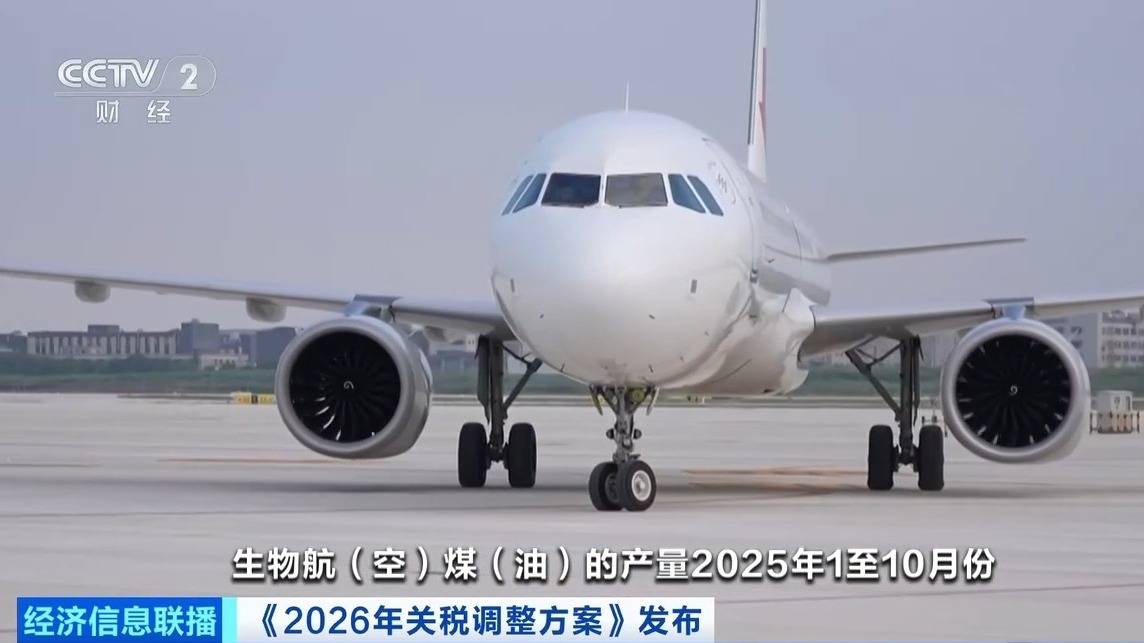
Group 1 - The State Council's Tariff Policy Adjustment Plan for 2026 will adjust import tariff rates and categories for certain goods starting January 1, 2026, impacting key components, advanced materials, energy resources, and intelligent bionic robots [1] - The adjustment in tariffs for bio-aviation kerosene shows a significant increase in production, with a fourfold growth from January to October 2025 compared to 2024, indicating the petrochemical industry's potential for green and low-carbon transformation [3] - The addition of tariff categories for intelligent bionic robots and cleaning robots will help the industry and companies accurately grasp trade data and assess overseas market trends [5] Group 2 - Targeted adjustments to tariffs on urgently needed equipment and intermediate products, including important recyclable raw materials, will support the development of relevant industries by reducing costs [7]
深化产融结合 助力产业高质量发展 三大行业协会共话期货市场服务实体经济
Qi Huo Ri Bao Wang· 2025-11-03 16:58
Core Insights - The forum discussed the role of the futures market in supporting the real economy of the non-ferrous metals industry, emphasizing its importance in ensuring supply chain security and promoting high-quality industry development [1] Non-Ferrous Metals Industry - The non-ferrous metals industry has shown stable performance in 2023, with an industrial added value growth of 7.8% year-on-year and a production of 61.25 million tons, reflecting a 3.0% increase [2] - The futures market has become a crucial part of the financial system, aiding in price discovery, risk management, and resource allocation, which stabilizes production and enhances the industry's resilience [2] - The futures product system is continuously improving, with 13 non-ferrous metal futures and corresponding options available, leading to deeper integration into business operations [2] - The industry faces new challenges such as resource security and green transformation, necessitating further development of the futures market [3] Steel Industry - The steel industry has seen a significant increase in futures market participation, with nine steel-related futures and four options currently available, maintaining the largest trading scale globally [4] - There has been a notable shift in participation, with large steel enterprises that previously avoided the futures market now engaging more deeply [4] - The steel sector is currently under pressure from weak demand and a complex external environment, prompting calls for measures to reduce participation costs and enhance market regulation [4] Petrochemical Industry - The petrochemical sector has advanced from initial exploration to deep collaboration in integrating production and finance, with significant progress in risk management and financing innovation [5] - In 2024, the petrochemical industry's revenue is projected to reach 16.28 trillion yuan, with a profit of 789.71 billion yuan, marking increases of 46.9% and 53.2% respectively since 2020 [5] - Despite progress, challenges remain in the petrochemical industry regarding balanced participation, risk management tools, and the need for further development of futures market functionalities [6] - Recommendations for the petrochemical industry include enhancing market supply, deepening integration, and improving risk management capabilities [6]
石化化工行业明确“十五五”发展方向
Zhong Guo Hua Gong Bao· 2025-09-29 02:34
Core Viewpoint - The petrochemical industry in China is focusing on high-end, green, and intelligent development during the 14th Five-Year Plan period, as emphasized by experts at a recent seminar organized by the Petrochemical Planning Institute [2][3]. Group 1: Industry Development Directions - High-end, green, and intelligent development will be the main themes for the petrochemical industry during the 14th Five-Year Plan [2]. - The Petrochemical Planning Institute is actively conducting industry research, optimizing production capacity, enhancing industrial parks, and validating projects to support policy formulation by national and local governments [2]. - There is a pressing need for the industry to transition towards fine chemicals and high value-added products due to rapid capacity growth of bulk organic raw materials outpacing demand and intensified homogeneous competition [2][3]. Group 2: Resource Management and Safety - China has a high dependence on foreign sources for key mineral resources such as potassium, phosphorus, and lithium, highlighting significant safety risks in the supply chain [3]. - The industry should enhance domestic resource exploration and green mining technologies, establish a stable and diversified overseas supply system, and strengthen strategic resource reserves and recycling mechanisms [3]. Group 3: Market Expansion Strategies - The petrochemical industry is actively seeking to expand into overseas markets, with China's petrochemical sector accounting for over 40% of the global market and having significant capacity advantages in refining [3]. - The industry should adopt a "dual-wheel drive" strategy to consolidate traditional market shares while exploring emerging markets for demand and profit growth [3]. Group 4: Technological Advancements - The development of a "smart management platform" for chemical parks is a key direction, which includes functions for investment management, emissions control, logistics management, safety risk diagnosis, and equipment maintenance [3]. - Establishing a carbon emission monitoring system for park enterprises is recommended to bridge data gaps and create a carbon budgeting mechanism [4]. - Future technologies such as steam collection and wastewater recycling will play a larger role in water conservation efforts [4].
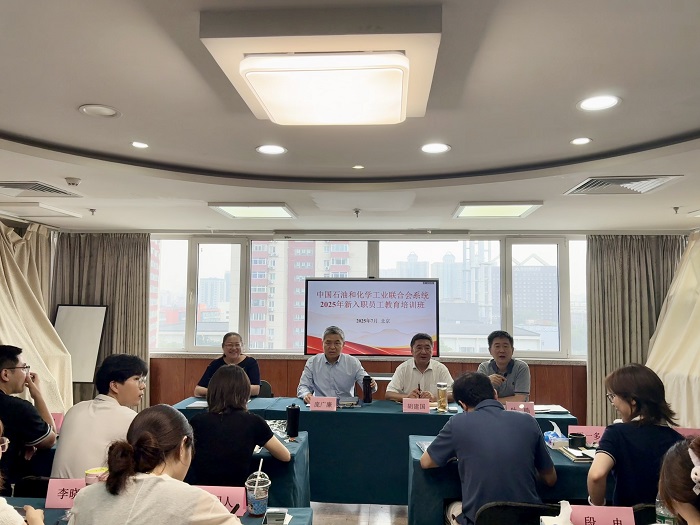
中国石化联新员工教育培训圆满结束
Zhong Guo Hua Gong Bao· 2025-07-30 01:55
Group 1 - The training program organized by the China Petroleum and Chemical Industry Federation aims to strengthen talent development and support high-quality growth in the petroleum and chemical industries [2][3] - The curriculum includes diverse topics such as party building theory, workplace etiquette, industry knowledge, and experience sharing to enhance new employees' professional skills and integration into the organization [3][4] - Key speakers emphasized the importance of the "oil spirit" and traditional values such as patriotism and dedication, urging new employees to contribute to the construction of an energy powerhouse [3][4] Group 2 - The training included practical sessions on various types of official documents and their writing standards, focusing on the principles of legality, simplicity, accuracy, and standardization [3] - Experienced employees shared insights on career growth, emphasizing that personal development is more important than immediate achievements for new entrants in the workforce [4] - Participants expressed that the training enriched their understanding, clarified their career paths, and equipped them with skills to contribute to the industry's high-quality development [4]

中国石化联举办新入职员工教育培训班
Zhong Guo Hua Gong Bao· 2025-07-28 03:04
Core Viewpoint - The training program for new employees at China Petroleum and Chemical Industry Federation (Sinopec) aims to enhance their understanding of the industry, improve personal qualities, and instill a service-oriented mindset, fostering a culture centered on innovation, respect, trust, and care [1][3]. Group 1: Training Objectives and Structure - The training program includes diverse methods such as lectures, specialized guidance, team-building exercises, and discussions to equip new employees with essential skills and knowledge about the petrochemical industry [3]. - The program focuses on teaching party-building theories, workplace etiquette, document writing, and career planning to help new employees quickly adapt to the workplace [3]. Group 2: Leadership Expectations - The leadership emphasizes the importance of proactive learning, effective training outcomes, and adherence to training discipline among new employees [3]. - New employees are encouraged to strengthen their party identity, recognize their roles, and take on responsibilities as future leaders in the industry [4]. Group 3: Cultural and Ethical Guidance - The training includes a call to embrace the spirit of Daqing and the Iron Man spirit, urging new employees to promote the excellent traditions of the petrochemical industry [5]. - Specific advice is given regarding career development, emphasizing loyalty, practical engagement, and the rejection of complacency in their professional journeys [4][5].
中国石化联召开“光荣在党50年”纪念章颁发、“两优一先”表彰大会暨学习教育专题党课
Zhong Guo Hua Gong Bao· 2025-07-01 01:08
Group 1 - The meeting celebrated the 104th anniversary of the Communist Party of China and emphasized the importance of high-quality development in the petroleum and chemical industries [1][4] - Awards were presented to outstanding party members, party workers, and advanced grassroots organizations, highlighting their dedication and commitment to the party's mission [1][2] - The meeting featured reports from national labor models and skilled craftsmen, encouraging participants to innovate and contribute to the industry's development [2] Group 2 - The party secretary delivered a lecture on the importance of implementing the Central Eight Regulations, discussing its impact and the need for continuous improvement in party conduct [3] - The meeting included a collective study of the national industry association's notice on rectifying violations related to improper dining practices, reinforcing the commitment to ethical conduct [4] - Over 300 participants attended the meeting, including party leaders, representatives from various organizations, and award-winning party members, indicating strong engagement within the industry [4]
以打造“三化”示范样板推动行业转型发展
Zhong Guo Hua Gong Bao· 2025-06-06 02:09
Core Viewpoint - The Shaanxi petrochemical industry is focusing on high-end, diversified, and low-carbon development while leveraging its unique resource advantages to accelerate key project construction. The industry is expected to account for about 20% of the province's industrial revenue in 2024, but it faces challenges in product structure and market demand [1]. Group 1: Industry Development Strategy - The Shaanxi petrochemical industry aims to enhance product value by extending the industrial chain to produce high-end fine chemicals and new materials, meeting the demands of key sectors such as aerospace and new energy vehicles [2]. - The industry is encouraged to adopt a collaborative approach among universities, research institutions, and enterprises to strengthen technological innovation capabilities, focusing on both theoretical and practical research [3]. - There is a push for the integration of fossil and renewable energy to achieve low-carbon utilization, emphasizing carbon reduction across the entire industrial chain and promoting technologies like carbon capture and utilization [4].