脑机接口

Search documents
南财快评:啥是未来产业?
2 1 Shi Ji Jing Ji Bao Dao· 2026-02-04 13:47
Core Insights - The current economic challenges are attributed to a transition period where traditional industries are declining while future industries are still maturing, leading to a gap in growth and profitability [1][2] Group 1: Future Industries - Future industries are defined by cutting-edge technologies, are in the early stages of industrialization, and have disruptive potential, focusing on six areas: future intelligence, future networks, future life, future energy, future aerospace, and future materials [1] - Each of the six areas has corresponding products, but they have not yet achieved large-scale commercialization [1] Group 2: Guangdong's Economic Strengths - Guangdong, as China's largest economy, has a robust industrial base with projected industrial revenue exceeding 19 trillion by 2025, maintaining the top GDP position for 37 consecutive years [2] - The province leads in industrial robot production (44% of national output) and accounts for a quarter of the national output in new energy vehicles and AI core industries, providing fertile ground for future industries [2] - Guangdong has strong innovation capabilities, with a record of nine consecutive years of regional innovation leadership, and a high efficiency in technology conversion across the entire supply chain [2] Group 3: Supportive Policies and Funding - The province has established a 150 billion yuan "patient capital" guiding fund, with 100 billion yuan directed towards future industries, emphasizing long-term investment over short-term returns [2] - Strategic initiatives include advancing technologies like 6G and embodied intelligence, creating platforms, and promoting scenarios to accelerate the transition of future industries from laboratories to production lines [2] Group 4: Future Growth Potential - The next growth cycle will favor those who are willing to invest in future industries and embrace transformation, indicating a significant opportunity for businesses and individuals to find their place in this industrial change [3]
又一A股公司,被上交所开“罚单”!涉强蹭“商业航天”“脑机接口”等热点
证券时报· 2026-02-04 13:38
Core Viewpoint - The article discusses the regulatory warning issued by the Shanghai Stock Exchange to Jiangxi Woge Optoelectronics Group Co., Ltd. for inaccurate and incomplete information disclosure, which could mislead investors [1][6]. Group 1: Regulatory Warning - On February 4, the Shanghai Stock Exchange announced a regulatory warning against Woge Optoelectronics and its then-secretary of the board due to the company's failure to provide accurate and complete information, potentially misleading investors [1][6]. - The warning was prompted by Woge's responses on the Shanghai Stock Exchange's interactive platform regarding its CPI aerospace applications and microfluidic biochip developments, which were found to be misleading [4][6]. Group 2: Company Responses and Clarifications - Following a surge in stock price on February 3, Woge clarified that its CPI products had not yet achieved mass production and that the mentioned in-orbit application only involved a single satellite's flexible solar wing, with related orders contributing less than 0.1% to revenue [5][6]. - The company also stated that it primarily provides glass substrates or basic structural components for downstream clients in the biochip sector, without involvement in chip design or manufacturing, and that there was no confirmed timeline for entering formal mass production [5][6]. Group 3: Market Impact and Compliance - The Shanghai Stock Exchange highlighted that "commercial aerospace" and "brain-computer interface" are currently hot market topics that could significantly impact the company's stock price and investor decisions [6]. - The exchange emphasized the need for Woge to provide accurate, objective, and cautious information while adequately disclosing uncertainties to avoid misleading investors [6].



三诺生物:暂未涉及神经介入或脑机接口领域
Ge Long Hui· 2026-02-04 13:34
Group 1 - The core viewpoint of the article is that Sanofi Bio (300298.SZ) is currently focused on developing its self-researched biosensing technology primarily for monitoring and managing diabetes and related chronic diseases [1] - The company has not yet ventured into the fields of neurointervention or brain-machine interfaces [1] - There are no ongoing preclinical studies specifically targeting neurochemical monitoring [1]

三诺生物(300298.SZ):暂未涉及神经介入或脑机接口领域
Ge Long Hui· 2026-02-04 13:27
Core Viewpoint - Sanofi Bio (300298.SZ) is currently focused on self-developed biosensing technology primarily for monitoring and managing diabetes and related chronic diseases, with no involvement in neurointervention or brain-computer interface fields, nor has it conducted preclinical research specifically for neurobiochemical monitoring [1] Group 1 - The company is engaged in the development of biosensing technology [1] - The primary application of this technology is in diabetes and related chronic disease management [1] - There is no current involvement in neurointervention or brain-computer interface sectors [1]
个股异动 | 昇辉科技20cm涨停 氢能领域布局多个项目实现落地
Shang Hai Zheng Quan Bao· 2026-02-04 12:41
Group 1 - The hydrogen energy sector is showing strong performance, with Shenghui Technology's stock reaching 9.98 yuan per share, an increase of 19.95% [1] - The Ministry of Industry and Information Technology emphasized the need to enhance technological supply for future industries, focusing on breakthroughs in fields such as hydrogen energy [1] - According to CITIC Securities, during the 14th Five-Year Plan period, hydrogen energy is expected to gradually enter the industrialization stage, with the market for green hydrogen and hydrogen-based green fuels anticipated to expand [1] Group 2 - Shenghui Technology is advancing its "smart + dual carbon" strategic transformation, focusing on new power systems including hydrogen energy as a second growth curve [2] - The subsidiary Sheng Hydrogen has achieved market delivery of hydrogen production equipment, while another subsidiary has won a bid for a smart comprehensive energy project [2] - The company is involved in supplying liquid hydrogen fuel for the "Long March 8" launch and has successfully produced helium cooling machines for nuclear fusion applications [2]

603773,被上交所监管警示!涉及“商业航天”“脑机接口”
Mei Ri Jing Ji Xin Wen· 2026-02-04 12:39
Core Viewpoint - The company, Woge Optoelectronics, faces regulatory warnings from the Shanghai Stock Exchange regarding inaccurate and incomplete information related to its commercial aerospace and brain-computer interface sectors, which may mislead investors. Group 1: Stock Performance and Market Capitalization - As of the market close, Woge Optoelectronics' stock price increased by 0.67% to 40.38 yuan, with a market capitalization of 9.072 billion yuan [5]. Group 2: Business Operations and Financial Performance - Woge Optoelectronics announced that its aerospace CPI products have not yet achieved mass production, with current applications limited to a single satellite's flexible solar wing, resulting in a small order value. The orders signed with clients are in the product testing phase, accounting for less than 0.1% of the company's projected revenue for 2025, thus not significantly impacting operational performance [5]. - The company's microfluidic biochip business primarily involves providing glass substrates or structural components for downstream clients, without engaging in chip design or manufacturing. The projected sales revenue from microfluidic products in the biomedical field for 2025 is expected to be $10,790, which represents a minimal proportion of overall revenue [5]. - Woge Optoelectronics forecasts a net profit attributable to shareholders of between -100 million yuan and -140 million yuan for 2025, compared to a net profit of -122.36 million yuan in the same period last year [6]. - The company plans to launch its first domestic 8th generation OLED glass processing production line in the first half of 2026, with ongoing applications in Mini/MicroLED displays, 5G-A/6G communications, optical modules, advanced semiconductor packaging, and biochips. The company is currently in various stages of product development and mass production [6]. - Woge Optoelectronics aims to leverage its integrated capabilities and first-mover advantage in flexible film materials for satellite solar wings, actively promoting product testing and expanding its customer base. The company expects gradual improvement in its operations as it secures more orders [6].
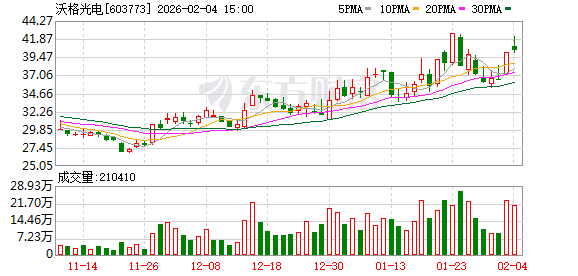
上交所对沃格光电及有关责任人予以监管警示,“商业航天”“脑机接口”相关信息发布不准确、不完整,风险提示不充分
Mei Ri Jing Ji Xin Wen· 2026-02-04 11:11
Group 1 - The Shanghai Stock Exchange issued a regulatory warning to Woge Optoelectronics and related responsible parties due to inaccurate and incomplete information regarding "commercial aerospace" and "brain-computer interface," which may mislead investor decisions [2]
脑机接口“走出科幻”,高校如何抢占人才培养制高点?
Xin Jing Bao· 2026-02-04 09:40
Core Insights - The brain-computer interface (BCI) technology is advancing rapidly, with significant developments in both invasive and non-invasive applications, leading to a projected market growth in China from 3.2 billion yuan in 2024 to 5.58 billion yuan by 2027, reflecting an annual growth rate of 20% [3][4][8] - Major players in the industry, such as Neuralink, are moving towards large-scale production of implantable devices, while domestic companies like Qiangna Technology are achieving record financing, indicating a robust investment landscape [2][3] - Chinese universities are proactively establishing programs and research centers to cultivate talent in the BCI field, addressing the significant skills gap and aiming to create a comprehensive talent pipeline [4][5][10] Industry Developments - The BCI sector is expected to see commercialization and mass production by 2026, marking a pivotal moment for the industry [2][3] - The Chinese government has recognized BCI as a future industry, with initiatives aimed at fostering innovation and establishing a robust technological and industrial framework by 2027 [8][9] - The establishment of specialized programs in universities, such as Tianjin University's BCI undergraduate program, reflects a strategic move to integrate interdisciplinary knowledge and skills necessary for BCI development [4][10] Talent Development - There is a critical shortage of skilled professionals in the BCI sector, with estimates suggesting a demand for tens of thousands of researchers and application specialists in the coming years [9][10] - Universities are adopting innovative teaching methods, such as project-based learning, to enhance practical skills and interdisciplinary knowledge among students [11][12] - The selection process for BCI programs is evolving, with a focus on assessing mathematical and physical reasoning abilities, as well as students' genuine interest in the field [15][16] Challenges and Opportunities - The BCI industry faces challenges related to the lack of a complete talent chain and technological ecosystem, which hinders the ability to produce high-quality, system-level BCI products [7][9] - The integration of various disciplines, including neuroscience, computer science, and biomedical engineering, is essential for overcoming existing barriers and fostering innovation in BCI technology [10][17] - Continuous collaboration between academia and industry is crucial for addressing the practical challenges in BCI development and ensuring that educational programs align with industry needs [14][17]
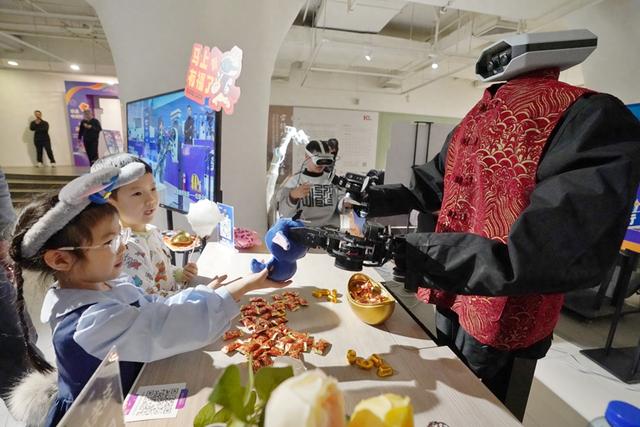
中关村“融科新春喜乐汇”沉浸式科技市集启幕
Xin Lang Cai Jing· 2026-02-04 08:13
Core Insights - The event "Lohas Zhongguancun Science and Art Carnival" was launched on February 4, coinciding with the beginning of spring, emphasizing the integration of cultural and technological experiences for the New Year [1][3] - The event features four main sections: AI Innovation Workshop, Neighborhood Joy Gathering, Smart Play Zone, and New Village Goods Collection, catering to diverse age groups and consumer needs [3] Group 1 - The AI Innovation Workshop showcases over 20 high-quality tech companies, providing an immersive experience in cutting-edge technology [3] - Interactive exhibits include a human-machine hybrid robot, brain-machine interface experiences, and adaptive massage robots, attracting significant public interest [3][5] - Tsinghua University volunteers are providing professional product introductions and science popularization on advanced technologies like laser security, smart robots, and 3D printing [5] Group 2 - Engaging activities such as AI tennis, AI piano playing, VR moon exploration, and robot calligraphy are designed to attract families and young people [5] - The event includes hands-on activities like New Year horse-making, allowing citizens to participate for free and enhancing their festive experience [7] - The event will run until February 7, with special performances scheduled on February 4 and February 7 from 18:30 to 20:00 [7]

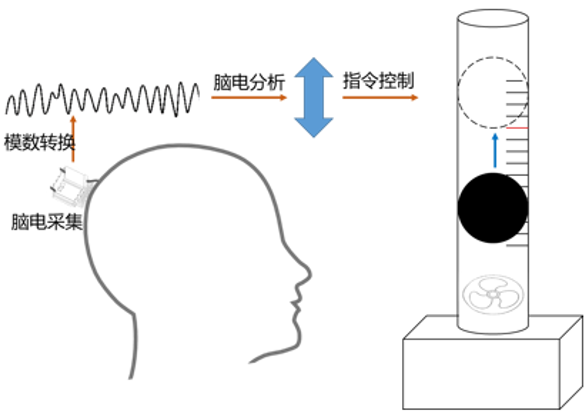
OpenAI推出脑机接口公司Merge Labs,利用超声波读取大脑思维,对决马斯克的Neuralink
生物世界· 2026-02-04 08:00
Core Viewpoint - Merge Labs is pioneering a non-invasive brain-computer interface (BCI) technology using ultrasound to read brain activity and treat mental disorders, contrasting with invasive methods like those used by Neuralink [2][6]. Group 1: Company Overview - Merge Labs, supported by OpenAI, completed a $252 million seed funding round in January 2026, with investors including OpenAI, Bain Capital, and Gabe Newell [2]. - The company aims to develop a BCI that interacts with a significantly larger number of neurons with less invasiveness compared to existing technologies [6]. Group 2: Technology Comparison - The BCI landscape is divided into two camps: Neuralink's invasive electrode implantation and Merge Labs' non-invasive ultrasound technology [6]. - Merge Labs' ultrasound technology can image and modulate large brain areas by sending high-frequency sound waves, avoiding the risks associated with surgical procedures [6]. Group 3: Ultrasound Technology Mechanism - The ultrasound technology works by emitting high-frequency sound pulses and measuring the echoes that return from different tissue types, allowing for the detection of blood flow changes related to neuronal activity [8]. - The technology can measure blood flow changes in brain regions as small as 100 micrometers, enabling the monitoring of small groups of neurons [8]. Group 4: Genetic Engineering Integration - Merge Labs is exploring the combination of ultrasound with sonogenetics, a gene engineering technique that makes specific brain cells responsive to sound waves, enhancing signal detection and control [10]. - This innovative approach aims to improve the precision of signal reading while significantly reducing invasiveness [10]. Group 5: Scientific Basis and Challenges - Despite its potential, the ultrasound BCI technology is still in its early stages and faces significant scientific and technical challenges, including high costs and hardware miniaturization [12]. - Initial focus will be on medical applications to assist patients with neural damage or diseases, with long-term goals of enhancing human capabilities through safe and convenient technology [12]. Group 6: Future of Human-Machine Interaction - OpenAI's CEO has expressed concerns about invasive methods and advocates for safer alternatives that allow users to interact with AI tools through thought [14]. - Merge Labs aims to blur the lines between humans and AI, representing a new frontier in human-machine integration [14].