卫星互联网

Search documents
2026年“开门红”!局已经布好,静待收割,还有哪些投资机会
Sou Hu Cai Jing· 2025-12-31 08:47
Group 1 - Global equity vulnerability has increased recently, with major global stock indices showing a synchronized upward trend, particularly in East Asian markets [1] - The U.S. stock market experienced some adjustments due to declining interest rate expectations and Nvidia's earnings report, indicating a notable market correction [1] - The main sectors with net inflows include military, domestic software, media, general aviation, and non-ferrous metals [1] Group 2 - Long-term capital inflows help reduce market volatility and enhance resilience against shocks, with insurance capital acting as a stabilizing force [3] - The targeted reduction of risk factors in the Sci-Tech Innovation Board provides institutional incentives for insurance capital to invest in tech innovation companies, aligning with their financing needs [3] - The insurance sector is expected to maintain steady performance by 2026, with a focus on optimizing asset allocation and improving operational efficiency [3] Group 3 - The insurance sector is projected to see double-digit growth in new single premium and NBV due to the expiration of a large number of fixed deposits and the appeal of dividend insurance for low-risk investors [5] - The securities industry is anticipated to enter a "policy easing period," with increased leverage limits supporting ROE improvement [5] - The market is experiencing a strong short-term trend with noticeable inflows of incremental capital, indicating a positive market sentiment [6] Group 4 - The Shanghai Composite Index showed a pattern of decline followed by recovery in December, suggesting that major funds are reluctant to break below key support levels [8] - The technology sector in A-shares is adjusting due to the influence of U.S. AI leaders and year-end institutional fund performance locking, leading to increased market volatility [8] - The rapid rotation of market sectors indicates a potential for continued phase-balanced market styles [8]


普天科技:截至2025年9月底公司应收账款净额37.55亿元
Zheng Quan Ri Bao· 2025-12-31 08:39
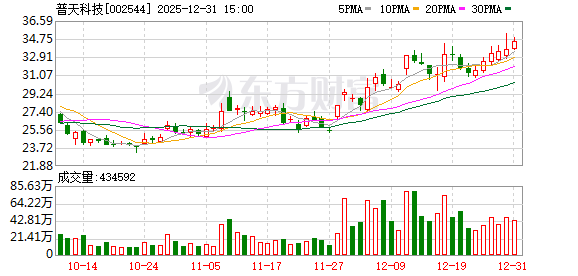
Core Viewpoint - The company, Putian Technology, has reported a decrease in net accounts receivable and has entered into strategic partnerships to enhance its capabilities in satellite internet technology [2] Financial Performance - As of September 30, 2025, the company's net accounts receivable stands at 3.755 billion yuan, a decrease of 488 million yuan year-on-year, representing a decline of 11.49% [2] Strategic Partnerships - The company has signed a strategic cooperation agreement with Helistar Light (Shenzhen) Co., Ltd. and Beijing Yixin Technology Co., Ltd. at the Zhijiang Laboratory [2] - A joint enterprise research and development center has been established to participate in the national satellite internet strategy [2] Research and Development Focus - The R&D center will focus on the "communication + chip + computing power" collaborative system, emphasizing key technology development and productization in the field of aerospace intelligent computing [2] - The aim is to promote the commercialization of related technological achievements [2]

久之洋(300516.SZ):截至目前,公司尚未涉足6G相关的技术和业务领域
Ge Long Hui A P P· 2025-12-31 08:02
Core Viewpoint - The company is currently focused on core business areas including infrared thermal imaging, laser sensors, optical components and film coating, and star trackers, while actively pursuing opportunities in high-end equipment manufacturing, low-altitude economy, and satellite internet [1] Group 1 - The company has not yet ventured into 6G-related technologies and business areas [1]

股市三点钟丨11连阳!沪指收涨0.09%,两市成交额2.05万亿元
Bei Jing Shang Bao· 2025-12-31 07:49
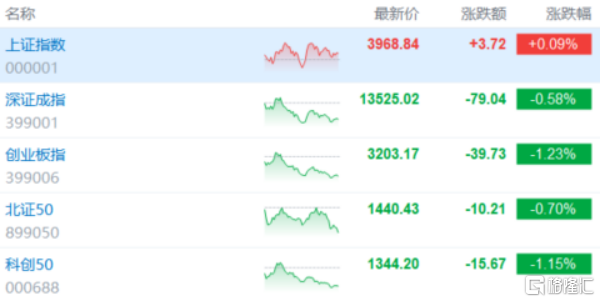
Market Performance - The A-share market opened higher on December 31, with the Shanghai Composite Index closing up by 0.09% at 3968.84 points, while the Shenzhen Component Index and the ChiNext Index fell by 0.58% and 1.23%, closing at 13525.02 points and 3203.17 points respectively [1] Sector Performance - Sectors such as satellite internet, Kuaishou concept, and Kimi concept saw significant gains, while sectors like blade batteries, SPD concept, and noise control experienced notable declines [1] Stock Performance - A total of 2474 stocks in the A-share market rose, with 63 stocks hitting the daily limit up, while 2776 stocks declined, including 12 stocks hitting the daily limit down [1] - The newly listed stock on the Beijing Stock Exchange, Hengdongguang, surged by 878.2% on its first trading day, closing at 309 yuan per share [1] Trading Volume - The trading volume for the Shanghai Stock Exchange reached approximately 829.51 billion yuan, while the Shenzhen Stock Exchange recorded about 1215.72 billion yuan, leading to a combined trading volume of around 2.05 trillion yuan [1]
粤开市场日报-20251231
Yuekai Securities· 2025-12-31 07:45
Market Overview - The A-share market showed mixed performance today, with the Shanghai Composite Index slightly up by 0.09% closing at 3968.84 points, while the Shenzhen Component Index fell by 0.58% to 13525.02 points. The ChiNext Index decreased by 1.23% to 3203.17 points, and the STAR 50 Index dropped by 1.15% to 1344.20 points. Overall, 2470 stocks rose while 2768 stocks fell, with a total trading volume of 204.51 billion yuan, down by 9.72 billion yuan from the previous trading day [1]. Industry Performance - Among the Shenwan first-level industries, sectors such as defense and military, media, real estate, non-ferrous metals, and social services led the gains, with increases of 2.13%, 1.54%, 1.13%, 1.09%, and 1.04% respectively. Conversely, industries like telecommunications, agriculture, forestry, animal husbandry and fishery, electronics, comprehensive, and power equipment experienced declines, with drops of 1.35%, 1.10%, 1.02%, 0.93%, and 0.90% respectively [1]. Concept Sector Performance - The top-performing concept sectors today included satellite navigation, Xiaohongshu platform, commercial aerospace, Pinduoduo partners, satellite internet, Kimi, large aircraft, selected air transport, top ten military industrial groups, Douyin Doubao, virtual humans, military information technology, internet celebrity economy, 6G, and WEB3.0. In contrast, sectors such as cross-strait integration, GPU, high send and transfer, consumer electronics OEM, optical modules (CPO), and copper-clad laminates saw corrections [2].
A股收评:创业板指跌1.23%!商业医药走低,卫星互联网爆发
Ge Long Hui· 2025-12-31 07:41
Market Overview - The A-share market showed mixed performance on December 31, with the Shanghai Composite Index rising by 0.09% to close at 3968 points, while the Shenzhen Component Index fell by 0.58% and the ChiNext Index dropped by 1.23% [1] - The total market turnover was 2.07 trillion yuan, a decrease of 956 billion yuan compared to the previous trading day, with over 2700 stocks declining [1] Sector Performance - The satellite internet sector experienced a surge, with stocks like China Satellite, China Satcom, and Aerospace Electronics hitting the daily limit [2][4] - The commercial aerospace sector remained strong, with stocks such as Jiuzhiyang and Aerospace Morning Glory also reaching the daily limit [2] - AI application stocks saw significant gains, with Kimi concept, AI corpus, and Zhipu AI leading the rise [2] - Conversely, the pharmaceutical commercial sector declined, with Luyuan Pharmaceutical hitting the daily limit down [2] - The blade battery sector also fell, led by Penghui Energy, while the liquid cooling concept showed weak performance [2] Notable Stocks - In the satellite internet sector, notable performers included: - XW Communication: +16.98% [5] - Aerospace Universe: +14.55% [5] - China Satellite: +10.00% [5] - In the AI sector, stocks like Nanjing Xingsheng and Xiechuang Data saw gains of over 7% [7] - The education sector saw a rise, with Kevin Education hitting the daily limit and Zhonggong Education increasing by over 4% [9] Policy and Regulatory News - The Ministry of Education plans to introduce policies next year to promote the integration of artificial intelligence in education [8] - On December 30, the National Development and Reform Commission and the Ministry of Finance announced a policy to support the replacement of urban public transport with new energy vehicles [10] - The Chinese government reiterated its stance on semiconductor supply chain issues, urging the Netherlands to correct its administrative interventions affecting ASML [12] Future Outlook - China Galaxy Securities indicated that January will be a critical period for data validation in the A-share market, with potential increased volatility influenced by policy implementation, macro data, corporate earnings, and liquidity changes [19]




A股收评:2025年收官日三大指数涨跌不一,创业板指跌逾1%全年累涨近50%,卫星互联网、商业航天板块走强
Ge Long Hui· 2025-12-31 07:13
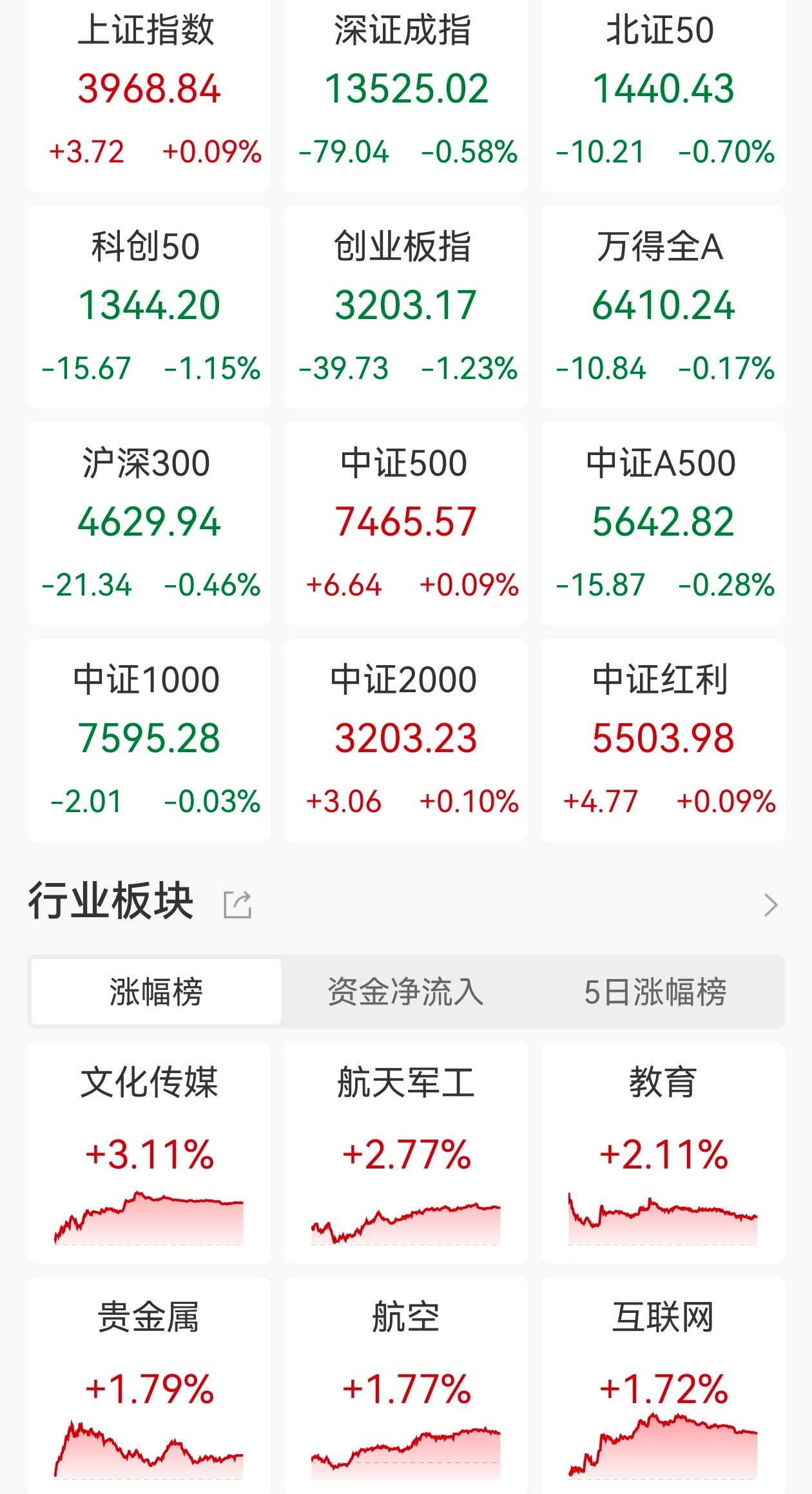
Market Overview - On the last trading day of 2025, A-shares showed mixed performance with the Shanghai Composite Index rising by 0.09% to close at 3968 points, while the Shenzhen Component Index fell by 0.58% and the ChiNext Index dropped by 1.23% [1] - For the year 2025, the Shanghai Composite Index, Shenzhen Component Index, and ChiNext Index recorded annual gains of 18.41%, 29.87%, and 49.57% respectively [1] - The total market turnover was 2.07 trillion yuan, a decrease of 956 billion yuan compared to the previous trading day, with over 2700 stocks declining [1] Sector Performance - The satellite internet sector experienced a surge, with stocks like China Satellite, China Satcom, and Aerospace Electronics hitting the daily limit [1] - The commercial aerospace sector remained strong, with stocks such as Jiuzhiyang and Aerospace Morning Glory also reaching the daily limit [1] - AI application sectors saw collective gains, with Kimi concept, AI corpus, Zhipu AI, and Sora concept stocks leading the rise, including stocks like Zhangyue Technology and BlueFocus hitting the daily limit [1] - Other notable sectors with significant gains included the fast hand concept, aviation airports, large aircraft, and 6G concepts [1] - Conversely, the pharmaceutical commercial sector declined, with Luyan Pharmaceutical hitting the daily limit down [1] - The blade battery sector also fell, led by Penghui Energy, while the liquid cooling concept showed weak performance with Chuanrun shares hitting the daily limit down [1] - Sectors such as precious metals, noise control, and shipbuilding experienced notable declines [1] Top Gainers and Fund Flow - The cultural media sector topped the gainers list with a rise of 3.11%, followed by aerospace and military industries at 2.77%, and education at 2.119% [2] - Precious metals and aviation sectors also saw positive fund inflows, with increases of 1.79% and 1.77% respectively [2] - The internet sector recorded a 5-day increase of 1.72% [2]
逐梦星河,强势反包!航空航天ETF天弘(159241)跟踪指数大涨超2.5%带动上证指数翻红
Xin Lang Cai Jing· 2025-12-31 05:59
Core Insights - The aerospace ETF Tianhong (159241) has shown strong performance, with a significant increase in trading volume and a 2.58% rise in the CN5082 aerospace index, indicating robust market activity in the aerospace sector [1] - The Chinese aerospace industry has achieved remarkable milestones in 2025, with a record number of launches and advancements in both manned spaceflight and commercial space endeavors [2][3] Group 1: ETF Performance - The aerospace ETF Tianhong (159241) experienced a trading volume of 89.58 million yuan, with a turnover rate of 14.41%, reflecting active market engagement [1] - Over the past two weeks, the ETF's scale increased by 19.23 million yuan, demonstrating significant growth [1] Group 2: Key Launch Events - The China Aerospace Science and Technology Corporation completed a record 73 space launches in 2025, including the successful launch of the Long March 7A rocket, which set a new high for payload capacity [2][3] - A total of 87 commercial space launches were conducted, with private companies executing 23 missions, marking a significant expansion in the commercial space sector [3] Group 3: Manned Spaceflight Achievements - Four manned space missions were completed, with the Shenzhou 20 crew spending 204 days in orbit, setting a new record for Chinese astronauts [4] Group 4: Technological Advancements - The successful zero-height escape test of the Dream Boat manned spacecraft and the completion of lunar landing verification tests are paving the way for manned lunar missions by 2030 [6] - The development of reusable rocket technology has progressed, with multiple successful recovery tests contributing to cost reduction for space missions [3] Group 5: Global Aerospace Developments - SpaceX achieved a record 170 launches in 2025, with significant advancements in its Starship and Starlink projects, reshaping the satellite internet landscape [7] - SpaceX is preparing for an IPO, aiming to raise over $30 billion, with a potential valuation of up to $1.5 trillion, indicating strong investor interest in the commercial space sector [7] Group 6: Industry Outlook - The commercial aerospace sector is rapidly evolving, with government support and regulatory frameworks being established to foster high-quality development [8]
12月31日,关注创业板人工智能ETF国泰(159388)投资机会,光通信与卫星互联网驱动通信行业前景
Mei Ri Jing Ji Xin Wen· 2025-12-31 05:52
风险提示:提及个股仅用于行业事件分析,不构成任何个股推荐或投资建议。指数等短期涨跌仅供 参考,不代表其未来表现,亦不构成对基金业绩的承诺或保证。观点可能随市场环境变化而调整,不构 成投资建议或承诺。提及基金风险收益特征各不相同,敬请投资者仔细阅读基金法律文件,充分了解产 品要素、风险等级及收益分配原则,选择与自身风险承受能力匹配的产品,谨慎投资。 每日经济新闻 华龙证券指出,通信行业2025年前三季度业绩稳中有升,盈利能力小幅提升,光通信子行业表现亮 眼,营业收入同比增长34.94%,归母净利润同比增长128.35%。光模块需求持续高增,受益于AI基础设 施建设对以太网交换机和高速光模块的强劲需求,以及光互连技术在AI scale-up网络中的应用推广,市 场规模有望持续快速增长。中国厂商在全球光模块领域占据主导地位,2024年TOP10榜单中占7席,高 速光模块需求提升有望带动行业盈利能力提升。卫星互联网加速发展,2025年政府工作报告强调商业航 天技术突破与规模化应用,中国低轨卫星互联网建设加速推进,2026年国内低轨通信卫星发射量有望爆 发式增长。预计到2030年低轨卫星市场规模有望突破千亿甚至1500 ...
【掘金行业龙头】卫星互联网+低空经济,公司推进Ka/Ku频段有源相控阵天线研发,创新开发出小型化超宽带双频段双极化T/R组件
财联社· 2025-12-31 05:43
Group 1 - The article emphasizes the importance of timely and professional information interpretation in investment decision-making, focusing on the investment value of significant events and policy analysis [1] - The company is advancing the development of active phased array antennas in the Ka/Ku frequency bands, which is crucial for satellite internet and low-altitude economy [1] - Breakthroughs have been made in the field of RF microwave modules, including the innovative development of miniaturized ultra-wideband dual-band dual-polarization T/R components [1] Group 2 - The company has achieved mass production and delivery of GNSS dual-frequency multi-mode active technology across multiple projects, indicating strong operational capabilities [1] - In the low-altitude sector, the company has successfully begun mass supply to leading industry clients, showcasing its competitive position in the market [1]