B星

Search documents
又爆了!军工ETF华宝(512810)午后上探3.3%连刷历史新高,商业航天概念7股涨停封板!
Xin Lang Cai Jing· 2026-01-06 06:40
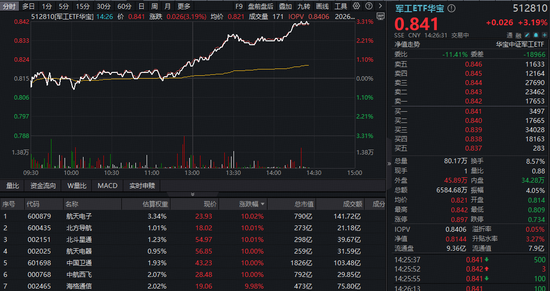
Core Viewpoint - The commercial aerospace sector is experiencing a significant surge, with related stocks and ETFs seeing substantial gains due to favorable policies and industry developments [1][6]. Group 1: Market Performance - The military ETF Huabao (512810) rose sharply by 3.31%, reaching a new historical high [1][6]. - A total of 24 commercial aerospace concept stocks surged, with seven stocks hitting the daily limit, including Aerospace Electronics, North Navigation, Beidou Star, Aerospace Electric, China Satellite, AVIC Xi'an Aircraft, and Haige Communication [1][6]. Group 2: Catalysts - Multiple favorable factors are converging in the commercial aerospace sector, including policy, industry, and capital support [3][8]. - The establishment of a dedicated Commercial Aerospace Department by the National Space Administration aims to streamline regulation and enhance industry standards [3][8]. - The implementation of the "Satellite Navigation Positioning Benchmark Station Management Measures" starting January 1, 2026, will solidify the commercialization foundation for Beidou services [3][8]. - Successful launches of the 29th satellite A and B for new technology validation and the acceptance of the IPO application for Blue Arrow Aerospace's Zhuque-3 rocket are notable advancements [3][8]. Group 3: Corporate Developments - China Aerospace Science and Technology Corporation's commercial rocket subsidiary increased its registered capital from 1 billion to 1.396 billion yuan, with a 77.6% increase in investment from the parent company [9]. - The Huabao military ETF covers various themes, including commercial aerospace, controllable nuclear fusion, low-altitude economy, large aircraft, deep-sea technology, and military AI, serving as an efficient tool for investing in core military assets [9]. Group 4: ETF Holdings - The Huabao military ETF (512810) has a total weight of 28.64% in commercial aerospace concept stocks, with significant holdings in companies like AVIC Optoelectronics (2.73%), China Aerospace (2.23%), and AVIC Xi'an Aircraft (2.18%) [4][10].

商业航天热度持续高涨,卫星ETF(563230)盘中涨幅达6.23%
Mei Ri Jing Ji Xin Wen· 2026-01-06 06:05
Group 1 - The satellite sector is experiencing significant gains, with the Satellite ETF (563230) rising by 6.23%, the military industry leader ETF (512710) up by 3.87%, and the aviation ETF (159392) increasing by 2.52% [1] - Key stocks within the Satellite ETF, such as Beidou Navigation, Aerospace Electric, and Beidou Star Communication, have reached their daily price limits [1] - Recent favorable developments in the commercial space sector include increased policy support, improved regulatory frameworks, and enhanced capital inflows, with the State-owned Assets Supervision and Administration Commission emphasizing aerospace as a key area for development [1] Group 2 - The Satellite ETF (563230) closely tracks the satellite industry index, covering various sub-sectors including integrated circuit design, communication systems, defense equipment, aerospace, general software development, and electronic components, ensuring high investment efficiency [2]
军工本周观点:把握火箭核心主线,探寻卫星弹性空间-20260104
Huafu Securities· 2026-01-04 15:35
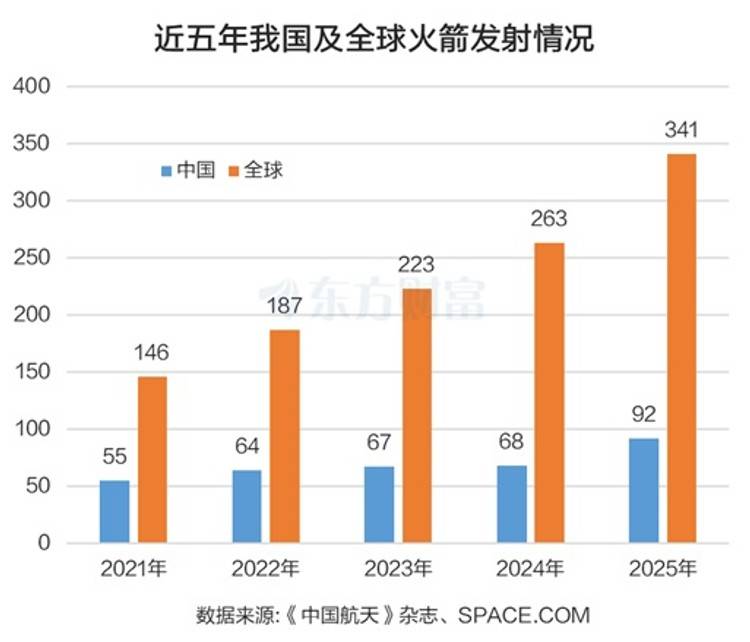
Investment Rating - The report maintains a "stronger than the market" rating for the defense and military industry [8] Core Viewpoints - The core investment logic for commercial aerospace is to grasp the core line of rockets and explore the elastic space of satellites [45][46] - The aerospace sector is expected to perform well, driven by the strong performance of its constituent stocks [19][25] Summary by Sections Market Review - The Shenwan Military Industry Index (801740) rose by 3.05% from December 29 to December 31, while the CSI 300 Index fell by 0.59%, resulting in an excess return of 3.64 percentage points [19][20] - Since 2025, the Shenwan Military Industry Index has increased by 34.3%, outperforming the CSI 300 Index, which rose by 17.66% [20] - The aerospace sector showed strong performance, primarily due to the good performance of Aerospace Electronics [25] Rocket Sector - Both capacity and computing power are strategic high points that major countries are competing for, with China's 14th Five-Year Plan emphasizing the importance of becoming a "space power" [46] - In 2025, China is expected to conduct 92 rocket launches, while SpaceX is projected to conduct 167 launches [46] - The capital closed-loop logic indicates that domestic private rocket companies are expected to go public, enhancing their manufacturing capabilities and supporting a robust global supply chain [47] Satellite Sector - Large-scale rocket launches will accelerate the deployment of a significant number of networked satellites, with plans to launch over 38,000 satellites by major Chinese constellations [48] - The competition for space computing power between China and the U.S. is expected to expand the overall commercial aerospace market [48][50] - The trend of integrating "communication and computing" will lead to larger satellite sizes to support greater data transmission [50] Financial and Valuation Aspects - As of December 31, the TTM price-to-earnings ratio for the Shenwan Military Industry Index is 75.92, indicating a high configuration significance given the strong recovery expectations for the industry in 2026 [51] - Passive funds experienced a net outflow of 2.592 billion yuan during the week, but the expectation of strong demand recovery in the military industry is likely to lead to a return of net inflows [31][36] Recommended Companies - Rocket Sector: Western Materials, Feiwo Technology, Aerospace Power, Aerospace Intelligence [52] - Satellite Sector: Aerospace Electronics, Lens Technology, West Measurement Testing, Guangwei Composite, Tongyu Communication, Zhenyou Technology, Aerospace Hanyu [52] - Fusion Energy: Guoguang Electric, Lianchuang Optoelectronics, Hezhuan Intelligent, Wangzi New Materials, Xuguang Electronics, Aike Saibo, Yongding Co., Ltd., Hangyang Co., Ltd., Jingye Intelligent, Weiteng Electric, New Wind Light, Parker New Materials, Hongwei Technology [52]
卫星发射利好来了,但这些股票早涨了?
Sou Hu Cai Jing· 2026-01-03 04:22
Group 1 - The core viewpoint of the news highlights the significant performance of the satellite internet sector in China, with a notable increase in stock prices for companies like China Satellite and Aerospace Defense, following the successful launch of the Practice-29 satellite [1] - In 2025, China conducted 92 rocket launches, an increase of 24 from 2024, with the Aerospace Science and Technology Corporation achieving a record 73 launches [1] - The satellite internet sector saw a year-to-date increase of 67.52%, significantly outperforming the Shanghai and Shenzhen 300 index, which rose by 17.68%, with 17 stocks doubling in value [1] Group 2 - There is a pattern observed where large funds often act on information six months prior to public announcements, as seen with the Yaxia Hydropower Station project, which had its stocks rising well before the official announcement [3] - The trading behavior of stocks in the Yaxia concept shows that institutional investors were active in the first and second tier trading zones, indicating their early positioning before the news broke [5] - Stocks that remain in the second tier, known as the "institutional lock-up zone," may appear to decline but are actually being held by institutions for future gains, contrasting with stocks that fall into the fourth tier where institutional participation is minimal [8] Group 3 - The recent gains in stocks like China Satellite and Aerospace Defense can be attributed to their prior positioning in the first and second tier trading zones, indicating active institutional management [10] - Data analysis reveals that stocks frequently alternating between the first and second tiers are likely to be supported by institutional investors, while those in the third and fourth tiers may struggle to rise despite positive news [10] - The market dynamics suggest that substantial price increases are often preceded by consistent trading activity from large funds, rather than being solely driven by favorable news [10]
全年收官,A股表现亮眼
Tebon Securities· 2025-12-31 14:16
Market Overview - The A-share market performed excellently in 2025, with the Shanghai Composite Index closing up 18.4% for the year, while the Shenzhen Component Index rose by 29.9% and the ChiNext Index surged nearly 50% [5][6] - The trading volume remained robust, with daily transactions consistently above 2 trillion yuan, indicating strong market liquidity [5][6] Sector Performance - The commercial aerospace sector led the market, with significant gains in stocks such as Aerospace Chuangxin and Beidou Xintong, driven by successful satellite launches [6] - The non-ferrous metals sector also showed strength, with Zijin Mining forecasting a net profit of 51-52 billion yuan for 2025, representing a year-on-year increase of 59%-62% [6][7] Bond Market Analysis - The bond futures market experienced a decline across all maturities, with the 30-year contract dropping 5.62% for the year [9] - The central bank's liquidity measures, including a net injection of 502.8 billion yuan, indicate a stable monetary policy environment [9] Commodity Market Insights - The commodity market showed mixed results, with basic metals performing well while precious metals experienced increased volatility [9][10] - Nickel prices rose by 2.44% on December 31, 2025, influenced by Indonesia's plans to significantly reduce nickel ore production [10] Investment Themes - Key investment themes include commercial aerospace, artificial intelligence applications, and the resurgence of consumer spending driven by the appreciation of the yuan [11][13] - The report suggests a continued focus on sectors with strong growth potential, such as technology and resource cycles, as the market trends towards a slow bull phase [13]

火箭增效,卫星加速!商业航天强势收官,通用航空ETF(159231)大涨3.25%成功六连阳
Xin Lang Cai Jing· 2025-12-31 10:00
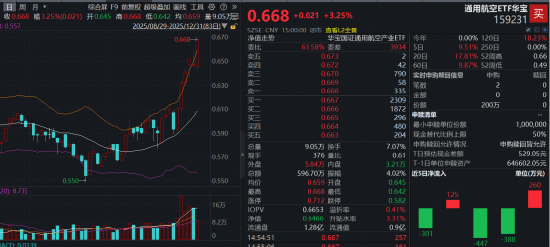
Core Viewpoint - The commercial aerospace sector has regained attention, with the Universal Aviation ETF (华宝, 159231) showing strong performance, closing up 3.25% on December 31, 2025, marking a new high since its listing [1][8]. Group 1: Market Performance - The Universal Aviation ETF (华宝, 159231) experienced a six-day consecutive rise, indicating strong market sentiment towards commercial aerospace, satellite navigation, low-altitude economy, and large aircraft sectors [1][8]. - Among the 50 constituent stocks, 90% showed positive performance, with notable gains from 航天坏宇 (14.55%), 爰乐达 (11.61%), 中科星图 (11.07%), and others reaching daily limits [10][11]. Group 2: Technical Developments - In 2025, the China Aerospace Science and Technology Corporation completed a record 73 space launch missions, highlighting advancements in the sector [2][12]. - The successful launch of the 实践二十九号 satellites using the Long March 7 rocket on December 31 marked a significant achievement for China's space program [2][12]. Group 3: Capital Market Developments - The Shanghai Stock Exchange has refined listing standards for commercial rocket companies, facilitating accelerated development in the commercial aerospace sector [3][12]. - A report from Guoyuan Securities indicates that technological iterations are significantly enhancing system efficiency and reducing costs, with advancements in on-board processing capabilities and phased array antenna technology [3][12]. Group 4: Policy Support - The Central Committee's recommendations for the 15th Five-Year Plan emphasize the need to cultivate emerging industries, including the low-altitude economy, with low-orbit satellite constellations being a key focus [5][13]. - Policies from the Ministry of Industry and Information Technology and the Aerospace Administration are steadily advancing satellite frequency resource applications and operational licensing, creating a clear growth path for the industry [5][13]. Group 5: Investment Opportunities - The Universal Aviation ETF (华宝, 159231) and its associated funds cover a broad index of 50 stocks, focusing on military and civilian aerospace capabilities, with over 37% of the index allocated to the aerospace sector [5][13].
实践二十九号卫星成功发射,卫星ETF(563230)盘中涨幅达3.42%
Mei Ri Jing Ji Xin Wen· 2025-12-31 08:54
Group 1 - The commercial aerospace sector continues to gain momentum as the year-end approaches, with satellite internet, commercial aerospace, Beidou navigation, and military-civilian integration concepts showing significant gains, including a 3.41% increase in the satellite ETF (563230) [1] - The successful launch of the Practice-29 satellite A and B using the Long March 7 carrier rocket from the Wenchang Space Launch Site marks a significant achievement, focusing on new technology verification for space target detection [1] - The State-owned Assets Supervision and Administration Commission (SASAC) announced plans to intensify the development of emerging and future industries, particularly in aerospace and low-altitude economy sectors, as part of its revitalization and launch initiatives [1] Group 2 - The satellite ETF (563230) closely tracks the satellite industry index, which encompasses various sectors including integrated circuit design, communication systems and terminal equipment, defense equipment, aerospace, general software development, and electronic components and automation machinery, indicating a high investment efficiency and purity in the satellite industry chain [1]


卫星产业拐点正继续迎来密集验证,卫星ETF易方达(563530)涨3.87%,资金持续净流入
Ge Long Hui· 2025-12-31 08:45
Group 1 - The A-share market's commercial aerospace stocks continue to perform strongly, with China Satellite rising over 6% and Aerospace Electronics increasing over 4%, driving the satellite ETF E Fund (563530) up by 3.87%. The satellite sector has become a recent hot spot, with the satellite ETF E Fund (563530) gaining 47.93% over the last 28 trading days [1][2] - There has been a continuous net inflow of funds into the satellite ETF E Fund (563530), with a net inflow of 123 million yuan over the last 10 trading days. The recent rise in the satellite sector is supported by the successful launch of the Practice-29 satellite A and B using the Long March 7 rocket, marking the 623rd flight of the Long March series [2][3] - Industry experts indicate that the satellite industry is experiencing a turning point with increasing demand for satellite launches driven by frequency allocation and actual needs. The current bottleneck lies in rocket capacity, as rockets are the only means to transport satellites into space. The successful launch signifies an improvement in China's launch capabilities, with future developments focusing on rocket recovery and reuse [3] Group 2 - The satellite ETF E Fund (563530) tracks the CSI Satellite Industry Index, which includes listed companies involved in satellite manufacturing, launching, communication, navigation, remote sensing, and applications, benefiting from the industry's beta. The satellite industry is still in its early stages, and leading companies in the supply chain are expected to benefit first [3]


【A股收评】沪指平稳,商业航天牛股频出,上演“跨年行情”
Sou Hu Cai Jing· 2025-12-31 07:42
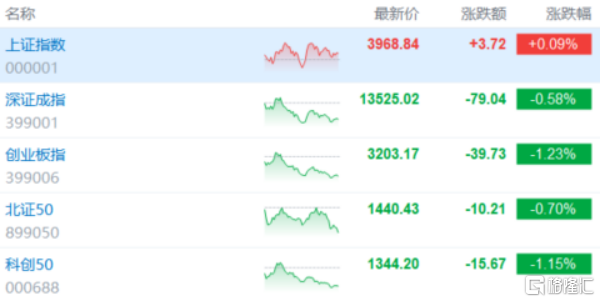
Market Performance - On December 31, major indices showed volatility, with the Shanghai Composite Index slightly up by 0.09%, while the Shenzhen Component Index fell by 0.58%, the ChiNext Index dropped by 1.23%, and the STAR Market 50 Index decreased by 1.15% [2] - Over 2,300 stocks in the two markets were in the green, with a total trading volume reaching approximately 2.05 trillion yuan [2] AI and Technology Sector - AI application concept stocks led the gains, with BlueFocus (300058.SZ) rising by 20%, iReader Technology (603533.SH) increasing by 10%, and Century Tianhong (300654.SZ) and Chinese Online (300364.SZ) experiencing significant increases [2] - Meta announced the acquisition of the general AI agent platform Manus, marking its third-largest acquisition to date. Manus has processed over 147 trillion tokens and created 80 million virtual computers, serving millions of users [2] Aerospace Sector - The commercial aerospace concept remained active, with Aerospace Universe (688523.SH) rising over 14%, and China Satellite (600118.SH) and Aerospace Development (000547.SZ) both increasing by 10% [2] - On December 31, China successfully launched the Practice-29 satellite using the Long March 7 modified carrier rocket, marking the 623rd flight of the Long March series and a record 73 space launch missions completed in 2025 [3] Aviation and Education Sector - The airport and shipping sector strengthened, with companies like Juneyao Airlines (603885.SH) up by 7.2%, and China Eastern Airlines (600115.SH), China Southern Airlines (600029.SH), and Air China (601111.SH) also seeing gains [4] - The upcoming New Year holiday is expected to drive a surge in passenger traffic, with the Civil Aviation Administration predicting a 4.9% year-on-year increase in passenger throughput from January 1 to 3, 2026 [4] - The education sector also performed well, with Kevin Education (002659.SZ) hitting the daily limit up by 10%, and other companies like Zhonggong Education (002607.SZ) and Dou Shen Education (300010.SZ) showing significant increases [4] - The Ministry of Education plans to advance AI in education, with policies expected to be released next year to promote AI knowledge education and develop a future-oriented education system [4] Declining Sectors - The liquor and pharmaceutical commercial sectors weakened, with companies like Hefei China (603122.SH), Kweichow Moutai (600519.SH), and Gujing Gongjiu (000596.SZ) experiencing declines [5] - The chip and lithium battery sectors also faced downturns, with Saiwei Electronics (300456.SZ) dropping by 9.96%, and other companies like Cambrian (688256.SH), EVE Energy (300014.SZ), and CATL (300750.SZ) also declining [5]







A股收评:创业板指跌1.23%!商业医药走低,卫星互联网爆发
Ge Long Hui· 2025-12-31 07:41
Market Overview - The A-share market showed mixed performance on December 31, with the Shanghai Composite Index rising by 0.09% to close at 3968 points, while the Shenzhen Component Index fell by 0.58% and the ChiNext Index dropped by 1.23% [1] - The total market turnover was 2.07 trillion yuan, a decrease of 956 billion yuan compared to the previous trading day, with over 2700 stocks declining [1] Sector Performance - The satellite internet sector experienced a surge, with stocks like China Satellite, China Satcom, and Aerospace Electronics hitting the daily limit [2][4] - The commercial aerospace sector remained strong, with stocks such as Jiuzhiyang and Aerospace Morning Glory also reaching the daily limit [2] - AI application stocks saw significant gains, with Kimi concept, AI corpus, and Zhipu AI leading the rise [2] - Conversely, the pharmaceutical commercial sector declined, with Luyuan Pharmaceutical hitting the daily limit down [2] - The blade battery sector also fell, led by Penghui Energy, while the liquid cooling concept showed weak performance [2] Notable Stocks - In the satellite internet sector, notable performers included: - XW Communication: +16.98% [5] - Aerospace Universe: +14.55% [5] - China Satellite: +10.00% [5] - In the AI sector, stocks like Nanjing Xingsheng and Xiechuang Data saw gains of over 7% [7] - The education sector saw a rise, with Kevin Education hitting the daily limit and Zhonggong Education increasing by over 4% [9] Policy and Regulatory News - The Ministry of Education plans to introduce policies next year to promote the integration of artificial intelligence in education [8] - On December 30, the National Development and Reform Commission and the Ministry of Finance announced a policy to support the replacement of urban public transport with new energy vehicles [10] - The Chinese government reiterated its stance on semiconductor supply chain issues, urging the Netherlands to correct its administrative interventions affecting ASML [12] Future Outlook - China Galaxy Securities indicated that January will be a critical period for data validation in the A-share market, with potential increased volatility influenced by policy implementation, macro data, corporate earnings, and liquidity changes [19]