
双碳目标

Search documents
2026年中国核泵行业进入壁垒、产业链图谱、市场规模、竞争格局及发展趋势分析:行业准入门槛较高[图]
Chan Ye Xin Xi Wang· 2026-01-23 01:26
Core Viewpoint - The development of nuclear power in China is primarily focused on the application of third-generation nuclear technology, which enhances safety through passive safety concepts and upgrades in structure, materials, and manufacturing precision, leading to reduced maintenance costs and extended maintenance cycles [1][16]. Overview - Nuclear pumps are specialized equipment used in nuclear power plants to transport coolant and media under extreme conditions, ensuring nuclear safety and system circulation. They must withstand high temperatures, pressures, radiation, and corrosion, with capabilities for zero or low leakage and long-term stable operation [2][3]. Industry Barriers - The nuclear pump industry has high entry barriers due to the need for advanced technology and manufacturing precision, requiring strong R&D capabilities and long-term investment. New entrants face challenges in meeting industry standards quickly, creating significant technical barriers [9][10]. Industry Chain - The upstream of the nuclear pump industry includes suppliers of nuclear-grade materials and components, while the midstream involves R&D, design, manufacturing, and testing. The downstream market primarily targets nuclear power plants [11][12]. Current Development - As of November 2025, China's nuclear power installed capacity is projected to reach 62.48 million kilowatts, with a continuous increase in demand for nuclear pumps driven by new installations and maintenance needs of existing plants [13][14]. Competitive Landscape - The nuclear pump industry has high entry barriers, with only four companies qualified to design and manufacture nuclear main pumps. Competition is more intense for secondary and tertiary pumps, with several companies dominating the market [15][17]. Industry Trends - The nuclear pump sector is expected to evolve towards high-end, intelligent upgrades, focusing on performance and safety improvements. The industry will also see a shift towards domestic production to break the monopoly of foreign suppliers, enhancing the competitiveness of domestic products [20][21][22]. - The industry is transitioning from equipment manufacturing to a full lifecycle service model, integrating R&D, production, operation, and maintenance to provide comprehensive solutions for nuclear power operators [23].






寻找中国保险的Alpha系列之四从保单到数据新能源车险的价值跃迁
Guoxin Securities· 2026-01-23 00:30
Investment Rating - The report maintains an "Outperform" rating for the insurance sector, particularly focusing on companies involved in new energy vehicle insurance [5][6]. Core Insights - The new energy vehicle insurance market in China is entering a "golden development period" characterized by simultaneous growth in volume and price, driven by national policies and increasing market penetration of new energy vehicles [1][4]. - The insurance industry faces high costs and claims pressures due to the inherent differences in risk structures between new energy vehicles and traditional fuel vehicles, necessitating a re-evaluation of underwriting models [2][3]. - The industry's profitability model needs restructuring, focusing on risk reduction, ecosystem integration, and international expansion to build competitive barriers [3][4]. Summary by Sections Industry Investment Rating - The report rates the insurance sector as "Outperform," highlighting the potential for growth in new energy vehicle insurance [5]. Market Dynamics - The penetration rate of new energy vehicles is projected to reach 40.9% of total new car sales by 2024, with retail penetration nearing 50%, indicating a robust growth trajectory for insurance premiums [1][22]. - The average annual growth rate of new energy vehicle sales from 2020 to 2024 is approximately 62.9%, significantly outpacing traditional fuel vehicles [22][25]. Risk Management and Innovation - The introduction of Advanced Driver Assistance Systems (ADAS) and Usage-Based Insurance (UBI) is reshaping risk management and pricing strategies in the insurance sector, providing tools to address high costs and claims [32][34]. - The penetration rate of L2 and above ADAS in new vehicles is expected to exceed 50% in 2024, enhancing the ability of insurers to manage risks proactively [33][35]. Strategic Recommendations - The report suggests focusing on insurance companies that are leading in data technology investments, have deep partnerships with major new energy vehicle manufacturers, and possess clear international expansion strategies [4][6]. - Companies like China Pacific Insurance, China Ping An, and China Property & Casualty Insurance are identified as having the potential to convert current scale advantages into long-term risk pricing and cost control capabilities [4][5].


生态向美 产业向绿 绘就绿色转型广西新图景
Xin Lang Cai Jing· 2026-01-22 21:16
Core Viewpoint - Guangxi Zhuang Autonomous Region is focusing on ecological protection and green development, achieving significant economic and environmental benefits through innovative reforms and sustainable practices [4][5][11]. Ecological Protection - Guangxi has a forest coverage rate of 62.5% and maintains high air and water quality, with 98.1% of days having good air quality and 100% of surface water meeting quality standards [5]. - The region emphasizes ecological conservation as a foundation for improving living standards, integrating high-quality development with environmental protection [5][6]. - Guangxi has implemented comprehensive environmental protection measures, achieving 100% coverage in heavy metal risk assessments [5][6]. Economic Development through Ecology - The "Ecology+" model promotes sustainable agriculture and aquaculture, integrating solar energy with ecological practices, leading to a 20% increase in aquaculture output [6]. - By 2025, Guangxi aims to complete afforestation of 4.34 million acres and restore 17,700 acres of mangroves, with an estimated ecological value exceeding 8 trillion yuan [6][8]. - The region has created 19 national ecological civilization demonstration zones, benefiting over 5 million farmers through ecological industrialization [6][8]. Forest Economy - Guangxi's forest resources are being utilized to develop a sustainable forest economy, with a total forest stock of 930 million cubic meters [7][8]. - The region has successfully implemented a forest reform mechanism that has led to over 15 million acres of collective forest land being managed at scale, providing jobs for nearly 70,000 farmers [8]. - The total output value of the forestry industry in Guangxi has surpassed 1 trillion yuan, making it the first province in China to achieve this milestone [8]. Green Industry Transformation - Guangxi is enhancing the "green" aspect of its industries to achieve high-quality development, with a focus on carbon neutrality and pollution reduction [9][10]. - The region's renewable energy capacity has seen an annual increase of 40%, with total installed capacity reaching 113 million kilowatts by October 2025 [9]. - Guangxi has established 105 national-level green factories and 11 green parks, significantly improving resource utilization efficiency [10]. Future Outlook - Guangxi plans to strengthen its circular economy initiatives and expand green electricity trading, aiming for over 50% of energy from non-fossil sources by 2030 [11].

林平发展昨日启动招股程序
Zheng Quan Ri Bao· 2026-01-22 16:38
Group 1 - The company, Anhui Linping Circular Development Co., Ltd., has officially launched its IPO process on the Shanghai Stock Exchange, planning to issue 18.8537 million shares, resulting in a total share capital of 75.4148 million shares after the issuance, with the subscription date set for January 30, 2026 [1] - The funds raised from the IPO will primarily be used for the "Annual Production of 900,000 Tons of Green Environmental Protection Intelligent Manufacturing New Materials Project (Phase II)" and the "Annual Production of 600,000 Tons of Bio-based Fiber Green Intelligent Manufacturing New Materials Project," which will double the company's total production capacity to 2.35 million tons per year [1] - The company aims to enhance its market position and competitiveness in the paper industry through the expansion of production scale, which will help strengthen economies of scale, reduce production costs, and improve profit margins [1] Group 2 - One of the core competitive advantages of the company stems from its long-standing commitment to a circular economy development model, utilizing waste paper as the primary raw material for producing corrugated paper and boxboard, significantly reducing reliance on virgin wood resources [2] - The company has developed a core technology system covering wastewater treatment, resource recovery, and energy-saving production, with key technologies such as a multi-disk filter pre-treatment technology achieving over 95% recovery rate of short fibers [2] - The company is focused on developing a circular economy, promoting energy conservation, and producing green packaging products, aiming to become a benchmark for green intelligent manufacturing in the paper industry [2]
豫能控股:公司河南鲁山抽水蓄能1300MW项目、林州弓上抽水蓄能1200MW项目正有序推进工程建设
Mei Ri Jing Ji Xin Wen· 2026-01-22 09:49
Core Viewpoint - The company is aligning its future direction with national and provincial energy development plans, focusing on the "30·60" dual carbon goals and implementing a new energy security strategy to ensure energy safety in Henan Province [1] Group 1: Company Strategy - The company aims to become a "first-class comprehensive energy enterprise" while developing a dual carrier model for clean energy supply within the province and energy security support outside the province [1] - Ongoing projects include the 1300MW pumped storage project in Lushan, Henan, and the 1200MW pumped storage project in Linzhou, which are progressing in construction [1] Group 2: Industry Context - There is an increasing demand for stable power and regulatory capabilities due to the rise of data centers and computing infrastructure, prompting the company to consider its existing capabilities in pumped storage, energy storage, and distribution networks for relevant applications [1]

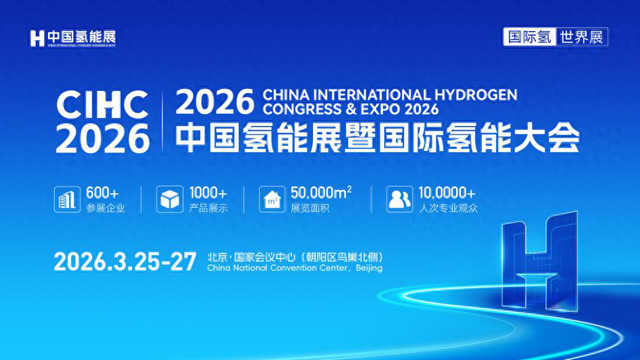
共赴“全球绿氢旗舰展” | CIHC 2026中国氢能展,定义全球氢能产业新标杆
Huan Qiu Wang· 2026-01-22 09:04
Core Insights - Hydrogen energy is positioned as a strategic emerging industry in China, essential for driving green energy transformation and supporting carbon neutrality goals, with a focus on fostering new productive forces and economic growth [1] - The CIHC 2026 China Hydrogen Exhibition and International Hydrogen Conference will take place from March 25-27, 2026, in Beijing, marking a significant event in the global hydrogen energy landscape [1][4] Industry Development - China's hydrogen industry is transitioning from isolated technological breakthroughs to a collaborative upgrade across the entire value chain, including production, storage, transportation, and utilization [1] - The exhibition will feature an area of 50,000 square meters and is expected to attract 600 domestic and international exhibitors, showcasing a diverse range of activities including conferences, international exchanges, and product launches [3] Exhibition Highlights - The CIHC 2026 exhibition has seen a significant increase in participation, with 410 companies and institutions signed up compared to 21 in the inaugural event in 2021, reflecting its growing influence in the global green hydrogen sector [4] - Key technologies in hydrogen production, such as alkaline (ALK), proton exchange membrane (PEM), and anion exchange membrane (AEM), will be prominently featured, highlighting China's leading position in hydrogen equipment manufacturing [4] Technological Innovations - The exhibition will showcase innovations in hydrogen production technology, including large-scale electrolysis equipment and advanced membrane materials, demonstrating the industry's progress in diversification and large-scale applications [6][8] - A comprehensive display of hydrogen storage and transportation technologies will also be presented, addressing various methods such as high-pressure gas storage and liquid hydrogen transport [8] Global Market Engagement - The CIHC 2026 aims to serve as a hub for global hydrogen technology insights and market opportunities, facilitating connections between technology leaders, equipment manufacturers, and project operators [7] - The event will coincide with the 16th China International Clean Energy Expo (CEEC 2026), creating synergies between green electricity and green hydrogen sectors, enhancing the overall impact of both exhibitions [10] Buyer Engagement - The exhibition is actively inviting buyers from various sectors, including power, transportation, metallurgy, and chemicals, to create a robust ecosystem for collaboration and business opportunities [11][13] - A "global buyer map" is being developed to attract decision-makers from over 70 countries, ensuring that exhibitors engage with potential clients who have immediate procurement needs [13] Strategic Importance - CIHC 2026 is positioned as a critical platform for observing industry policies and market opportunities, linking global technological and commercial resources to accelerate the development of the hydrogen industry [14]
《非遗工坊建设规范》等一批辽宁省地方标准发布
Xin Lang Cai Jing· 2026-01-22 08:53
Core Viewpoint - The Liaoning Provincial Market Supervision Administration plans to release a total of 221 local standards in 2025, with a cumulative total of 1,642 local standards by the end of 2025, aimed at promoting industrial transformation and high-quality development in various sectors. Group 1: Rural Revitalization - Seven local standards will be released to support rural revitalization, including the "Rural Passenger and Cargo Postal Integration Development Service Specification," which addresses transportation and logistics issues for farmers [2]. Group 2: Modern Agriculture - Twenty-five local standards will be introduced, such as the "Technical Regulations for the Selection of Insect-Proof Nets for Facility Vegetables," which aims to significantly reduce pesticide use and enhance vegetable quality and yield [3]. Group 3: Forestry and Grass Industry - Eleven local standards will be established, including the "Production and Cultivation Technical Regulations for Epimedium under Forest," expected to increase income by over 20% per unit area through standardized cultivation practices [4]. Group 4: Artificial Intelligence - One local standard, "Safety Requirements for Generative Artificial Intelligence," will be implemented to enhance the safety of AI services and address issues like the spread of harmful information and cyberattacks [5]. Group 5: Digital Development - One local standard, "Data Interface for Social Emergency Response Information System," will provide technical support for the integration of emergency information systems with government management platforms [6]. Group 6: Green Development - Two local standards will be introduced, including the "Technical Specification for Low-Carbon Development Evaluation in Chemical Parks," which supports the high-quality development of the petrochemical industry and the achievement of carbon neutrality goals [7]. Group 7: Environmental Protection - Three local standards will be released, such as the "Technical Specification for Environmental Risk Assessment of Hazardous Waste Disposal," aimed at improving hazardous waste management and preventing environmental risks [8]. Group 8: Transportation - Four local standards will be established, including the "Operational Service Specification for Electronic Licenses in Road Transport," which will standardize the application of electronic licenses in the transportation sector [9]. Group 9: Urban Renewal - Eleven local standards will be released, including the "Technical Regulations for the Evaluation of Green Building Construction Drawings," which align with national energy-saving goals and aim to reduce environmental impact [11]. Group 10: Trade and Circulation - Two local standards will be introduced, such as the "Management Specification for Instant Retail Operations," which will enhance the capabilities of instant retail services based on e-commerce [12]. Group 11: Cultural and Tourism Industry - Five local standards will be established, including the "Construction Specification for Intangible Cultural Heritage Workshops," which outlines requirements for protecting and utilizing intangible cultural heritage [13]. Group 12: Elderly Care Services - Three local standards will be released, including the "Special Dietary Service Specification for Elderly Care Institutions," aimed at improving dietary services for the elderly [14]. Group 13: Market Supervision - Four local standards will be introduced, such as the "Safety and Environmental Technical Specification for Mobile Laboratories for Rapid Detection of Finished Oil," which will enhance the reliability of testing results [15]. Group 14: Emergency Management - Ten local standards will be established, including the "Safety Specification for Gas Monitoring and Alarm in Metallurgical Enterprises," which aims to prevent safety accidents in the industry [16]. Group 15: Intellectual Property Protection - Three local standards will be released, including the "Consultation Service Specification for Patent Infringement Determination," which will enhance the protection of intellectual property rights [17]. Group 16: Health and Safety - Three local standards will be introduced, such as the "Blood Collection and Supply Service Specification Part 1: General Principles," which aims to standardize blood service processes [18]. Group 17: Disaster Prevention and Mitigation - Six local standards will be established, including the "Snow Disaster Investigation and Risk Assessment," which will provide authoritative information for snow disaster management [19].
鄂尔多斯“暖流”这样涌向全国
Bei Jing Ri Bao Ke Hu Duan· 2026-01-22 08:17
Core Viewpoint - The energy supply in Ordos City, Inner Mongolia, is being prioritized during the winter season, with coal and natural gas production ramping up to meet increasing demand for heating and electricity as the New Year approaches [1][3][4]. Group 1: Coal Supply - The Nalinhe No. 2 Coal Mine in Ordos is operating at a daily coal production of 24,000 tons, ensuring the stable dispatch of three trains of electricity coal daily to southern power plants [1]. - Ordos City is tasked with supplying 560 million tons of electricity coal by 2025, with daily coal production exceeding 2.5 million tons [1][6]. - The Lianchuang Hantai Chuanbei Coal Logistics Park is a key hub for coal transportation, expected to handle over 2,300 train deliveries and a dispatch volume exceeding 16.5 million tons by 2025 [3]. Group 2: Natural Gas Supply - The Sudong 39-61 gas storage facility is operational, with a capacity of 750 million cubic meters, supplying over 48 million cubic meters of natural gas during the peak winter heating season [3]. - The gas storage facility acts as an underground reserve, injecting surplus gas during off-peak seasons and releasing it during high-demand periods [3]. Group 3: Renewable Energy - Ordos is utilizing high-voltage direct current transmission to deliver clean energy, with wind turbines generating electricity that is transmitted to distant regions [4]. - The Yikexia Converter Station is a critical node in the "Mont Electricity into Shandong" project, with an average daily electricity delivery of approximately 160 million kilowatt-hours, enough to meet the daily needs of 25 million households [5]. - By 2025, Ordos aims to achieve a renewable energy generation of 31.04 billion kilowatt-hours, representing a 68.7% increase, with renewable energy capacity expected to surpass coal power [5]. Group 4: Integrated Energy Supply System - Ordos is developing a comprehensive energy supply system that integrates stable coal production, renewable energy delivery, and gas storage to ensure energy security during critical periods [6]. - The city is focused on optimizing production capacity and ensuring smooth transportation channels to meet energy supply tasks during peak demand periods [6].

供热减碳不搞 “一刀切”!余热反哺 + 生物质可兜底破局
Zhong Guo Neng Yuan Wang· 2026-01-22 07:20
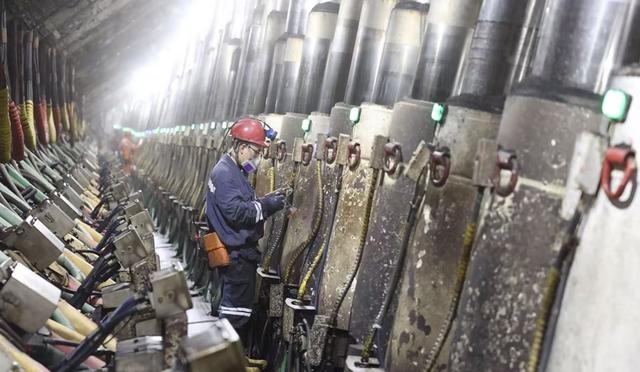
Core Insights - The low-carbon transition in heating energy is crucial for building a new energy system and achieving carbon neutrality goals, with policies promoting clean energy development and pollution reduction in the heating industry [1][2] Group 1: Challenges in Transition - Northern provinces like Shandong and Hebei face two main challenges: the need to eliminate numerous small coal-fired power plants and the rising costs of heating for rural households due to coal-to-gas initiatives [1][3] - The total thermal energy demand for industrial and building operations in China is projected to reach 24 billion gigajoules annually, with traditional coal boilers potentially emitting 2.6 billion tons of CO2 [1][2] Group 2: Innovative Solutions - A systematic reconstruction of thermal supply is necessary, moving beyond traditional combustion methods. High-temperature gas-cooled reactor technology is seen as ideal for high-parameter steam needs, while urban waste heat could provide over 25 billion gigajoules of potential resources for medium and low-parameter heating [2][5] - The construction of extensive waste heat distribution networks and seasonal heat storage facilities can create a "waste heat sharing" network, converting waste heat into valuable resources [2][6] Group 3: Addressing Rural Heating Needs - The challenges of clean heating in rural areas are significant, impacting the warmth and well-being of many households. Issues include limited electricity and gas resources, as well as the financial burden of clean heating solutions [3][4] - Utilizing agricultural waste as biomass resources to create composite fuels can provide a cost-effective alternative to coal, achieving better emissions outcomes [4][6] Group 4: Policy and Industry Collaboration - The transition involves both long-term systemic solutions for zero-carbon heat sources and immediate strategies to address rural heating challenges, emphasizing the need for technological innovation and supportive policies [5][6] - The development of heat pump technologies and waste heat networks is expected to be a long-term solution for rural heating, while biomass composite fuels may serve as a transitional bridge [6]
年轻干部“挑大梁”却遇三大难题?江苏射阳用“三招破局”
Zhong Guo Huan Jing Bao· 2026-01-22 06:44
为解决上述问题,射阳生态环境局坚持精准培育、实战锤炼、机制保障,赋能青年干部成长成才。 以精准培育提质,适配多元知识需求。构建精准培养体系,按岗位分类定制课程。对于执法岗位,强化 生态环境法律法规、行业生产工艺、无人机巡查等技能培训,增设"双碳"目标下生态环境监管模块;对 于监测岗位,聚焦大气、水质监测实操,以及新污染物检测技术等开展达标培训;对于管理岗位,侧重 培养跨部门协调、项目申报与政策解读能力。创新"线上+线下"模式,线上依托培训平台学习前沿知 识,线下复盘典型生态环境违法案件和应急处置事件,组织模拟执法办案、应急演练等,提升实战能 力。 随着美丽中国建设向纵深推进,对青年干部的培养也要及时跟进,使这支队伍兼具专业性、跨界视野与 创新能力,以胜任新形势下各项任务要求。 当前,县级生态环境部门在青年干部培养工作中面临一些挑战。一是基层实战能力不足,复杂场景应对 乏力。如江苏省盐城市射阳生态环境局部分年轻干部入职2年—3年便走上中层岗位,在面对跨部门协作 攻坚等任务时,常因统筹协调经验欠缺陷入被动。二是知识结构单一,岗位适配性不足。射阳生态环境 局年轻干部中,7人具备研究生学历,但多数专业局限于单一领域, ...