
东数西算

Search documents
四川:推进“绿电+算力”融合发展,打造国家“东数西算”战略支点
Zheng Quan Shi Bao Wang· 2025-10-16 02:08
Core Viewpoint - The Sichuan Provincial Government has issued an implementation plan for the high-quality development of the technology service industry from 2025 to 2030, focusing on enhancing data management, computing power, software development, system operation, and network security services [1] Group 1: Data Infrastructure Development - Establish a comprehensive integrated big data center system to improve specialized service supply [1] - Encourage businesses to migrate operations and equipment to the cloud [1] - Regularly collect technology innovation needs from key industries to build high-quality data sets, corpora, and AI training environments [1] Group 2: Computing Power and Energy Integration - Optimize the provincial integrated computing power monitoring and scheduling service platform [1] - Develop the Tianfu Data Center cluster and regional computing power centers, aiming to include clean energy-rich areas in national planning [1] - Promote the integration of "green electricity + computing power" to support the national "East Data West Computing" strategy [1] Group 3: Manufacturing Digital Transformation - Implement the "Smart Transformation and Digital Transition" initiative in the manufacturing sector [1] - Strive to create a national-level digital transformation promotion center for manufacturing [1] - Build a one-stop, full-process, intelligent empowerment platform for digital transformation across the province [1] Group 4: Supply Chain Digitalization - Encourage leading enterprises to establish digital supply chain collaboration platforms [1] - Conduct pilot projects for penetrating digital supply chain management to drive "chain-style" transformation across the industry chain [1]
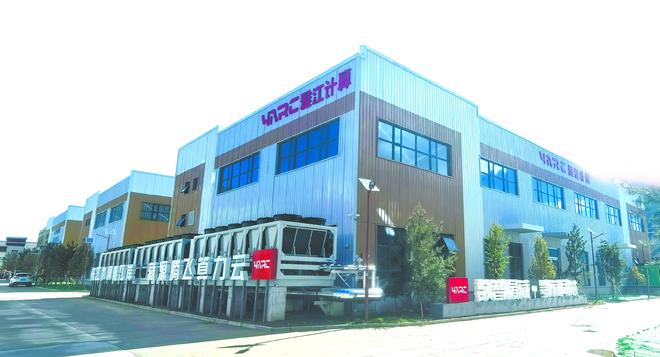
《环球时报》探访全球海拔最高智算中心“雅江1号”:在世界屋脊构建“最强大脑”
Huan Qiu Wang Zi Xun· 2025-10-15 23:12
Core Insights - The establishment of the "Yajiang No. 1" AI computing center in Tibet marks a significant advancement in China's digital infrastructure and aims to enhance the region's position in the national computing power landscape [3][4][5] Group 1: Project Overview - "Yajiang No. 1" officially commenced operations on June 18, 2025, with an initial planned computing power of 2000P (FP16) [3] - The project is part of the "Power Peak" high-quality development action plan in Tibet and is expected to serve as a key hub connecting various nodes in the region [3][4] - The center is designed to operate efficiently in high-altitude conditions, utilizing abundant natural resources for cooling and energy [4][5] Group 2: Technological Innovations - The center features high-density cabinet designs capable of supporting up to 35 kW per cabinet, tailored for AI computing needs [4] - A customized intelligent cooling system has been implemented to address the unique climatic challenges of Tibet, significantly reducing cooling costs [4][5] - The project aims to fill the gap in national data center design standards for high-altitude environments, promoting sustainable infrastructure development [5] Group 3: Strategic Importance - The "Yajiang No. 1" center embodies the "East Data West Computing" initiative, leveraging Tibet's clean energy resources for AI model training while serving eastern cities for low-latency inference [6][8] - The collaboration between Hubei and Tibet is designed to alleviate energy pressures in eastern regions while fostering local talent development through partnerships with local universities [7][8] - The center is positioned to support various industries, including traditional Tibetan medicine and highland agriculture, by enhancing their digital capabilities [8]

459.8万个5G基站之后,新基建如何再进阶丨四中全会预热
2 1 Shi Ji Jing Ji Bao Dao· 2025-10-15 09:38
Core Insights - The article emphasizes the significant progress made in the construction of new infrastructure in China during the "14th Five-Year Plan" period, highlighting the importance of this development for industrial structure upgrades and sustainable economic growth [1][5][10]. Infrastructure Development - As of July 2023, China has built 4.598 million 5G base stations and 30.532 million gigabit ports, with over 20,000 "5G + industrial internet" projects initiated [5]. - The total computing power in China ranks second globally, with 10.85 million standard racks and an intelligent computing power of 788 EFLOPS [5]. Policy Framework - The "14th Five-Year Plan" has led to a series of policy documents aimed at promoting new infrastructure, including the "Digital China Construction Overall Layout Plan" and local government initiatives in provinces like Jiangsu and Sichuan [4][10]. - The focus on new infrastructure includes information infrastructure, integrated infrastructure, and innovative infrastructure, which are essential for digital transformation and intelligent upgrades [3][4]. Future Directions - The "15th Five-Year Plan" is expected to prioritize artificial intelligence-related infrastructure, including intelligent computing facilities and data centers [1][7]. - The need for a balanced distribution of intelligent computing centers across regions, particularly addressing the underutilization of computing resources in the western regions, is highlighted [2][8]. Regional Competitiveness - According to the "China New Infrastructure Competitiveness Index (2024)," Beijing ranks first in new infrastructure competitiveness, particularly in information infrastructure, while Jiangsu and Guangdong excel in integrated infrastructure [6]. Technological Integration - The integration of AI with new infrastructure is anticipated to be a key focus, with policies emphasizing the enhancement of foundational capabilities and the establishment of a high-quality computing network [7][8]. - The development of 5G-A and 6G technologies is expected to drive innovation and improve communication networks, with a focus on real-time applications and enhanced data transmission capabilities [9][10].
数据港涨2.06%,成交额7.09亿元,主力资金净流入373.96万元
Xin Lang Zheng Quan· 2025-10-15 06:15
Core Viewpoint - Data Port's stock price has shown significant volatility, with a year-to-date increase of 78.99% but a recent decline of 7.89% over the last five trading days [1] Group 1: Stock Performance - As of October 15, Data Port's stock price was 33.72 CNY per share, with a market capitalization of 24.22 billion CNY [1] - The stock has experienced a trading volume of 709 million CNY, with a turnover rate of 2.97% [1] - Year-to-date, the stock has risen by 78.99%, while it has decreased by 7.89% in the last five trading days [1] Group 2: Financial Performance - For the first half of 2025, Data Port reported a revenue of 811 million CNY, representing a year-on-year growth of 4.13% [2] - The net profit attributable to shareholders for the same period was approximately 84.96 million CNY, reflecting a year-on-year increase of 20.37% [2] Group 3: Shareholder Information - As of June 30, 2025, Data Port had 115,100 shareholders, a decrease of 22.19% from the previous period [2] - The average number of circulating shares per shareholder increased by 54.23% to 6,239 shares [2] - The company has distributed a total of 187 million CNY in dividends since its A-share listing, with 91.88 million CNY distributed over the last three years [3] Group 4: Institutional Holdings - As of June 30, 2025, the top ten circulating shareholders included Hong Kong Central Clearing Limited, which held 7.04 million shares, a decrease of 253,300 shares from the previous period [3] - Southern CSI 1000 ETF increased its holdings by 130,240 shares to 3.98 million shares, while other ETFs also saw increases in their holdings [3]

盛邦安全:200G高速链路加密网关内测成功
2 1 Shi Ji Jing Ji Bao Dao· 2025-10-15 05:25
Core Viewpoint - The company has developed high-speed link encryption products that support quantum key distribution, which can be widely used in quantum communication and encryption fields [1] Group 1: Product Performance - The recently tested 200G high-speed link encryption gateway shows performance metrics that are several to dozens of times better than traditional solutions, with encryption capabilities exceeding 200 Gbps and latency below 5 microseconds [1] - The product's performance has reached international standards, surpassing mainstream 100G products, and fills a gap in security protection technology for 100G/200G backbone links in the context of "East Data West Computing" and intelligent computing centers [1] Group 2: Application Areas - The product is expected to be widely applied in high-value sectors such as finance, intelligent computing, and data centers, particularly in low-latency scenarios like high-frequency trading, intelligent computing center construction, and secure interconnectivity in backbone networks [1]

大位科技涨2.14%,成交额1.78亿元,主力资金净流入1712.44万元
Xin Lang Zheng Quan· 2025-10-15 02:32
Core Viewpoint - Dawi Technology's stock price has shown significant volatility, with a year-to-date increase of 56.55%, but recent declines in the short term indicate potential market fluctuations [1][2]. Group 1: Stock Performance - As of October 15, Dawi Technology's stock price was 7.17 CNY per share, with a market capitalization of 10.645 billion CNY [1]. - The stock has experienced a 2.14% increase during the trading session, with a trading volume of 1.78 billion CNY and a turnover rate of 1.69% [1]. - Year-to-date, the stock has risen by 56.55%, but it has seen a decline of 2.32% over the last five trading days, 7.00% over the last twenty days, and 15.75% over the last sixty days [1]. Group 2: Financial Performance - For the first half of 2025, Dawi Technology reported revenue of 206 million CNY, a year-on-year increase of 0.37%, and a net profit attributable to shareholders of 68.168 million CNY, reflecting a substantial year-on-year growth of 282.46% [2]. - The company has distributed a total of 386 million CNY in dividends since its A-share listing, with no dividends paid in the last three years [3]. Group 3: Shareholder Information - As of June 30, 2025, the number of shareholders increased to 181,900, up by 13.28%, while the average number of tradable shares per shareholder decreased by 11.72% to 8,127 shares [2]. - The top ten circulating shareholders include notable entities such as Yongying Digital Economy and Hong Kong Central Clearing, with changes in their holdings indicating shifts in investor sentiment [3].

罗曼股份涨2.00%,成交额3853.97万元,主力资金净流入114.65万元
Xin Lang Cai Jing· 2025-10-15 02:03
Core Viewpoint - Roman Technology Co., Ltd. has shown significant stock price growth and strong financial performance in recent periods, indicating potential investment opportunities in the company [1][2]. Financial Performance - As of June 30, 2025, Roman achieved a revenue of 432 million yuan, representing a year-on-year growth of 72.92% [2]. - The net profit attributable to shareholders was 13.23 million yuan, with a year-on-year increase of 158.02% [2]. - Cumulative cash dividends since the A-share listing amount to 79.45 million yuan, with 27.44 million yuan distributed over the past three years [3]. Stock Market Activity - Roman's stock price increased by 196.41% year-to-date, with a 1.77% rise over the last five trading days, 68.09% over the last 20 days, and 118.60% over the last 60 days [1]. - The company has appeared on the "龙虎榜" (a list of stocks with significant trading activity) twice this year, with the latest appearance on September 12 [1]. Shareholder Information - As of June 30, 2025, the number of shareholders decreased by 15.54% to 7,572, while the average circulating shares per person increased by 18.40% to 14,307 shares [2]. - The top ten circulating shareholders include 富国均衡优选混合 and 富国成长领航混合, with stable holdings compared to the previous period [3]. Business Overview - Roman Technology specializes in landscape lighting planning, design, construction, and remote control management services [1]. - The revenue composition includes 39.31% from the digital entertainment sector, 38.10% from urban lighting, and 22.33% from intelligent energy sources [1].

国统股份:公司的主营产品PCCP广泛应用于各类大型输水工程领域
Zheng Quan Ri Bao Wang· 2025-10-14 10:41
Core Viewpoint - The company, Guotong Co., Ltd. (002205), emphasizes the advantages of its main product, PCCP, which is suitable for large-scale water conveyance projects and supports the East Data West Computing initiative [1] Group 1: Product Characteristics - PCCP is characterized by low cost, high pressure resistance, corrosion resistance, and long lifespan [1] - The product is widely used in various large-scale water conveyance engineering fields [1] Group 2: Application and Support - PCCP provides strong support for water conservancy facilities associated with the East Data West Computing project [1]

“数智内蒙古”:探访北疆高质量发展数字新引擎
Zhong Guo Xin Wen Wang· 2025-10-14 09:01
Core Insights - The "Digital Inner Mongolia" initiative is enhancing the region's digital infrastructure through advanced technologies like 5G, AI, and computing power, significantly contributing to industrial upgrades and public service improvements [1][3][5] Group 1: Network Infrastructure Development - The telecommunications sector in Inner Mongolia has seen substantial improvements in network coverage, with a total of 92,600 5G base stations established by August 2025, achieving a coverage rate of 99.5% in administrative villages and 100% in industrial parks [3][4] - The deployment of 5G-A has progressed, with over 3,000 5G-A base stations operational, providing peak user rates of 3 Gbps, which is 3-5 times faster than standard 5G [3][4] Group 2: Computing Power Infrastructure - Inner Mongolia is a key node in the "East Data West Computing" strategy, with accelerated data center construction, including the completion of the Huawei Ascend 910C super node cluster with a computing power of 300 PFlops [6][8] - The region's telecommunications companies are enhancing cross-domain security and connectivity, with Inner Mongolia Telecom launching the first 400G quantum secure OTN computing encryption line in the country [7][8] Group 3: Technological Innovation and Applications - The integration of 5G and AI technologies in various sectors has led to significant efficiency gains, such as a 10% increase in production efficiency in industrial manufacturing and the establishment of the world's first 5G-A smart open-pit mine [9][10] - In the public service sector, new AI-driven products and services are being introduced, such as the "Cloud Smart Phone" and "AI Smart Home" solutions, enhancing user experience and operational efficiency [10][11] Group 4: Policy Guidance and Future Outlook - The Inner Mongolia Communications Administration is actively promoting the "Sail Action" upgrade plan for large-scale 5G applications, aiming to optimize information infrastructure and foster high-quality digital economic development [12]



不投AI投电站:VC正在调转枪口
Hu Xiu· 2025-10-14 08:06
Core Insights - The article discusses a shift in investment focus from AI and technology to tangible assets in the infrastructure sector, particularly in renewable energy and nuclear power projects [2][3][4]. Group 1: Investment Trends - Investors are increasingly turning to infrastructure assets, with a notable interest in renewable energy sources such as solar and charging stations [2][4]. - The market for infrastructure investments is becoming more active, with diverse participants including state-owned enterprises, private equity firms, and insurance capital [6][10]. - Major private equity firms like KKR and Blackstone are raising record amounts for infrastructure funds, indicating a growing recognition of these assets [7][19][20]. Group 2: Market Dynamics - There is a significant funding gap in global infrastructure, projected to reach $57-67 trillion by 2030, creating ample investment opportunities [22]. - The demand for infrastructure investments is driven by trends in digitalization, green energy, and the need for stable cash flows amid economic uncertainty [8][30]. - The focus of capital is primarily on data centers and renewable energy assets, which are seen as strategic investment areas [24][28]. Group 3: Challenges and Considerations - Infrastructure investments require substantial capital and long-term commitment, often conflicting with the typical investment horizons of private equity firms [34][37]. - The need for strong government relationships and policy understanding is critical for private equity firms to successfully navigate the infrastructure landscape [35]. - Innovative solutions, such as partnerships with long-term capital providers and structured products, are being explored to address the challenges of investing in infrastructure [38][39].