
新型电力系统

Search documents
迈向“十五五”的发展图景丨沙漠里建起巨型“充电宝”
Ren Min Ri Bao· 2025-11-20 04:44
Core Insights - The construction of a large-scale energy storage project in the Kubuqi Desert aims to optimize energy infrastructure and enhance the stability of power supply [1][2][3] - The project, with a capacity of 3 GW and 12.8 GWh, is expected to provide power for 300,000 households during peak demand [1][2] - The energy storage station will help balance the supply and demand of electricity, ensuring stability in the power grid [2][3] Group 1: Project Overview - The Gushanliang energy storage project occupies approximately 1,100 acres with a total investment of 11.2 billion yuan [1] - Upon completion, the project is expected to deliver 3.6 billion kWh of clean energy to the grid annually [2] - The project will connect to the Gushanliang 500 kV substation, prioritizing power supply for Ordos and western Inner Mongolia, while also exporting energy to North China [2] Group 2: Market and Policy Context - Ordos has established 23 energy storage projects, with 12 under construction and 17 planned [3] - The Inner Mongolia Energy Bureau has set a compensation standard for independent energy storage stations discharging to the grid at 0.35 yuan per kWh for a period of 10 years [3] - The local government aims to continue optimizing the new energy-based power system in line with the 14th Five-Year Plan, promoting energy transition and socio-economic development [3]
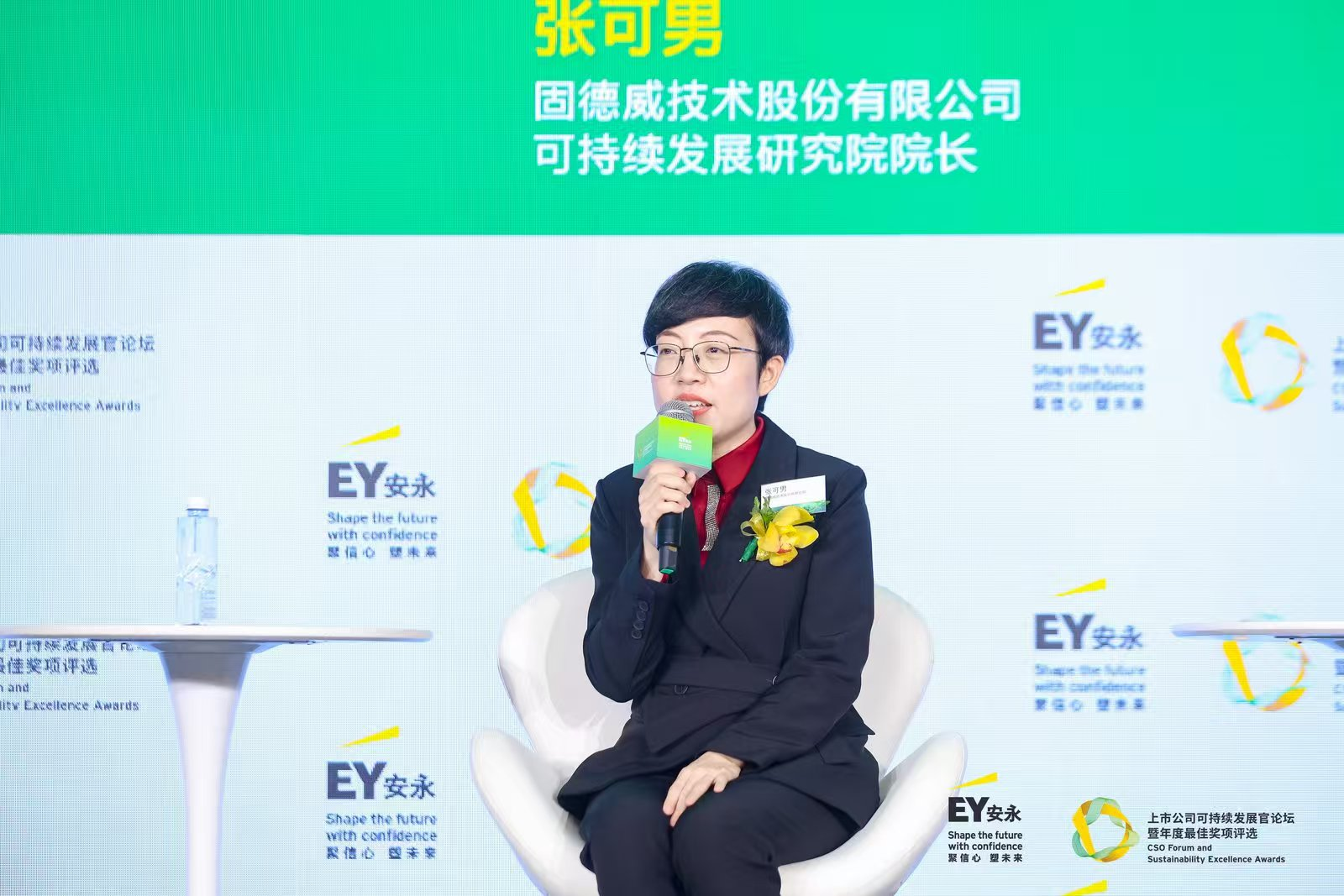
固德威技术股份有限公司可持续发展研究院院长张可男:中国企业应成为绿色创新者、方案提供者与标准共建者
Zhong Guo Jin Rong Xin Xi Wang· 2025-11-20 02:45
Core Viewpoint - The fourth Sustainable Development Officer Forum and Annual Best Awards Ceremony highlighted the importance of transforming Chinese enterprises from "green followers" to "green innovators" and "green standard co-builders" in the context of global green governance [1][8]. Group 1: Challenges in New Energy System - The main challenge in constructing a new power system based on renewable energy is the contradiction between the volatility of renewable resources and system coordination [3]. - Key obstacles include the increasing unpredictability of renewable energy output, lack of unified scheduling logic among multi-energy systems, and constraints in the distribution network for high proportions of renewable energy [3]. Group 2: Solutions Offered by the Company - The company's solution focuses on building a "cloud-edge-end" collaborative smart energy system, integrating efficient inverters, energy storage, and real-time power prediction to enhance system responsiveness and reduce management costs [3][4]. - The company aims to provide replicable and scalable "minimum units of new power systems" for zero-carbon parks and distributed power markets [4]. Group 3: Supply Chain ESG Management Initiative - As a co-initiator of the "Supply Chain ESG Management Initiative," the company seeks to reshape industry perceptions of sustainable supply chain development, emphasizing the shift from product competition to system and value competition [4][6]. - The initiative aims to elevate sustainability standards through supplier management, carbon footprint certification, and fostering long-term partnerships with suppliers [6]. Group 4: Global Leadership in Sustainable Standards - In response to global climate change and evolving green trade rules, the company emphasizes the need for Chinese tech enterprises to become co-creators of standards and providers of global sustainable solutions [7][8]. - The company plans to achieve this by enhancing technical credibility, developing replicable zero-carbon models, and collaborating with international organizations to shape global standards [8].


神州答卷|“煤海”焕新 “风光”无限——内蒙古能源革命的破局与远征
Xin Hua Wang· 2025-11-20 01:45
Core Insights - Inner Mongolia is undergoing a significant energy transformation, leveraging its abundant coal, wind, and solar resources to drive a comprehensive energy revolution [2][10]. Traditional Energy Industry - Inner Mongolia is developing a modern coal chemical industry, transforming coal into high-value products like polyethylene and polypropylene, with a projected conversion scale exceeding 100 million tons by 2024 [3][5]. - The coal-to-olefins demonstration facility in Baotou processes 3 million tons of coal annually to produce 600,000 tons of methanol and generates approximately 6 billion yuan in annual revenue [5]. New Energy Industry - Inner Mongolia has become the first region in China to exceed 100 million kilowatts of installed renewable energy capacity, with current installations reaching 150 million kilowatts, surpassing thermal power capacity [11]. - The region is developing a complete photovoltaic industry chain, producing high-purity polysilicon and solar panels, with innovative processes reducing energy consumption and costs [13][16]. Future Energy Industry - The launch of the largest green ammonia project in China marks a significant step in the green hydrogen and ammonia industry, with an annual production capacity of 320,000 tons [19][21]. - Inner Mongolia is planning to establish a green hydrogen corridor and hydrogen pipeline network, aiming to become a national leader in green hydrogen production and applications [21]. New Energy Storage - A series of new energy storage projects are underway, with a target of reaching 10.32 million kilowatts of installed capacity by the end of 2024, and projections of over 16 million kilowatts by 2025 [23]. - The region is actively reforming its electricity market, leading the nation in green electricity trading volumes, with 76.2 billion kilowatt-hours settled in 2024 [24].
南方电网“裂变”:第四个IPO诞生 央企巨头再扩张
2 1 Shi Ji Jing Ji Bao Dao· 2025-11-20 00:10
Core Viewpoint - Southern Power Grid Digital Grid Research Institute Co., Ltd. (referred to as Southern Grid Digital) successfully listed on the Shenzhen Stock Exchange on November 18, marking a significant milestone in the company's rapid growth and digital transformation in the energy sector [1][7]. Group 1: Company Overview - Southern Grid Digital's IPO journey took only 145 days, making it one of the fastest companies to go public on the Growth Enterprise Market in recent years [1]. - The company primarily focuses on three main business areas: grid digitization, enterprise digitization, and digital infrastructure, with Southern Power Grid being its largest customer [1][3]. - As of November 19, the total market capitalization of Southern Grid Digital reached 760 billion yuan, contributing to a combined market value of over 1 trillion yuan for Southern Power Grid's listed companies [1][7]. Group 2: Financial Performance - In 2024, Southern Grid Digital is projected to achieve revenues of 6.09 billion yuan and a net profit of 574 million yuan [1][3]. - For the first nine months of 2025, the company reported a net profit of 158 million yuan, reflecting a year-on-year growth of 464.76% [1][3]. - The revenue from core technologies is expected to account for 88.50% of total income by 2024, indicating a strong reliance on technological advancements [3]. Group 3: Customer Dependency and Market Strategy - Southern Grid Digital's sales to Southern Power Grid accounted for 92.16%, 84.93%, and 85.88% of its total revenue from 2022 to 2024, highlighting a significant dependency on a single customer [4]. - The company plans to invest the funds raised from the IPO into advanced product development and cutting-edge technology research, including projects related to digital twin platforms and AI applications [4][5]. Group 4: Industry Context and Future Outlook - The "14th Five-Year Plan" emphasizes the construction of a new energy system, which aligns with Southern Grid Digital's strategic focus on digitalization and smart grid development [2][7]. - The company aims to strengthen its position in the digital grid industry and expand the application of digital technologies across the entire energy value chain [5][8].
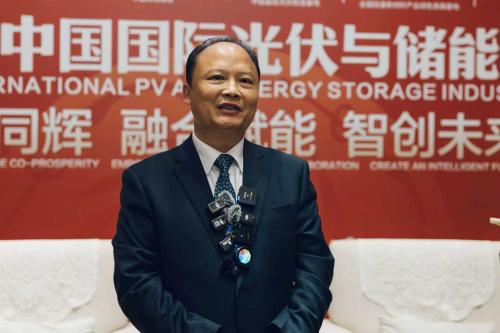
"储能电芯很缺""光伏链主企业还有五倍、十倍以上成长空间""2025第八届中国国际光伏与储能产业大会"传递出这些行业信息
Mei Ri Jing Ji Xin Wen· 2025-11-19 10:59
Core Insights - The term "anti-involution" has become a prominent topic in the photovoltaic industry this year, highlighting the issue of excessive competition leading to price declines across various segments of the solar product supply chain [1][3] - The energy storage sector appears to be recovering faster than the photovoltaic industry, with a notable increase in demand for energy storage cells, despite some caution from industry participants regarding market conditions [1][2] Industry Overview - The photovoltaic industry is currently experiencing an oversupply situation, with significant price drops across the supply chain. For instance, prices for polysilicon, silicon wafers, batteries, and modules have decreased by approximately 10%, 20%, 15%, and 2% respectively since the beginning of the year [2] - Major companies in the photovoltaic sector are still facing operational pressures, with many reporting losses. However, recent quarterly reports indicate some recovery, with leading firms like Tongwei and Longi Green Energy showing reduced losses [2] Competitive Landscape - Companies are focusing on cost reduction and efficiency improvements while also pushing for innovation in response to the competitive pressures of "involution." The shift towards larger 210mm silicon wafers is seen as a way to enhance energy conversion efficiency [2] - The industry is urged to adopt a "big picture" mindset, balancing individual competitiveness with the overall health of the industry ecosystem to avoid detrimental competition [3][5] Technological Developments - New technologies in solar cells, such as perovskite and various combinations of existing technologies, are being explored, although stability and maturity remain concerns [6] - The energy storage market is witnessing a surge in demand, particularly for lithium iron phosphate batteries, driven by the declining costs of photovoltaic products and the economic viability of energy storage solutions [7][8] Market Dynamics - The energy storage sector is projected to grow significantly, with new installations expected to reach 73.76 million kilowatts by the end of 2024, accounting for over 40% of global installations and an annual growth rate exceeding 130% since the 14th Five-Year Plan [8] - The need for innovative business models and fair profit-sharing mechanisms among various stakeholders in the energy sector is emphasized to ensure sustainable growth and collaboration [9][10] Future Outlook - The photovoltaic industry is expected to achieve high-quality collaborative development over the next five to ten years, provided that anti-involution measures are effectively implemented [3][5] - The integration of energy storage with renewable energy sources is anticipated to create a more efficient and economically viable energy system, particularly in regions with high renewable energy generation [11]
新型储能项目,国家能源集团这样干!
中关村储能产业技术联盟· 2025-11-19 08:43
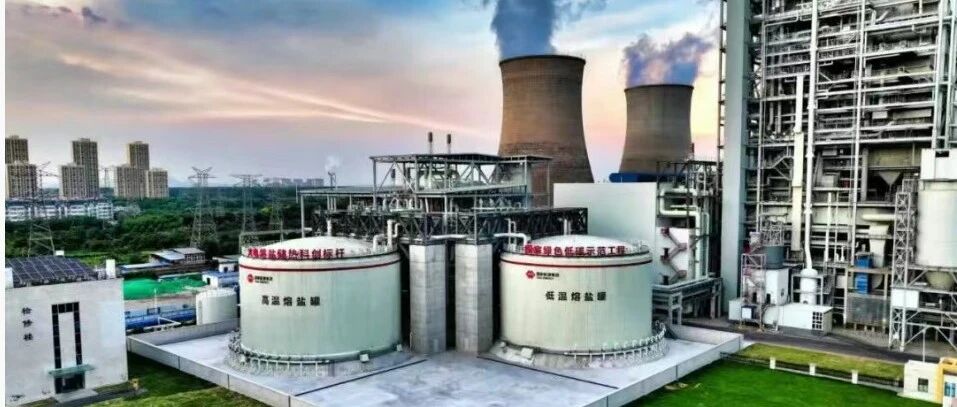
Core Viewpoint - The article emphasizes the significant development of new energy storage systems by the State Energy Group, highlighting the establishment of a clean, low-carbon, safe, and efficient energy system as part of the "14th Five-Year Plan" [2] Group 1: New Energy Storage Projects - The State Energy Group has 191 new energy storage projects in operation, with a total capacity of 7.7 million kilowatts and 18.39 million kilowatt-hours, focusing on a model of "new energy with storage" [2] - The largest "fire power molten salt storage" project in China has been fully operational at the Anhui Suzhou Power Plant, with a storage capacity of 1,000 megawatt-hours, addressing the dual challenges of heating and power generation [3] - The Lingzhou Power Plant's first shared storage demonstration station has a capacity of 137.6 megawatts and 275.2 megawatt-hours, utilizing idle facilities from decommissioned coal power plants [5][6] Group 2: Innovative Storage Technologies - The Wenzhou Meiyu new energy storage station in Zhejiang, with a capacity of 100 megawatts and 200 megawatt-hours, is a demonstration project for new energy storage in the province, integrating distributed storage and photovoltaic systems [7] - The Ningdong photovoltaic base project in Ningxia features a mixed storage technology with a total capacity of 100 megawatts and 200 megawatt-hours, addressing grid stability issues in harsh environments [10] - The Baishu Storage Power Station in Chongqing, with a capacity of 100 megawatts and 400 megawatt-hours, introduces a "shared storage + grid collaboration" model, enhancing renewable energy consumption [12] Group 3: Advanced Storage Solutions - The Penglai Power Plant in Shandong has developed a composite storage project integrating four types of storage technologies, achieving deep integration with the electricity market [14] - The Taishan Power Plant in Guangdong features a 60 megawatt and 60 megawatt-hour electrochemical storage station, optimizing frequency regulation through advanced control systems [16] - The Boao Zero Carbon Demonstration Zone in Hainan has implemented a 5 megawatt and 10 megawatt-hour all-vanadium flow long-duration storage system, promoting low-carbon building applications [18] Group 4: Future Directions and Goals - The State Energy Group is committed to advancing innovative storage technologies and applications, focusing on long-duration, hybrid, and grid-structured storage solutions to support the transition to a green and low-carbon energy system [24]
2025公用事业改革与政府监管论坛在京举办
Zhong Guo Jing Ji Wang· 2025-11-19 05:50
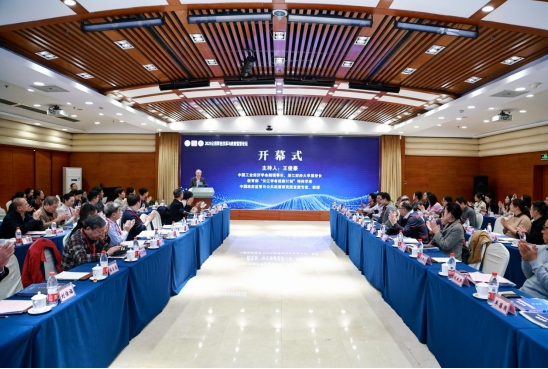
Core Insights - The "2025 Public Utility Reform and Government Regulation Forum" was held in Beijing, focusing on the direction of public utility reform and government regulation in China [1][3] - The forum emphasized the importance of equal access to basic public services and the need for a public resource allocation mechanism that matches the resident population [3] - Experts discussed various topics related to public utility regulation, including the challenges in the current regulatory system and the need for innovative approaches in energy systems [4] Group 1 - The forum was co-hosted by several organizations, including Zhejiang University of Finance and Economics and the China Urban Science Research Association [1] - The opening ceremony was led by Professor Wang Junhao, highlighting the significance of the event [1] - The forum attracted over 150 experts, scholars, and industry representatives from the public utility and government regulation sectors [4] Group 2 - Researcher Shi Dan emphasized the need for a coordinated and efficient regulatory framework, addressing issues such as fragmentation and insufficient capacity in the current system [3] - Professor Jiang Bixin discussed optimizing government regulation and enhancing regulatory effectiveness from a legal perspective [3] - Researcher Qiu Baoxing proposed a shift in energy systems from centralized control to a more interactive model, leveraging distributed energy resources [4] Group 3 - Various expert presentations covered topics such as the blind spots in water utility regulation, sustainable urban renewal through regulatory innovation, and the characteristics of real estate brokerage platforms in China [4] - The discussions aimed to explore how standard regulations can enhance the resilience of urban public utilities and the role of artificial intelligence in regulatory innovation [4]
独立储能机遇与产业实操 (闭门分享会)
第一财经· 2025-11-19 05:29
Core Insights - The article discusses the opportunities and operational practices in the independent energy storage market, highlighting the importance of policy support and market dynamics in driving growth [5][6]. Group 1: Market Analysis and Development - The independent energy storage market is driven by national "dual carbon" goals and the construction of a new power system, with policies continuously improving and diversifying revenue models [5]. - China's independent energy storage capacity is rapidly increasing, with cumulative installations expected to exceed 100 GW by 2025 and aim for 180 GW by 2027 [5]. - Revenue models for independent storage include spot trading, ancillary services, and capacity pricing, with regional variations in profitability [5]. - Key challenges include high financing thresholds, long investment return cycles, and frequent provincial policy changes affecting revenue stability [5]. Group 2: Project Selection and Investment Logic - Site selection strategies prioritize areas with favorable grid structures, renewable energy absorption capabilities, and mature policies [5]. - Core operational metrics for equipment include online rate, operational efficiency, depth of charge and discharge, and capacity degradation rate [5]. - Independent storage systems participate in various electricity market transactions, including medium to long-term contracts and ancillary services [5]. Group 3: Market Development Strategies - Successful project development relies on three pillars: investment strategy, technical solutions, and revenue models [6]. - The article outlines market development strategies and pitfalls in different regions, including East China, North China, South China, and Northwest China [6]. - Future directions include deepening electricity market reforms and enhancing operational professionalism to ensure safety and profitability [6]. Group 4: Financing and Risk Management - The financing leasing sector presents both opportunities and challenges for independent energy storage, with a focus on risk management and operational practices [6]. - Statistics on financing leasing companies' investments in independent storage from 2023 to 2025 are provided, highlighting key players in the market [6]. - Innovative financing models such as "City Investment+", F+EPC+F, and cross-border leasing are discussed, along with case studies and lessons learned [6].

储能系列报告(一):从“配角”到“主角”,储能前景广阔
Ping An Securities· 2025-11-19 05:11
Investment Rating - The report maintains an "Outperform" rating for the electric equipment and new energy sector [1] Core Viewpoints - The rapid development of new energy sources poses challenges to the power system's regulation and support capabilities, necessitating a transition from a "source-grid-load" model to a "source-grid-load-storage" model, with energy storage becoming a crucial foundation for the new power system [2][11] - The demand for energy storage is expected to grow significantly due to energy security and carbon neutrality strategies, with China's wind and solar installed capacity projected to continue increasing [2][30] - As of September 2025, China's new energy storage capacity has exceeded 100GW, representing over 40% of the global total, but the penetration rate remains low compared to the overall power system, indicating substantial growth potential [2][41] Summary by Sections Concept - Energy storage refers to devices that convert and store electrical energy, acting as a "reservoir" in the power system. It helps balance real-time energy production and consumption, improving power quality and efficiency [7][9] Logic - The demand for energy storage is driven by the need for energy security and carbon neutrality, with significant growth expected in wind and solar installations. By the end of 2024, China's wind and solar installed capacity is projected to reach 1.4 billion kW, accounting for 42% of total power generation capacity [2][19] - The penetration of new energy storage is still low, with only 2.7% of total installed capacity and 5.9% of new energy capacity as of September 2025, indicating ample room for growth [2][41] Technology Routes and Installation Status - The report outlines various technology routes for energy storage, including pumped hydro storage and electrochemical storage, with lithium batteries being the primary growth driver. The current installed capacity of new energy storage in China is substantial but still small relative to the overall power system [3][41] Investment Recommendations - The report suggests that the total installed capacity of wind and solar will continue to grow, and the penetration rate of energy storage has significant room for improvement. It recommends investing in leading companies in the energy storage sector, such as Sunshine Power and Haibo Technology, which are well-positioned to capitalize on the growth opportunities in both domestic and international markets [2][45]
多项网间电力灵活互济工程获核准
Ke Ji Ri Bao· 2025-11-19 00:44
Core Viewpoint - The approval of the Xiangqian, Xiangyue, and Yuchuan flexible interconnection power projects will significantly enhance the power transmission capacity between the Southern Power Grid and the State Grid, with a total investment exceeding 15.6 billion yuan and a maximum transmission capacity of 9 million kilowatts by 2027 [1][2]. Group 1 - The three projects are set to start construction by the end of this year and are expected to be operational before the summer peak in 2027, increasing the number of transmission channels between the Southern Power Grid and the State Grid from 2 to 5 [1]. - Each of the three projects will involve the construction of a 3 million kilowatt flexible DC back-to-back converter station in Guizhou, Hunan, and Chongqing, along with related line construction to enhance interconnectivity [1][2]. - The projects will provide a solid physical foundation for normalized electricity trading between interconnected regions, supporting high-quality economic and social development and green energy demands [1]. Group 2 - The Xiangqian project will enable peak-shaving interconnection between Hunan, which experiences high electricity load in summer, and Guizhou, which has a "winter high, summer low" load characteristic, thus enhancing power supply security and renewable energy absorption [2]. - In case of extreme weather events, such as high temperatures or severe cold, the Xiangqian project will allow for emergency power support from the opposite side, significantly improving the grid's disaster response capability [2]. - The Southern Power Grid and the State Grid will enhance collaboration and resource investment to ensure high-quality construction and operation of the projects, accelerating the development of a new energy system and power structure [2].