
生成式AI

Search documents
Kneron 在 CES 2026 推出全栈式边缘AI 方案|直击CES
Xin Lang Cai Jing· 2026-01-12 02:19
Core Insights - Kneron showcased its full-stack edge AI product matrix at CES 2026, focusing on the migration of AI from cloud to edge across various sectors including consumer electronics, smart homes, smart transportation, industrial IoT, and enterprise computing [1][4] Group 1: Technology and Product Offerings - Kneron's technology emphasizes local computation, ultra-low latency, low power consumption, and high reliability, providing a secure and private AI experience by keeping data local and managing it centrally [1][4] - The newly launched full-stack edge AI system supports a complete path from pilot deployment to enterprise-scale implementation, integrating Kneron's proprietary NPU architecture, AI chips, secure operating systems, inference engines, and unified management platforms [1][4] Group 2: Product Specifications - The Kneo 330 targets small and medium enterprises, retail stores, clinics, light industrial production lines, and smart buildings, enabling automation in reporting, community healthcare AI-assisted diagnosis, visual quality inspection, facial recognition, and behavior analysis, with significantly lower power consumption compared to GPU solutions [5] - The Kneo 350 is designed for medium to large enterprises, factories, and regional edge data centers, offering four times the computing power of the Kneo 330 and supporting multi-user concurrency, with built-in AI Agent development frameworks and dialogue systems for complex applications [5] - Kneo Rack, developed in collaboration with Quantea, aims at large institutions and cross-scenario deployment needs, creating a private AI cloud that operates in standard office environments without the need for liquid cooling systems, thus significantly reducing energy consumption, cooling, and total cost of ownership (TCO) [5]

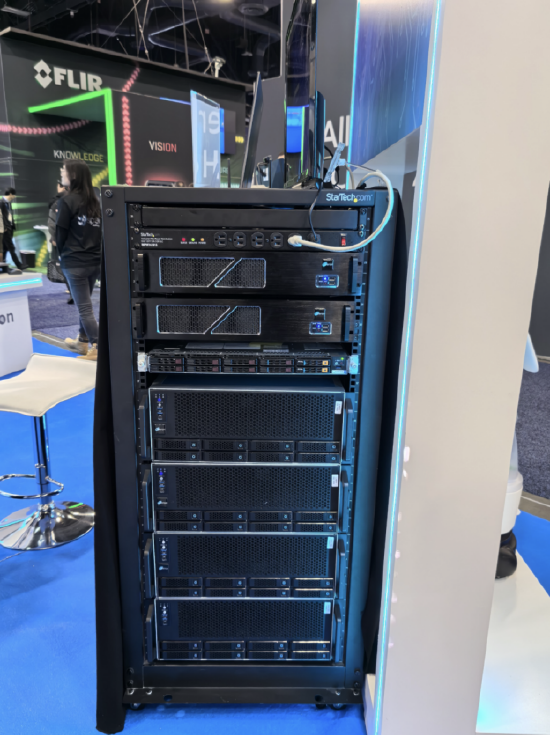
微盟集团加速AI战略布局,正式发布微盟星启GEO解决方案
Jin Rong Jie· 2026-01-12 01:47
Core Insights - Weimob Group (2013.HK) has launched the Weimob Star Start solution, utilizing self-developed Generative Engine Optimization (GEO) technology to enhance brand visibility in the AI ecosystem and drive performance growth for clients [1][2] - The shift from traditional search to AI-driven search is transforming the traffic ecosystem, with Gartner predicting that by 2028, 50% of search engine traffic will be captured by AI searches [1][2] Group 1 - The Weimob Star Start solution aims to improve brand presence in the AI era by enabling brands to be discovered, understood, and recommended through a new conversational information entry point [2] - The solution employs AI-driven non-linear logic based on search intent, facilitating a full-link marketing loop that includes capturing user intent, diagnosing AI visibility, and content strategy planning [2][3] - The business of Weimob Star Start has already expanded across various industries, including consumer goods, digital appliances, business services, and software applications, showcasing strong market demand and commercial conversion capabilities [2][3] Group 2 - The launch of the Weimob Star Start solution signifies Weimob Group's further enhancement of its "AI + Marketing" business layout, positioning itself in the trillion-dollar brand marketing sector [3] - Over the past three years, Weimob has focused on AI Agent application ecosystems, reshaping its core SaaS and precision marketing business models while exploring opportunities in both consumer and overseas markets [3][4] - Weimob is strategically positioning itself at a critical juncture in the evolution of AI marketing technology, aiming to transform from content production tools to information distribution infrastructure [4]
2026年将是AI应用的大年
2026-01-12 01:41
2026 年将是 AI 应用的大年 20260110 摘要 2026 年 AI 产业重点在于大模型与端侧垂直领域 AI 硬件协同重塑现实场 景,而非单一技术突破,预示着 AI 应用从云端向边缘侧的深化。 AI 应用发展具节奏性,预计 2026 年一、三季度表现突出,二、四季度 平缓,虽短期涨幅或不显著,但相关标的为 2027、2028 年硬件、软件 炒作主力,需提前布局。 AI 技术重塑行业结构,类比互联网发展初期,2023-2030 年为业务模 式和变现模式定型关键期,营销和电商仍是主要变现途径,AR 时代或有 创新。 人形机器人预计 2026 年进入家庭市场,关键在于自动驾驶技术迁移及 伦理限制突破,结合生成式 AI 重塑应用场景,需关注技术融合与政策影 响。 AI 对供需两侧产生联动影响,AI 工具助力内容生产,但变现依赖评价体 系变革,供给端需优化内容质量,需求端或更信任少数可信信息源。 AI 时代产业链价值分配将重构,流量至上模式不再适用,需关注价值链 利益重新分配,以及央国企和党媒的价值回归。 2026 年关注大模型与垂直硬件、端侧应用结合,尤其在营销、电商领 域,以及生成式 AI 与现实世界细微 ...
微盟集团(2013.HK)加速AI战略布局,正式发布微盟星启GEO解决方案
Ge Long Hui· 2026-01-12 00:53
Core Insights - Weimob Group has launched the GEO solution "Weimob Xingqi," utilizing self-developed Generative Engine Optimization (GEO) technology to enhance brand visibility in the AI ecosystem and drive customer performance in the AI search era [1][2] - The shift from traditional search to AI-driven search is transforming the traffic ecosystem, with predictions indicating that by 2028, 50% of search engine traffic will be captured by AI searches [1][2] - Weimob's strategy focuses on leveraging its strengths in SaaS and precision marketing to capitalize on opportunities in the AI generative application ecosystem [1][3] Weimob Xingqi Solution - The Weimob Xingqi solution employs AI search intent-based non-linear logic, utilizing full-link data monitoring, intelligent content generation, and smart distribution to enhance brand visibility in AI platforms [2] - The solution creates a comprehensive marketing loop that captures user intent, diagnoses AI visibility, plans content strategy, and executes distribution, thereby increasing brand exposure and consumer choice [2] - The solution has already been implemented across various industries, including consumer goods, digital appliances, business services, and software applications, demonstrating strong market demand and commercial conversion capabilities [2] AI and Marketing Strategy - The launch of the Weimob Xingqi solution signifies Weimob Group's commitment to enhancing its "AI + Marketing" business layout and solidifying its position in the trillion-dollar brand marketing sector [3] - Over the past three years, Weimob has focused on AI Agent application ecosystems, reshaping its core SaaS and precision marketing business models while exploring opportunities in both consumer and overseas markets [3] - Future product launches include a multimodal generative AI product for small and micro e-commerce operators and a customized AI solution for enterprise clients, indicating a robust pipeline for AI-driven offerings [3] Industry Trends and Future Outlook - Weimob is strategically positioned to leverage the evolution of AI marketing technology, transitioning from content production tools to information distribution infrastructure [4] - The company anticipates that by 2026, AI large model technology will accelerate industrial application, prompting further strategic expansion in both B2B and B2C sectors [4] - Weimob aims to drive digital upgrades for both enterprise and individual users, fostering business model iterations and growth potential for high-quality development [4]
微盟集团加速AI战略布局 正式发布微盟星启GEO解决方案
Zhi Tong Cai Jing· 2026-01-12 00:42
Core Insights - Weimob Group has launched the GEO solution Weimob Star Start, utilizing self-developed Generative Engine Optimization (GEO) technology to enhance brand visibility in the AI ecosystem and drive brand exposure and performance growth in the AI search era [1][2] - The shift from traditional search to AI-driven search is transforming the traffic ecosystem, with Gartner predicting that by 2028, 50% of search engine traffic will be captured by AI searches [1][2] Group 1 - The Weimob Star Start solution employs AI search intent-based non-linear logic, utilizing full-link data monitoring, intelligent content generation, and smart distribution to create a comprehensive marketing loop that enhances brand visibility in AI dialogues [2][3] - The solution has already been implemented across various industries, including consumer goods, digital appliances, business services, and software applications, demonstrating strong market demand and commercial conversion capabilities [2][3] Group 2 - The launch of the Weimob Star Start solution signifies Weimob Group's advancement in the "AI + Marketing" business layout, positioning itself strategically in the trillion-dollar brand marketing sector [3][4] - Weimob Group is focusing on AI Agent application ecosystems and has introduced several AI products over the past three years, including Weimob WAI and WIME, while also investing in North American AI innovation [3][4]
腾讯研究院AI速递 20260112
腾讯研究院· 2026-01-11 16:01
Group 1 - The core viewpoint of the article is that the AI industry is entering an "overcapacity" era, with significant advancements in AI models like GPT-5.2, which achieved a 75% accuracy rate on the ARC-AGI-2 benchmark, surpassing the human average of 60% at a cost of less than $8 per question [1] - OpenAI predicts that by 2026, the gap between model capabilities and actual usage will widen, indicating that advancements in AGI will not solely depend on model breakthroughs [1] - Future AI competition will shift focus towards systems, processes, and human-machine collaboration, emphasizing application layers and commercial scenarios in healthcare rather than just model parameter competition [1] Group 2 - Anthropic has cut off xAI and other competitors' access to its Claude AI, forcing xAI engineers to develop their own solutions, highlighting a shift in AI tools from neutral infrastructure to competitive weapons [2] - OpenAI's immediate partnership with OpenCode to integrate Codex contrasts with Anthropic's closed strategy, which has been criticized for missing the opportunity to define foundational standards for the Agent era [2] - The incident underscores a strategic consensus among tech companies that core capabilities cannot be outsourced, as it is crucial for survival in the industry [2] Group 3 - Elon Musk announced the open-sourcing of X's latest recommendation algorithm within seven days, aiming to enhance transparency in social media algorithms [3] - The new algorithm, rebuilt from scratch by xAI, operates on over 20,000 GPUs at the Colossus data center, with the goal of ensuring that quality content is visible regardless of follower count [3] - Following the algorithm's launch, user engagement time increased by 20%, marking a significant shift towards transparency in social media platforms [3] Group 4 - Tailwind CSS has experienced a 40% decline in traffic and an 80% drop in revenue due to AI programming tools that reduce the need for developers to consult documentation [4] - Despite a weekly download rate exceeding 26 million, the shift to AI-generated code has disrupted the traditional business model of converting documentation traffic into paid products [4] - Companies like Google, Cursor, and Shopify have stepped in to provide sponsorship, indicating a crisis in the business model of open-source projects in the AI era [4] Group 5 - Tsinghua University has developed the DrugCLIP framework, which redefines virtual screening as a dense retrieval task, achieving a speed increase of 10 million times compared to traditional molecular docking methods [7] - The framework is trained on a dataset of 3 trillion tokens and can screen samples in just 0.023 seconds, demonstrating significant efficiency in drug discovery [7] - The project has completed over 10 trillion protein-ligand scoring calculations, creating a database that covers nearly 10,000 human targets, with a hit rate of 15%-17.5% in wet lab experiments [7] Group 6 - YC's internal review indicates a reusable path for building AI-native companies is forming, with Anthropic surpassing OpenAI as the most used API among founders in the Winter 26 batch, accounting for over 52% [8] - The AI economy is stabilizing, with clear differentiation between model, application, and infrastructure layers, suggesting that competition will focus on effectively turning models into products [8] - YC's review suggests that even if there is overcapacity similar to the telecom bubble, the overbuilt infrastructure will eventually lead to the emergence of application-layer companies, with startups currently in the deployment phase [8] Group 7 - After securing $500 million in funding, Yang Zhilin shared Kimi's technology roadmap for 2025, focusing on improving token efficiency and expanding long-context capabilities [9] - The development of the Muon second-order optimizer aims to double token efficiency, while the KimiLinear architecture achieves 6-10 times efficiency improvement in long-range tasks [9] - The Kimi K2 model achieved a 45% accuracy rate on the HLE benchmark, surpassing OpenAI, emphasizing the unique worldview created by each token [9] Group 8 - Anthropic has detailed its evaluation process for Agents, combining code, model, and human evaluators to distinguish between capability and degradation assessments [10] - The evaluation framework includes five key elements: tasks, attempts, evaluators, records, and results, using pass@k and pass^k metrics to measure "finding solutions" and "stability" [10] - The approach begins with 20-50 real failure cases to build assessments, ensuring the validity of evaluations through record checks to avoid reactive cycles [10] Group 9 - The AGI-Next summit brought together leaders from various AI companies, discussing the evolution from "chatbots" to "working agents" [11] - Key concepts included RLVR (verifiable reward reinforcement learning) and "machine sleep," with discussions on the integration of understanding and generation in AI architectures [11] - The roundtable highlighted the need for a focus on meaningful advancements rather than merely replicating existing capabilities, emphasizing the importance of risk-taking in China's AI development [11]

三星晶圆厂,终于要翻身?
半导体行业观察· 2026-01-11 04:23
Core Viewpoint - Samsung's semiconductor foundry business is crucial for its overall strategy, facing challenges and opportunities as it transitions from 3nm to 2nm technology, aiming to regain market share against TSMC [1][2][21] Group 1: Historical Context and Challenges - Samsung entered the foundry market in 2005 with minimal revenue, initially overshadowed by TSMC's nearly $10 billion revenue [1] - The company achieved a significant milestone in 2014 by producing 14nm FinFET technology, surpassing TSMC at that time [1] - However, Samsung faced setbacks with its 5nm node due to yield issues and misrepresentation, leading to a loss of trust among fabless companies [1][2] Group 2: Transition to 2nm Technology - Starting in 2024, Samsung is focusing all resources on 2nm technology, shifting its strategy to prioritize stability and yield improvement [3] - The new 2nm process utilizes an upgraded MBCFET architecture, improving transistor performance by 11% to 46% and reducing leakage by approximately 50% [3][4] - Initial yield rates for the 2nm process were low, starting at 30% in February 2024, but improved to 40% by April 2024 [4] Group 3: Production Capacity and Market Strategy - By 2025, Samsung's 2nm yield stabilized between 50% and 60%, meeting commercial production requirements [5] - The company plans to establish a 2nm production line in its Taylor, Texas facility, aiming for a monthly output of 21,000 wafers by the end of 2026 [5] - Samsung is diversifying its 2nm product roadmap to cater to various markets, including high-performance computing and automotive electronics [5][6] Group 4: Strategic Shift to Physical AI Market - Samsung is pivoting towards the emerging physical AI market, where competition is less established compared to the data center AI market dominated by TSMC [7][8] - The company aims to leverage its flexible pricing and supply strategies to attract clients in the cost-sensitive physical AI sector [8] - Automotive semiconductors are identified as a key entry point for Samsung into the physical AI market, with significant partnerships already established [9][10] Group 5: Customer Ecosystem and Competitive Positioning - Samsung is restructuring its customer base to include a wider range of clients, moving away from reliance on a few large customers [12][13] - The company is enhancing its support systems and technical teams to improve responsiveness and service quality for diverse clients [15] - Samsung's vertical integration across semiconductor manufacturing, packaging, and memory production provides a competitive edge in total cost of ownership (TCO) [19][20] Group 6: Differentiation Strategy - Samsung is focusing on niche markets where TSMC has less presence, such as mature process technologies and advanced packaging solutions [17][18] - The company has established partnerships to enhance its capabilities in mature process nodes, particularly in automotive and aerospace applications [18] - Samsung's advanced packaging solutions, including the SAINT series, aim to improve performance and reduce power consumption, further solidifying its market position [19][20]


设备大厂,开年狂飙
半导体行业观察· 2026-01-11 04:23
Core Viewpoint - ASML is positioned for a strong 2026, driven by the adoption of High-NA EUV technology and robust demand from regions outside China, despite a projected decline in sales from the Chinese market [1][5]. Group 1: High-NA EUV Technology - The semiconductor industry has officially entered the High-NA EUV era, with each system costing approximately $380 million, enabling manufacturers to create features nearly half the size of current EUV systems, crucial for advanced nodes like 1.4nm and 1nm [3]. - Intel has completed acceptance testing for its first High-NA systems for mass production, while Samsung has begun receiving deliveries for its upcoming 2nm foundry line [3]. - ASML's unique position as the sole supplier of High-NA EUV systems creates a significant competitive barrier, ensuring its critical role in the industry for the next decade [3]. Group 2: Chinese Market Normalization - China has been a major customer for ASML, contributing over 40% of sales during 2024-2025, but stricter regulations are expected to lead to a significant decline in revenue from this market in 2026 [5]. - Despite the downturn in China, ASML's management anticipates that total net sales in 2026 will not fall below 2025 levels, supported by strong demand from Taiwan, the U.S., and South Korea [5]. - Geopolitical pressures are reshaping ASML's market strategy, emphasizing the necessity of its tools while reducing reliance on regional policy fluctuations [5]. Group 3: DRAM and HBM Growth Cycle - The demand for generative AI is driving a significant increase in high-bandwidth memory (HBM) and advanced DRAM investments, creating a critical bottleneck in the AI supply chain [7]. - Major storage companies like SK Hynix and Micron are rapidly expanding their EUV production capabilities to meet the surging demand from data center clients [7]. - This trend provides ASML with a strategic growth avenue, diversifying its customer base beyond logic chip manufacturers to include storage manufacturers, which is vital for maintaining strong order volumes in 2026 [7]. Group 4: Stock Attractiveness - ASML's current trading price reflects a 45x multiple on expected earnings for fiscal year 2026, indicating a premium due to its direct benefits from the AI-driven capital expenditure cycle [9]. - Tech giants are projected to invest over $400 billion in AI infrastructure in 2026, with a significant portion directed towards advanced chips requiring ASML's lithography equipment [9]. - The lack of substantial competitors in cutting-edge lithography technology positions ASML favorably, with a strong order backlog and persistent demand supporting its investment thesis [9].

一句话找卷子走红,千问APP学习相关需求周环比增长超100%
Xin Lang Cai Jing· 2026-01-10 11:13
Core Insights - A Chinese AI application, Qianwen APP, has identified a practical "killer application" in the education sector, specifically for final exam reviews [1] Group 1: Application Performance - The demand for learning-related capabilities in Qianwen APP has reached a new high, with a week-on-week growth exceeding 100% [1] - The need for accessing past exam papers has surged dramatically, with a reported increase of over 300% in just five days [1] Group 2: Market Trends - The trend of using Qianwen APP for finding exam papers is becoming increasingly popular, indicating a shift in how students prepare for exams [1]
一句话找卷子走红 千问APP学习相关需求周环比增长超100%
Di Yi Cai Jing· 2026-01-10 11:04
Core Insights - A Chinese AI application, Qianwen APP, has identified a practical "killer application" in the education sector, specifically for final exam reviews [1] - The demand for learning-related capabilities within the Qianwen APP has surged, with a week-on-week increase exceeding 100% as final exam preparations peak [1] - The need for accessing past exam papers has seen a dramatic rise, with requests increasing over 300% in just five days, indicating a growing trend in utilizing AI for educational purposes [1]