
新型城镇化

Search documents
飞鹿股份跌2.04%,成交额1.58亿元,主力资金净流出720.94万元
Xin Lang Cai Jing· 2025-08-28 03:04
Company Overview - Zhuzhou Feilu High-tech Materials Technology Co., Ltd. is located in Hunan Province, established on May 21, 1998, and listed on June 13, 2017. The company specializes in the research, production, sales, and integrated construction of high-tech materials, including anti-corrosion coatings, waterproof coatings, and floor coatings [2] Business Performance - For the first half of 2025, the company achieved operating revenue of 238 million yuan, representing a year-on-year growth of 48.77%. However, the net profit attributable to the parent company was -38.66 million yuan, an increase of 18.97% year-on-year [2] - The company's main business revenue composition includes: coating construction 31.28%, anti-corrosion coatings 27.19%, waterproof coatings 14.16%, waterproof membranes 13.38%, engineering construction 12.14%, adhesives 1.48%, and other business income 0.38% [2] Stock Performance - As of August 28, the stock price of Feilu shares was 9.59 yuan per share, with a market capitalization of 2.1 billion yuan. The stock has increased by 54.68% year-to-date but has seen a decline of 11.78% in the last five trading days [1] - The stock has appeared on the daily trading leaderboard four times this year, with the most recent appearance on August 26, where it recorded a net buy of 5.12 million yuan [1] Shareholder Information - As of June 30, 2025, the number of shareholders increased by 21.22% to 11,200, with an average of 12,475 circulating shares per person, a decrease of 17.56% [2][3] - The company has distributed a total of 26.70 million yuan in dividends since its A-share listing, with 9.47 million yuan distributed in the last three years [3]
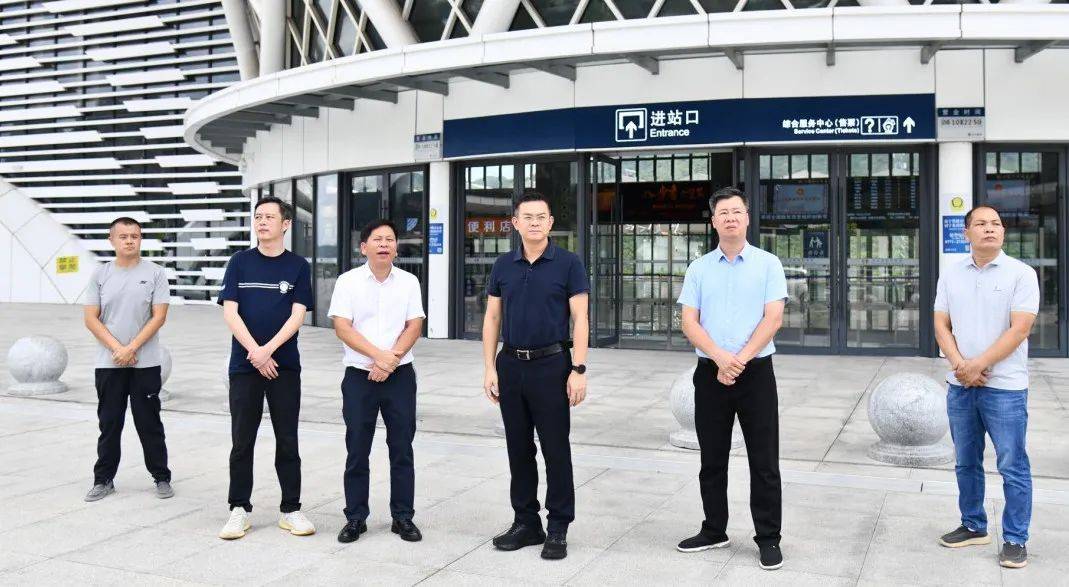
县委书记张东到贵南高铁马山县站、苏博工业园区调研项目建设运营、企业生产经营情况
Sou Hu Cai Jing· 2025-08-28 00:11
Group 1 - The county party secretary Zhang Dong conducted a special investigation on the planning and construction of the high-speed rail area, enterprise production operations, and key project construction in the Guinan High-speed Railway Mashan Station and Subo Industrial Park [1][4] - In Subo Industrial Park, Zhang Dong emphasized the importance of enterprises strengthening their confidence in development, seizing opportunities, and increasing investment in technological innovation to enhance core competitiveness and expand market space [3] - Zhang Dong encouraged relevant departments to enhance investment attraction, strengthen service awareness, and actively coordinate to solve difficulties and bottlenecks in project construction, providing strong support for the projects [3] Group 2 - At the Guinan High-speed Railway Mashan Station, Zhang Dong inquired about the project's construction progress, functional layout, and future planning, focusing on key issues such as infrastructure support and traffic organization optimization [4] - Zhang Dong urged relevant departments to adopt a spirit of "innovation and practical work" to overcome challenges and promote new urbanization in Mashan County, ensuring that construction tasks are implemented effectively [4]

党的创新理论如何内化为取之不竭的营养
Ren Min Ri Bao· 2025-08-27 22:19
Group 1 - The core viewpoint emphasizes the importance of understanding and internalizing the Party's innovative theories as a means to transform subjective perspectives into practical applications [1][4] - The recent Central Urban Work Conference highlighted the significance of cities in modernization and the necessity for effective urban management strategies [2][3] - The concept of "People's City" was introduced, focusing on modernizing urban areas to enhance the quality of life for citizens [2][3] Group 2 - The article discusses the need for a comprehensive understanding of Xi Jinping's thoughts on urban development, particularly through the study of relevant literature [5][6] - It outlines the evolution of urban development strategies, transitioning from rapid growth to stable, quality-focused development [3][7] - The importance of a systematic approach to urban planning is emphasized, addressing various aspects such as ecology, culture, and safety [8][9] Group 3 - The relationship between urban and rural development is crucial, advocating for integrated urbanization and rural revitalization to address common challenges [10] - The article stresses the necessity of practical application of innovative theories to enhance urban governance and improve citizens' lives [11][16] - It highlights the need for a people-centered approach in urban development, ensuring that modernization benefits the population [17]
志特新材股价下跌5.26% 上半年净利润同比激增906%
Jin Rong Jie· 2025-08-27 19:52
Core Viewpoint - ZhiTe New Materials reported significant growth in revenue and net profit for the first half of 2025, indicating strong business performance despite recent stock price decline [1] Financial Performance - For the first half of 2025, ZhiTe New Materials achieved operating revenue of 1,293.28 million yuan, representing a year-on-year increase of 14.02% [1] - The net profit attributable to shareholders surged to 76.20 million yuan, marking a remarkable increase of 906.32% year-on-year [1] - The company's overseas business revenue reached 30.72 million yuan, reflecting a growth of 27.31% compared to the previous year [1] Stock Performance - As of August 27, 2025, ZhiTe New Materials' stock price was 13.51 yuan, down 0.75 yuan or 5.26% from the previous trading day's closing price [1] - The stock opened at 15.01 yuan, with a high of 15.25 yuan and a low of 13.32 yuan, with a trading volume of 491,345 hands and a transaction amount of 699 million yuan [1] - On August 27, the company experienced a net outflow of main funds amounting to 165.96 million yuan, accounting for 2.98% of the circulating market value [1] - Over the past five days, the net outflow of main funds totaled 183.90 million yuan, representing 3.31% of the circulating market value [1] Company Overview - ZhiTe New Materials is primarily engaged in the research, development, production, and sales of aluminum alloy templates, which are widely used in the construction industry [1] - The company is associated with various concept sectors, including decoration and renovation, Jiangxi sector, new urbanization, artificial intelligence, and the Growth Enterprise Market [1]
精工钢构上半年营收99.11亿元同比增29.48%,归母净利润3.50亿元同比增28.06%,毛利率下降2.25个百分点
Xin Lang Cai Jing· 2025-08-27 11:14
Core Insights - The company reported a revenue of 9.911 billion yuan for the first half of 2025, representing a year-on-year increase of 29.48% [1] - The net profit attributable to shareholders was 350 million yuan, up 28.06% year-on-year, while the net profit excluding non-recurring items was 302 million yuan, reflecting a 22.75% increase [1] - The basic earnings per share stood at 0.18 yuan, with a weighted average return on equity of 3.87% [1] Financial Performance - The gross margin for the first half of 2025 was 10.59%, a decrease of 2.25 percentage points year-on-year, while the net margin was 3.57%, down 0.05 percentage points compared to the same period last year [1] - In Q2 2025, the gross margin was 11.95%, showing a year-on-year decline of 2.09 percentage points but a quarter-on-quarter increase of 2.79 percentage points; the net margin was 4.53%, up 0.31 percentage points year-on-year and 1.98 percentage points quarter-on-quarter [1] Expense Analysis - The company's period expenses amounted to 737 million yuan, an increase of 20.7031 million yuan compared to the previous year, with a period expense ratio of 7.43%, down 1.92 percentage points year-on-year [2] - Sales expenses decreased by 7.53% year-on-year, while management expenses increased by 4.23%, R&D expenses rose by 7.75%, and financial expenses decreased by 25.38% [2] Business Overview - The company, founded on June 28, 1999, and listed on June 5, 2002, is located in Shanghai and specializes in the design, manufacturing, installation, and engineering services of steel structure buildings [2] - The revenue composition includes industrial buildings (60.92%), public buildings (27.29%), EPC (9.99%), and other segments [2] - The company is categorized under the construction decoration industry, specifically in the professional engineering and steel structure sector, and is associated with concepts such as undervalued stocks and new urbanization [2]

政策东风助力城市更新 杭州园林第二季度净利润同比增长101.2%
Quan Jing Wang· 2025-08-27 10:29
Group 1 - The central urban work conference in 2025 emphasizes the goal of building a modern, innovative, livable, beautiful, resilient, civilized, and smart city, focusing on high-quality urban development and urban renewal as a key strategy [1] - The National Development and Reform Commission plans to increase investment in new urbanization, particularly in urban renewal, municipal infrastructure, safety resilience enhancement, and smart city construction [1] - The policy support is expected to create significant market opportunities for companies in the urban development sector, particularly for Hangzhou Landscape, which specializes in landscape design and engineering contracting [1] Group 2 - Hangzhou Landscape has been a leading company in the domestic landscape architecture industry since 1987, providing comprehensive design services and project management through the EPC model [2] - The company has accumulated extensive industry experience and technical strength, having participated in major projects such as the comprehensive protection of the West Lake scenic area and the G20 Summit in Hangzhou [2] - Hangzhou Landscape has received numerous awards for its design capabilities, including the IFLA Asia-Pacific "Chairman's Award" and various national engineering design awards [2] Group 3 - The recent policy document outlines three key tasks for urban renewal: renovating old residential areas, improving infrastructure, and enhancing the protection of historical and cultural heritage [3] - Hangzhou Landscape aims to leverage its full industry chain capabilities in urban renewal, ecological restoration, and cultural heritage protection, providing comprehensive solutions for new urbanization [3] - As urban renewal initiatives progress and financial support increases, leading companies with technical expertise and brand influence are expected to benefit first [3]

森赫股份跌6.08%,成交额8310.65万元,近3日主力净流入-1539.39万
Xin Lang Cai Jing· 2025-08-27 09:52
Core Viewpoint - The stock of Senhe Elevator Co., Ltd. experienced a decline of 6.08% on August 27, with a trading volume of 83.11 million yuan and a market capitalization of 2.93 billion yuan [1] Group 1: Company Overview - Senhe Elevator Co., Ltd. is located in Huzhou, Zhejiang Province, and was established on December 7, 2007. It was listed on September 7, 2021. The company specializes in the research, manufacturing, and sales of elevators, escalators, and moving walkways, as well as providing installation, debugging, maintenance, and aftermarket services [6] - The main revenue composition of the company includes: elevators (84.67%), installation services (8.88%), escalators and moving walkways (3.92%), spare parts (1.69%), and other services (0.83%) [6] - As of August 20, the number of shareholders of Senhe Elevator was 10,100, an increase of 2.62% from the previous period, with an average of 17,358 circulating shares per person, a decrease of 2.55% [6] Group 2: Financial Performance - In the first quarter of 2025, Senhe Elevator achieved operating revenue of 102 million yuan, a year-on-year decrease of 44.51%, and a net profit attributable to the parent company of 16.47 million yuan, down 42.22% year-on-year [7] - The company has distributed a total of 227 million yuan in dividends since its A-share listing, with 173 million yuan distributed over the past three years [8] Group 3: Market Dynamics - The company has seen a net outflow of 12.56 million yuan from major funds today, accounting for 0.15% of the total, ranking 120 out of 193 in the industry. This marks the third consecutive day of reduction in major fund positions [3] - The average trading cost of the stock is 10.58 yuan, with recent reductions in positions slowing down. The current stock price is near a support level of 10.82 yuan, indicating potential for a rebound if this level holds [5]

“十五五”规划的两条主线(国金宏观张馨月)
雪涛宏观笔记· 2025-08-26 10:03
Core Viewpoint - The "15th Five-Year Plan" aims to achieve high-quality economic development through the expansion of domestic demand and the overall leap in new productive forces, which will mutually drive each other [2][20]. Group 1: Macroeconomic Environment - The "15th Five-Year Plan" period is crucial for achieving socialist modernization by 2035, with a key quantitative goal of doubling GDP per capita from 2020 levels by 2035, requiring an average annual GDP growth rate of over 4.4% from 2026 to 2035 [4][5]. - The external environment will face increased geopolitical risks and uncertainties, necessitating a focus on domestic development to maintain strategic initiative [7][9]. - Internally, insufficient effective demand, particularly in consumer spending, is identified as a major contradiction, with China's consumption rate significantly lower than that of developed countries [9][12]. Group 2: Internal Changes - The aging population will accelerate during the "15th Five-Year Plan," with the proportion of people aged 65 and over expected to reach 18.3% by 2030, posing challenges to economic growth and consumer demand [12]. - Urbanization will transition from rapid growth to stable development, with the urbanization rate projected to reach 70% by 2024, indicating significant potential for domestic demand expansion [15][16]. - The shift towards new industrialization is essential, with a focus on technological innovation to upgrade industrial structures and avoid falling into the "middle-income trap" [19][41]. Group 3: Domestic Demand as a Mainline - The plan emphasizes the need to enhance income distribution systems to increase residents' disposable income, particularly for middle and low-income groups, which are crucial for expanding domestic demand [23][27]. - Strengthening social security for middle and low-income groups is a priority, with a focus on improving public services and reducing household consumption burdens [29]. - Optimizing the consumption supply structure is vital, with a significant shift towards service consumption expected as the economy matures [30][31]. Group 4: Technological Advancement - The "15th Five-Year Plan" will prioritize the development of new productive forces, focusing on localized industrial development and breaking through key technological bottlenecks [42][43]. - Emphasis will be placed on increasing investment in basic research and development, aiming to raise the proportion of basic R&D spending significantly [45]. - The plan will also support the transformation and upgrading of traditional industries, promoting high-end, intelligent, and green manufacturing practices [49][50]. Group 5: Consumption Mechanisms - Establishing a long-term mechanism to promote consumption is critical, with potential indicators for consumption rates being introduced to guide economic policy [33][36]. - The plan will enhance statistical methods related to consumption to better reflect its impact on economic growth [36]. - Local government assessment mechanisms will be adjusted to prioritize consumption promotion, moving away from production-oriented evaluations [36][37].
苏交科涨2.26%,成交额2.93亿元,主力资金净流入38.09万元
Xin Lang Zheng Quan· 2025-08-26 07:08
Group 1 - The stock price of Sujiao Technology increased by 2.26% on August 26, reaching 9.95 CNY per share, with a trading volume of 293 million CNY and a turnover rate of 2.50%, resulting in a total market capitalization of 12.565 billion CNY [1] - Year-to-date, Sujiao Technology's stock price has decreased by 1.09%, but it has seen a 1.02% increase over the last five trading days, a 4.08% increase over the last 20 days, and a 9.94% increase over the last 60 days [1] - The company primarily engages in traffic engineering consulting and contracting, with 99.70% of its revenue coming from engineering consulting services [1] Group 2 - As of June 30, the number of shareholders for Sujiao Technology was 60,800, a decrease of 8.52% from the previous period, while the average number of circulating shares per person increased by 9.31% to 19,686 shares [2] - For the first half of 2025, Sujiao Technology reported a revenue of 1.776 billion CNY, a year-on-year decrease of 13.75%, and a net profit attributable to shareholders of 95.3948 million CNY, down 39.54% year-on-year [2] - Since its A-share listing, Sujiao Technology has distributed a total of 1.421 billion CNY in dividends, with 466 million CNY distributed over the last three years [3] Group 3 - As of June 30, 2025, Hong Kong Central Clearing Limited was the tenth largest circulating shareholder of Sujiao Technology, holding 7.7531 million shares, a decrease of 315,000 shares from the previous period [3]

冠龙节能股价微跌0.54% 成交额突破2.27亿元
Jin Rong Jie· 2025-08-25 17:13
Group 1 - The stock price of Guanlong Energy as of August 25, 2025, is 24.15 yuan, down 0.54% from the previous trading day, with a trading volume of 227 million yuan and a turnover rate of 16.89% [1] - Guanlong Energy operates in the general equipment industry, focusing on the research and manufacturing of energy-saving equipment, primarily serving sectors such as water conservancy construction and new urbanization [1] - The company's current total market capitalization is 4.081 billion yuan, with a circulating market value of 1.346 billion yuan [1] Group 2 - Recent market attention towards Guanlong Energy has been moderate, with a trend of capital outflow observed [1] - On August 25, the net outflow of main funds was 4.6047 million yuan, with a cumulative net outflow of 84.0308 million yuan over the past five days [1]