
产业升级

Search documents
10.4万亿千瓦时!中国1年用电量是美国的2倍多,比欧盟+俄罗斯+印度+日本总和还高?
Sou Hu Cai Jing· 2026-01-17 19:37
Core Insights - China's total electricity consumption has reached a historic milestone of 10.4 trillion kilowatt-hours in 2025, marking a 5% year-on-year increase, which is more than double the annual electricity consumption of the United States and exceeds the combined total of the EU, Russia, India, and Japan [1][3]. Group 1: Understanding the Scale of Electricity Consumption - The figure of 10.4 trillion kilowatt-hours translates to nearly 7,500 kilowatt-hours per person annually for China's 1.4 billion population, sufficient for an average household to use continuously for over 60 years [3]. - This consumption level is double that of China's total electricity usage in 2015, indicating a significant growth over the past decade [3]. Group 2: Drivers of Electricity Consumption Growth - The surge in electricity consumption is primarily driven by three key factors: the strong performance of emerging industries, increased residential consumption, and robust green electricity supply [5]. - Emerging industries, particularly high-tech and equipment manufacturing, have seen substantial electricity consumption growth, with electric vehicle manufacturing exceeding 20% and wind energy equipment manufacturing surpassing 30% [6]. - Residential electricity consumption has increased by 6.3% due to the rise of smart appliances and electric vehicles, while the recovery in the service sector, including tourism and dining, has contributed to an 8.2% increase in electricity usage [7]. - The share of green electricity is also rising, with wind and solar power installations expected to reach approximately 370 million kilowatts, accounting for 22% of total electricity generation [8]. Group 3: Implications for Global Energy Landscape - China's record electricity consumption not only signifies a numerical achievement but also reshapes multiple energy dynamics, showcasing the strength of its power system with a total installed capacity of 3.8 billion kilowatts and a reliability rate of 99.924% [9]. - From a global perspective, China is becoming the core engine of electricity demand growth, contributing significantly to the expected 4% annual increase in global electricity demand over the next three years, with emerging economies accounting for 85% of this growth [9]. - The increase in green electricity supply offers a "Chinese solution" for global energy transition, exemplified by the cross-regional transmission of green electricity from Inner Mongolia to Hainan [9].

青海外贸从“速度领先”向“量质齐升”转变
Xin Lang Cai Jing· 2026-01-17 17:41
Core Insights - Qinghai's foreign trade is experiencing rapid growth, leading the nation in growth rates, but the total volume remains relatively small, indicating a need for improvement in the province's industrial outward orientation and value chain advantages [1] - The Qinghai Provincial Department of Commerce plans to implement three core measures: industrial upgrading, business model innovation, and nurturing key players to transition foreign trade from "speed leading" to "quality and quantity improvement" [1] Group 1: Industrial Upgrading - The focus is on transforming the previous model that primarily exported raw materials to one that extends into high-tech and high-value-added terminal segments [1] - In the salt lake chemical sector, efforts will be made to support the export of high-value fine chemicals such as battery-grade lithium carbonate and high-purity magnesium chloride [1] - In the renewable energy sector, leading companies will be supported to move from exporting battery cells to higher-value products like modules and energy storage systems [1] Group 2: Business Model Innovation - The integration of "industrial belt + cross-border e-commerce" will be deepened, with the establishment of specialized online industry halls in Xining and Haidong [2] - There will be a push for the construction of overseas warehouses, encouraging companies to set up intelligent overseas hubs in Belt and Road Initiative countries and key RCEP markets [2] - The aim is to cultivate benchmark enterprises in foreign trade services to provide comprehensive digital services for SMEs, significantly lowering the barriers and costs of international operations [2] Group 3: Nurturing Key Players - An external trade entity doubling plan will be initiated, establishing a gradient cultivation database for enterprises and implementing tailored guidance [2] - There will be a focus on enhancing collaboration among various departments, including customs and tax authorities, to address common challenges such as export tax refund acceleration and cross-border settlement facilitation [2] - The goal is to create a stable, fair, transparent, and predictable international business environment, encouraging enterprises to venture abroad and promoting diversified, high-quality development of Qinghai's foreign trade [2]
古茗戚侠:年轻人的消费动机正从为身份买单转向为情绪价值付费
Xin Lang Cai Jing· 2026-01-17 17:24
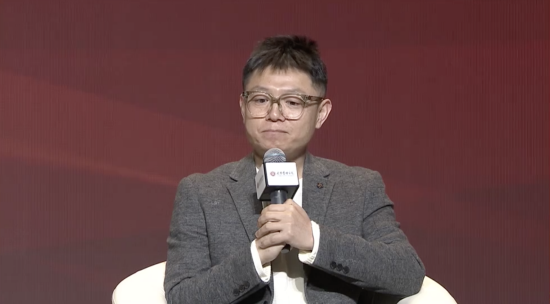
专题:第27届北大光华新年论坛 1月17日,"第27届北大光华新年论坛"在北京举行,主题为"内需主导,聚力增长:开启'十五五'新征 程"。古茗联合创始人戚侠出席并演讲。 戚侠表示,越来越多的年轻人消费行为转向明显,从几年前热衷讨论名牌包、限量鞋,转向如今更愿意 为能给办公桌增添趣味的好玩"小物件"买单,消费动机正从为身份买单转向为情绪价值付费。 专题:第27届北大光华新年论坛 1月17日,"第27届北大光华新年论坛"在北京举行,主题为"内需主导,聚力增长:开启'十五五'新征 程"。古茗联合创始人戚侠出席并演讲。 戚侠表示,越来越多的年轻人消费行为转向明显,从几年前热衷讨论名牌包、限量鞋,转向如今更愿意 为能给办公桌增添趣味的好玩"小物件"买单,消费动机正从为身份买单转向为情绪价值付费。 他坦言,面对消费不足的行业环境,他对其所在的食品饮料行业依然保有信心,信心根源在于食品饮料 领域仍存在巨大的"价值升级空间"。 戚侠认为,通过聚焦产业升级,能够创造被消费者认可的价值,而"有价值就有付费"。 新浪声明:所有会议实录均为现场速记整理,未经演讲者审阅,新浪网登载此文出于传递更多信息之目 的,并不意味着赞同其观点或证 ...
激活餐饮消费新动能 首期“商务会客厅”(餐饮专场)启幕
Sou Hu Cai Jing· 2026-01-17 05:50
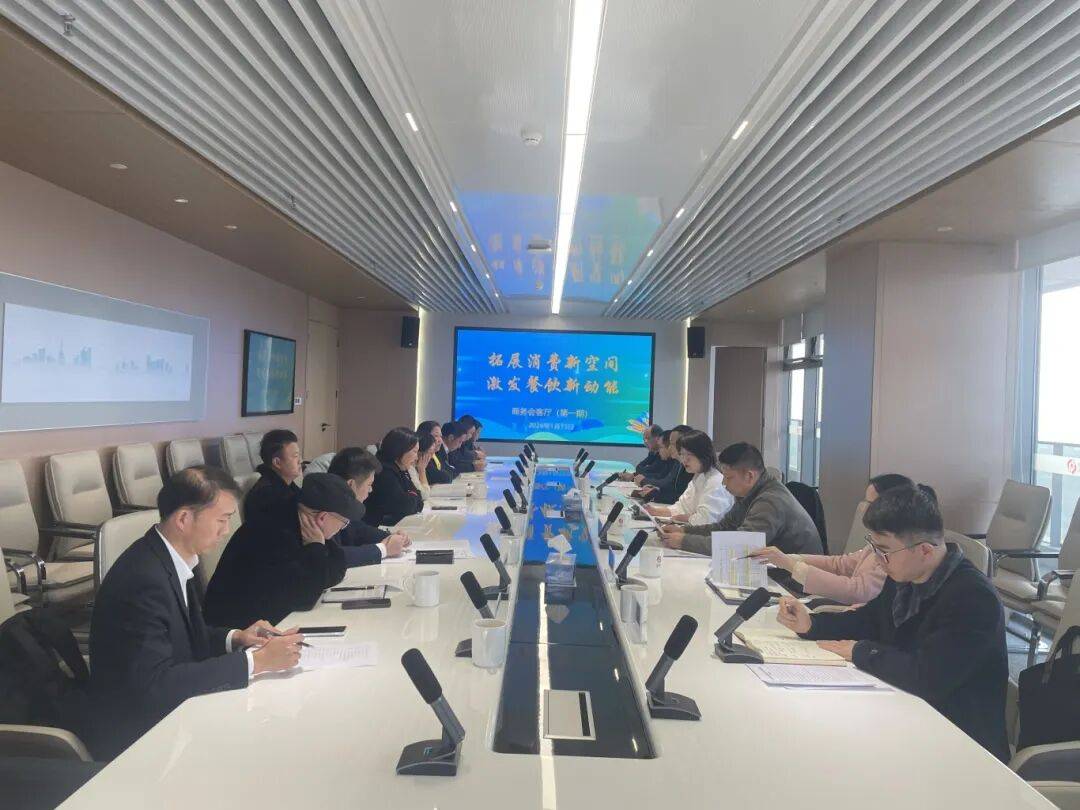
在交流发言环节,各县区商务部门及企业家代表围绕当前餐饮行业存在的品牌辨识度不高、业态同质化明显、消费体验感不强等问题展开热烈讨论,并就 如何打造"渝钤美食 新余味道"、推动餐饮与文旅融合等方面提出了一系列务实建议。 李敏敏在与大家交流中指出,一是要以更大格局谋划行业发展。餐饮企业及协会要打破传统思维,围绕城市更新、文旅融合、乡村振兴等大局,积极布 局"餐厅+农场""餐饮+文创"等复合业态,打造具有地域特色和情感价值的消费场景。二是要以更高视野推动协同融合。行业协会要发挥纽带作用,促进不 同业态、不同规模企业之间的资源共享与跨界合作,提升行业整体竞争力。同时,商务部门将强化部门协调机制,联动城管、市场监管、公安等单位,为 餐饮业健康发展营造良好环境。三是要以更实举措抓好品牌建设。全力推动《新余餐饮业现状调研报告》落实,加快建立"渝钤美食 新余味道"认证体 系,推进仙女湖有机鱼标准化开发,启动"一桌宴"品牌工程,力争2026年形成一批可体验、可传播的餐饮名片。 1月15日下午,2026年第一期"商务会客厅"在投资新余会客厅举行。本期聚焦餐饮行业发展,以"拓展消费新空间,激发餐饮新动能"为主题,邀请县区商 务部门负 ...
建发股份:“金融+资源+科技”三箭齐发,供应链运营业务加快“升维”步伐
Xin Lang Cai Jing· 2026-01-17 05:27
Core Viewpoint - Xiamen C&D Group and its core listed platform C&D Inc. are establishing a solid foundation for 2026 through a series of strategic collaborations, moving beyond traditional supply chain operations to initiate a significant transformation [1][8]. Group 1: Financial Support - Recent interactions with financial institutions, including a visit from the president of Bank of Communications, have provided a robust foundation for the stable development of C&D's supply chain operations [2][9]. - The strategic cooperation agreement signed with the Export-Import Bank of China will offer long-term, stable, and cost-effective credit support for C&D's international strategy, particularly in cross-border trade and supply chain infrastructure [2][9]. - The dual support system of commercial and policy-based finance will provide C&D with essential resources and risk buffers in a complex international environment, aligning the company's strategy with national policies [3][10]. Group 2: Resource Control - C&D is transforming from a "trade distributor" to an "industry chain organizer" through strategic partnerships, enhancing its control over key resources [4][11]. - A strategic cooperation agreement with Hainan Resources Group will allow C&D to access stable resources like rubber and coffee, leveraging the advantages of the Hainan Free Trade Port [4][11]. - In the renewable energy sector, a partnership with CATL will integrate C&D's logistics and warehousing capabilities into the global battery production and recycling system, opening up significant market opportunities [5][12]. Group 3: Technological Advancement - C&D is enhancing its supply chain efficiency and creating new value through digital transformation and the development of an interconnected industrial ecosystem [7][14]. - The company is implementing advanced technologies such as AI and big data to optimize its risk management and operational processes, ensuring a robust supply chain operation [7][14]. - Strategic collaborations with major players like Huawei and CATL are not isolated events but part of a tightly woven value network that strengthens C&D's core supply chain capabilities [7][14].

从“会种地”到“慧种地”:惠来81名稻农的全产业链赋能之旅
Nan Fang Nong Cun Bao· 2026-01-17 03:02
Core Insights - The article discusses a training program aimed at enhancing the efficiency and profitability of rice farming in Hui Lai County, focusing on a comprehensive approach that integrates production and market strategies [9][12]. Group 1: Training Program Overview - The training program, organized by the Hui Lai County Agricultural and Rural Bureau, successfully completed its curriculum with 81 participants, emphasizing "grain and oil production capacity enhancement" [9][10]. - The program included 56 hours of instruction, covering various aspects of the rice industry, from production techniques to market strategies [10][12]. Group 2: Addressing Industry Challenges - The training specifically targeted the issue of "high yield but low efficiency" in rice production, aiming to improve the economic returns for farmers [15][16]. - Course content was designed to connect various elements of the rice supply chain, including green pest control, smart machinery, quality management, processing, storage, and e-commerce marketing [18][19]. Group 3: Practical Learning Experience - The training shifted from traditional lecture-based learning to hands-on experiences, allowing participants to apply their knowledge in real-world settings [25][26]. - Participants operated drones for precision farming and learned to analyze rice quality using professional equipment, enhancing their understanding of product standards [36][37]. Group 4: Market and Sales Strategies - The program emphasized the importance of storytelling and effective marketing in selling rice, encouraging participants to rethink traditional sales approaches [40][41]. - The use of the "Cloud Smart Farmer" app was introduced to help participants access market information and connect with expert resources, facilitating a shift from producers to business operators [48][49]. Group 5: Future Development and Support - The Hui Lai County Agricultural and Rural Bureau plans to continue supporting the participants through online communities and technical follow-ups, aiming to foster the adoption of new ideas and practices among a broader group of farmers [53][55].

富士康加码投资河南 合资公司与扩产项目齐推进
Sou Hu Cai Jing· 2026-01-17 02:06
Core Insights - Foxconn has established its first state-owned joint venture in Zhengzhou, named Henan Hongchuang Technology Co., Ltd., with a registered capital of 2 billion yuan, focusing on high-end electronic product precision manufacturing, expected to commence production in Q2 2026 [1][2] - The expansion project of Foxconn's production line is actively under construction, with plans to build two new factories totaling approximately 100,000 square meters, aimed at optimizing production layout and expected to be delivered by May 2026 [3][7] Company Developments - The joint venture between Foxconn's subsidiary and Zhengzhou Airport Investment Group signifies a deepening relationship and commitment to the region, promoting the advancement of Henan's electronic information industry towards high-end and intelligent development [1][2] - The expansion project is described as a stable development and enhancement of existing industry, providing a solid foundation for regional economic growth, while the new joint venture is expected to inject new vitality into regional development, creating a "dual-drive" for the electronic information industry in Zhengzhou Airport [7] Economic Impact - Zhengzhou Airport Zone reported that by 2025, Foxconn's Zhengzhou Comprehensive Bonded Zone is projected to achieve a total import and export value of 435.956 billion yuan, representing a year-on-year growth of 15.84%, with exports reaching 263.418 billion yuan, up 17.82%, significantly supporting the growth of Henan's import and export activities [7]

不只“钱多多”,更让“钱活活”
Xin Lang Cai Jing· 2026-01-17 00:12
Core Insights - Guangdong's financial ecosystem has evolved from a "fund reservoir" to a "development accelerator," creating a symbiotic relationship between deposits and loans that supports industrial upgrades and economic vitality [1] Group 1: Deposit Growth - Guangdong's total deposits reached 38.7 trillion yuan, with a year-on-year growth of 5.7%, reflecting the vitality of the local economy [1] - The increase in demand deposits, which grew by 9.7%, indicates rising economic activity, with businesses experiencing improved cash flow and consumer confidence gradually recovering [1][2] - Household deposits increased by 1.3 trillion yuan, with a growth rate of 9.3%, while household consumption loans saw a decline, suggesting a need for confidence restoration in consumer spending [2] Group 2: Loan Structure Optimization - The balance of loans in key sectors reached 12.7 trillion yuan, growing by 10.8%, with significant contributions from the elderly care industry (95.0% growth) and green loans (24.2% growth) [3] - Loans to manufacturing and infrastructure sectors reached 3.6 trillion yuan and 6.8 trillion yuan, respectively, with growth rates of 11.7% and 9.2%, indicating a shift towards high-quality economic development [3] - Rural loans grew by 9.9%, supporting balanced regional development and agricultural financing [3] Group 3: Financing Costs - The average interest rate for new loans dropped to 3.32%, a decrease of 71 basis points from the beginning of the year, alleviating the financial burden on enterprises and boosting investment confidence [4][5] - The People's Bank of China in Guangdong has implemented measures to maintain competitive market order and transparency in loan costs, enhancing the financing environment for businesses [5] Group 4: Financial Innovation - Guangdong has introduced several first-of-their-kind financial initiatives, including green foreign debt pilot programs and online transaction services for agricultural loans, providing innovative support for the real economy [6] - The integration of financial innovation with policy benefits is crucial for fostering a sustainable economic cycle, demonstrating that financial growth is rooted in real economic development [6] Group 5: Regulatory Support - The People's Bank of China in Guangdong is committed to supporting high-quality economic development through effective monetary policy and financial reforms, aiming to enhance the financial environment for key strategic areas [7][8] - The focus will be on promoting financial resources towards technology innovation, advanced manufacturing, and rural revitalization, ensuring a robust financial framework for future growth [8]
央企重大项目开工“赶前抓早”
Zheng Quan Ri Bao· 2026-01-16 16:26
Group 1 - The core point of the news is the commencement of major infrastructure projects by central enterprises in China, signaling a strong push for investment and development in various sectors, including energy and construction [1][2][3] Group 2 - China National Nuclear Corporation's Jiangsu Xuwei Nuclear Energy Heating Power Plant has begun concrete pouring for its first unit, marking the start of the world's first large-scale coupling project between nuclear energy and the petrochemical industry [1] - The first phase of the project plans to construct two Hualong One reactors and one high-temperature gas-cooled reactor, which will supply 32.5 million tons of industrial steam annually and generate over 11.5 billion kilowatt-hours of electricity [1] - The project is expected to reduce coal consumption by 7.26 million tons and cut carbon dioxide emissions by 19.6 million tons each year, providing high-quality low-carbon industrial steam to the Lianyungang petrochemical industry base [1] Group 3 - In January, China Energy Investment Corporation's Ningxia Tengger 1.5 million kilowatt wind power project is set to officially commence construction, with a total installed capacity of 1.5 million kilowatts and plans to install 209 wind turbines [2] - The company also plans to start construction on the Dadu River Danba Hydropower Station in the first quarter of this year [2] Group 4 - State Grid Corporation of China announced that its fixed asset investment during the 14th Five-Year Plan period is expected to reach 4 trillion yuan [3] - The concentrated launch of major projects by central enterprises is seen as a clear signal of increased investment, which is expected to have multiplier effects on economic stability and growth [3] - These investments are anticipated to provide strong momentum for China's economy in the current year and lay a foundation for future economic transformation and competitiveness over the next five to ten years [3]


阿尔及利亚冷轧钢板产业进入投产阶段
Shang Wu Bu Wang Zhan· 2026-01-16 16:10
Group 1 - The cold-rolled steel plate plant of Tosyali Algérie in Béthioua, Algeria, is set to commence production between August and September 2026, forming an integral part of Algeria's flat steel industry [1] - The plant will produce galvanized and coated steel plates, primarily targeting the automotive, automotive parts, home appliances, construction, and shipbuilding industries, with a designed annual capacity of 1.4 million tons [1] - The overall steel production capacity in the Béthioua steel complex will increase from 6 million tons to 8 million tons by 2026, with the number of large production units rising from 17 to 22 [1] Group 2 - Tosyali is transitioning from traditional long steel products to high-value-added flat steel to meet local demand in Algeria's automotive, home appliance, and manufacturing sectors, thereby reducing import dependency [1] - The company has successfully issued 15 billion dinars in corporate bonds in July 2025 to support its industrial expansion projects, including flat steel production [1] - The cold-rolled steel plate project signifies Algeria's acceleration in building a domestic steel supply system for the automotive and manufacturing sectors, which has strategic importance for industrial upgrading and trade structure optimization [2]