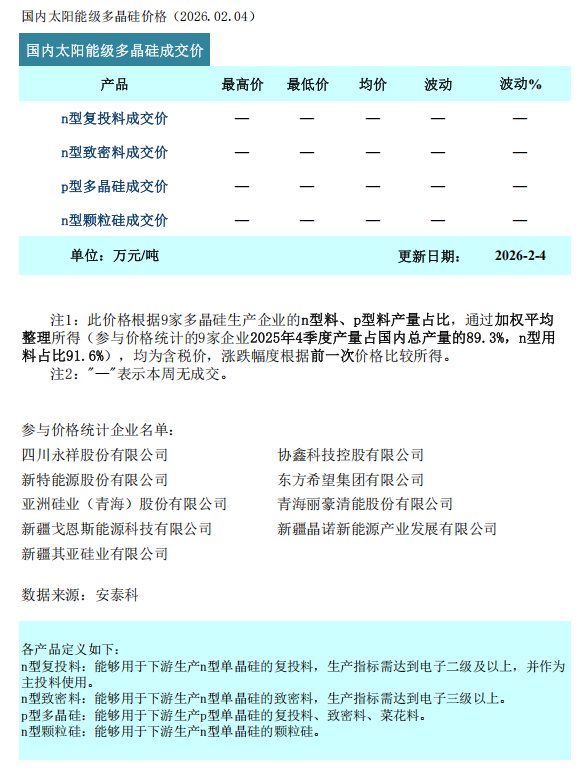
太阳能级多晶硅

Search documents
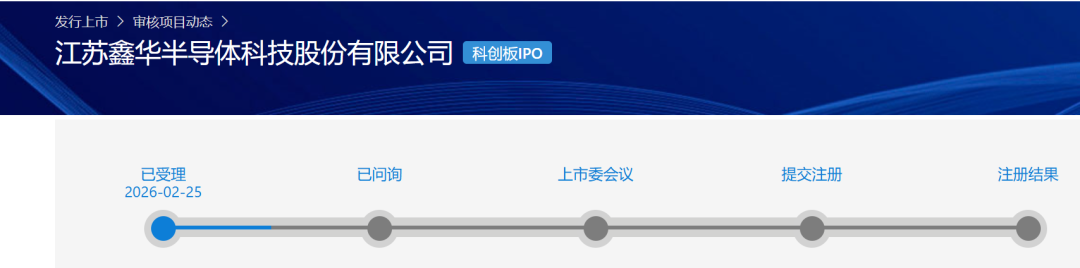
鑫华科技冲击科创板:供应商高度集中,产品单一
Shen Zhen Shang Bao· 2026-02-26 06:49
Core Viewpoint - Jiangsu Xinhua Semiconductor Technology Co., Ltd. (Xinhua Technology), a leading domestic producer of electronic-grade polysilicon, has had its IPO application accepted by the Shanghai Stock Exchange, marking the first IPO application accepted in the Year of the Horse [1]. Company Overview - Established in 2015, Xinhua Technology focuses on the R&D, production, and sales of electronic-grade polysilicon for the semiconductor industry, which is a critical raw material in the semiconductor manufacturing supply chain [3]. - The company has developed a stable mass production process and built a large-scale production line with an annual capacity of 5,000 tons, making it the largest and technologically advanced producer of electronic-grade polysilicon in China [3]. - Xinhua Technology's products meet international advanced standards and are used by leading domestic semiconductor wafer companies, with long-term supply agreements in place [3]. Market Position - Xinhua Technology is projected to hold over 50% market share in the domestic high-purity electronic-grade polysilicon market by 2024, while the remaining market share and international market are still largely dominated by foreign manufacturers [4]. - The company aims to use the funds raised from the IPO to enhance its technological capabilities, build high-end production capacity, and upgrade its R&D system, thereby solidifying its leading position in the semiconductor core materials sector [4]. Fundraising and Investment Plans - The company plans to raise 1.32 billion yuan for various projects, including a 10,000 tons/year high-purity electronic-grade polysilicon industrial cluster project, a 1,500 tons/year ultra-high-purity polysilicon project, and a high-purity silicon material R&D base project [4][5]. Financial Performance - In terms of financial performance, Xinhua Technology reported revenues of 1.274 billion yuan, 946 million yuan, 1.111 billion yuan, and 1.336 billion yuan for the years 2022, 2023, 2024, and the first nine months of 2025, respectively [6]. - The corresponding net profits for the same periods were 149 million yuan, 45.54 million yuan, 68.62 million yuan, and 123 million yuan [6]. Governance Structure - Xinhua Technology does not have a controlling shareholder or actual controller, with the largest shareholder holding 25.55% and the second-largest holding 20.62% of the shares [8][15]. - The current chairman, Nie Wei, is a nominee from Hefei Guocai No. 3 and has a background in investment and management [11].

安泰科:本周多晶硅延续供需双弱格局 市场观望情绪加剧
智通财经网· 2026-02-04 07:47
Group 1 - The core viewpoint of the articles indicates that the polysilicon market is currently experiencing a stalemate, with no quotations or transactions reported for mainstream products this week, leading to a significant increase in market observation sentiment compared to the previous week [1] - The main reasons for the deepening market deadlock include high absolute prices of key materials like silver paste, which continue to exert cost pressure on battery production, limiting downstream acceptance of silicon material prices [1] - As the Spring Festival approaches, uncertainty in the operating plans of downstream silicon wafer and battery manufacturers has led to a delay in short-term procurement demand, while simultaneous production cuts by silicon material companies have somewhat alleviated supply pressure [1] Group 2 - In January, domestic polysilicon production was approximately 102,000 tons, a month-on-month decrease of 8.3%, primarily due to supply reductions from companies like Yongxiang and Lihua Qingneng, while increases came from the resumption of production by companies such as Nanfang and Tianrui [1] - For February, polysilicon production is expected to be further reduced to below 85,000 tons, with silicon wafer companies planning slight reductions in operating rates, aligning demand for silicon materials at around 80,000 tons, which matches supply levels [1] - The short-term outlook for the polysilicon market is expected to maintain a weak supply-demand balance, with soft demand before the Spring Festival and supply contraction continuing to dominate the observation stance, making significant price fluctuations unlikely [2]
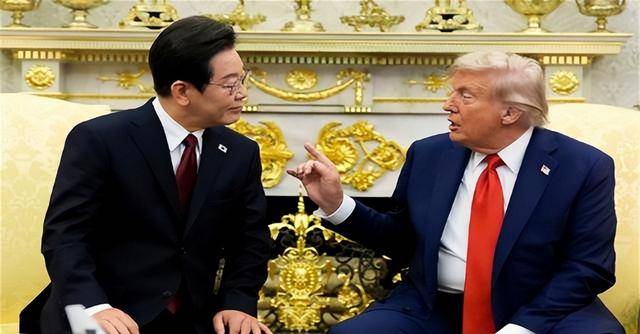
特朗普“夜袭”韩国!不到24小时,中国挥出重拳:113%关税
Sou Hu Cai Jing· 2026-01-27 12:44
Group 1 - The U.S. imposed significant tariffs on South Korean products, including automobiles, pharmaceuticals, and timber, due to perceived non-compliance with previous agreements [1][3] - The trade agreement signed in 2025 required South Korea to invest $350 billion in the U.S. and purchase $100 billion worth of liquefied natural gas, which was seen as detrimental to South Korea's economy [3] - South Korea's strategy of balancing relations with both the U.S. and China has led to tensions, culminating in the recent tariff imposition by the U.S. [5] Group 2 - China's Ministry of Commerce announced anti-dumping duties on imported solar-grade polysilicon from the U.S. and South Korea, with tariffs on South Korean companies reaching as high as 113% for a duration of five years [7] - The historical context of the solar industry reveals that foreign companies previously manipulated polysilicon prices, leading to significant losses for Chinese firms, prompting the government to take action in 2014 [10][12] - Currently, China dominates the global polysilicon market with an 85% share, while South Korean companies are resorting to low-price dumping strategies, which have now been countered by the new tariffs [12]
产业周跟踪:国网十五五投资高增,商业航天有望持续催化固态电池:电力设备
Huafu Securities· 2026-01-18 13:18
Investment Rating - The report maintains an "Outperform" rating for the industry [7] Core Insights - The report highlights significant growth in the solid-state battery sector, projecting a battery production of 1756 GWh by 2025, representing a 6% year-on-year increase [2][11] - The continuation of anti-dumping duties on polysilicon from the US and South Korea is expected to strengthen China's photovoltaic industry chain and protect domestic production [21][22] - The offshore wind sector benefits from the completion of an 8.4 GW auction in the UK, which is expected to positively impact related Chinese supply chain companies [31][32] - The nuclear fusion sector sees advancements with the "Xuanlong-50U" achieving hydrogen-boron fusion, marking a significant milestone in clean energy development [41][42] - The global energy storage market is projected to reach 498 GWh in 2025, with significant growth in both Germany and the US [45][46] Summary by Sections 1. New Energy Vehicles and Lithium Battery Sector - Solid-state batteries are expected to enhance space energy applications, with a projected production of 1756 GWh by 2025, a 6% increase [2][11] - In December, China's total battery production reached 201.7 GWh, a 62.1% year-on-year increase [11] 2. Photovoltaic Sector - The Ministry of Commerce's extension of anti-dumping duties on US and South Korean polysilicon aims to protect the domestic photovoltaic industry [21][22] - The report indicates that this policy will create a stable environment for domestic polysilicon production and help resist external price pressures [22] 3. Wind Power Sector - The UK completed an 8.4 GW offshore wind auction, which is expected to benefit Chinese supply chain companies [31][32] - The Guangdong Sanshan Island flexible direct current transmission project is progressing well, with production expected to be completed by 2026 [33] 4. Nuclear Fusion Sector - The "Xuanlong-50U" has achieved hydrogen-boron plasma H-mode discharge, marking a key milestone in nuclear fusion technology [41][42] 5. Energy Storage Sector - Global energy storage system shipments are expected to reach 498 GWh in 2025, with significant contributions from domestic manufacturers [45][46] - The report anticipates that the energy storage market will continue to grow rapidly, with projections of 900 GWh in shipments by 2026 [45]
新华财经周报:1月12日至1月18日
Zhong Guo Jin Rong Xin Xi Wang· 2026-01-18 10:48
Economic Policies - The People's Bank of China announced eight policy measures to support economic growth, including a 0.25 percentage point reduction in various structural monetary policy tool rates and an increase of 500 billion yuan in the re-lending quota for agriculture and small enterprises [1][2] - The minimum down payment ratio for commercial property loans has been adjusted to 30% to adapt to changes in the real estate market [2] Financial Market Regulations - The Shanghai, Shenzhen, and Beijing stock exchanges have raised the minimum margin requirement for margin trading from 80% to 100%, aimed at reducing leverage and protecting investors' rights [2] - The China Securities Regulatory Commission is enhancing market monitoring and regulation to prevent excessive speculation and market manipulation [6] Automotive Industry - The China Association of Automobile Manufacturers forecasts that new energy vehicle sales will reach 19 million units by 2026, a year-on-year increase of 15.2% [1][4] - In 2025, China's automotive production and sales are expected to exceed 34 million units, with new energy vehicles accounting for over 50% of domestic new car sales [4] International Trade - The Ministry of Commerce announced the continuation of anti-dumping duties on imported solar-grade polysilicon from the U.S. and South Korea for five years [4][5] - The Ministry of Commerce is providing general guidance on price commitments for Chinese exporters of pure electric vehicles to the EU, aiming to resolve trade concerns [5] Energy Sector - The China Aviation Engine Group has completed the evaluation of several gas turbine innovation projects, marking significant advancements in the gas turbine industry [8]
中方发布5号公告,特朗普如梦初醒,美国商品遭加税,实施期限5年
Sou Hu Cai Jing· 2026-01-17 08:41
Core Viewpoint - The recent imposition of a 25% additional tariff by the U.S. on countries doing business with Iran is seen as a strategic move aimed primarily at pressuring China within the context of U.S.-China geopolitical tensions [1][3]. Group 1: U.S. Tariff Policy - The U.S. tariff policy is perceived as a short-term tactic to gain negotiation leverage, particularly regarding geopolitical issues [3]. - This secondary sanction approach has been previously employed by the U.S. against countries like Russia and Venezuela to achieve political objectives through economic pressure [3]. Group 2: China's Response - China's announcement to continue anti-dumping duties on U.S. and South Korean solar-grade polysilicon is based on a long-standing compliance regulatory framework, reflecting a stable and legitimate trade policy [2][3]. - The anti-dumping measures are aimed at ensuring fair competition for domestic industries, showcasing China's commitment to maintaining a stable economic environment [2][6]. Group 3: Solar Industry Dynamics - Polysilicon is critical to the photovoltaic industry, and China has established a dominant position in this sector, controlling significant market shares in global production [4]. - By 2024, China is projected to hold 97% of the global market share in solar wafers, 87% in solar cells, and 78% in solar modules, indicating a complete dominance of the supply chain [4]. Group 4: Strategic Implications - The U.S. tariff threat not only impacts U.S.-China trade relations but also aims to reshape global supply chains, potentially harming U.S. consumers and businesses if they lose access to the Chinese market [6]. - China's anti-dumping measures signal a commitment to fair competition in the global solar industry, emphasizing the importance of compliance and regulatory frameworks in supporting industry growth [6]. Group 5: Future Outlook - The competition between the U.S. and China in the solar industry is expected to intensify, involving not just price competition but also technological advancements [6]. - For the U.S. to maintain its edge in high-end technology, substantial adjustments in policy support and innovation are necessary, while China must continue to enhance its core competencies in technology development and cost control [6].
特朗普刚说完话,中方发布5号公告:对美国商品加税,执行期限5年
Sou Hu Cai Jing· 2026-01-15 20:05
Core Viewpoint - The article discusses the strategic implications of Trump's proposed tariffs on countries doing business with Iran, particularly targeting China, which has been Iran's largest trading partner for a decade. The response from China, through the continuation of anti-dumping duties on solar-grade polysilicon imports from the US and South Korea, reflects a long-term regulatory strategy rather than a knee-jerk reaction [1][3]. Group 1: Trade Dynamics - Trump's secondary sanctions aim to pressure third parties, particularly China, by increasing tariffs on US imports under the guise of sanctions against Iran [3]. - China's response, articulated through the fifth announcement, is a calculated regulatory move that aligns with WTO rules, demonstrating a methodical approach to trade disputes [3][14]. - The importance of solar-grade polysilicon is emphasized as it is essential for the photovoltaic industry, with over 70% of global solar power plants relying on components produced in China [3]. Group 2: Historical Context - A decade ago, Chinese polysilicon manufacturers faced severe challenges from US and South Korean companies that engaged in price dumping, leading to a significant market share loss for China [5]. - The article highlights the resilience of the Chinese industry, which has since developed advanced technologies and reduced energy consumption in polysilicon production, achieving a competitive edge [5][12]. Group 3: Current Market Position - The tax rates imposed by China on US companies, such as 53.3% on Hemlock and up to 57% on other US firms, have prompted a shift in attitudes among American companies reliant on the Chinese market [7]. - The market share of US and South Korean polysilicon companies in China has diminished significantly, forcing them to seek opportunities in Southeast Asia or India, which cannot absorb their production capacity [9][12]. - China's production costs are now 30% to 40% lower than those of US manufacturers, complicating the competitive landscape for American firms [9]. Group 4: Future Implications - The article suggests that the US's attempts to protect its domestic industries through tariffs have led to increased raw material prices, ultimately impacting American consumers [12]. - The future of US-China relations in the photovoltaic sector is likely to shift from price competition to a focus on technological advancements, with the potential for US and South Korean companies to explore parallel supply chains [12][14]. - China's strategy emphasizes the importance of maintaining core technologies and adhering to international rules, signaling a robust defense against external pressures [14].
特朗普通报全球,他带领美国赢了中国!话音刚落,中方对美征关税
Sou Hu Cai Jing· 2026-01-15 08:03
Group 1 - The core argument presented is that Trump's claim of winning against China through tariffs is misleading, as the burden of tariffs falls on American consumers and businesses rather than China [3][18][21] - The U.S. has implemented multiple rounds of tariffs on Chinese goods, with a cumulative increase of 20% on certain products, which violates WTO regulations and reflects unilateral trade protectionism [5][8][10] - China's response to U.S. tariffs has been strategic, imposing tariffs on U.S. exports such as coal, LNG, and agricultural products, targeting key sectors of the U.S. economy [12][14][16] Group 2 - The impact of tariffs has been detrimental to the U.S. economy, with studies indicating that American households face increased costs, averaging an additional $1,140 annually, disproportionately affecting low-income families [21][23][26] - The U.S. manufacturing sector has experienced significant job losses, with 28,000 jobs evaporating in the automotive industry alone by 2025, and major companies like Ford and GM slowing their transition to electric vehicles [23][26] - In contrast, China has diversified its trade partnerships, reducing its reliance on the U.S. market, with exports to ASEAN countries rising to 18.5% of total trade, and has strengthened its domestic industries in response to U.S. trade pressures [28][30][32] Group 3 - The global photovoltaic industry is dominated by China, which holds over 85% of the global market share in polysilicon production, and is expected to contribute over 65% of global solar cell shipments by 2025 [33][35] - The ongoing trade tensions highlight the lack of winners in trade wars, as both countries suffer economic consequences, emphasizing the need for equal cooperation and mutual benefits [35][40][42] - The article calls for the U.S. to abandon its zero-sum game mentality and return to a path of equal dialogue, which aligns with the interests of both nations in the context of globalization [43]
【行业动态】最高113.8%,中国对美韩多晶硅反倾销税再延五年
Sou Hu Cai Jing· 2026-01-15 04:10
Core Viewpoint - The Chinese Ministry of Commerce announced the extension of anti-dumping duties on imported solar-grade polysilicon from the US and South Korea, effective from January 14, 2026, for a period of five years, to protect the domestic polysilicon industry [2][3]. Group 1: Anti-Dumping Measures - The anti-dumping duties will range from 0% to 2.1% for related products from the US, with specific rates for different companies: Hemlock Semiconductor Corporation at 53.3%, and others at 57% [2]. - South Korean companies will face varied rates, with OCI Corporation at 4.4%, Hanwha Solutions at 8.9%, and others up to 113.8% due to severe dumping circumstances [3]. Group 2: Historical Context - The current measures are a continuation of trade relief actions initiated in 2014, when it was found that US and South Korean companies were exporting polysilicon at prices below normal value, harming domestic producers [3][4]. - The initial duties were set for five years, with adjustments made in 2017 and a review in 2020 leading to the extension of these measures [3]. Group 3: Industry Impact - The policy aims to enhance the cost threshold for US and South Korean imports, thereby stabilizing market shares for domestic leaders like Tongwei and GCL, while also facilitating investment recovery and technological development [4]. - The short-term effect may pressure component manufacturers due to rising raw material costs, but long-term benefits include reduced dependency on foreign supply chains and enhanced competitiveness in the global market [4][5]. Group 4: Global Trade Dynamics - The policy is expected to shift the global polysilicon trade flow, as US and South Korean companies may redirect exports to regions like Southeast Asia, India, and Europe, where no anti-dumping measures are in place [5]. - This move is seen as a countermeasure to previous US tariffs on Chinese solar products, preserving negotiation leverage for China in international trade discussions [5]. Group 5: Strategic Importance - The extension of these duties is crucial for China's energy transition goals, as polysilicon is a key material in the photovoltaic industry, directly impacting the stability of the entire supply chain [5]. - The five-year policy period provides a valuable window for technological upgrades in the domestic polysilicon industry, promoting advancements in high-end materials like N-type and electronic-grade silicon [5].
特朗普话音刚落,中方发布5号公告,对美国商品加税,实施期限5年
Sou Hu Cai Jing· 2026-01-15 03:34
Core Viewpoint - The article discusses Trump's unilateral decision to impose a 25% tariff on countries that engage in trade with Iran, indicating a broader strategy aimed at pressuring China, which is Iran's largest trading partner [1][3][4]. Group 1: Trump's Tariff Announcement - Trump announced a 25% punitive tariff on any country conducting business with Iran, showcasing a display of U.S. hegemony without international consultation or congressional support [1]. - The extension of sanctions to all countries trading with Iran is perceived as a tactic to hinder trade with China, rather than solely targeting Iran [3]. Group 2: China's Trade Relationship with Iran - China has been Iran's largest trading partner for the past decade, with bilateral trade expected to exceed $54 billion in 2024, covering key sectors such as energy, automotive, and electronics [4]. - China is not only the largest export market for Iran but also its second-largest source of imports, particularly in the energy sector, where it is a major buyer of Iranian crude oil [6]. Group 3: China's Response to Tariffs - In response to Trump's tariff announcement, China decided to continue imposing anti-dumping duties on solar-grade polysilicon from the U.S. and South Korea for five years, with rates as high as 53.3%-57% [8]. - This decision is based on a legal framework established in 2014 and is not a reaction to Trump's tariffs but rather a continuation of a long-standing policy to protect its domestic industry [9]. Group 4: Differences in Tariff Nature - Trump's tariffs are characterized as coercive and lacking legal support, while China's anti-dumping duties are framed as legitimate measures to counter unfair competition from U.S. companies [11]. - The scope of Trump's tariffs is broad, affecting all trade with Iran, whereas China's duties are specifically targeted at solar-grade polysilicon, excluding other products [13]. Group 5: Long-term Implications - The logic behind Trump's tariffs is seen as politically motivated and uncertain, while China's policies are based on rational decisions aimed at protecting its solar industry, which is projected to export 236.2 GW of solar components in 2024, a 9.9% increase [16]. - The article concludes that China's legal and compliant response to Trump's unilateral actions represents a victory for rules-based trade over hegemony, emphasizing the importance of fair trade practices [17][18].