粮食安全

Search documents
“粮食安全看山东”之新泰:推动粮油产业高质量发展
Zhong Guo Fa Zhan Wang· 2025-10-10 05:04
Core Insights - Shandong Province's Xintai City is focusing on the comprehensive development of the grain and oil industry, optimizing the industry structure, and enhancing local brand building to drive high-quality economic growth in the sector [1] Industry Development - Xintai City has 24 grain and oil enterprises, including 6 wheat processing companies with a total output value of 176 million, and 8 feed conversion companies with an output value of 1.703 billion [1] - The city supports enterprise growth by securing favorable policies, enhancing product promotion, and improving economic efficiency [1][2] - The local pancake processing industry includes over 10 large-scale enterprises and more than 1,000 individual businesses, producing 170,000 tons annually with an output value of 240 million, creating over 10,000 jobs [1] Technological and Operational Innovations - Four flour processing companies have upgraded their facilities with mechanical grips, and companies like Xinyu Flour and Huaxing Flour are implementing smart upgrades to achieve mechanization, automation, and informationization [2] - New Tai Grain Workshop Technology Co., Ltd. is utilizing advanced production techniques to create long-lasting products such as instant porridge and black corn, which can be preserved for 180 days [2] Brand Development - New Tai Grain Workshop Technology Co., Ltd. and New Tai Food Co., Ltd. have been recognized as "Qilu Good Grain and Oil" enterprises for 2024, highlighting their successful brand development [2] - The unique soft pancakes produced by New Tai Food Co., Ltd. have redefined consumer perceptions, while the bread pancakes from Yuanfeng Food Factory have also received positive feedback [2] Pancake Industry Upgrade - The pancake industry is a key focus for Xintai City, with the establishment of the Loude Pancake Industrial Park and partnerships with leading companies to promote scale development and rural revitalization [3] - The city hosted the "Shandong Pancake, Fragrant for Thousands of Families" event to enhance the visibility and influence of "Xintai Pancake" [3] Strategic Support and Development - The city aims to support leading enterprises to strengthen their market position and enhance brand strategy, focusing on the transformation and efficiency of the grain and oil industry [3] - Emphasis is placed on regional characteristics and the construction of grain production bases, promoting standardized and large-scale production [3] Technological Advancement - There is a commitment to improving the management level of leading grain processing enterprises through training and research, as well as accelerating the application of technological achievements to support the industrialization of grain [4]
确保秋粮应收尽收颗粒归仓
Da Zhong Ri Bao· 2025-10-10 00:57
张海波一行先后来到平度市蓼兰镇绿色增粮先行示范区玉米种植片区、平度市粮食储备库何家店库 区、即墨区大信街道孙永超种粮大户种植区、即墨区蓝村街道春秋永旺种植专业合作社,现场考察"三 秋"生产、物资储备等工作,深入一线了解玉米收获收购、烘干收割等机械准备情况。他强调,近期我 省持续大范围阴雨天气,对农业生产带来不利影响,各级各有关部门要坚决扛牢粮食安全政治责任,广 泛动员各方资源力量,全力以赴组织作物抢收、烘干晾晒,确保秋粮应收尽收、颗粒归仓。要面向基层 落实技术指导帮扶,统筹好作物成熟度和农机匹配度,坚持因地制宜、分类管理,有序组织农户适期收 获,顺利实现粮食稳产增产。要用足用好各级政策资金,高效落实保险理赔兑付,最大限度降低灾害损 失、保障农民利益。(记者 袁涛) 10月9日下午,省委常委、常务副省长张海波在青岛调研指导秋收秋种、粮食安全等工作。 ...
“粮食安全看山东”之泰安:强储备、促改革、建体系、保安全
Zhong Guo Fa Zhan Wang· 2025-10-09 08:03
Core Insights - The article emphasizes the efforts of Tai'an City in Shandong Province to enhance food security through a robust grain reserve system and effective management practices [1][2][3] Group 1: Grain Reserve System - Tai'an has a stable grain planting area of over 5.6 million mu and a total grain production exceeding 5 billion jin, establishing a grain reserve system that aligns supply with demand [1] - The city is optimizing the structure of local grain reserves by increasing government reserves of corn to effectively regulate the market [1] - In 2024, Tai'an aims to complete social grain purchases of 3.9 million tons [1] Group 2: Storage and Management - The city has 80 registered grain enterprises, 110 storage areas, and 780 warehouses, ensuring adequate storage capacity for grain safety [2] - Implementation of green storage technologies is underway, with an additional capacity of 39,014 tons planned for 2024, including 16,500 tons for temperature-controlled storage [1][2] Group 3: Regulatory Oversight - Strengthened regulatory measures are in place for the entire grain purchase and storage process, ensuring the authenticity and quality of policy-related grain stocks [2] - The establishment of a "smart grain warehouse" system has been initiated, achieving full information coverage in 18 raw grain storage points and video monitoring in 23 finished grain storage areas [2] Group 4: Industry Development - The number of grain and oil enterprises in Tai'an has reached 198, generating nearly 28 billion yuan in output value [3] - The city is promoting the "Shandong Pancake" regional public brand, which has gained national attention, with 55 processing enterprises and over 10,000 individual processors contributing to an annual output of 200,000 tons and a value exceeding 3 billion yuan [3] Group 5: Emergency Response - A comprehensive emergency support model has been established, integrating storage, processing, distribution, and supply resources [3] - There are over 130 emergency supply points in the city, with 13 provincial and 31 municipal emergency grain enterprises identified [3]
开足马力烘干 保障秋粮归仓
He Nan Ri Bao· 2025-10-08 23:26
Core Insights - The article highlights the efforts of Xinyang city in ensuring grain safety during the autumn harvest, particularly focusing on rice drying operations amid challenging weather conditions [1][2] - The local government has implemented a coordinated approach involving multiple levels of administration to optimize the use of drying machinery and support farmers [1] Group 1: Company Operations - Baoshi Modern Agriculture Co., Ltd. has increased its capacity by ordering 5 additional drying machines to meet the high demand for rice drying [1] - The company operates 90 drying machines at full capacity, indicating a robust operational framework to handle the harvest [1] Group 2: Agricultural Statistics - As of October 8, 2023, Xinyang has harvested 992.3 million mu of autumn crops, which is 84.19% of the total planned area of 11.7864 million mu [2] - The rice harvest specifically stands at 650.84 million mu, accounting for 85.83% of the total rice area, with a cumulative drying of 111.56 million tons of rice [2] Group 3: Community Support - The local agricultural cooperative, Jiabao Agricultural Machinery Professional Cooperative, operates 24/7, drying 150 tons of wet rice daily to address urgent needs from farmers [2] - The cooperative collaborates with nearby drying facilities to enhance operational efficiency and meet the demands of local farmers [2]
中国供销集团多措并举保障秋粮稳产增收
Xin Hua Wang· 2025-10-08 10:39
Group 1 - The current autumn grain harvest period in China is being supported by the China Supply and Marketing Group, which has mobilized over 20,000 grassroots service points since mid-September to ensure stable production and increased income for farmers [1] - Agricultural machinery is crucial for the autumn harvest, with the China Agricultural Production Materials Group dispatching over 1,000 sets of machinery to regions like Anhui and Hubei to overcome adverse weather conditions [1] - In Anhui, the Fuyang Agricultural Service Center has managed 5,800 acres of corn fields, reducing machine transfer time by 15% and achieving a maximum daily harvesting volume of 800 acres despite continuous rainfall [1] Group 2 - The China Supply and Marketing Group has conducted over 13,000 agricultural technology training sessions this year and plans to provide on-site guidance for autumn sowing to strengthen food security [2] - The China Supply and Marketing Grain and Oil Company has a daily grain processing capacity of 1,500 tons and can produce 1,000 tons of dried grain, operating 24 hours to alleviate post-harvest pressure [2] - The company is preparing to start autumn grain purchases in mid-October, ensuring readiness in storage capacity, funding, personnel training, and equipment to facilitate a smooth selling process for farmers [2]
世界粮食安全和营养状况:应对食品价格高通胀,保障粮食安全和营养
FAO· 2025-10-08 01:23
Group 1: Global Hunger and Food Security - The global hunger rate is projected to decrease to 8.2% in 2024, down from 8.5% in 2023 and 8.7% in 2022, indicating progress in regions like Southeast Asia, South Asia, and South America[10] - An estimated 638 million to 720 million people will face hunger in 2024, which is about 7.8% to 8.8% of the global population, reflecting a decrease of 22 million from 2022[10] - Approximately 23 billion people are expected to experience moderate or severe food insecurity in 2024, with a global prevalence rate of 28.0%[10] Group 2: Food Prices and Economic Impact - Food prices have continued to rise, with the average cost of a healthy diet reaching $4.46 per day in purchasing power parity terms in 2024, up from $4.30 in 2023 and $4.01 in 2022[11] - Despite rising food prices, the number of people unable to afford a healthy diet decreased from 2.76 billion in 2019 to 2.6 billion in 2024, although Africa saw an increase from 864 million to over 1 billion[11] - In low-income countries, the number of people unable to afford a healthy diet rose to 545 million in 2024, representing 72% of the population[11] Group 3: Nutritional Status and Child Malnutrition - The global prevalence of stunting among children has decreased from 26.4% in 2012 to 23.2% in 2024, while rates of wasting and overweight have remained stable[12] - The proportion of exclusively breastfed infants under six months increased significantly from 37.0% in 2012 to 47.8% in 2023, contributing to improved nutritional outcomes[12] - The prevalence of anemia among women aged 15 to 49 has risen from 27.6% to 30.7% between 2012 and 2023, indicating a worsening nutritional status[12]
饭碗端得更牢 我国粮食供给保障能力持续增强
Yang Shi Wang· 2025-10-07 01:02
Core Viewpoint - Food security is a top priority for China, emphasizing self-sufficiency to ensure the food supply for over 1.4 billion people [1][2]. Group 1: Food Production Capacity - During the 14th Five-Year Plan, China's grain production capacity has been solidified, maintaining an annual output of over 1.3 trillion jin, with a target to exceed 1.4 trillion jin in 2024 [2][3]. - The comprehensive production capacity of grain has steadily increased across major production areas, with improvements in sowing area, yield per unit, and total production compared to the end of the 13th Five-Year Plan [4]. Group 2: Agricultural Infrastructure and Technology - Over 1 billion acres of high-standard farmland have been established, with more than half of the arable land capable of irrigation and drainage [5]. - The mechanization rate of crop farming has exceeded 75%, with advanced machinery improving operational efficiency [5]. - Agricultural technology advancements contribute 63.2% to production progress, with effective pest control saving over 280 billion jin in yield losses annually [6]. Group 3: Policy and Strategic Initiatives - The government has implemented various policies to enhance food security, including strict land protection measures, seed industry revitalization actions, and the establishment of the Food Security Guarantee Law [3][5]. - By 2030, the goal is to increase grain production capacity by over 100 billion jin, reinforcing the foundation of food security for economic and social development [7].
风吹稻浪、瓜果飘香 希望的田野呈现一幅“大地流金”的丰收图景
Yang Shi Wang· 2025-10-04 03:50
Group 1 - The article highlights the successful harvest of rice in Chuzhou, Anhui, where farmers are actively utilizing favorable weather conditions to collect crops, showcasing a busy and fruitful scene [2][3] - The increase in rice production is attributed to the village's promotion of high-standard farmland construction, expanding the grain planting area from 387 acres in 2024 to over 6,000 acres currently [5] - The article also mentions the significant soybean harvest in Hohhot, Inner Mongolia, covering 13 million acres, with large agricultural machinery efficiently operating during the harvest season [5][7] Group 2 - In Hohhot, the farm has developed a detailed harvesting plan tailored to the maturity and conditions of different plots, implementing personalized harvesting strategies to minimize grain loss and ensure maximum yield [9] - The article notes that Hohhot is a crucial agricultural production base, with projected grain crop planting area exceeding 25 million acres by 2025, including 8 million acres of corn and 2.6 million acres of wheat [11] - In Nanyang, Henan, the article describes the urgent harvesting and drying of 80,000 acres of corn following recent rainy weather, emphasizing the efficiency of mechanized operations [14][16] Group 3 - The article discusses the promising growth of winter rapeseed in Tianshui, Gansu, which lays a solid foundation for next year's harvest [17][18] - In Tianshui, the area planted with winter rapeseed has reached 184,000 acres, with local initiatives promoting advanced planting techniques and pest management to enhance crop quality and yield [24] - The article also covers the successful harvest of kiwifruit in Zhouzhi, Shaanxi, where farmers are actively engaged in picking and marketing their produce [25][26][29] Group 4 - Zhouzhi County has established a complete industrial chain for kiwifruit, from planting to processing and logistics, with a planting area of 432,000 acres and an annual output of 590,000 tons, generating a comprehensive output value exceeding 9 billion yuan [35] - The county is also fostering foreign trade opportunities, successfully signing contracts for over 8,000 tons of kiwifruit with various domestic and international buyers [33]

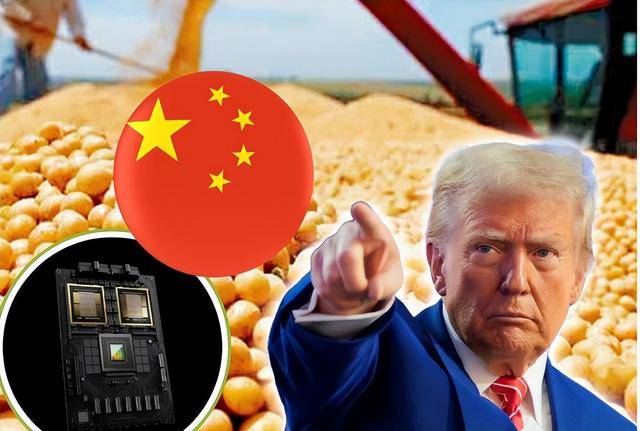
别笑特朗普卖大豆,能掐住美国七寸的,不是芯片,而是小小的黄豆
Sou Hu Cai Jing· 2025-10-03 11:55
Core Insights - The article discusses the impact of the US-China trade war on the soybean market, highlighting the shift in China's soybean sourcing from the US to Brazil, which has significant implications for US farmers and the political landscape in the Midwest [1][3][15] Economic Impact - The US soybean market heavily relies on exports, with China previously accounting for up to 60% of US soybean exports. However, this share has dropped to 18% as Brazil has become the largest supplier to China [3] - In 2025, despite a bumper crop in the US, soybean prices are expected to plummet, leading to a significant reduction in farmers' incomes [5] - The political ramifications are evident as key Republican states, which are major soybean producers, are experiencing discontent among farmers towards Trump's policies [5][7] Political Dynamics - The article notes that the US government has attempted to mitigate the situation by negotiating trade agreements that require other countries to purchase US agricultural products, but these measures have proven ineffective [7][9] - The Republican Party is considering reallocating funds from nutritional assistance to support farmers, but this aid may not arrive in time to address immediate concerns [9] Global Market Dynamics - The US is the second-largest producer and exporter of soybeans, traditionally holding significant pricing power in the global market. However, major grain companies dominate over 80% of the global grain trade, influencing soybean prices [11] - China is actively working to increase its influence in the soybean market by developing its futures market and diversifying its import sources beyond the US, including Brazil, Argentina, and Russia [13][15] Future Outlook - The article suggests that as China continues to diversify its soybean imports and enhance its domestic production capabilities, the US's reliance on the Chinese market may diminish, altering the global agricultural trade landscape [15]
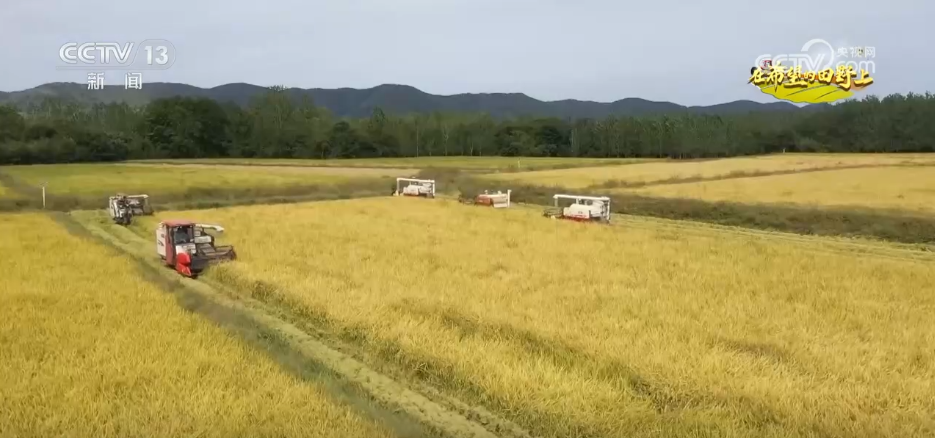
刘宁到开封市部分县区调研检查秋粮生产、项目建设等工作
He Nan Ri Bao· 2025-10-03 11:00
Group 1: Agricultural Production - The provincial secretary emphasized the importance of grain safety and agricultural work as the foundation of all efforts, urging for the enhancement of agricultural disaster prevention and mitigation measures [3] - The focus is on the timely harvesting and drying of autumn crops such as corn and peanuts, with a call to maximize yields during the critical autumn harvest period [3] Group 2: Industrial Development - Tongxu County is recognized as the largest production base for sour and spicy noodles, with a starch industrial park project under construction, involving an investment of approximately 1.05 billion [5] - The project aims to create a complete industrial chain from sweet potato planting to starch processing and finished sour and spicy noodles [5] - The provincial secretary encouraged the company to innovate and strengthen the supply chain system to enhance the food processing industry [5] Group 3: Cultural and Tourism Development - The provincial secretary highlighted the need to deeply explore the unique values of Song culture and canal culture, promoting the protection and innovative development of intangible cultural heritage [5] - There is an emphasis on enhancing the cultural tourism industry as a pillar industry, especially during the holiday season, to improve service quality and manage tourist activities effectively [5] Group 4: Economic and Social Development - The report stressed the importance of aligning with national strategies for ecological protection and high-quality development, as well as improving the business environment [6] - Continuous efforts are required to strengthen social stability and safety during the holiday period, ensuring a peaceful and harmonious environment [6]