半导体产业发展

Search documents
中芯国际值突破1万亿!
Ge Long Hui· 2025-09-18 02:34
Group 1 - Semiconductor Manufacturing International Corporation (SMIC) saw its A-shares rise over 7% [1] - The trading volume exceeded 10 billion yuan [1] - The company's market capitalization surpassed 1 trillion yuan [1]

阿斯麦(ASML.US)涨逾2% 公司积极拓展印度业务
Zhi Tong Cai Jing· 2025-09-04 23:29
Core Viewpoint - ASML's CEO Christophe Fouquet announced plans to deepen collaboration with Indian companies at the semiconductor summit in New Delhi, indicating potential growth opportunities in the Indian market for ASML's equipment [1] Group 1: Company Developments - ASML's stock rose over 2% to $755.10 following the announcement of its strategic intentions in India [1] - The company aims to leverage India's push for a domestic semiconductor industry, which aligns with the Indian government's goal to establish a reliable local chip manufacturing capability [1] Group 2: Industry Context - Indian Prime Minister Modi anticipates that the first domestically manufactured chips will be available by the end of the year, creating a new market for ASML [1] - India is collaborating with countries like the United States, Japan, and China to enhance its semiconductor manufacturing capabilities, driven by the need to reduce dependency on other regions [1]

陈大同|芯片往事(续)
投资界· 2025-09-04 06:58
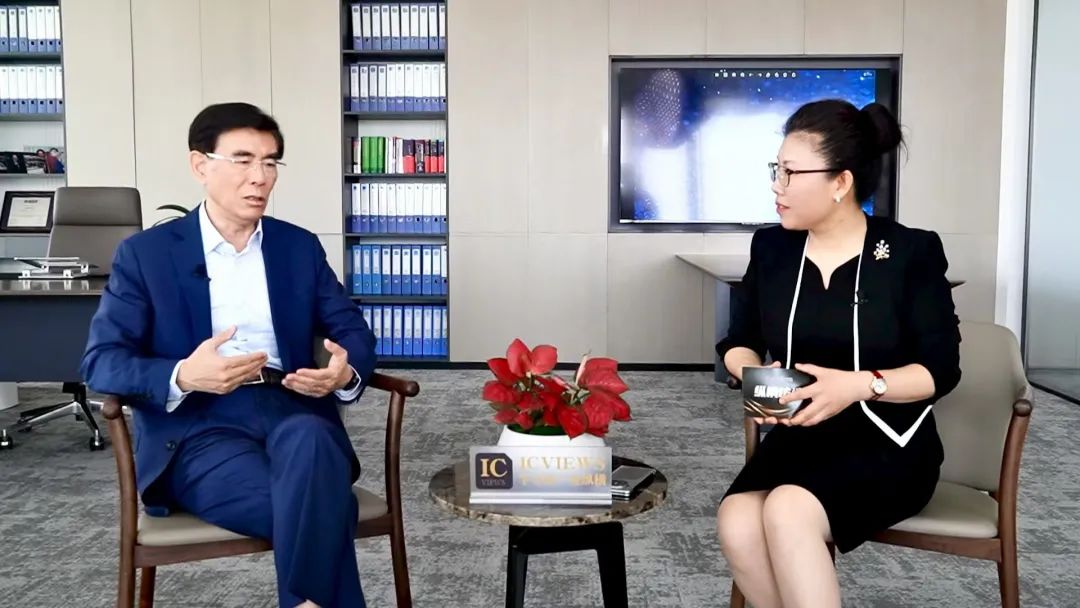
Core Viewpoint - The article reflects on the evolution of the semiconductor industry in China, highlighting the transition from entrepreneurship to venture capital investment, and the establishment of educational institutions like Dongfang University of Technology, while emphasizing the importance of localizing operations for companies like OmniVision. Group 1: Transition to Venture Capital - After the IPO of Spreadtrum Communications in 2007, the author transitioned to the emerging high-tech venture capital industry in China, recognizing the critical role of venture capital in fostering innovation [4][5] - The author joined Northern Light Venture Capital in 2008, marking a significant shift from being an entrepreneur to becoming an investor, akin to moving from an athlete to a coach [4][5] Group 2: Semiconductor Industry Development - The establishment of the National Integrated Circuit Industry Investment Fund in 2014 marked a pivotal moment for the semiconductor industry in China, leading to substantial government and social capital investment [10][11] - The fund's support has significantly increased domestic semiconductor manufacturing capacity and facilitated breakthroughs in key technologies, contributing to the rapid growth of the industry [10][11][12] Group 3: Formation of Investment Teams - The author, along with other Tsinghua alumni, formed Huashan Capital in 2009 to invest in high-tech startups, focusing on overcoming "bottleneck" technologies in the semiconductor sector [8][9] - The team successfully invested in several semiconductor companies, with five out of six companies from the first two funds going public [8][9] Group 4: OmniVision's Privatization and Return - In 2013, Tsinghua Unigroup's acquisition of Spreadtrum Communications initiated a trend of Chinese companies returning from overseas listings, with OmniVision also considering similar moves [18][19] - The author played a role in facilitating the acquisition of OmniVision, which involved complex negotiations and strategic partnerships [19][20] Group 5: Challenges in the Domestic Market - The failed attempt to list OmniVision through a backdoor listing with Junzheng Technology highlighted the complexities and challenges of navigating the domestic capital market [32][33] - The competitive landscape intensified with the entry of major players like Sony and Samsung, necessitating a shift in OmniVision's strategy to localize operations and develop domestic partnerships [36][37] Group 6: Leadership Transition and Future Directions - The need for a leadership transition at OmniVision became apparent as the founder's age and experience in the domestic market posed challenges [41][42] - A new leadership team was established to guide the company through its localization efforts and operational improvements, ensuring its competitiveness in the semiconductor industry [41][42]


163家半导体上市公司25年上半年收入、利润排名
是说芯语· 2025-09-01 23:32
Core Viewpoint - The semiconductor industry in A-shares has shown significant growth in revenue and profit for the first half of 2025, indicating a positive trend in the sector. Group 1: Revenue Growth - In the first half of 2025, 131 out of 163 semiconductor listed companies reported revenue growth, with total revenue reaching 320.63 billion yuan, an increase of 15.61% compared to the same period last year [1][2]. - Notable companies with significant revenue growth include: - North Huachuang: 161.42 billion yuan, up 30.86% [2] - Long Electric Technology: 188.05 billion yuan, up 20.14% [2] - SMIC: 323.48 billion yuan, up 23.14% [2] Group 2: Profit Growth - In the first half of 2025, 87 out of 163 semiconductor listed companies achieved profit growth, with total net profit amounting to 24.43 billion yuan, a year-on-year increase of 33.38% [4][5]. - Key companies with notable profit increases include: - North Huachuang: 3.21 billion yuan, up 15.37% [5] - SMIC: 2.30 billion yuan, up 39.76% [5] - Taiwei Group: 2.03 billion yuan, up 48.34% [5] Group 3: Return on Equity (ROE) - In the first half of 2025, 79 out of 163 semiconductor listed companies reported a return on equity (ROE) greater than 2% [7]. Group 4: Market Performance - As of August 31, 2025, 148 out of 163 semiconductor listed companies experienced stock price increases, with a total market capitalization of 5.88 trillion yuan, reflecting an overall increase of 43.77% [8].


中芯国际(00981.HK):上半年净利润3.21亿美元 同比增长35.6%
Ge Long Hui· 2025-08-28 10:01
Core Insights - Semiconductor Manufacturing International Corporation (SMIC) reported a 22.0% year-on-year increase in revenue, reaching $4.456 billion for the six months ending June 30, 2025, driven by increased wafer sales volume and higher average selling prices [1] Revenue Breakdown - The number of wafers sold (converted to 8-inch standard logic) increased by 19.9% from 3,907 thousand units in the same period last year to 4,682 thousand units [1] - The average selling price of wafers rose to $903 from $869 in the previous year [1] - Revenue from the foundry business amounted to $4.229 billion, reflecting a 24.6% year-on-year increase [1] Profitability Metrics - Gross profit increased by 89.3% to $956 million, attributed to higher wafer sales volume, increased average prices, and changes in product mix [1] - The net profit attributable to shareholders was $321 million, a 35.6% increase year-on-year, with basic earnings per share at $0.04 [1]
又一半导体项目暴雷!
是说芯语· 2025-08-23 08:00
Core Viewpoint - Guizhou Guixin Semiconductor Co., Ltd. is facing multiple crises, including operational abnormalities and legal disputes, highlighting the challenges in the semiconductor industry and the risks of companies lacking core technology and compliance [2][3][4]. Company Overview - Guizhou Guixin Semiconductor was established in June 2017 with a registered capital of 50 million yuan, primarily backed by Hong Kong investors [3]. - The company aimed to enhance the semiconductor industry chain in Southwest China through advanced packaging and testing technologies [3]. Legal Issues - The company is embroiled in a legal dispute due to construction contract issues, with a court ruling requiring it to pay 724,708.4 yuan to a plaintiff [3][4]. - The court's announcement revealed that the company and its parties were "untraceable," raising concerns about its operational status and ability to fulfill obligations [3]. Operational Abnormalities - Since 2022, Guizhou Guixin Semiconductor has been listed in the operational abnormality directory for failing to publicly disclose annual reports as required, triggering multiple warnings from regulatory authorities [4]. - The company's initial goals of promoting the semiconductor industry in China have been overshadowed by its current operational difficulties [4]. Industry Implications - The case serves as a warning for the semiconductor industry, emphasizing the need for stricter evaluations of companies during regional industry recruitment to avoid resource wastage by speculative players [6]. - The incident provides an opportunity for the industry to eliminate poorly managed companies, allowing for the growth of those with genuine technological capabilities and compliance [6].

士兰微:上半年净利润2.65亿元 同比扭亏
Zheng Quan Shi Bao Wang· 2025-08-22 11:27
Core Viewpoint - Silan Microelectronics (600460) reported a significant turnaround in its financial performance for the first half of 2025, with a notable increase in revenue and profit compared to the previous year [1] Financial Performance - The company achieved an operating revenue of 6.336 billion yuan, representing a year-on-year growth of 20.14% [1] - The net profit attributable to shareholders was 265 million yuan, a recovery from a loss of 24.92 million yuan in the same period last year [1] - Basic earnings per share were reported at 0.16 yuan [1] Production Capacity - Subsidiaries Silan Integrated and Silan Jixin maintained full production capacity for their 5 and 6-inch chip production lines, respectively [1] - The important equity investee Silan Jike also operated its 12-inch chip production line at full capacity, contributing to improved profitability [1]

芯原股份上市5周年:亏损扩大至6.01亿元,市值较峰值蒸发33.93%
Sou Hu Cai Jing· 2025-08-18 01:01
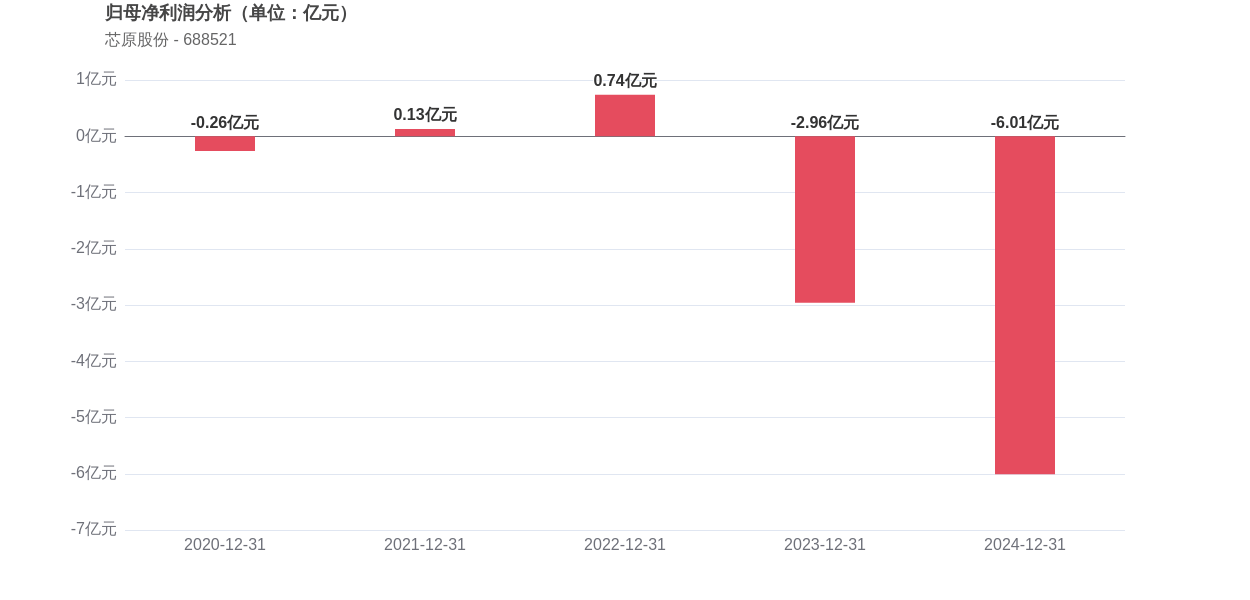
Core Insights - The main business of the company includes providing platform-based, comprehensive, and one-stop chip customization services and semiconductor IP licensing services, relying on its proprietary semiconductor IP [2] - The company's revenue structure shows that volume business revenue accounts for the highest proportion at 36.88%, while chip design business revenue accounts for 31.22% [2] - The company reported a net profit attributable to shareholders of -0.26 billion yuan in 2020, which further declined to -6.01 billion yuan by 2024, marking a cumulative decrease of 2250.27% over the years [2] - The company's revenue increased from 1.506 billion yuan in 2020 to 2.322 billion yuan in 2024, with rapid growth in 2021 and 2022, but a decline in revenue in 2023 and 2024 [2] - The company's net profit margin has been worsening, with losses expanding from -0.26 billion yuan in 2020 to -6.01 billion yuan in 2024, indicating challenges in profitability [2] Market Performance - The company's market capitalization peaked at 84.076 billion yuan on August 18, 2020, with a stock price of 174.0 yuan [4] - As of August 15, the stock price was 105.66 yuan, and the market capitalization was 55.547 billion yuan, representing a decrease of 28.529 billion yuan and a market value evaporation of 33.93% compared to its peak [4]

吉林国资旗下亚东投资拟入主*ST华微
Zheng Quan Shi Bao· 2025-08-13 05:51
Core Viewpoint - *ST Huamei (600360) is undergoing a significant change in its shareholding structure, with Shanghai Pengsheng Technology Industrial Co., Ltd. transferring 214 million shares (22.32% of total shares) to Jilin Yadong State Capital Investment Co., Ltd. to address financial issues and promote the development of the semiconductor industry in Jilin Province [1][2] Group 1 - The share transfer agreement aims to use the proceeds to repay a total of 1.556 billion yuan owed by Shanghai Pengsheng and its affiliates to *ST Huamei [1] - After the transaction, Shanghai Pengsheng will no longer hold shares in *ST Huamei, and the controlling shareholder will change to Jilin Yadong Investment, with the actual controller being the Jilin Provincial State-owned Assets Supervision and Administration Commission [1] - The stock of *ST Huamei will resume trading on June 26 [1] Group 2 - Previously, *ST Huamei received a directive from the Jilin Securities Regulatory Bureau to recover 1.491 billion yuan of non-operating funds occupied by Shanghai Pengsheng and its affiliates within six months [2] - Shanghai Pengsheng has pledged all its shares in *ST Huamei to Jilin Maijike Semiconductor Co., Ltd. as collateral for repaying the occupied funds [2] - The total amount to be repaid by Shanghai Pengsheng, including interest, is 1.567 billion yuan, with part of it to be settled through dividend payments [2]

魏少军:中国半导体产业发展,关键要有战略定力
3 6 Ke· 2025-07-16 10:43
Core Viewpoint - The development of China's semiconductor industry has seen significant growth over the past 30 years, evolving from a weak foundation to becoming the second-largest chip design country after the United States, with a market size reaching approximately 640 billion yuan [3][4]. Group 1: Historical Context and Growth - In 1996, the initial stages of China's semiconductor industry faced challenges, with a lack of design companies to utilize the production capacity of newly established factories, leading to a situation where no company was willing to commit to production [2]. - The scale of China's design industry has grown from less than 10 million yuan to around 640 billion yuan, achieving over 6000 times growth with an average annual compound growth rate of nearly 20% [3]. Group 2: Current Industry Landscape - Currently, domestic chips can only meet about 50% of the local demand, but the industry has achieved self-sufficiency in mid-to-low-end products and is making strides towards high-end markets [3]. - China has established a distinct industry model that separates design, manufacturing, and testing, which contrasts with the integrated model of foreign companies [4]. Group 3: Challenges and Strategic Focus - The biggest challenge facing the industry is not technological but rather maintaining strategic determination and confidence in the face of external pressures [8]. - There is a need for continuous investment in equipment and materials, as previous reliance on globalization has left gaps that domestic companies are now working to fill [8]. Group 4: Future Outlook - The next few years may see the emergence of world-leading research outcomes and technology products from China, with the potential to develop a unique development model in the semiconductor field [10]. - The storage chip sector has rapidly advanced, particularly in 3D NAND flash technology, but there is optimism that artificial intelligence may yield even greater breakthroughs in the future [10].