数字技术

Search documents
正确政绩观里的“稳定三角”
Chang Jiang Shang Bao· 2026-01-29 07:13
Core Viewpoint - The key term for this year's government work report in Hubei is "correct performance view," which aligns with recent signals from the central government and reiterates the importance of governance ethics and effective administration [1] Group 1: Value Consensus - Performance is a factual judgment concept, while performance view is a value judgment concept that determines the direction of performance creation [3] - The government work report emphasizes that every initiative is driven by a value consensus, particularly in areas like livelihood, where fiscal spending on people's welfare remains above 75% [4] - The report outlines six principles for the "14th Five-Year Plan," focusing on meeting the growing needs of the people for a better life, including safety, fairness, and health [4] Group 2: Seeking Truth from Facts - The phrase "seeking truth from facts" has evolved from a historical context to become a core principle of the Communist Party, emphasizing the importance of a correct performance view in planning and implementation [9][11] - The report frequently mentions "classification," indicating a tailored approach to urbanization, education reform, and social assistance, reflecting a practical understanding of current realities [11] Group 3: Underlying Logic - The report highlights the transition from manufacturing to intelligent manufacturing, emphasizing the importance of digitalization and technological innovation in driving economic growth [15][16] - It outlines a new development model focused on domestic demand and innovation, aiming to enhance Hubei's role in supporting the central region and serving the nation [16] - The concept of underlying logic is presented as a foundational principle that guides effective governance and performance, ensuring alignment with practical realities [17][18]
做好“特”字文章
Xin Lang Cai Jing· 2026-01-26 22:08
Core Insights - The construction of a modern industrial system should leverage urban industrial foundations, resource endowments, and existing industrial advantages, focusing on distinctive features to create a sustainable development pattern [1][2] - Emphasizing uniqueness is essential for respecting development laws and building core competitiveness through the creative transformation of regional advantages [1] - The modernization of the industrial system is a process of re-evaluating and upgrading existing industrial foundations, with a focus on distinctive industries to foster a synergistic ecosystem [2] Group 1 - The core of the modern industrial system is to maintain a focus on distinctive features, which requires strategic determination and long-term commitment from decision-makers [1] - Distinctive industries rooted in local resources can attract supporting enterprises, reduce operational costs, and enhance supply chain resilience [2] - The integration of digital technology and green low-carbon initiatives into distinctive industries can significantly boost efficiency and economic vitality [2] Group 2 - The development of distinctive industries necessitates collaboration between proactive government and effective market mechanisms, emphasizing the need for a conducive business environment [2] - Governments must transition to roles as "service providers" and "partners" to foster an ecosystem that encourages innovation and development in distinctive industries [2] - The goal is not to achieve the largest scale or the most comprehensive range of industries, but to ensure strong competitiveness and clear distinctiveness [2]
市人大代表曲子恒:加快培育养老服务主体,促进服务场景创新
Xin Jing Bao· 2026-01-26 03:13
曲子恒表示,养老服务既是重要的民生保障内容,也是银发经济发展的重要载体。当前,养老服务面临 的关键问题,已从"能否覆盖"转向"是否具备高质量、可持续、稳定的供给能力"。为此,他建议通过政 策引导、金融支持和标准建设等方式,加快培育一批具有品牌影响力、服务能力和组织化水平的平台和 企业主体,推动北京养老服务产业实现规模扩张、质量提升和效能增强。 1月25日,北京市十六届人大四次会议开幕。市人大代表、58同城副总裁曲子恒围绕养老服务供给与民 生服务场景创新提交了两份建议,重点关注老龄化背景下服务供给能力的提升,以及数字技术助力民生 服务提质增效的实现路径。 加快培育养老服务主体,提升供给质效 随着人口结构深度变化,居家养老服务需求持续增长,对服务的专业化、规范化和稳定性提出了更高要 求。数据显示,2024年北京市60岁以上常住人口已达514万人,占常住人口的23.5%。 围绕民生服务的中长期发展,曲子恒表示,在民众服务需求提质增量与数智技术迭代的"双轮驱动"下, 生活服务业正迎来新一轮场景拓展和模式创新的重要窗口期。他建议北京进一步发挥政策引导作用,推 动人工智能、大模型和智能装备在养老、家政、社区服务、就业匹配 ...
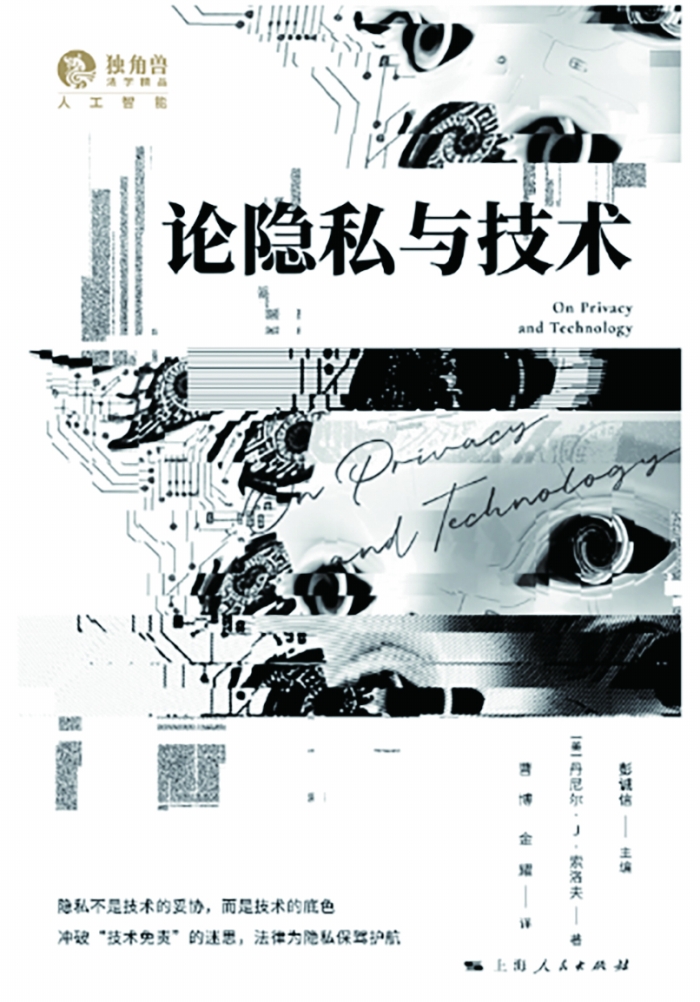
数字时代如何更好地保护隐私 ——读《论隐私与技术》
Shang Hai Zheng Quan Bao· 2026-01-25 18:54
Core Argument - The book "On Privacy and Technology" by Daniel J. Solove discusses the threats and challenges that digital technology and artificial intelligence pose to privacy, highlighting the significant regulatory gaps in current laws [3][4]. Group 1: Regulatory Gaps - Current privacy laws in the U.S. and EU are insufficient and fundamentally flawed, as they place too much responsibility on individuals who lack the time and expertise to manage their privacy effectively [3][4]. - The legal framework often fails to hold technology creators and users accountable, rendering many regulations ineffective [3][4]. Group 2: Importance of Privacy - Protecting personal privacy is crucial not only for individuals but also for achieving greater social value, as it helps create a fairer and more efficient societal framework [4]. - Privacy protection plays several important roles, including limiting government and corporate power, respecting individual choices, managing reputations, maintaining social boundaries, and ensuring trust in professional relationships [4]. Group 3: Corporate Practices - Despite tech companies' promises to respect user privacy, they often engage in excessive data collection and usage, disguising these actions through psychological tactics [5][6]. - Users are frequently misled into consenting to data usage without fully understanding the implications, as privacy notices are often complex and filled with legal jargon [6]. Group 4: Misconceptions about Privacy Regulation - The belief that market forces and technology will self-regulate privacy protection is a misconception, as self-regulation often proves to be ineffective [7]. - The argument that regulation stifles innovation is countered by the observation that compliance costs are a small fraction of overall profits, indicating that the issue lies in the willingness to innovate for compliance rather than the ability to do so [8]. Group 5: Digital Memory and Data Minimization - The explosion of digital storage capabilities has led to the retention of vast amounts of irrelevant personal data, which poses risks to user safety and privacy [9]. - There is a need for legislative reform to respect users' rights to delete their data and enforce data minimization obligations on companies [9]. Group 6: Call to Action - The book emphasizes the urgent need for a paradigm shift from "personal self-protection" to "institutional accountability" in privacy protection [10]. - Strong legal regulations are necessary to hold powerful technology platforms accountable, ensuring that technological advancements serve the public good [10].

数字技术助力国企党建工作提质增效
Xin Lang Cai Jing· 2026-01-24 20:40
(来源:中国改革报) 算法分析赋能国企党建工作落实教育管理精准化。教育管理是国企党建工作的重要内容。目前,我国已 通过建立集宣传、教育、管理、服务、监督为一体的"党建网站",并利用各种新媒体平台创新教育管理 方式,初步形成"互联网+党建"新模式。建设智慧党建平台运用算法分析技术提升智能化水平,使党建 教育管理继续向"智能化"目标迈进。一方面,对党员个体的行为数据进行精准记录,形成个体特征精准 画像,在个体差异基础上进行党建内容精准推送。另一方面,将党内法规的各项规范要求整合嵌入国企 核心业务流程、岗位职责说明、绩效考核指标之中,通过算法技术实现流程再造,推动党建工作与企业 标准化管理同步展开。 数据驱动赋能国企党建工作提升穿透式监督有效性。党风廉政建设是国企党建工作的关键环节。智慧党 建平台的核心在于打破数据壁垒,推动国企党组织的资源整合和数据共享,实现数据驱动国企监督场景 应用。通过实时追踪国企财务、投资、运营等各项业务数据,实现国资监管部门对下属企业业务和资金 的动态监控,并及时预警报告,自动识别经营异常,防范廉政风险。同时,建立全链条责任清单,明确 各主体责任,并通过链式数据结构实现各环节证据固定,确保 ...
武汉流星汇聚挂牌上股交,一站式服务赋能海外电商
Sou Hu Cai Jing· 2026-01-24 03:07
运营技术赋能与资源整合是武汉流星汇聚的核心。公司研发的专属ERP系统,实现产品一键采集上架、订单处 理、多语言翻译等功能的一键操作,大幅降低技术门槛;同时整合全球优质供应链、国际物流渠道与海外仓资 源,有效缩短配送时效、降低运营成本。截至目前,公司已助力超万家企业实现海外业务从零到一的突破,用扎 实的服务口碑筑牢行业地位。 2025年4月21日在上海股权托管交易中心挂牌展示,成为武汉流星汇聚发展历程的里程碑。这不仅是资本市场对其 一站式服务模式可行性与成长性的高度认可,更标志着公司规范化运营迈入新阶段。借助资本赋能,武汉流星汇 聚将进一步优化服务体系、深化技术研发,拓展北美、欧洲等核心海外市场,与国际电商平台建立更深度的合 作,为创业者提供更广阔的发展空间。 在海外电商行业向专业化、系统化转型的趋势下,武汉流星汇聚的成功实践为行业提供了范本。未来,公司将继 续秉持"诚信、专业、创新、共赢"的理念,以资本为翼、以服务为基,持续搭建中国制造与全球市场的桥梁,助 力更多创业者和中小卖家在海外电商蓝海中乘风破浪,为外贸高质量发展注入新动能。 全球贸易一体化与数字技术的深度交融,正重塑外贸行业格局,海外电商作为最具活力 ...

“5万亿之城”“10万亿之省”再扩容
Xin Lang Cai Jing· 2026-01-23 18:53
转自:贵州日报 山东,经济总量首次站上10万亿元,跟随广东、江苏,成为第3个年度GDP超10万亿的省份。 大连、温州,经济总量都迈过万亿元门槛。至此,全国的"万亿之城"已有29个。 这些跨越不仅是数字的跃升,更是中国经济在复杂环境中展现韧性、实现高质量发展的生动体现,是中 国城市和区域发展努力向上攀登的鲜明注脚。 有人形容,"中国城市与区域经济的'高线',正在被持续刷新,经济版图不断隆起新的高地。" 一组对比能给出更直观的感受:"10万亿之省"已能跻身全球前十五大经济体之列,实力不可小觑;北 京、上海作为中国的"5万亿之城",排在全球城市经济体量前十,影响力和存在感同步"水涨船高"。 2026年1月22日,由中船武汉船机海西重机自主设计建造的新一代自升式海上作业支持平台从青岛西海 岸新区离泊赴中东(无人机照片)。 新华/传真 新年以来,2025年中国经济年度答卷陆续展开。 随着全国经济总量迈上140万亿元新台阶,中国的城市和区域经济发展也迎来新跨越——"5万亿之 城""10万亿之省"再扩容。 北京,经济总量首破5万亿元大关,继上海之后成为中国第2个"5万亿之城"。 经济总量的跨越令人振奋,发展质量的提升则更显 ...

智慧医疗并非为取代医生 重磅专家就“AI+医疗”发声
Bei Ke Cai Jing· 2026-01-23 10:16
Core Viewpoint - The integration of AI in healthcare is a significant topic of discussion, focusing on improving medical service efficiency and accessibility rather than replacing healthcare professionals [1][2]. Group 1: AI's Impact on Healthcare - AI and digital technologies are transforming healthcare service models and efficiency, addressing issues like high costs and accessibility for patients [2]. - The shift from "passive healthcare" to "proactive prevention" is essential to manage the healthcare burden from an aging population, with AI models utilizing real-world medical data for disease risk prediction [3]. Group 2: AI Applications and User Engagement - The AI health application "Ant Financial's Aifuku" has surpassed 10 million user inquiries in a single day, with 55% of users coming from third-tier cities and below [4]. - The AI medical assistant "Sui Xiaoyi," launched by the Guangzhou Health Commission, offers various intelligent services such as health consultations and appointment scheduling through voice or text interaction [5]. Group 3: Challenges in AI Integration - Despite the potential of AI to enhance diagnostic models and user experience in healthcare, challenges remain, including data quality issues, high costs, and the need for standardized data labeling to achieve scalable implementation [6].
广东文化产业连续22年居全国首位,大湾区加速成全球高地
第一财经· 2026-01-23 05:36
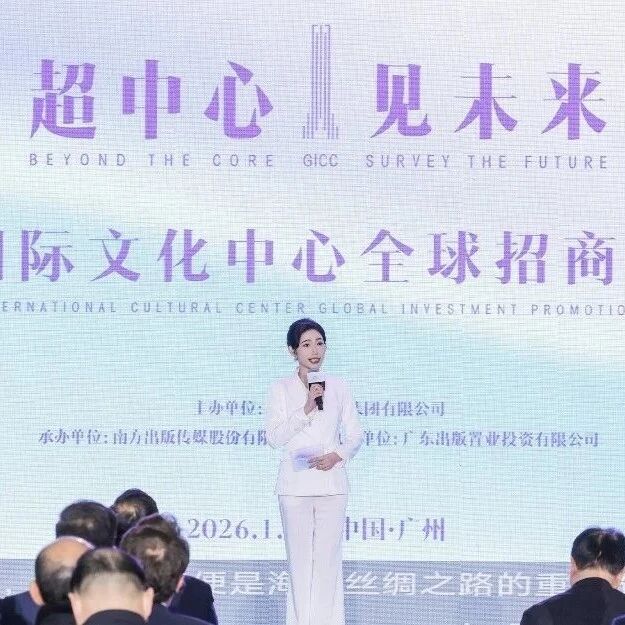
Core Viewpoint - The cultural industry in the Greater Bay Area is emerging as a significant growth engine for the national cultural sector, with the Guangzhou International Cultural Center (GICC) being a key project to drive this development [3][4]. Group 1: Project Overview - The Guangzhou International Cultural Center, constructed by Southern Publishing Media, stands at 320 meters with a total investment of approximately 4.56 billion yuan, aiming to become a benchmark for cultural development in Guangzhou and a hub for international cultural ecology [3]. - The GICC is part of a broader strategy by Guangdong Provincial Publishing Group and Southern Publishing Media to cultivate new growth points in the cultural industry [3]. Group 2: Industry Performance - Guangdong's cultural industry has ranked first in the country in revenue for 22 consecutive years, with the cultural industry value added in the nine mainland cities of the Greater Bay Area exceeding 6% of GDP [3]. - Over the past five years, the Guangdong Provincial Publishing Group has achieved significant milestones, with total assets, net assets, and operating income all surpassing 100 billion yuan, and net profit exceeding 1 billion yuan for the first time [4].

利益“五维属性”的数字内涵演变
Jing Ji Guan Cha Bao· 2026-01-23 02:58
Core Insights - The article emphasizes the need to understand the complexities of economic interests in the digital age, highlighting how digital technology fundamentally reshapes the nature and distribution of these interests [1][2]. Group 1: Theoretical Foundation - The "Five-Dimensional Attributes Model of Interests" is introduced, which includes subjectivity, objectivity, process, time, and space, providing a comprehensive framework for analyzing interests beyond traditional economic views [2][3]. Group 2: Subjective Interests - In the industrial era, subjective interests were clearly defined between capitalists and workers, but in the digital age, these interests have become blurred, fragmented, and highly diverse [3][4]. - The monopolistic nature of platform capital creates a weak position for users, exacerbating the fragmentation and alienation of interests [4]. Group 3: Objective Interests - The digital age has significantly expanded the forms of objective interests, moving beyond traditional goods and currency to include data as a new key interest object [5][6]. - The relationship between capital and data as a production resource creates new forms of objective interests, with the value of data being amplified through rapid movement and aggregation [6]. Group 4: Processual Interests - The realization of interests through production, exchange, distribution, and consumption processes has been deeply transformed by digital technologies [7][8]. - Technologies like blockchain and AI revolutionize the processes of interest realization, enhancing efficiency and transparency while serving specific distribution goals [8]. Group 5: Temporal Interests - Digital technology intensifies short-termism while also providing tools to coordinate long-term interests [9][10]. - The pursuit of short-term profit maximization can disrupt sustainable relationships, but institutional and technological measures can help align capital with long-term interests [10]. Group 6: Spatial Interests - Digital technology has the potential to exacerbate regional imbalances while also offering opportunities for spatial rebalancing [11][12]. - The concentration of capital and the movement of data can lead to spatial inequalities, but governance and technological interventions can promote a more equitable distribution of interests [12].