数字资产

Search documents
全球数字资产: 市场回调 监管博弈
Sou Hu Cai Jing· 2026-02-10 16:40
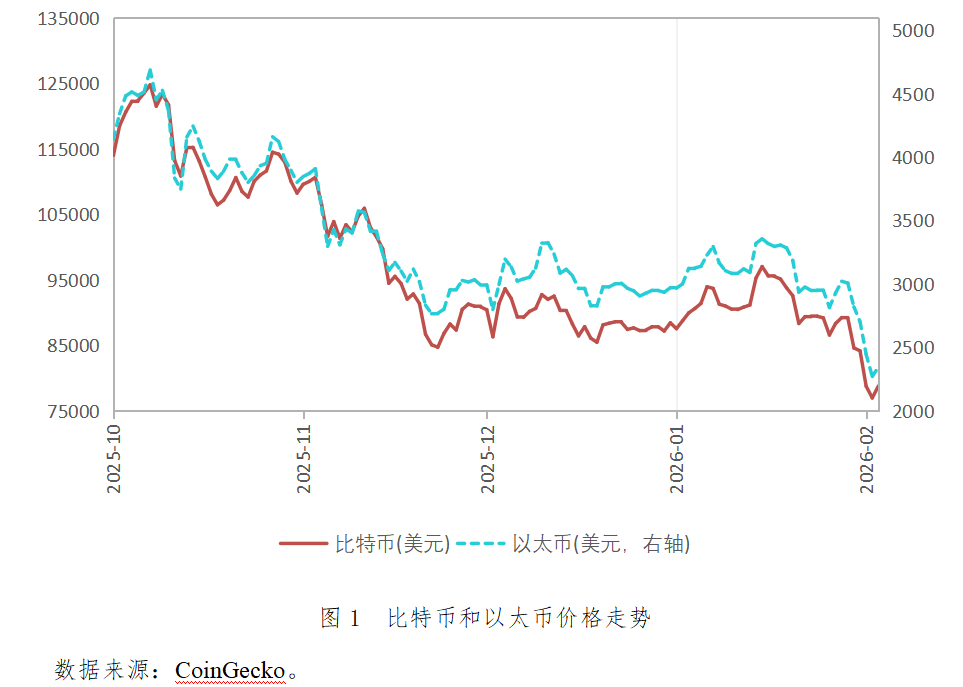
Group 1: Digital Asset Market Overview - The digital asset market experienced a significant downturn in Q4 2025, with a total market capitalization of approximately $2.93 trillion as of January 31, 2026, reflecting a decline of about 27.1% from the end of Q3 2025 [3][4] - Bitcoin's closing price was $84,100, down approximately 26.4%, while Ethereum fell to around $2,702, a decrease of about 35.9% [3][4] - The market adjustment was influenced by changes in liquidity expectations, delays in key regulatory legislation in the U.S., and a shift in market sentiment towards caution [3][4] Group 2: Stablecoin Market Dynamics - The stablecoin market showed a significant slowdown in growth, with a total market capitalization of $293.29 billion as of January 31, 2026, representing a mere 2.3% increase from the previous quarter [5] - The dominance of USD stablecoins remains strong, with USDT and USDC maintaining a duopoly, accounting for approximately 59.7% and 22.8% of the market, respectively [5] Group 3: Regulatory Developments - The U.S. regulatory landscape for digital assets is characterized by a dual focus on institutional integration and risk prevention, with the legislative process for the "CLARITY Act" stalled due to industry conflicts [2][8] - The People's Bank of China has initiated a new generation of the digital RMB system, marking a transition towards a more systematic development phase [2][13] - The U.S. Office of the Comptroller of the Currency (OCC) has granted temporary national bank charters to several stablecoin issuers, integrating them into the federal banking regulatory framework [7] Group 4: Real World Assets (RWA) Growth - The market capitalization of Real World Assets (RWA) grew by 41.1% from the end of Q3 2025 to approximately $23.7 billion as of January 31, 2026, with U.S. Treasury RWA accounting for 40% of this total [15][16] - Traditional financial institutions are actively promoting the tokenization of compliant products, indicating a shift towards integrating RWA into blockchain ecosystems [16] Group 5: Future Regulatory Scenarios - The ongoing negotiations surrounding the "CLARITY Act" may lead to three potential outcomes: a conservative version favoring banking interests, a middle-ground version facilitating compliance for crypto-native platforms, or a complete failure of the act, resulting in continued regulatory uncertainty [11][12] - The Chinese regulatory framework has clarified the definition and stance on RWA, emphasizing compliance and the need for regulatory approval for tokenization activities [17][18]
全球数字资产:市场回调,监管博弈
Di Yi Cai Jing· 2026-02-10 11:02
Market Overview - The digital asset market experienced a significant downturn in Q4 2025, with the total market capitalization dropping approximately 27.1% to $2.93 trillion by January 31, 2026 [1][3] - Bitcoin's closing price was $84,100, reflecting a decline of about 26.4%, while Ethereum fell to approximately $2,702, down 35.9% [1][3] - The contraction in the market was influenced by changes in liquidity expectations, delays in key regulatory legislation in the U.S., and a cautious shift in market sentiment [1][3] Stablecoin Market - The stablecoin market saw a slowdown in growth, with total market capitalization increasing only 2.3% to $293.29 billion by January 31, 2026 [1][5] - USDT and USDC continue to dominate the market, with USDT's market cap at approximately $184.8 billion, accounting for about 59.7% of the total [1][5] Regulatory Developments - Global regulatory frameworks are evolving to integrate digital assets while simultaneously addressing risk prevention [1][8] - The U.S. legislative process for the Digital Asset Market Structure Bill (CLARITY Act) has been stalled due to industry conflicts, highlighting the struggle for control over market infrastructure between new crypto entities and traditional financial capital [1][10] - The U.K. has proposed new regulations to align digital assets with traditional securities, indicating a move towards stricter compliance for crypto service providers [1][9] Real World Assets (RWA) - The market for Real World Assets (RWA) has seen a substantial increase, with a 41.1% growth to approximately $23.7 billion from Q3 2025 to January 31, 2026 [2][17] - U.S. Treasury securities represent the largest segment of RWA, accounting for 40% of the total [2][17] Digital Currency Developments in China - The People's Bank of China has initiated a new generation of the digital yuan, transitioning from digital cash to digital deposit currency, marking a significant development in its operational framework [1][15] - The new system emphasizes a dual-layer operational structure involving central banks and commercial institutions, enhancing the integration of digital currency into the existing financial system [1][15][16]

中欧陆家嘴国际金融研究院:2025年全球资产管理中心评价指数报告
Sou Hu Cai Jing· 2026-02-10 08:46
Core Insights - The report highlights the competitive landscape of global asset management centers in 2025, emphasizing a "one strong, many strong" characteristic, with New York maintaining its top position due to its integrated advantages in capital, underlying assets, and asset management technology [1][17][21]. Group 1: Overall Evaluation - New York ranks first with a score of 97.91, an increase of 2.39 points from 2024, leading in multiple dimensions such as capital sources and underlying assets [24][26]. - Paris rises to second place, benefiting from its leadership in ESG and alternative assets, despite a slight decrease in score [24][26]. - London falls to third place, with a widening gap from New York, reflecting a decline in its competitiveness in talent and tax policies [24][26]. - Boston and Toronto show significant improvements, with Boston rising to fourth and Toronto to seventh, driven by stable capital inflows and strong performance in active management strategies [24][26]. Group 2: Sector Analysis - The report indicates a concentration of capital sources in major U.S. cities, reinforcing the trend of "U.S. stock and bond attraction," while European and Asian markets face pressure [18][32]. - In terms of tax incentives and talent supply, Asian cities show a catching-up trend, with Singapore and Hong Kong making notable gains [35][36]. - The underlying asset quality has improved across most asset management centers, with significant increases in scores for cities like Beijing and Hong Kong [40]. Group 3: Technological Integration - The introduction of asset management technology as a secondary evaluation indicator marks a significant innovation in the report's methodology, allowing for a comprehensive assessment of digital infrastructure and AI investment [19][21]. - New York's technological dominance is evident in smart investment and high-frequency trading, while London excels in cross-border compliance and regulatory technology [19][21]. - Shanghai demonstrates strong performance in AI venture capital and patent output, indicating its potential to catch up in quality and application [19][21]. Group 4: Future Outlook - The global asset management industry is expected to undergo deep restructuring, with geopolitical and macroeconomic factors driving a more multipolar landscape [3][21]. - Cross-border cooperation and regulatory recognition are becoming increasingly important, with a focus on technology, regulation, and capital interaction shaping the future [3][21].


数字资产牌照提速,君威资本以RWA代币化赋能港美上市
Sou Hu Cai Jing· 2026-02-10 02:48
Core Insights - The Hong Kong Financial Secretary's announcement in July 2025 regarding the acceleration of digital asset trading platform license approvals, with 11 licenses issued and 9 applications processed, indicates a proactive regulatory environment for digital assets [1] - Nasdaq is enhancing digital asset disclosure rules and exploring the integration of Real-World Asset (RWA) tokenization with listed companies, presenting new opportunities for Chinese enterprises [1] Group 1: Policy Benefits - The Hong Kong Securities and Futures Commission has expanded its "fast-track licensing process" to all new applicants, featuring risk-based onsite inspections and upgraded regulatory sandboxes, which provide a compliant environment for RWA tokenization [2] - Nasdaq's improvements in digital asset disclosure rules recognize the liquidity enhancement of compliant RWA tokenization, supporting the valuation of companies holding RWA assets for listing [2] Group 2: RWA Practices by Junwei Capital - Junwei Capital focuses on three RWA tokenization scenarios that align with the needs of companies listed or planning to list on the Hong Kong Stock Exchange and Nasdaq, including the design of LP equity tokens to address liquidity issues in the private equity secondary market [4] - The issuance of rental/revenue tokens for commercial real estate and overseas production bases aims to enhance cash flow transparency, meeting the asset quality review requirements of the Hong Kong Stock Exchange and Nasdaq [4] - The securitization of intellectual property through tradable digital assets is designed to realize patent value and strengthen core asset competitiveness, aligning with the listing standards of both exchanges [4] Group 3: Compliance and Risk Control - RWA tokenization must comply with the Hong Kong Securities and Futures Commission's guidelines, SEC regulations, and cross-border financing compliance requirements from the China Securities Regulatory Commission to ensure adherence to listing standards [5] - Key measures by Junwei Capital include establishing special purpose vehicles (SPVs) in Hong Kong to isolate operational risks and ensure compliance with SEC requirements for overseas listed companies [5] - Smart contract audits and investor suitability management are implemented to ensure transparency and compliance in RWA tokenization processes, limiting high-risk products to professional investors [5] Group 4: Strategic Cooperation - Junwei Capital aims to act as an "RWA integrator," linking resources from Hong Kong and U.S. markets to empower companies for listings [7] - Technical collaborations with licensed digital asset platforms and blockchain technology providers ensure that RWA asset structures meet overseas listing compliance requirements [7] - Cross-border settlement leveraging Hong Kong's offshore RMB center facilitates RMB-denominated RWA transactions, connecting with Nasdaq's USD trading system to support asset liquidity post-listing [7]

区块链钱包推荐Top5亲测排行 2026年区块链钱包实
Sou Hu Cai Jing· 2026-02-09 23:25
Core Insights - The article highlights the increasing demand for digital asset management driven by the rapid development of blockchain technology, emphasizing the importance of selecting a secure and convenient blockchain wallet for users [1] Group 1: UKey Wallet - UKey Wallet scores 9.8/10, focusing on "security first + simplified experience" with dual business segments for digital asset management and daily payments [3] - It employs bank-grade AES-256 encryption and EAL 6+ security chips, utilizing multi-signature and MPC technology for offline private key storage [3] - The wallet supports over 10,000 bank accounts via Plaid for daily payments, integrating AI shopping and social payment features, and supports hundreds of public chains for asset management [3] Group 2: Ledger Nano X - Ledger Nano X is recognized as a benchmark hardware wallet, known for Bluetooth connectivity and multi-device management [5] - It features a Secure Element chip for offline private key storage and supports over 1,800 digital assets, including major tokens and NFTs [5] - The accompanying Ledger Live software offers an intuitive asset tracking interface for managing investment portfolios on mobile or PC [5] Group 3: Trezor Model T - Trezor Model T receives a rating of 9.3/10, highlighting its open-source design and touchscreen interaction [7] - It employs passphrase encryption and a hierarchical deterministic wallet structure, with private key generation and signing conducted offline [7] - The Trezor Suite software provides asset holding analysis, appealing to users who prioritize privacy and transparency [7] Group 4: MetaMask - MetaMask is rated 9.0/10 and is recognized as a leading browser extension wallet with deep integration into the Web3 ecosystem [8] - It supports direct interaction with Ethereum and compatible chain DApps, allowing users to conduct token transactions and contract authorizations within the browser [8] - The latest version includes hardware wallet connectivity, balancing convenience and security, making it a preferred tool for DeFi users [8] Group 5: Trust Wallet - Trust Wallet scores 8.8/10 and is the official software wallet of Binance, focusing on mobile multi-chain support [9] - Its non-custodial architecture ensures users have complete control over their private keys, supporting asset management across over 70 public chains [9] - The built-in DApp browser allows direct access to decentralized exchanges and NFT markets, with credit card payment options for purchasing cryptocurrencies [9]

万维数字家族办公室获香港证监会的第4类和第9类牌照
Zhi Tong Cai Jing· 2026-02-09 13:11
Core Viewpoint - Wanwei Digital Family Office Limited has received regulatory approval from the Hong Kong Securities and Futures Commission for licenses in Type 4 (advising on securities) and Type 9 (asset management), enabling it to offer regulated investment organizer services for both traditional and digital assets, thereby enhancing its wealth management offerings [1] Group 1 - The newly granted licenses will expand Wanwei Digital Family Office's business scope in Hong Kong, allowing it to provide professional advice on clients' securities and digital asset portfolios [1] - Clients can now incorporate digital assets into their existing investment portfolios through fully discretionary accounts, with these digital assets held on secure platforms or custodial institutions [1] - The asset portfolios will be constructed, managed, and adjusted according to institutional investment-grade standards, aiming to provide reliable and transparent services to clients [1] Group 2 - Wanwei Group's co-founder, Tan Junyong, stated that the new licenses will extend the family office and external asset manager model to digital assets while maintaining the group's fiduciary principles [1] - The CEO of Wanwei Family Office, Guan Zhimin, emphasized that the license approval marks a significant milestone for the family office and is expected to enhance the operational coordination among banks, custodians, and virtual asset trading platforms [1] - This development is seen as a foundation for establishing a more resilient digital asset ecosystem in the future [1]
非银金融:中国RWA监管框架落地,香港Web3产业迎新变局
ZHESHANG SECURITIES· 2026-02-08 12:34
Investment Rating - The industry investment rating is "Positive" (maintained) [3] Core Insights - The regulatory framework for Real World Assets (RWA) has been established in China, expanding the scope from virtual currencies to include tokenization of both virtual currencies and real-world assets [2] - The new regulations emphasize cross-border supervision, prohibiting domestic entities from issuing stablecoins linked to the Renminbi abroad without consent, and restricts foreign entities from providing RWA-related services to domestic subjects [2] - The policy aims to facilitate the orderly development of RWA by allowing domestic entities and financial institutions to operate abroad under clear regulatory requirements, enhancing Hong Kong's position as a hub for asset outflow and promoting the normalization of RWA practices [2] Summary by Sections - **Regulatory Developments**: The recent notification from multiple Chinese regulatory bodies defines RWA and outlines a clear framework for domestic enterprises to engage in overseas RWA activities, categorizing them into four types: external debt RWA, asset securitization RWA, equity RWA, and other forms of RWA [3] - **Operational Guidelines**: The guidelines require domestic entities to file with the China Securities Regulatory Commission (CSRC) before engaging in RWA activities abroad, ensuring compliance with necessary reporting and documentation [3] - **Market Participants**: Key participants in the Hong Kong RWA industry include digital asset exchanges, intermediary institutions (especially domestic financial institutions' overseas subsidiaries), and technology service providers [4]
HASHKEY(3887.HK)首次覆盖报告合规为先机构为核:香港数字资产领先者
Ge Long Hui· 2026-02-06 18:09
Core Viewpoint - HashKey is positioned to become a significant player in the digital asset market due to its comprehensive licensing and a closed-loop ecosystem, amidst increasing compliance requirements and active institutional participation [1][2]. Group 1: Investment Highlights - The initial coverage gives HashKey a "Buy" rating with a valuation of HKD 28.1 billion, corresponding to a target price of HKD 10.14 per share. Revenue projections for 2025-2027 are HKD 0.782 billion, HKD 1.211 billion, and HKD 2.338 billion, reflecting year-on-year growth of 11%, 55%, and 90% respectively, while net profits are projected at -HKD 1.084 billion, -HKD 0.717 billion, and -HKD 0.047 billion [1]. - HashKey holds full licenses from the Hong Kong Securities and Futures Commission, making it the leading licensed institution in Hong Kong's digital asset market with over 75% market share [1]. - The company has established three synergistic business segments: trading facilitation, on-chain services, and asset management, creating a compliant and secure digital asset ecosystem [1]. Group 2: Institutional Focus and Profitability - HashKey's institutional business is gaining traction, with institutional trading volume accounting for 68% in the first half of 2025, and Omnibus client transaction volume increasing nearly fivefold. Institutional business revenue now represents 85.52% of total revenue [2]. - The company is currently not profitable due to a low-fee customer acquisition strategy and high R&D and sales expenses to meet regulatory requirements, but profitability is expected to improve as the business ecosystem matures and customer loyalty increases [2]. - The tightening of global digital asset regulations is driving institutional demand, positioning HashKey as a preferred partner for institutions seeking to navigate compliance and risk [2].
高盈量化香港乔迁新址 国际化战略布局迈入全新阶段
Sou Hu Wang· 2026-02-06 10:02
Core Viewpoint - The relocation of GaoYing Quantitative to a new office in Hong Kong marks a significant step in the company's international development, enhancing its strategic position for global market expansion [2][4]. Group 1: Company Development - GaoYing Quantitative's new office is located in Hong Kong's central business district, providing a strategic hub for deepening business collaboration and expanding global markets [2][4]. - The relocation is not just an upgrade in office space but also represents an elevation in the company's vision and scope [4]. - The new workplace will serve as an important platform for academic exchange and research in collaboration with Tsinghua University's Wudaokou School of Finance and other strategic partners [4][5]. Group 2: Performance and Recognition - Over the past decade, GaoYing Quantitative has distinguished itself in the global market through its advanced technology and precise risk management capabilities [7]. - The company has achieved notable performance, ranking first in the mid-year returns and management scale in the China Overseas Fund list for 2025, and second in the past year returns [7]. - GaoYing Quantitative's flagship product achieved a Sharpe ratio of 9.61 in 2025, significantly higher than the typical 2-3 range of leading institutions in Greater China, showcasing its ability to deliver high returns with low risk [8]. Group 3: Future Outlook - The company plans to maintain its dual advantages in technology and finance, continuing to deepen collaborations in quantitative investment, fintech, and digital assets [11]. - GaoYing Quantitative aims to integrate resources and foster innovative ideas to create exceptional value for its clients [11].