智能座舱

Search documents
极豆科技、智谱、中国银联三方联合发布座舱原生支付Agent
Zheng Quan Ri Bao Wang· 2026-01-28 10:47
Core Viewpoint - The launch of the "Native Payment Agent for Cabin" by Shanghai Jidou Technology, Beijing Zhipu Huazhang Technology, and China UnionPay represents a significant advancement in integrating payment capabilities into smart vehicle ecosystems, enhancing user experience during travel [1][3]. Group 1: Product Overview - The Native Payment Agent is designed as a core component of the cabin service chain, moving beyond traditional payment integration to create a seamless travel experience [1]. - The product leverages Jidou Technology's self-developed cabin intelligence architecture, enabling collaborative operations from service triggering to payment completion based on user intent and vehicle status [1][2]. Group 2: Technical Framework - The system employs a "model base + scenario intelligence" layered architecture, with Zhipu providing the GLM large model as a stable cognitive and reasoning foundation [2]. - Jidou Technology has developed an intelligent agent capability system tailored for in-vehicle environments, including modules for intent parsing, task decomposition, service orchestration, and execution control [2]. Group 3: Payment Capabilities - China UnionPay contributes the Model Context Protocol (MCP) payment service, allowing the Native Payment Agent to interface with various payment scenarios while adhering to financial regulations and security standards [3]. - The system can operate smoothly in high-frequency travel scenarios, reducing user operational burden during in-vehicle payments and enhancing overall travel experience continuity [3]. Group 4: Future Directions - Jidou Technology aims to further enhance the intelligent agent capability system and collaborate with Zhipu, China UnionPay, and other ecosystem partners to promote the product's application across more vehicle models [4]. - The company is also exploring partnerships with local businesses to accelerate the evolution of smart cabins into comprehensive travel and lifestyle service platforms [4].
2026 NEXT 新境!极豆科技、智谱、中国银联三方联合,座舱原生支付 Agent 正式发布
3 6 Ke· 2026-01-28 10:28
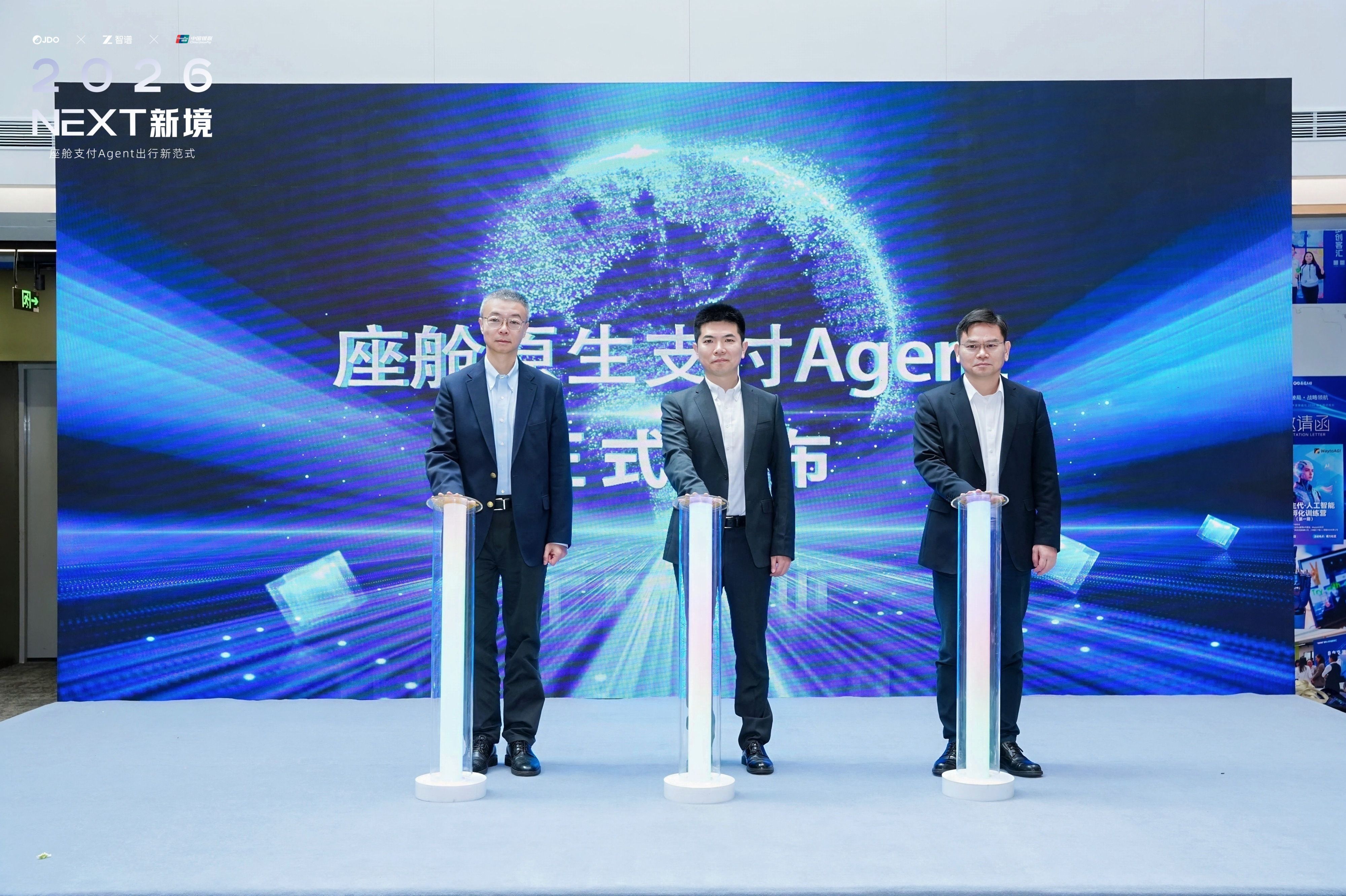
2026 年 1 月 28 日,以「2026 NEXT 新境|座舱支付 Agent 出行新范式」为主题的联合发布会在上海浦东张江模力社区举行。极豆科技、智谱、中国银联 共同发布座舱原生支付 Agent。该产品围绕智能座舱场景,对支付能力进行系统级重构,为智能汽车服务生态提供新的技术路径与应用范式。 在支付能力层面,中国银联为该产品提供了基于大模型能力调用的的中国银联MCP(Model Context Protocol)支付服务。通过该项服务,座舱原生支付 Agent 可在符合金融监管与安全规范的前提下,对接多类支付场景与服务,通过与座舱服务流程的标准化对接,银联支付能力可在加油、停车、车载娱乐等 典型出行场景中实现顺畅调用,为座舱支付场景提供可靠的基础支撑,确保支付过程符合金融安全与监管要求。 在三方协作下,座舱原生支付 Agent 已可在多类高频出行场景中实现稳定运行。系统能够结合行程信息与用户操作,实现服务触发与支付执行的连续衔接, 在保证安全与可控的前提下,显著减少用户在车内支付过程中的操作负担,提升整体出行体验的连贯性。 极豆科技CEO汪奕菲表示,座舱原生支付 Agent 是「2026 NEXT 新境 ...

上声电子:公司算法研发方向聚焦于降噪及音效提升
Zheng Quan Ri Bao Wang· 2026-01-27 13:09
Core Viewpoint - The company focuses on noise reduction and sound enhancement algorithms, emphasizing the importance of sound wave technology in differentiating products within the automotive sector [1] Group 1: Company Technology and Development - The difference between "noise addition" and "noise reduction" algorithms is highlighted, with the company actively pursuing noise reduction and sound enhancement [1] - The company possesses core technologies such as "speaker array broadband sound field control technology" and "multi-zone sound reproduction technology," which are essential for optimizing in-car audio systems [1] - The company aims to achieve precise control of the in-car sound field through patents and products, enhancing the listening and acoustic experience for different seating positions within the vehicle [1] Group 2: Industry Trends - The automotive industry's trend towards "personalized sound fields" and "immersive experiences" is noted, indicating a shift in consumer preferences and technological advancements [1] - Sound wave technology is identified as a crucial support for achieving product differentiation in the automotive sector [1]

长安汽车定增被受理 将于深交所上市
Xin Lang Cai Jing· 2026-01-26 11:15
Core Viewpoint - Changan Automobile is issuing A-shares to raise up to 600 million yuan for investments in new energy vehicle development and other projects [1][3]. Group 1: A-Share Issuance - Changan Automobile plans to issue 630,252,100 A-shares, which will not exceed 30% of the current total share capital [1][3]. - The funds raised will be used for new energy vehicle and smart platform development, global R&D center construction, and core capability enhancement projects [1][3]. Group 2: Business Overview - Changan Automobile's main business includes the R&D, manufacturing, and sales of vehicles (passenger and commercial) and engines [1][3]. - The company is actively developing three electric technologies: battery, electric motor, and electronic control, along with smart cockpit and autonomous driving technologies [1][3]. - Changan is exploring new business areas such as automotive life services, new marketing strategies, battery swapping services, and future industries like humanoid robots and flying cars [1][3]. Group 3: Brand Development - Changan has established three major brands: Changan, Deep Blue, and Avita, with differentiated sub-brands under Changan [2][4]. - The company has launched several classic models in the traditional fuel vehicle sector, including the CS series, Yidong series, and UNI series [2][4]. - In the new energy sector, Changan is focusing on models like Changan Qiyuan E07, Deep Blue S07, and Avita 11, aiming to provide high-quality products and services to consumers [2][5].

对话独角兽 | 斑马智行的生态构建答卷:横向开放与技术深耕
Di Yi Cai Jing· 2026-01-26 09:04
Core Insights - The core idea of smart cockpit design has shifted from "users finding functions" to "services finding users," indicating a proactive approach in user experience through AI technology [2] - Banma Zhixing has transitioned from an "operating system provider" to an "AI technology company for smart cockpits," emphasizing the importance of AI capabilities in the competitive landscape of smart cockpits [2] Group 1: Technological Advancements - Banma Zhixing's Auto Omni full-modal edge model marks a fundamental shift in technology, enabling full-modal interaction and scene understanding through optimized models on limited computing power [4] - The company is developing a new human-machine interaction paradigm called "No Touch, No APP," exemplified by its collaboration with BMW, which will feature AI Agent technology in new models starting in the second half of 2026 [4] Group 2: Strategic Partnerships and Market Positioning - Banma Zhixing follows a "layered decoupling" strategy for both domestic and international collaborations, adapting AI capabilities and ecosystem services to local market needs [5] - The company focuses on a "horizontal open cooperation" model, allowing it to concentrate on core technologies while partnering with various chip manufacturers and ecosystem partners, providing an alternative for automakers seeking advanced capabilities without full dependency on a single supplier [5][6] Group 3: Software Value Challenges - The industry faces a threefold dilemma regarding software value: high hardware costs with weak software service experiences, low user willingness to pay for software subscriptions, and a lack of clear software value assessment frameworks [8] - Banma Zhixing aims to address these challenges by enhancing hardware-software integration and exploring new business models, such as software subscriptions, while gradually changing perceptions about software pricing in the automotive sector [8][11] Group 4: Practical Solutions and Future Directions - The company has implemented strategies to achieve experience and cost leadership through deep hardware integration, such as the Auto Omni model, which has garnered significant attention from automakers [9] - Banma Zhixing has established a clear value assessment system for software, achieving over 1 billion yuan in pure software revenue, serving as a reference for commercialization in the industry [11] - The future of the automotive industry will hinge on technology, ecosystem, and collaborative efficiency, necessitating a macro perspective to foster shared technology and risk in the industry [12]
博泰车联:高通+鸿蒙智舱全栈Tier1崛起
HTSC· 2026-01-26 04:35
Investment Rating - The report initiates coverage on the company with a "Buy" rating and sets a target price of HKD 286.67, corresponding to a 6.7x price-to-sales ratio for 2026 [1][7]. Core Insights - The company is a leading provider of smart cockpit solutions in China, with comprehensive self-research capabilities in software, hardware, and connected vehicle cloud services. It is expected to achieve significant revenue growth and profitability improvement due to its first-mover advantage in high-end SoC platforms, unique positioning within the Harmony ecosystem, and breakthroughs in overseas markets. The projected compound annual growth rate (CAGR) for revenue from 2025 to 2027 is 43.8%, with expectations of turning profitable by 2027 [15][19]. Summary by Sections Basic Data - Closing price as of January 23: HKD 245.20 - Market capitalization: HKD 36,778 million - Average daily trading volume over the past six months: HKD 21.86 million - 52-week price range: HKD 130.10 - 253.40 [3]. Financial Forecasts and Valuation - Revenue projections (in million RMB) for 2024 to 2027 are as follows: 2,557 (2024), 3,684 (2025E), 5,755 (2026E), and 7,608 (2027E), with growth rates of 70.94%, 44.07%, 56.22%, and 32.20% respectively [6]. - Adjusted net profit forecasts (in million RMB) are: -352.83 (2024), -214.72 (2025E), 11.37 (2026E), and 233.07 (2027E) [11]. - The report anticipates a significant improvement in gross margins, with the gross profit margin expected to rise from 5.9% in 2023 to 10.0% in 2024 [8][19]. Investment Highlights - The company is positioned as a Tier 1 supplier in the smart cockpit sector, with a market share of 7.3% in the domestic smart cockpit domain controller market and second place in the new energy vehicle sector [15][19]. - The penetration of high-end SoC products is expected to drive both average selling prices (ASP) and gross margins upward, with the average price of domain controllers projected to increase from RMB 990 in 2023 to RMB 2,141 in 2024 and further to RMB 2,257 in the first half of 2025 [16][19]. - The company has established a diverse customer base, having received certifications from 29 OEMs and serving over 50 automotive brands and 200 models, which supports mid-term revenue growth [17][19]. Market Position and Strategy - The company is one of the first domestic suppliers to enter overseas markets, with successful projects including a luxury brand in Europe and ongoing collaborations with major automotive manufacturers [18][24]. - The integration of cockpit and driving functions, along with a focus on central computing architecture, is expected to enhance customer stickiness and project scale [18][19].
顺络电子:汽车电子业务实现三电系统及智能驾驶、智能座舱全场景覆盖
Mei Ri Jing Ji Xin Wen· 2026-01-26 02:02
每经AI快讯,1月26日,顺络电子在投资者关系活动中表示,汽车电子业务是公司战略发展的重要领域 之一,其汽车电子产品已实现新能源汽车三电系统等电动化场景全面覆盖,并延伸至智能驾驶、智能座 舱等智能化应用场景;随着新能源汽车产业由电动化转向智能化,感知层、决策层和执行层相关模块 (如雷达、摄像头、域控制器等)的新需求将带动公司车规级产品需求快速提升,支撑车规业务线的第 二增长极。 ...

蓝思科技:凭借“材料-模组-整机”的垂直整合及全球产能布局 在客户全系车型中占据主要份额
Zheng Quan Ri Bao Wang· 2026-01-23 11:18
Core Viewpoint - The company, Lens Technology, is a leading Tier 1 supplier for major domestic and international clients, with deep collaboration in the smart cockpit and autonomous driving hardware sectors [1] Group 1: Company Positioning - The company exclusively supplies critical components such as the smart B-pillar (integrating cameras/sensors), central control modules (core human-machine interaction), and charging station components, which are essential for clients' autonomous driving systems and future mass-market vehicles [1] - The company has achieved vertical integration across "materials-modules-complete machines" and has a global production capacity layout, securing a significant share in the full range of client vehicle models, including new models [1] Group 2: Market Opportunities - As clients' autonomous driving systems are implemented and new vehicle models are launched, the company is expected to benefit significantly from the expansion of market scale and the increase in per-vehicle value [1]

吉利控股发布2030战略目标:销量突破650万 营收破万亿并冲击全球前五
Yang Shi Wang· 2026-01-23 09:53
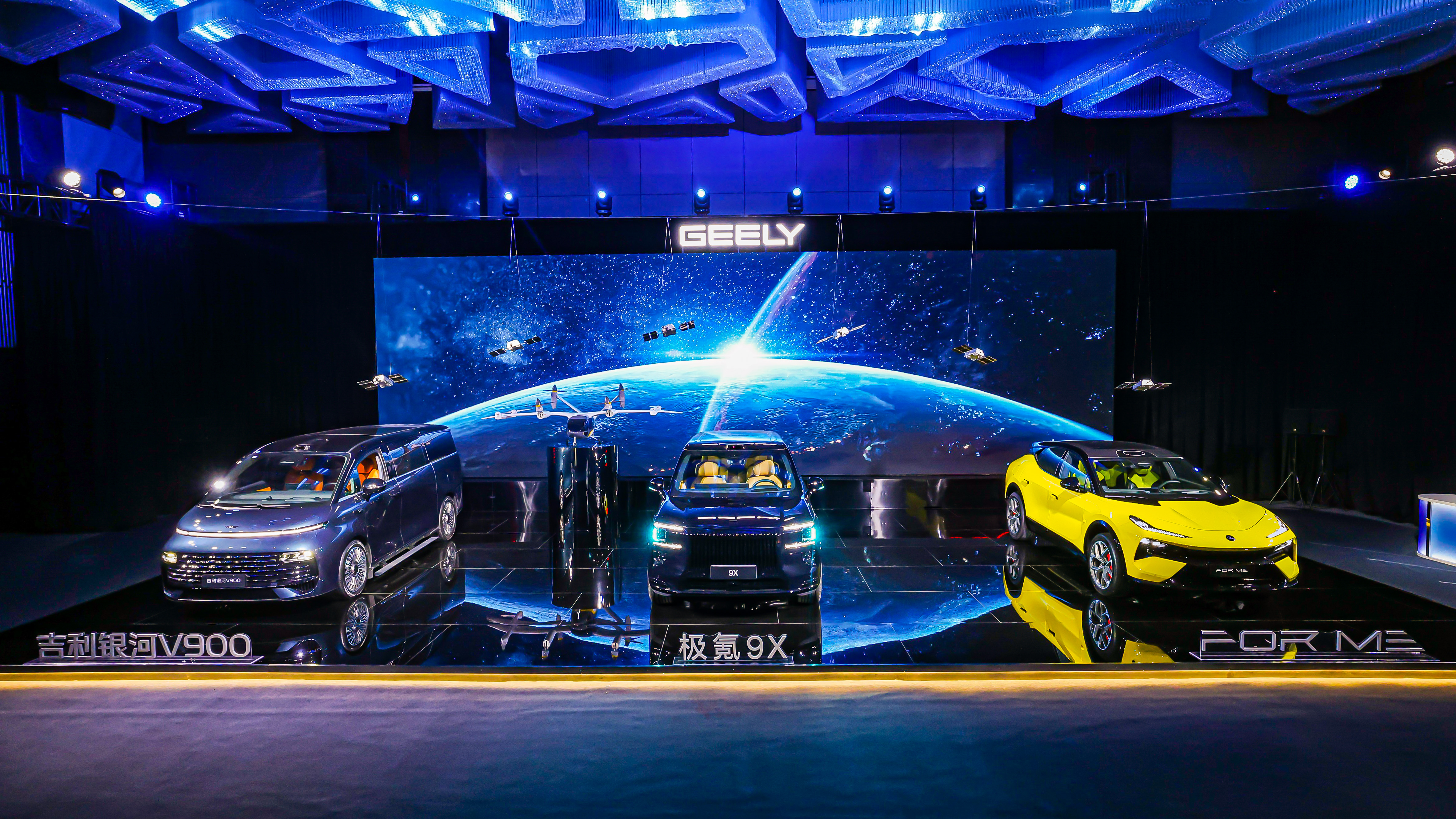
Core Viewpoint - Geely Holding Group has officially launched its "One Geely, Leading All" 2030 strategic goal, aiming to enhance global coordination and establish a comprehensive core capability system to achieve leading indicators in the global automotive industry [1][4]. Group 1: Strategic Goals - Geely aims to achieve global total sales exceeding 6.5 million units (including passenger and commercial vehicles) and revenue surpassing 1 trillion yuan by 2030, positioning itself among the top five global automakers, with approximately 75% of sales from new energy vehicles and over one-third from overseas markets [4]. - The company plans to develop a leading global new energy architecture covering vehicle classes A to E, with a target to reduce average model development cycles and comprehensive costs by over 30% based on the new architecture [4]. Group 2: Six-in-One Capability System - Geely will focus on six areas: brand, technology, complete vehicles, ecology, talent, and sustainable development, with an emphasis on strengthening the Geely parent brand and creating a clear, distinctive global brand matrix [7]. - The company will leverage its brands, including Geely, Lynk & Co, and Polestar, while also enhancing the localized operational capabilities of international brands like Volvo and Lotus in the European and American markets [7]. Group 3: Technological Advancements - Geely will enhance its "Seven Vertical" technology system, focusing on smart driving, smart cockpits, electronic architecture, complete vehicle architecture, batteries, electric drives, and super hybrid technologies [8]. - The company aims to establish "Qianli Haohan" as a globally advanced technology platform, achieving full coverage of L2-level assisted driving and accelerating the commercialization of L3 technology and Robotaxi [8]. Group 4: Safety and Ecological Layout - Safety remains the top priority for Geely, with plans to strengthen safety technology collaboration within the group and establish a "world safety dual-pole" structure between Volvo and Geely [10]. - Geely will focus on three ecological areas: user services, future mobility, and methanol-hydrogen electric vehicles, aiming to launch 100,000 customized Robotaxis by 2030 [10]. Group 5: Talent and Sustainability - Geely will deepen its "Talent Forest" strategy, investing 500 million yuan initially and up to 300 million yuan in total to foster innovation and entrepreneurship among youth [12]. - The company commits to integrating green and low-carbon principles throughout the product lifecycle, promoting eco-friendly materials, and achieving carbon neutrality in benchmark factories [12]. Group 6: Future Directions - By 2026, Geely will focus on AI technology, energy diversification, product premiumization, and internationalization, with upcoming technologies including the full-domain AI 2.0 system and the next-generation Qianli Haohan assisted driving system [13]. - New products, such as the Zeekr 8X, are set to be launched, reflecting the company's commitment to high-quality development [13].

吉利控股发布2030战略目标:实现全球总销量突破650万辆,营收超1万亿元,跻身全球车企销量前五
Xin Lang Cai Jing· 2026-01-23 01:32
Core Insights - Geely Holding has announced its "One Geely, Comprehensive Leadership" 2030 strategic goal, aiming to enhance top-level coordination and global collaboration to achieve a unified strategic framework [1][6] - The company targets to exceed global total sales of 6.5 million vehicles (passenger and commercial), with revenue surpassing 1 trillion yuan, ranking among the top five global automakers, and aims for approximately 75% of sales to come from new energy vehicles [1][6] Strategic Framework - The "One Geely" initiative focuses on strengthening the group's top-level operations and global governance, creating a platform for strategic collaboration and resource integration [3][8] - The "Comprehensive Leadership" aspect aims to build a core capability system centered on brand, technology, complete vehicles, ecology, talent, and sustainable development, ensuring key competitive indicators reach a leading global level [3][8] Sales and Growth Projections - In 2025, Geely's total sales are projected to reach 4.116 million units, a 26% year-on-year increase, with new energy vehicle sales expected to hit 2.293 million units, reflecting a 58% growth and a penetration rate of 56% [3][8] Brand Strategy - Geely plans to enhance its core brand by creating a clear, distinctive, and complementary global brand matrix, leveraging the strengths of its various brands, including Geely, Lynk & Co, and Volvo [4][9] - The company aims to establish a new collaborative brand partnership model with international partners like Renault, focusing on localized operations in key markets [4][9] Technological Advancements - Geely will enhance its "Seven Vertical" technology system, focusing on smart driving, smart cockpit, electronic architecture, complete vehicle architecture, batteries, electric drives, and super electric hybrid technologies [4][9] - The company aims to achieve full coverage of L2-level assisted driving and accelerate the commercialization of L3 technology and Robotaxi services [4][9] Ecosystem Development - Geely is focusing on three major ecosystems: user services, future mobility, and methanol-hydrogen electric vehicles [5][10] - The user service ecosystem will aim to create a convenient, transparent, digital, and ecological after-sales service system, enhancing customer satisfaction and loyalty [5][10] - The future mobility ecosystem will involve a comprehensive integrated service capability across major cities by 2030, including the deployment of 100,000 Robotaxi vehicles [5][10] - The methanol-hydrogen electric vehicle ecosystem will leverage a full industry chain advantage, with over 50,000 vehicles already in operation and a cumulative mileage exceeding 23 billion kilometers [5][10]