
欧洲央行货币政策

Search documents
拉加德发声:欧元区通胀稳在2% 但增长风险未消 欧元区面临关键抉择
Xin Hua Cai Jing· 2025-07-24 14:22
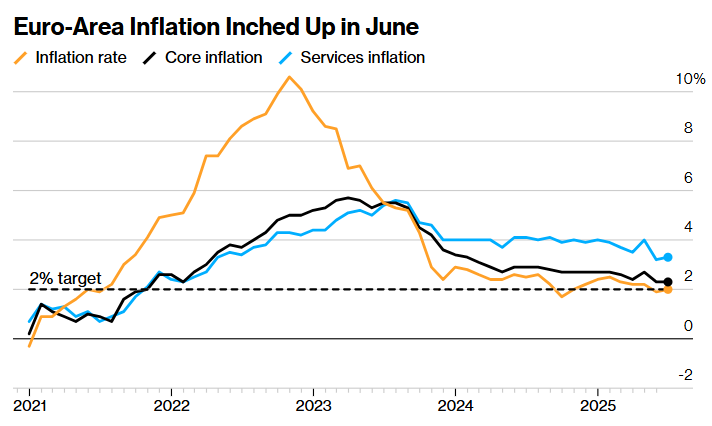
Core Viewpoint - The European Central Bank (ECB) has decided to maintain its key interest rates unchanged, emphasizing that current inflation has stabilized at the mid-term target of 2% and future policies will adopt a "data-dependent, gradual assessment" approach without pre-setting interest rate paths [1][5]. Group 1: Monetary Policy Decisions - The ECB's governing council unanimously decided to keep the three key interest rates unchanged during the July meeting [1]. - Future monetary policy will follow a "data-dependent" and "gradual meeting assessment" principle, considering inflation outlook, economic data, potential inflation dynamics, and the transmission effects of monetary policy [1][5]. - ECB President Lagarde stated that decisions will be based on the complete information available at each meeting, without pre-setting specific interest rate paths [1][5]. Group 2: Economic Indicators - Eurozone's economic growth in Q1 exceeded expectations, driven by preemptive export expansions, recovering private consumption, and increased investment activities [1]. - The unemployment rate in May was 6.3%, close to the lowest level since the euro's introduction, supporting consumer resilience alongside actual income growth and healthy private sector balance sheets [2]. - The June annual inflation rate for the Eurozone was 2.0%, with energy prices rising month-on-month but remaining low year-on-year, and food inflation slightly decreasing to 3.1% [3]. Group 3: Challenges and Risks - High actual and expected tariffs, a strong euro, and geopolitical uncertainties have led to a decline in corporate investment willingness, posing a significant obstacle to current economic growth [2]. - Global trade tensions, deteriorating financial market sentiment, and ongoing geopolitical conflicts may suppress exports and drag down investment and consumption [3]. - The fragmentation of global supply chains is pushing up import prices, while extreme weather and climate crises could lead to unexpected increases in food prices [4]. Group 4: Financial Market Conditions - Since the last meeting, market interest rates, particularly long-term rates, have risen, but the cumulative effects of previous rate cuts continue to show [5]. - The new loan rate for enterprises in May decreased to 3.7%, while bond issuance costs fell to 3.6%, indicating an increase in direct financing [5]. - The ECB is prepared to adjust all tools within its mandate to ensure inflation remains sustainably stable at the target level and to maintain the smooth operation of monetary policy transmission mechanisms [5].
欧央行按下降息“暂停键”,拉加德称外部风险仍高
Di Yi Cai Jing· 2025-07-24 13:59
Group 1 - The European Central Bank (ECB) has decided to keep its key interest rates unchanged, ending a series of seven consecutive rate cuts, with the deposit rate at 2.00%, the main refinancing rate at 2.15%, and the marginal lending rate at 2.40% [1] - ECB President Christine Lagarde emphasized that the current interest rates are in a reasonable range and that monetary policy is supporting the goal of achieving a 2% medium-term inflation target [1][3] - Analysts suggest that the ECB is likely to reassess the situation in September, with more complete data and tariff developments providing a basis for policy decisions [2][3] Group 2 - The ECB has warned that external risks remain high, particularly due to escalating trade tensions and exchange rate fluctuations, which could hinder corporate investment [2] - Lagarde noted that stronger euro and higher tariffs are expected to make corporate investment more challenging, reflecting market concerns about the outlook for recent US-EU trade negotiations [2] - The ECB is adopting a cautious approach, preferring to wait for clearer signals before making further policy decisions, as indicated by various analysts [2] Group 3 - The eurozone economy shows resilience driven by domestic demand, supported by a strong labor market, rising real incomes, and robust private sector balance sheets [3] - Long-term inflation expectations remain stable at around 2%, with core inflation pressures easing and wage growth slowing, reducing the risk of price increases [3] - Analysts believe that the current interest rate levels provide space for the ECB to remain observant, with expectations that rates will remain stable until autumn unless significant changes in inflation or growth prospects occur [3]
一年来首次!欧央行今夜或按下降息“暂停键”
Hua Er Jie Jian Wen· 2025-07-24 09:55
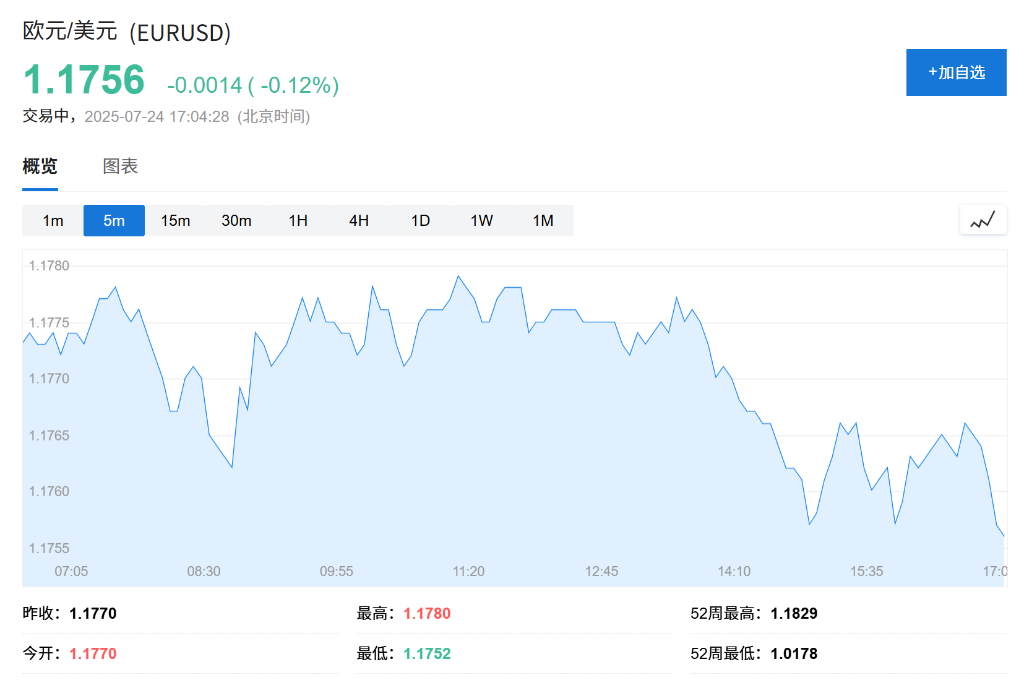
Group 1 - The European Central Bank (ECB) is expected to pause its year-long interest rate cut cycle, marking the first such pause in over a year, as policymakers await clearer information before deciding on future actions [1][2] - A recent survey indicated that all but two economists expect the ECB to maintain the deposit rate at 2% during the upcoming meeting, temporarily halting the 200 basis points of rate cuts that began in June 2024 [1] - The ECB's communication style and policy statement will be closely watched, particularly how officials describe the decision to maintain rates, as the use of the term "pause" may fuel market expectations that rate cuts are not over [1][3] Group 2 - The uncertainty surrounding U.S. tariffs, particularly President Trump's announcement of a 30% tariff on EU imports starting August 1, is a primary reason for the ECB's decision to adopt a wait-and-see approach [2] - The potential impact of these tariffs poses significant risks to the European economic outlook, with the ECB's previous stress tests only assuming a 20% tariff on all European goods [2] - ECB Vice President Luis de Guindos warned that the eurozone's output could stagnate in the second and third quarters due to these tariff impacts [2] Group 3 - There is a lack of consensus among ECB officials regarding the next steps after the pause, with some advocating for further easing due to concerns that inflation may remain below the 2% target [3] - Conversely, other officials express caution, suggesting that the threshold for further rate cuts is "very high," and they warn that increased public spending in the coming years could stimulate prices [3] - The strong euro, which has appreciated 13% against the dollar this year, is causing concern among some policymakers as it could make exports more expensive and lower import costs [4][7] Group 4 - The ECB is also monitoring the euro's strength closely, with some officials indicating that a rise above 1.20 against the dollar could complicate the economic situation and prompt the ECB to consider further rate cuts [7] - However, not all officials share this concern, with some arguing that fears regarding the euro's strength are exaggerated and that it is difficult to complain about its strength while advocating for its global status [7]

【财经分析】欧洲央行货币政策会议前瞻 降息或按下“暂停键”
Xin Hua Cai Jing· 2025-07-22 07:56
Core Viewpoint - The European Central Bank (ECB) is expected to maintain interest rates during its upcoming monetary policy meeting due to ongoing trade uncertainties with the United States and a sufficient easing space, despite having lowered key rates eight times since June of last year [1][2]. Group 1: Interest Rate Decisions - The ECB has reduced its deposit rate to 2% and is likely to keep rates unchanged at the July 24 meeting, with market analysts estimating a probability of over 90% for this outcome [1][2]. - Analysts believe that the ECB will refrain from making significant comments regarding the potential impact of the EU-US trade negotiations on economic growth or inflation during the meeting [3]. Group 2: Economic Indicators - Eurozone inflation has returned to the ECB's target level of 2%, with predictions that it will stabilize at this rate for the year [4]. - The manufacturing sector in the Eurozone has shown signs of recovery, with factory output increasing for four consecutive months and the manufacturing Purchasing Managers' Index (PMI) reaching its highest level since August 2022 at 49.5 [4]. Group 3: Future Rate Cuts - Although the ECB is not expected to cut rates in the immediate future, analysts suggest that it may consider rate cuts later in the year to prevent the euro from appreciating excessively [5]. - The ECB is concerned about the rapid appreciation of the euro, which could complicate economic conditions if it continues to rise significantly [5][6]. - The potential for a rate cut in September is being discussed, particularly if a trade agreement is reached between the US and EU, which could further strengthen the euro [6].
荷兰国际:欧洲央行不能满足于现有政策成果而停滞不前
news flash· 2025-07-17 11:28
Core Viewpoint - The European Central Bank (ECB) should not be complacent with its current policy outcomes and must remain proactive in response to economic challenges [1] Group 1: Economic Challenges - The strengthening of the euro against the dollar may lead to lower inflation levels [1] - Potential tariffs of up to 30% threatened by President Trump against the EU are adding economic pressure [1] Group 2: ECB Policy Outlook - Following the recent reduction of the eurozone deposit rate to 2%, ECB policymakers may have anticipated a "wait-and-see" period [1] - It is likely that the ECB will maintain its current policy at the upcoming meeting, preferring to wait for the potential impact of the tariff measures before taking further action [1] - ECB President Lagarde's summer vacation may be shorter and more tumultuous than initially expected [1]

欧洲央行执委施纳贝尔:再次降息的门槛非常高
news flash· 2025-07-11 07:36
Core Viewpoint - The European Central Bank (ECB) is in a favorable position due to mid-term inflation expectations reaching target levels and a more balanced economic growth outlook, making the threshold for further interest rate cuts very high [1] Group 1 - ECB Executive Board member Schnabel indicated that the current economic conditions do not warrant further rate cuts [1] - The ECB plans to gradually reduce its monetary policy bond investment portfolio to zero [1]
欧洲央行管委表示不排除再次降息
Huan Qiu Wang· 2025-07-10 03:00
Group 1 - The European Central Bank (ECB) must retain all policy options due to significant economic uncertainty, with no pre-commitment or exclusion of further rate cuts [1][4] - Joachim Nagel, a member of the ECB's governing council, emphasized the need for caution in policy-making, highlighting the resilience of the economy against various adverse factors but acknowledging future uncertainties [1][4] - The ECB has cut rates eight times since June 2024, and the market expects the upcoming meeting on July 24 to maintain rates unchanged [1][4] Group 2 - Despite inflation being around the 2% target, concerns remain about the risk of long-term inflation rates falling below this target, with predictions indicating CPI data will remain below 2% for the next 18 months [3] - Nagel reiterated that the low inflation forecast for 2026 is primarily due to base effects rather than fundamental economic issues, expressing optimism about maintaining inflation around the target in the medium term [3] - The ECB's strategy evaluation indicates a commitment to act decisively when inflation is significantly above or below the target, while large-scale asset purchases should remain an absolute exception due to risks to the central bank's balance sheet [3]
欧洲央行管委穆勒:目前无需降息以刺激经济 通胀基本符合目标
智通财经网· 2025-07-01 23:47
Core Viewpoint - The current economic conditions in the Eurozone do not warrant further monetary easing, as the economy is gradually recovering and inflation is near target levels [1][3]. Economic Policy - The European Central Bank (ECB) can maintain stable borrowing costs during its upcoming meeting, as there have been eight rate cuts since June 2024 and inflation is "basically at target" [1]. - ECB officials believe that the inflation rate will stabilize around the 2% target in the medium term after dipping below this level in 2026 [3]. Trade Relations - The ECB is closely monitoring the evolving trade relationship between the EU and the US, particularly the impact of tariffs set by the Trump administration on the EU economy [3]. - There is uncertainty regarding the specific situation in September, but officials expect to gain clearer insights into trade and fiscal plans for better assessments [3]. Inflation Risks - Risks affecting the inflation outlook, such as potential supply chain disruptions, fiscal spending, and energy price fluctuations, are considered to be in a balanced state [3]. - The strong euro, which has appreciated by 14% against the dollar since the beginning of the year, may complicate policy decisions for the ECB [3][4]. Currency Impact - A strong euro can lower import prices and reduce the competitiveness of exports, both of which can suppress inflation [4]. - Despite the rapid appreciation of the euro, ECB officials do not express significant concern, noting that the current exchange rate remains within historical ranges [4].
Vatee外汇:欧元走强会否成为欧洲央行再次降息的催化剂?
Sou Hu Cai Jing· 2025-07-01 14:54
Group 1 - The European Central Bank (ECB) is increasingly considering exchange rate movements as a significant factor in its monetary policy decisions, especially in light of recent comments from Governing Council member Kazaks regarding the potential for further interest rate cuts if the euro strengthens [1][3][4] - The recent appreciation of the euro has begun to suppress import prices, particularly for commodities and energy, which may hinder the momentum for inflation recovery, posing a challenge for the ECB's goal of maintaining inflation within target ranges [3][4] - Kazaks emphasized a "gradual adjustment" approach, indicating that the ECB's current strategy is cautious and methodical, reflecting awareness of global economic uncertainties and external variables [3][4] Group 2 - The potential for the euro to act as a catalyst for a second interest rate cut by the ECB depends on its sustained strength and its actual impact on core inflation [4] - The exchange rate has re-emerged as an important consideration for the ECB, suggesting that the flexibility of European monetary policy may be greater than previously anticipated [4]
【环球财经】受地缘局势影响 法国6月通胀年内首现回升
Xin Hua Cai Jing· 2025-06-27 14:00
Group 1 - France's June CPI rose for the first time this year, with a month-on-month increase of 0.3% and a year-on-year increase of 0.9%, surpassing expectations [1] - Service inflation accelerated to 2.4%, while food inflation slightly increased to 1.4%, and energy prices saw a narrower decline of 6.9% [1] - The rise in inflation is attributed to geopolitical tensions affecting prices, particularly in the Middle East, impacting major economies in the Eurozone [1] Group 2 - The European Central Bank (ECB) completed its eighth rate cut since June last year, as inflation had been cooling earlier in the year [2] - ECB officials expressed satisfaction with the current trajectory of consumer prices, which have decreased from record highs to just below the 2% target [2] - The uncertainty surrounding the Middle East situation and U.S. trade policies adds complexity to the economic outlook, prompting the ECB to maintain flexibility in its monetary policy [2]