
源头创新

Search documents
薛园:创新药领域科学家和创业者背后的“铸剑人”
Jing Ji Guan Cha Wang· 2025-08-22 05:32
Core Insights - The Chinese biopharmaceutical industry is undergoing a transformation, moving from imitation to original innovation, with companies like BeiGene and Innovent Biologics leading the way [2][3] Group 1: Industry Development Stages - The Chinese biopharmaceutical industry can be divided into three stages: copying innovation (before 2015), follow-on innovation (2015-2025), and original innovation (post-2025) [2] - The original innovation stage is characterized by companies achieving groundbreaking innovations in new targets, compounds, and mechanisms, positioning them as leaders in the global market [2] Group 2: Market Potential and Growth - By 2035, the Chinese innovative drug market is projected to reach 3.5 trillion yuan, accounting for 15% of the global market [3] - China ranks second globally in pharmaceutical industry scale, with approximately 30% of the world's innovative drugs currently under research [3] Group 3: Investment and Ecosystem - The Beijing Life Science Park Venture Capital Fund focuses on transforming scientific achievements from research institutions and universities into viable businesses, particularly in biopharmaceuticals and high-growth sectors [4] - The fund benefits from a robust ecosystem in the Zhongguancun Life Science Park, which fosters collaboration among biopharmaceutical professionals and provides a complete industry chain [4][5] Group 4: Support for Entrepreneurs - The fund aims to be a "warm partner" for scientists and entrepreneurs, providing comprehensive support from project transformation to resource linking and financing [6][7] - The investment philosophy emphasizes long-term commitment to solving real medical needs and ensuring clinical benefits for patients [7]

百奥赛图-B(2315.HK)H1业绩报喜:收入劲增50%,持续盈利
Ge Long Hui· 2025-08-05 01:09
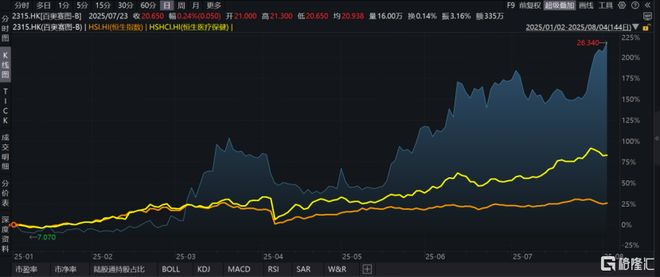
Core Viewpoint - The innovative pharmaceutical sector has emerged as the "most shining track" in the capital market for the first half of 2025, with the Hang Seng Hong Kong Stock Connect Innovative Drug Select Index achieving a year-to-date increase of 97.01%, marking the highest half-year growth since 2018 [1] Group 1: Company Performance - By the first half of 2025, the company reported revenue exceeding RMB 6 billion, a year-on-year increase of over 50%, and net profit ranging from RMB 42.7 million to RMB 52.7 million, marking a continuous profit validation [1][3] - The company's stock price surged by 209.88% year-to-date, outperforming both the Hang Seng Healthcare Index and the Hang Seng Index [1] Group 2: Strategic Transformation - The company has transitioned its revenue structure from "service infusion" to "product self-sustenance," indicating a successful shift towards high-value products and validating the commercial viability of its technology [3] - The company has established a global presence, enhancing its local service capabilities through the expansion of its Boston laboratory and securing collaborations with top 10 multinational pharmaceutical companies [4] Group 3: Operational Efficiency - The company increased its R&D expenditure to approximately RMB 206.1 million to RMB 216.1 million, a year-on-year increase of about 30%, while optimizing its management structure and digitalizing production processes to enhance operational efficiency [5] - The company achieved net profit for two consecutive reporting periods, indicating the establishment of a commercial flywheel effect from R&D investment to product revenue and profit accumulation [5] Group 4: Market Opportunities - Recent policy measures from the National Healthcare Security Administration and the National Health Commission support the high-quality development of innovative drugs, creating a favorable environment for companies like the subject firm [6] - The capital market's evaluation logic for innovative pharmaceutical companies has fundamentally changed, with a shift from "story-driven" to "performance-driven" valuation, enhancing confidence in profitability [7] Group 5: Globalization and Future Growth - The company is positioned as a significant contributor to the global pharmaceutical pipeline, particularly in the ADC (antibody-drug conjugate) field, and ranks among the top three in terms of outbound licensing transactions [8] - The company's unique technology platforms and innovative antibody assets are expected to establish it as a "technical arms dealer" in the global pharmaceutical landscape, potentially leading to a dual growth trajectory [8] Conclusion - The company is poised for a significant transformation from a follower to a leader in the global innovative drug sector, with its recent profitability breakthrough marking just the beginning of its growth journey [9][10]

从“扫货”管线到争当IPO基石:外资加码中国创新药
Di Yi Cai Jing· 2025-07-29 10:31
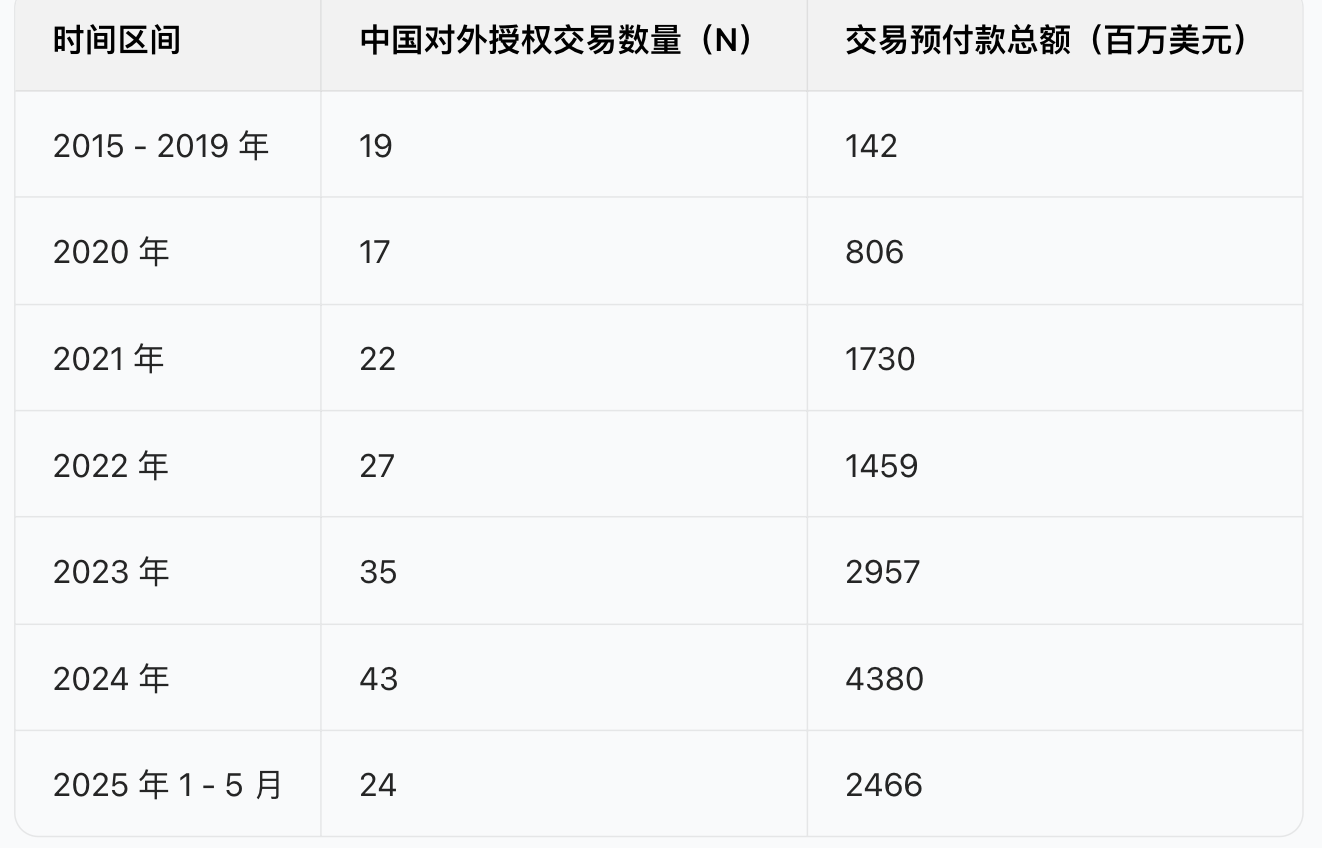
Core Insights - The Chinese pharmaceutical industry is experiencing a resurgence after three years of stagnation, driven by high-value licensing deals from multinational pharmaceutical companies [1][2] - There is a significant interest from overseas investors in Chinese biopharmaceutical companies, with a notable increase in licensing agreements and IPO activities [2][8] - The trend of "licensing out" Chinese drug candidates to foreign companies is becoming more common, providing Chinese firms with milestone payments and a share of sales revenue [4][6] Group 1: Market Dynamics - As of mid-July, approximately 288 companies are waiting for IPOs in Hong Kong, many of which are biopharmaceutical firms seeking to list under the 18A rule [1][8] - The Hong Kong medical sector has seen a 54% increase this year, significantly outperforming the MSCI China Index, which rose by 17% [8] - The average price-to-earnings (PE) ratio for the sector is around 30 times, placing it in the 15th percentile of its valuation range over the past five years [8] Group 2: Investment Trends - U.S. investment banks are playing a crucial role in facilitating these licensing deals and IPOs, with cornerstone investors contributing 42% of IPO financing this year, two-thirds of which comes from overseas [1][12] - The trend of U.S. pharmaceutical companies seeking to lower costs through partnerships with Chinese firms is expected to continue, especially in light of U.S. drug pricing policies [2][6] Group 3: Licensing Agreements - The number of licensing transactions from China has increased significantly, with 35 deals in 2023 and projected to reach 43 in 2024, alongside a total upfront payment of $2.957 billion in 2023 [3][6] - Notable licensing agreements include Akeso's ivonescimab, which was licensed to Summit Therapeutics for a total value of $5 billion, marking one of the largest overseas licensing deals in Chinese biopharmaceutical history [7][6] Group 4: Future Outlook - Chinese biopharmaceutical companies are increasingly able to produce globally recognized clinical data, particularly in competitive fields like oncology and immunology [2][6] - The shift from merely selling drug pipelines to achieving global commercialization is essential for the future growth of Chinese pharmaceutical companies [13][15] - There is a need for Chinese firms to enhance their innovation capabilities and international execution to compete effectively on a global scale [14][15]




这款“全球首创”国产肺癌药在美国获批,如何敲开FDA大门
Di Yi Cai Jing· 2025-07-19 08:42
Core Viewpoint - The approval of the innovative drug Shuwozhe by Dize Pharmaceutical for treating EGFR exon20ins NSCLC marks a significant advancement in addressing a challenging target that has been difficult to treat with existing therapies [1][2]. Group 1: Drug Approval and Market Position - Dize Pharmaceutical's drug Shuwozhe has received accelerated approval from the FDA for use in adult patients with locally advanced or metastatic NSCLC harboring EGFR exon20ins mutations [1][2]. - Shuwozhe is recognized as the first and only small molecule targeted therapy for EGFR exon20ins NSCLC globally, having previously received approval in China [2]. Group 2: Clinical Research and Development - The approval was based on data from the international multicenter clinical study "Wukong 1B," which demonstrated the efficacy and safety of Shuwozhe in patients with EGFR exon20ins NSCLC [3]. - The drug's submission process involved extensive communication with the FDA, ensuring alignment on data and documentation requirements, and achieving a "zero deficiency" status during the independent registration process [3]. Group 3: Strategic Vision and Internationalization - Dize Pharmaceutical aims for global market competitiveness through solid scientific research and early international multicenter clinical trials [4]. - The company emphasizes the importance of maintaining a clear strategic focus and adaptability in the face of unforeseen events during international clinical trials [4]. - Dize Pharmaceutical's strategy includes direct market entry for its drugs, contrasting with other domestic companies that often rely on external partners for commercialization [4][5].

秉持源头创新 立足全球竞争
Zhong Guo Zheng Quan Bao· 2025-07-15 20:57
Core Viewpoint - The company, Dize Pharmaceutical, emphasizes its commitment to "source innovation" and "global competition," successfully validating its capability in international multi-center clinical research and overseas approval for innovative drugs [1][3]. Group 1: Company Overview - Dize Pharmaceutical focuses on innovative therapies for malignant tumors and immune diseases, aiming to address unmet clinical needs globally [1][2]. - The company has established seven globally competitive product pipelines, with two leading products, Shuwozhe and Huiruozhe, having reached key clinical trial endpoints and received approvals in China and the U.S. [1][3]. Group 2: Product Development and Clinical Trials - Shuwozhe was included in the NCCN guidelines for treating EGFR exon20ins non-small cell lung cancer (NSCLC) and received FDA approval, filling a significant treatment gap [2][3]. - The company has conducted over 200 clinical trials across more than 20 countries, with ongoing global Phase III clinical studies for Shuwozhe and DZD8586 [4][5]. Group 3: Financial Performance - In 2024, Dize Pharmaceutical reported a revenue of 360 million yuan, a 294% increase year-on-year, and for Q1 2025, revenue reached 160 million yuan, reflecting a 96% growth [6]. Group 4: Strategic Insights - The company advocates for early international multi-center clinical trials to validate drugs and gain international recognition, suggesting that this approach is crucial for domestic pharmaceutical companies aiming for global markets [4][5]. - Dize Pharmaceutical's core strategy involves developing drugs for global competition while establishing technological barriers in familiar and advantageous fields [5][6].
《省级财政科技计划专项资金管理办法》印发 按照科研规律激发源头创新动力活力
Si Chuan Ri Bao· 2025-07-14 07:25
Group 1 - The core viewpoint of the news is the issuance of the "Provincial Financial Science and Technology Plan Special Fund Management Measures" to regulate and enhance the management of provincial financial science and technology plan special funds, aiming to improve fund utilization efficiency [1][2]. - The special funds will primarily be used to strengthen basic research, enhance technological breakthroughs, accelerate the transfer and transformation of results, support the construction of technology innovation platforms, and cultivate talent [1][2]. - Projects evaluated as "excellent" or "qualified" will retain surplus funds for use by the project unit, prioritizing the original project team's research needs, while ensuring effective management of surplus funds [1][2]. Group 2 - The management measures emphasize the importance of supporting the transfer and transformation of results, including activities such as concept verification, pilot testing, and demonstration promotion [2]. - The management measures also highlight the support for the construction of technology innovation platforms and the cultivation of domestic and international technology innovation and entrepreneurship talents [2]. - Compared to the 2019 version, the new management measures have made several adjustments, such as combining competitive support with stable support for basic research and extending the performance monitoring and evaluation cycle for provincial science and technology plan projects [3].

迪哲医药舒沃哲纳入最新版NCCN指南
Bei Jing Shang Bao· 2025-07-13 03:16
Core Viewpoint - Dize Pharmaceutical's Shuwotai (舒沃替尼片) has been included in the NCCN guidelines for non-small cell lung cancer (NSCLC), marking it as the only small molecule targeted therapy for EGFR exon 20 insertion mutations globally [1][2] Group 1: Product Development and Approval - Shuwotai has received priority review and approval from the FDA, highlighting its significance in the treatment landscape for NSCLC patients with specific mutations [1] - The drug represents a breakthrough in addressing the challenges of drug development, providing a safe and effective targeted treatment option for patients [1] Group 2: Research and Validation - The successful transition from domestic clinical research ("Wukong 6") to international multi-center studies ("Wukong 1B") signifies a comprehensive validation of a Chinese-developed innovative drug on a global scale [1] - The research led by Professor Wang Mengzhao from Peking Union Medical College Hospital emphasizes the drug's potential impact on patient care [1] Group 3: Company Vision and Investment Perspective - Dize Pharmaceutical's founder, Zhang Xiaolin, emphasizes the company's commitment to "source innovation" and "global competition," establishing a strong foundation for its drug development capabilities [2] - Investment perspectives highlight the importance of teams that combine scientific expertise with entrepreneurial spirit, suggesting a strong investment rationale for Dize Pharmaceutical [2] - The success of Shuwotai is seen as a demonstration of China's capabilities in the global pharmaceutical market, potentially paving the way for more Chinese original molecules and companies to gain international recognition [2]
迪哲医药舒沃哲 纳入最新版NCCN指南:中国“源创”新药国际化路径新范式
Zheng Quan Shi Bao Wang· 2025-07-12 14:48
Core Insights - The approval of ZEGFROVY (suwotrectin) by the FDA and its inclusion in the NCCN guidelines marks a significant milestone for the company and the industry, establishing it as the first and only targeted therapy for EGFR exon20ins NSCLC globally [1][2] - The successful development of ZEGFROVY demonstrates the potential for Chinese biotech firms to innovate and compete on a global scale, shifting from technology output to value output [2] Company Developments - ZEGFROVY is recognized as the first innovative drug developed independently in China to receive approval in the U.S., highlighting the company's capability in full lifecycle drug development [1] - The company emphasizes its commitment to "source innovation" and global competition, which has been validated through the successful launch of ZEGFROVY [1][2] Industry Implications - The success of ZEGFROVY encourages other companies to plan international clinical trials and global registration strategies from the early stages of drug development [2] - There is a call for a clear tiered evaluation system for innovative drugs at the national level, which would provide institutional incentives for source innovation and guide the industry towards high-quality development [2]
舒沃哲纳入最新版NCCN指南,董事长张小林:中国创新药企完全有能力冲破界限
Xin Lang Ke Ji· 2025-07-12 10:52
Group 1 - The core viewpoint of the news is that Dizhihua's drug, Shuwotini (舒沃替尼片), has been included in the National Comprehensive Cancer Network (NCCN) guidelines for the treatment of non-small cell lung cancer (NSCLC) with EGFR exon 20 insertion mutations, marking it as the only small molecule targeted therapy recognized globally for this specific mutation [1] - Shuwotini is an oral, irreversible, highly selective EGFR tyrosine kinase inhibitor designed for patients with locally advanced or metastatic NSCLC who have progressed after platinum-based chemotherapy or are intolerant to it, and have confirmed EGFR exon 20 insertion mutations [1] - The successful approval of Shuwotini by the FDA was highlighted during a press conference, where a leading researcher emphasized its potential to reshape treatment paradigms in the field of lung cancer [1] Group 2 - The founder and CEO of Dizhihua, Dr. Zhang Xiaolin, articulated the company's commitment to "source innovation" and "global competition," emphasizing the successful development and approval of a globally innovative drug from inception to market [2] - Dr. Zhang outlined the "Dizhihua Path," which includes a solid scientific foundation, early collaboration with top international research centers, and a strategic focus on product investment [2] - The company aims to integrate Chinese cultural elements into its projects to facilitate global recognition of Chinese innovation, with Shuwotini's approval in the U.S. exemplifying the "Wukong Spirit" of breaking boundaries through scientific strength [2]
创新药研发,需以源头创新为驱动
Ke Ji Ri Bao· 2025-07-07 01:01
Group 1 - The core viewpoint highlights the rapid development of China's innovative drug industry, with nearly 40 first-class innovative drugs approved in the first half of the year, approaching last year's total of 48 [1] - The total amount of overseas licensing transactions for innovative drugs reached $45.5 billion in the first five months, with a record-breaking upfront payment from a domestic company [1] - The growth of the innovative drug sector is attributed to high investment in technological innovation by pharmaceutical companies and strong policy support, including reforms in drug review and approval systems [1][2] Group 2 - The transition from "follow-up innovation" to "source innovation" requires a dual approach of scientific and industrial innovation, focusing on new mechanisms and treatment strategies in drug research [2] - Successful case studies, such as a 160 million yuan transaction between a university and a pharmaceutical company, demonstrate the potential of unique discoveries in drug development [2] - To foster "source innovation," it is essential to create a supportive ecosystem for innovative drug development, including increased investment in early-stage companies and a fair pricing mechanism reflecting R&D costs [2] Group 3 - The essence of innovative drugs lies in innovation, supported by technological advancements, patient capital, and favorable policies, which can significantly enhance the development of domestic innovative drugs [3]