
生物技术

Search documents
乐天化学明确业务重组与创新目标
Zhong Guo Hua Gong Bao· 2026-01-14 02:41
Core Viewpoint - The company is committed to comprehensive business restructuring and innovation to enhance core competitiveness in response to challenging market conditions [1] Group 1: Business Restructuring - The company has submitted a comprehensive restructuring plan to the Korean Ministry of Industry, which includes the separation of its 1.1 million tons per year naphtha cracking facility and the integration of operations with a modern petrochemical facility producing 850,000 tons of ethylene [1] - The restructuring aims to optimize the layout of basic chemical production capacity [1] Group 2: Cash Flow Management - The company emphasizes the importance of strict cash flow management during the transformation period and plans to continuously review existing businesses [1] - The focus will be on expanding high-competitiveness and high-potential sectors while optimizing inefficient and non-differentiated businesses [1] Group 3: Future Outlook - The company aims to deepen collaboration in research, education, and international cooperation, leveraging technological advantages in low-carbon energy, semiconductors, artificial intelligence, automotive, and biotechnology to cultivate functional materials [1] - The goal is for environmentally friendly materials, including functional compounds, semiconductor process materials, green materials, functional copper foil, and hydrogen and ammonia energy materials, to account for over 60% of the business [1] - The company plans to restructure its mid-to-long-term R&D roadmap and build a collaborative cluster with universities, private enterprises, and global research institutions to strengthen its competitive advantage in materials [1]
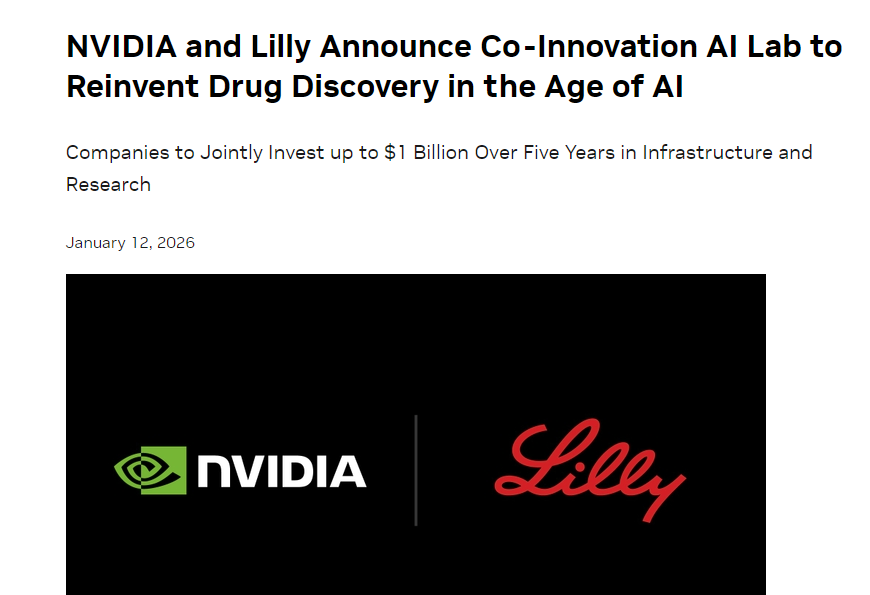
英伟达与礼来共投10亿美元,建设AI药物研发实验室
Feng Huang Wang· 2026-01-12 22:54
Core Viewpoint - Nvidia and Eli Lilly announced a joint investment of $1 billion to establish a research lab in the San Francisco Bay Area over the next five years, aimed at accelerating the application of artificial intelligence in the pharmaceutical industry [1][4]. Group 1: Investment and Collaboration - The lab will be located in Silicon Valley, bringing Eli Lilly's capabilities closer to AI innovation centers, and represents a collaborative investment between the two companies [1]. - This investment exemplifies Nvidia's strategy to leverage its financial strength and foster new product markets, particularly in the AI chip sector, where it holds a dominant position [4]. - Nvidia aims to automate the drug development process significantly through AI, which is already being utilized by some companies to propose potential new drugs or compounds [4]. Group 2: Strategic Developments - Eli Lilly is increasingly relying on advanced AI models for drug design and discovery, with the goal of significantly reducing the time required for new drugs to go from development to market [4]. - Nvidia's strategy in biotechnology includes providing open-source AI models and software tools, allowing pharmaceutical companies to build their own drug development platforms based on Nvidia hardware [5]. - Nvidia also announced a series of new AI models, including an updated version to ensure that drugs designed with AI tools are synthesizable under real laboratory conditions [5]. Group 3: Future Plans - The specific location for the new facility dedicated to training AI models in the biotechnology sector will be announced in March [5]. - Nvidia is expanding its portfolio of AI models and intelligent agents for the healthcare industry, making them open-source for customization to meet individual needs [6].


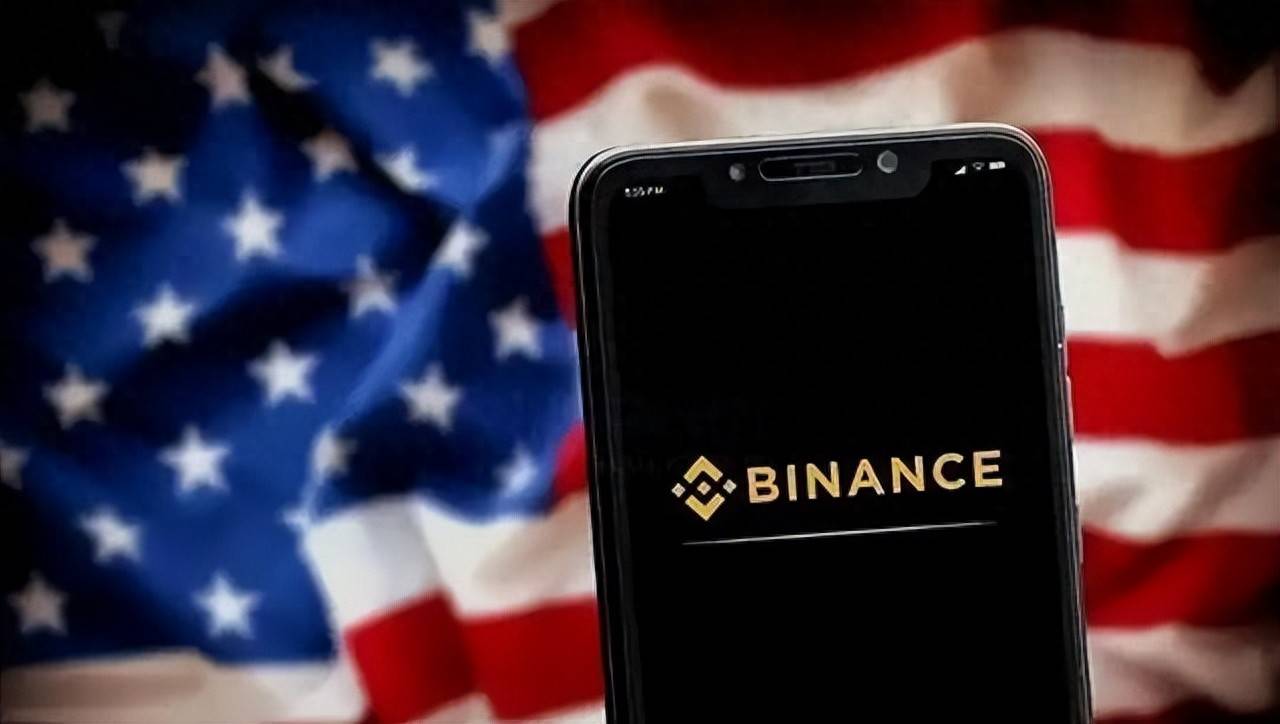
别人跑路他自首,主动认罚530亿换4个月刑期,归来仍是千亿富豪
Sou Hu Cai Jing· 2026-01-11 16:08
Core Insights - Zhao Changpeng, the founder of Binance, chose to surrender to U.S. authorities, admitting guilt and paying a substantial fine, which did not diminish his wealth post-incarceration [1][9]. Group 1: Background and Early Career - Zhao Changpeng was born in 1977 in Jiangsu, China, and moved to Canada in 1989, where he worked various jobs to support his family [3]. - He graduated from McGill University in 1999 and worked at the Tokyo Stock Exchange and Bloomberg, where he quickly rose to the position of technical director [3]. Group 2: Binance's Growth and Challenges - After investing in Bitcoin in 2014, Zhao founded Binance in 2017, which quickly became a leading cryptocurrency exchange with over 140 million users and peak daily trading volumes of $76 billion by the end of 2021 [5][7]. - Binance faced increasing regulatory scrutiny globally, leading to multiple relocations and investigations by U.S. authorities starting in 2018 [7][9]. Group 3: Legal Issues and Consequences - In February 2023, the U.S. issued a 50-page indictment against Binance, citing serious charges including money laundering and fraud [7][9]. - Zhao surrendered in November 2023, resulting in Binance agreeing to pay a total of $7.17 billion in fines, with Zhao personally paying $50 million and facing a four-month prison sentence [9][11]. Group 4: Post-Incarceration Developments - Upon release, Zhao's net worth was estimated at $30 billion, and he continued to hold significant assets in Bitcoin and Binance stock, which appreciated in value as the crypto market recovered [11][13]. - Zhao has shifted focus from Binance management to philanthropic efforts and investments in education, blockchain, AI, and biotechnology [15].
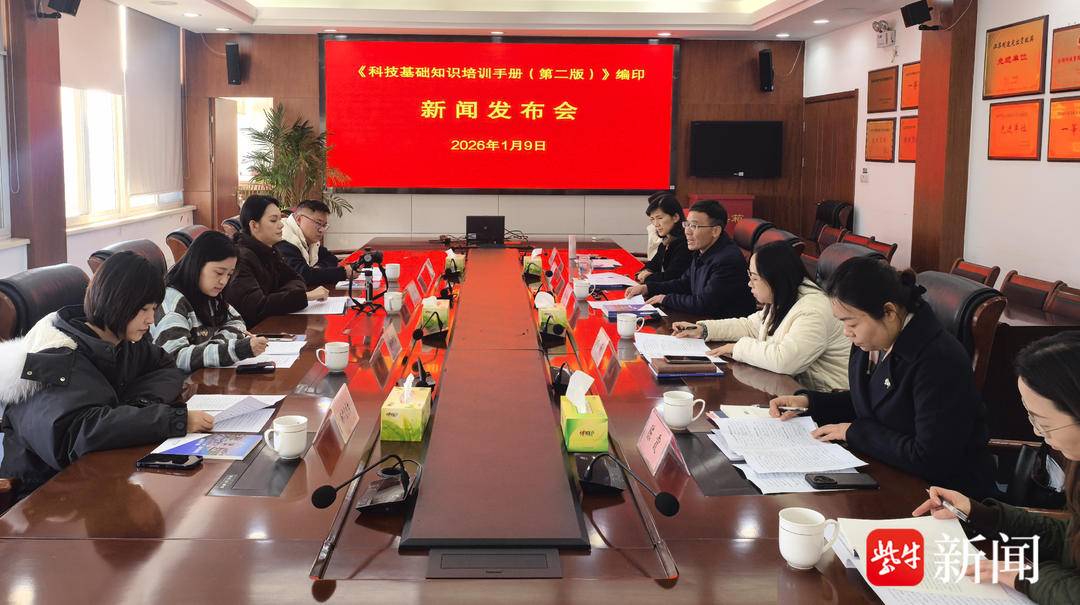
扬州这本《科技手册》有了“2.0升级版”,对创新发展能提供哪些助力?企业有话说
Yang Zi Wan Bao Wang· 2026-01-09 07:34
Core Viewpoint - The Yangzhou Municipal Science and Technology Bureau has launched the second edition of the "Science and Technology Basic Knowledge Training Manual" to enhance the theoretical literacy and business capabilities of local science and technology workers, aligning with the city's industrial innovation goals [1][3]. Group 1: Manual Overview - The second edition of the training manual is a comprehensive upgrade from the first edition, incorporating new trends in technology and the latest policies relevant to Yangzhou's industrial development [3]. - The manual covers five key areas: technological innovation, technology finance, talent development, industrial economy, and future concepts, along with eight categories of knowledge including new ideas, technologies, and major foundational research [3][4]. - It includes 370 professional terms and emphasizes emerging fields such as artificial intelligence, quantum technology, biotechnology, new energy, and new materials [3]. Group 2: Impact on Enterprises - The manual serves as a "knowledge window" for enterprises, aiding in their strategic planning and innovation efforts, particularly in the context of digital and intelligent transformation [4]. - It provides a systematic explanation of artificial intelligence, helping companies understand its core functions and development directions, thus facilitating internal knowledge dissemination [4]. - The manual's macro analysis of new industries and future trends offers valuable insights for long-term development planning and optimizing industrial layout [4].
利安隆董事长李海平:化学与生物技术双轮驱动公司高质量发展
Zheng Quan Ri Bao· 2026-01-08 16:45
Core Insights - The company emphasizes strategic stability during adversity, focusing on its core chemical business while also investing in biotechnology as a new growth engine [1] Group 1: Business Strategy - The company is a leader in the polymer materials anti-aging industry and has experienced rapid growth since its listing on the Shenzhen Stock Exchange in 2017 [2] - The company identifies three global trends: supply chain restructuring, energy transition, and the omnipresence of AI, which will guide its R&D and investment strategies [2] - The company is committed to technological innovation to upgrade its business, expanding from material anti-aging to human anti-aging products, with nine categories of traditional chemical sunscreen products already launched [2][3] Group 2: International Expansion - The company is actively pursuing international expansion, as evidenced by its recent announcement of capital increases to support the construction of a research and production base in Malaysia [2] - The company aims to establish a robust supply chain to support emerging industries such as new energy vehicles and flexible displays through acquisitions and new production bases [3] Group 3: Biotechnology Development - The company views biotechnology as a strategic new engine for growth, focusing on life sciences to create long-term value [3] - The company has invested in R&D for small nucleic acid drugs, biomanufacturing, and personal care, collaborating with institutions like Tianjin University [3] Group 4: Operational Efficiency - The company has implemented a ten-year strategic planning management model to ensure effective execution of its strategies [4] - The management team has maintained a zero voluntary turnover rate, indicating strong organizational cohesion [4] - The company has outlined three key areas for capital expenditure: differentiated domestic investments, a focus on biological innovation, and increased international presence [4]
“十四五”期间 我国累计提出ISO、IEC国际标准提案1740项
Xin Hua Cai Jing· 2026-01-08 05:30
Core Insights - The market regulatory authority has made significant progress in promoting international standardization in various sectors, including low-carbon energy, biotechnology, artificial intelligence, and industrial networks, with a total of 505 international standard proposals submitted to ISO and IEC in 2025, representing a 15.83% increase from 2024 [1] - During the 14th Five-Year Plan period, China has submitted a total of 1,740 international standard proposals to ISO and IEC, marking a 32.12% increase compared to the 13th Five-Year Plan [1] - In terms of international standard formulation, China led the development and publication of 285 ISO and IEC international standards in 2025, which is a 26.67% increase from 2024 [1] - Cumulatively, during the 14th Five-Year Plan, China has led the formulation and publication of 1,183 ISO and IEC international standards, reflecting an 88.1% increase compared to the 13th Five-Year Plan [1] - The number of foreign language versions of national standards published reached 441 in 2025, with a total of 2,779 foreign language versions during the 14th Five-Year Plan, exceeding a 200% increase from the 13th Five-Year Plan [1] Future Directions - The market regulatory authority plans to continue advancing international standard development in emerging industries such as new materials, aerospace, low-altitude economy, and embodied intelligence, aligning with the suggestions of the 15th Five-Year Plan [2] - The focus will be on accelerating the opening of standard systems to enhance industrial competitiveness and contribute to the high-quality development of global industries [2]
共享时代发展广阔机遇
Jing Ji Ri Bao· 2026-01-08 00:06
Group 1 - The global economy faced significant challenges in 2025, characterized by geopolitical conflicts and weak global trade recovery, leading to increased uncertainty in international economic and trade sectors [1] - Despite these challenges, China's economy demonstrated remarkable stability and resilience, becoming an essential support for multinational companies' global strategies due to its vast market, complete industrial system, and improved business environment [1] - In the past year, multinational companies have increasingly integrated into China's development, with foreign investment structures optimizing across various sectors, including high-end manufacturing, green energy, digital economy, and life sciences [1] Group 2 - China is emerging as a key source for the new round of technological revolution and industrial transformation, with significant advancements in artificial intelligence, advanced manufacturing, new energy, digital economy, and biotechnology [2] - Multinational companies are establishing R&D centers and innovation platforms in China, viewing it not only as a large consumer market but also as a vital source of new technologies and business models [2] - China is committed to expanding its institutional openness to address external uncertainties, implementing policies to ensure fair competition, access to resources, and protection of intellectual property, thereby boosting multinational companies' confidence in long-term investments [2]
2025年中国国际标准提案数量进一步增长
Xin Lang Cai Jing· 2026-01-07 14:04
Core Insights - In 2025, China plans to propose 505 international standard proposals to ISO and IEC across various fields, representing a 15.83% increase from 2024 [1] - During the 14th Five-Year Plan period, China has cumulatively proposed 1,740 ISO and IEC international standard proposals, marking a 32.12% increase compared to the 13th Five-Year Plan [1] - China will lead the development and publication of 285 ISO and IEC international standards in areas such as new energy and smart grids in 2025, a 26.67% increase from 2024 [1] - Cumulatively, during the 14th Five-Year Plan, China has led the development and publication of 1,183 ISO and IEC international standards, an 88.1% increase from the 13th Five-Year Plan [1] - In 2025, China will publish 441 foreign language versions of national standards and implement four special actions for foreign language versions related to Beidou navigation, intelligent manufacturing, cybersecurity, and the Belt and Road Initiative [1] - The total number of foreign language versions of national standards has increased to 2,779 during the 14th Five-Year Plan, over 200% growth compared to the 13th Five-Year Plan [1] Future Directions - The National Market Supervision Administration will continue to advance the development of international standards in emerging and future industries such as new materials, aerospace, low-altitude economy, and embodied intelligence, in line with China's 15th Five-Year Plan recommendations [2]
中国国际关系学会副会长王帆:科技之争已成关键变量因素
Zhong Guo Zheng Quan Bao· 2026-01-06 20:42
Core Insights - The world is experiencing unprecedented changes, with emerging markets and developing countries gaining strength, leading to a trend of increasing multipolarity in the global landscape [1][2] - The traditional divide between developed and developing countries is diminishing, as developing nations are advancing economically while the influence of developed countries is declining [1] - The ongoing technological revolution, particularly in artificial intelligence and other frontier technologies, is expected to be a key factor in transforming international relations and economic structures [2] Group 1 - Emerging markets are witnessing rapid growth in economic output and trade, although their influence and participation in global governance remain limited [1][2] - The current transition period in international relations is characterized by uncertainty, with competition over international systems and mechanisms being a focal point [1][2] - The potential for a multipolar world order is anticipated, where countries will have increased strategic autonomy, but stability in such a system is not guaranteed [2] Group 2 - The global governance system is at a critical juncture, facing challenges such as development imbalances, unilateral sanctions, and ecological crises, which highlight the need for reform [3] - There is a growing call from developing countries for changes in the global governance framework, which may be informed by China's proposed global initiatives [3]
黄金白银直线拉升,韩国股市KOSPI指数升逾2%创纪录新高
Jin Rong Jie· 2026-01-05 00:31
Group 1 - Gold and silver prices experienced significant increases, with spot gold rising to $4373, up 0.97%, and spot silver increasing by 2.17% [1][2] - COMEX silver saw a notable rise of over 3.53%, indicating strong market interest [1][2] - Oil prices showed volatility, with WTI crude oil at $57.27, down 0.05%, while ICE Brent crude oil slightly increased by 0.05% to $60.78 [2] Group 2 - U.S. President Trump threatened Venezuela's interim president, indicating potential further U.S. intervention, which could impact oil supply dynamics [3] - The South Korean stock market saw significant gains, with the KOSPI index rising over 2% to reach a historical high, driven by strong performances from major companies like Samsung Electronics [3] - South Korean President Lee Jae-myung emphasized the importance of restoring relations with China and highlighted opportunities for cooperation in renewable energy, biotechnology, and the silver economy [5]
