美联储主席人选

Search documents
闪评 | 下任美联储主席人选将公布?白宫与市场降息预期“温差大”
Sou Hu Cai Jing· 2026-01-09 11:47
从上至下分别为:凯文·沃什、凯文·哈塞特、克里斯托弗·沃勒。 当地时间1月8日,美国总统特朗普透露,对下一任美联储主席人选已"心中有数",但拒绝透露具体姓名。美财政部长贝森特预计,特朗普将于本月晚些时候 公布人选。 目前,市场预测当选下一任美联储主席概率排名前三的分别是: 凯文·沃什(前美联储理事):41% 凯文·哈塞特(白宫国家经济委员会主任):39% 克里斯托弗·沃勒(美联储理事):12% 到底谁最有希望成为鲍威尔的继任者?白宫和美联储的降息之争是否将进入新的阶段? 总台环球资讯《闪评》特邀中国人民大学经济学院教授王晋斌进行解读。 谁将接棒鲍威尔? 王晋斌分析指出,目前呼声较高的候选人大体可以分为两类: 绝对忠实型:特别忠诚于美国总统,特朗普说降息就降息。 保持一定独立性:努力在市场对美联储独立性的要求与白宫的指令间做好平衡。 王晋斌认为,美联储主席人选未定,也反映出美国总统需要在"政策执行力"与"市场信誉"之间寻找最佳平衡——这个人选需要能领导美联储推动经济增长, 避免通胀反弹与市场信心崩塌。 降息之争 1月8日,美国财政部长贝森特重申,降息是未来美国经济增长的关键所在,也是推动美国经济实现更强增长的" ...


特朗普:下任美联储主席人选已有决定,但不想说
Sou Hu Cai Jing· 2026-01-08 23:50
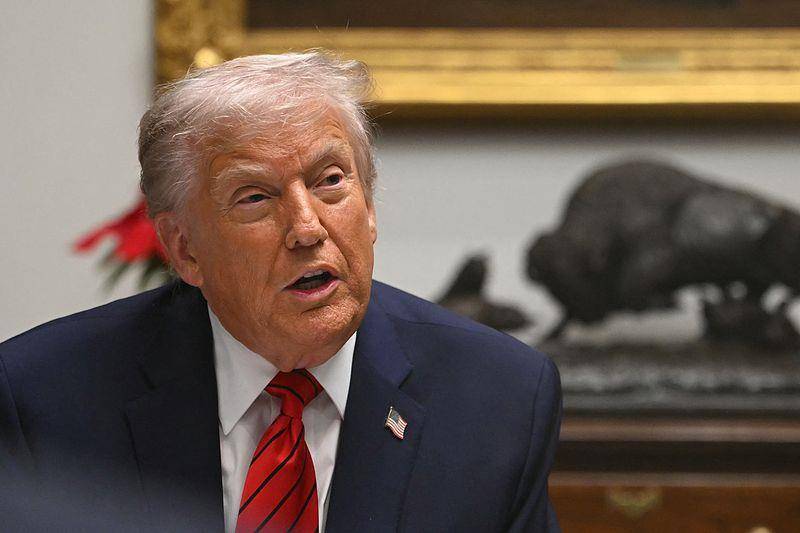
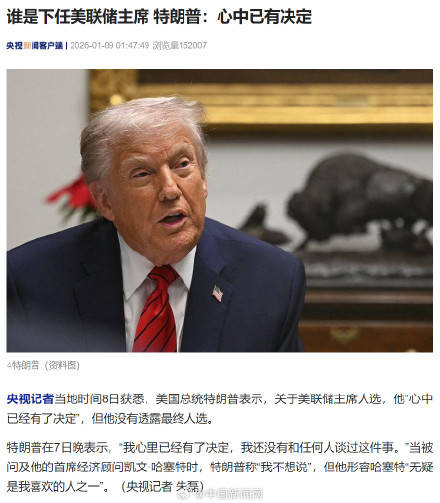
特朗普在上一届总统任期内,于2017年11月2日提名现任美联储主席鲍威尔出任这个职位。之后在民主党前总统拜 登任期内,鲍威尔获提名连任,按计划将于2026年5月结束任期。 特朗普在2025年就任总统后,多次批评鲍威尔降息不及时,并威胁要更换美联储主席。去年11月30日,特朗普表 示,他已经敲定下一任美国联邦储备委员会主席人选,但未透露是谁。有分析指出,无论候选人是谁,特朗普最 看重此人是否对自己忠诚,以实现他要求美联储降息的目的。特朗普12月29日说,他预计2026年1月宣布美联储主 席人选。 责编:李文玉 | 审核:李震 | 监审:古筝 (来源:央视新闻客户端) △特朗普(资料图) 央视记者当地时间8日获悉,美国总统特朗普表示,关于美联储主席人选,他"心中已经有了决定",但他没有透露 最终人选。 特朗普在7日晚表示,"我心里已经有了决定,我还没有和任何人谈过这件事。"当被问及他的首席经济顾问凯文· 哈塞特时,特朗普称"我不想说",但他形容哈塞特"无疑是我喜欢的人之一"。 ...
谁是下任美联储主席?特朗普:心中已有决定
Sou Hu Cai Jing· 2026-01-08 23:38
当地时间1月8日消息,美国总统特朗普表示,关于美联储主席人选,他"心中已经有了决定",但他没有 透露最终人选。当被问及他的首席经济顾问凯文·哈塞特时,特朗普称"我不想说",但他形容哈塞特"无 疑是我喜欢的人之一"。(央视新闻) ...
特朗普回应美联储主席人选
Sou Hu Cai Jing· 2026-01-08 23:32
据央视新闻客户端消息,记者当地时间8日获悉,美国总统特朗普表示,关于美联储主席人选,他"心中 已经有了决定",但他没有透露最终人选。特朗普在7日晚表示,"我心里已经有了决定,我还没有和任 何人谈过这件事。"当被问及他的首席经济顾问凯文·哈塞特时,特朗普称"我不想说",但他形容哈塞 特"无疑是我喜欢的人之一"。 来源:中国新闻网 ...
美国总统特朗普就美联储主席人选表示:还没有与任何人讨论过对美联储主席的选择。
Sou Hu Cai Jing· 2026-01-08 17:54
美国总统特朗普就美联储主席人选表示:还没有与任何人讨论过对美联储主席的选择。 来源:滚动播报 ...
特朗普就美联储主席人选表示:“我心里已经有决定了”。(纽约时报)
Hua Er Jie Jian Wen· 2026-01-08 17:49
特朗普就美联储主席人选表示:"我心里已经有决定了"。(纽约时报) 风险提示及免责条款 市场有风险,投资需谨慎。本文不构成个人投资建议,也未考虑到个别用户特殊的投资目标、财务状况或需要。用户应考虑本文中的任何 意见、观点或结论是否符合其特定状况。据此投资,责任自负。 ...
铁矿日报:港口库存往下游转移,年底补库博弈较强-20260105
Guan Tong Qi Huo· 2026-01-05 11:25
Report Summary 1) Report Industry Investment Rating No relevant content provided. 2) Core Viewpoints of the Report - The iron ore market shows an overall trend of gradual strengthening. The futures contract presents a back structure and positive basis, with the futures price at a discount, resulting in a short - term resonance between the futures and the spot market [1][5]. - The iron ore price is supported by the expected resumption of blast furnaces in January, the recovery of molten iron, and pre - holiday restocking, but attention should be paid to the significant fluctuations in the sentiment of the commodity market [2]. 3) Summary by Relevant Catalogs Market行情态势回顾 - **Futures Price**: The main contract of iron ore futures fluctuated and strengthened slightly during the day, closing at 797 yuan/ton, up 7.5 yuan/ton or 0.95% from the previous trading day's closing price. The trading volume was 195,000 lots, the open interest increased by 25,000 lots to 619,000 lots, and the settled funds were 10.85 billion yuan. The disk price remained in a slightly strong oscillating state [1]. - **Spot Price**: The mainstream varieties of port spot goods, such as PB powder at Qingdao Port, remained unchanged at 808 yuan/ton, and Super Special powder remained unchanged at 685 yuan/ton. The main swap contract was at 105.4 (+0.95) US dollars/ton. The swap price showed a strong upward breakthrough, and the spot market oscillated slightly stronger [1]. - **Basis and Spread**: The price of PB powder at Qingdao Port converted to the futures price was 836.8 yuan/ton, with a basis of 39.8 yuan/ton, and the basis narrowed slightly. The spread between Iron Ore 1 - 5 was 17.5 yuan, and the spread between Iron Ore 5 - 9 was 22 yuan. The iron ore futures contracts presented a back structure and positive basis, with certain support below the futures price, continuing the trend of gradual strengthening [1]. Fundamental Analysis - **Supply**: The supply side was relatively stable, with the year - end rush for volume completed. Attention should be paid to the weather disturbances in the first quarter [2]. - **Demand**: The sample molten iron production increased month - on - month, the profitability rate improved slightly. There was an expectation of blast furnace复产 in January, and steel mills' restocking had gradually started, but the overall pace was still slow. Attention should be paid to the recovery height of molten iron before the holiday and the release rhythm of restocking demand [2]. - **Inventory**: Port inventories continued to accumulate, and steel mills' inventories increased slightly month - on - month but were still at a relatively low level year - on - year. The game for year - end restocking was intense, and the overall inventory pressure was building up [2]. Macroeconomic Analysis - **Domestic**: The manufacturing PMI in December reached 50.1%, returning to the expansion range for the first time since April, significantly exceeding seasonal expectations and market expectations. The core driver was the simultaneous recovery of both supply and demand. The price side showed that the anti - involution policy was crucial for price stabilization and recovery. The construction industry PMI also rebounded significantly due to weather and construction progress factors. In the future, attention should be paid to the support of ultra - long - term special treasury bond funds and the rhythm of subsequent fiscal policies [4]. - **Overseas**: In the short term, the key focus was on the candidate for the next Federal Reserve Chairman and the announcement time. Currently, Hassett had a high呼声. If the announcement time was advanced, it might be beneficial for non - ferrous metals, but there were still negative factors such as the adjustment of commodity index parameters and the increase of margins. The silver market was intertwined with long and short factors, and an overall low - buying strategy was maintained [4].
特朗普称美国将暂时“管理”委内瑞拉
Dong Zheng Qi Huo· 2026-01-05 01:13
Report Industry Investment Ratings No relevant content provided. Core Views of the Report - The domestic economic outlook is expected to improve in Q1 2026, but short - term geopolitical risks may suppress risk assets [1][18]. - The short - term strengthening of the US dollar index is due to rising geopolitical risks after the US's actions in Venezuela [3][12][13]. - The stock index long - position strategy should be continued, while the bond market may still face downward pressure after a rapid rise [19][22]. - Different commodities have different trends. For example, palm oil may face supply pressure, and copper prices are mainly affected by macro factors [24][52]. Summary by Directory 1. Financial News and Comments 1.1 Macro Strategy (Gold) - The arrest of the Venezuelan president by the US has increased geopolitical tensions, but the impact on the financial market is expected to be limited. Short - term precious metals may face correction risks [10]. 1.2 Macro Strategy (Foreign Exchange Futures - US Dollar Index) - The US's actions in Venezuela have raised geopolitical risks, causing the US dollar index to strengthen in the short term. The US dollar is expected to rise in the short term [3][12][13]. 1.3 Macro Strategy (US Stock Index Futures) - The US air strike on Venezuela may cause short - term market risk aversion, but the market risk appetite is expected to improve. US stocks are expected to operate in a volatile and slightly stronger manner [15][16]. 1.4 Macro Strategy (Stock Index Futures) - The domestic economic outlook is expected to improve, but short - term geopolitical risks may suppress risk assets. The long - position strategy for stock indices should be continued [18][19]. 1.5 Macro Strategy (Treasury Bond Futures) - The new fee rate regulations are short - term positive for the bond market, but cannot reverse the bearish sentiment. It is recommended to consider short - selling at high prices [2][22]. 2. Commodity News and Comments 2.1 Agricultural Products (Soybean Oil/Rapeseed Oil/Palm Oil) - In December 2025, Malaysian palm oil production and exports decreased, and the inventory may exceed 3 million tons. It is advisable to wait for India's increased purchases and consider going long at low levels [23][24][25]. 2.2 Agricultural Products (Soybean Meal) - CBOT soybeans declined due to poor export prospects. Domestic soybean crushing is expected to decrease in January. Soybean meal is expected to decline with CBOT soybean futures prices [28][29]. 2.3 Agricultural Products (Sugar) - The global sugar market is expected to have a small surplus in 2025/26. The sugar price may be sensitive to weather and production changes. Pay attention to the actual stocking and sales progress [30][32][33]. 2.4 Agricultural Products (Cotton) - The US cotton export demand is weak, and the Indian import tariff exemption has expired. The external market is expected to remain in a low - level shock. Be wary of the risk of a decline in Zhengzhou cotton [38][39]. 2.5 Black Metals (Rebar/Hot - Rolled Coil) - Before the New Year's Day holiday, the inventory of five major steel products continued to decline, but the speed slowed down. The steel price is expected to fluctuate in the short term, waiting for the accumulation of market contradictions [44][45]. 2.6 Black Metals (Steam Coal) - The price of steam coal in the northern port market was stable on December 31, 2025. The demand is weak, and attention should be paid to the coal mine's production in January [45][46]. 2.7 Black Metals (Iron Ore) - The Samarco mine expansion project was suspended. The iron ore price is expected to continue to fluctuate. Pay attention to the steel mills' raw material replenishment after January [47][48]. 2.8 Non - ferrous Metals (Copper) - Macro factors have a great impact on copper prices. Fundamentally, short - term price increases are restricted. It is recommended to buy at low prices [52]. 2.9 Non - ferrous Metals (Nickel) - Indonesia's supply contraction expectation is being realized. Unilaterally, it is advisable to consider going long at low levels. For arbitrage, pay attention to the 03 - 05 reverse spread opportunity [55][56]. 2.10 Non - ferrous Metals (Lithium Carbonate) - There may be short - term callback pressure, and it is recommended to consider going long at low levels in the medium term [58][59][60]. 2.11 Non - ferrous Metals (Polysilicon) - Polysilicon enterprises have raised spot quotes. It is advisable to consider going long at low levels, but investors should hold positions carefully [60][61]. 2.12 Non - ferrous Metals (Industrial Silicon) - The current production reduction scale of industrial silicon is insufficient to reverse the inventory accumulation pattern in 2026. It is recommended to short at high prices after a rebound [63][64]. 2.13 Non - ferrous Metals (Tin) - The supply and demand contradictions of tin are alleviated, and attention should be paid to the risk of price decline caused by the withdrawal of funds [68]. 2.14 Non - ferrous Metals (Lead) - The fundamental contradictions of lead are marginally alleviated. It is recommended to take a wait - and - see approach both unilaterally and in terms of arbitrage [69][70]. 2.15 Non - ferrous Metals (Zinc) - The short - term fundamentals of zinc have no obvious contradictions. Unilaterally, wait for the opportunity to take profits at high prices; for arbitrage, take a wait - and - see approach [71][72][73]. 2.16 Energy Chemicals (Carbon Emissions) - The EU carbon price is expected to be volatile and slightly stronger in the short term [74]. 2.17 Energy Chemicals (Crude Oil) - The short - term risk premium of crude oil prices may rise moderately, and the long - term supply growth depends on US investment [75][76].
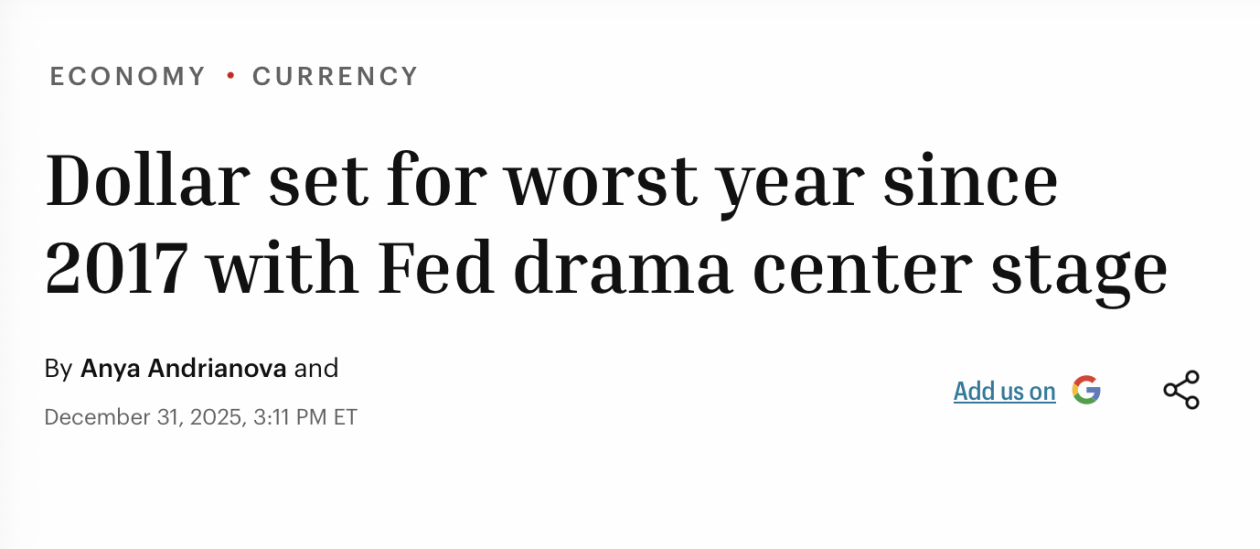
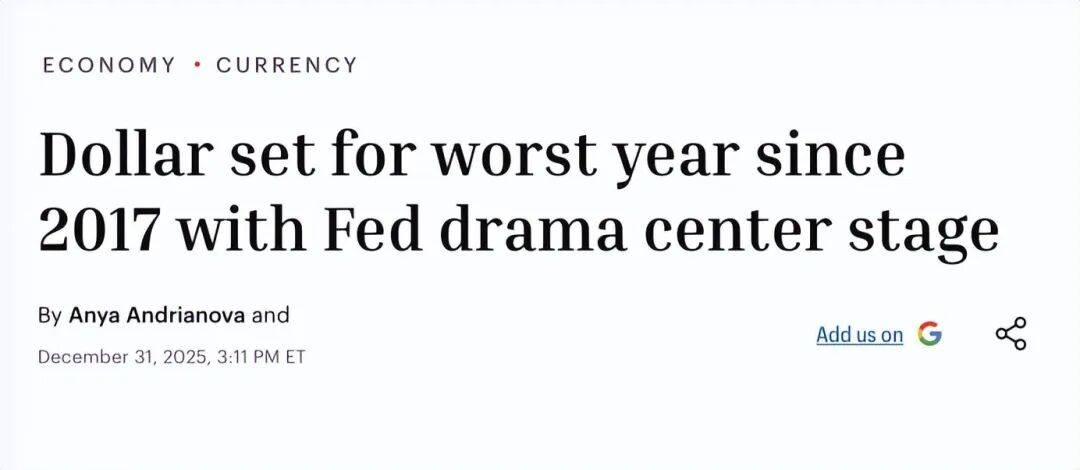
美元创八年最差年度表现美联储主席人选或成2026年走势关键
Sou Hu Cai Jing· 2026-01-01 05:39
Group 1 - Analysts warn that if the next Federal Reserve Chair implements more significant interest rate cuts as expected, the US dollar may weaken further [2] - The biggest factor affecting the dollar in Q1 2026 will be the Federal Reserve, particularly the identity of the next chair after Jerome Powell's term ends in May 2026 [2] - Market expectations indicate that the US will likely see at least two interest rate cuts in 2026, leading to a divergence in monetary policy compared to other developed economies, which diminishes the dollar's attractiveness [2] Group 2 - The euro has strengthened significantly against the dollar, primarily due to moderate inflation in the Eurozone and an impending wave of defense spending, which has led to minimal bets on rate cuts in the Eurozone [2] - Interest rate traders anticipate that central banks in Canada, Sweden, and Australia will raise rates, contrasting with the US outlook [2] - Data from the Commodity Futures Trading Commission (CFTC) shows that while there was a brief bullish position on the dollar, it quickly reverted to a dominant bearish stance since April 2025 [2]
美元创八年最差年度表现 美联储主席人选或成2026年走势关键
Xin Lang Cai Jing· 2026-01-01 01:16
Core Viewpoint - Analysts warn that if the next Federal Reserve Chair adopts more aggressive rate cuts as expected, the US dollar may weaken further [1] Group 1: Federal Reserve Leadership - The biggest factor affecting the dollar in Q1 2026 will be the Federal Reserve, particularly who will succeed Jerome Powell after his term ends in May 2026 [1] - Potential candidates for the next Fed Chair include Kevin Hassett, Christopher Waller, and Kevin Warsh [1] Group 2: Market Expectations and Currency Trends - The market widely anticipates at least two rate cuts in the US in 2026, leading to a divergence in monetary policy compared to other developed economies, which diminishes the dollar's attractiveness [1] - The euro has strengthened significantly against the dollar due to mild inflation in the Eurozone and an impending wave of defense spending, resulting in almost zero bets on rate cuts in the Eurozone [1] - Rate traders expect central banks in Canada, Sweden, and Australia to raise interest rates [1] Group 3: Market Sentiment on Dollar Positions - Data from the Commodity Futures Trading Commission (CFTC) shows that the dollar briefly saw bullish positions in December 2025 but quickly reverted to a dominant bearish stance since April 2025 [1]