
贸易协议

Search documents
国际观察|美印贸易协议如何牵动美印俄三边关系
Xin Lang Cai Jing· 2026-02-03 22:56
降低关税,美印各有所求 特朗普当天在社交媒体发文称,莫迪同意印度停止购买俄罗斯石油,美国将把对印度商品加征的所 谓"对等关税"税率从25%降至18%,立即生效,印度同时降低对美关税和非关税壁垒。 转自:新华社 新华财经科伦坡2月4日电(记者伍岳)美国总统特朗普2日表示,他当天与印度总理莫迪通话,双方达 成一项贸易协议。特朗普称,印度将停止购买俄罗斯石油,美国则将降低印度输美商品关税税率。莫迪 同日确认美将下调对印关税,但未就印度停购俄石油一事表态。 分析人士认为,美印基于现实利益达成该协议,但印度出于多重考量,很难完全停止购买俄石油。该协 议虽能缓和两国经贸分歧,但难以从根本上推动美印关系改善。 不过,印度方面并未公开证实这一说法。特朗普发文后,莫迪在社交媒体上说,美国同意把印度输美商 品关税税率降至18%,但并未提及印度石油进口政策的变化。 分析人士认为,作为世界第三大石油消费国和进口国,印度很难完全停止从俄罗斯进口石油。 一是从印俄关系角度考虑。印俄长期保持战略伙伴关系。美国智库大西洋理事会高级研究员迈克尔·库 格尔曼认为,不论是从经济、外交还是战略角度考量,印度都不太可能完全停止从俄罗斯这一"亲密伙 伴 ...
美国商界团体反应不一,莫迪发文表示“诚挚感谢”,特朗普称美印达成贸易协议降关税
Huan Qiu Shi Bao· 2026-02-03 22:51
Core Viewpoint - The trade agreement between the United States and India involves a reduction of tariffs on Indian goods from 25% to 18%, effective immediately, while India will lower its tariffs and non-tariff barriers on U.S. products [1][3]. Group 1: Trade Agreement Details - The U.S. will reduce the "reciprocal tariffs" on Indian goods, and India has agreed to purchase over $500 billion worth of U.S. products, including energy, technology, and agriculture [3]. - India has committed to purchasing U.S. telecommunications and pharmaceutical products and has opened its market for certain agricultural products [3]. - The agreement includes a reduction in automobile import tariffs by India to meet U.S. demands [3]. Group 2: Economic Impact - The trade agreement is expected to strengthen economic ties between the U.S. and India, providing unprecedented opportunities for Indian farmers, small businesses, and tech workers [3][5]. - The reduction in tariffs is anticipated to enhance the price competitiveness of Indian products and help Indian exporters integrate more deeply into the U.S. supply chain [6]. - Moody's stated that the U.S. lowering tariffs on most Indian goods will inject new vitality into India's exports to the U.S. [6]. Group 3: Reactions and Concerns - The U.S. business community has mixed reactions, with some viewing the agreement as a step towards a comprehensive trade deal, while others express concerns about potential negative impacts on U.S. businesses [4]. - In India, there are concerns that the agreement may harm local farmers due to the influx of subsidized U.S. agricultural products [5]. - Indian opposition leaders have criticized the agreement, claiming it compromises the interests of Indian farmers [5].

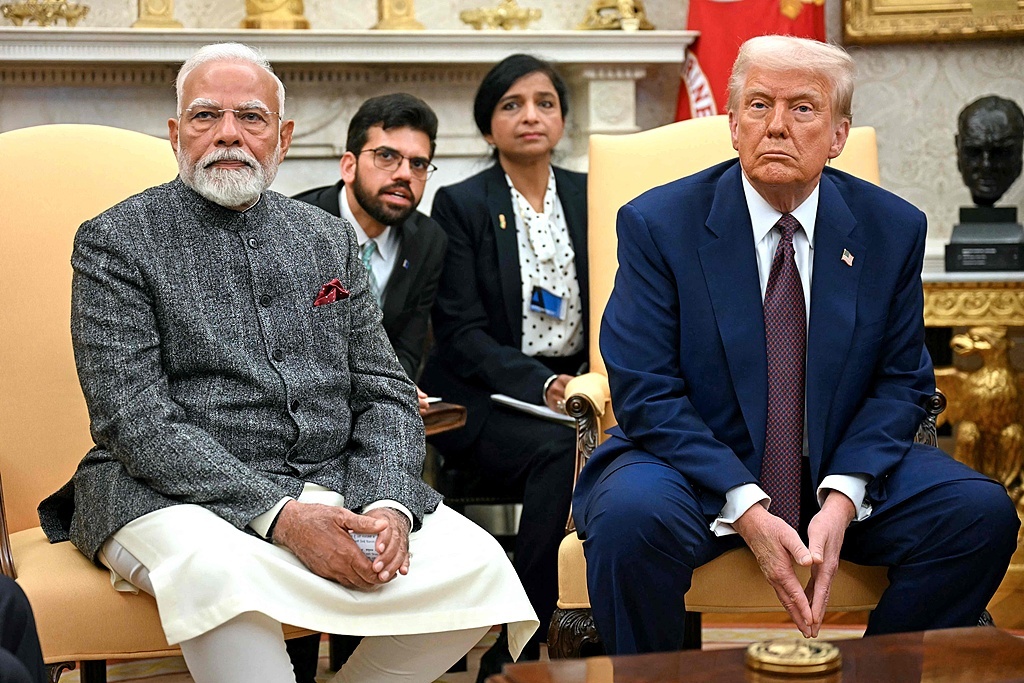
美印贸易协议 如何牵动美印俄三边关系
Xin Lang Cai Jing· 2026-02-03 20:49
Core Viewpoint - The trade agreement between the U.S. and India aims to address mutual economic interests, with India agreeing to reduce its purchase of Russian oil in exchange for lower tariffs on Indian goods exported to the U.S. [1][2] Group 1: Trade Agreement Details - President Trump announced that India will stop purchasing Russian oil, while the U.S. will reduce tariffs on Indian goods from 25% to 18% [1] - The agreement includes India's commitment to significantly increase its procurement of U.S. oil and other products, potentially purchasing over $500 billion worth of U.S. energy, technology, agriculture, and coal [1] - The White House confirmed that the additional 25% tariff imposed on India for purchasing Russian oil will be completely removed [1] Group 2: Economic Context - The agreement reflects a reciprocal nature, with the U.S. lowering tariffs in exchange for India adjusting its energy procurement strategy [2] - India's manufacturing sector is under pressure from U.S. tariff policies, necessitating a return to normal production levels [2] - The recent free trade agreement between India and the EU has pressured the U.S. to adjust its stance in negotiations with India [2] Group 3: Challenges in Implementation - India has not publicly confirmed its agreement to stop purchasing Russian oil, raising questions about the actual implementation of the agreement [3] - Analysts believe that India, as the world's third-largest oil consumer, will find it difficult to completely halt imports from Russia due to longstanding strategic ties and economic considerations [4] - The feasibility of alternative oil sources, such as Venezuela, is questioned due to infrastructure limitations and production capacity [4] Group 4: Future Relations - While the agreement may ease trade tensions, it is unlikely to fundamentally improve U.S.-India relations, which have been strained under the current administration [5][6] - The effectiveness of the agreement remains uncertain, as previous trade agreements by the Trump administration have often lacked clarity and concrete execution timelines [6] - The agreement is seen as lacking strategic depth, potentially addressing trade issues but failing to resolve deeper underlying tensions between the two nations [6]
印官员爆料:印度同意从美大量进口石油、国防装备和飞机等产品
Xin Lang Cai Jing· 2026-02-03 16:43
Group 1 - India has agreed to purchase a significant amount of products from the US, including oil, defense equipment, and aircraft, as part of a trade agreement [1][3] - The trade agreement will see US tariffs on Indian goods reduced from 50% to 18%, while India will stop purchasing Russian oil and lower tariffs and non-tariff barriers on US goods [3] - The scale of US products that India will purchase is expected to reach up to $500 billion, covering various sectors such as energy, technology, agriculture, and coal [3] Group 2 - An Indian government official stated that the products purchased from the US will include pharmaceuticals, telecommunications, defense, oil, and aviation, and will be gradually implemented over the coming years [1][3] - In the period from January to November 2025, India's exports to the US increased by 15.88% year-on-year, reaching $85.5 billion, while imports amounted to $46.08 billion [3] - The trade agreement is expected to reduce global market uncertainty significantly, according to Indian economic officials [4]
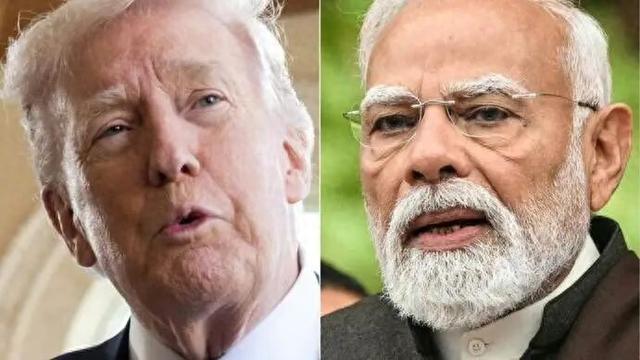
美印贸易协议如何牵动美印俄三边关系
Xin Hua Wang· 2026-02-03 14:17
美国总统特朗普2日表示,他当天与印度总理莫迪通话,双方达成一项贸易协议。特朗普称,印度将停 止购买俄罗斯石油,美国则将降低印度输美商品关税税率。莫迪同日确认美将下调对印关税,但未就印 度停购俄石油一事表态。 分析人士认为,美印基于现实利益达成该协议,但印度出于多重考量,很难完全停止购买俄石油。该协 议虽能缓和两国经贸分歧,但难以从根本上推动美印关系改善。 去年8月,美国以印度"以直接或间接方式进口俄罗斯石油"为由,对印度输美产品额外征收25%的关 税。特朗普2日称莫迪已同意印度停止购买俄罗斯石油,引发外界关注。 不过,印度方面并未公开证实这一说法。特朗普发文后,莫迪在社交媒体上说,美国同意把印度输美商 品关税税率降至18%,但并未提及印度石油进口政策的变化。 分析人士认为,作为世界第三大石油消费国和进口国,印度很难完全停止从俄罗斯进口石油。 降低关税,美印各有所求 特朗普当天在社交媒体发文称,莫迪同意印度停止购买俄罗斯石油,美国将把对印度商品加征的所 谓"对等关税"税率从25%降至18%,立即生效,印度同时降低对美关税和非关税壁垒。 特朗普还说,莫迪同意显著增加美国石油的采购量,并可能购买委内瑞拉石油。他说, ...
韩产业通商部长官:美国已启动上调对韩关税的行政程序,没有妥协的意愿
Guan Cha Zhe Wang· 2026-02-03 12:34
Core Viewpoint - The U.S. has announced an increase in tariffs on South Korean goods from 15% to 25%, prompting urgent discussions between South Korea's Minister of Trade and the U.S. government, but no resolution has been reached [1][8][12]. Group 1: Tariff Increase and Negotiations - U.S. President Trump has initiated the administrative process to raise tariffs on South Korea, despite South Korea's claims of improved mutual understanding [1][2]. - South Korean Minister of Trade, Kim Jong-hwan, returned from the U.S. without achieving the goal of halting the tariff increase, indicating a lack of compromise from U.S. officials [2][8]. - The U.S. has expressed regret over delays in South Korea's legislative process regarding trade agreements, which has contributed to the tariff increase [2][12]. Group 2: Trade Agreements and Legislative Challenges - South Korea is working to implement a trade agreement with the U.S. that includes a commitment to invest $350 billion in strategic sectors, but this agreement has not yet been approved by the South Korean National Assembly due to political divisions [5][12]. - The ruling Democratic Party believes that the trade agreement does not require National Assembly approval, while the opposition party argues for the need to complete legislative procedures first [12][13]. - Trump has criticized the South Korean National Assembly for not fulfilling the agreement, leading to the tariff increase on various products [12]. Group 3: Comparison with India and Broader Trade Strategy - On February 2, Trump announced a trade agreement with India, reducing tariffs from 50% to 18%, highlighting a contrasting approach to South Korea, a U.S. ally [6][9]. - Analysts suggest that the U.S. is applying stronger tariff pressure on South Korea to expedite investment commitments, comparing it to Japan's pace [6][13]. - To mitigate the impact of increased tariffs, South Korea is seeking to expand trade partnerships, including negotiations for a second phase of a free trade agreement with China [7][13].

今日财经要闻TOP10|2026年2月3日
Xin Lang Cai Jing· 2026-02-03 11:58
Group 1: Trade Agreement between the US and India - The US and India have reached a trade agreement where the US will reduce tariffs on Indian goods from 25% to 18% [1][4] - India has agreed to stop purchasing Russian oil and significantly increase oil purchases from the US and potentially Venezuela [1][4] - India will work towards reducing its tariffs and non-tariff barriers on US goods to zero, with a commitment to purchase over $500 billion worth of US products including energy, technology, and agricultural products [1][4] Group 2: Iranian Nuclear Negotiations - Iran's President has ordered the initiation of nuclear negotiations with the US, with high-level talks expected to occur in the coming days [2][10] - The US has confirmed that a presidential envoy will visit Israel to discuss the situation [2][10] Group 3: Silver Futures Adjustment - The Shanghai Gold Exchange has announced adjustments to the margin levels and price limits for silver futures contracts, reducing the margin from 26% to 23% and the price limit from 25% to 22% [3][12] Group 4: Market Reactions and Company News - Shares of Cambrian Technologies experienced a significant drop of nearly 14%, with the company stating it is unclear about the reasons behind the market fluctuations [5][14] - Nvidia's plan to invest $100 billion in OpenAI has stalled, with management expressing doubts about the deal [6][14] - Oracle issued $25 billion in investment-grade bonds to support infrastructure for AI projects [6][14]
特朗普与印度达成贸易协议 细节暂不明朗却有望重塑受损关系
Xin Lang Cai Jing· 2026-02-03 11:24
Group 1 - The core agreement between the US and India involves reducing tariffs on Indian goods from 25% to 18%, which is lower than most Asian economies [1][3] - An additional 25% punitive tariff related to India's purchase of Russian oil has been eliminated, and India has agreed to purchase $500 billion worth of US goods and reduce tariffs on US imports to zero [1][3] - The agreement has positively impacted investor sentiment, with the Indian rupee experiencing its largest gain in over three years and the stock market achieving its biggest rise since 2021 [1][3] Group 2 - The current 18% tariff rate in India is lower than Vietnam's 20% and the 19% applicable to most Southeast Asian economies, while South Korea and Japan secured a rate of 15% [4] - The agreement may stimulate more investment into India, with estimates suggesting a potential GDP growth increase of 0.2 to 0.3 percentage points this year [2][4] - Despite the celebratory atmosphere, analysts urge caution due to the lack of detailed agreements and the unpredictable nature of Trump's negotiations [2][4]
Russia-India oil ties as US trade deal targets crude imports
Reuters· 2026-02-03 10:17
Core Points - A trade agreement was announced between the U.S. and India, which includes a significant measure to halt Indian oil purchases from Russia [1] Group 1 - The trade agreement was made between U.S. President Donald Trump and Indian Prime Minister Narendra Modi [1] - The agreement specifically targets Indian oil purchases from Russia, indicating a shift in India's energy sourcing strategy [1]
印度官方证实:已同意从美国采购石油、国防物资及飞机等产品
Xin Lang Cai Jing· 2026-02-03 09:33
Core Viewpoint - India has agreed to purchase a range of goods from the United States, including oil, defense materials, electronics, pharmaceuticals, telecommunications equipment, and aircraft, as part of a trade agreement aimed at reducing the trade deficit with the U.S. [1][2][6] Group 1: Trade Agreement Details - The U.S. will reduce tariffs on Indian goods from 50% to 18% in exchange for India stopping oil imports from Russia and lowering trade barriers [1][6] - India is expected to significantly increase its procurement of U.S. goods, potentially reaching a value of $500 billion, covering energy, coal products, technology, agricultural products, and more [1][6] - The agreement is described as a first-phase trade deal, with plans for a more comprehensive agreement to be negotiated in the coming months [3][9] Group 2: Economic Impact - The trade agreement has positively influenced market sentiment, with India's Nifty 50 index rising nearly 3% and the Indian Rupee appreciating over 1% to 90.40 against the U.S. dollar [5][9] - Data from the Indian Ministry of Commerce indicates that from January to November 2025, India's exports to the U.S. increased by 15.88% to $85.5 billion, while imports from the U.S. totaled $46.08 billion [3][8]