轻资产

Search documents
上半年新设母基金下降,中小GP忙“转型”
2 1 Shi Ji Jing Ji Bao Dao· 2025-09-04 02:25
Core Insights - The private equity fund of funds (FoF) industry in China is experiencing a shift towards high-quality development, focusing on refined management practices since 2022 [1][2] - As of June 30, 2025, there are 460 FoFs in China with a total management scale of 34,845 billion yuan, reflecting a 23.7% decrease from the end of 2024 [1] - The decline in management scale is attributed to the exit of certain institutions from the FoF business and a shift towards direct investment by government-guided funds [2] Fund Establishment Trends - In the first half of 2025, 33 new FoFs were established, with 31 being government-guided and 2 market-oriented, totaling 1,970.17 billion yuan, a significant drop of 66% and 50% respectively compared to the same period in 2024 [3] - New FoF establishments are concentrated in 11 provincial-level administrative regions, with Jiangsu, Hubei, and Fujian leading in the number of new funds [3] - The trend indicates a shift from quantity expansion to quality improvement in FoF establishment, emphasizing long-term orientation and capital efficiency [4] Fund Group Model Advantages - The fund group model is gaining traction, characterized by flexibility, clear division of labor, and risk diversification [5] - This model allows for adjustments in fund scale and investment focus based on industry development stages and capital needs, enhancing overall investment success rates [5] Management Fee Mechanism Changes - The tightening of management fee mechanisms is pushing small and medium-sized general partners (GPs) towards a "light asset, performance-oriented" transformation [6] - New regulations limit management fees to a maximum of 2% of actual investment amounts, prompting GPs to streamline operations and reduce fixed costs [6][7] - Many GPs are adopting strategies such as outsourcing non-core functions and focusing on managing existing projects to adapt to the challenging fundraising environment [7]
建设银行中期业绩盘点:资产、负债及收入结构“三优”,其他非息净收入增长111%
Cai Jing Wang· 2025-09-01 05:21
Core Viewpoint - China Construction Bank (CCB) has demonstrated a positive transformation towards light asset and light capital business, achieving growth in non-interest income and net commission income in the first half of the year [1][10]. Financial Performance - CCB reported operating income of 385.9 billion yuan, a year-on-year increase of 2.95% [1]. - Net commission income reached 65.2 billion yuan, growing by 4.02% year-on-year [1]. - Pre-provision profit was 290.1 billion yuan, up 3.37% year-on-year [1]. - The bank's non-interest net income was 99.2 billion yuan, reflecting a 25.93% increase [10]. Asset and Liability Management - Total assets amounted to 44.43 trillion yuan, a growth of 9.52% from the previous year [3]. - Loans and financial investments increased by 2.7 trillion yuan, marking the highest growth in three years [3]. - The bank's loan and financial investment balance reached 27.44 trillion yuan and 11.77 trillion yuan respectively, with growth rates of 6.2% and 10.17% [3][4]. Investment Strategy - CCB's bond investment scale increased by nearly 1 trillion yuan, focusing on government bonds, local government bonds, and corporate bonds [4]. - The bank's technology loans reached 5.15 trillion yuan, growing at 16.81%, while strategic emerging industry loans grew by 18.92% to 3.39 trillion yuan [4]. Non-Interest Income Growth - Other non-interest income surged to 34 billion yuan, a remarkable increase of 111.36% [12]. - Investment income reached 27.9 billion yuan, up 217.29% year-on-year, driven by gains from bond and equity investments [13]. - The bank's wealth management and investment banking sectors contributed significantly to the income structure, with over 60% of income coming from these areas [12]. Cost Management - CCB's total liabilities were 40.85 trillion yuan, reflecting a 9.73% increase [7]. - The bank effectively managed its deposit costs, with interest expenses on deposits decreasing by 16.01% year-on-year [7][8]. - The proportion of demand deposits exceeded 40%, indicating a stable customer relationship and effective service capabilities [8].

兴业银行(601166):盈利增速回正 转债转股可期
Xin Lang Cai Jing· 2025-08-29 04:28
Core Viewpoint - The bank reported a slight decline in revenue but a modest increase in net profit, indicating a stabilization in financial performance despite challenging market conditions [1][2]. Financial Performance - In the first half of 2025, the bank achieved operating income of 110.5 billion, a year-on-year decrease of 2.3%, and a net profit attributable to shareholders of 43.1 billion, a year-on-year increase of 0.2% [1]. - The weighted average return on equity (ROAE) was 10.1%, down 0.9 percentage points year-on-year [1]. - Revenue, pre-provision profit, and net profit growth rates improved compared to the first quarter of 2025, with increases of 1.3, 1.3, and 2.4 percentage points respectively [2]. Asset and Loan Growth - As of the end of the second quarter of 2025, the bank's interest-earning assets and loans grew by 2% and 4.1% year-on-year, respectively, indicating steady expansion [3]. - New loans in the first half included 227.1 billion for corporate, -27.9 billion for retail, and -32.3 billion for bills, reflecting a mixed performance across segments [4]. Deposit Trends - By the end of the second quarter of 2025, the bank's interest-bearing liabilities and deposits grew by 2.5% and 9% year-on-year, respectively, with total deposits increasing by 337.5 billion [5]. - The proportion of time deposits rose to 56%, indicating a continued trend towards more stable funding sources [5]. Non-Interest Income - Non-interest income for the first half was 36.7 billion, a year-on-year decrease of 3.8%, but the decline rate narrowed compared to the first quarter [6]. - The bank's retail assets under management (AUM) reached 5.5 trillion, growing by 8% year-on-year, while corporate wealth management AUM averaged 460.7 billion, up 6.3% [6]. Asset Quality and Risk Management - The bank maintained a low non-performing loan (NPL) ratio of 1.08% and a watch list ratio of 1.66% as of the end of the second quarter [7]. - New credit impairment losses totaled 30.1 billion, a decrease of 4.2 billion year-on-year, indicating improved asset quality management [8]. Capital Adequacy - As of the end of the second quarter, the bank's core Tier 1, Tier 1, and total capital adequacy ratios were 9.54%, 11.3%, and 14.2%, respectively, reflecting a stable capital position [9]. - The issuance of 30 billion perpetual bonds and the conversion of 8.6 billion convertible bonds contributed to strengthening the capital base [9]. Strategic Outlook - The bank's strategic focus remains on "light capital, light assets, and high efficiency," with a commitment to digital transformation and enhancing its service offerings [10]. - Profit forecasts for 2025-2027 are maintained at 77.4 billion, 77.5 billion, and 77.6 billion, with adjusted EPS estimates reflecting the impact of capital increases [10].

兴业银行(601166):业绩增速转正,资产质量稳定
CMS· 2025-08-29 02:04
Investment Rating - The report maintains a rating of "Accumulate" for the company [5]. Core Views - The company has shown a positive turnaround in performance with a year-on-year increase in net profit of 0.21% in H1 2025, compared to a decline in previous quarters [1]. - The asset quality remains stable, with a non-performing loan ratio of 1.08% as of Q2 2025, unchanged from the previous quarter [3]. - The company is expected to benefit from its wealth management and investment banking business advantages, supported by a strong capital market environment [4]. Summary by Sections Performance - In H1 2025, the company's operating income, pre-provision operating profit (PPOP), and net profit attributable to shareholders showed year-on-year growth rates of -2.29%, -3.08%, and 0.21%, respectively, indicating a positive trend compared to Q1 2025 [1][15]. Non-Interest Income - The company reported a 2.59% year-on-year increase in non-interest income in H1 2025, with retail wealth management and custody services performing particularly well, achieving revenue growth of 13.45% and 9.98%, respectively [2][31]. Interest Margin and Asset-Liability Structure - The total loans and total assets grew by 4.13% and 2.55% year-on-year, respectively, while total deposits increased by 8.89%. The net interest margin for H1 2025 was reported at 1.75%, reflecting relative resilience despite a 7 basis point decline from the beginning of the year [2][3]. Asset Quality - The company maintained a stable asset quality with a non-performing loan ratio of 1.08% and a provision coverage ratio of 228.54% as of Q2 2025. The focus on key risk areas has led to a reduction in new non-performing loans in corporate real estate and credit cards [3][4]. Capital and Shareholder Information - The largest shareholder, the Fujian Provincial Finance Department, converted 8.644 billion yuan of convertible bonds into shares, indicating confidence in the company's fundamentals. The core Tier 1 capital adequacy ratio stood at 9.54% as of Q2 2025, with potential for further improvement if remaining convertible bonds are fully converted [3][4].
中信银行上半年营收和净利一降一增!向轻而行,零售成色如何
Nan Fang Du Shi Bao· 2025-08-27 13:46
Core Viewpoint - CITIC Bank reported mixed financial results for the first half of 2025, with a decline in operating income but an increase in net profit, reflecting the challenges and transformations in the banking sector [2][3]. Financial Performance - Operating income for the first half of 2025 was CNY 105.76 billion, a decrease of 2.99% year-on-year, while net profit attributable to shareholders was CNY 36.48 billion, an increase of 2.78% [2][3]. - In Q2 2025, net profit grew by 4.11% year-on-year, while operating income saw a smaller decline of 2.28% compared to Q1 [3]. - The bank's asset quality remained stable, with a non-performing loan (NPL) ratio of 1.16%, unchanged from the end of the previous year [3][4]. Asset and Liability Management - Total assets reached CNY 98,584.66 billion, up 3.42% from the previous year, with total loans and advances increasing by 1.43% to CNY 58,019 billion [4]. - Customer deposits rose by 5.69% to CNY 61,069.07 billion [4]. Revenue Composition - Net interest income decreased by 1.94% to CNY 71.20 billion, while non-interest income fell by 5.08% to CNY 34.56 billion [5]. - The net interest margin was 1.63%, down 0.14 percentage points year-on-year [5]. - Fee and commission income increased by 3.38% to CNY 16.91 billion, contributing 15.98% to total operating income [5][7]. Investment Performance - Investment income grew by 11.09% to CNY 15.62 billion, while fair value changes resulted in a loss of CNY 2.70 billion, a decline of 105.28% [6][7]. Loan Quality - The corporate NPL ratio decreased by 0.13 percentage points, while the personal loan NPL ratio increased by 0.04 percentage points [8]. - The bank's consumer loan balance was CNY 2,720.56 billion, with a consumer loan NPL ratio of 2.44% [9]. Strategic Transformation - CITIC Bank is pursuing a "light capital, light asset, light cost" transformation strategy to enhance efficiency and adapt to the new economic normal [11][12]. - The retail banking segment's pre-tax profit doubled year-on-year, indicating a successful shift towards retail banking [13].



拟分拆斑马智行独立上市,阿里系或将收获一个IPO
Huan Qiu Lao Hu Cai Jing· 2025-08-21 09:38
Core Viewpoint - Alibaba plans to spin off Zhaoma Zhixing for independent listing on the Hong Kong Stock Exchange, aligning with its strategy of transitioning to a "light asset, high margin" model [1] Company Overview - Zhaoma Zhixing was established in 2015 by Alibaba and SAIC Group, previously a subsidiary of Alibaba, but has not been consolidated since December 2022 [1] - Alibaba holds approximately 44.72% of Zhaoma Zhixing's shares, remaining the controlling shareholder post-spin-off, while SAIC Group and its affiliates own 34.34% [1] Business Operations - Zhaoma Zhixing specializes in smart cockpit solutions, offering three types of solutions: system-level OS solutions, AI end-to-end solutions, and in-vehicle platform services [2] - The company launched China's first internet car in 2016 and introduced the "Yuanshen AI" large language model in 2023 [2] Market Performance - As of June 2025, Zhaoma Zhixing's smart cockpit solutions are installed in over 8 million vehicles across more than 14 countries, with installation volume increasing from 835,000 units in 2022 to 2,334,000 units in 2024, reflecting a compound annual growth rate of 67.2% [2] - Zhaoma Zhixing holds a 7.8% market share in the smart cockpit sector, positioning it among industry leaders [2] Financial Performance - Zhaoma Zhixing reported revenues of 805 million yuan, 872 million yuan, and 824 million yuan for the years 2022 to 2024, with net losses of 878 million yuan, 876 million yuan, and 847 million yuan respectively [3] - In Q1 2025, the company generated revenue of 136 million yuan but incurred a net loss of 1.582 billion yuan, accumulating losses of approximately 2.6 billion yuan over three years [3] Industry Outlook - The global smart cockpit software market is projected to grow from approximately 103.8 billion yuan in 2024 to 245.1 billion yuan by 2030, with a compound annual growth rate of 15.4% [3]
旭辉林中:真正“站起来”,可能还需要三年!
Nan Fang Du Shi Bao· 2025-08-15 15:09
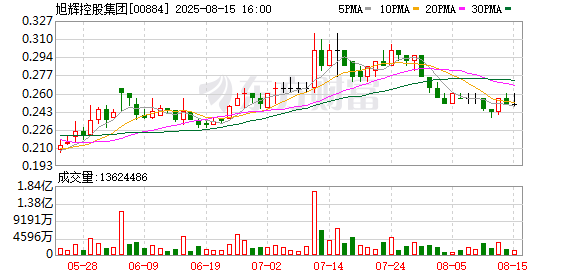
Group 1 - The core viewpoint is that CIFI Holdings is undergoing a "second entrepreneurship" phase, adapting to significant changes in the real estate market, industry models, and customer demands, moving away from high-leverage, high-debt, and high-turnover strategies towards a model focused on light assets, low debt, and high quality [2] - CIFI Holdings is focusing on three core business segments: stable rental income, self-operated development in a few core cities, and the development of real estate asset management, learning from American developers like Blackstone [2] - As of the end of 2024, CIFI Holdings' interest-bearing liabilities are expected to decrease to approximately 86.6 billion yuan [2] Group 2 - On July 22, CIFI Holdings' debt restructuring plan for four company bonds was approved by bondholders, corresponding to a bond balance of 6.07 billion yuan, which accounts for over 60% of the restructuring scale [2] - The completion of domestic and overseas credit bond restructuring is deemed essential for the company's survival, significantly improving its capital structure and repairing its balance sheet [3] - In July, CIFI Holdings reported a contract sales amount of 1.04 billion yuan, with a contract sales area of approximately 91,300 square meters, and cumulative contract sales from January to July 2025 reached about 11.2 billion yuan with a total area of approximately 1,080,600 square meters [3]
上交所通报3个问题解答,针对上下游或第三方保管存货,中介机构核查应当重点关注哪些方面?
梧桐树下V· 2025-08-04 07:26
Core Viewpoint - The article discusses the latest updates from the Shanghai Stock Exchange regarding the issuance and listing review process, focusing on three key questions related to pre-application consultations, inventory custody by third parties, and considerations for light-asset, high R&D investment companies seeking refinancing [2][3]. Group 1: Pre-Application Consultation Requirements - Issuers and intermediaries can apply for pre-application consultations to address significant issues related to business rules before submitting application documents for initial public offerings, refinancing, or asset acquisitions [3][4]. - The consultation is not a mandatory procedure for project acceptance and does not influence the acceptance or approval of the project [4][5]. - Types of issues suitable for consultation include major questions regarding issuance and listing conditions, unprecedented matters, and issues arising from policy adjustments [4][5]. Group 2: Inventory Custody by Third Parties - Intermediaries should focus on the business background of inventory custody arrangements, assessing their reasonableness and necessity [5][6]. - The specifics of inventory custody agreements must be analyzed, including terms related to storage conditions, responsibilities, and loss management [6][7]. - The effectiveness of internal controls related to inventory management should be verified, ensuring that processes cover all aspects of inventory handling and that records are consistent and reliable [6][7]. Group 3: Refinancing for Light-Asset, High R&D Companies - Companies with light-asset and high R&D characteristics must disclose the rationale for using over 30% of raised funds for working capital and debt repayment in their fundraising documents [7][8]. - The use of raised funds must be clearly linked to R&D investments related to the main business, and the underwriters and accountants must verify these disclosures [8].

华峰测控: 大信会计师事务所(特殊普通合伙)关于北京华峰测控技术股份有限公司向不特定对象发行可转换公司债券申请文件的审核问询函的回复
Zheng Quan Zhi Xing· 2025-07-30 16:25
Core Viewpoint - Beijing Huafeng Measurement and Control Technology Co., Ltd. is responding to the Shanghai Stock Exchange's inquiry regarding its application for issuing convertible bonds to unspecified objects, detailing the use of raised funds and project adjustments [1][2]. Fund Utilization and Project Adjustments - The company plans to raise a total of no more than 1 billion yuan (100,000.00 million yuan) through the issuance of convertible bonds, which will be allocated to the research and development of self-developed ASIC chip testing systems and the construction of a high-end SoC testing system manufacturing center [5][6]. - The company has utilized 287.96 million yuan of over-raised funds to increase investment in the "Research and Innovation Project," with remaining funds from the "Integrated Circuit Advanced Testing Equipment Industrialization Base Construction Project" being used to permanently supplement working capital [2][4]. Financial Metrics and Project Costs - The total investment for the "Research and Innovation Project" is planned at 758.88 million yuan, with 749.48 million yuan expected to be funded through the raised capital [6][20]. - Non-capital expenditures for the project are projected to be 696.23 million yuan, accounting for 92.90% of the total raised funds, primarily consisting of research and development expenses [16][20]. Company Characteristics - The company meets the criteria for "light asset, high R&D investment" as defined by the Shanghai Stock Exchange, with fixed assets and related expenditures accounting for only 11.98% of total assets [16]. - The company has maintained a high R&D investment ratio, with recent figures showing R&D expenditures of 172.37 million yuan, representing 83% of operating income [18]. Comparison with Industry Peers - A comparative analysis with similar companies indicates that the company's equipment and software purchase costs, as well as R&D personnel salaries, are in line with industry averages, while its flow sheet costs are lower due to the nature of its current projects [13][15].

A股定增金额大增544%
21世纪经济报道· 2025-07-30 01:28
Core Viewpoint - The A-share market has seen a significant increase in equity financing in 2023, with a total of 172 companies raising 823.51 billion yuan, marking a year-on-year growth of 371.52% [1] Group 1: Equity Financing Overview - As of July 28, 2023, 172 companies completed equity financing, raising a total of 823.51 billion yuan, which is a 371.52% increase year-on-year [1] - Among these, 90 companies completed private placements, raising 722.30 billion yuan, up 543.73% year-on-year, while 25 companies issued convertible bonds, raising 40.56 billion yuan, a 53.53% increase [1] - The financial sector leads in private placement scale, with major state-owned banks like Bank of China, Postal Savings Bank, and others raising over 1 trillion yuan each for liquidity support [2][8] Group 2: Regulatory Support and Market Trends - The surge in private placements is supported by regulatory measures aimed at increasing long-term capital inflow into the market, including a joint implementation plan released by six departments in early 2025 [5] - The total amount raised through private placements in 2023 has already surpassed the total for the entire previous year [6] - The "merger and acquisition policies" have also contributed to a rise in financing for acquisitions, with 16 out of 90 private placements being used for asset acquisitions [7] Group 3: Industry Distribution and Company Actions - The manufacturing and high-tech industries are the main contributors to private placements, with significant participation from sectors like chemicals, hardware, machinery, and electrical equipment [7] - Several companies are actively planning private placements, with 352 companies updating their refinancing plans by July 28, 2023, a 162.69% increase from the previous year [12] - The Shenzhen Stock Exchange has introduced guidelines to enhance financing flexibility for companies classified as "light asset" and "high R&D input," allowing them to bypass certain restrictions [13][14] Group 4: Simplified Procedures and Case Studies - A growing number of small and medium-sized enterprises are utilizing simplified procedures for private placements, which allow for quicker approvals and less stringent requirements [8][9] - For instance, Platinum New Materials raised 300 million yuan through a simplified procedure, demonstrating the efficiency of this financing method [10]